Well, we've made more than 58 percent of the world's computers, but almost all of them are made out of paper.
Li Guangdong, CEO of Foxconn Technology Group C, said the words rarely reveal a reflection and prudence about the choice of routes. He wanted to explain not Foxconn's manufacturing capabilities, but rather its position in the industrial chain.
Over the past few decades, the Group has become a global leader in scale, cost and delivery efficiency. It has produced more than half of the world's computers and is the world's largest manufacturing facility, but for a long time it has remained a relatively thin assembly link in the profitability of the industrial chain.
Li Guangdong used a slightly self-deprecating term to describe the profitability of the business, with a gross margin of only three to four points.
In his view, the problem is not that the group is not strong enough, but that the products it makes are not close enough to the core of the value chain. The assembly, modules, key components, different links correspond to different technological thresholds and profit spaces.
Well, I don't want to do anything in the future, but it's just an outline.
At the end of 2025, Chairman Xiangwei handed over the C business group to Li Guangdong. This business group is responsible for precision moulding and mechanical parts, key components for robots such as accelerators, sensors, agile hands, and others, as well as within the scope of its business focus.
After taking over Group C, he set himself a clear business goal: By 2028, Group C revenue will triple from 2026 and gross profit will rise to more than 15%.
In his plan, robots were not a new business that broke away from traditional manufacturing, but an opportunity to reallocate manufacturing capabilities. Foxconn's accumulated precision machining, mold design, supply chain management and large-scale production capabilities could be transferred to the robotics industry. But this time, it wanted to do more than just turn other people's designs into products.
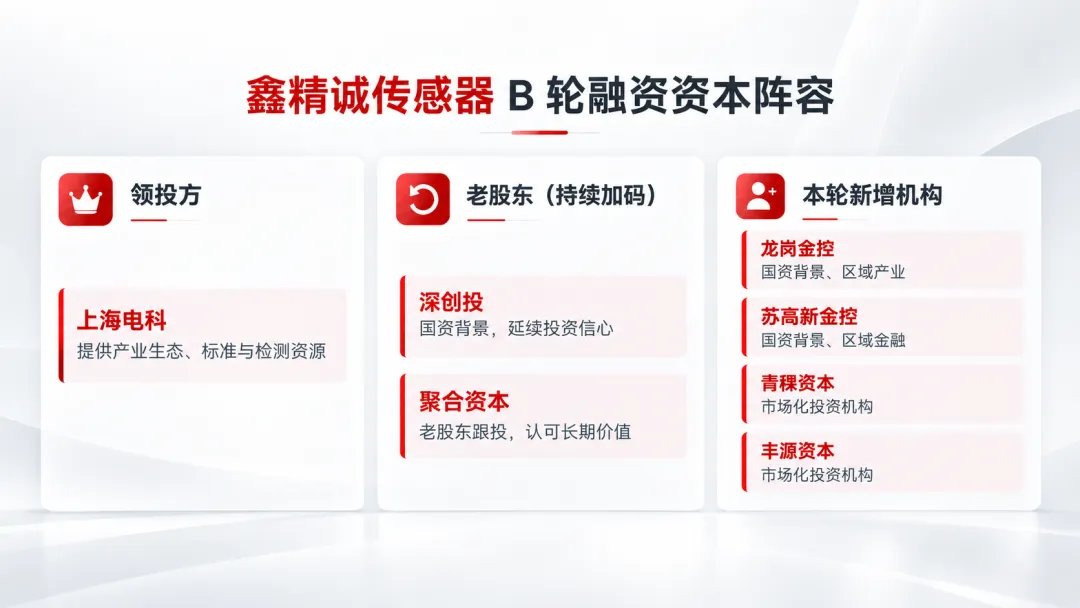
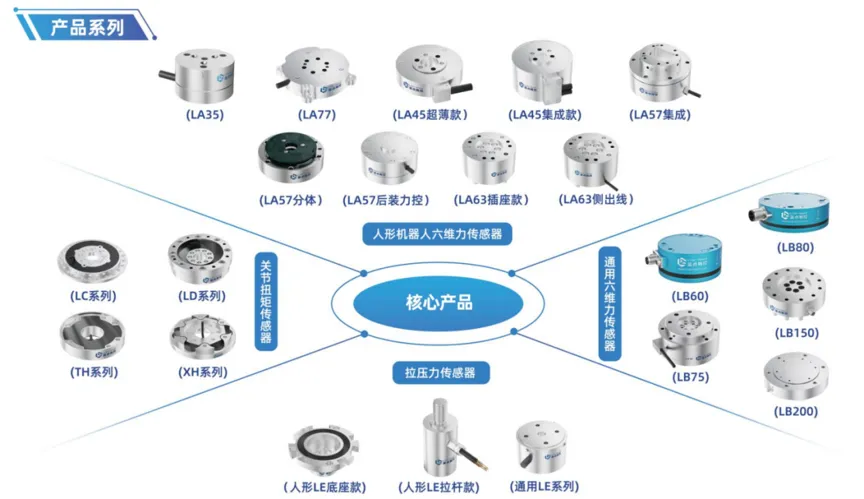
This year, under the leadership of Lee Guangdong, Guangdong, a subsidiary of Foxconn, did something that is not very similar to its 40-year-old image, investing in a company that makes six-dimensional sensors.
While the investment is not large, it reveals an important option: cutting off key components that can enter real production and have the opportunity to create a scale advantage, while the robotics industry has not yet fully determined the final shape.

01.
Investments set for 10 minutes
Li Guangdong had planned to talk to the team for a while while while visiting Shenzhen.
After reading the company's introduction, he asked several questions, and listened to the R&D team present the products and technology. About ten minutes later, a temporary meeting interrupted the exchange.
For a large manufacturing enterprise, 10 minutes is clearly not enough to complete all the work. But Li Guangdong judges whether an enterprise is worth wagering further and has its own criteria: whether the industry direction is right, whether the technical capabilities are ahead, whether the team is ambitious to become the leader of the industry.
In his view, the three conditions are met.
More importantly, the position of the six-dimensional sensors corresponds to a crucial change in the robot's ability to move to complete complex tasks.
Traditional industrial robots are already able to move quickly and repeatedly on a defined trajectory. For tasks such as transportation, loading and unloading, the robot can do the work with a predefined program as long as the target location is clear enough. But when the robot needs to touch soft objects, insert precise parts, or determine if there is a lag in the assembly process, simply knowing where it has moved is not enough to ensure the success of the task.
Robots also need to know how much effort they're putting in.
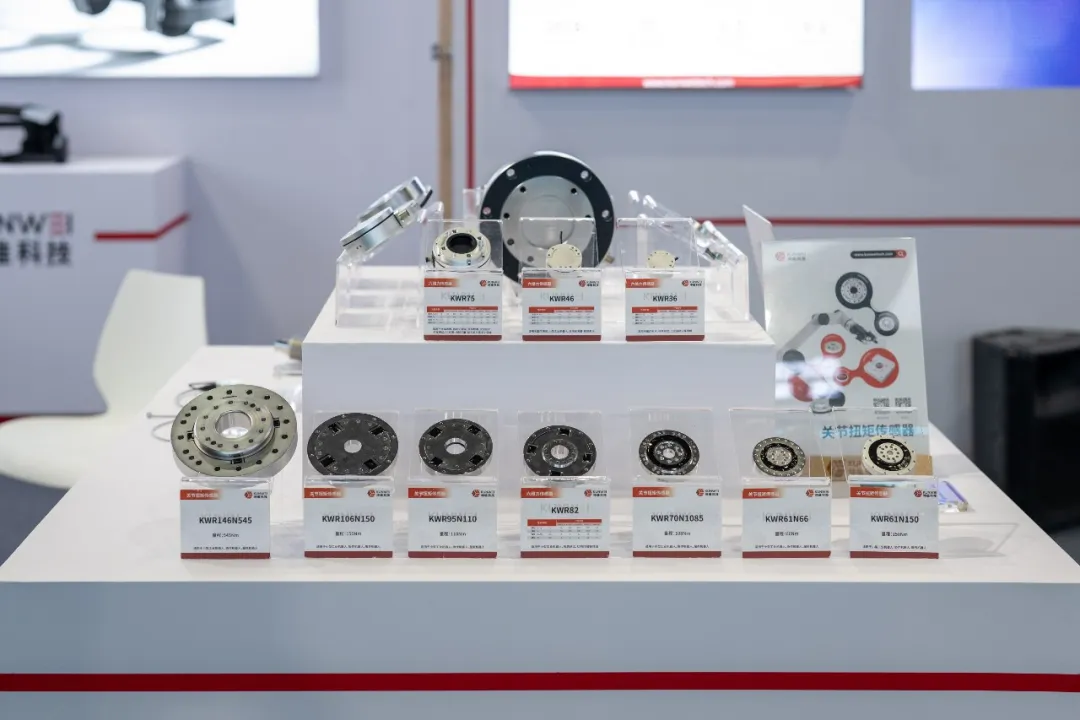
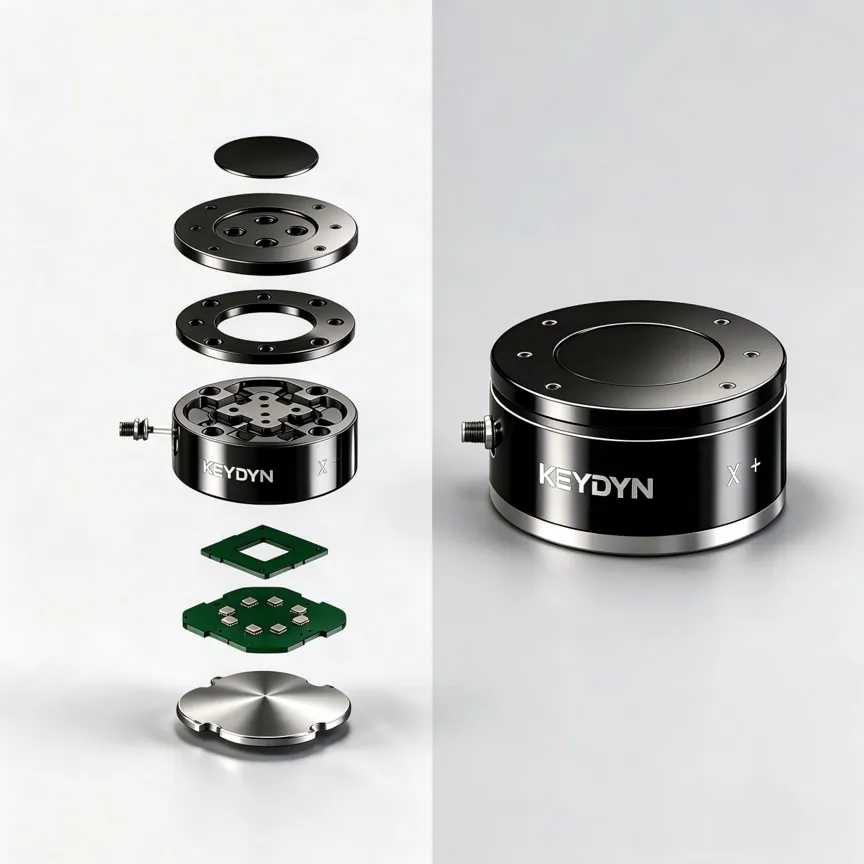
The six-dimensional sensors are capable of measuring three-dimensional force and three-dimensional torque, providing robots with more complete contact feedback.
This is also the reason why Li Guangdong focuses on gravity control.
He judged that as manufacturing demand for flexible production increases, more and more processes that rely on artificial experience will require force control capabilities. He even estimated that more than half of future production lines involving flexible materials may require force control equipment.
This judgement does not mean that all robots must install six-dimensional sensors, but rather that mindfulness will become an increasingly important capability as robots enter more complex contact tasks.
From the market point of view, Li Guangdong mentioned that the first half of this year's report by Frost Shalivin showed that according to downstream robot installation quantity statistics, Huawei's share in the overall robot six-dimensional sensor installation was 58%.
For Li Guangdong, market share not only means that the company has gained some customer recognition, but also means that it may have the opportunity to further participate in product standardization and scale-up.
He expects not only financial returns, but also that Huawei can become a leader in this segment and become the first company to list six-dimensional sensors.
The investment is also in line with the Group's own direction of operations.
The value of the precision processing business is transforming the manufacturing experience into higher product added value. According to Li Guangdong, the gross profit rate of the precision processing business is expected to reach 20% this year. If this trend can continue, it can be extended to a higher value chain, and there is already support at the business level.
Robots provide a new space for this ability to migrate.
As opposed to directly building a brand-new robot, cutting from key components allows Foxconn to leverage its existing engineering and manufacturing base more directly and gives it the opportunity to participate in the supply chain for different robot products.
It's the only stop on this path.
But the real value of investing in a sensor company depends on whether it can get into Foxconn's own products and product lines. Li Guangdong revealed at the end of October's Tech Day held by Foxconn's parent company, Huaihai, that the latest mechanical arm is already equipped with Huawei's six-dimensional sensors. From investment to procurement, from capital relations to product applications, the group is trying to turn this transaction into a longer industrial chain.
The six-dimensional sensors of the latest mechanical arm, which are equipped with a six-dimensional power sensor, are the signals that the link begins to close. Shareholders' relations resolve the capital connection, product applications establish supply chain connections, and subsequent mass production will test whether the two sides can convert technological advantages into manufacturing capabilities.
For Li Guangdong, the 10-minute decision is about to begin receiving longer verification on the production line.
02.
Robots are entering the production line, difficult to detect in human hands
Foxconn didn't start using robots today.
Li Guangdong revealed that in recent years, the automation rate of different factories within the group has been between 30% and 58%. The first thing to achieve automation is some repetitive, dry, or high-security risk processes, such as work beside presses.
These tasks have one thing in common: the work content is relatively definite, the operation paths are easily standardized, and robots can continue to operate according to preset procedures.
As automation progresses from these processes to more complex assembly links, the difficulty begins to increase significantly.
So large a manufacturing system that can provide a rich application scenario for automation, on the one hand, but also means that even a small improvement in the process could involve complex processes, equipment and production organizations.
The question for Li Guangdong is, can robots move from simple transportation and onloading to the most difficult and most reliant link in the assembly line?
Mobile phone assembly is a prime example.
On a mobile phone production line, workers may be in charge of a fixed position for a long time. It seems to be just putting one part into another part, but really skilled workers know what angle the part should enter, how much force it needs to be applied, and how to fine tune it when it encounters resistance.
These experiences have been difficult to write down in a comprehensive manual.
A worker is skilled, and it is natural to make judgments in his hands. Changing a person, even after receiving the same training, may not be able to achieve the same effect immediately. Moreover, people's hands get tired, and long repetitions of precision operations can also cause fluctuations.
Foxconn has attempted to replace parts of the assembly with industrial mechanical arms, but some procedures have always been difficult to achieve.
For example, fitting a headset to a designated location. The mechanical arm can rely on vision and positioning systems to find targets, or move accurately to the front of the headset. However, the next action is not simple: the force is too great, the softness of the headset can deform; the force is insufficient, and it cannot be installed in place.
The position is correct, but the mission may still fail.
For skilled workers, this may be just a natural adjustment of the arm; for traditional mechanical arms, it may mean redesigning equipment, increasing positioning steps, or even splitting a plant into two or three plants.
The equipment has changed, the tempo doesn't have to be faster, and the system doesn't have to be more flexible.
This exposes the boundaries of traditional automation. It is able to replicate certain actions well, but it is not necessarily able to deal with the constantly changing contact states in the course of the action.
In order for robots to enter these processes, they need to take control of the forces rather than the appearance of humans.
Location control solves where the pump goes, and force control solves what happens after the pump comes into contact.
When the mechanical arm is in contact with an object, the six-dimensional force sensor can provide the corresponding force and torque information. The control system thus determines the contact state and adjusts the movement to a certain extent. This gives the robot the opportunity to handle tasks such as insertion, compression, tightening and flexible material assembly.
It doesn't automatically give robots the full experience of skilled workers, but it can transform some of the past hand-held operations into engineering processes that can be measured, adjusted and replicated.
This is also the real meaning of power control entering manufacturing. It essentially isn't just about adding a sensor, it's more about transforming a long series of difficult to automate processes into problems that can be engineered to solve.
According to the experimental lines described by Lee Guangdong, about 30% to 40% of the connections in the mobile phone production line are likely to be replaced by flexible production equipment, robots or mechanics, and the efficiency rate will increase to close to 10%.
These data point to a noteworthy change: whether robots can access flexible assemblies not only affects which processes can be replaced, but may also affect the quality and cost of the entire manufacturing process.
In large-scale production, manufacturing efficiency is not only determined by the speed at which the equipment operates. Whether the equipment is stable, whether the product is qualified once, whether it needs to be returned to work repeatedly between processes, all have an impact on the final cost.
It is difficult to really change the economy of a factory if a technology can only allow a mechanical arm to complete the movement but cannot guarantee the quality of the product. On the other hand, if power control can reduce errors in complex assemblies, its value is not only a replacement for manpower, but can also come from improvements in efficiency, process stability and production flexibility.
It needs both to find new parts businesses and solve long-term problems that are difficult to automate in its own manufacturing system. The former gives it the opportunity to expand upwards while the latter provides a real-world technical verification environment.
For an enterprise with a large-scale production site, a robot is not enough to complete a task in a demonstration. It must be able to run continuously, adapt to process changes, meet quality requirements, and ultimately through cost accounting.
These requirements are precisely where Foxconn's long-term manufacturing experience can play a role.
03.
First solve the task, then discuss the form
Before deciding to invest in Huawei, Li Guangdong also studied another technological route: tactile skin.
The technology allows robots to perceive contact on a larger scale, but he studied for a while, struggled for a while, and finally counted a check, choosing a force control route, and choosing a leverage.
Li Guangdong believes that six-dimensional sensors are a more realistic option.
The reason for this is that industrial applications typically have clear task boundaries.
A robot working in a factory doesn't necessarily need to sense all the body's contacts as humans do. It needs to be in a specific working position, accurately judge the force and complete the assembly according to the requirements of the process.
Six-dimensional sensors can serve specific industrial tasks directly, and their cost, maturity, and maintenance requirements are easier to evaluate when combined with specific applications.
What capabilities can solve the current problems, what programs can run steadily under existing conditions, and what products can be deployed on a large scale at reasonable cost, all determine the sequence of technological deployments.
Li Guangdong's judgments of the robot market are based on similar logic.
He argues that commercial applications such as industrial manufacturing typically have relatively clear tasks, operating environments and input output standards, and that companies can judge whether a robot is worth deploying based on efficiency, quality and cost.
Family scenes are much more complex.
Robots enter the home not only to complete tasks, but also to cope with changing environments, close contact with humans, and safety, maintenance and use habits. Consumers may not be willing to pay high prices and learning costs for a particular function.
Consequently, the maturity of commercial applications will inevitably precede the expansion of the consumer market and will further contribute to the progressive maturation of relevant technologies, supply chains and costs.
This judgment is also reflected in the selection of robot-specific product routes. Li Guangdong suggests that Foxconn's current internal preference is to make wheeled robots first. This is an intuitive judgment of the needs of industry at the present stage.
In factories, many tasks take place on relatively flat surfaces and relatively defined work areas. For these scenarios, wheelbases are usually easier to achieve steady movement, structure is relatively simple, and cost and maintenance are easier to control.
Like buying a car, the car is a machine, the focus is on getting people to their destination. Sitting comfortably is functionality, not pleasure. The same is true of robots. The robots in the factory do not need to be like humans, they need to be stable, precise, accounted for.
For the manufacturing industry, a robot is first and foremost a production tool. It requires stability, precision in completing tasks, adaptability to production rhythms, and the creation of measurable value in long-term operation.
From this point of view, different forms correspond to different mobility capabilities, cost structures and application boundaries.
When robots move from simple mobility to precise operations, tasks such as grabbing, inserting, tightening, and mounting involve contact with force. The value of force control is helping robots handle these movements more steadily.
This also allowed the group to choose a clear path, starting with tasks capable of validating value in an industrial scenario, then gradually expanding the scope of application; first solving specific operational problems, and then discussing what form robots should ultimately adopt.
According to Li Guangdong, the number of robots is likely to grow faster between 2026 and 2027, while the real industrial outbreak may be between 2028 and 2030.
Whether robots can be deployed on a larger scale at this stage will ultimately depend on the maturity of the technology, product costs, application requirements, and actual operational effects.
This means that the most important thing at this stage is for robots to run first in real production environments.
Because when robots enter the factory, the value of power control is no longer just a technical parameter. It also depends on whether the craftsmanship can be standardized, production stability maintained, and whether operations that have relied on the experience of skilled workers in the past can be transformed into replicable engineering capabilities.
In today's focus on physical intelligence, real production lines mean another layer of value.
The contact, power, and motion feedback that a robot generates while performing a task can provide data for subsequent control optimization and model training. These information can further reflect what interactions the robot has with the physical world, rather than merely recording what trajectories the robot has traveled through.
However, the sensors do not automatically produce high-quality training data. Whether the data is useful depends on whether links such as collection, marking, task design, model training and actual verification can be connected.
The potential advantage of the group is that it has real manufacturing scenarios that allow robots to be tested in specific tasks. If these applications gradually accumulate replicable data and engineering experience, they may provide a greater basis for subsequent robot generations.
This is different from simply making a robot.
For a robot company, the completion of a demonstration can only prove that it has the corresponding capability under certain conditions. For a manufacturing company like Foxconn, it is more important to embed this capability into a production line that can continue to operate and allow it to be repeatedly verified under different products, processes and production conditions.
Ten minutes of throwing money, just an important external investment in the group's robotics edition. It's not big, but the direction is clear: throwing power control, throwing headlines, throwing upstream. Behind this, Li Guangdong is proving how future robots can do things stably and better in its familiar factories, with higher profits.
04.
What role does Foxconn want to play in the robotics industry?
China already has a large number of robotic enterprises, and Foxconn is also putting robots in place. It is easy for the outside world to understand that Foxconn is ready to launch its own robot brand to compete with existing manufacturers.
However, the plans described by Li Guangdong point to another possibility.
He believes that the entire group has production lines, processes, production data and clear good-rate requirements to know which tasks can be assigned to robots, which links still have technical barriers, and whether a technology can be overestimated on the manufacturing site.
This ability is not easy to replicate.
For a robotics startup, the technological breakthrough in the lab is just the beginning. Once a product enters the factory, a number of issues such as process adaptation, stability, production consistency, supply chain management and customer delivery need to be addressed.
If an enterprise lacks its own manufacturing system, it may need to invest heavily in building factories, organizing supply chains, and gradually accumulating mass production experience. Even if product technology is feasible, it may not be able to quickly reach the delivery level required by industrial customers.
The long-term manufacturing capabilities we have accumulated can help robotics companies shorten this process.
Li Guangdong revealed that one of the goals of the company, founded in late September with partners in Beijing, is to provide manufacturing capacity to domestic robotics companies. For small-scale robotics companies, building a complete production system on their own is not necessarily economical; if they can use mature manufacturing platforms, there is an opportunity to invest more resources into core technologies and product development.
In Li Guangdong's plan, support for invested enterprises should not be confined to shareholder relations, but can form three interconnected roles: shareholders, suppliers and exporters. Becoming a shareholder means connecting capital; being a supplier means connecting products and manufacturing capabilities; and being an exporter means reaching more markets through the Group's factories, customer relationships and networks.
These three roles are not natural to form a closed loop. Capital investment does not mean that products must be purchased, and entering the supply chain does not mean that overseas markets can be opened up. They still need to be verified by product quality, delivery capacity and customer demand.
It doesn't necessarily have to compete with robotic enterprises in the same terminal market, but it can work with robotic enterprises through core components, large-scale manufacturing, application scenarios and international conversion channels.
A concrete example of this is the investments made by Liu Wei.
After Li Guangdong's investment in Shenzhen, Shenzhen's power sensors entered the mechanical arm of Foxconn and demonstrated their application at the Science Day, and subsequently accumulated experience through production verification and mass production applications. If this collaboration could extend to more products and customers, Foxconn would not only be an investor, but could also be a connector for technological applications and scale manufacturing.
This is more of a test of Foxconn's ability to integrate the industrial chain than a mere increase in investment.
05.
Link to the Future
Returning to Li Guangdong's original words, the group has made more than 58% of the world's computers, but does not want the future to be just a shell.
This is not about abandoning the manufacturing capacity that has accumulated over the past four decades, but the fact that the Group is trying to bring these capabilities into higher value, higher technological thresholds.
From simple assembly to precision machining, from top-down to flexible operations, from assembly processing to core components such as six-dimensional sensors, from its own production lines to mass production by more robotic enterprises and overseas, Foxconn is trying to transform the original manufacturing system into a new advantage for the robotics industry.
It takes time and orders to verify whether it can actually achieve this transformation upgrade.
But at least in Li Guangdong's planning, the robot story isn't just about what kind of robot to build, it's about how to use the existing manufacturing base to find a more valuable place in a new industrial chain that is forming.
For a company known for its large-scale manufacturing, this is perhaps closer to what it's really good at than chasing some kind of robot shape.