Last night, when Archon Robotics released the full-body control model Anchor 1, a real-life video was released: a humanoid robot raises its arm, a one-shot of ANCHOR's six letters: straight, arched, swiftly twisted, trajectory blurred.
The project's homepage also has a playable demo: enter any line of text, and the robot in the simulation will write it out, leaving no ink and pen and ink in the space. We also tried to enter "JI QIZHIXIN", and the robot drew the characters out completely in the simulation environment.
Four times the speed of video
Writing is not very difficult to move, but it is the most straightforward test for the "right" one. Hands are a few centimeters, the words are twisted; body glance, the pen is broken.
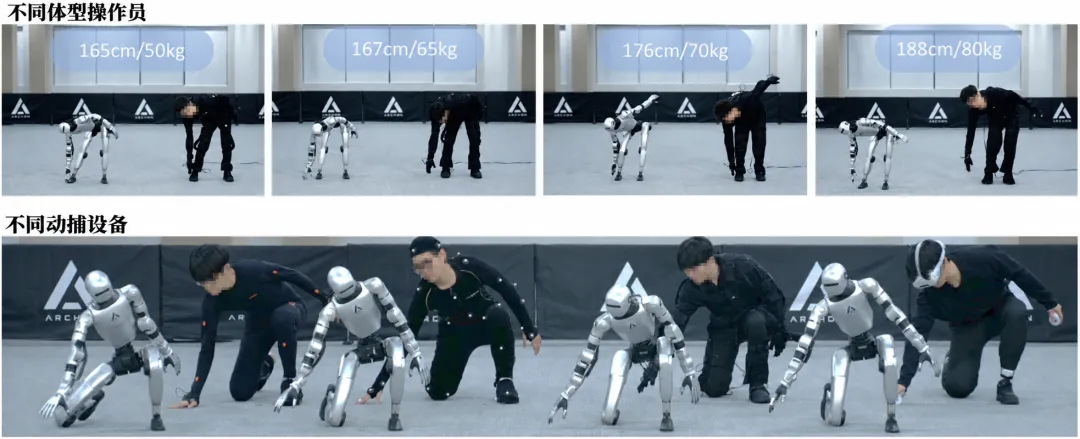
More interesting than writing is another group of videos on the homepage. Four operators, ranging in height from 165 cm to 188 cm, weighing from 50 kg to 80 kg, then use motion-capture devices to drive the same robot: on their knees, on their knees, on their sides, touching their ankles, moving their feet.
This is one of the most direct ways that humanoid robots can learn movements today: people do it first, and robots do it next. Whether it's remotely operated sample data, or movements that capture recorded human data, it takes the "follow-up" step to become the movements on the robot and then take the larger model to train the upper layer.
The problem is that this step of "follow-up" is different. The body proportions of humans and robots are different, the joint structure is different, human movements must first be "translated" into movements that robots can perform, the translation is slightly biased, and the robot's hands are not in place.
In the future, the source suggests a set of contrasts. Operators are standing and turning their legs, and a mainstream open-source, full-body controlled model-driven robot can't lift its legs; the operator is bent to the ground enough that it begins to wobble. The controller is unstable, and the samples taken back are biased, and the upper models are also biased.
Anchor 1 has to deal with this "do-as-you-want" link. It is positioned as the System 0 (S0) layer in the source system of all-body intelligence architecture, which is responsible for making instructions accurate and stable to the "brain" that moves the whole body. After all, robots are addicted to not only smarter brains, but also to a brain that can arrange the movements.
Several sets of experimental data showed an improvement in the accuracy and stability of the Anchor 1: in 72 full-body operational machine tests, its wrist and ankle position errors were about 28% and 39%, respectively, lower than previous best-performing countermeasures. Using it for remote operation, the sample collection success rate for paperboard tasks was increased from 37.5% to 98.0%, and the hourly sample success rate increased from 9 to 43 points.
The release of this industry background is also noteworthy. From the end of January this year, Figure joined System 0 in Helix 02; in February, Invidia opened up the full-body control base model SONIC, which uses more than 100 million human body movements to capture data training, supporting full-body remote operation through PICO headers; subsequently, Google DeepMind, Intelligent launched a series of related full-body control models, followed by a series of full-body control papers that popped up on arXiv in October, where the industry's eyes were shifting from "brain" to "brain" and from "performance" to "brain".
After the release of Anchor 1, we read this 32-page technical report carefully to try to answer three questions: How does Anchor 1 "grade"? How is this "grade" measured?
Anchor 1: Precise and Stable Humanoid Control for Whole-Body Manipulation
Address of the paper:https://arxiv.org/abs/2611.00193
Address of the project:
Anchor 1
A "small brain" designed to operate precisely and steadily throughout the body
In order to create "level" and "stability" at the same time, the design of Anchor 1 revolves around three questions: how to give instructions, how to use the extra freedoms, and how to correct deviations in execution.
The answers to the three questions are five tipping points, rigorously screened training data, and error feedback with action coding.
Focus on five points: more precise control of the whole body
The teacher moves a couch, and no one dictates "Left knee bend 63 degrees, waist tilted 20 degrees" and only says "Left hand here, right hand there, foot steady". The rest of the time, the body itself will find the best posture.
Its instructions contained only five parts: the pelvis, the left wrist, and the right ankle, each of which gave the position and direction of the target.
These five parts determine the operation and support: the wrist determines whether to reach, hold, the ankle determines whether to stand unstable, the pelvis determines where the body as a whole goes.
With fewer restrictions, the controller provides more room for adjustment, allowing it to move its hands and feet more accurately to the target by bending, kneeling, and transposing. The idea of these rare commands has been explored before, such as MaskedMimic and HOVER in Ingrid's work that attempted to give only some of the key parts of the target to the controller. The difference with Anchor 1 is how to "translate" human movements into these five points.
A common practice in the industry is online redirection: every time an operator moves, the system tries to resolve the robot's nodes in real time, and then delivers the results to the controller.
The paper contrasts human movements recorded with the same PICO: configurations that rely on online redirection deviate from the original movements when the arm is stretched, and instructional mutations occur, both disrupting tasks and causing unnecessary shock to the joints.
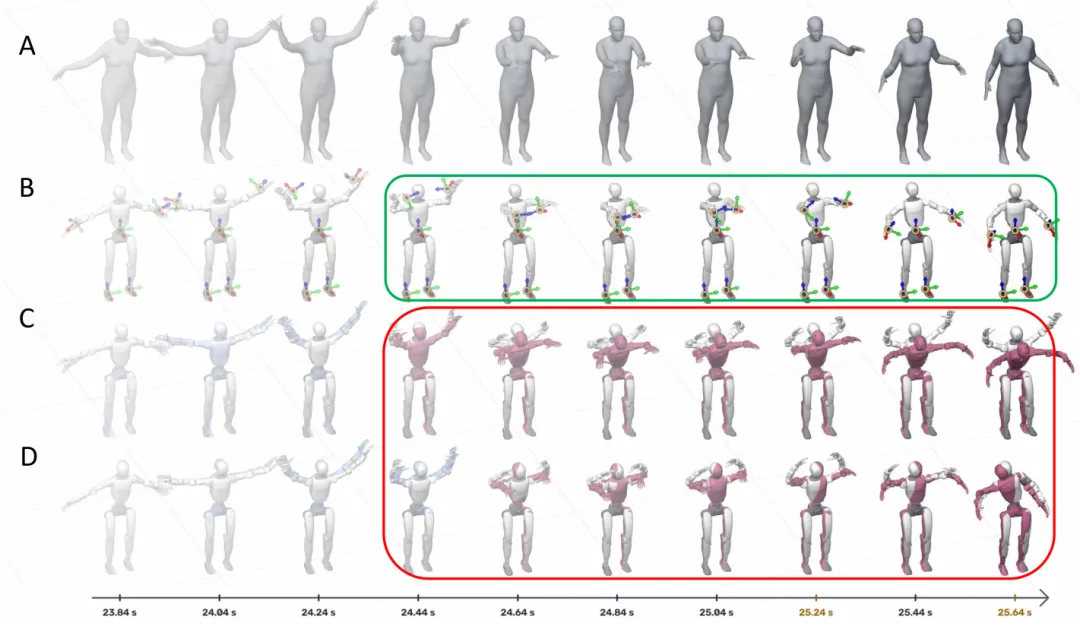
The same human movement, the execution effect of three control modes. The four lines use the same human movement recorded by PICO, and the time is pushed from left to right. A) Human reference movement; B) Anchor 1, directly with five focal points as input, without redirection; C) D) A mainstream open-source full control model, combined with reverse-motion-based redirection tools and learning-based redirection tools, first converts human movement into robotic movement and then performs it.
The other route is to bypass redirection and directly encode human movements to the controller, but the trajectory of the hand will also be distorted if the general parameterized human body model is used, ignoring the operator's own body proportions.
Anchor 1 follows the third path, which is closer to tapping: the system first identifies the T-position of the operator and the robot, calculating the scale ratio of each limb, rotational alignment and position deviation, and then uses this set of fixed parameters to calculate human movements at the scale of the robot without solving the angles of the joints.
In the future, the source uses a 16 cm radius drawing circle to test the accuracy of this reversal: Anchor 1's wrist trajectory is 80.2% less distorted in the direction of motion compared to the input of the parameterized human body model, and the drawn circle is closer to the original human hand.
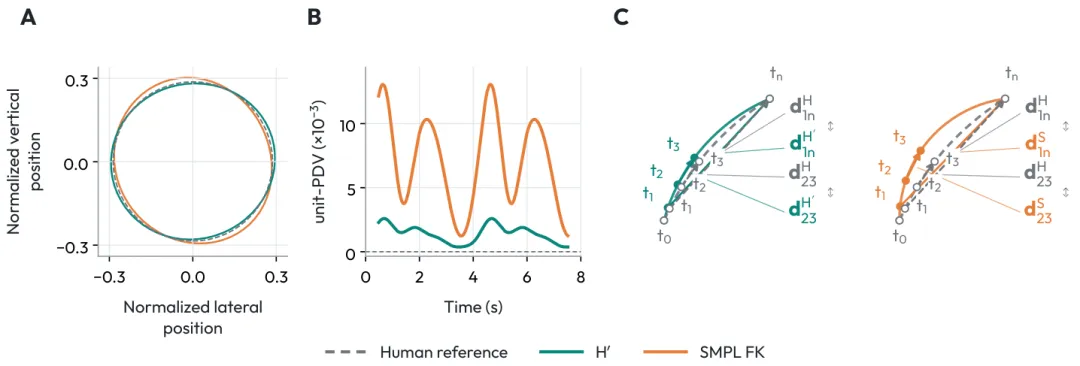
Comparison of the trajectories of the wrist in a circular motion
Reducing online redirection has also led to ease of deployment. The paper shows Xsens inertial motion capture, CHINGMU optical motion capture, and the four input devices known as PN-LINK wired inertial motion capture and PICO VR, although their frame representations and data quality vary, all of which can be directly converted into five focus points for controllers. Operators ranging in height from 165 cm to 188 cm and weight from 50 kg to 80 kg can also handle them directly. At the same time, Anchor 1 requires only 60 milliseconds of future instruction, while participating in each program takes 80 milliseconds to nearly 1 second.
How to use freedom, according to data
Five points solved the problem of "how to give instructions", while only five points meant that the same set of instructions could be applied to a wide range of body postures. The same applies to reaching down, bending, bending, kneeling, or slipping with a twisted posture. More freedom is a double-edged sword: using your hands more straight, using them less, makes your body unstable.
Anchor 1's solution is to work on training data, just like a teacher's apprenticeship, to demonstrate consistency.
The team assigned an off-line redirected robotic movement to each human body movement: during training, five focus points were used as inputs, and the paired robot movement was used to provide supervision and rewards, telling the model that "in this case, the body should cooperate like this". These paired data were automatically checked, eliminating long-standing gaps, joint mutations, collisions, cyclic vibrations, and penetrating ground segments; the self-extracting data was repeatedly checked through a round of cores to check the quality and correspondence of the original human body animation.
The final training set contained 406,222 movements, approximately 1,081 hours, of which 77% came from customized motion capture data, the rest from public data sets such as AMASS, OMOMO.
There is a clever partitioning. Redirection is done from the real-time link when deployed to the offline link before training. Redirection is done offline, there is time to check, there is an opportunity to remove bad samples; redirection is done directly with five focus points when deployed, no longer affected by redirection errors, and also saves corresponding computational costs and delays.
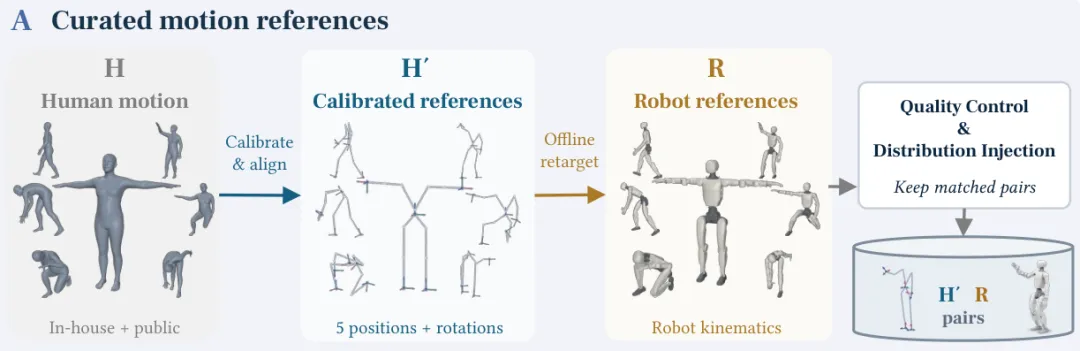
Build and filter processes for matching human and robot data
It's a long way to go.
Instructions allow deviations in execution as well. When the robot bends, the hands and feet always deviate slightly from the target, and the controller needs to know the deviation at any time in order to pull back in time.
There are roughly two ways in which existing programs can obtain this redirecting signal:
Compressing the target action into a motion token, together with the robot's own state, gives the strategy how much deviation is deduced by the strategy itself. The token is compact, structured, and easy to learn upper-level models, but compression will lose details, and small residual errors are difficult to detect and correct.
Calculating the "objective and current state deviation" directly to the strategy, correcting the deviation signal most directly, but once this deviation is also encoded in the token, the same action will receive a different token in different execution states, and the top-level model will learn nothing from it.
We can compare driving navigation with "destination" and "how far away are you from the route now". If each deviation changes the destination, the navigation is messed up; a reasonable practice is to leave the destination motionless and the deviation is given separately. This is exactly how Anchor 1 is used: in the architecture of encoders, quantifiers, decoders, the tracking error of the wrist and ankle does not enter the encoder, but bypasses the token and is sent directly to the decoder that is responsible for the output. The token only describes "whatever you do", the error is responsible for "pulling back".
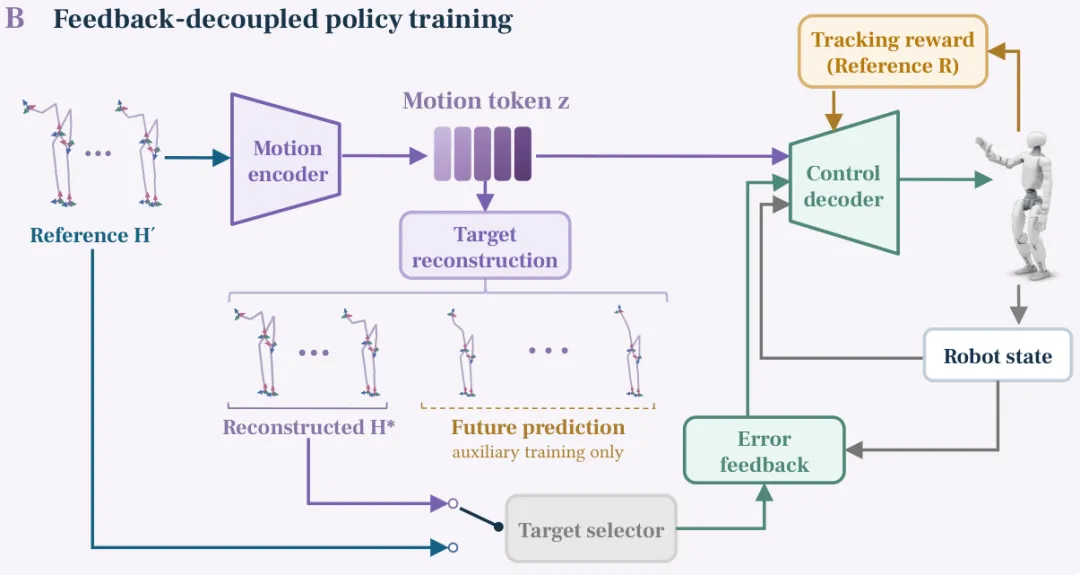
Anchor 1 controller structure: tracking errors bypassing the encoder and sending them to the decoder along with the motion token
Where does the corrected reference come from when the top-level model sends the token directly down, without a five-point point position attached?
Anchor 1 additionally trains a trajectory head that can reconstruct recent target positions from the token and use it to calculate tracking errors. Thus, the same controller has two command modes: remote operation and upper strategy that can send down five focus points, and upper strategy that can directly output tokens.
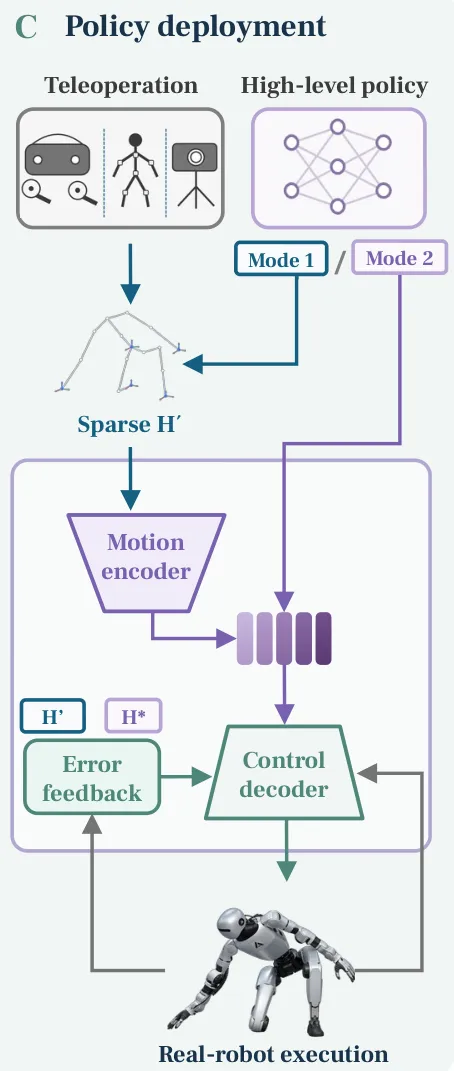
There are two command modes: remote operation and upper-level strategies that can send down five focus points, and upper-level strategies that can directly output motion tokens.
The dilution experiment demonstrated the value of this design. In MuJoCo's In-house simulation evaluation, the overall and local success rates were only 70.9% and 61.7% respectively after removing manifest error feedback; when the error was sent to the decoder, they rose to 88.7% and 88.4% respectively.
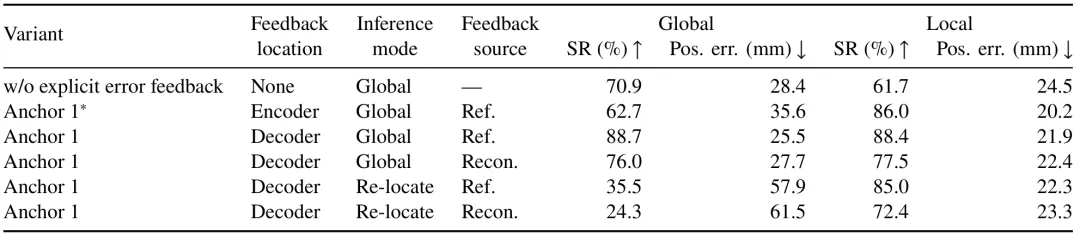
Dissolving experiments: where error feedback is sent, reasoning patterns and sources of targeted deviations, impact on success rates and tracking errors
Precision decreases slightly from reconstructing target computation errors, with the local position error in simulation rising from 21.9 mm to 22.4 mm. Therefore, the paper recommends that the five focal points of direct descent be preferred in remote-operation acquisition scenarios that require the highest precision.
A more rigorous measure
And then there's the second question: how is this "grid" measured?
In their view, the existing methodology for measuring "grade" has blind spots: the success rate of task-level assessments confuses perceptual and planning factors, it's unclear which layer is the problem; taking the average tracking error over the entire action covers up short but deadly biases.
It's a bit like a driving test. Subject 2 doesn't look at the average speed of the entire course, and pressing a line doesn't qualify. The source strategy is based on a three-track evaluation system that includes In-house, Public and Reachability, which examines body coordination, dynamic movement tracking, and arm reach and leg stability under different postures. In In-house Public, a move is only successful when the position of the wrist and ankle is not more than 10 cm across the entire course, with no more than 1 arc in the direction, and the rest of the body is not more than 25 cm apart.
The specific evaluations of the three tracks are as follows:
The In-house Track comprises 15,342 movements, covering 3,247 tasks, in which the team describes drying with arm movements, lower limb support and mobility, and combines motion capture instructions, specifically examining single-handed and double-handed seizures, hand-to-toe coordination, and hand-to-hand coordination.
Public Track selected 2,230 moves from four open data sets, adding more dynamic behaviors such as running, jumping and more.
Reachability Track The target point of the wrist in a given space, in five postures of standing, shallow, deep, backward, forward and half-knee, requires the robot to put its hand in place, hold it, and take it back, not to slide, not to take more steps, a total of 3,210 reference movements.
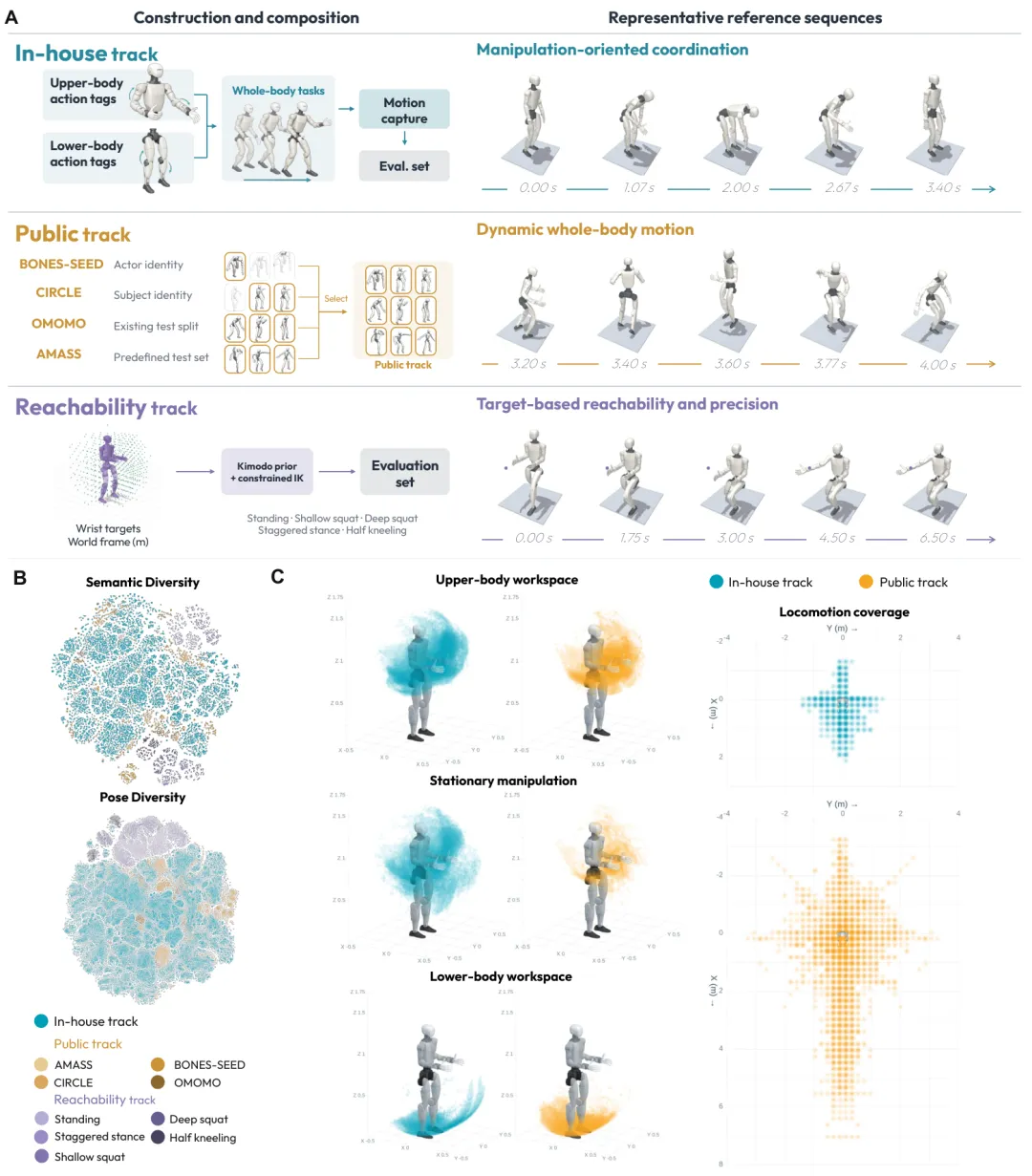
The three tracks that make up the evaluation of the future of Sourcing are the ways in which they are constructed and the actions covered.
All three Track evaluation moves are not part of the training.
Three Track examples of each movement, from left to right, followed by forward bending to pick up the combined movement ((In-House), dance movement ((Public), right knee-only kneeling ((Reachability))
In the simulation, Anchor 1 achieved the highest overall and local success rates on In-house Track, at 88.7% and 88.4%, respectively, and the lowest root position error in the horizontal direction.
On the more dynamic Public Track, the absolute success rates for each approach dropped significantly, with Anchor 1 remaining the highest; the paper also suggests that the approaches involved in the comparison may have been exposed to some public data during training.
On Reachability Track, Anchor 1 achieved the highest success rate in most gesture groups, averaging only 0.06 slips and 0.53 extra moves per movement.
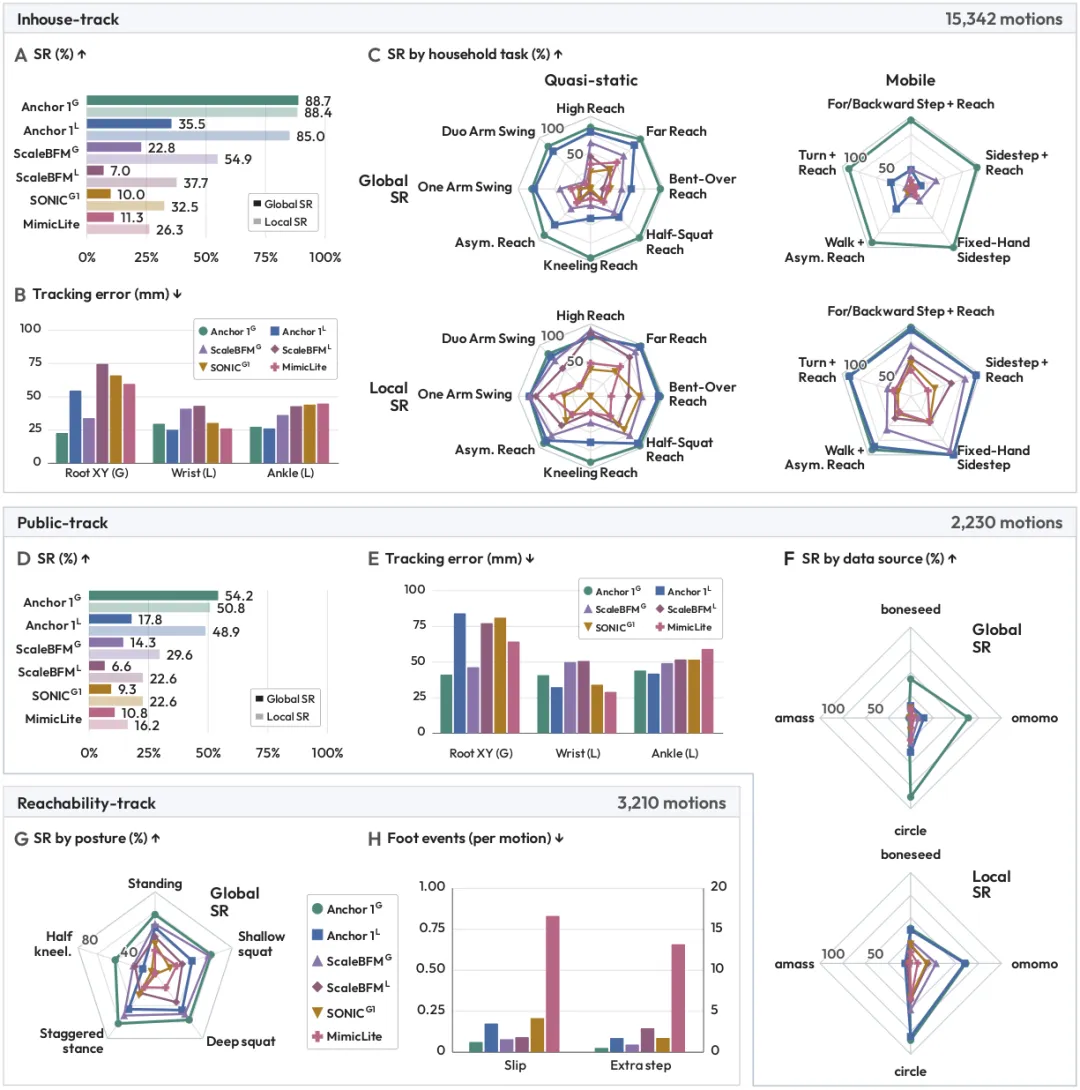
3 Track success rates, tracking errors and foot events
The more stringent the standards, the greater the gap
In addition to the simulation, the team performed two sets of machine-readable tests on the U-tree G1 humanoid robot: one set consisted of 51 steps of standing up to take action, examining the precision of the wrist position; the other set consisted of 72 body-readable actions selected by the action labels, covering seven steps of taking action, moving, balancing disruption, and hand-to-toe coordination.
In the Standing-Reach test, the overall position error of the wrist and ankle of Anchor 1 was 44.58 mm and 35.70 mm respectively, with the best comparison previously being 53.59 mm and 50.40 mm respectively.
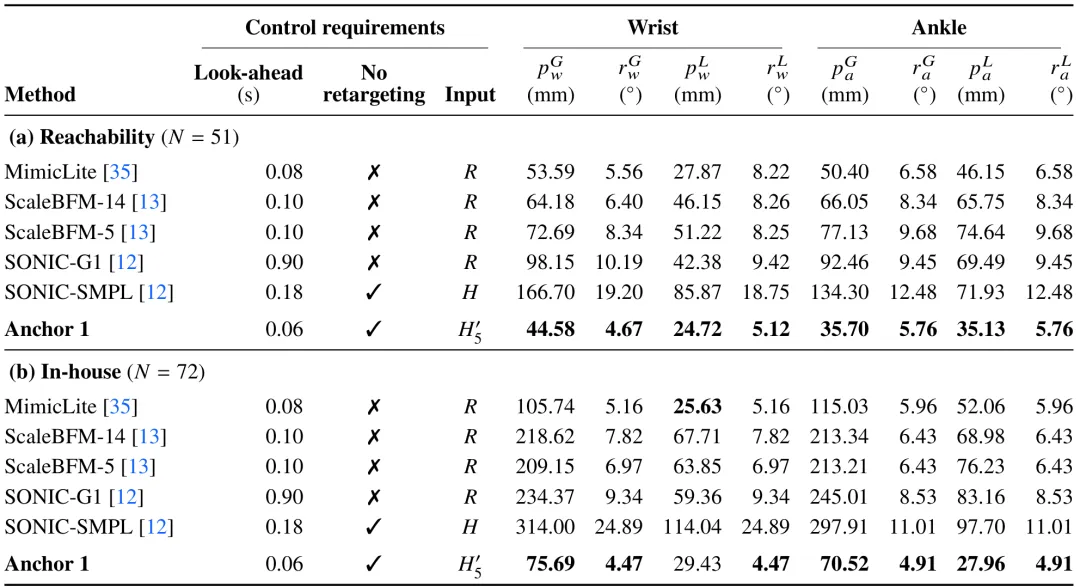
In-house and Reachability Track real-world tracking errors and reference requirements
It is noteworthy that this result was achieved under the conditions of shorter future instructions (0.06 seconds vs. 0.08 seconds) and no online redirection. Compared to other similar non-redirectional, direct-receiving human motion schemes, the wrist and ankle general error in Anchor 1 was reduced by 73.3% and 73.4%, respectively, and future instructions required only one-third of each other.
In 72 full-body operational movements, the team gradually relaxed the error threshold of the wrist and ankle from 10 cm to 25 cm, with the rest of the standard remaining the same. Anchor 1 maintained the highest overall success rate under all six thresholds, leading the strongest method by 41.2 percentage points on the strictest 10 cm threshold.
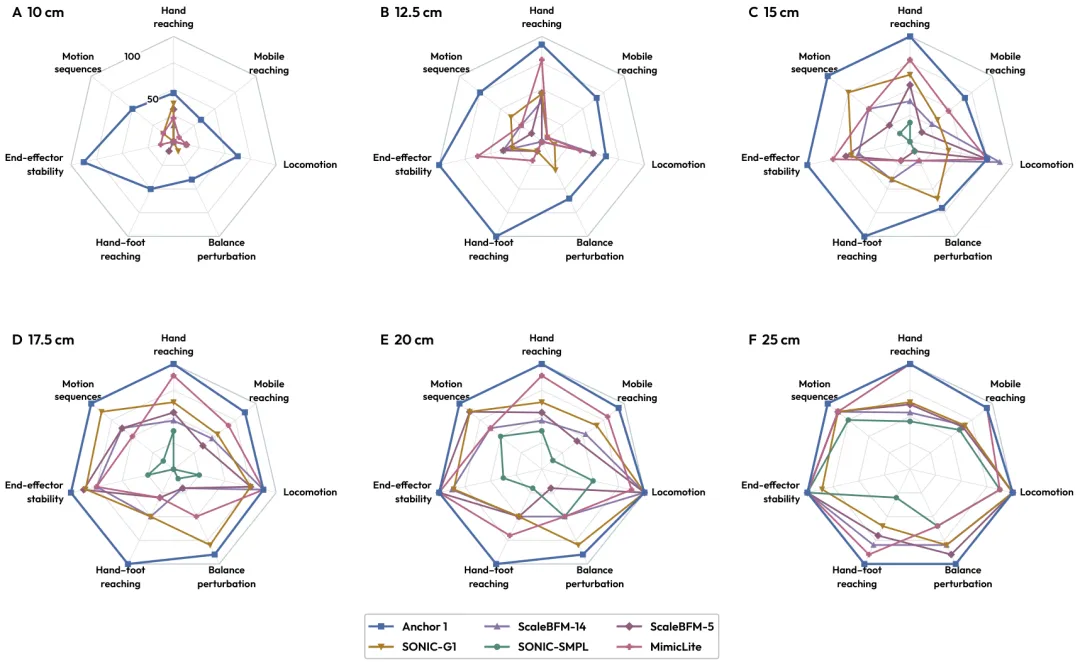
Success rates of classification under different error thresholds in true machine-to-body operation tests
The level of error, as shown in the table above, is 7th lowest in Anchor 1 of the 8 indicators: the overall position error of the wrist and ankle is 75.69 mm and 70.52 mm, respectively, about 28% and 39% lower than previous best-performing contrast methods, and the local position error of the ankle is 46.3% lower; the only exception is the local position error of the wrist and ankle, with one contrast method slightly lower than that.
This group of results also explains why the source strategy adheres to a stricter measure: threshold release, the gradual success rate of classification of methods depends on the threshold; threshold narrowing, the gaps appear. In the discussion section, the paper specifically points out that the threshold of success of loosening overshadows the real differences between controllers.
The brain is small enough to be strong enough.
Finally, there is the third question: what does this "grand" model mean for the upper layers? the precise value, which will ultimately come to fruition in two places: remote-operated data collection and the upper-level model acting autonomously.
In remote operation, the controller is incorrect, and the operator has to repeatedly make compensatory moves, which will affect efficiency, success rate and demonstration quality. As shown in the video at the beginning of the article, in small movements such as moving the side, turning the ankle, bending the ankle, touching the side of the foot, a mainstream open-source full-body control model can either reproduce small changes, or fail to lift the foot, or start shaking unstable, and Anchor 1 can fit the operator's movements.
Quantitative testing selected two tasks: inserting the carton into a designated area and removing the slippers from the lower shoe shelf to a designated location, respectively testing the landing point of the foot and the lower grip.
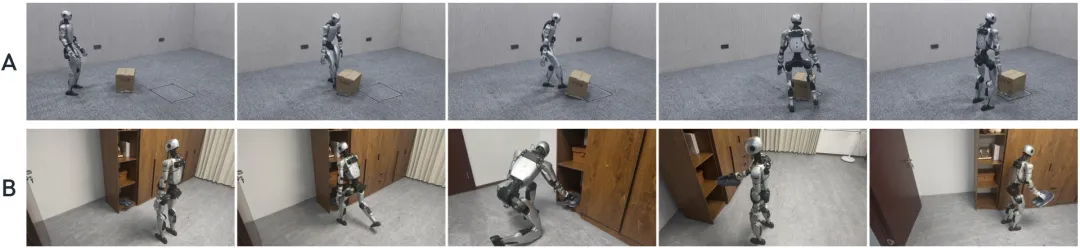
Self-executing process for VLA-powered plastic boxes and plastic sneakers
Using Anchor 1, the paperboard box collected 43 successful samples per hour, collecting a success rate of 98.03%; the slippers collected 62 items per hour, a success rate of 97.37%. The same task replaced the above open source model, with corresponding figures of 9 and 37.50%, 41 and 68.33%, respectively.
Efficiency of remote data collection
In autonomous execution, the team minimized the demonstration data collected remotely using an open-source VLA model GR00T N1.7, allowing it to execute a frozen Anchor 1 based on the language instruction, three-way RGB image and body state, output a five-point target position or motion token, together with a handheld instruction.
In 20 trials, the Anchor 1, which combined motion tokens as interfaces, with a rebuilding target correction, had a 90 percent success rate and a 45 percent success rate; and, in contrast, the same open-source model with tokens as interfaces, with 70 percent and 10 percent respectively. Another result illustrated the same problem: the error was encoded in a combined version of the token, and once the token command was changed, the two missions all failed.
The 45 percent success rate of sneakers also reminds us that autonomous full-body operation is far from being able to turn around. But this comparison clearly shows a link: the brain's precision, which leads to data quality and then to the success rate of the brain's tasks.
To turn "graduation" into an industry's public capability
The paper also frankly lists the limitations. Currently, the assessment is only done on a humanoid robot, with no rigorous comparison of different methods on different bodies; the five focus points describe only where the body should be, without describing the geometry of the object, contact strength and grip stability, so keeping up is not necessarily the same as holding things back; the accuracy loss from token rebuilding targets also needs to continue to decrease.
The next direction given by the team was to introduce object-relative goals and touch perceptions, and to connect whole-body control more directly to object interaction. In the whole-body intelligent architecture envisaged in the future, the S0 is at the bottom of what makes robots "stand still, be ready", with the S1 responsible for perception and decision-making.
Future Source plans to open the model weighting and deployment code for Anchor 1 by the end of 2026, as well as remote operation and demonstration data collection links based on PICO and PN-LINK, and support the deployment of mirrors, use tutorials and demonstration actions.
Back to the beginning of the video. A humanoid robot's sketch of ANCHOR, which is much more than just flipping and punching, points to what really matters next for the industry: from "performing" to "deploying" compared to the robot's ability to keep its hands steady and accurate in the process of bending, walking, changing postures. Anchor 1 gives an answer about "precision" and a measure of "precision". For an industry that is still looking for a scale-down path, both things may be equally important.
Until the end of the year, when the model weight and the collection links are opened up, this ability to "precise" will be handed over to more teams. By then, the humanoid robot will be able to write well, perhaps not just the six letters ANCHOR.