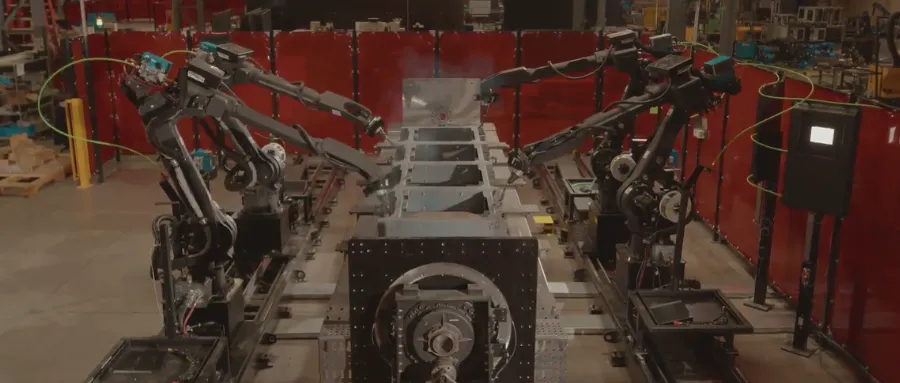
It is also in this context that aluminum is an urgent need for high-quality welding power in the automotive and parts manufacturing industries, according to data from the Institute of High-Industry Robotics Industry (GGII). In 2025, welding robots account for about 38% of the applications in the field of automotive and parts manufacturing, one of the highest robot penetration rates in all industrial sectors.
High reliability and stability are essential conditions for the production of welding components in automobiles, while meeting the demands of automakers to upload welding parameters in real time, MES, and digital controls that track the entire process. This difficulty, imported welding machines and domestic welding machines give different answers. To understand the field of these two answers, we must first return to a more fundamental question: what role does power play in welding this production line?
If you don't have a good power supply, you don't have a good welding rate.
There is a common understanding in the industry: the robotic body determines the accuracy and rhythm of the movement, the power determines the welding process quality welding speed, shape, depth, winding, consistency, these indicators directly determine the winding rate, and the burden ultimately falls on the winding power supply. The wire drip transition method and control technology directly determine the winding volume and shape, the short-range transition drip bridges break, and the winding particles are heavily attached to the tooling, installation and winding gun nozzles; the pulse transition, if the pulse drip transition frequency and control method are incorrect, the winding and high-range forming consistency cannot be guaranteed, they are closely related to the fixed arc density and control power supply stability.
The robot's movements were more precise, the welding power did not keep up, and the welding quality did not match the knot pattern. In other words, the power supply was the foundation stone of the welding quality, which is also the real issue of the problem.
The answer is clear: the automotive welding equipment market has long been monopolized by foreign brands. Influenced by the industry's technical habits and perceptions, many of the leading automotive companies preferred European-American import welding power supplies, the worst being joint investments, especially in the absence of a budget. But now the project structure in the automotive industry is changing: budget insufficiency, declining new projects, increased demand for inventory and upgrading of old production lines.
Workshop robot brands are mixed, early import pump communication protocols are closed, versions are outdated, new and old equipment conversion coupling costs are extremely high, cycles are long. Multiple workplace robots close to parallel couplings, strong electromagnetic interference can easily cause communication disruptions, signal delays, cause arc abnormalities, and arc instability.
Nowadays, the requirements for the management of assembly equipment of automotive enterprises are constantly improving, welding parameters are uploaded in real time MES, process tracking, process locking. Traditional imported grinding machine data interfaces are limited, do not support local information platform matching; data collection functions are not matched or selected expensive, it is difficult to meet the demanding digital control requirements of automotive enterprises.
Even after crossing this digital path, the technical improvement project faces another real problem: after the installation of the pump, it is not possible to keep up with the pace of continuous operation of the production line. The technical improvement projects mostly take advantage of the shutdown window implementation, the shutdown time is extremely valuable, long waiting for maintenance is very easy to lose the production line. The price of individual imported pump does not fall back, most import brands pump spare parts are expensive, easy to break down, the order cycle is long, service time is difficult to guarantee.
from the one with the palm of his hand to the one with the palm of his hand
What can the national welding power have crossed
The market position of domestic welding power supplies is changing. According to GGII research statistics, in the welding power competitive ladder, the first ladder manufacturers are represented by European-American import brands such as Volkswagen, Lincoln, and the second ladder is represented by the combined brands Tang Shan and Shenzhen Magnet.
The gap between the scales is objectively present, and high-end technologies such as aluminium alloy CMT-MIG steam are still dominated by European brands; however, the special constraints of automotive industry engineering projects coincided with the advantages of domestic steam engines, giving domestic steam engines enormous opportunities.
For example, MEGMEET is an open multi-protocol communication platform that supports mainstream protocols such as EtherNet/IP, Profinet, EtherCAT, DeviceNet, and is compatible with the vast majority of robot brands on the market; MEGMEET does not require secondary development; no additional costly protocol gateways are required; old output techniques can be maximized along the original robot and cable layout, significantly reducing the change in the resistance to debugging and debugging cycles.
Domestic localization service advantages are equally critical. Domestic localization technology teams, regional close support, communication modulation, process optimization, door-to-door service, etc. are far superior to imported pumps brands. The integrated, core spare parts localization supply chain is mature, spare parts prices are much lower than imported pumps, there is no need for long overseas orders, spare parts are locally available, the overall advantages of using low cost and short downtime are highlighted.
These advantages are solved by the fact that hydrogen cannot use hydrogen: can it be installed, run and connected to the MES without changing robots, without changing cables, without stopping production for a long time? But hydrogen can only get a ticket, the real threshold for the car manufacturer is never that the equipment is not cheap, but dare not hand over the production line to you, because once the hydrogen is on the production line, a minute of shutdown is tens of thousands of yuan of gold and silver, 60 JPH (60 cars on the line every hour) savings, shutdown fines, energy losers, no decision can be made.
What is more realistic is that European and American brands have been deeply engaged in this field for more than 20 years, and the word of mouth and the customer scene are there, even if the equipment has problems, decision-makers do not have to back down alone; and domestic sewing machines are going to squeeze into this scene, equipment can't be bad, price can't be expensive, service can't be slow, any ring goes off the chain, lost is not just a business.
How the National Sewing Machine Proves Itself
Cold-transition zero-flying high-speed servo arc welding technology is one of the core technologies that has long been used in China. The core technology in this field has been tightly controlled by European-American companies and domestic welding equipment manufacturers are rarely involved.
The problem to be solved is specific: the traditional low-speed short-circuit transition drip bridges are broken, the transition frequency cannot be increased; the transition frequency cannot be increased; the throttle speed is slow; the medium-thickness pulse coupling of the substrate is not precise enough to control the heat input during high-speed throttle; the throttle transition frequency is slow; the thermal deformation is easy. Magnet's RDT zero-speed throttle high-speed servo arc coupling technology, driven by high-speed servo motors, actively controls the entire throttle transition process, coupled with the precise adjustment of the parametric waveform, simultaneously presses the throttle and heat input, and increases the throttle transition frequency and welding speed.

The RDT technology combines dozens of technologies such as ultra-low-thermal input-current waveform precision control, throttle shrinkage prediction, energy leakage and efficient recycling, microsecond switching, multi-node industrial field interface control, high-precision high-frequency inverter motors and drive algorithms. Compared to traditional direct-flow coupling, the throttle decreases by up to 99%, basically achieving zero-flow; up to 200Hz is reversing ultra-high-precision transmissions, higher frequencies, more precision drives, and better brake formatting; ultra-low-thermal transmissions lead to very small coupling distortions, the thinnest of which can achieve 0.3mm ultra-thin brake pads and large-space brake thinners; micro-second information time delayed programming on the industry's main lines, more precision control, number stabilization, NFC support, high-technology data management, and disconnected power lines.
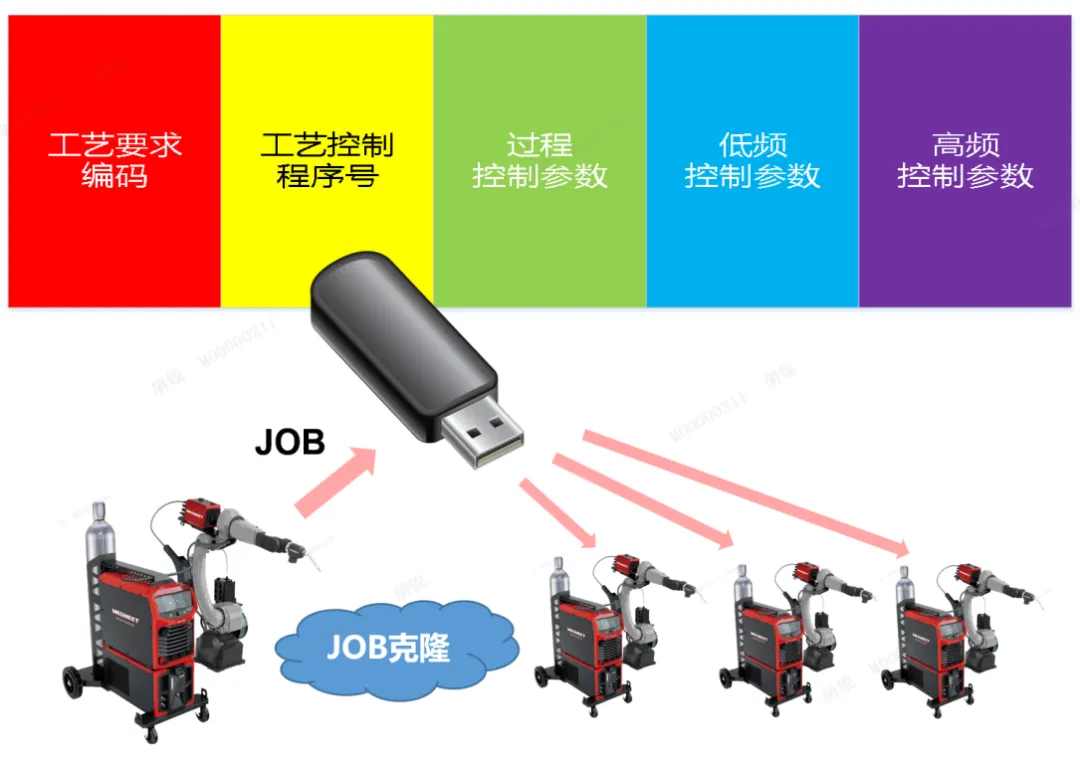
This set of capabilities has come to the scene, mainly in the areas of automotive white body, ultra-thin plates, new energy battery trays, heat-formed steel and 3D printing. To date, Magnet's applications clients in the automotive industry have included Automobile, General Motors, BYD, GE, 5G, Magna, Virginia, Shanghai HSBC, Rich Outech, Top, Construction Industry, Shanghai International Chongqing, Jiaowei, Jiaowei, Jiaowei, Jiaowei, Jiaowei, Jiaowei, Jiaowei, Jiaowei, Jiaowei, and others. The application scene covers the car body, chassis systems, backrestrials, torque beams, arm controls, seat frames, CBB frame frames, protective beams, battery frames, air conditioning systems, etc.
For example, in the case of the dashboard system, its over 200 high-frequency energy-controlled Artsen-series robotic pumps were put into service on the production line of Cosma International, a wholly owned subsidiary of the global automotive giant Magna.
The stability and reliability of domestic steam engines in the industrial sector has been greatly questioned, but the situation is changing with over 200 steam engines and a large number of the above-mentioned automotive parts customers on the Casma production line.
From aluminum accessories to aluminum core units to aluminum:
The next decade of welding power
The 200 robot domestic high-end welding machines on the Casma production line verify the domestic welding machine's ability to weld the current; while the changing demand for welding power supplies in the automotive industry determines who will remain on the production line in the future.
By 2026, the automotive industry's demand for welding power supplies has shifted from steady-state welding to high-precision dynamic control, multi-process adaptation and welding data management, with the core drivers coming from lightweight materials (high-strength steel/aluminum alloy) widespread adoption, refinement of new energy tri-electric systems and upgrading of production line flexibility.
The industry is shifting from the purchase of aluminum equipment to the aluminum process solutions aluminum cooperation model. Power suppliers need to be pre-engaged in the development phase of automotive enterprises to provide material aluminum process aluminum equipment integration verification support. The newly built Magnet's Yangtze Research and Development Center has a total investment of 650 million yuan, with 48 laboratories in eight different fields, more than 120 sets of professional testing equipment, including 3 3 mF wavelength darkroom and 1 10 mF wavelength darkroom.
In-depth use and management of welding data is another direction. Currently, most of the data is used for tracking and monitoring, but the use of data for quality prediction and process automation is still in its early stages. The Magnet SMARC system has accumulated a cluster control network of nearly 100,000 industrial smart welding machines.
The automotive industry is not going to disappear, but the way it's done is changing. The real opportunity for plug-in power companies is not in how much it costs more than imported brands, but in the real constraints that imported brands have on the automotive industry and techniques. When the profits are squeezed, every investment in the manufacturing sector has to be accounted for.