“ A transaction that is neither banned nor authorized
In the first week of November 2026, Sun received a signal that he was not very familiar with. On November 5, the Office of the Working Mechanism on Foreign Investment Security Review of the National Development and Reform Commission (NDRC) informed SoftBank Japan that it was prohibited from buying ABB's robot business in Switzerland for $5.4 billion.
Over the past two decades, the SoftBank founder has been accustomed to navigating regulatory loopholes. U.S. CFIUS has reviewed his acquisition of Sprint, European antitrust officials have released ARM transactions, and Nvidia's approval process can wait until the last minute.
In February 2026, the transaction was completed with Chinese operators focused on anti-monopoly proceedings and subsequently shifted to foreign investment security scrutiny. But the Chinese National Development and Reform Commission's refusal was quieter, more thorough, without a lengthy hearing, without an anticipated redress window, and only one conclusion: the transaction cannot proceed.
The future of ABB robots is once again a mystery.
01.
Why does this link have to be in China
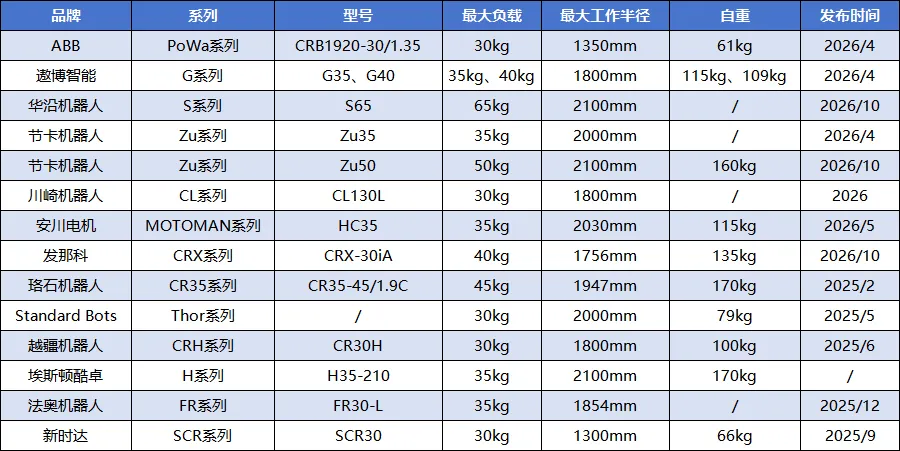
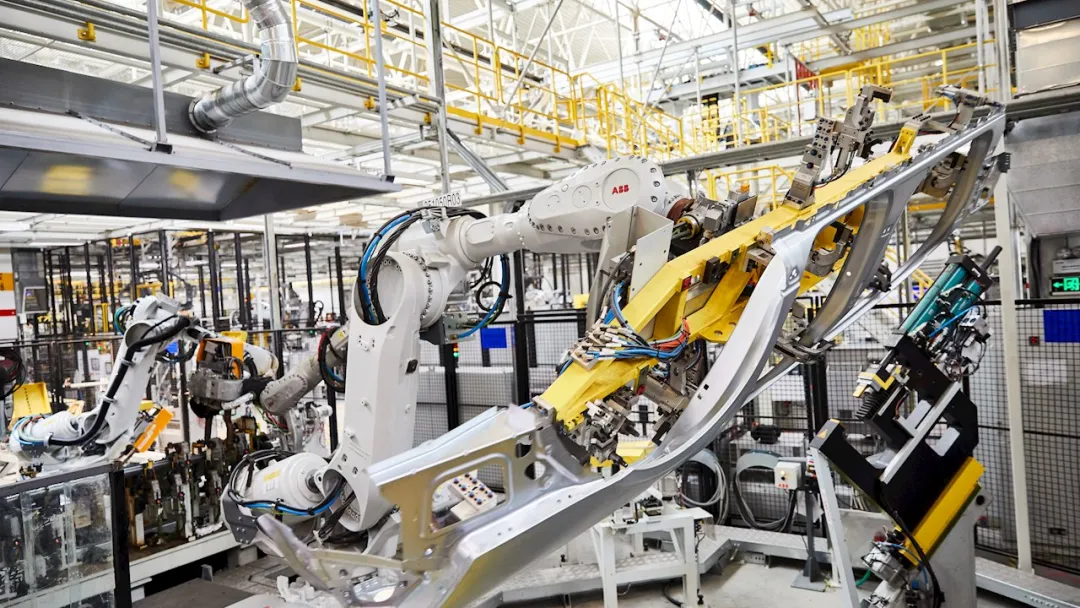
The answer is in China's installed capacity. IFR data shows that China installed 354,000 industrial robots in 2025, an increase of 20%, accounting for 59% of global installed capacity, and China is the core growth and driver of global robots. ABB has about 12% of the global market share.
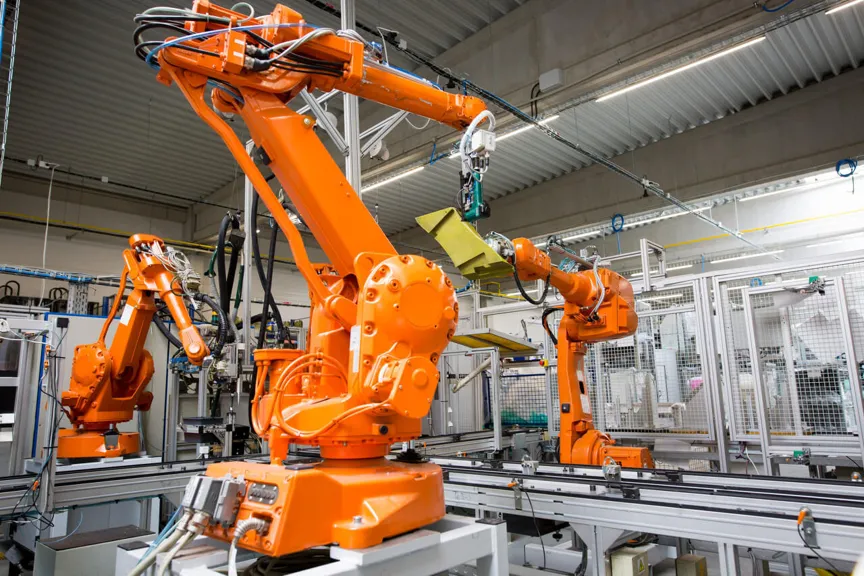
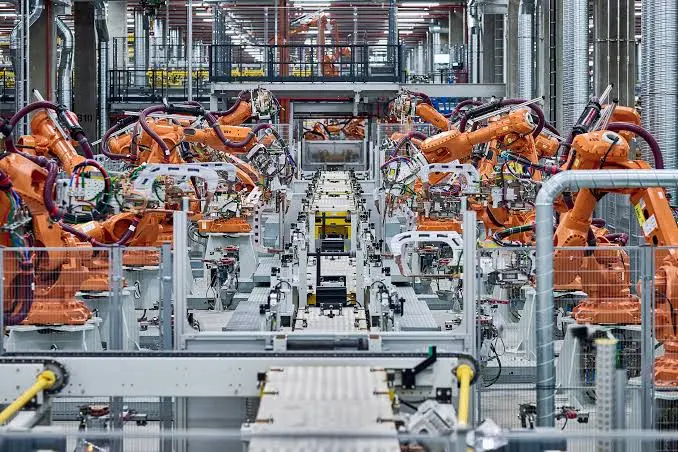
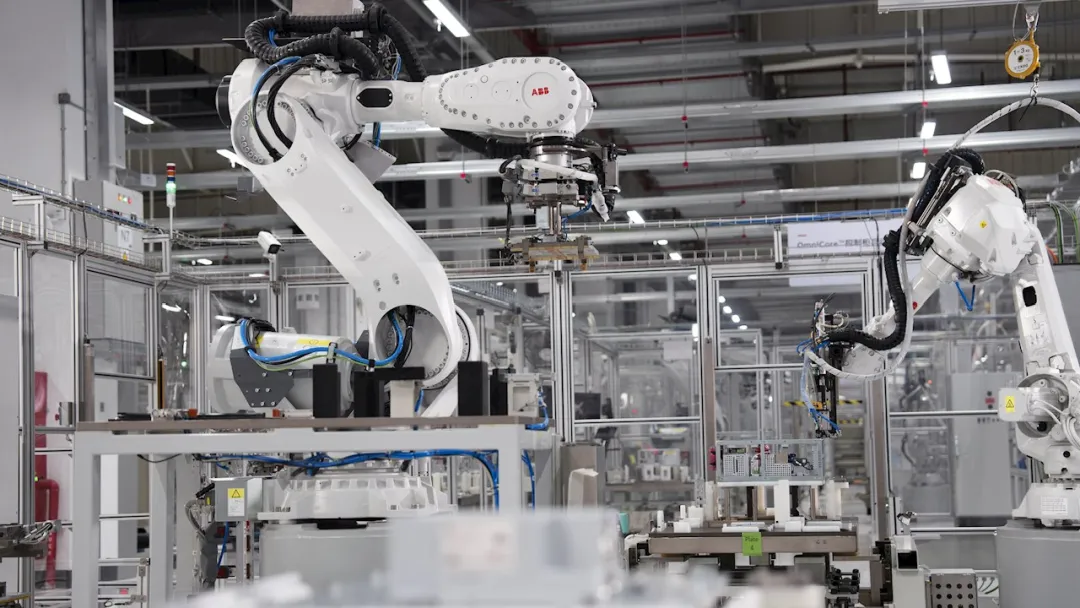
The focus of ABB's robotics business is on manufacturing plants, selling installations, spare parts, systems integration, and certification systems that are basically all tied to the manufacturing line. Since 2015, ABB has accounted for more than half of all new installations in China.
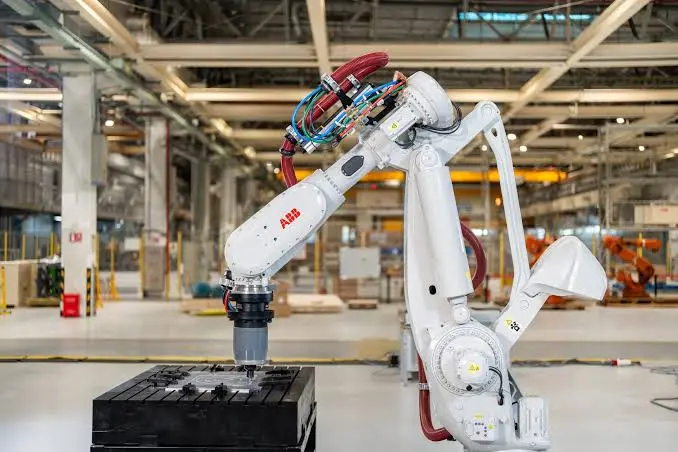
China accounts for more than half of the world's industrial robot installations.Over the last decade, the total installed capacity of ABB robots has been estimated to account for about 20% of total domestic robot operations.This link must have been in China.
The current core of China's foreign investment security review is the Foreign Investment Security Review Measure, which explicitly requires that, if investments relate to important areas of national security and will gain actual control of the invested enterprise, investors must make proactive declarations before making investments. Among them, important information technology and Internet products and services, as well as key technologies, are important areas covered by the measure, so it can be considered that the transaction itself has a clear compliance layer.
02.
What is it?
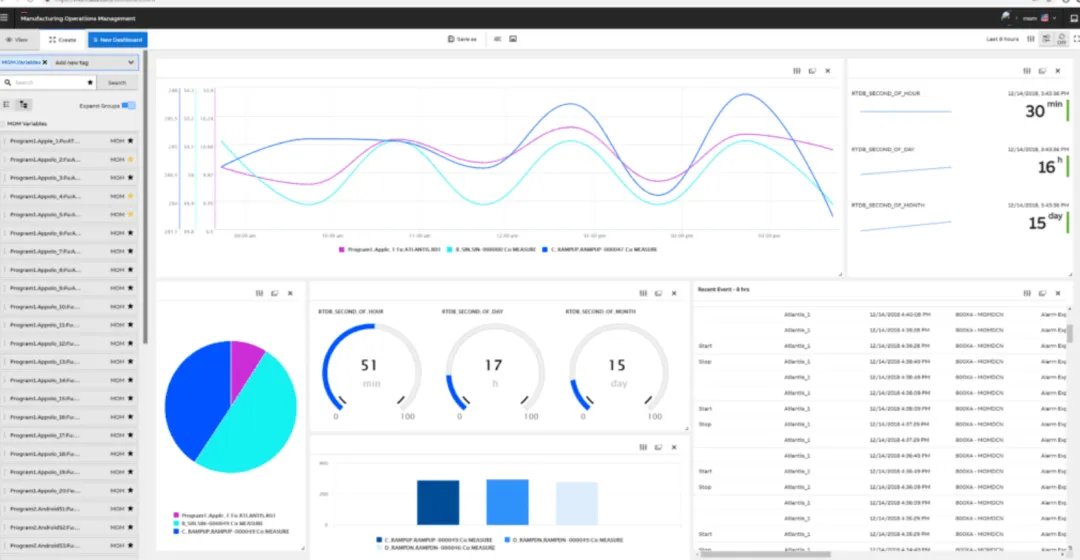
In fact, it is not these ABB robots that are really being examined, but basically the factory data behind them.
As data has increasingly become the basis for upgrading transformations in manufacturing, in the past, the operation data of robots in factories was mostly stored by automakers, with a small portion being stored locally, and ABB robots were used in some key areas of military and public life, which changed the nature of the entire acquisition.
Because the robot itself is a movable asset, the production line can be replicated, spare parts can be re-painted, customers can be re-signed, and these two years of domestic production alternatives are also accelerating, but the work data that robots run in Chinese workshops can't move, it follows the production line locally.
Reviewing the comments on the data is a redefinition of the trademark of the transaction, which ABB robots sell not only equipment and a customer list, but also things that are continuously produced in factories in China.
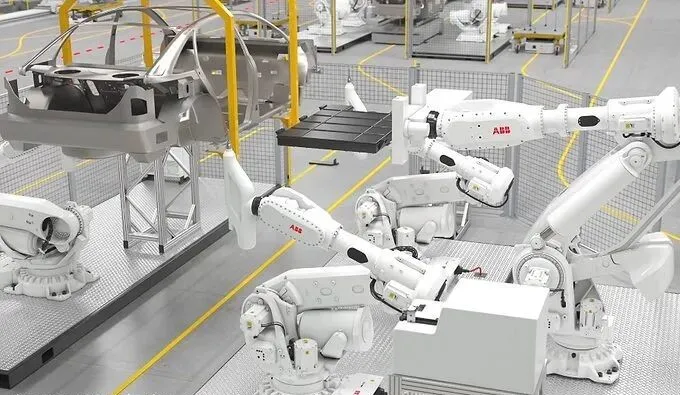
The next era of industrial automation will be defined by the speed at which robots learn, not the level of programming, as the speed at which they learn depends on data, and the thickest piece of data is still in the hands of ABB's older robot manufacturers.
If acquired, ABB's accumulated operational data could be transferred overseas to be used to train AI models, including those developed by OpenAI, which SoftBank heavily invests in. In the context of physical AI, output-line data is not a subsidiary and has become the most scarce raw material for training robotic base models.
In addition to the acquisition of ABB robots, the Office of the China Foreign Investment Security Review Working Mechanism has previously opposed the Meta acquisition of Manus, which is also the center of the transaction's review of how much real interactive data is in the hands of manufacturers. This shows that today's corporate acquisitions are no longer as simple as they used to be.
ReviewsThe ultimate goal is toIt's not a robot.These types of physical assets will ultimately needWho's to blame for these robots running out?IncludedThe dataIt should.To whom?。If data assets are difficult to classify, the risks of the transaction itself are enormous.。The blocking of the acquisition means that after the mechanism is widened, all foreign buyers will have to recalculate the data discount coefficient for Chinese assets.
SoftBank's downward spiral in physical intelligence has been steep, and it is rumored that it is talking about acquiring a controlling stake in American humanoid robot company 1X valued at about $6 billion, with the shadow of the SoftBank Vision Fund behind its launch on November 5.JapanSoftbanksIn this one.$5.4 billionIn the transaction, it could beWhat you can't buy is notAll of ABB's robotsCapacityIncluding Chinese factoriesIt has been running for decades.
03.
New changes brought about by transaction audits
The price of data assets is obvious, and recent talks have been reported that there is already foreign funding Tier 1 has begun in turn to sell the scene data to Chinese robotics companies, or directly replace the ownership of corporate smart companies. And this route has already been run. Because foreign investors have customers and processes, there is a lack of low-cost material, Chinese manufacturers have material, there is a lack of scene and data accumulation, this exchange has precisely illustrated the price of data.
State-owned alternative is no longer a slogan, it has changed the cost-benefit calculation of regulatory decisions, and the opportunity cost is much higher than it was five years ago if an outflow of critical data and manufacturing capabilities is accelerated by the release of a foreign acquisition.
ABB's customers in China are automotive factories, 3C factories and system integrators, who buy the entire system's continuous supply capabilities, spare parts response speeds and engineering support, and once the sector's affiliation is under review, the first reaction of the procurement sector is to allocate shares to a second supplier.
This will undoubtedly be a lasting benefit for China's leading industrial robot companies.Every day that a subscription is suspended, the list of purchases is moved to the second supplier.
After the window closes, SoftBank and ABB have little choice. According to Flagstaff estimates, after the transaction is blocked, ABB's available acquisition funds will be cut in half from about $10 billion to $5 billion.
The first solution is to deprive the Chinese business of re-reporting, which is the lowest-cost solution, to keep the Chinese business operating or sold separately in the country, according to the regulated asset handling, SoftBank only purchases the overseas portion of $54.4 billion, and the subject of scrutiny from the entire package of assets to a small block, and the difficulty of auditing may decrease immediately.
Article 2 is similar to previously issued Chinese assets, whereby the transaction structure is converted from acquisitions to joint ventures through joint ventures with Chinese holdings and SoftBank holding shares but with Chinese holdings.
Similarly, on the industrial side, Schaeffer's news on November 3 was that the amount of cuts reached 1.2 times its 400 million-euro human robot orders, orders were falling one by one, indicating that the balance sheet of European industrial buyers was still shrinking, and that in such a market, the robot business could be taken out of the market, with an estimated value of less than $5.4 billion.
Some analysts predict that the potential valuation of ABB robots after divesting from China could fall between $2 billion and $3 billion, less than half the price of the original transaction. Due to the publicly quoted overpriced and undelivered assets, the next round of bidding will begin with a question about why they didn't sell, and the divestment will mean shareholders' immediate value will also shrink significantly.
All three roads worked, but each cost less than $5.4 billion.Because onceABB's most valuable asset is actually half the moving parts.,This makes it difficult for the transaction to be completed in the short term.As SoftBank's acquisition booths now expand, the cash flow situation does not have much capacity to delay the change in scrutiny. As of November 2026, SoftBank shares fell more than 50% from their June high, with a net loss of 1.12 trillion yen in the third quarter, and OpenAI's IPO postponed to 2027, making it difficult to change SoftBank's holdings of $64.6 billion after 2027.
04.
Link to the Future
The transaction was originally scheduled to be completed within a year, and if the first quarter of 2027 is still non-delivery, it would exceed a period of routine review of an asset. When a transaction's benchmark becomes data input from equipment, from manufacturing capacity to model-trained infrastructure, the approval coordinate system is no longer a market share and consumer benefit, but a long-term distribution of data sovereignty and AI capabilities, which means China is beginning to have a secondary pricing power on a larger scale.
SoftBank can wait, ABB can wait, robots that are already installed in Chinese factories won't stop, they're recording new moves every day, and the most valuable part of this transaction is being continued to be produced by the party that it wants to buy, which means that the data pool is overlapping, which means that whoever wants to take that data out of the country has to answer a question that is much more complex than antitrust.