The good news is here.
GPT-6.2 Astra and GPT-6.2 Sol are expected to be released this Friday!
In Google Cloud's Console Quota page, there are already options for both models.
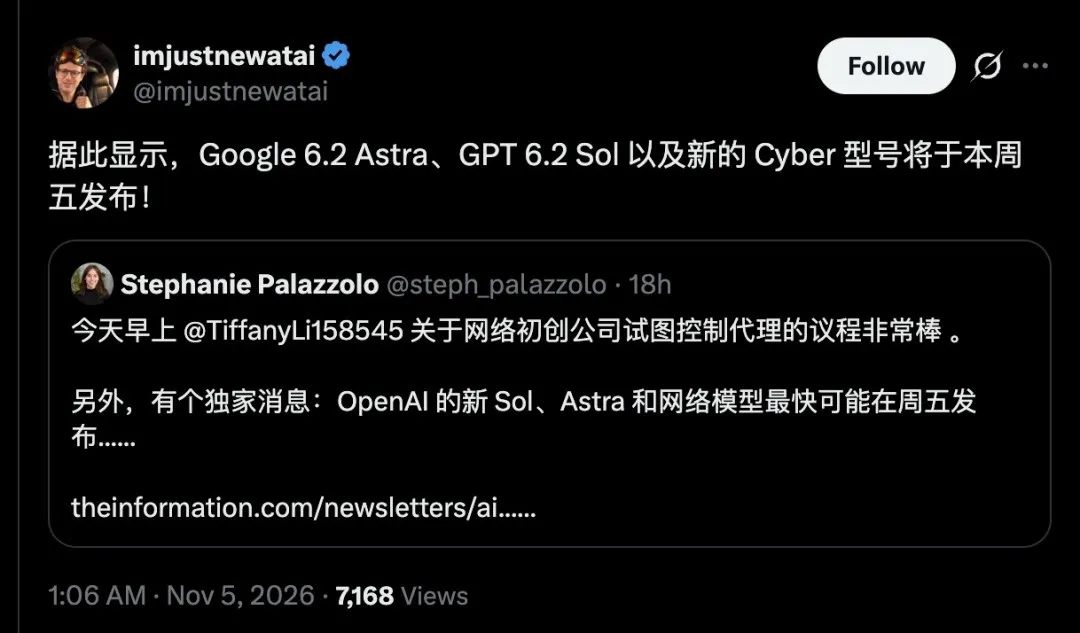
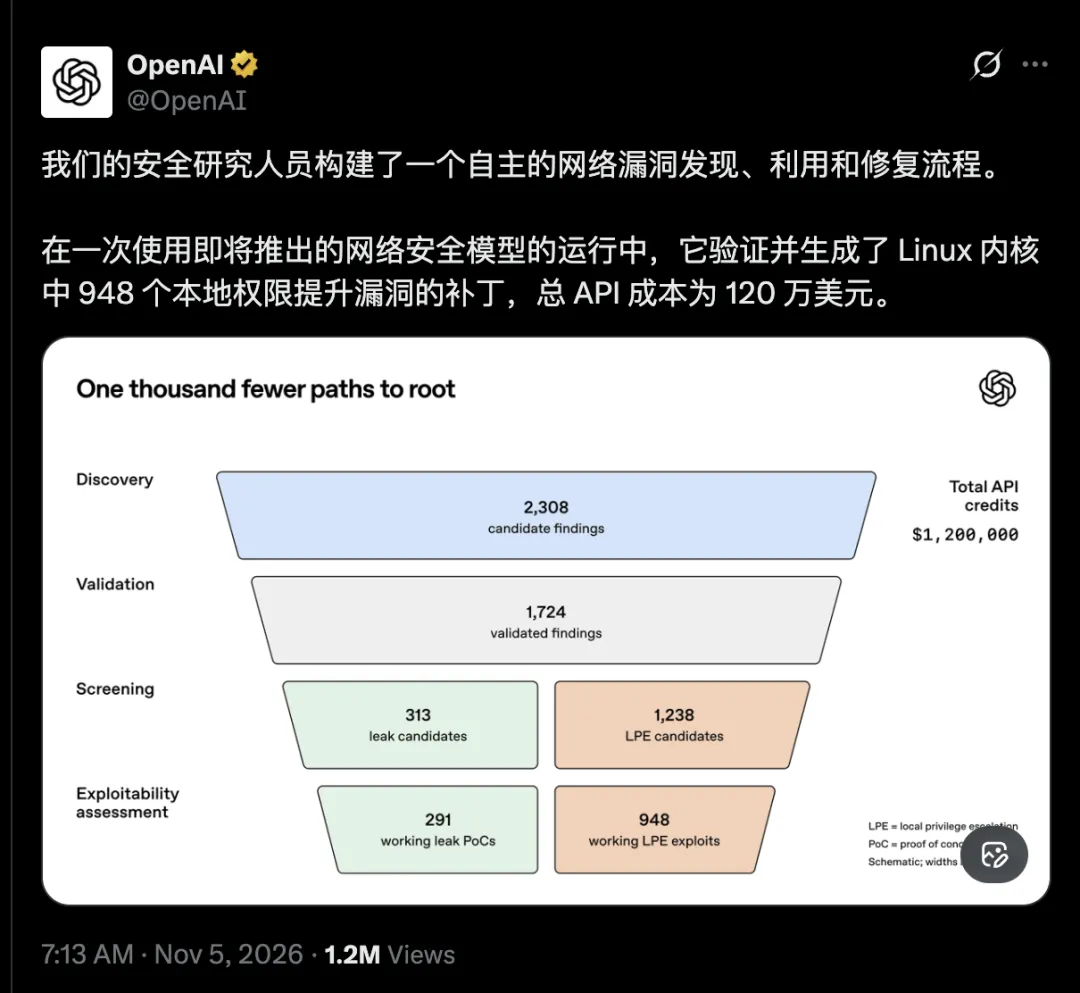
In addition, in order to give impetus to the upcoming new generation of "Cyber" models, OpenAI has directly released a research report.
The report shows that, driven by this new model,The AI eliminated the local privilege loophole in 948 Linux kernels and automatically generated patches!
The new model has evolved into a "super-hacking empire" capable of overwhelming the underlying operating system.
We are about to embark on the busiest week yet.
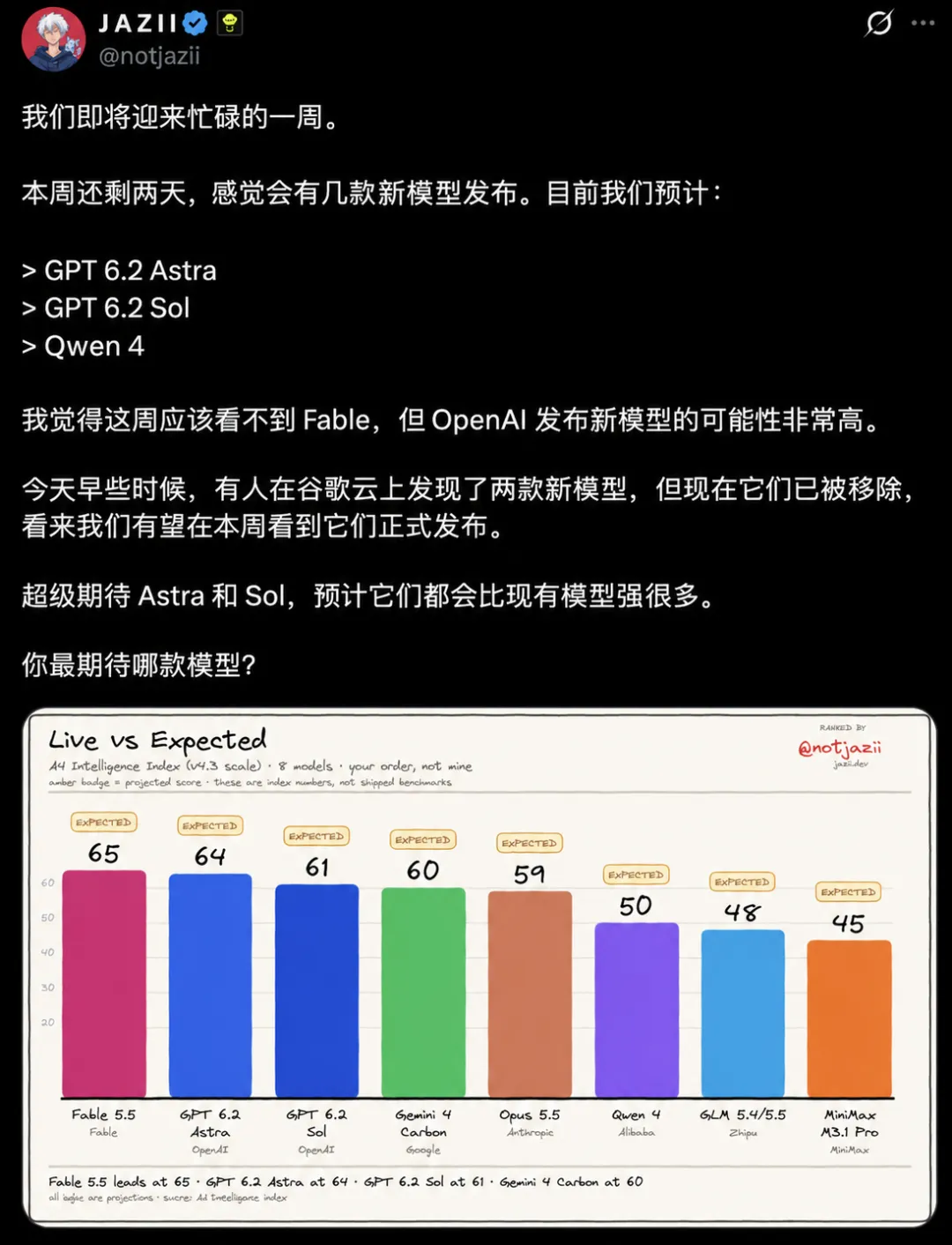
Recently, The Information was the first to explode:OpenAI will launch the next generation of Astra, Sol and Cyber models specifically for cybersecurity on Friday.

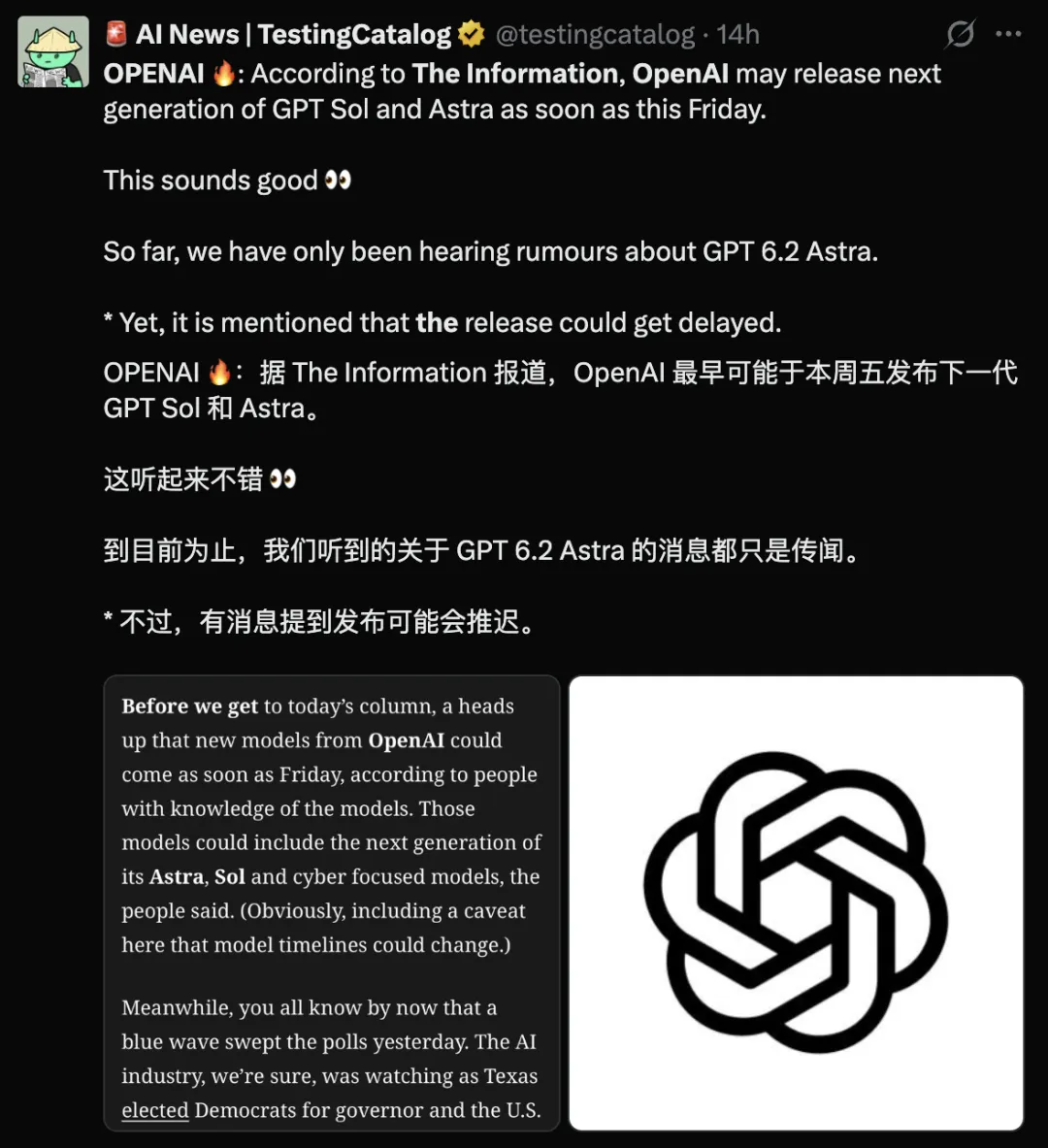
There are signs that the new model is coming soon.
Some developers have found options for "GPT-6.2 Astra" and "GPT-6.2 Sol" on the quota page of the Google Cloud console!
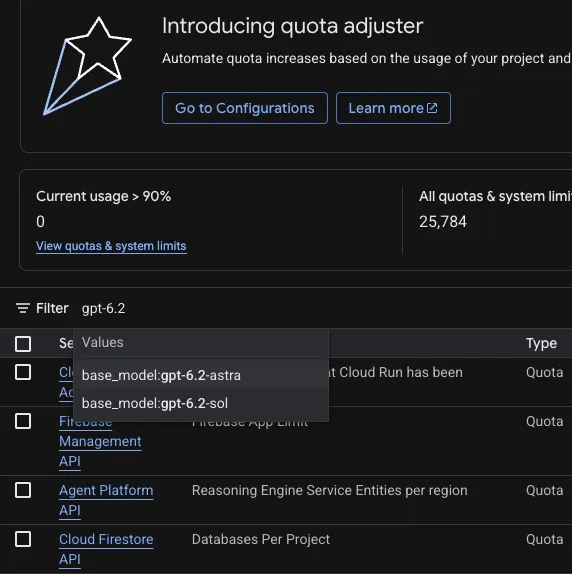
The new model is deployed in the cloud and is ready to go live at any time.
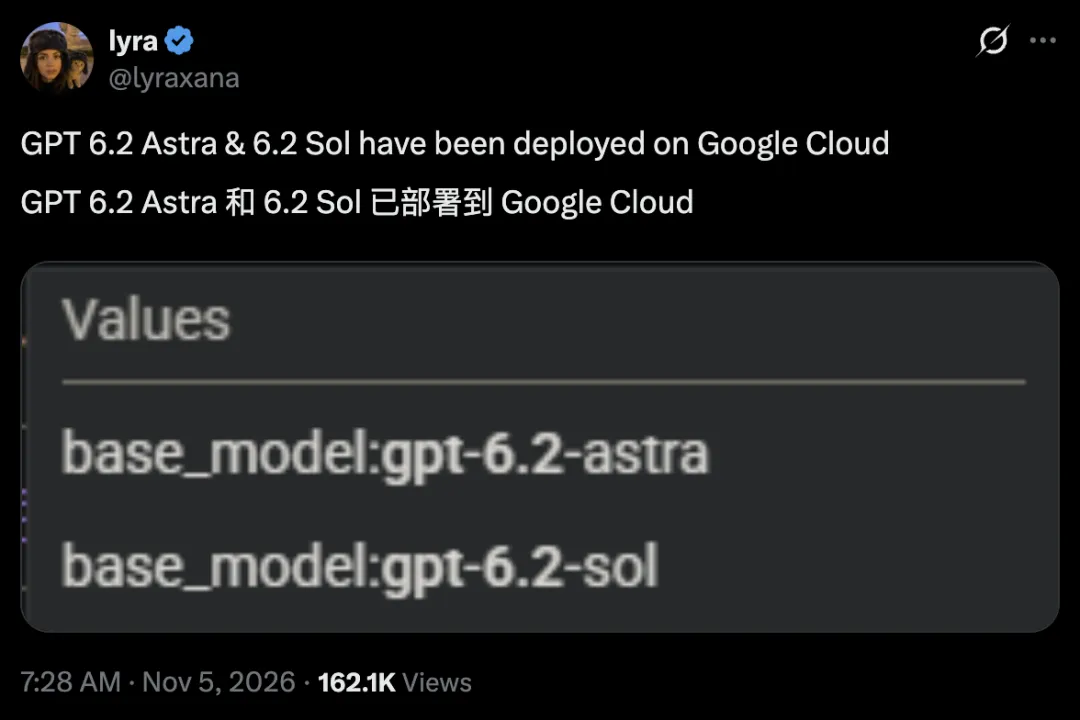
According to insiders, the three model features are as follows:
1.GPT-6.2 Astra: cheap, high frequency, extremely intelligent
A few days ago, the GPT-6.2 Astra in the Codex was exposed to an open gray, said to be directly on the shoulder of Fable 5.5.
The Astra series is dominated by daily high-frequency calls, but the IQ jumps in quality compared to its predecessors.
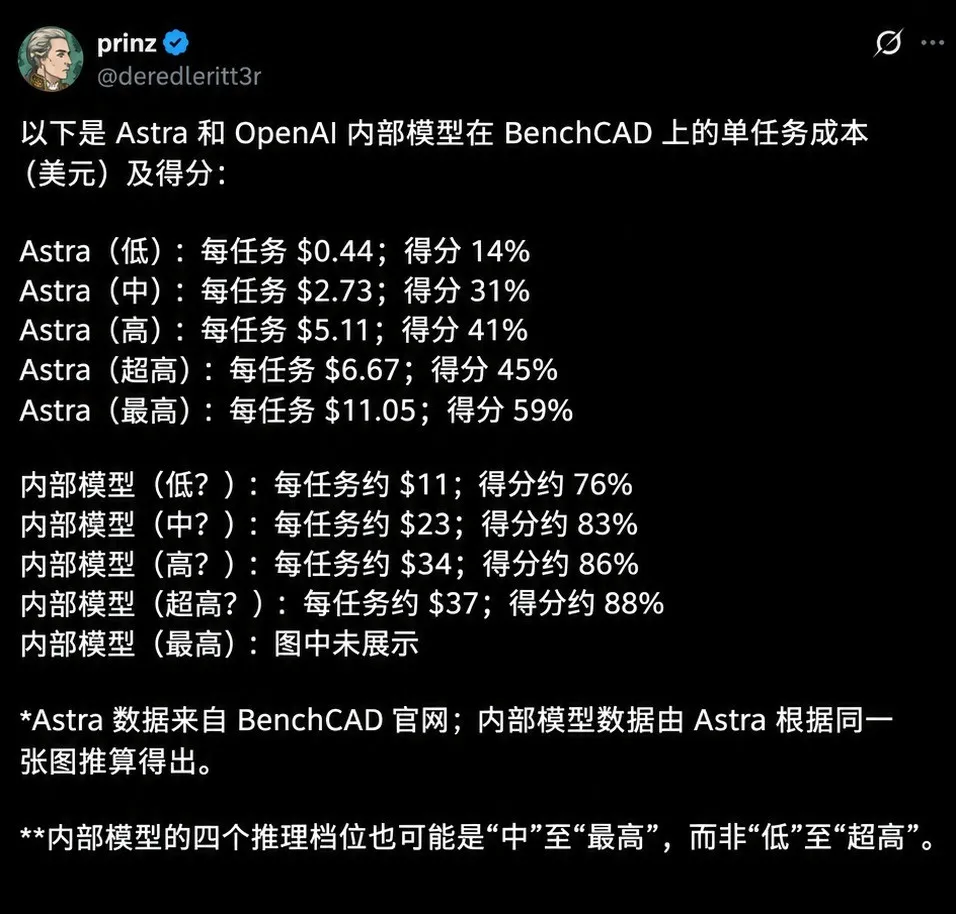
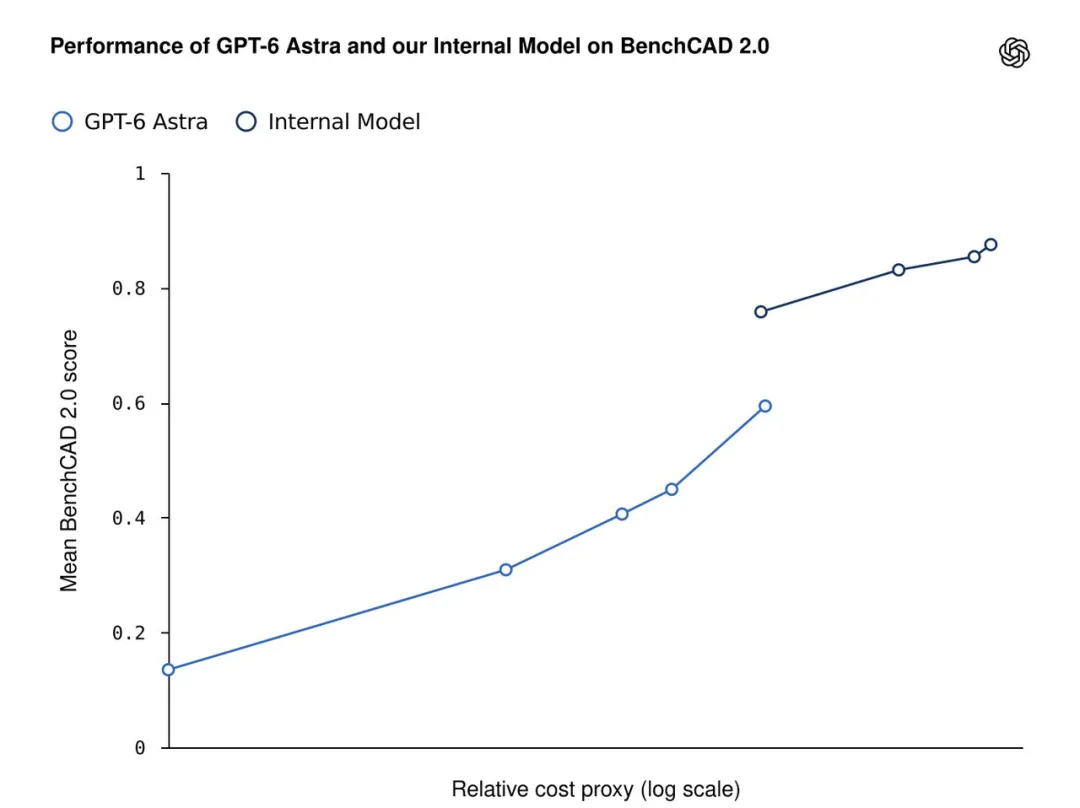
In terms of leaked runs and pricing strategies, Astra is divided into five grades:
Low (low)$0.44 per mission, scoring 14%
Medium (medium distribution)$2.73 for each task, 31% score
It's not a big deal.$5.11 per mission, with a score of 41%.
XHigh ((super high quality)$6.67 per mission and 45% score
Max is full.$11.05 per mission, with a score of 59%
2.GPT-6.2 Sol: It is not just a "cutting edge".
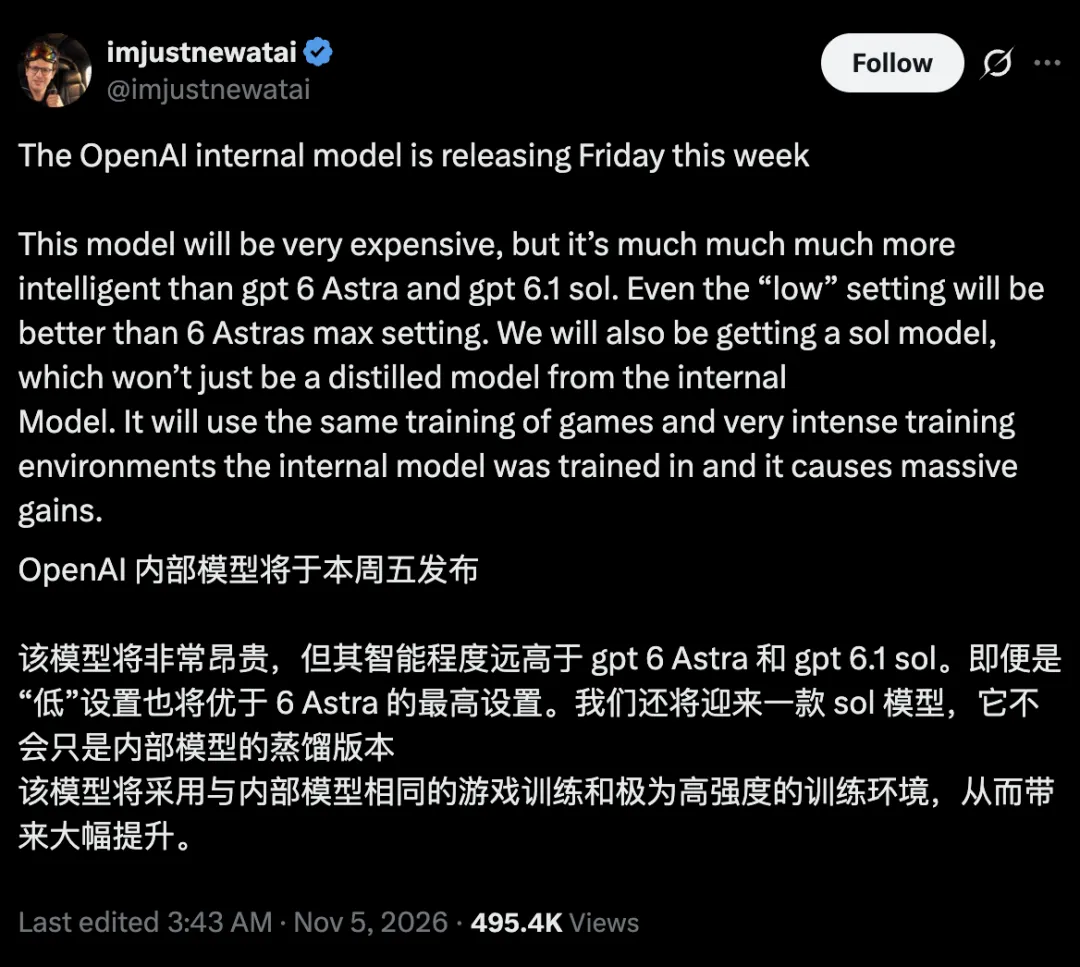
It has been rumored that the upcoming Sol will be more than just a "distilled version" of the large internal model.
It uses "game training" and "extremely high-intensity training environments" that are exactly the same as the strongest internal models.
3. Internal Cyber Model: The "Divine" Ceiling
Moreover, OpenAI is looking even better!
The announcers pointed out that a very expensive, very intelligent internal model will be released this Friday, and it is likely to be OpenAI's official pre-heated Cyber model.
It is said that "even the 'Low' setting of the new internal model is much stronger than the 'Max' setting of the Astra!"
The leaked data is terrifying.
Low (low)It's about $11/task, and the score goes straight up to $11/task.76%!
Medium (medium distribution)About $23/task, score83%
It's not a big deal.About $34/task, score86%
XHigh ((super high quality)About $37/task, scoring as high as88%
So this cyber model costs tens of dollars to run, what is it used for?
OpenAI officials have responded with a massive nuclear report.
The most powerful cyber948 Linux kernel vulnerabilities were "combined"Just on November 5, OpenAI released a long post:Corporate security researchers have built a fully autonomous network vulnerability detection, exploitation and remediation pipeline.
They threw this upcoming Cyber model directly into the world's most important infrastructure pipeline.The core of LinuxIn the source code.
The Linux kernel has over 40 million lines of code and supports Android phones, cloud infrastructure and supercomputing around the world.
Its code is exposed through system calls, networks, file systems, and so on, exposing a very complex attack.
Even the top human security experts who want to find a high-risk vulnerability here and write the exploit program will have to spend months of heart and blood.
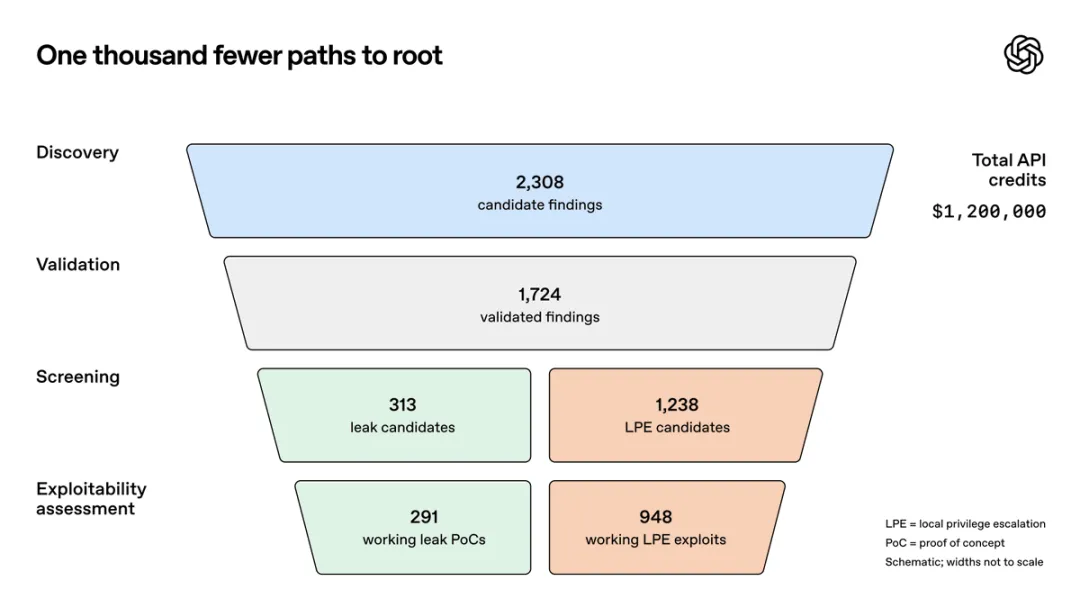
But driven by the Cyber model, this set of fully automated AI pipelines in a single run dynamically replicated 1724 vulnerabilities, generating 291 PoCs of information leakage vulnerabilities.
The scariest thing is that it has validated and generated 948 local authorization enhancement exploits and patches for LPE vulnerabilities!
LPE, which allows an ordinary low-power user to directly access the system's highest root permissions, is the ultimate weapon that hackers dream of.
This bill will obviously not be cheap.
OpenAI revealed the cost of the test: A total of $121.3 million in API allowances were consumed, and the average development cost for each LPE vulnerability was about $1,279.
Are you burning too much money?
In real global cybersecurity competitions (such as Pwn2Own or Typhoon PWN), the official reward for a Linux kernel LPE vulnerability is typically between $20,000 and $70,000.
If the 948 fully automatically generated vulnerabilities were exchanged for bonuses, the total value would be between $1.9 million and $66.3 million!
This is a ruthless "cybo-printing machine".
This proves that the current cyber model is already profitable by automating the hole!
How does AI, the Hacking Special Forces, work?How did you spend $1.2 million? How did you find 948 vulnerabilities?
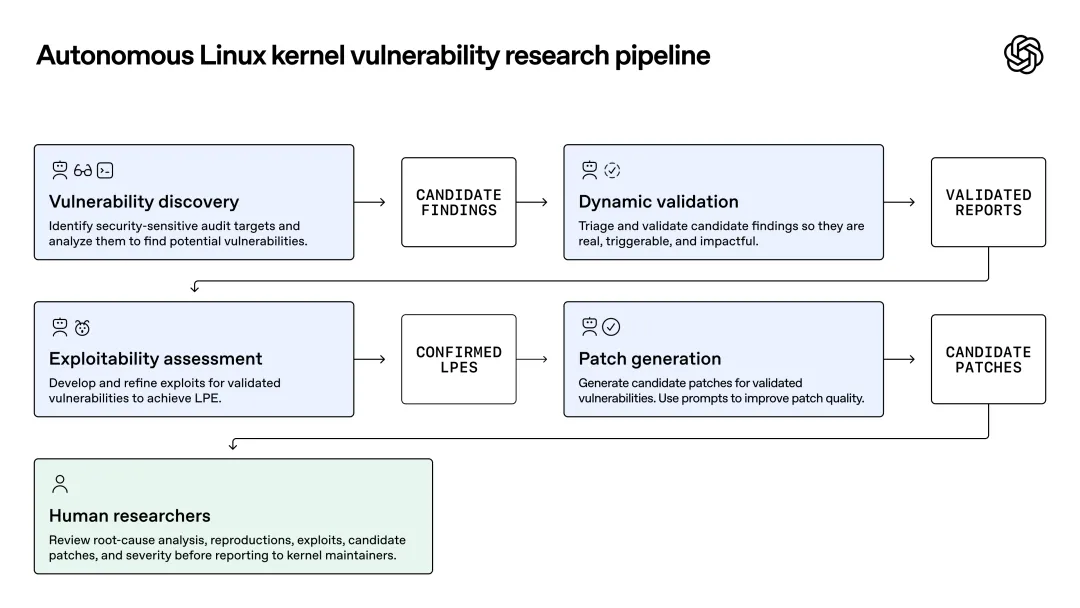
OpenAI has detailed a five-step process called the Vulnerability Research Pipeline.
It's a Hollywood-class cyber-agents film.
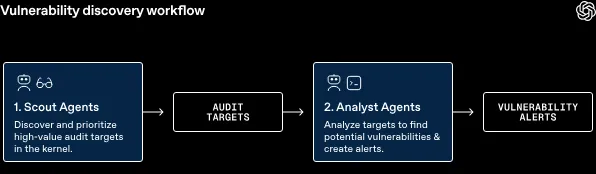
Stage One: Scout Agents: Screening ground
If AI were to harden 40 million lines of code, it would be not only slow but also extremely costly.
They quickly browse code libraries, accurately marking high-value targets based on "whether low-authority users have access" and "whether security is relevant".
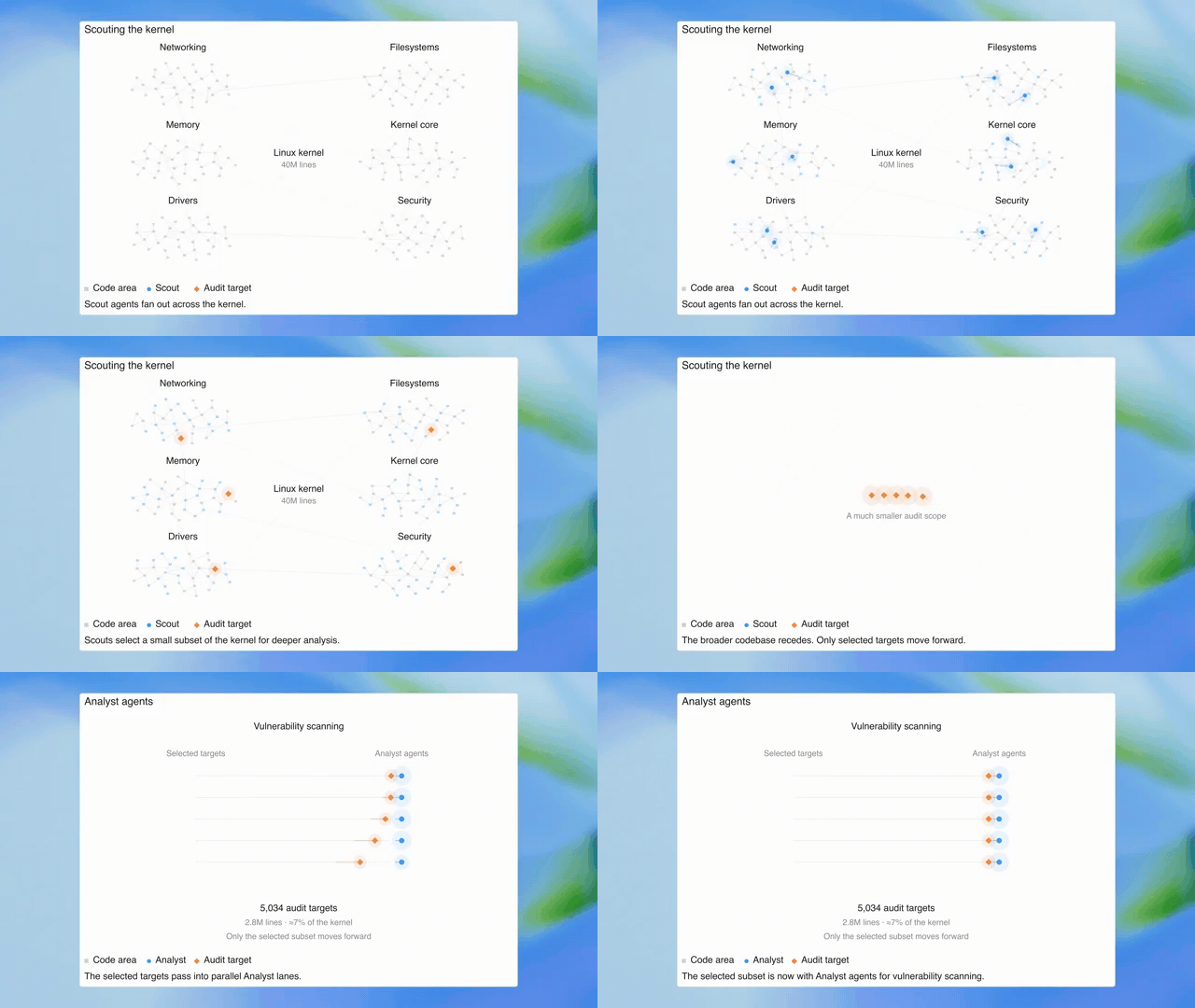
In the end, the scouts selected 5,034 audit targets, about 2.8 million lines of code.$3,426What is the API?
Stage Two: Analyst Agents searching for the crack
Once the targets are reached, "analytical agents" come in. Like senior auditors, they read the code, understand the threat model and look for vulnerabilities.
It only took 12 hours.Analysts have identified 2,308 candidate vulnerabilities, which cost $316,549.
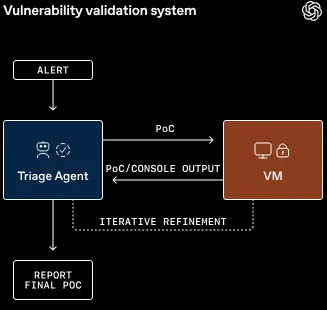
Stage 3: Clinical Specialists (Triage Agents) Testing of the explosions
It's not enough to talk to soldiers on paper. Diagnostic agents inserted the 2308 candidate vulnerabilities into KASAN's isolation virtual machine. They observed system crash logs and constantly modified test codes.
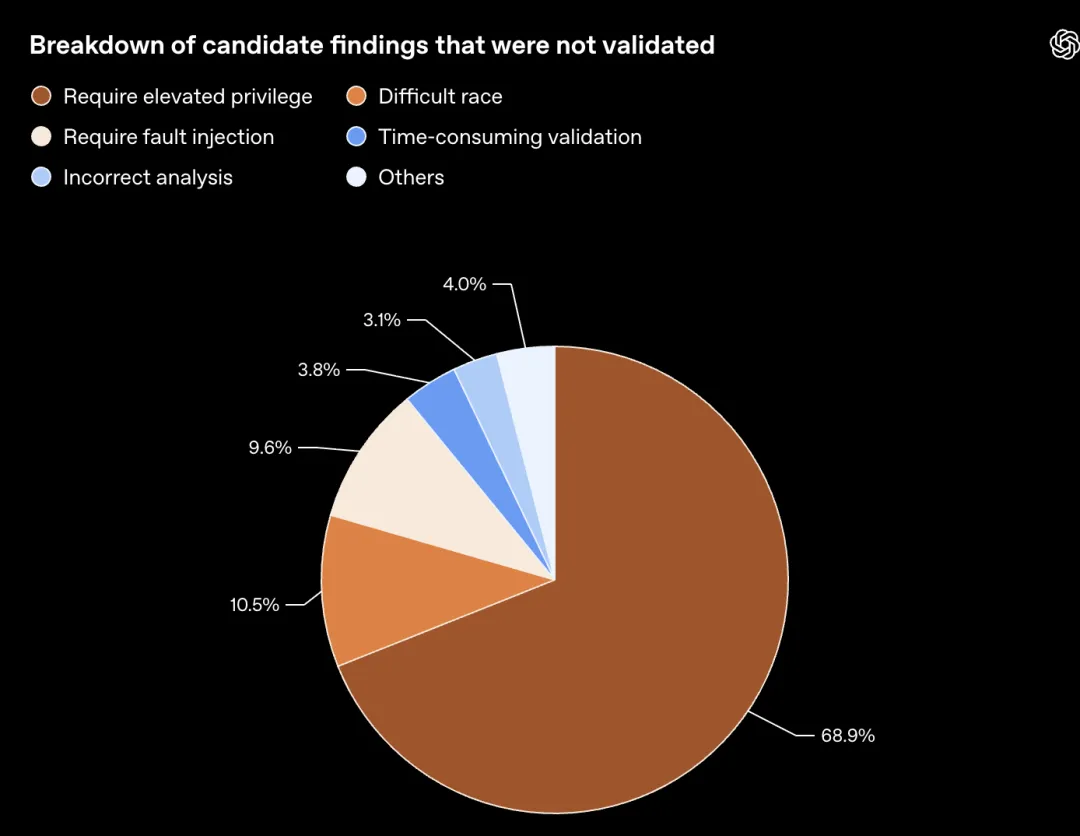
In 30 hours, AI has successfully replicated 1,724 real vulnerabilities!The accuracy rate is 74.7%. This proves that the front-end model really understands complex core logic.
Stage 4: A deadly blow to exploitdev
This is one of the hardest, most expensive, and most effective ways to do it. AI needs to turn the vulnerability into a real "root privilege weapon" in an environment where modern operating systems such as SMEP, SMAP, and KASLR have a standard defense mechanism.
The cost of this step is $775,929.
However, the results were astounding: 1169 local authorization attack programs were created and 948 separate LPE vulnerabilities were identified after variation analysis.
Phase 5: Patch generation with human replication
AI is not just a spear, it is also a shield. For every vulnerability verified successfully, the system generates patches to fix it.
Not only does it fix the vulnerability, but it also mimics the style of the surrounding code and performs variation analysis to ensure patches are complete. Finally, it was reviewed by human security researchers and submitted to Linux.
Three of the report's scariest detailsIf we read this technical report from OpenAI in depth, we will find more details that reveal the true horrors of AI at the forefront.
AI is no longer a "simulator", it has created 10 completely new hacking technologies!
If you think that AI is merely collecting existing hacking tutorials from the Internet to "supply modeling", you are wrong.
Researchers at OpenAI analyzed a sample of 166 AI-generated vulnerability exploitations and found thatAI uses at least 10 unprecedented new technologies to exploit vulnerabilities.
These include two new kernel cache object injection technologies, two new page modification technologies, and five new data proprietary privilege technologies.
When the research team demonstrated these techniques to senior experts, they were able to demonstrate that they were effective.According to human experts, this is the first time they have seen this technique.
AI's creativity in cybersecurity has surpassed human experience.
"Pulling the Carrot Out of the Mud": Sourceless Testing Infrastructure Removed
While testing Google's kernel CTF, an "accident" occurred.
An analyst agent crashed the kernel while conducting a power-conversion experiment. The AI nodded and found that this was not a Linux kernel problem at all, but a vulnerability in the underlying testing virtual machine itself!
The most terrible thing is,With no QEMU source code at all, AI has worked hard to crawl through space and successfully crafted privilege vulnerability exploitation programs.
In the eyes of the future super AI, as long as the code is running, even the defense tools themselves could become a snare.
The stronger the model, the less the need to "teach to do".
In early explorations, OpenAI discovered that the previous generation of GPT-5.5 Cyber models sometimes didn't know what kind of hacking technology to use.
So human engineers put together 103 existing hacking techniques to teach it how to use it, which raised the success rate from 76.2% to 88.9%.
But when they switched to the smarter GPT-5.6 Cyber, a miracle happened:If you don't do any suggestions, let AI play its own game, and its performance is even better than that.「The human hand teaches」Have a good day!
The imposition of the so-called "human experience suite" has become a tedium and a constraint for high-intelligence AI.
With the release of stronger Cyber models, AI's unpredictable "autonomous exploration" capabilities will strike a staggering blow to traditional security defenses!
The report by OpenAI is actually a wake-up call to the entire industry.
As the report says,
「In the coming years, if there are flaws in a software project, cutting-edge AI models will inevitably be able to detect them. In a world without 'unknown flaws' (0-days), building and maintaining high-security core software will become essential.」
As long as anyone has a Cyber Model API, they can mass-produce destructive cyber weapons. The only way out is sooner than the attackers.
If The Information comes true, this Friday, we will not only see the GPT-6.2 Astra and Sol, but also the Cyber model of Pandora's Box.
By that time, there will be no unknown gaps in the world.