
Anthropic's mysterious "Model 4" has been revealed!
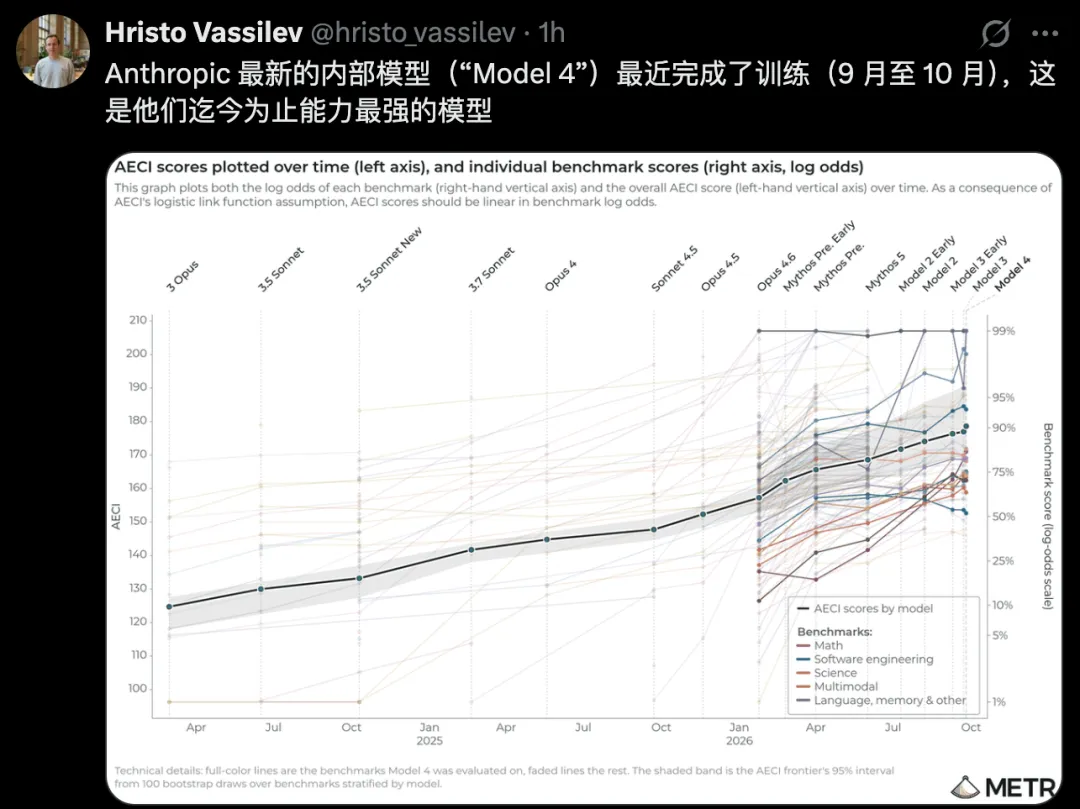
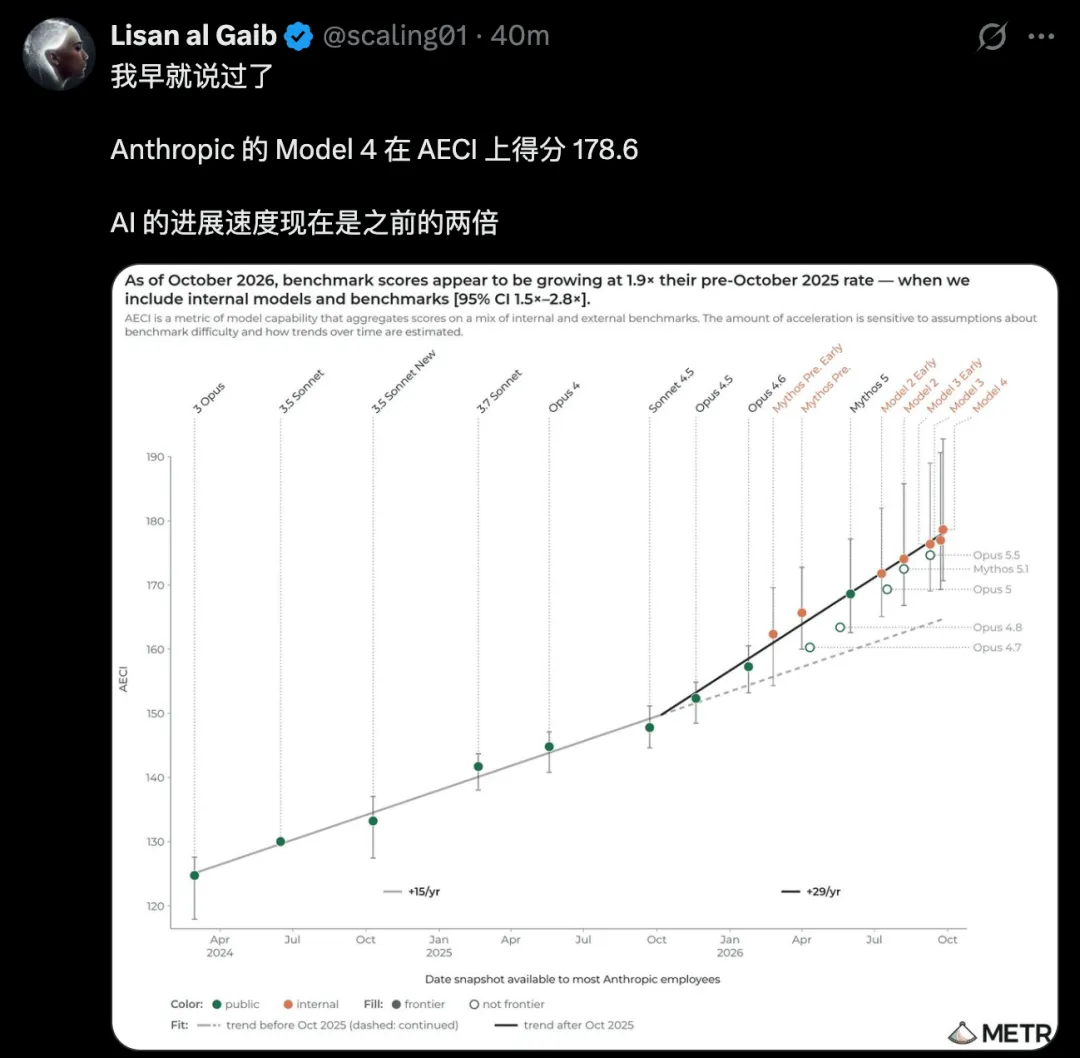
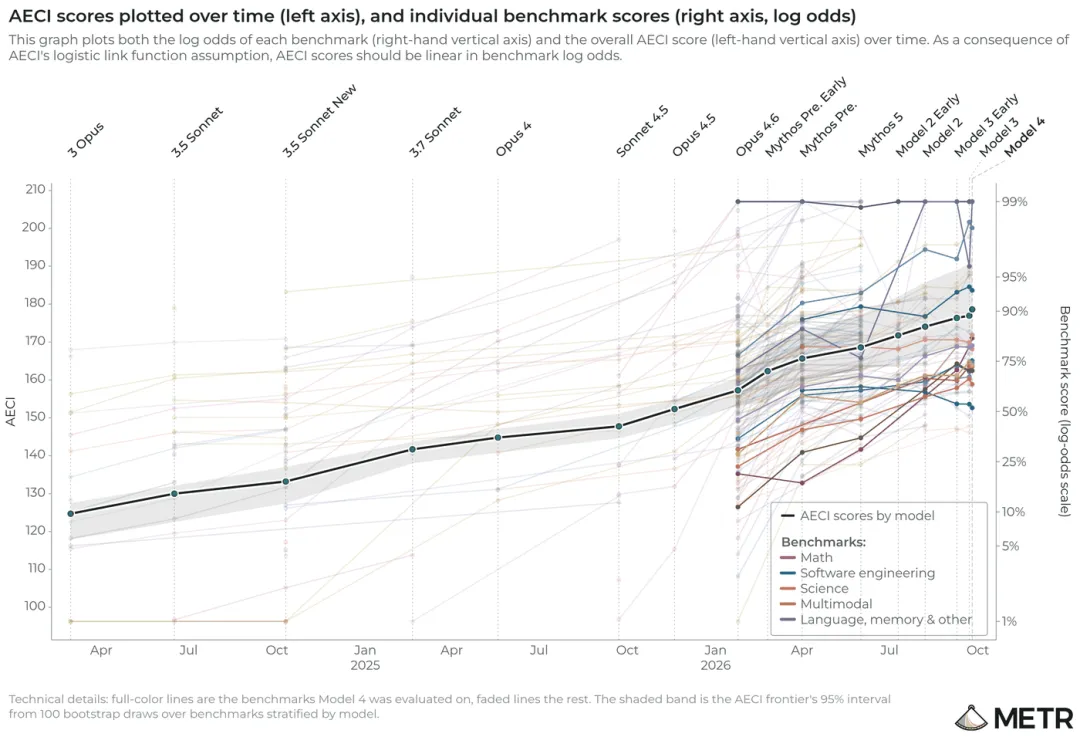
After secret practice from 9 to October, the internal comprehensive capability index (AECI) directly climbed to 178.6 against the sky, and the existing test scores are about to overwhelm it.
 |  |
Just today, the third-party rating agency METR released a major investigation.
After 11 weeks of digging deep into the sensitive data inside Anthropic, only one conclusion was reached.
The evolutionary speed of the Anthropic model has been completely out of control, directly doubling the original.

These are some of the most explosive numbers in the report.
As of October, Anthropic has increased its ability to perform specific missions twice as fast as it did in March 2024-2025.
The turning point is October 2025.
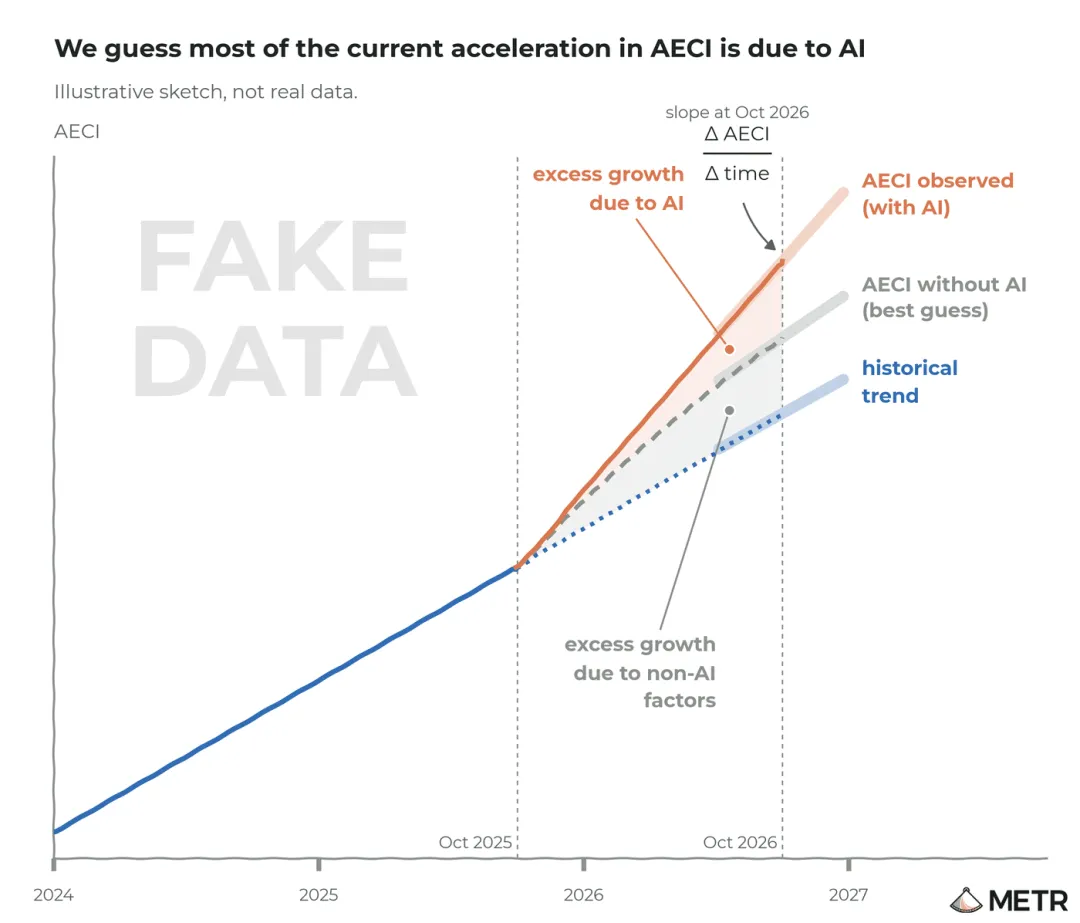
Since then, the growth rate of the AECI in the internal capacity index has been directly pulled up to 1.9 times, a year after the previous two years.
What's even more terrifying is that 80% of the momentum in this frenzy is coming from AI itself!

METR researcher Ryan Greenblatt said: "This report is a major signal to achieve ASI within a year or two".
At this rate, the ASI in the "AI 2027" script will come down in just four months!
The mysterious Model 4 is suddenly here.15 exams burst 50%The most striking feature of this report is a series of mysterious codes that have never been disclosed by Anthropic.
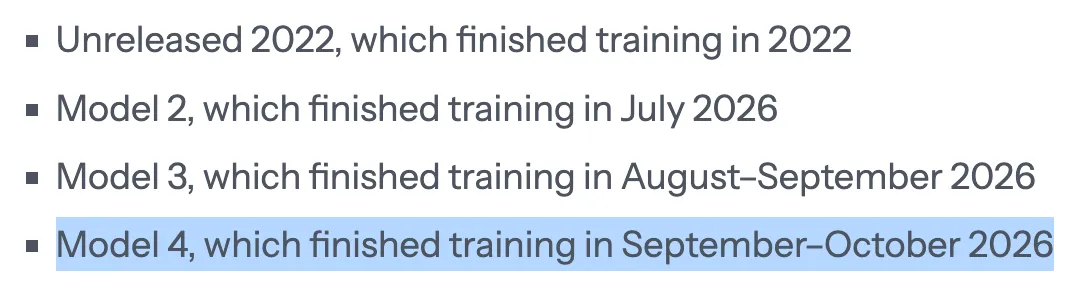
In the appendix to the report, METR lists four internal undisclosed models.
They are the Unreleased 2022 which was completed in 2022, the Model 2 which was completed in July 2026, the Model 8 which was completed in September 2026, and the Model 4 which was launched in October 2029.
It's the Model 4 that really ignited the net, which was just finished last month.
It scored 178.6 points on AECI, far above the public model Opus 5.5 and Mythos 5.1 and 172.5 points.
AECI, like the "High Test Score" of a large model, divides the rolling results of a benchmark test into a comprehensive set of sections.
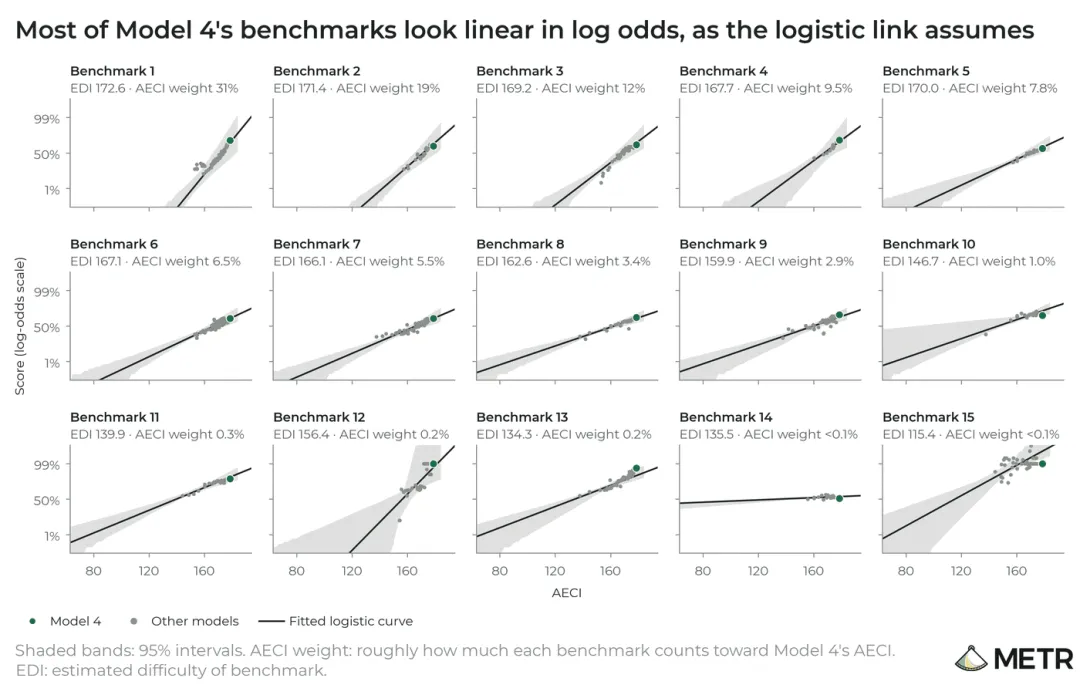
In a single class, the Model 4 took part in 15 benchmark tests, each with an accuracy rate of more than 50%. Nine months ago, Opus 4.6 still had a lot of benchmarks that didn't make the cut.
But that's not the real limit of the Model 4!
The METR team even did a "insecticide test" in the report, where they found that three of the 15 test benchmarks contained long tail traps or subject-damaged traps.
Once these three interference benchmarks are recalculated, the Model 4's AECI score jumps further 1.1 points to 179.7 points.
Even in terms of Token consumption, Anthropic's internal testing has not completely wiped out the potential of the Model 4.
Running a standard benchmark test takes an average of 2.5 million input tokens per task, generating more than 70,000 output tokens.
If the agent were to write the code, a single task would directly consume the entire 10 million tokens input and output to 94,000 tokens.
Even more troubling to METR reviewers is the fact that the existing test scores are almost beyond the limits of Model 4.
Not surprisingly, Anthropic renewed the S-1 offering before the IPO, adding a new risk tip specifically.
According to internal estimates, a future model will soon trigger a "significantly accelerated AI research and development" decline that could take one year to complete the last two years.
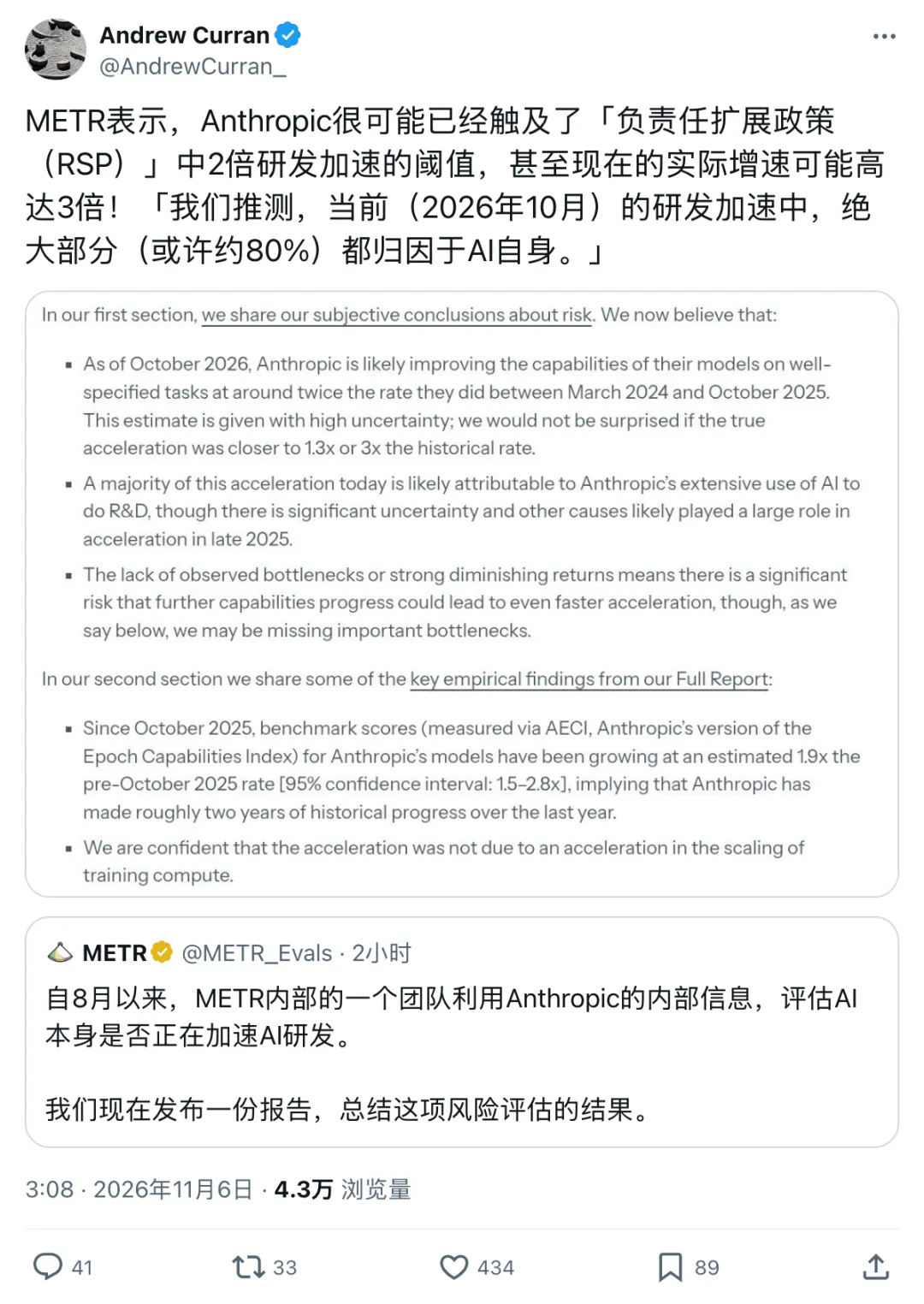
The Model 4 is the best proof. As for the Model 3 in the chart, netizens speculate that it is the Mythos 5.5 in the rumor.
80% acceleration is AI itself.The Model 4 is capable of speeding up to such high points, behind which the pace of model evolution is accelerating significantly.
The historic turning point came to a halt on October 7, 2025.
Prior to this demarcation, the AECI scores of the Anthropic model increased by about 15 points per year.
Starting in October 2025, the trend of this curve has been steadily turning upwards to 29 points per annum, an increase of 1.9 times the previous rate (95%).Differences between beliefsIt's between 1.5 and 2.8 times).
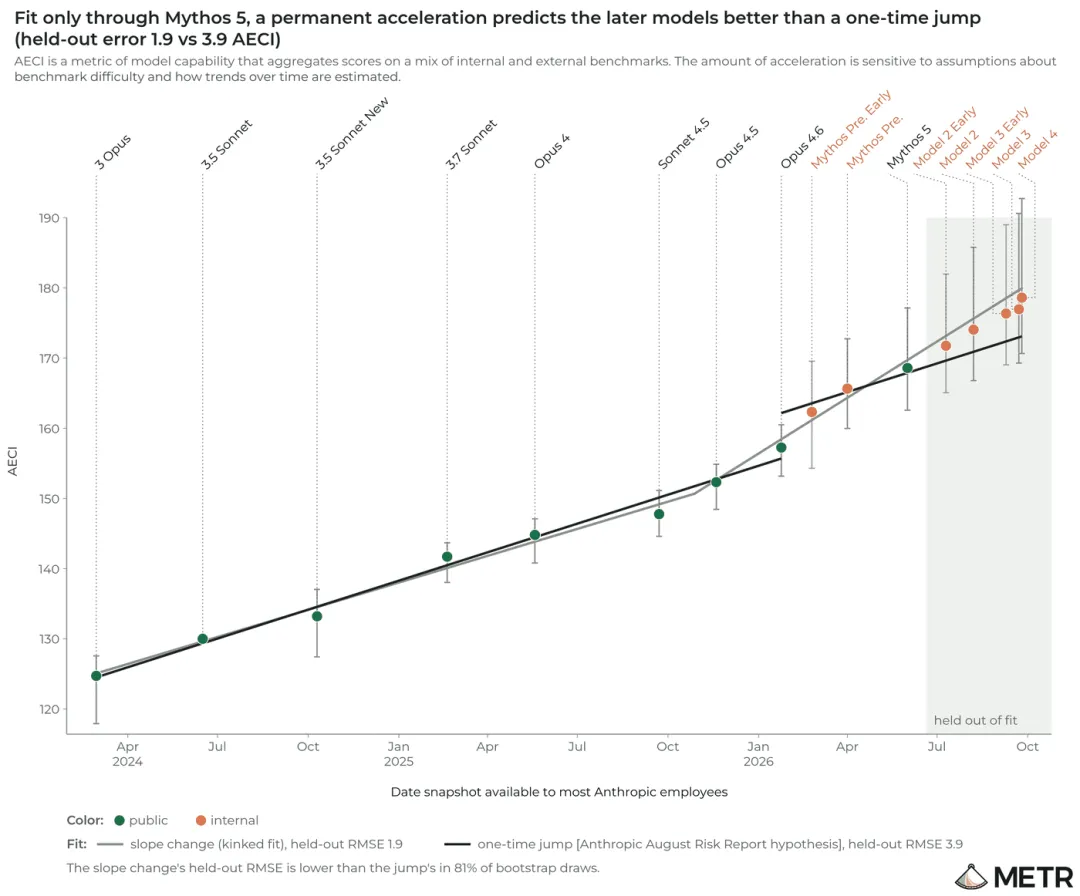
Anthropic made a modest assumption in its risk report in August this year that it was merely a one-off "step jump" by enabling new tools and new assessment methods.
So METR did a rigorous set of blind contrast experiments.
Researchers drew two lines of prediction using data from Mythos 5 and earlier models, and then blindly tested the later models: Model 2, Model 3, Opus 5.5 and Model 4.
The results are very clear. In 81% of statistical samples, the error in "long-term sustained acceleration" predictions is only 1.9 points, which is much more in line with real data than "single-step jump". The latter error is up to 3.9 points.
Two-fold acceleration means that in just the past year, Anthropic has completed the entire technical journey of the past two years!
If you put it under the dimension of index growth, the indicator would have tripled three times a year, and it would have turned into nine times a year at a two-fold acceleration.
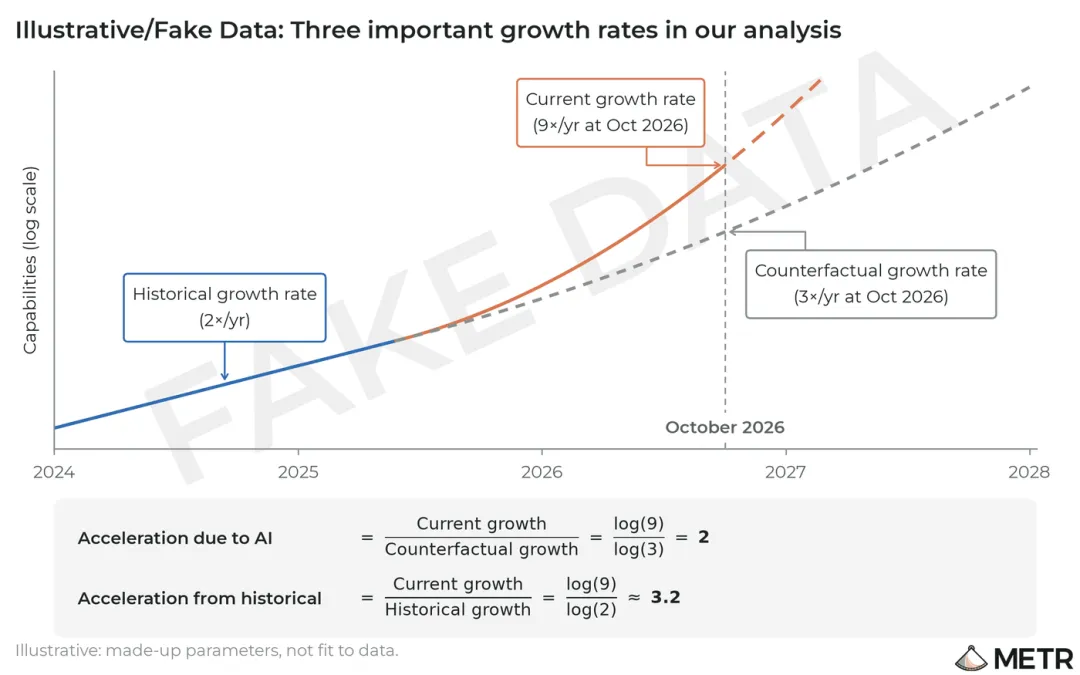
In order to find out where the momentum came from, METR used the calculations, algorithms, and personnel to break down a total account.
The METR explicitly excludes the possibility of "accelerating computing based on massive stacks" because of the ability to train after October 2025.Growth rateIt's slower than before.
The real push is at the end of R&D.
METR estimates that about 80% of the current R&D acceleration, which is about twice that, comes from AI's own R&D assistance, while the remaining fraction comes from increased research staff and the expansion of computational reasoning.
 Interns are 12 times faster10 points to Agent at the same time.
Since no one outside could test Model 4 in person, daily testing by researchers inside Anthropic was the only window.
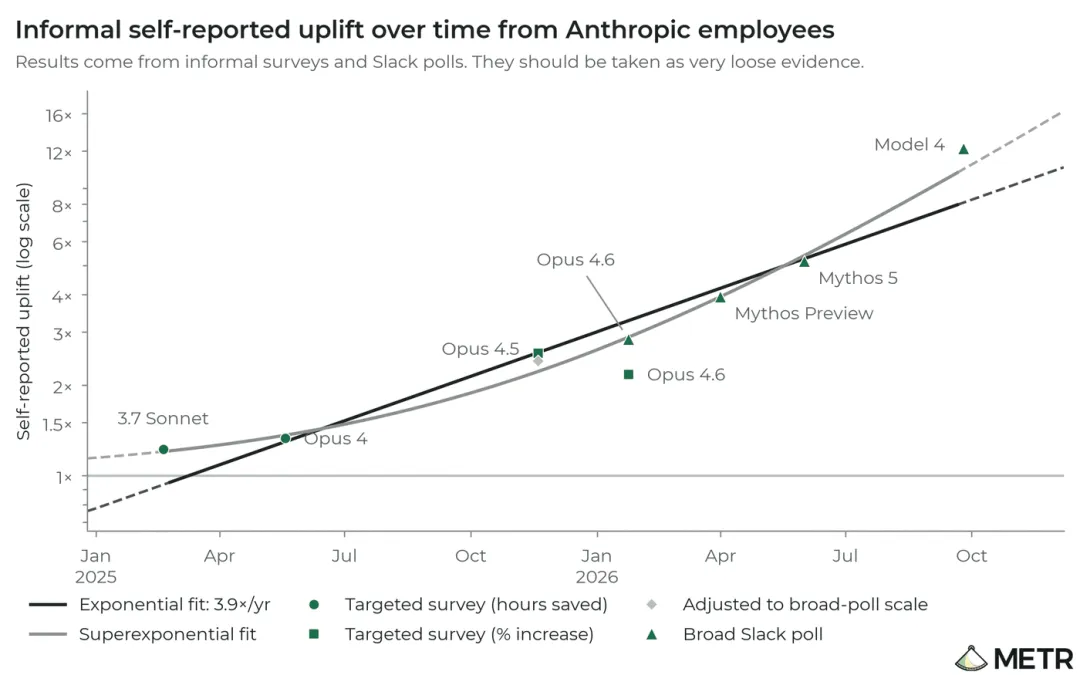
In the report, METR released an informal chart of trends in Anthropic's internal inquiry with Slack voting.
In the spring of 2025, with 3.7 Sonnet and Opus 4, the efficiency of employee self-report increased by only 1.3 to 1.4 times.
By the time of Mythos 5 in June of this year, self-report speeds had jumped about five times.
By October of this year, with the Model 4, the research and development speed of the employee self-reported had jumped about 12 times, corresponding to an index adjustment equivalent to 3.9 times a year.
To find out how this 12 times happened, METR conducted in-depth interviews at the end of September with 11 Anthropic technical researchers.
Researchers interviewed J to summarize the changes in their workflow in three phases.
The first stage is to take Claude as the auto-complete, hand-written, one-off script.
In the second stage, the human being stares at a single instance of Claude, allowing it to develop a complete function.
By the third stage, the "comprehensive claudelization" movement had begun, and researchers were beginning to simultaneously command a large group of parallel running experiments with Agents.
Researchers interviewed by C, D and E revealed that the company has launched an internal reward this year to encourage people to give all the crazy points they don't normally dare to try to AI Agent to run.
So we threw 10 research points directly into the internal Agent system at the same time to see which one would run out.

Researchers interviewed A said that handwriting code experiments were time-consuming, and with Claude's help, the time from coming up with ideas to running experiments was reduced by 80 percent.
In his own words, the researcher said:
Now I'm just relying on points and calculus, and I won't be relying on writing code anymore.
Researchers interviewed B estimated that they had tripled their overall speed, and felt as if they had suddenly had more post-doctoral and post-doctoral fellows on hand.
At present, AI has not taken over the design of the most core model training entirely on its own, but several interviewees confirmed to METR that AI autonomously contributes core training has shown clear "life signs".
Evolution cannot find a brakeOne of the most conflicting scenes of the entire assessment is hidden in the pages that are not open to the public.
METR said in an official post that they submitted a complete report of about 100 pages to Anthropic, but Anthropic removed most of the largest amount of core evidence from the public version.
The report, which is open to the public, is marked with black "[REDACTED]" in sensitive locations.
One of the tables used to predict Anthropic's new model capability scores in the coming months, along with the entire analysis, was blacked out.
According to the METR, in the next 12 months, no matter what happens, there will be a lot of uncertainty.AlgorithmsNeither computing nor data have seen any apparent bottlenecks to stop the accelerator.
The stronger Claude team saved 80% of the experimental time, and the time saved was immediately used to cement the 178.6-pound Model 4.
And the existing human papers are not printed enough.
I didn't see a bottle, I didn't find a brake, and the speed is doubling.