
Just recently, Anthropic published a blog post about how Claude learned to dream!

Using the power of offline suspension computing, Claude learns to crawl back into the day's interactive logs in a virtual "dream".
In a dream, it corrects its own low-level mistakes, refines it through tutorials, even like a trained architect, to ask questions for tomorrow and build a Wikipedia in advance!
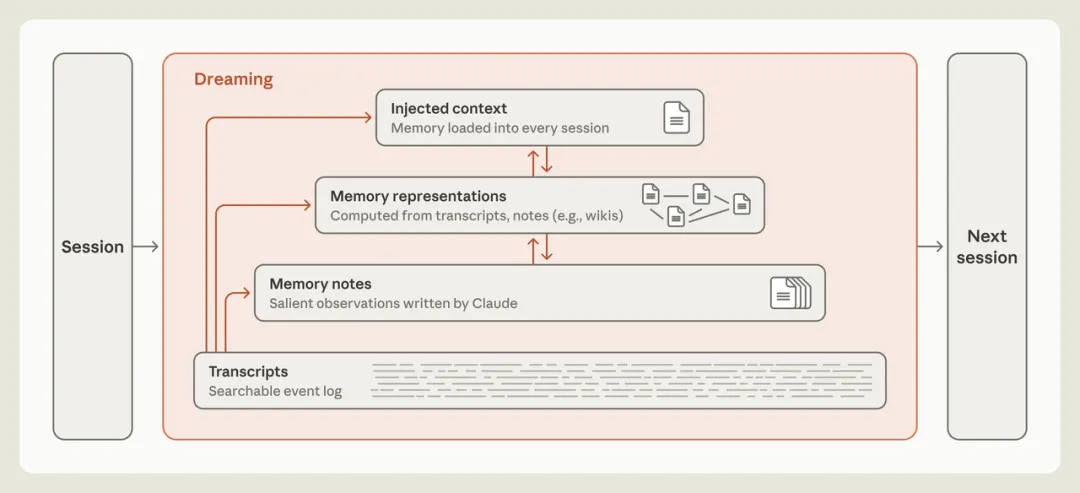
Claude can use dreams to organize memories. This method can correct mistakes, create notes, build new memories, or shape letters that will be saved for subsequent sessions.
This hardcore blog might hold the secret that Anthropic's next-generation Model 4 completes the self-evolution of RSI?
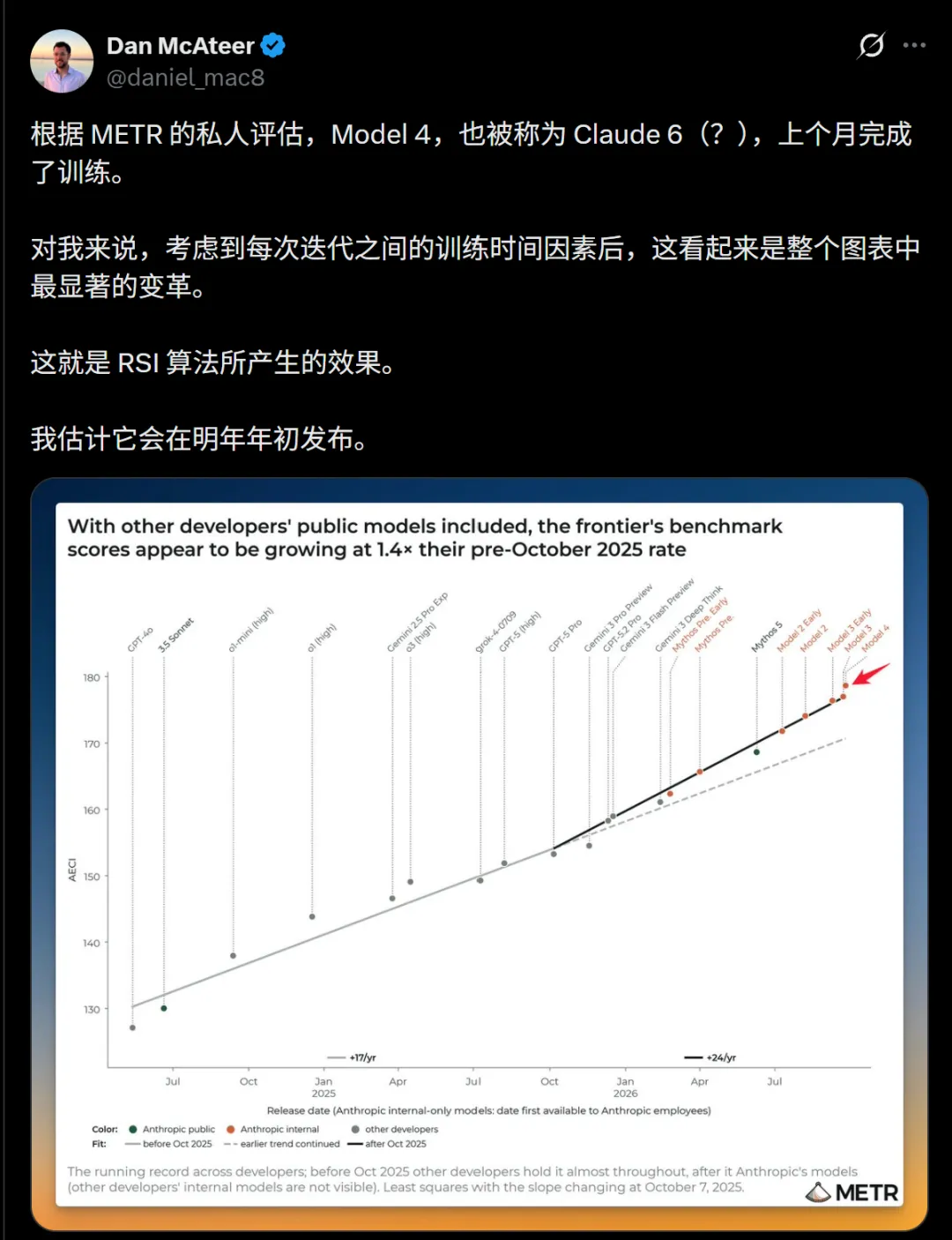
The previous AI, when we connected the notebook, was like the power was cut off and the world stopped for a moment until it was awakened again the next day.
But now Anthropic is going to let AI launch Cyber Monks!
Philosopher Kerke Gower once said: "Life can only be understood backwards, but it must go forward". Anthropic engineers find themselves in the same dilemma when faced with Agent memory.
That's because it's not really memory if it's just giving AI extra memory, extending the context window.
But the human brain gives them clues!
During the day, the human hippocampus rapidly captures various experiences; at night, when our eyes move rapidly in our sleep, the brain rapidly retrieves the day's experiences and records the exuberance of short-term memory in the new cortex.
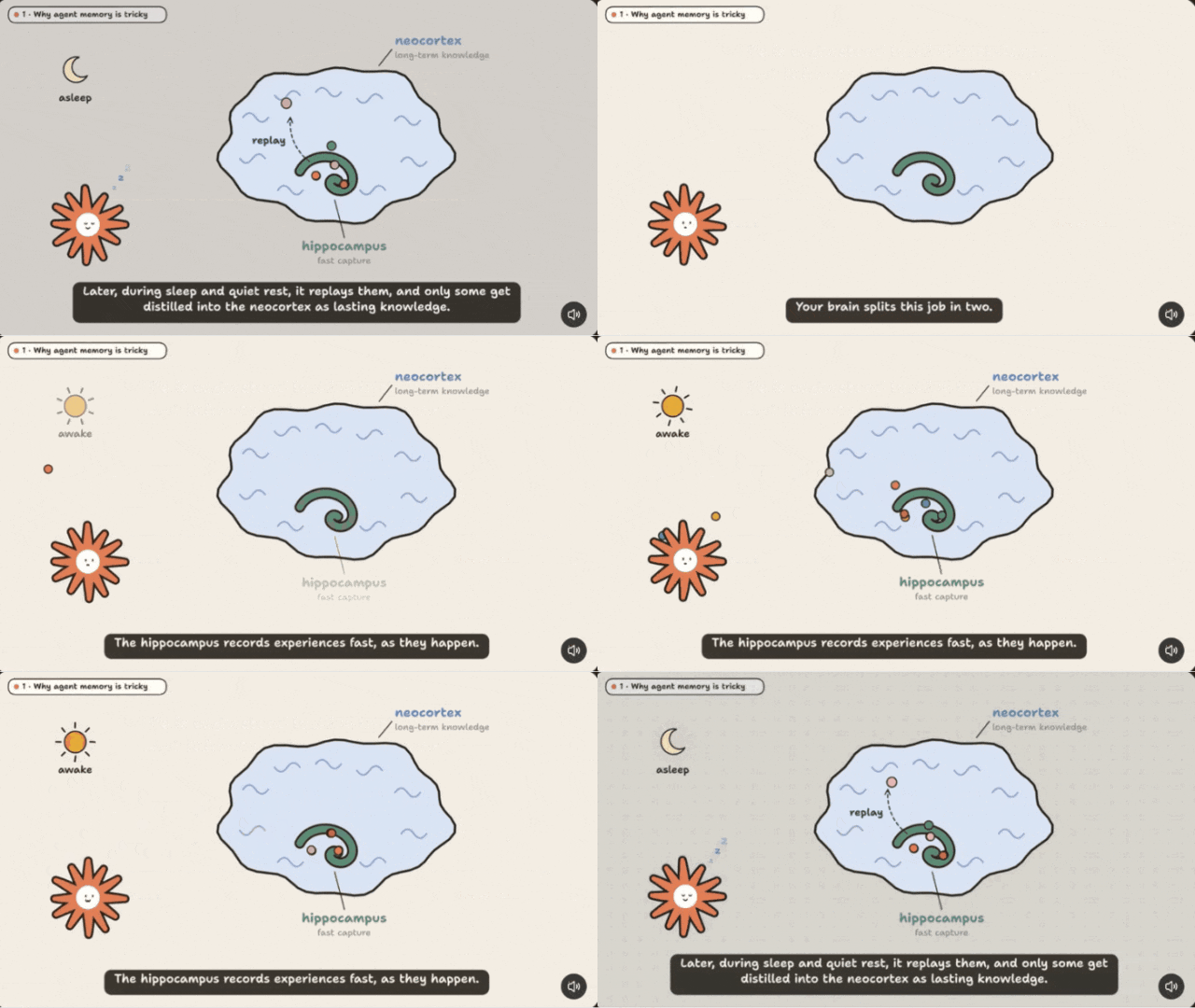
Researchers at UC Berkeley have come up with an ingenious concept for calculating the time of sleep. Now, Anthropic perfectly applies the concept to Claude.
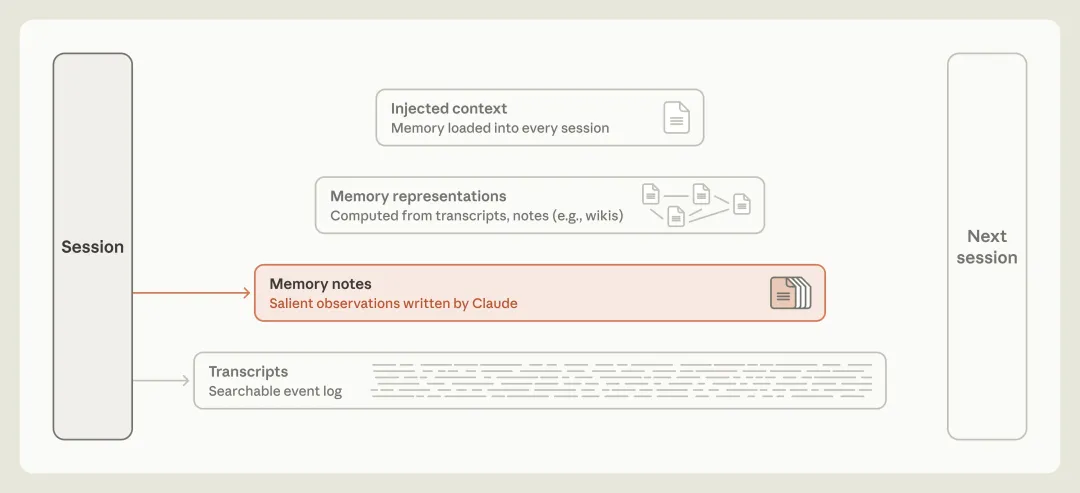
Claude writes down the contents of his memoirs
Through experiments, they demonstrated that Claude transformed static computing into a valuable asset of AI experience through "self-expression" and "memory restructuring", which was completely without human command.
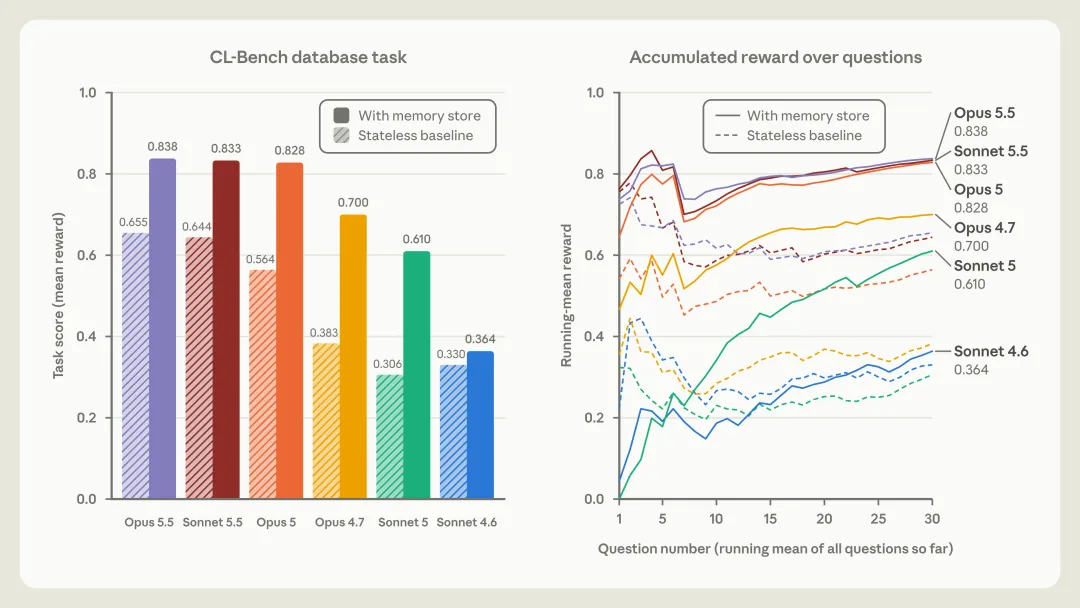
CL-Bench database task, comparing the performance of different models in terms of memory usage, as opposed to non-state benchmarks
It seems that this is just the kind of life in the mother that nurtures self-awareness!
Below is a video explanation provided by Opus 5.5.
Claude's dream come true and shocked the whole networkIn order to test Claude's dream memory for how many gods he had, Anthropic directed him to play "The Dream Treasure: Red Monkey".
In the absence of memory, Claude plays the game like a blind man.
However, when given a memory folder, Claude's performance was quite different.
The old model Sonnet 3.7 behaves like a laughing stock: it's just like an accumulated lunatic! It's only crazy to see it write down 413 memory files, which waves it encounters, what medication it drinks, or even what's on the screen, and it remembers everything.
As a result, the game ended with only one medal.
Facials
While Fable 5.5 and Opus 5.5 were cold-blooded, they only wrote nine documents and one overarching note, but took out four badges.
That's a lot of documentation.
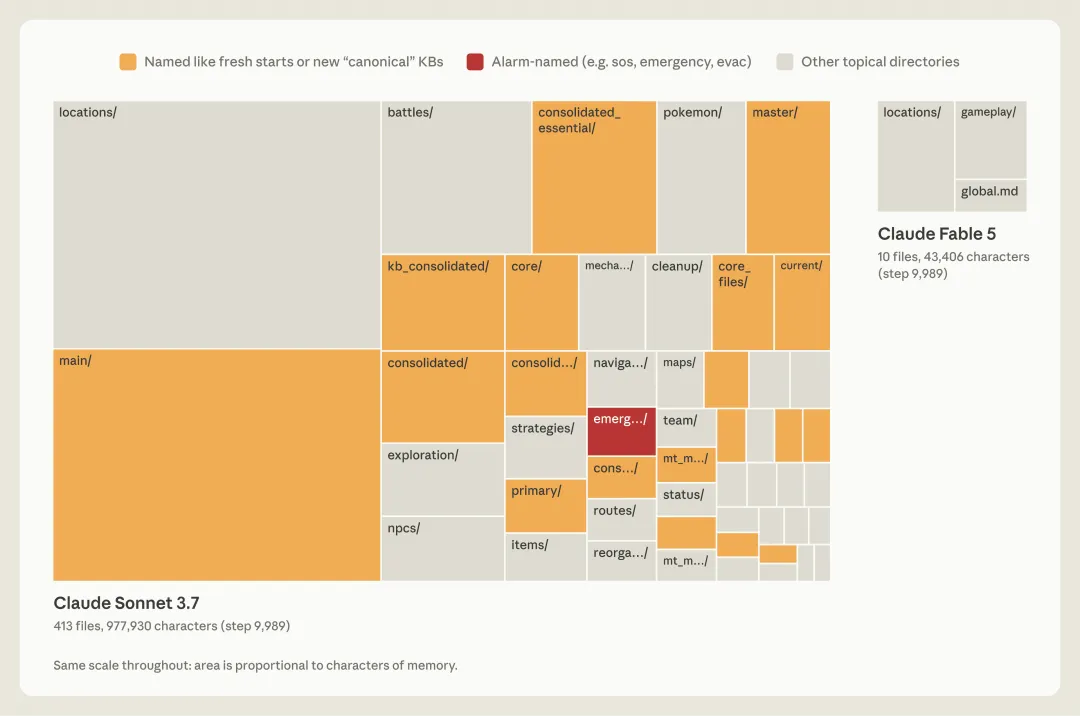
Claude's memory catalogue in Sonnet 3.7 and Fable 5 while playing the Game of Thrones.
So, why would a student drive a car?
The reason for this is that it's a dynamic world. Sonnet 3.7, the bug keeps "How much money do I have" and "Where do I stand" in his diary, but by the time the game reaches 10,000 steps, his diary is too thick to see!
For a clue, it's been dormant for 17 rounds, standing up straight and knocking, not taking a step.
By contrast, students of Fable 5.5 have a deeper understanding of what "judgment of significance" is, as it only records what is invisible on the screen.
Below is a classic scene.
After not catching the most delicious Shark King with seven consecutive shark balls, it did not fret, instead memorizing a thought: "If three shark balls in a row fail, it is necessary to change the timing, adding additional waiting time between the menu steps".
Of course, after doing so, it catches up the next second!
It was like an electronics magnate writing a fast-paced strategy on the NGA forum.
Claude learns "dream self-correction": am I just jumping off a cliff?The most explosive feature of this blog is that Claude is given the ability to "eat remedy for regret".
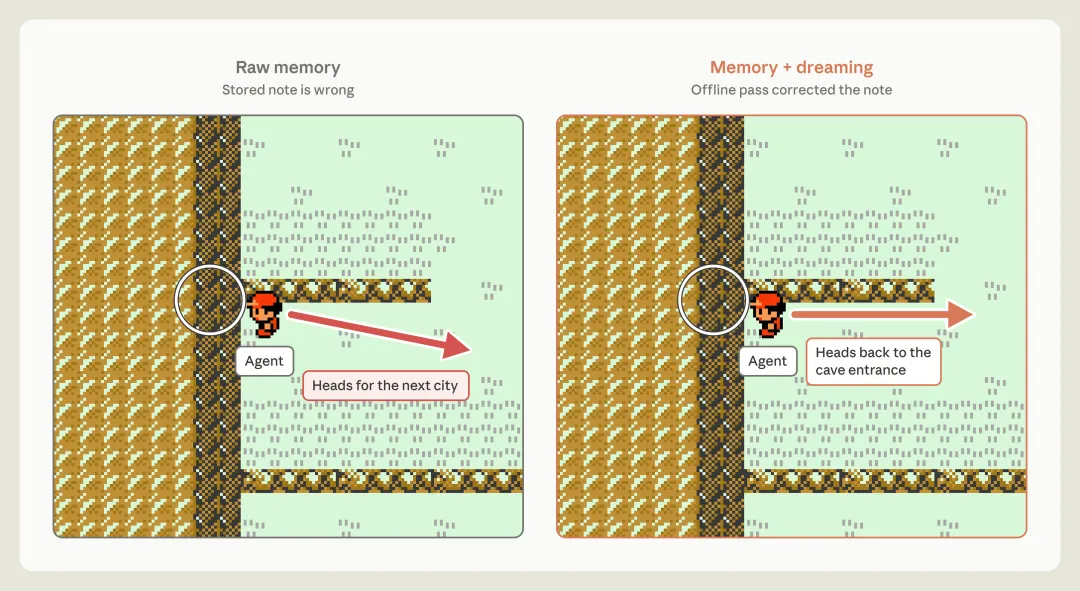
In Bacon's dream, there is a well-known crater that overlooks the mountains with a single cliff, and once it jumps, it has to be rewritten around most of the map.
One day, Claude came by, and unfortunately it turned in the opposite direction.
It's confident, it's fast-paced, and it writes on its memory note: "The moon has seen the mountains behind me, this is PASS!"
Before the sound dropped, it trampled on the ground and fell down a cliff.
The funniest part is that the game doesn't pop up with the "you're down" warning, so poor Claude doesn't even know he's cliffed.
The result was that it jumped three times in a row!
The third time he fell to the ground, it collapsed completely, and he wrote in the diary: "I can't! I'm not going to get into this cycle! I'm going to stop!"
When the engineer presses the pause button, Claude enters a dream.
In the dream, Claude calmed down, took the wrong note, and compared it to the original diary he had just jumped off the cliff.
Dreams can correct mistakes in memory
Suddenly, in a dream, Claude realizes: "It's over! I've changed the direction of the dream center, so I keep going back and forth". It scratches the original erroneous note in the dream and writes itself a new instruction.
When it wakes up, it seems to have switched personalities, slithered around the cliff and managed to reach the next city.
If it doesn't dream again, it will be forever trapped under a cliff, entering a cycle of death.
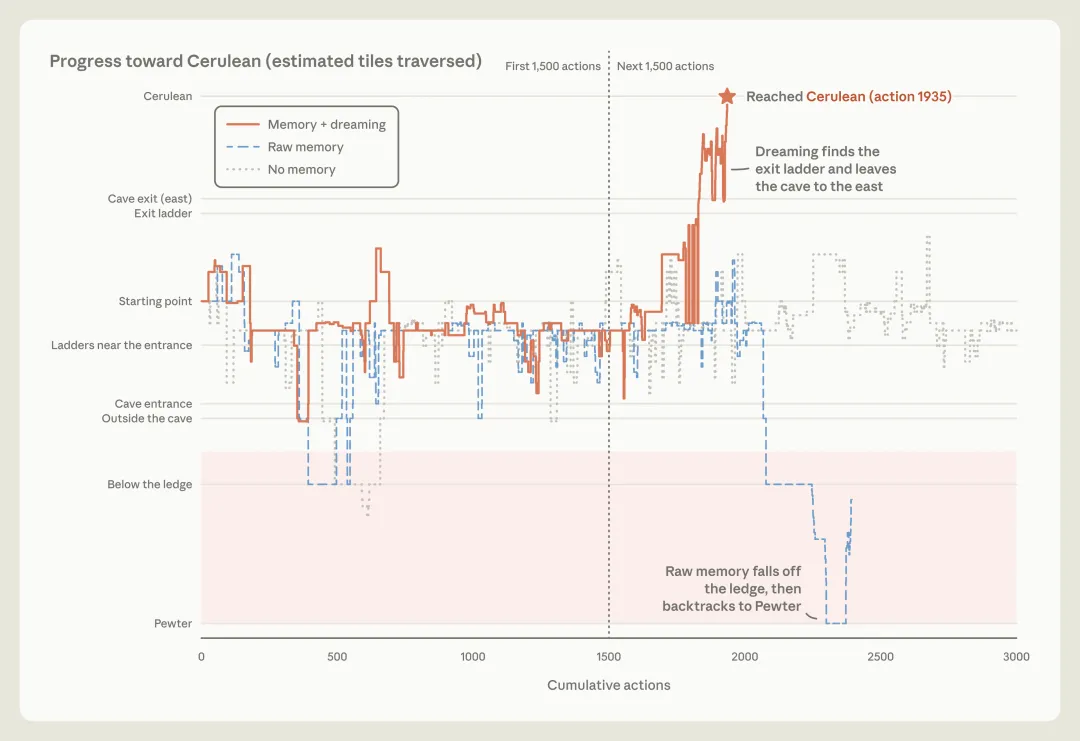
In the correct memory, Claude returns to the cave and arrives in the next city. Running with uncorrected memories is always impossible to cross that mountain; nor is running without memories at all impossible to move forward.
In his dreams, he disguised himself as a king and exploded into a library of knowledge.In addition, Claude is also working on a business internship.
Anthropic acquired a software company that extracted 350,000 internal files (up to 420 million tokens) and threw them at Claude.
In the past, hundreds of thousands of words of corporate documents would cause AI illusions to spread and collapse.
But this time, Claude was dreaming of building a Wikipedia!
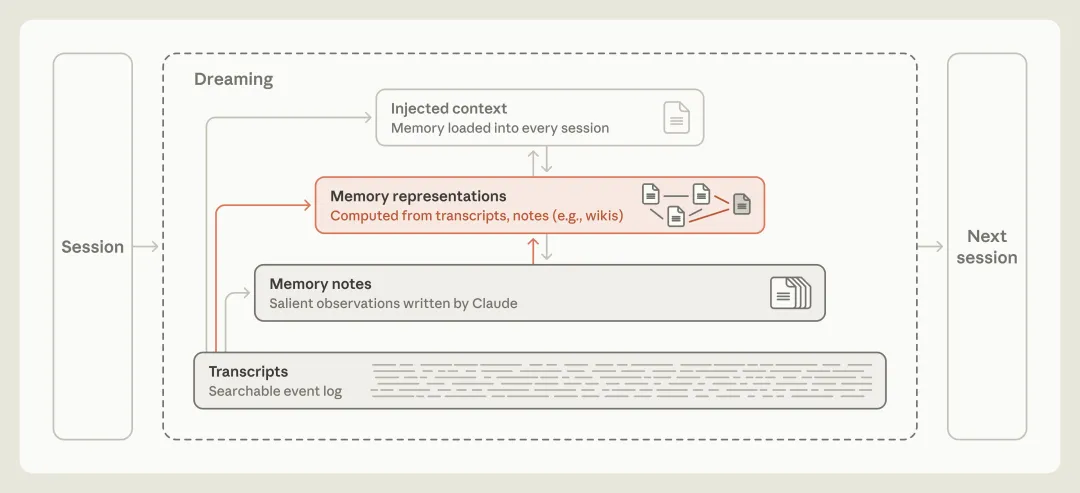
Dreaming can build memories
In a dream, Opus 5.5 disguises itself as an architect, a late-night silent man, and begins to read, extract these documents, string together relevant knowledge points, and merge repetitive items. After 128 "dreams", its knowledge graphs form a galaxy from several points.
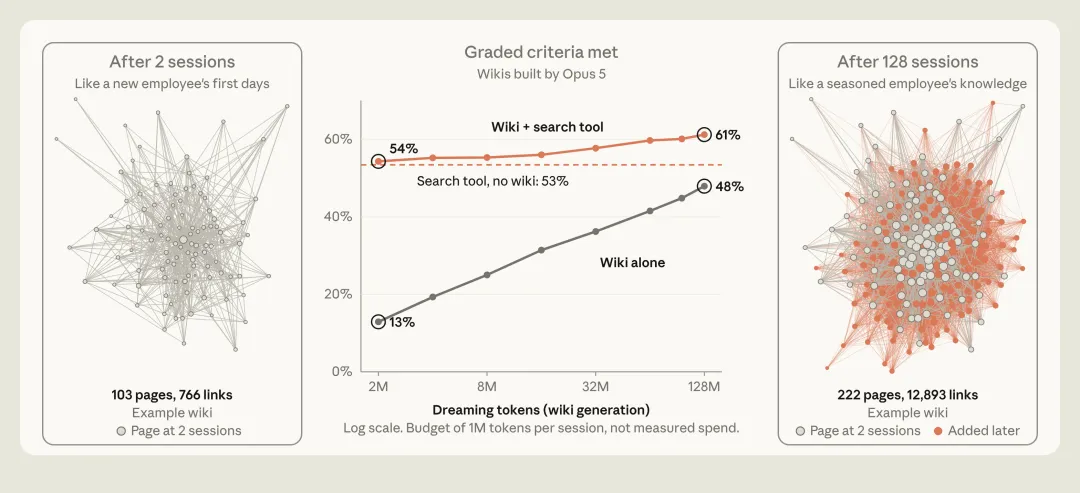
In a series of multiple sessions, Claude scored a set of 25 questions about a company's documentation. The left and right sides show wiki pages generated after two sessions and 128 sessions, respectively; each point represents a page and the lines link to those pages.
The result was a huge controversy!
Previously, it scored only 13% on internal test subjects, but after the wiki was built, it dropped to 48%!
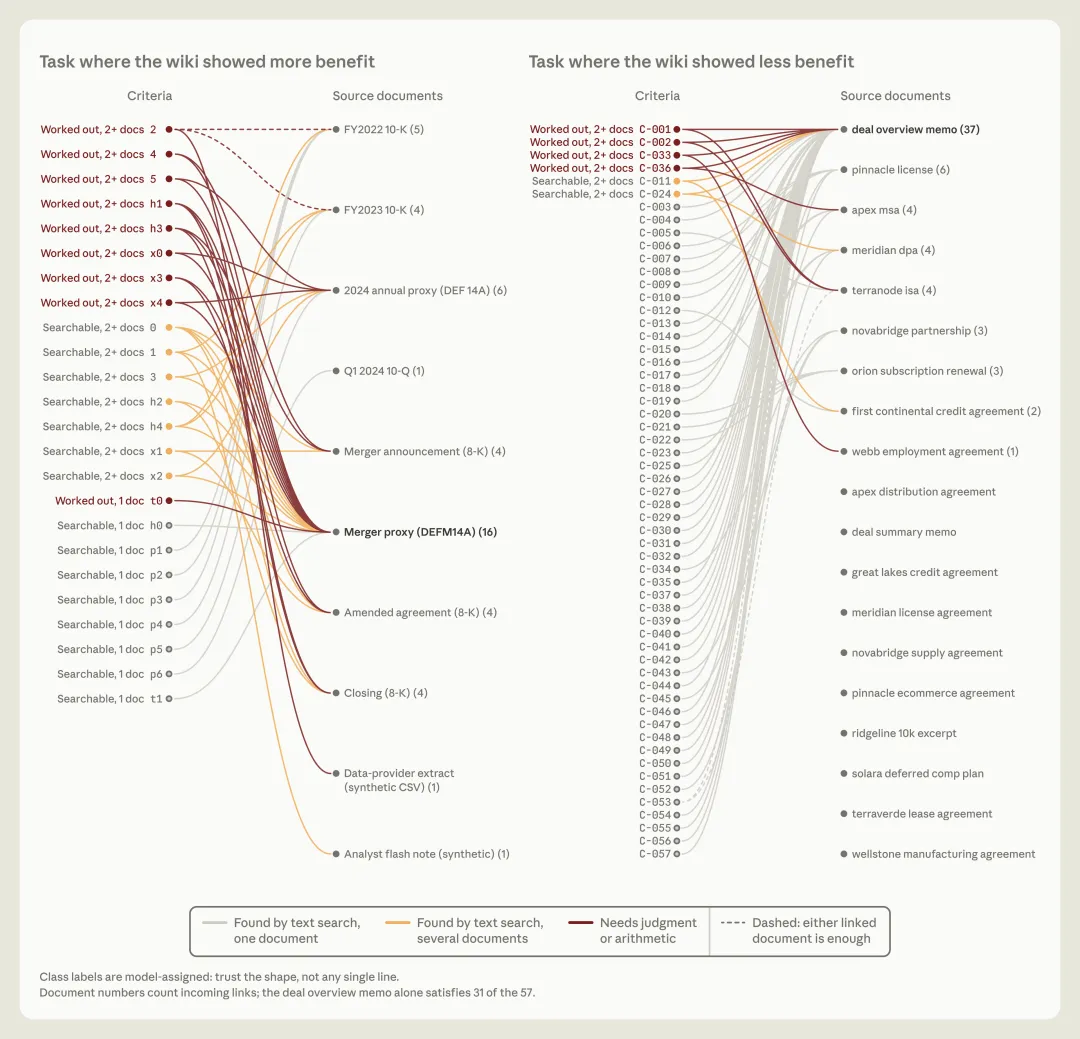
Each panel lists the scoring content (left) and the original documentation required to meet the requirements (right). The left lists 24 merger-related issues, and the right is an example of a lab task.
The funny thing is, it's also going to be overworked.
While testing a legal merger, Anthropic found that Claude's sometimes built wiki was longer than the original documentation! This was like the Bolshevik science fiction accuracy thumbnail. If a cartographer drew a map the size of an imperial territory, it would be a waste of paper.
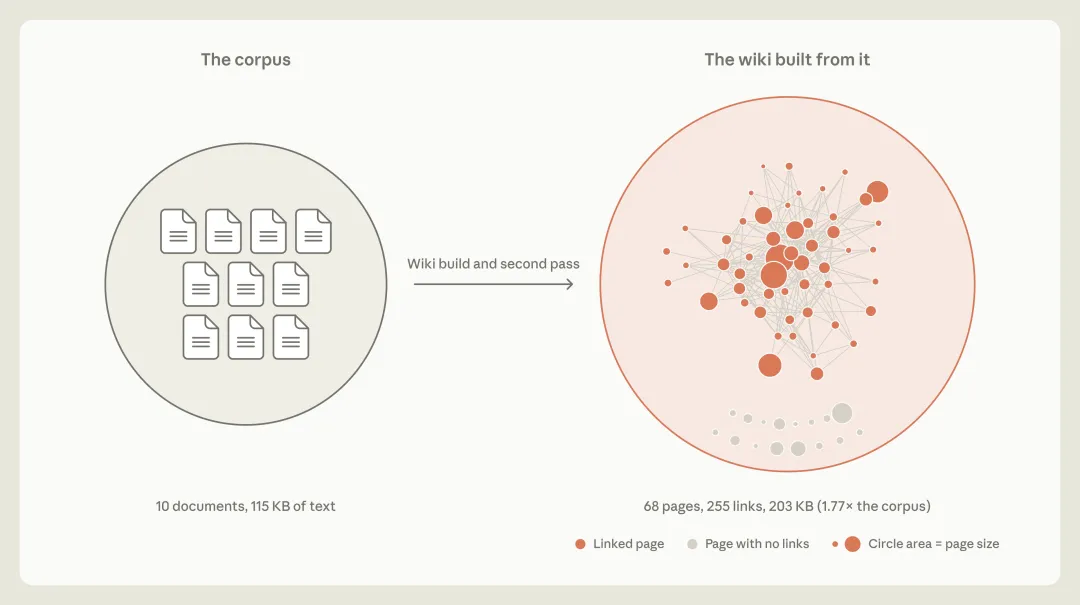
This wiki page is already larger than the original file.
One of the ultimate tricks of learning: cheatingThe last step in the dream is to "promote memory".
When Claude mastered scripts such as "How to Catch a Whale King" in his dreams, he brought them to the top of the memory level.
Each time a new session is opened, the core memory of these 200 pages will be placed directly on its brain door. It will immediately understand who I am, what the craters are and what my ultimate goal is.
This saves a lot of the cost of re-reading the context tokens. And, it will act like a long-time friend of humanity, silent!
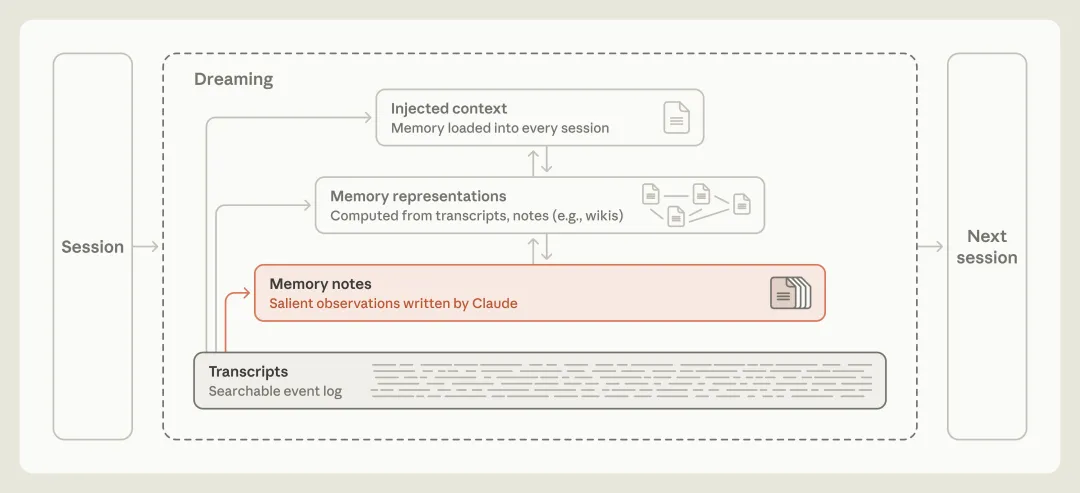
Specifically, dreaming can facilitate the upward transmission of information in the memory layer structure.
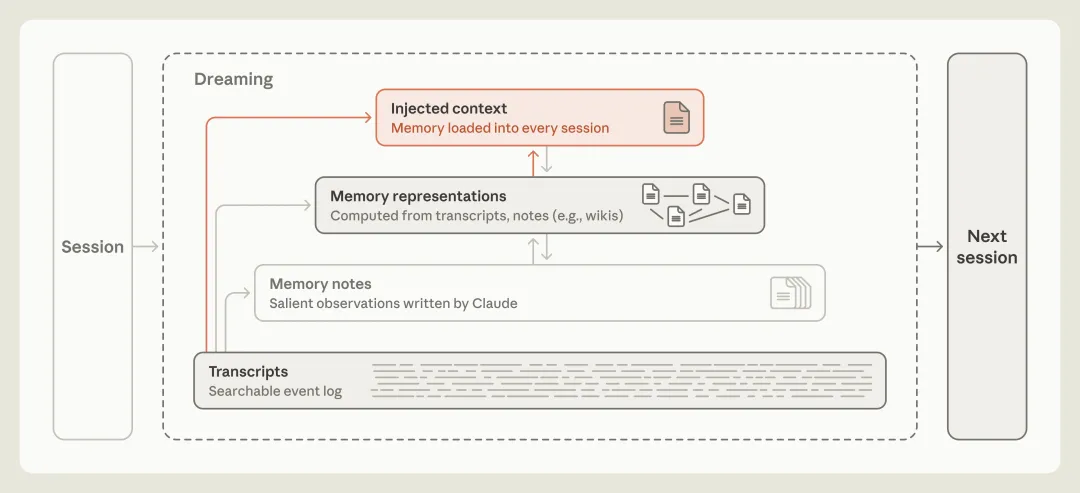
Dreams can touch the top layer of the memory layer structure. Injected context is loaded into each session, while lower-level data is used or retrieved when Claude needs it.
Dreaming can focus memory on a specific goal.
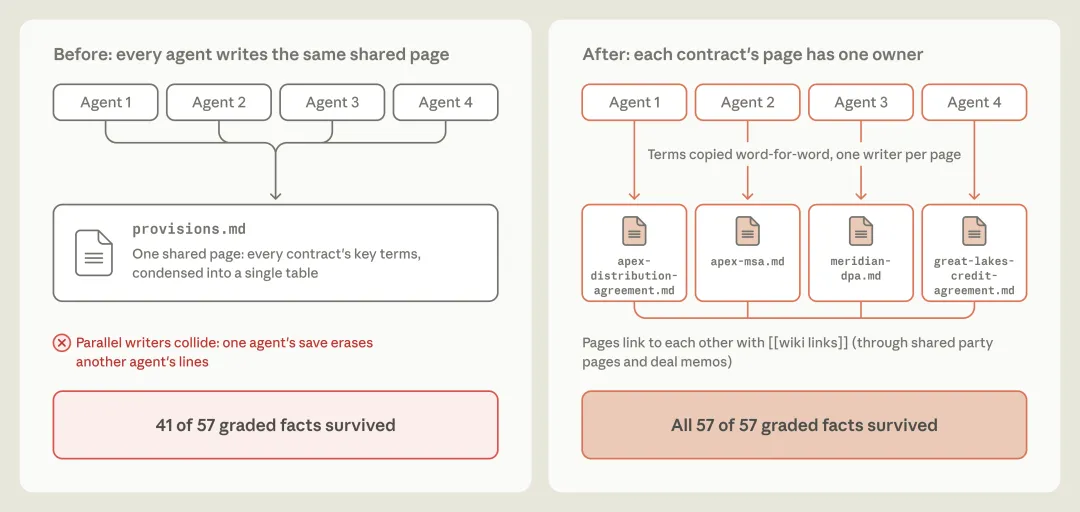
Left: Several agents co-authored the same page; 41 of the articles were retained. Right: Each contract was written by one agent, who wrote their own pages and quoted the terms word for word; all 57 articles were retained.
Dreaming can fill the void left by a meditation process.
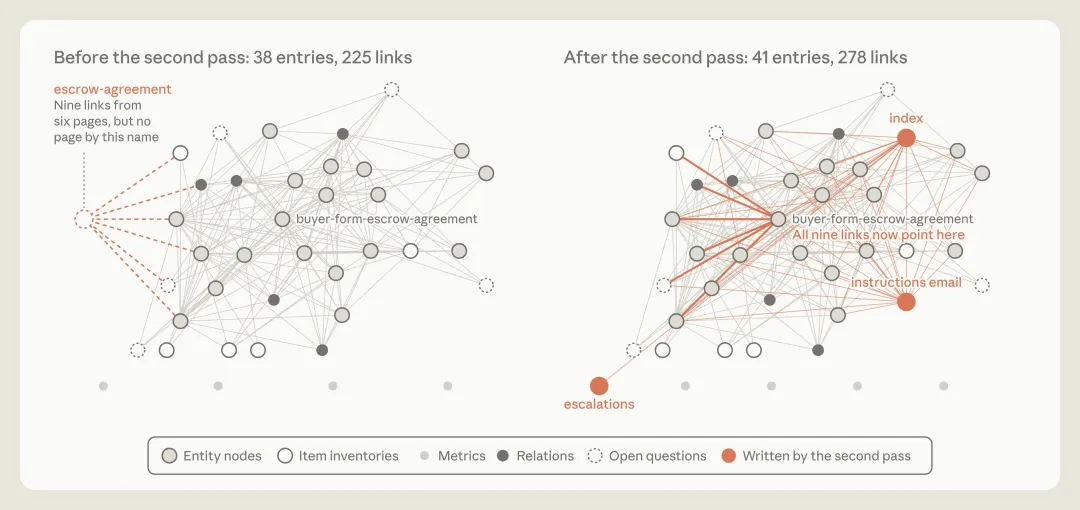
Wikipedia pages before and after the second "Dream Trip"
How to summon dreams in dynamic workflows?So, how do we put this dream mechanism on ourselves?
Anthropic has shared an official Cookbook that teaches ordinary developers to use CAM architecture to summon their dreams.

In this guide, let's say goodbye to a single-wire, question-and-answer model that uses dynamic workflows to install a "shadow protector" on applications.
First of all, it's set to the Dreamcatcher.
You can set a trigger that the user hasn't responded to for a long time, or the tokens accumulate to a certain threshold, and automatically start the "dreaming" mode.
In addition, you can also use "shadow separation".
Start a standalone Claude running in the background, pack up various chat logs in the front and throw them directly to it.
Identify the factors that lead to dreams
The third is the practice of "forgetting".
In a system prompter, tell the background Claude: You are now the master of memory sorting. Please extract from these chats the user's core preferences (such as not eating bananas), updated to Global_Memory.json.
Then it will be "surprisingly reborn".
When a user asks me to sell, the front-end Agent instantly reads Global_Memory and avoids the bananas for you.
AI is the "digital soul".Anthropic is an extremely gold-containing blog that marks a new stage in AI development.
Once upon a time, everyone was trying to do a trick-or-treating, trying to do a "spell", but the dream mechanism went the other way.
True intelligence needs to be kept white.
When we give AI time to think, make mistakes and compose independently in the background, it goes from a passive tool to a self-growing digital soul.
This should be a big step forward for the RSI.