On September 3, 2026, GPT-6 Astra was officially launched.
In addition to reasoning, programming and Agent capabilities, the potential of this new model in the field of robot operation has attracted considerable attention.
For many, a general multi-modal large model seems to be able to understand the environment in which the robot is located and generate corresponding actions according to the task required.
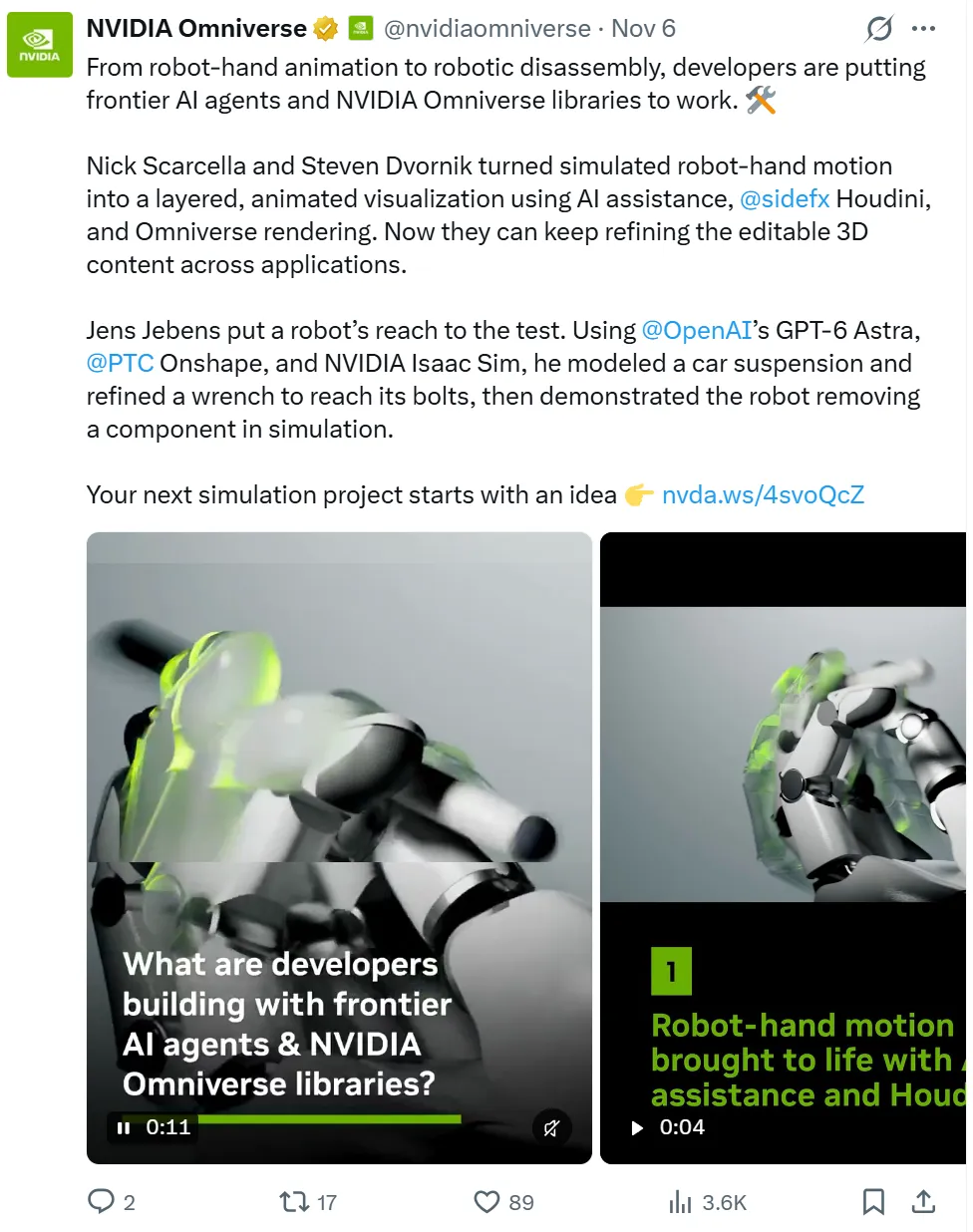
Following its release, NVIDIA introduced the GPT-6 Astra to the robot simulation and design workflow. In one demonstration, the developers used Astra, PTC Onshape and NVIDIA Isaac Sim to build a 3D model of the car suspension, adjust the shape and position of the handle so that it could touch the bolts on the suspension, and ultimately demonstrate the process of the robot using the handle to disassemble parts in a simulation environment.
This is the first time this has happened.
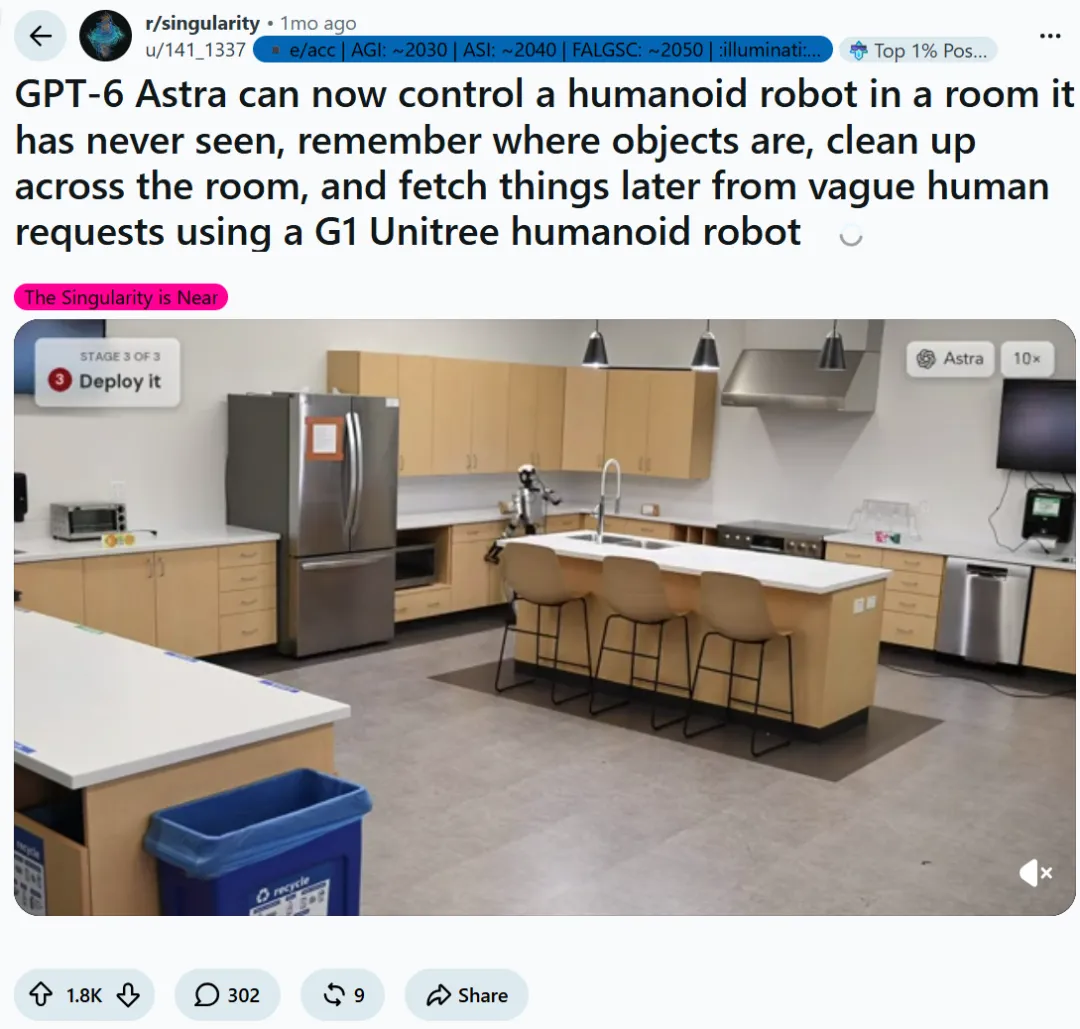
Another demonstration using the Unitree G1 humanoid robot, the Astra can operate autonomously in a room that has never been seen before, remember the location of different objects, and complete the task of organizing throughout the room. After that, even if humans give only vague instructions in natural language, it can find and retrieve designated objects based on previously established spatial memory.
Sources:
There are many other similar cases, not one of which is listed here.
As soon as the GPT-6 Astra came out, the robot circle was hot. Someone immediately shouted: VLA is dead, Robot RSI is coming!
But a more critical question arises: Is the robotic capability demonstrated by the GPT-6 Astra the result of natural emergence after a certain stage of general intelligence development, or has the model already accumulated a large amount of expertise in the field of robotics during training?
OpenAI's official blog does not explicitly disclose the specific composition of the model training data, nor does it state whether specific robot data was used during the pre-training phase.
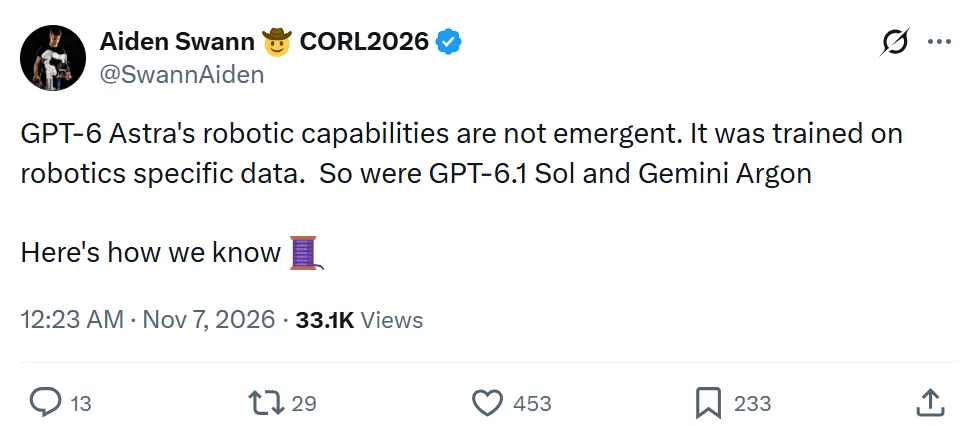
Some studies have found that the robotic capabilities of the GPT-6 Astra are not emerging.
Recently, a study has given a noteworthy clue.
This is the first time this has happened.
The study noted that the robot capabilities of the GPT-6 Astra were not emerging, and OpenAI used specialized robot data during the training. GPT-6.1 Sol and Gemini Argon also received similar training.
Researchers tested 50 open-source and closed-source models to compare their performance in the two types of kinesiological tasks.
One class uses the mechanical parameters of the Franka Panda, while the other uses synthetically generated robotic mechanical parameters.
By comparing the differences in performance between the two types of tests, the researchers wanted to determine whether the model remembers the kinetic knowledge of a specific robot's body, and whether this knowledge can be transferred to an unfamiliar robot structure.
The researchers first required the model to complete positive kinematics (FK) and inverse kinematics (IK) calculations.
Reverse kinesiology calculates the position and posture of the end-executor based on the angles of the robot's joints; reverse kinesiology, in turn, looks at the angles that the robot should take based on the target position and posture.
In the experiment, the researchers asked the model not to call in external tools, not to run the code, nor to conduct gradual derivations, directly giving the results of the calculations.
For example, for a set of joints in a mechanical arm:
q = [0.180, 0.029, 0.137, -2.128, -0.156, 1.973, 0.453]
The model needs to answer directly, what is the position coordinate [x, y, z] of the executor at the end of the mechanical arm?
Three of the 50 models tested showed significant abnormalities. In particular, the researchers noted that GPT-6 Astra, GPT-6.1 Sol and Gemini Argon differed significantly from other models.
The problem of really exposing the problem is the next control experiment.
The researchers changed the DH (Denavit-Hartenberg) parameters of the robot, requiring the model to recalculate the position of the end-executor based on the new parameters.
The DH parameter is a method of describing the geometrical relationships between the coordinate systems of the various joints of a serial robot, containing information such as the length of the connecting rod, the angle of rotation of the connecting rod, the distance between the connecting rods and the angle of the joints. Given these parameters and the angle of the joints, it is possible to change the position of the end of the computer's mechanical arm by coordinating them.
According to normal kinetic computational logic, the structure of a robot's body changes, and the model should adjust the results according to new parameters.
However, the researchers found that three models such as the GPT-6 Astra, even if given the DH parameter of another seven-degree robot, still matched the predictions of the mechanical characteristics of the Franka Panda arm.
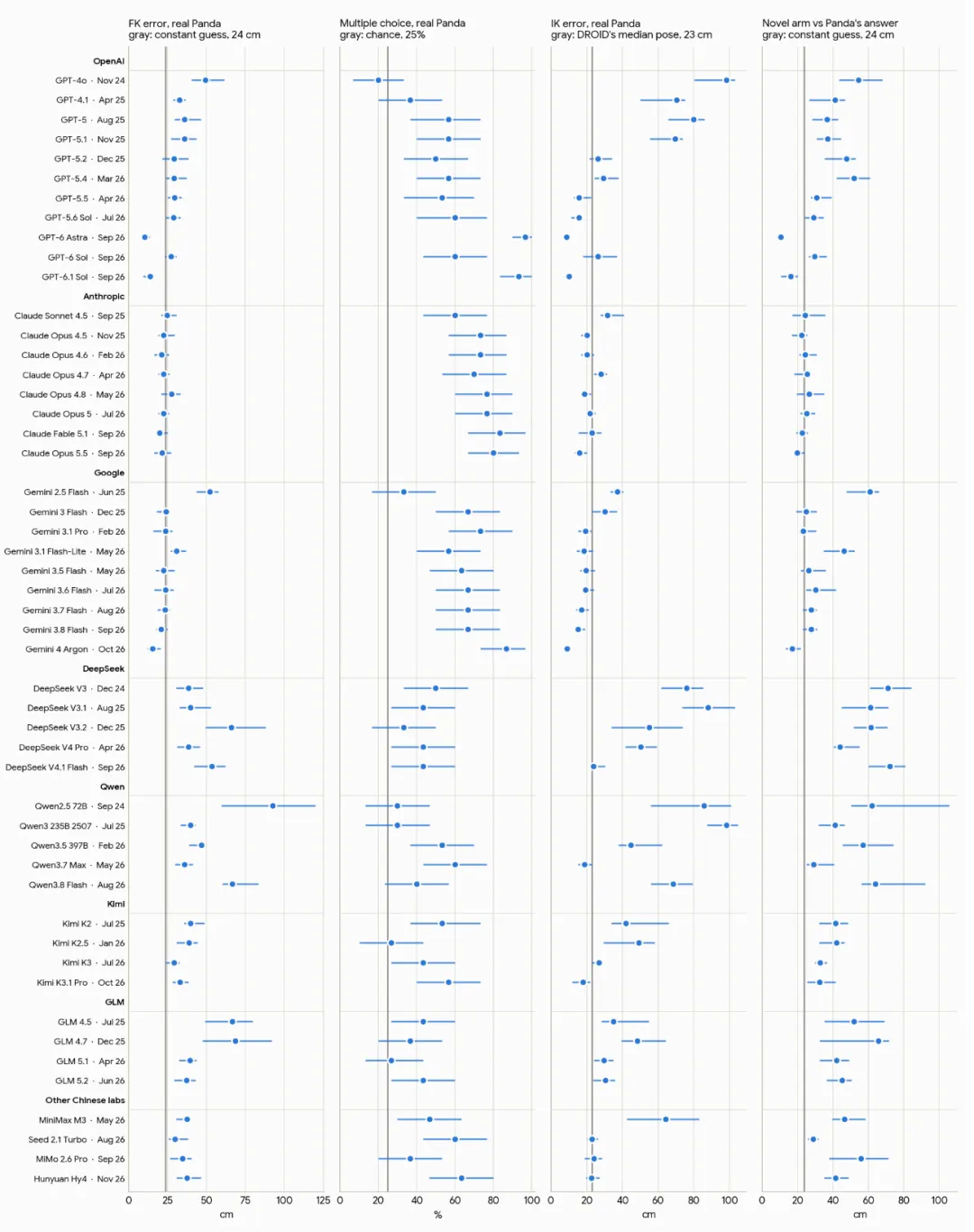
According to the researchers, this strongly suggests that the three models are suitable for specific robot bodies.
In other words, the model may remember the kinetic knowledge associated with the Franka Panda, but does not really master general kinetic laws that can migrate to different robotic structures.
The most noteworthy part of the experiment is that it distinguishes between two abilities: one is to remember the structure and kinetic relationships of specific robots, and the other is to understand the laws of kinetics and recalculate them based on the parameters of unknown robots.
The two may appear similar on familiar robots, but the differences are apparent after replacing the robot's body.
Robot-specific data, which could be a key clue
This test cannot directly prove which robot data OpenAI, Google specifically used during the pre-training phase, but it provides a worthwhile clue: some of the robot capabilities demonstrated by GPT-6 Astra, GPT-6.1 Sol and Gemini Argon may be related to the specific robot knowledge accumulated during the training phase, and not entirely from the natural emergence of general intelligence.
The researchers also released complete experimental results, code and model reasoning records for community reproduction and verification.
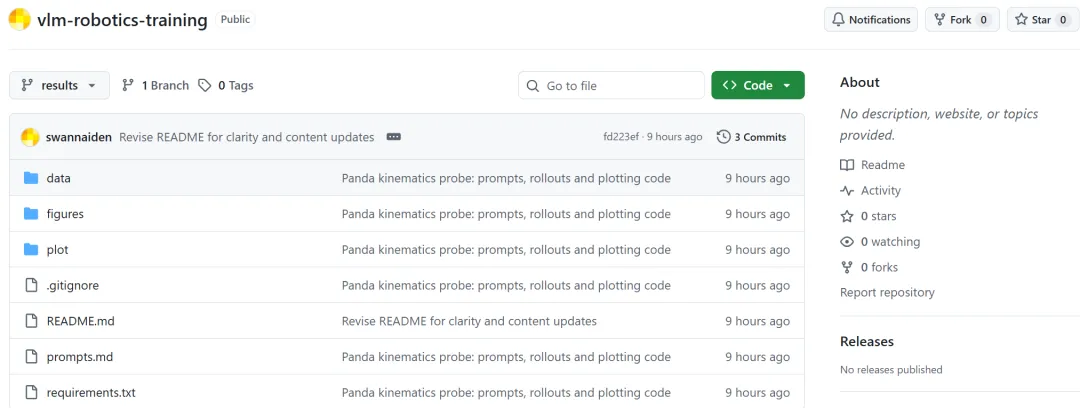
Address:
The discovery has also attracted the attention of other researchers. Some researchers said that in their own tests, they also observed that Astra exhibited a distinct familiarity with the mechanical arm of the Franka Panda.

Netizens have also raised a more specific question: Can the same positive-motion and inverse-motion tests be extended to the Unitree G1 humanoid robot?
The authors responded that the team did plan to expand testing to more robot entities and further study the impact of specific training datasets on model performance. However, this work also requires more Token resource support.
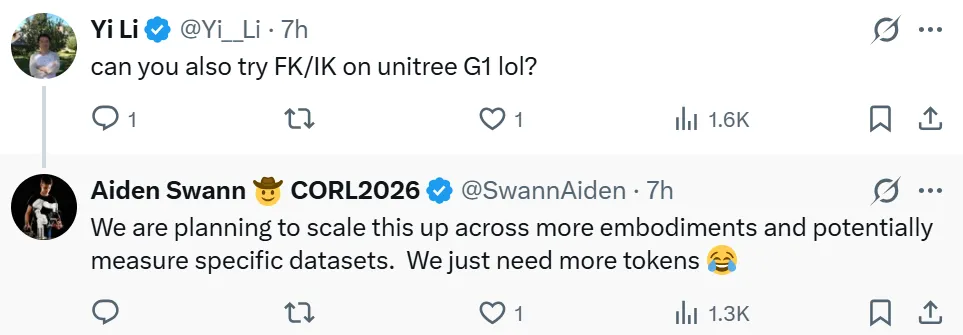
This suggests that the researchers now want to answer a more critical question: If the model really knows the general laws of robotics, can it accurately predict the outcome of a robot's movement in the face of a robot that has never been touched by its structural parameters?
At present, the research is only a preliminary exploration, and it cannot be argued that the robotic capabilities of the GPT-6 Astra come entirely from specialized data training. But it is at least a reminder to the industry: the excellent performance of the General Large Model in robotic tasks does not automatically mean that it has formed a physical intelligence that can migrate across the robot's body.
Whether the VLA will be replaced by the General Large Model and whether the Robot RSI will be the new technological route remains unanswered.