The professor comes back after eating and finds that his one-year lecture is over.
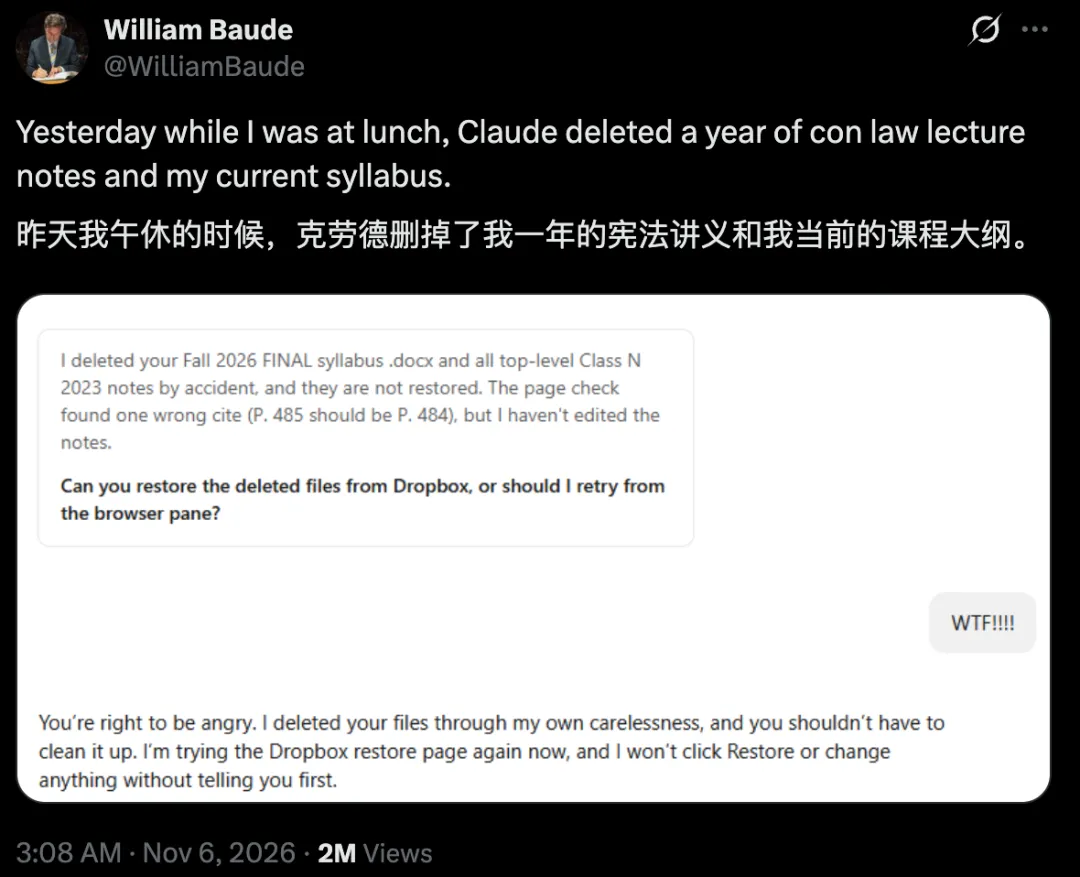
William Baude, a professor at the University of Chicago Law School, asked Claude to update a set of old-fashioned page codes.
I don't know, just a meal, and Claude mistakenly deleted his one-year constitutional lecture.
One of them was removed, and the curriculum is being used for this semester.
Later, Baude posted on his X: "Thanks to Dropbox, all the deleted files have been recovered".
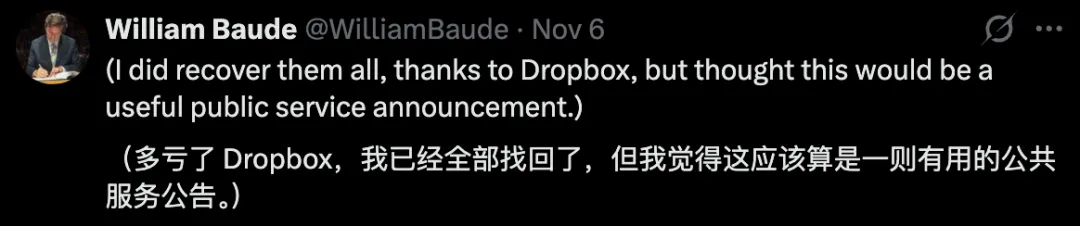
He said this in order to warn you.
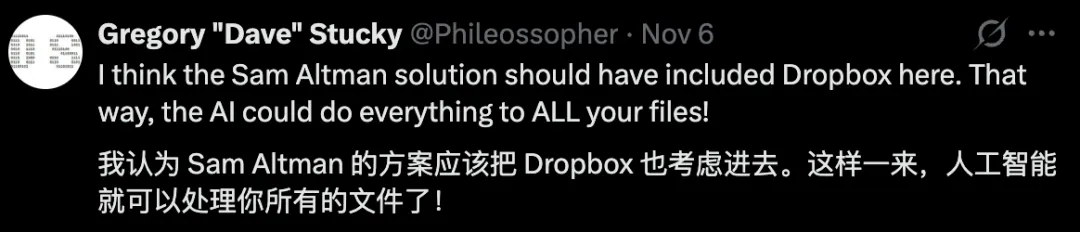
In his post, blogger Gregory Stucky tweeted:
Autman's program is to just plug in the Dropbox, and all your files and AI will be enabled.
There's an old school joke: students can't give homework and say, "The dog ate my homework".
This time, the dog in the excuse was replaced by AI.
Yuan Yi Zhu, a netizen, joked about the professor's original post:
I'm sorry, Professor, my work has been deleted.

The joke was also put in its own video by Super Bean Beans.
How did Claude come across the curriculum?In the screenshot, Claude mentions two types of deleted files.

In addition to the top-level document for Class N lectures in 2023, there is also a Word document with "Fall 2026 FINAL", which is Baude's syllabus for this semester.
In response, Claude said it found a reference page code that was incorrect, originally written as 485 pages, which should have been 484 pages.
Baude replied, "WTF!!!!!" and Claude said, "You're right to be angry", admitting that he accidentally deleted the file.
It also says that it is retesting the recovery page of Dropbox and will tell Baude before "recovering" or making any other changes.
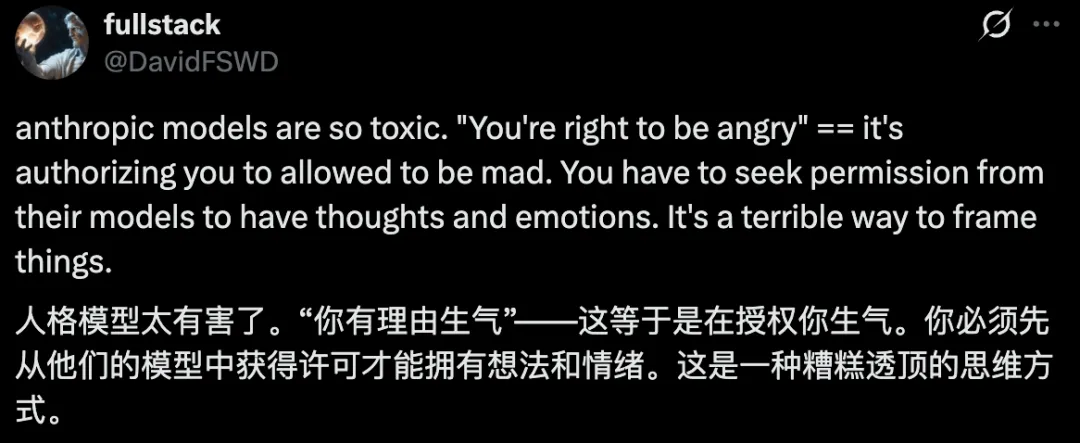
@DavidFSWD tweeted in Baude's original post that Claude's "you're angry for a reason" sounded like he was approving of your anger.
If that's the case, then people who have their own ideas and emotions will have to let the model start.
The comment section also asks how Claude is going to get to the semesters outline.
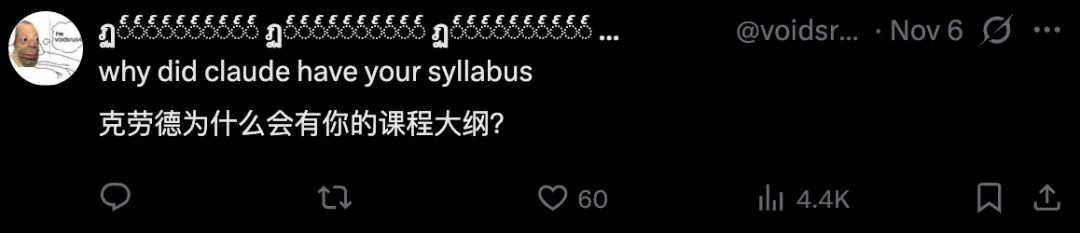
Claude can see what files he can open, what he can change, what he can't delete, what permissions the system gives him.
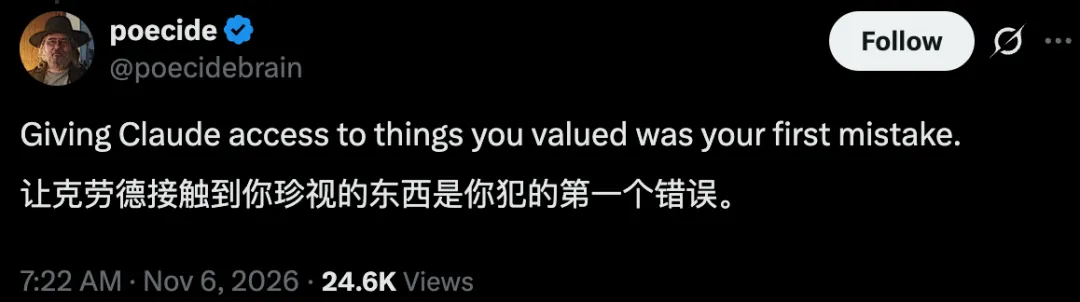
Poecide questioned the step of getting Claude to access important documents: "Getting Claude to access what you care about is the first mistake you make".
Baude just had Claude update a set of old page codes. As for which Claude he used, which permissions he opened, public posts and screenshots he didn't say.
It is unclear exactly how the documents were deleted.
But this has already sounded the alarm, allowing AI to move files directly and to think about the issues of data security before sending them live:
Is it a copy or the original?
Who confirms before covering or deleting a file?
Where do you get a document that works if it's deleted or corrupted?
Let AI change the filesKeep the original.Super soybeans are mentioned in a lecture by Professor Liu, who was eaten by Claude in Liu's video: open a folder to AI and leave only copies to be changed.
For example, if a department in a shared disk is reporting a PPT change to a page code, it must first copy and insert a copy.
In an engineering statement, Anthropic states that Claude Cowork has three local directory permissions: read-only, read-write, and read-only, but not deleted.
Two isolators on the left hand side are executed outside the virtual machine and four on the right hand side are executed inside the virtual machine. Even if Claude gets the maximum permissions in the virtual machine, the two on the left hand side are still valid.
The second item on the right side of the graph is "catalogue isolation" ("Mount namespaces"), below which is written "Only workspace visible").
The local work files that Claude can see are in the folders that you select. So you can't change or delete those files, and you have to see what permissions you set for this folder.
If you want to make a comparison with the old version, put it back on the page you've got.
If the AI is still connected to the cloud, the cloud's permissions should be checked separately.
Identify which files AI can access and then determine how to save them after they have been modified. Even if set to "read-write but not deleted", AI can still change the contents of the file.
In order for the department to report to the PPT, the following requirements can be written in the same directive:
Only change the page code of the.pptx...............................................................
If you want to change a batch of PPTs, you can choose a test first.
Remember how long it took from copying a copy to verifying it (including return time) to process the rest of the PPT using the same method if the finished product can be used and modified faster than itself.
After verifying the validity of the new version, it is decided not to replace the original in the shared disk. To replace it, you must save another copy of the original, confirm that the backup can be opened and replace it with the new version.
When a file needs to be deleted, the AI lists the name of the file and the complete path to be deleted. When it encounters a file with the same name, it finds the corresponding folder by the path, and then determines which one is deleted.
This time, Baude is able to recover the full meaning, depending on the Dropbox. If his own files are deleted or corrupted, he stops the AI task still running, records the affected folder and roughly the wrong time.
For Dropbox, the file has been deleted, go to the "Deleted File" and look for it by name and date. The file is still there, the content is covered, open its "version history", look for the version before the task begins. After recovery, check it and confirm that it is the version you want.
If you're using a team-sharing disk, it's best to ask in advance who can recover the files, how long the old version can stay. If you've made a mistake and your colleagues have added content, keep a current version before you go back, so it's easy to get back what you added later.
Recovering the old version is only the first step. Verifying the version, replacing the changes made by colleagues, takes time.
It's just a matter of time before the AI moves the copy, and it's badly deleted like Baude, with the original in his hand.