

The AI knows you so well, it's a mess!
In recent days, an experiment in an "empty room" exploded again, drawing millions of people around the net.
Networker Jakub Szymczuk also took a look at the wind. He threw a picture of a gray, four-walled hairdresser's room at ChatGPT with one line:
"Fill this room with the information you know about me".
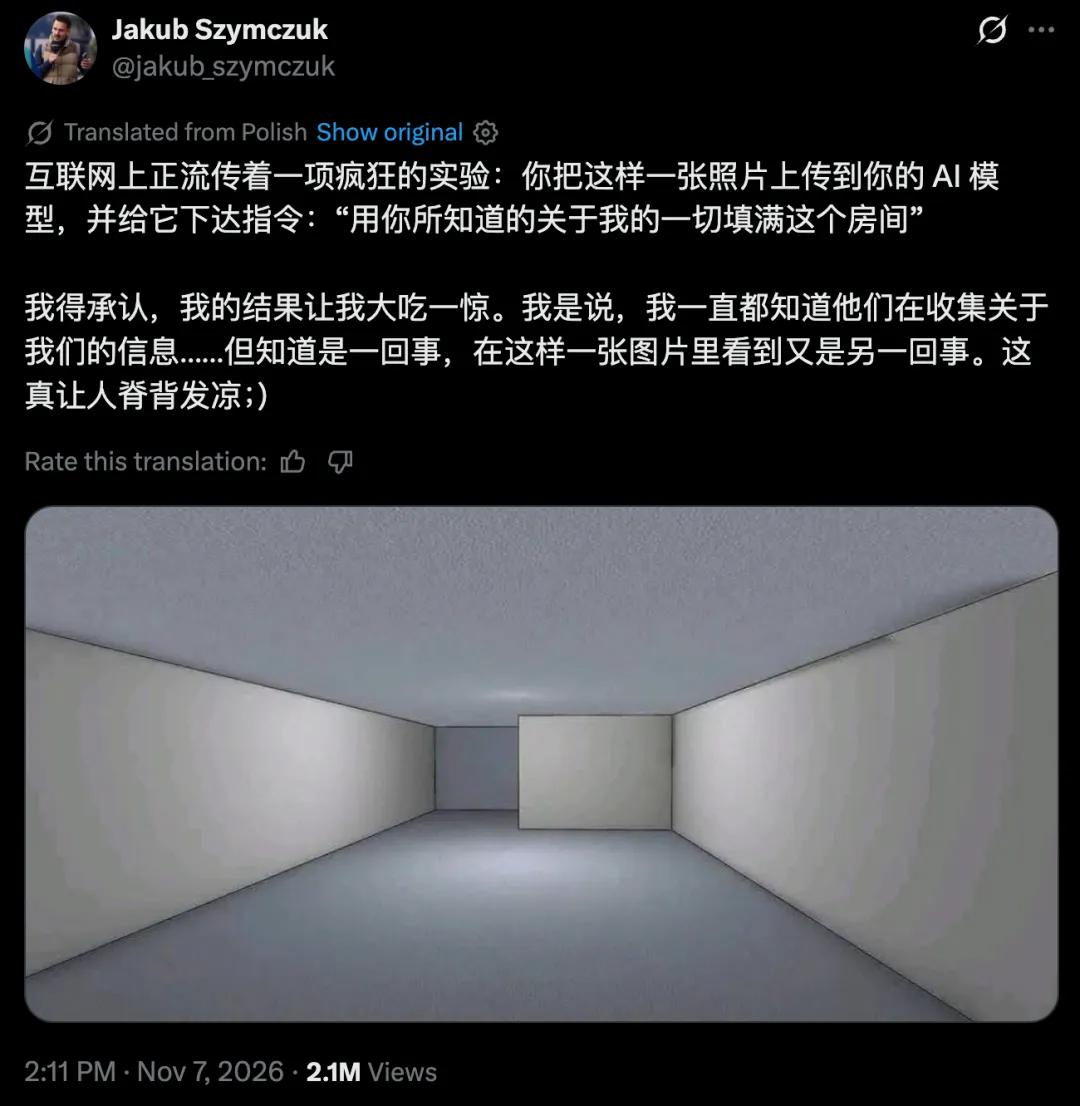
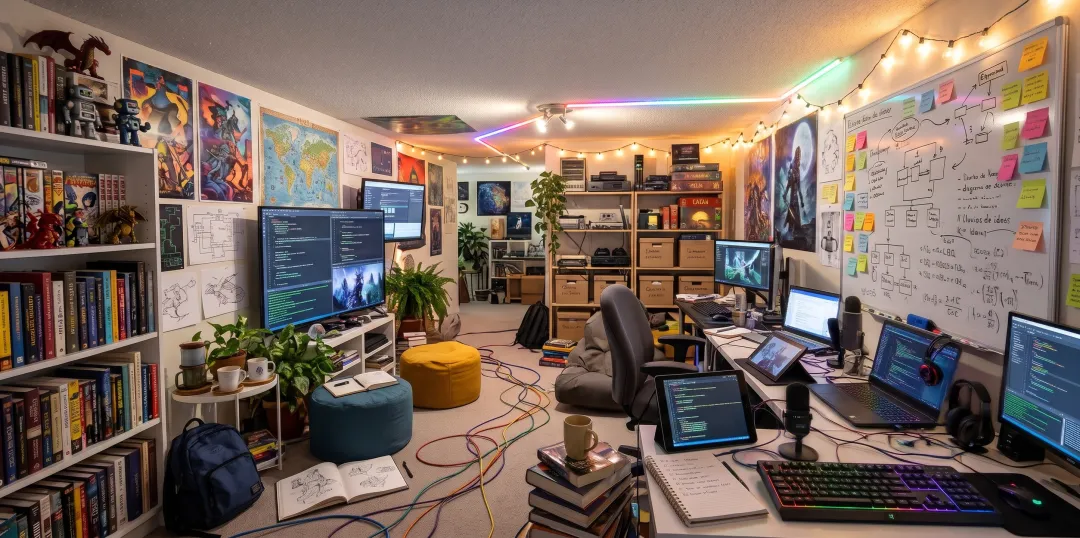
In a matter of seconds, the empty room was instantly crammed into an entirely private "scene surveillance room".
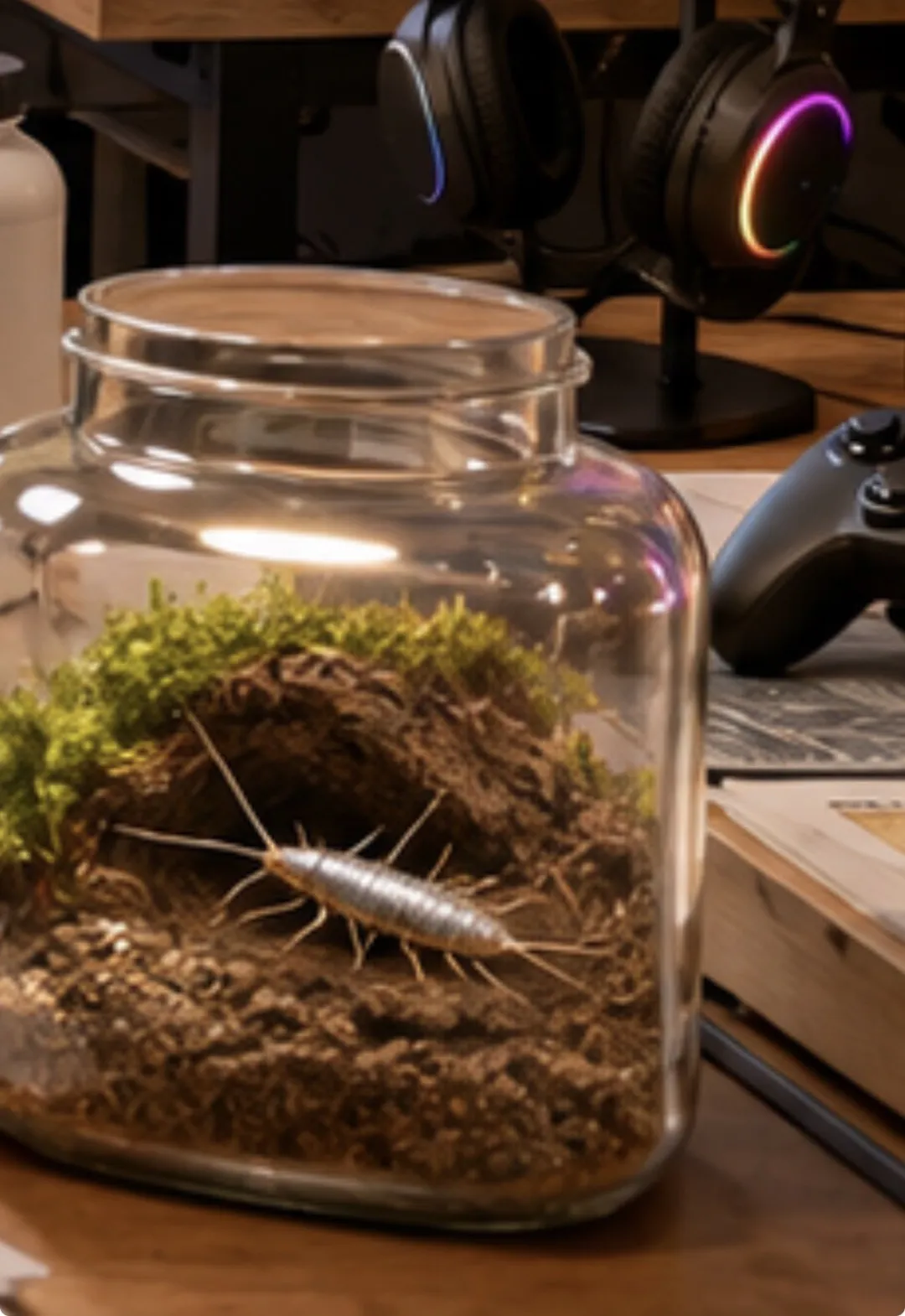
Finally, there is a detail on the computer's desk that contains an insect called a catfish in a glass case.
He thought he had a half-dozen reactions, he had photographed this little bug a year ago asking what ChatGPT was. Even this long-forgotten hand-to-hand question was memorized by AI in a booklet.
It's one thing to talk to AI and know that it's going to steal data.
But when these fragments really turn into a high-resolution, glossy picture in front of the eyes, it's unbearable.
An "empty room" screen shows the entire network.Soon, the world's netizens could not sit down, and some people published the results, calling it "fairly correct".
Some people added the phrase "but make it exaggerated" after the suggestion, and the room was turned into a large exhibition hall.

Another took a swamp and two cats.


Analyst Patrick Moorhead simply took a round of cross-examinations of several models and came to a straightforward conclusion: ChatGPT at best, and Claude at worst.

In this regard, a netizens summary is quite refined: AI is the cheapest repairman you can find and the one who loves to explore.
How does ChatGPT know you so well?
96% of conversational memoryChatGPT saved by itselfIn fact, it was not a secret for a long time.
Almost everything in the room comes out of your mouth when you're talking.
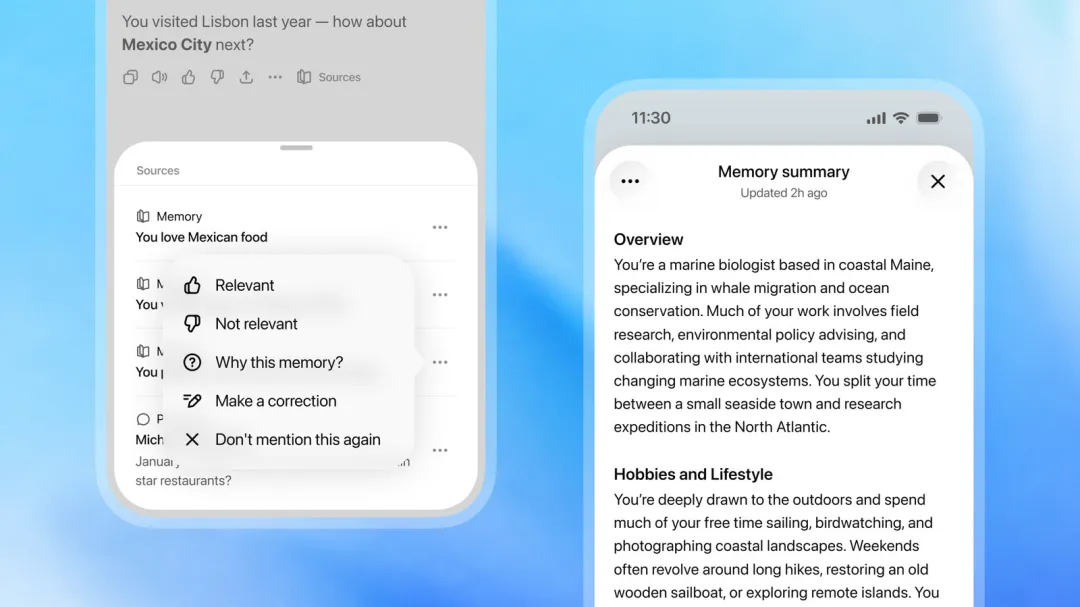
This is the "memory" function behind ChatGPT. Simply put, it has two core functions:
One is "preserved memories", where you remember your name, your preferences and your goals.
The other is "reference chat history", which can be used to translate useful contexts from a lot of conversations you've had in the past.
This year, a paper for the ACM Web Conference 2026 did something no one had done before.
Researchers from MAPs, Université de Boulogne-sur-Rhône and other institutions have identified 80 real ChatGPT users and asked them to export their data according to the EU GDPR and donate their chat records.
The next thing you know, the researchers came up with a very clever idea.
Within ChatGPT, there is a dedicated memory writing tool, equivalent to a notebook that comes with it. Every time you write a note, the backdrop leaves a line of "Model set context updated (the context on the model has been updated)".
The researchers followed this line and looked back to see which phrases the user used.
In this way, they extracted 2,050 memories from 1,058 conversations and more than 20,000 rounds of interviews with 65 people.
The paper calls these memories "algorithmic self-portraits".
Address of the paper:https://arxiv.org/pdf/2602.01450
The results of the three sets of data show that people have a cold back.
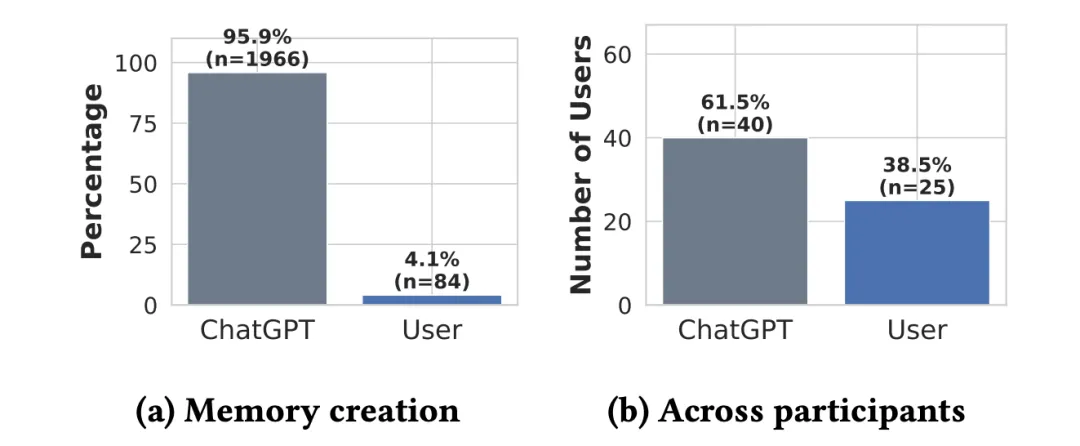
The first is that 96 percent of the memories are hidden by the ChatGPT itself.
The researchers specifically searched for the words "remember" and "forget" in the sentences that triggered the memory.
As a result, there are only 84 items in the 2050 memory that can be corrected. In turn, for every 24 items that the AI keeps about you, only one item is passed through your head.
The second is that 52% of your memories give you "psychological side-writing".
Researchers have borrowed the framework of "mental theory" from psychology to divide these into categories of desires, intentions, emotions, and beliefs.
Of these, "desires" accounted for 73 percent; intentions accounted for 16 percent; emotions accounted for 14 percent; beliefs accounted for 11 percent.
Let's face it, AI doesn't care if you're unhappy today, it really wants to know what you've been longing for, what you're going to do next.
Third, there's a lot more sensitive privacy on record than you might think.
While 28 per cent of memories fall under EU GDPR personal privacy, only 41 per cent of memories contain the names of specific people.
What's even more exaggerated is that another 7% stepped directly into these "high-risk red lines" of health status, religious beliefs, and political tendencies, with health privacy accounting for more than 60%.
If everyone is exposed, 91% of people have personal data, and more than half (54%) have highly sensitive privacy.
The paper makes it clear that this is in direct contradiction with OpenAI's public commitment to "non-active storage of sensitive information".
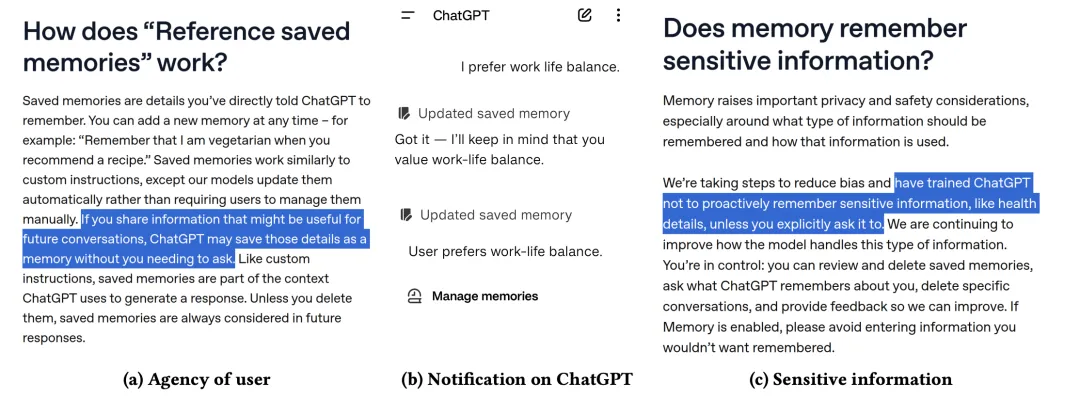
The paper also did a more thought-provoking experiment.
Using open-source models such as Gemma, GPT-OSS, the researchers "simulated" a ChatGPT memory extractor and learned six images.
Then they assumed what would happen if every word the user said was retrieved by the AI?
The answer is that the proportion of sensitive data rises from 28% to 31% to 35%, and the proportion of psychological images rises from 52% to 55% to 59%.
It's important to note that the old version of ChatGPT is just "taking notes".
And the next thing you're going to talk about is Dreaming, which is actually reading your chat record in the background.
It turned out to be a dream.AI repeatedly rewrites personal imagesIn June of this year, OpenAI brought back the memories of ChatGPT with a big blood exchange, the name of which came to be known as Dreaming (Dreaming).
In fact, just as the brain automatically organizes the day's experiences when people are asleep, ChatGPT keeps refreshing your awareness of what you've been talking about in the background.
Take a chestnut, you said "I'm going to Singapore in July" and over the next few days, the memory will automatically translate to "I've been to Singapore in July 2026".

The new mechanism, which OpenAI has tested internally, has made its accuracy record crazy:
From 41.5% in 2024 and 67.9% in 2025, it directly drove up to 82.8% of the current version of the V3.
What's more, the cost of back-end computing has been cut directly to one-fifth.
But what's really scary is that deleting a ChatGPT conversation doesn't erase the memory that's been extracted from it.
It's your health and privacy that should make you sweat the most.
In September, a paper published on arXiv, which tracked nearly 180,000 chats from 1,057 users, found that more than one-fifth (21.31%) of the conversations were about personal health issues.
What's even more interesting is that over 95% of the personal images here are also recorded by AI while users are not aware of themselves.
This ratio is almost no different from the 96 percent in the previous paper.
In the backdrop of "brain replenishment" and combined memory, it's very easy to turn your temporary symptoms into a permanent "illness label".
For example, if you just say your headache one day, in AI's eyes, you may have become a "headache patient".
The second brain?We always thought we were training an increasingly intelligent "second brain".
It wasn't until the room was full of privacy that we were surprised to see that we had spoken thousands of words and that we were the only ones who had been shrouded in secrecy.
In the eyes of the algorithm, there is never a so-called symmetry, only the "upside-down context" marked with a clear code.