

Anthropic engineers have just suggested that 95% of engineers are already running a self-improvement cycle. The RSI boom has begun, and the recurring cycle has begun, how strong has AI become? This article will reveal insights and visions from the evolutionary era of Theseus Lab and open up three related works.
The model's capabilities are advancing on the scale of the moon, but the progress of the capabilities is different.
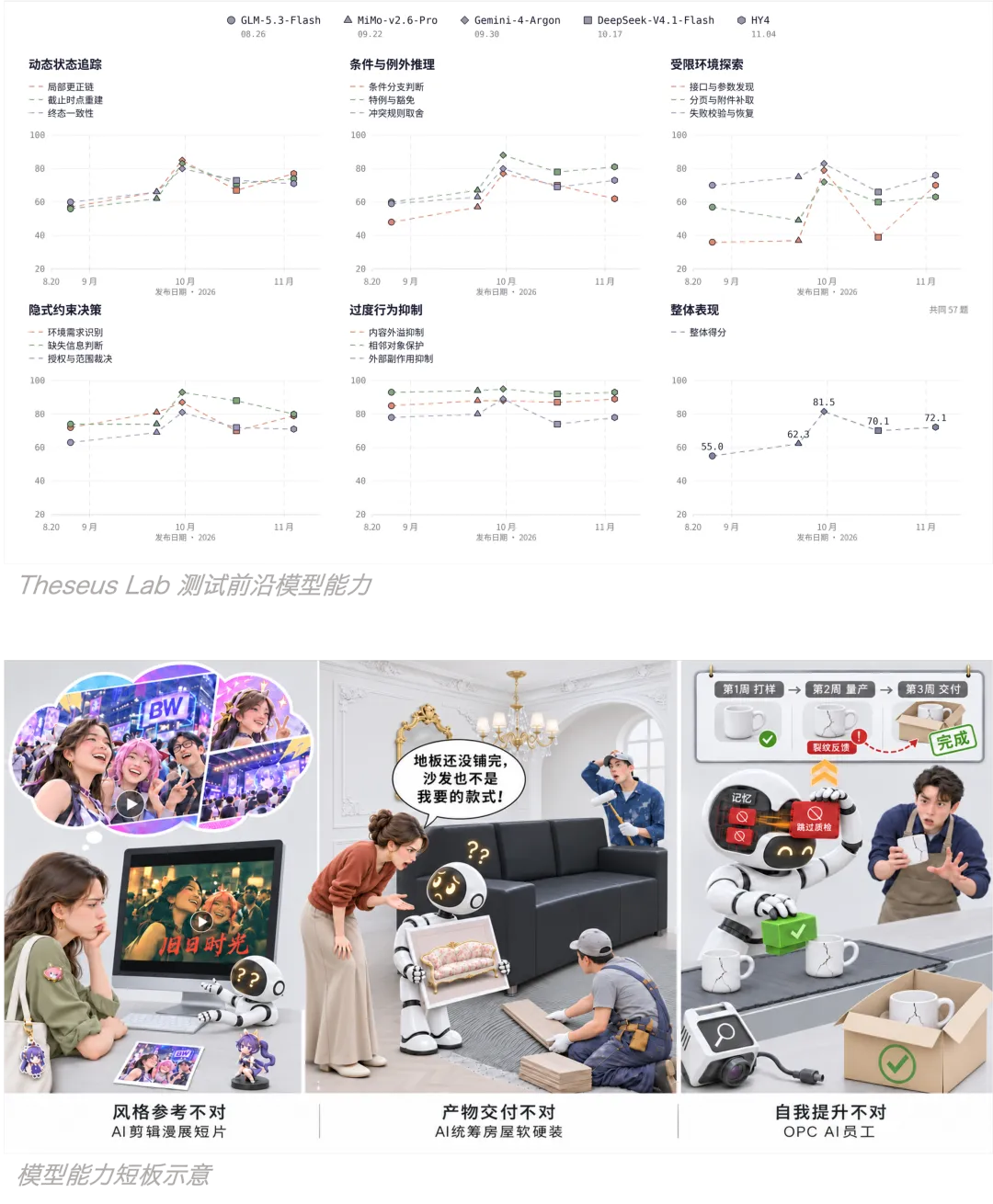
When you talk to AI about making a good-looking vlog, the result is a different style because the instructions for making a good-looking vlog aren't clear enough and you need to communicate a lot more.
Even if the instructions are detailed enough, it is still difficult for AI to deliver at the enterprise level, as this involves multi-node unification, and single-node errors can lead to delivery biases.
Even if AI remembers the needs of each node and does memory storage, the rules will evolve & the needs will be updated, and new changes will still lead to new problems.
The real world is always full of vague demands, unexpected sudden changes, so it's impossible to give AI 100% confidence.
Theseus Lab's workspace tests also reflected similar problems: from GLM in August, MiMo in September, DeepSeek in October to HY4 in November, cross-source evidence integration and limited-environment exploration scores increased by about 22 points, and state tracking and exception reasoning continued to rise.
Vision 1: Self-driving superintelligence
In order to open up the capacity to evolve and serve the real world, Theseus Lab is now building on a progressive three-tiered evolutionary technology pathway:
1.1 Self-exploration in an open environment
Improving models' capabilities is no longer limited to standard test sets, but extends to real, open business, creative and research environments, understanding real needs in autonomous exploration, and responding to environmental change.
For example, in the above workspace experiment, users made vague requests that the model look for key clues and actively query relevant data sources.
The original GLM-5.3-Flash scored only 34.3 on this type of task, while the model with full access to the material in the context could reach 100.
1.2 Continued internalization of practical experience
Anthropic's research suggests that Agents need a dream sequencing process similar to human brain sleep to organize memories and review all logs after the end of a mission to consolidate effective experiences.
For example, just saying "help me write a weekly column" can help you to synchronize your work and your style with your reporting.
In a long-range task test covering a real individual's 12-month work trajectory, the method scored best in multiple comparisons of detection enhancement, skill memory, and more.
1.3 Stage one improvement to stage two evolution
There are already more automated approaches that are based on established approaches that are constantly adjusting the results according to feedback. Let's let AI examine these approaches themselves: how to change the direction and the way in which experiments can lead to greater breakthroughs.
For example, in R&D, multiple rounds of experiments are performed continuously, and if the program continues to be modified and re-tested, it is a phase improvement; adjusting the experimental order and judgement criteria is a phase two improvement.
In the experiment, the fixed-improvement method was used in comparison to constant improvement, which resulted in a 12 percentage point improvement.
Once the above three levels of automation have matured, the AI shorts listed in the preceding example will be able to respond from the bottom up, and the evolution of superintelligence will continue to align with the real goals of humans.
Second, gradually opening up the source of recent technological achievements
The ideal outline is clear, how far away is the real AI front-end model from superintelligence? If objective measurements are to be carried out across different task types, we will also open up the corresponding reference scale.
Theseus Lab Joint Ecological Partnership for the Evolutionary Era: Humanlaya, The Little Red Book is the source of three specific technological achievements, including proxy capabilities, specialization and advanced evolutionary capabilities.
Open Source 01. Real enterprise projects reveal shortcuts to the ability of front-end model agents to deliver
If the project is handed over to Codex, Claude Code, why is it so hard?
Intelligent tools like OpenAI, Anthropic, and others can do a lot for people, but they don't give people the confidence to deliver the entire project. Writing reports, modeling, organizing materials, pulling them out separately is like a template; once it's in charge of the entire project, people still have to make progress, find out, and fill in the gaps.
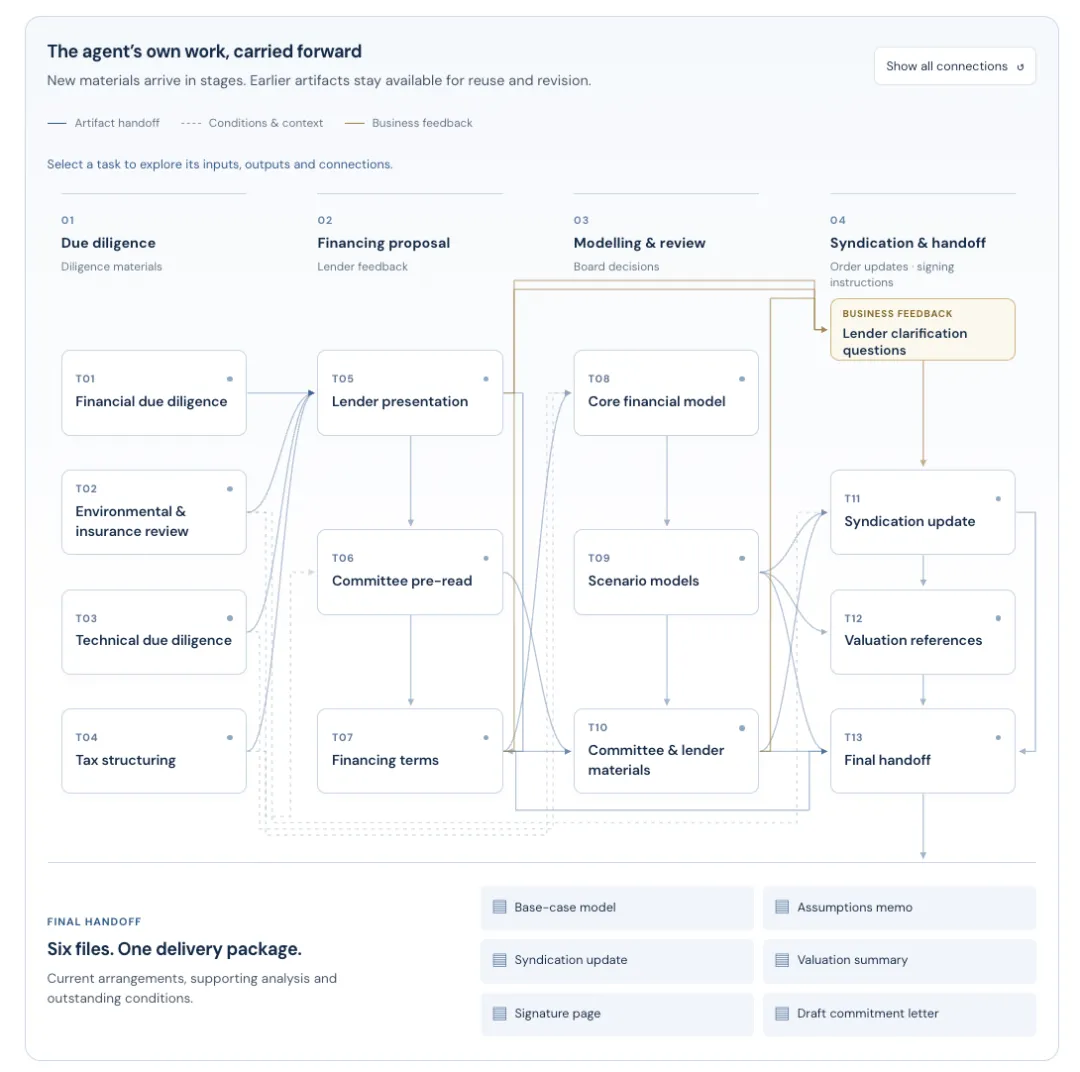
In the experiment, Qwen 3.8 Max took all of the company's loans, mistakenly as the outstanding balance of a loan, and entered the final delivery in the wrong order of the task-dependent chain.
At DeliverBench, we let these smart individuals take on the full range of professional projects: going back and forth with their own results, dealing with incoming materials and feedback, ultimately delivering acceptable results, and testing where they go from helping hydrogen to helping hydrogen to delivering hydrogen.
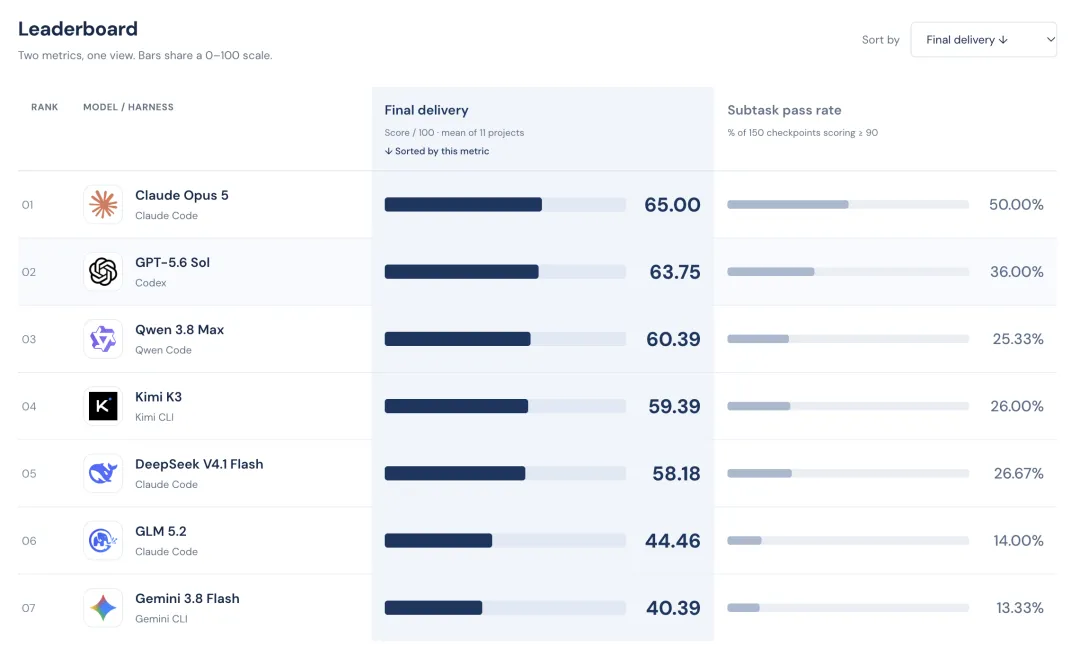
Of the seven Agent system assessments for all 11 projects covered in this study, the highest average final delivery for the front-end model was only 65.0/100; and the highest pass rate was only 50.0% if the threshold was passed as a 90-point submission.
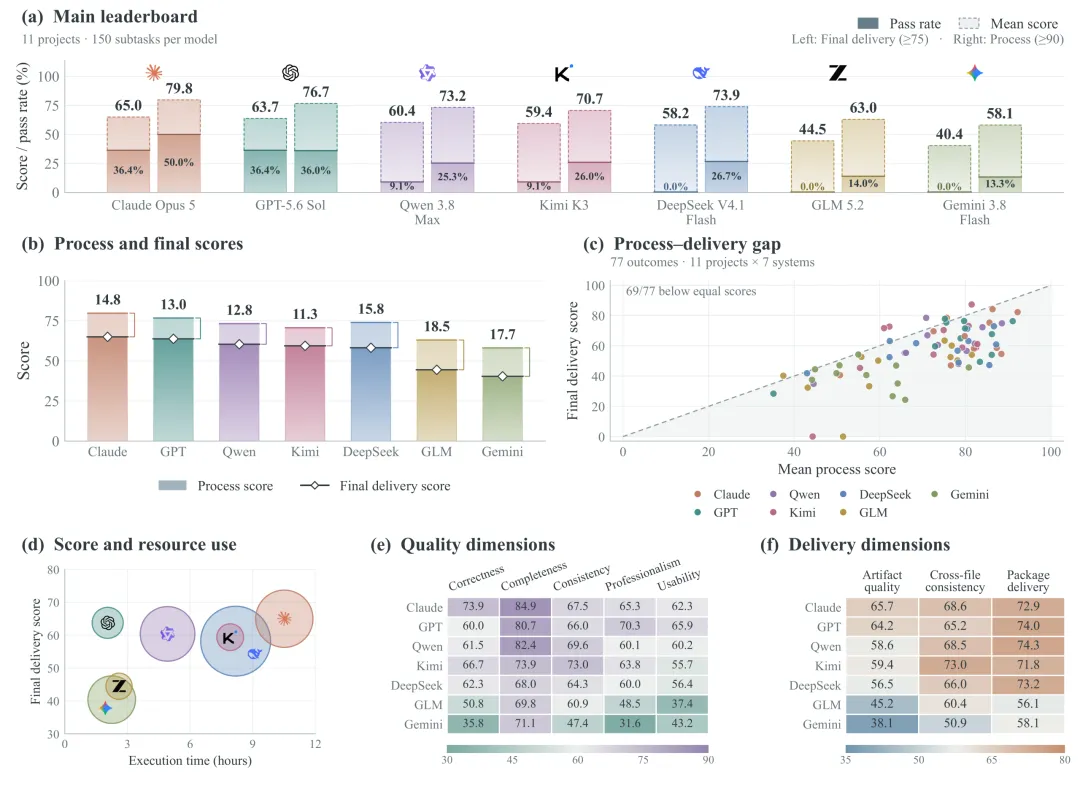
This exposes the key issues that lead to the unbalanced front-end AI capabilities that we've mentioned above, often performing well when they're doing a clear task; and the shortcut's ability to continue to be responsible for the entire project:
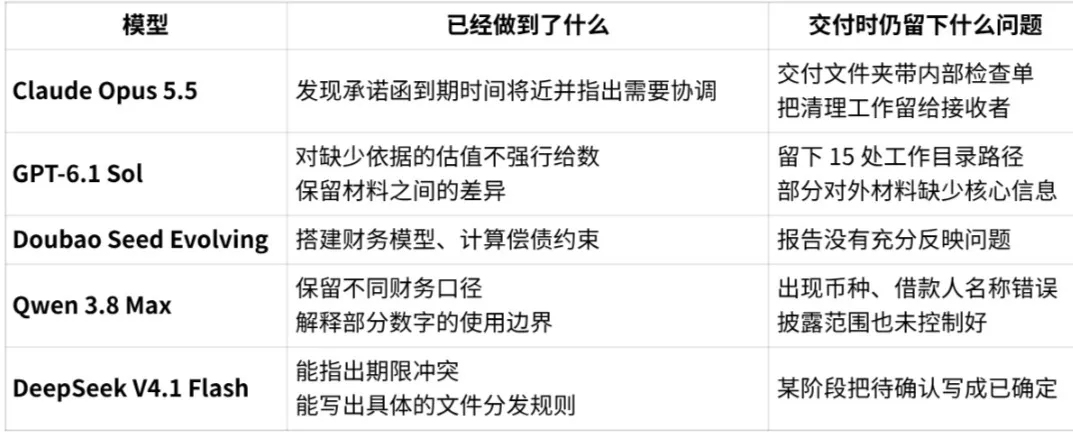
The unbalanced capacity of the five front-end models under Project Mars Refinancing
DeliverBench's original design goal was to test the entire process along the entire project chain, exposing the dangers not seen in the short demos.
What computational reports and decisions need to be re-checked after input changes?
How can evidence be maintained in relation to conclusions and how can unverified assumptions be avoided as established facts?
How can early errors be detected and corrected, and how can the document be updated after it has been corrected, and how can the dependence on it be confirmed?
Open Source 02. Self-improvement and migration reveal the current boundaries of intelligent evolution
Can AI learn how to improve itself, how to retain and move forward?
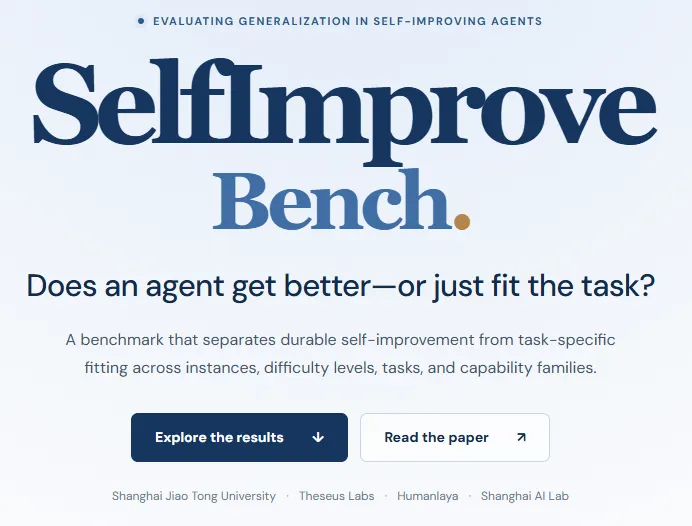
AI has begun to modify instructions based on task feedback, accumulate memory, and even adjust tools and execute processes. But after repeated improvements, can it still do better? The existing RSI scoreboard says that the benefits are three words: no checks. Some assessments only look at "trained tasks can't do right", others look at "other tasks don't work"...
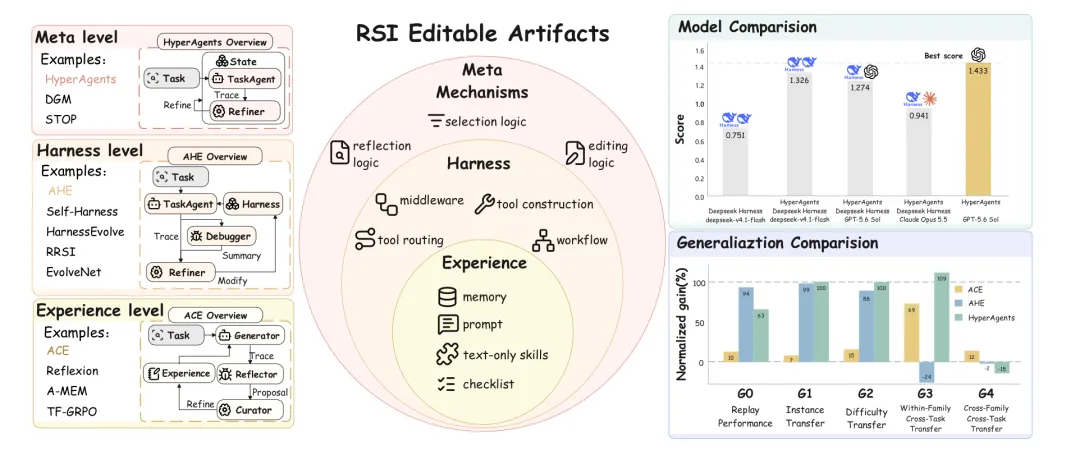
Experience-level stood for improvements to prompt, memory and pure-text skills, harness-level incorporated code tools and processes into the improvement scope, and meta-level further evolved the improvement itself.
Self-improvement that is worthy of attention should be able to migrate to unprecedented instances, to higher difficulty, to new tasks in the same class, and even to different types of capabilities; these tasks cannot be met through simple Experience-level improvements; controllable, scalable infrastructure is needed to support the assessment of these aspects. In our SelfImprove-Bench, according to the "relationship of assessment and training", G0G4 is defined in five stages:
G0 has seen examples kept: Old issues reworked
G1 is the same difficulty as the game: only updated titles
G2 more difficult: the same game, more difficult
G3 cross-games of the same mission family: similar abilities, game exams
G4 Cross-Mission Family Migration: Capacity to change classes, whether to migrate
Each level uses an HCI to measure the effect of an improvement process, the formula being straightforward: post-evolution scores - pre-evolution scores) / upper limits - pre-evolution scores), the focus of the evaluation shifted from "how strong this AI ultimately reaches" to "how useful this improvement process is".
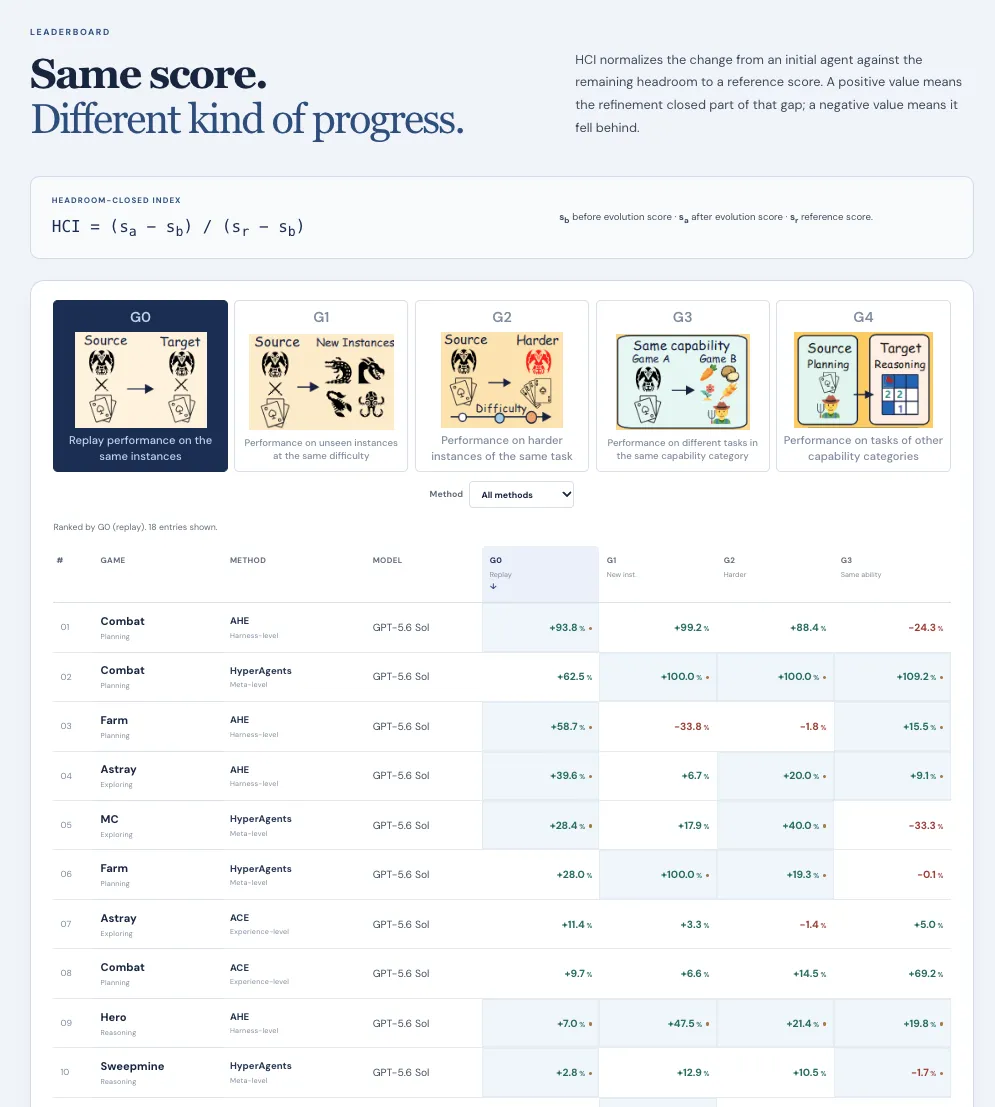
SelfImprove-Bench has a complete set of parameters to generate, organize, simulate, and analyze tasks, and an extensible RSI infrastructure.
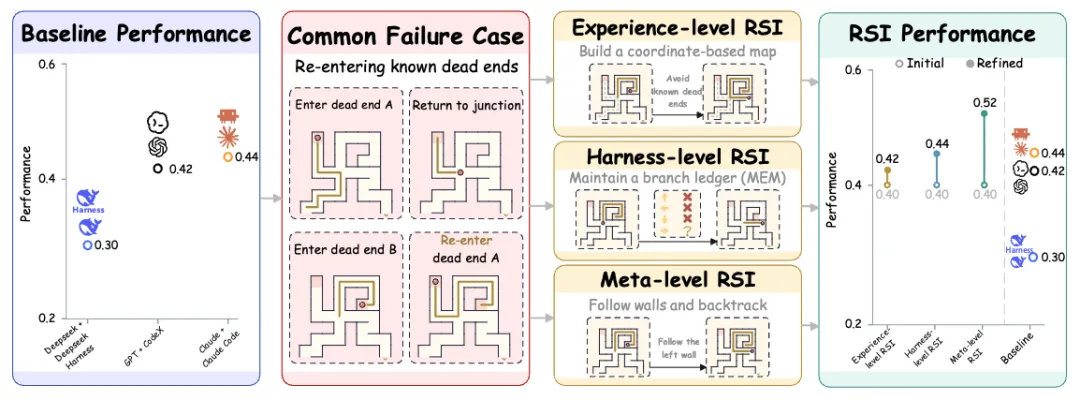
Finding one: The higher the climb, the thinner the gains, and even falling. G1 combines 88.9% of positive gains; G2 is down to 82.4%; G3 is down to only 55.6%; G4 is down to just five.
Findings 2: The rankings are reversed. Single methods differ significantly in performance at different stages, and the rankings between methods alternate.
Finding three: Advanced evolutionary doubts. In the main experiment, 87.9% of improvements were still focused on cue words and memory, without observing the improvement of the improver itself.
Findings four: Effective evolution, as well as daring to overturn previous improvements.
Open source 03. "Visual Documentation" is a semantic analysis evaluation
What model is stronger in accuracy and visual restoration?
Imagine you carefully designed a set of poster templates, or a useful set of red book note editing workflows, how to replicate it and quickly edit it later? or, when you have a folder full of form information, how to keep the form in format and keep the key information in its place, so that the Agent can extract the field information better?
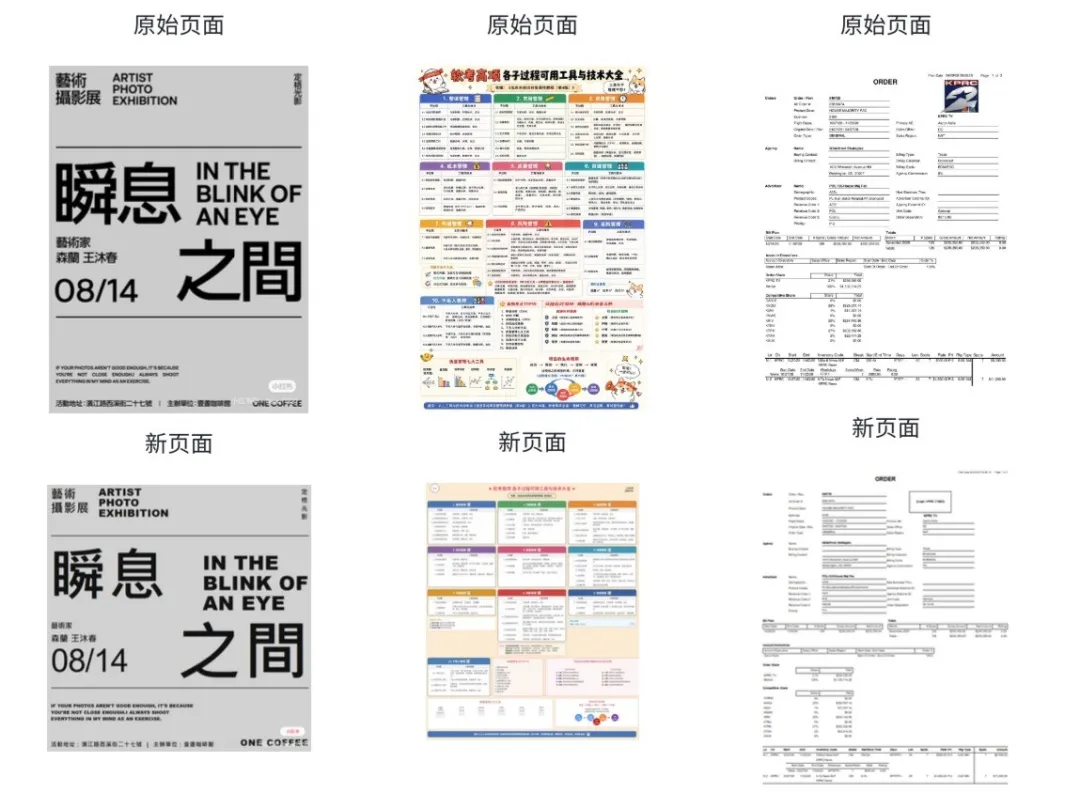
If we want to continue to use these pages for editing, retrieval, or Agent operations, we need to preserve the relationship between the content and the way they are presented on the page.
Based on this, the Theseus Lab Evolutionary Joint Red Book launches the AmbiHTMLBench to answer the question: given a "visual document" image, can the model reconstruct a content accurate, structured, and visually faithful HTML page?
AmbiHTMLBench quantifies errors in both objective and subjective aspects: the first is an objective evaluation, which identifies leaks, misspellings, and texts, tables, and layouts, respectively, for content recognition. The evaluation system first renders HTML generated by models in a fixed browser interface, then extracts visible content and its location, and matches it to reference tags. The second is a subjective evaluation, which rebuild pages are visually more faithful to the original.
Combining web-based open-source data, high-impact tweets and excellent editing, we constructed a pool of 50,000 qualitative documents and selected four main categories of pages as research subjects:
Institutional PDF: A graphic with dense text tables
Originating pages: Different levels of content, page organization
Newspapers and magazines: multi-column editions, cross-column headlines, complex graphs
Poster design: visual level, free layout, variety of fonts
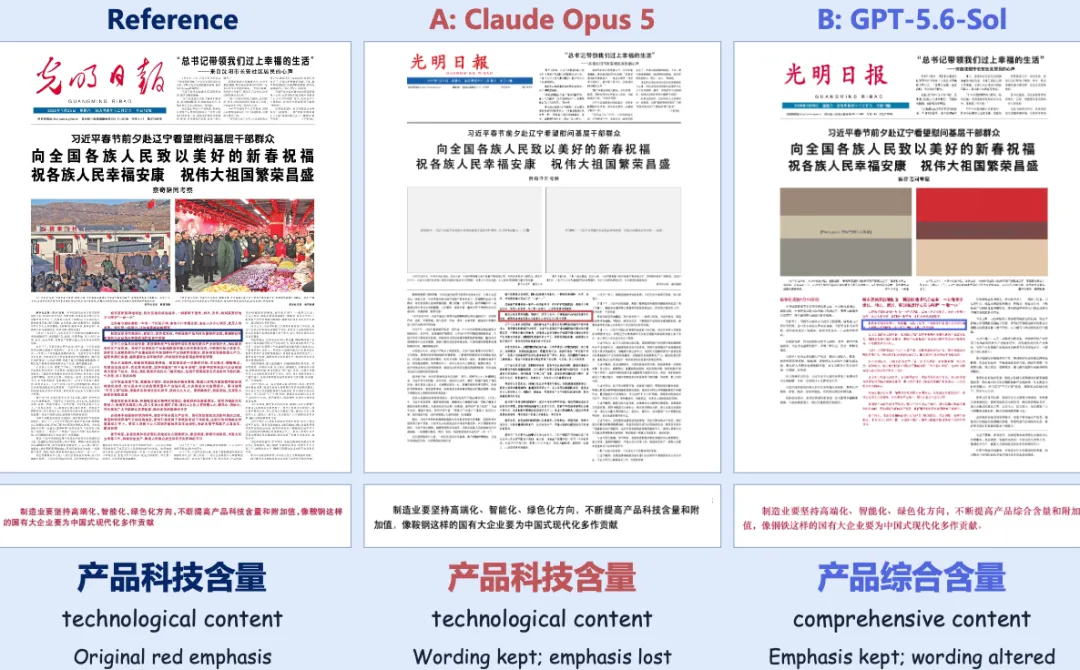
Currently recognized models with a higher capacity do not deal well with this problem: as in this paper, Claude Opus 5 retains the original wording but loses the red emphasis; while GPT-5.6-Sol retains the emphasis portion but rewrites one of the text.
In the experiment, we evaluated a large number of model systems. Among them, on subjective indicators, we invited 33 participants to complete 7,920 artificial judgments to replicate as far as possible the faithful human preference of visual restoration judgments.
The results showed that Gemini 3.1 Pro Preview scored first overall at 0.8092, with the main advantages coming from lower spelling errors and stronger table accuracy; GPT-5.6-Sol scored the highest objective layout and ranked first in the subjective list, but was disappointing in the overall objective rankings.
This clarifies that text errors and visual loss can affect the quality of reconstruction in different ways; depending on the specific task, the two lists can provide a more appropriate model capability perspective, respectively.
The wave of technology makes it easy to get bogged down in the quirks of ability, but it often belittles the weight of real life.
In the past, we were manufacturers, putting the burden of physical power on the outside; now we are building intelligence, hoping to shift the heavier part of our thoughts to the outside.
Redistribute the boundaries of human and AI capabilities to liberate the energy consumed by repeatedly driving humanity.
Theseus gave infinite evolution to intelligence and gave infinite imagination to man.