
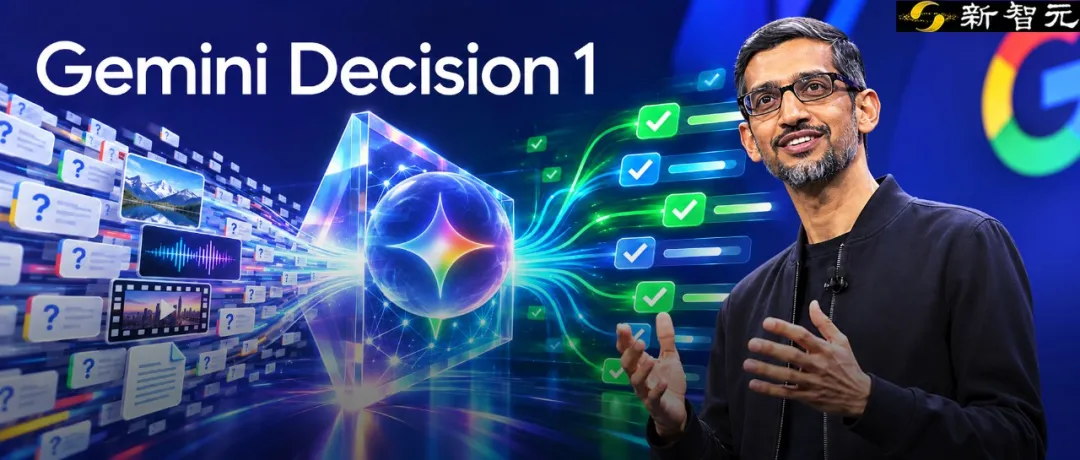

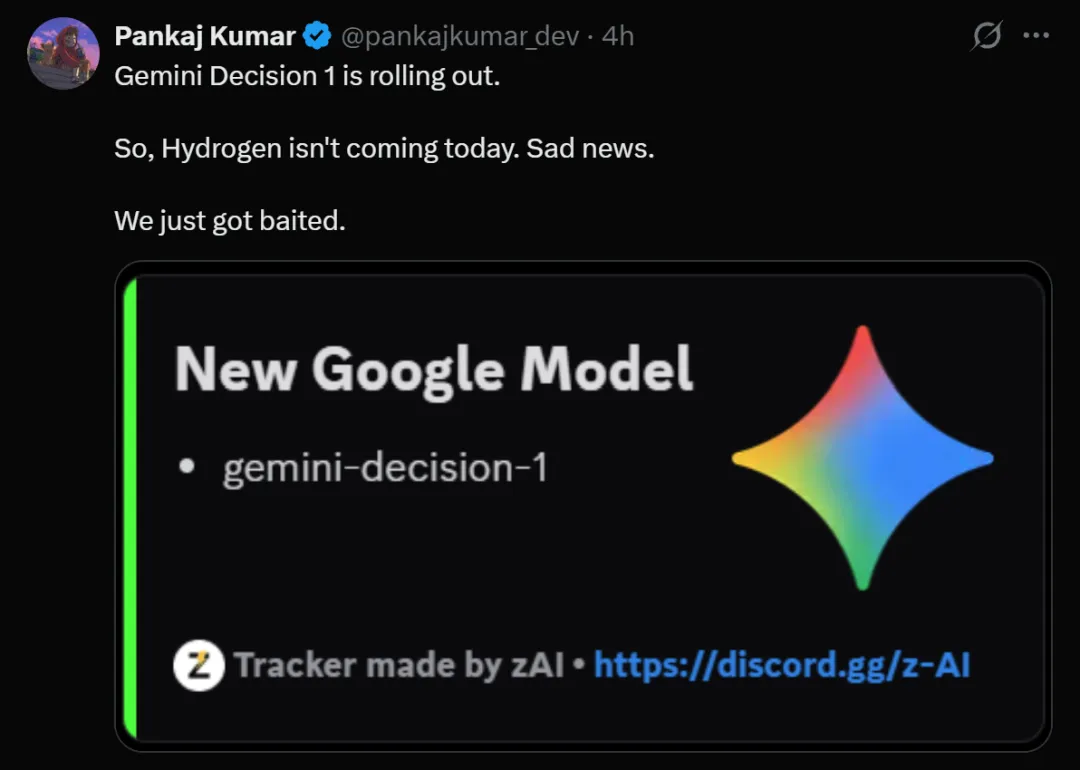
We waited half a day, and Gemini 4 Hydrogen didn't arrive.
The Gemini Decision 1 is a multi-mode decision-making model that came up on Google last night.
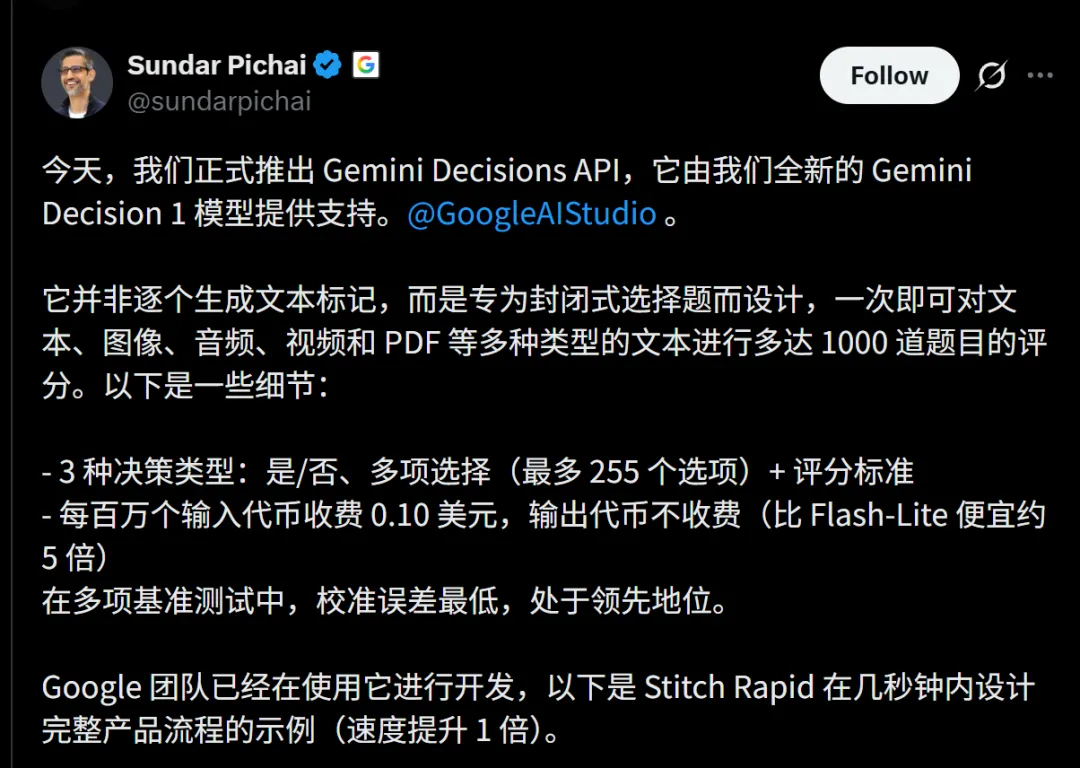
Today, Google officially launched the Gemini Decisions API, supported by the Gemini Decision 1 model.
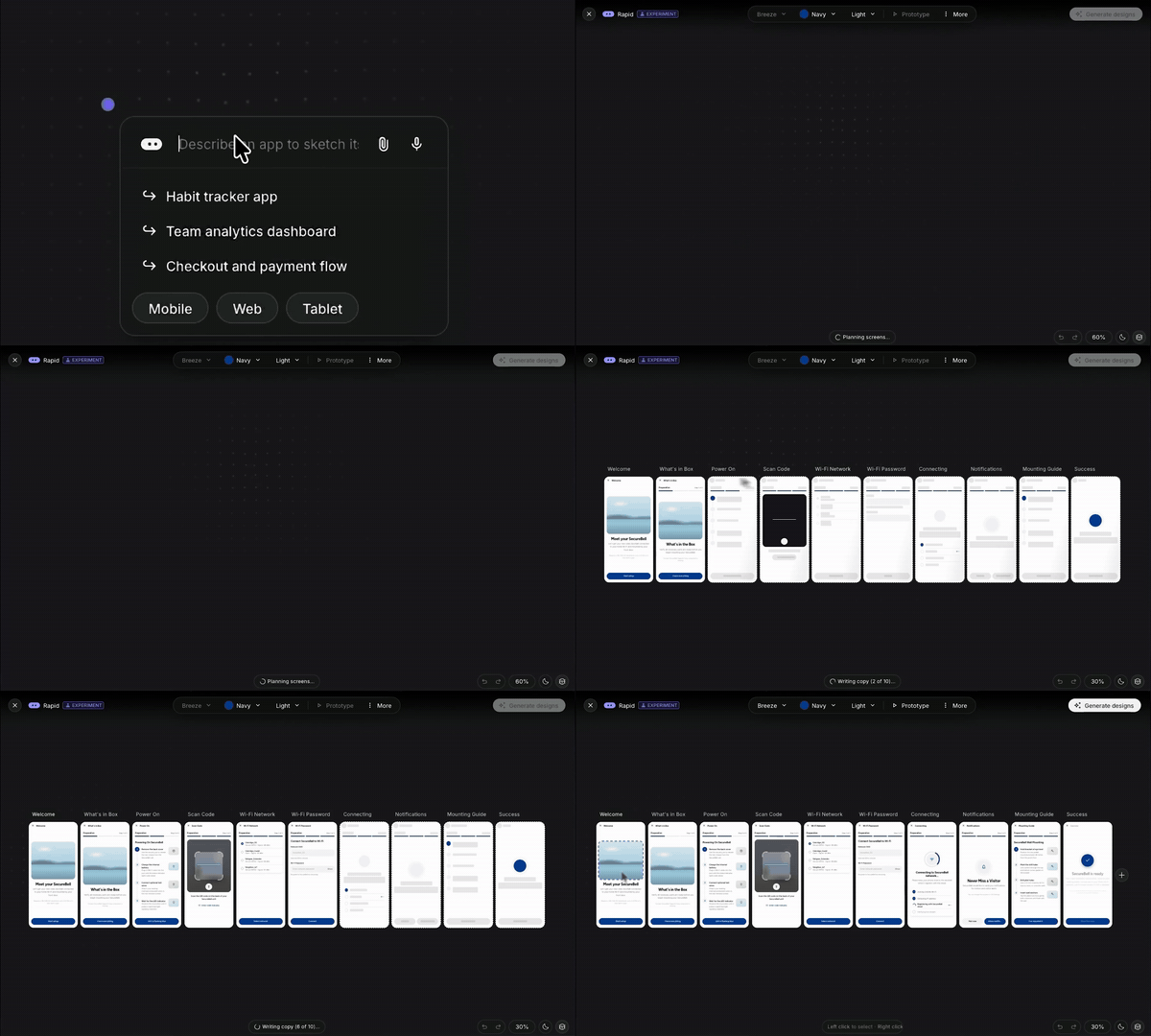
Stitch Rapid uses the Decisions API to design the entire product process in seconds.
The wind of "Jev" is finally blowing on Google.
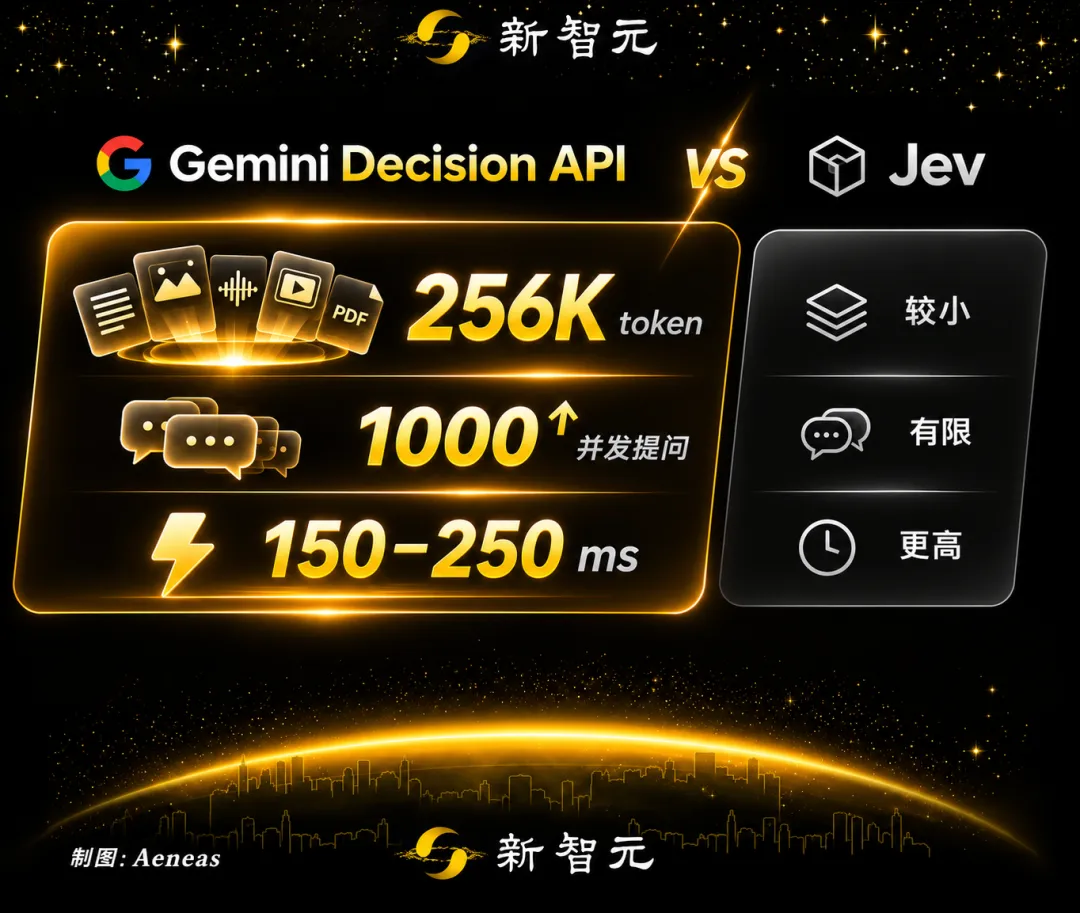
It was designed for "closed selection problems", ultra-low latency, multimodal, and deals with 1,000 questions at a time.
It has three native decision types: "Yes/No", "Multiple options (maximum support for 255 options!) " and "Rating Standard Score".
It costs just $0.10 per million of Token input, and Token output is free! (only 1/5) of Flash-Lite.
In many benchmark tests, it leads absolutely with the lowest calibration error.
 Multi-modal and disruptive decision-making models
TypeSafe AI's Jev has seen a surge in popularity in Silicon Valley, and other giants have followed suit.
Now that Jeff has hit $0.042 million for a pure-text decision, how is Google going to break?
The answer is:It uses a multi-mode, compressed pure-text model.
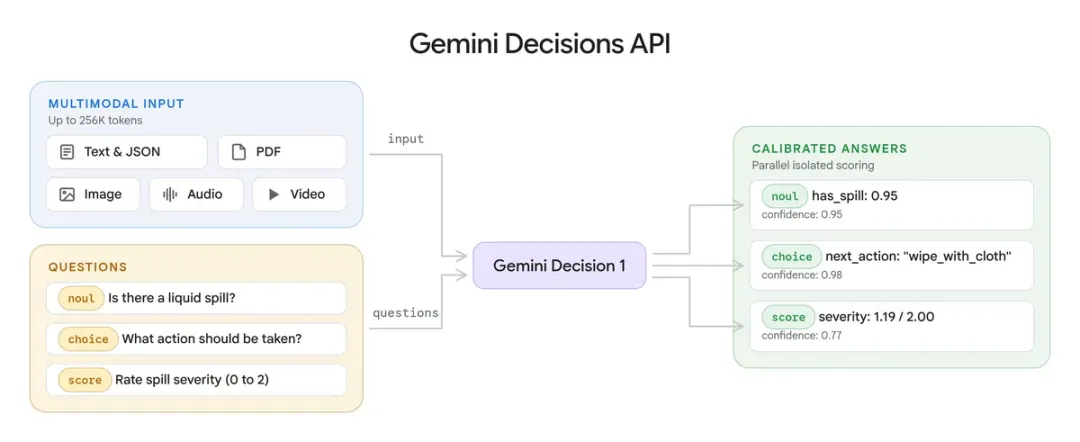
You can feed it up to 256K tokens of massive data -- whether it's text, images, audio, video, or PDF -- all at once and then send 1,000 soul copies to it at the same time!

Whether you're working on tool calls, strategic wind controls, or model dynamic routing, the Decisions API can give you the simplest answers straight away.
Gemini Decision 1 instantly scores all options through an efficient "forward forwarding".
Of course, the decision-making model needs to be not only fast, but also precise!
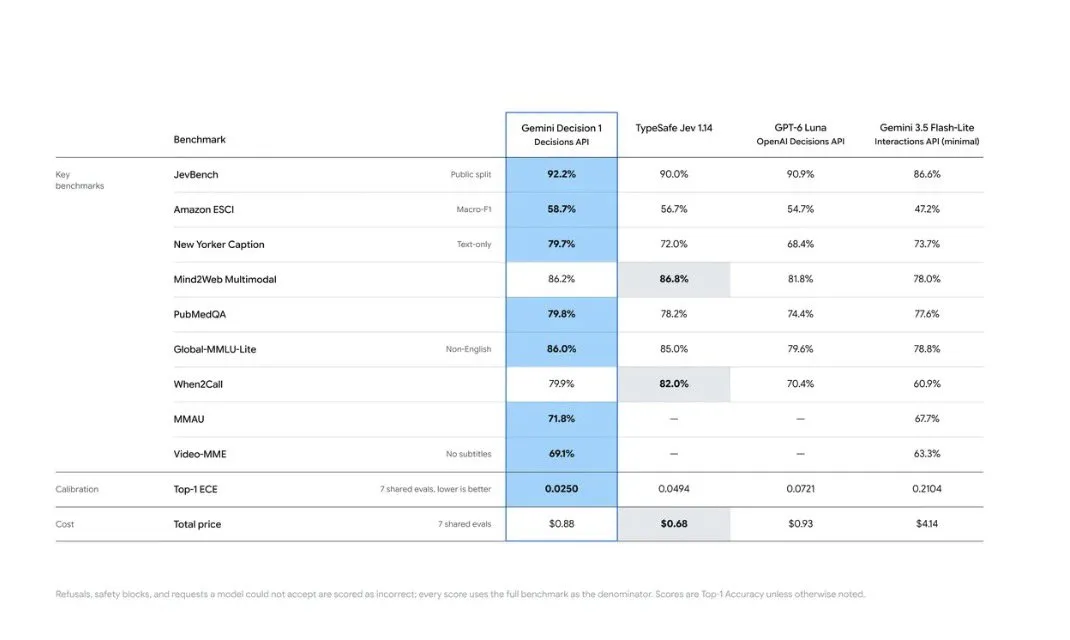
In top benchmark tests covering intelligent-body routing, logical reasoning, information ordering, and multi-modal understanding, Gemini Decision 1 is a full-fledged leader.
What's more, it's the lowest calibration error ever!
Therefore, the degree of grasp it gives, the degree of accuracy it actually gives, the degree of hallucination is low.
Since there is no need for word-for-word decoding, Gemini Decision 1 deals with multimodal contexts of up to 16K tokens, the average delay in model computation is pressed at 50-100 milliseconds, with end-to-end delay being only 150-250 milliseconds.
And whether you ask one question at a time or 100 questions at a time, the speed is almost exactly the same.
Because it's almost five times cheaper than the currently recognized Gemini 3.5 Flash-Lite (using an interactive API model), which is an absolute price slaughter.
It's a multi-dimensional model + three big decision-making models: let's get the model mirrored!Based on Gemini's powerful native multimodal architecture, it can "see, hear, understand" both in documentation, audio and video in a single move.
You can combine a variety of multi-mode mixtures, such as "recording customer calls" and "account data", or pack a "PDF claim" with a "damaged photo".
It can even freely adjust the resolution of the audio and video to control the visual details and cost of the token.
In one request, you can mix three core decision-making models.
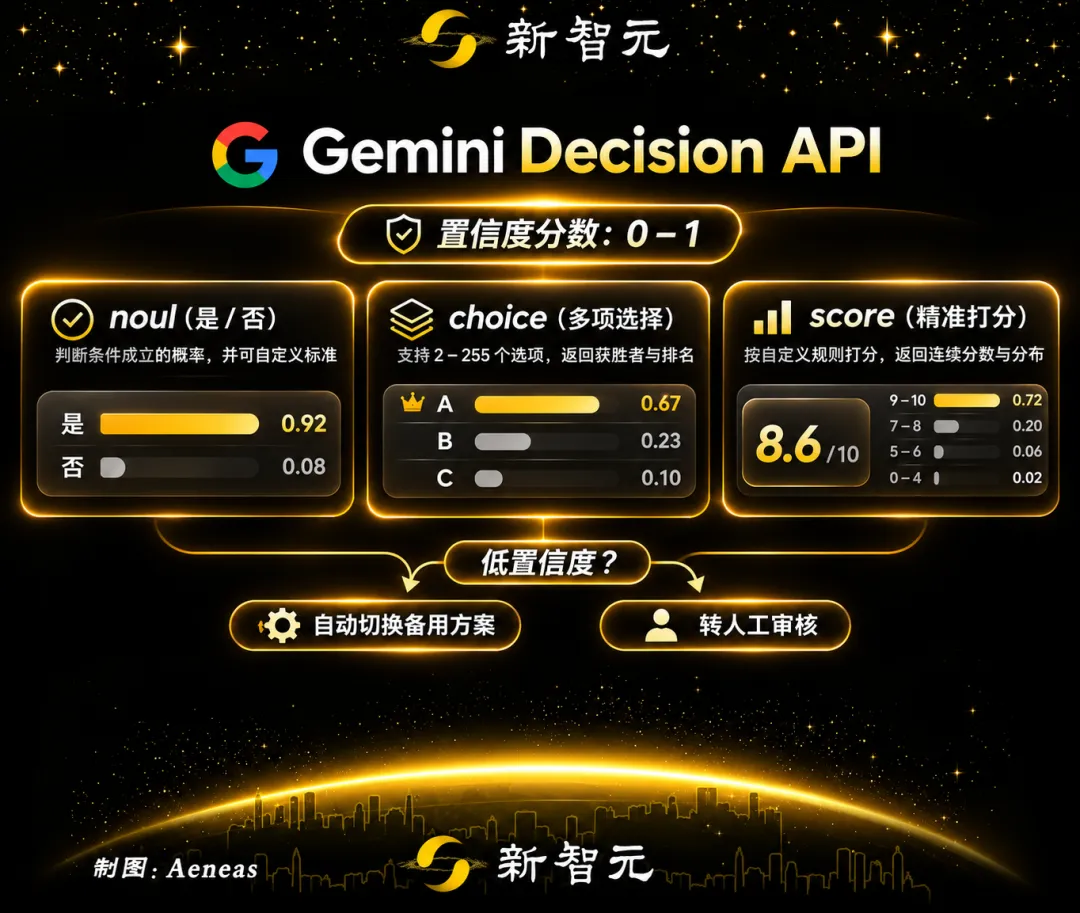
Moreover, it returns a "confidence score of 0 to 1" every time it encounters an ambiguous situation, and your code can throw it directly to a backup program, or an artificial audit, which is very stable.
Noul(yes/no):It judges whether/or not the probability of a condition being established, and selects the "true/false" description criteria.
Choice (multiple options):Support options 2 to 255! It tells you directly who is the winner and includes a probability ranking of all candidates.
Score (accuracy, orderly scoring criteria):It will bet on the input content according to your rules (starting from 0), giving a continuous weighting score and the probability of each level.
The interface is extremely friendly and uses the familiar content block format.
So let's take a look at this incredibly elegant piece of code below.How to use a single request to let an AI look at a picture of an office counter while making three different types of judgments.
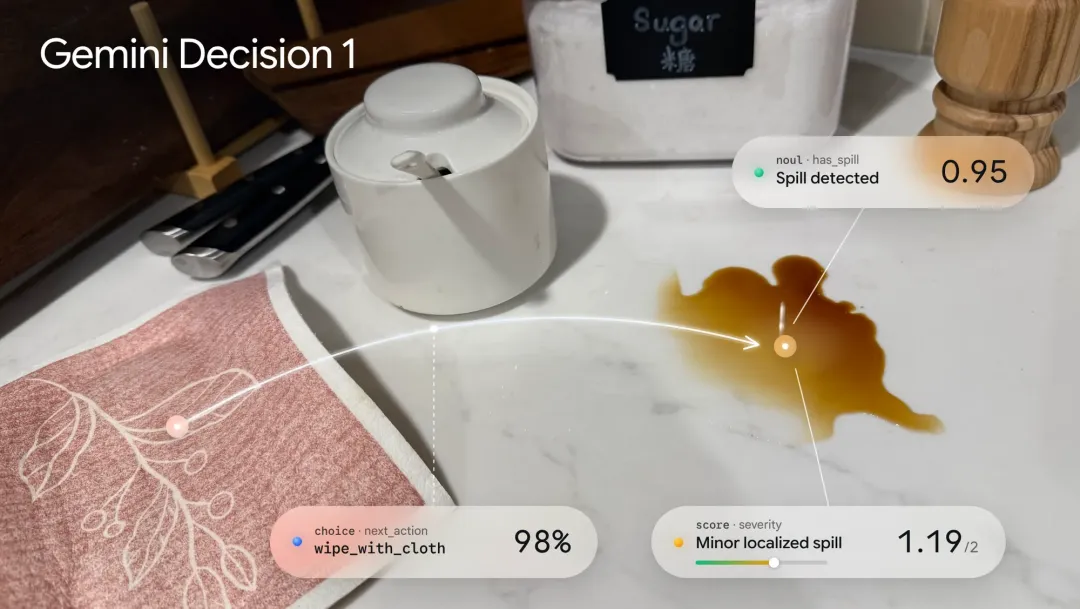
What's going on inside the Google factory?from google import genaiclient = genai.Client(http_options={"api_version": "v1beta"})result = client.decisions.create(model="gemini-decision-1",# 共享输入:丢给它一张图 + 一句话input=[{"type": "image","uri": ""mime_type": "image/jpeg",},{"type": "text","text": "早上9点客户会议前的休息室吧台检查。",},],# 一次性连发3个问题!questions={"has_spill": {"type": "noul","instructions": "吧台上是否有未清理的液体溢出?",},"next_action": {"type": "choice","instructions": "哪种清理措施最适合当前场景?","criteria": {"wipe_with_cloth": "吧台少量溢出,附近已有抹布。","dispatch_janitorial": "地面大面积危险、碎玻璃或持续漏水。","ready_for_meeting": "吧台干净,已准备就绪。",},},"severity": {"type": "score","instructions": "评估吧台脏乱的严重程度。","criteria": ["干净且准备就绪。","轻微的局部溢出。","重大溢出或安全隐患。",],},},)
Now, top teams within Google have long regarded it as a "low latency control center".
You don't have to spend time and effort training any custom classifiers, and you don't have to slowly generate large models like dry, to define the options, and the following functions go live!
For example, it canThis is the dynamic model route in the Gemini Notebook.
In the Notebook, the Decisions API can be used as a "traffic police". When a user asks a question, it can classify the intent in a few milliseconds.
The simplest problem is the lightweight model (latency dropped 40%!) and the complex problem is thrown to the deep-thinking model.
It can be done.High-speed design replacement in Stitch:This is definitely a kitchen-level app!
Stitch's fast-paced canvas can generate a "running frame map" of an entire product process in a matter of seconds.
The changes you make with voice or clicks are instantly effective. When the process reaches its ideal state, you can switch to a complete design mode with one click.
In Google Labs' CC social app, it can select the most appropriate one from over 200 emoji in less than a second. The expression pops up instantly, very smoothly.
It's also the security layer of searching MCP tools. Google searches use the Decision API to detect content from counter-behavior and counter-behavior assessments and is highly efficient.
Free API is here.And this time, Google AI Studio is also preparing a free API level to help us design whitewash prototypes.
Its billing logic is very conscientious: Shared input, no matter how many questions you ask, only counts for once!
There are no outputs, no mind-token assassins, and no separate audio transcripts or OCR fees.
Not only that, but Google's entire AI ecosystem is in full swing! The integration of OpenRouter, LongChain, Vercel, LiteLLM, Pydantic AI, Pipecat, LiveKit, OpenCode and the Google-genai SDK is in the heat of the moment.
In 17 days, the giants went crazy.This "decision model" storm, triggered by Jev, has completely torn apart the big model's billing rules, once and for all transmitting direct outcomes, cost overruns, and zero output.
The month of October has been called the "crazy month" of AI decision-making models. In just 17 days, many top AI labs have released similar models.
Amazon is a great place to visit.Directly open source decision-making model called Strands Decider 2B.
Cloudflare: Launched the Clef and Clef-flash models, open source under the Apache 2.0 protocol.
PerplexityOpen Decision API based on the 27B open source model.
Liquid AID1-ultra has been introduced.
Giants such as Microsoft and OpenAI have also made rapid adjustments at the API level in an attempt to stem the tide.
In just 17 days of massive confusion, Google's goal with Gemini Decision 1 was: to avoid the price difference between pure text and directly to "original multi-models + 1000 queries in parallel".
The current track layout is: pure-text ultra-low price Jev, complex multi-mode and high concurrent view of Google, eco-compliance left to OpenAI.
The future of the Agent architecture is already clear: the decision-making model System 1) is responsible for "judging" extremely quickly, cheaply, and the big model System 2) is responsible for "thinking slowly" deeply.
It's the second half of the brainstorming craze.