

"Heroes have flaws."
The controversy over Jensen Huang's resignation continues to rage, and Sam Altman finally made a public statement.
On November 16, local time, at the Silicon Valley Summit held by Semafor, OpenAI CEO Sam Altman publicly talked about Jensen Huang’s resignation for the first time.
Sam Altman even made no secret of his admiration for Jensen Huang at the scene: "Jensen Huang has always been my hero."
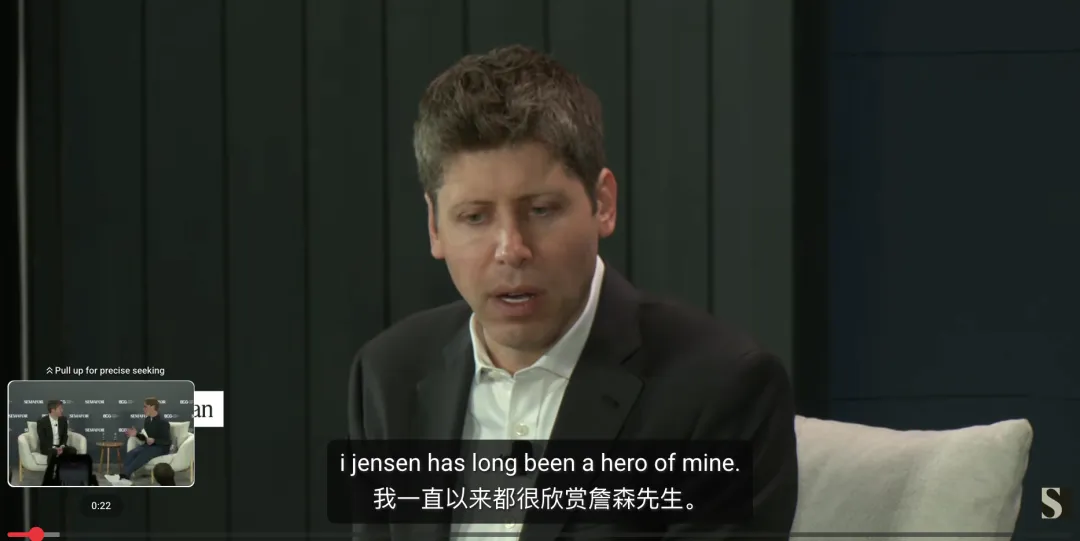
Altman also shared his more complete views on Jensen Huang’s resignation and the future of the entire AI industry:
- Sam Altman admits that heroes are not perfect.
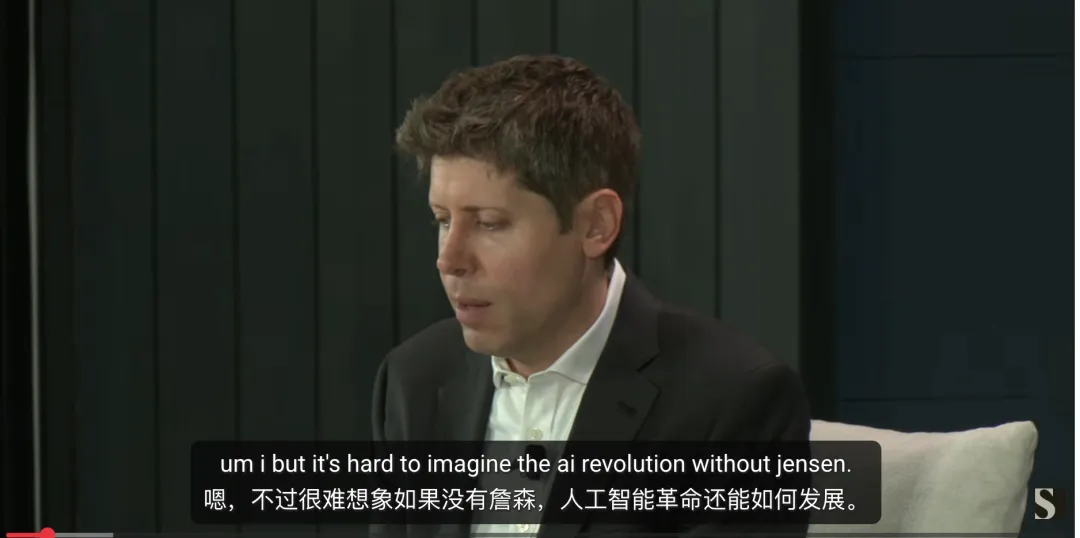
- Jensen Huang has always been Sam Altman’s hero, and it’s hard to imagine the AI revolution without him.
- Jensen Huang's departure will not affect the continued development of the entire AI industry.
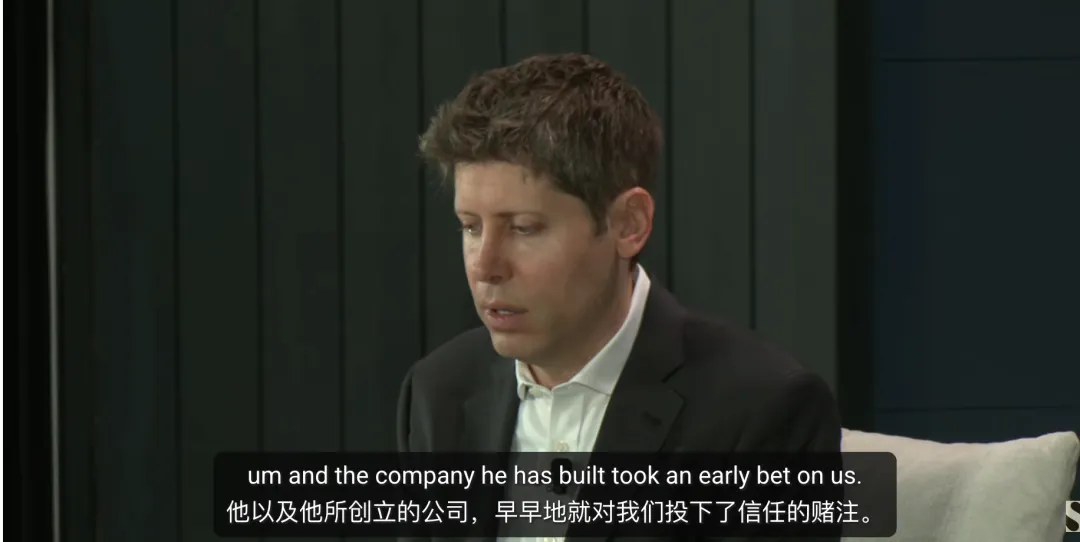
- OpenAI and NVIDIA established a mutually supportive relationship early on, with both parties betting on each other early on.
- As for whether Jensen Huang should return to NVIDIA, Altman believes that he has insufficient information to make a judgment.
Three years ago, Altman himself experienced a boardroom recall that rocked Silicon Valley.
Now it's Jensen Huang's turn, and he obviously understands it better than most people.
Sam Altman talks about Jensen Huang's resignation for the first time: Heroes also have flaws
Turn the time back a few days.
On November 12, founder Jensen Huang, who has been in charge of NVIDIA for 33 years, suddenly announced his resignation as CEO and board of directors.
As soon as the news came out, NVIDIA's stock price fell by about 15% within a week, and its market value evaporated by more than $570 billion.
Subsequently, many Silicon Valley executives, including Elon Musk, signed an open letter, and 180,000 people signed a petition calling on NVIDIA’s board of directors to reinstate Huang.
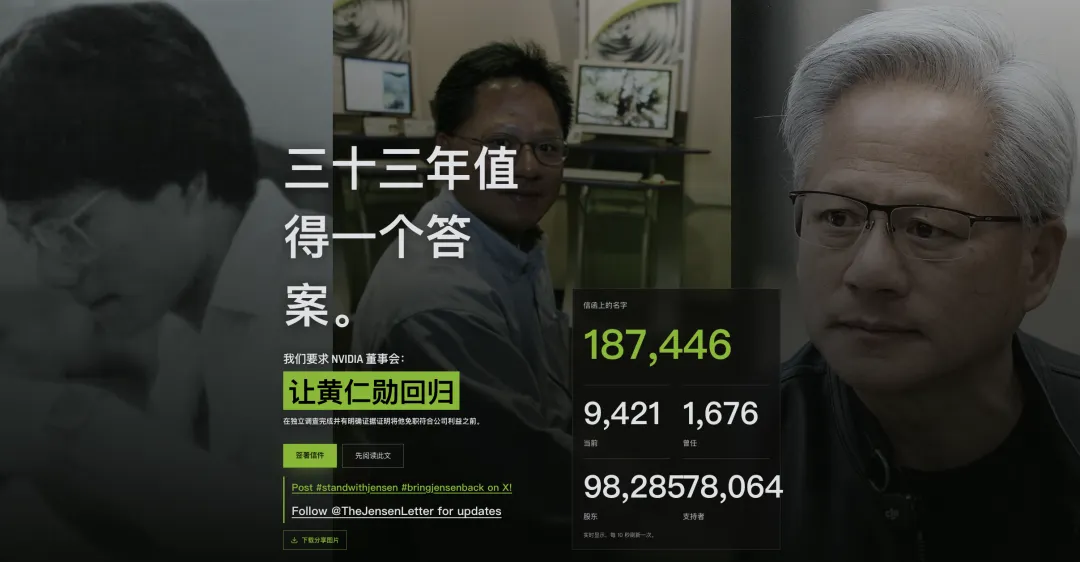
However, many outsiders have noticed the wording of this very pro-Huang open letter——
It is exactly the same as the open letter written by OpenAI employees in 2023 when they forced the board of directors to demand Sam Altman's return.
At the Semafor Summit, host Reed Albergotti directly raised this question to Sam Altman.
After all, Altman was suddenly dismissed by the OpenAI board of directors in November three years ago, and staged a dramatic return as the king four days later.
In this regard, Sam Altman admitted that he has "strong personal empathy" for Jensen Huang's current situation.
He recalled that NVIDIA bet on OpenAI in the early days, and OpenAI also bet on Jensen Huang.
In Altman’s view, it would be difficult to imagine what today’s AI revolution would look like without Jensen Huang and NVIDIA, which he created.
But feelings are feelings, and business is business.
When asked whether NVIDIA's business commitments are still as important as before after Jensen Huang's departure, Altman's answer was very pragmatic.
In the past few years, NVIDIA has not only been OpenAI’s largest chip supplier, but also one of its most important investors.
Not long ago, NVIDIA just agreed to provide up to $105 billion in financial guarantees for OpenAI’s data center project in Ohio.
Statistics show that NVIDIA’s total investment and commitment in the AI ecosystem has exceeded US$100 billion, covering core players such as CoreWeave, Nebius, and Anthropic.
There is widespread concern that once Chief Financial Officer Colette Kress becomes interim CEO, NVIDIA may shrink its front line and affect the liquidity of the entire AI industry.
Altman disagrees with this pessimism.
He pointed out that NVIDIA is now a huge giant company, and everyone still trusts its guarantee capabilities.
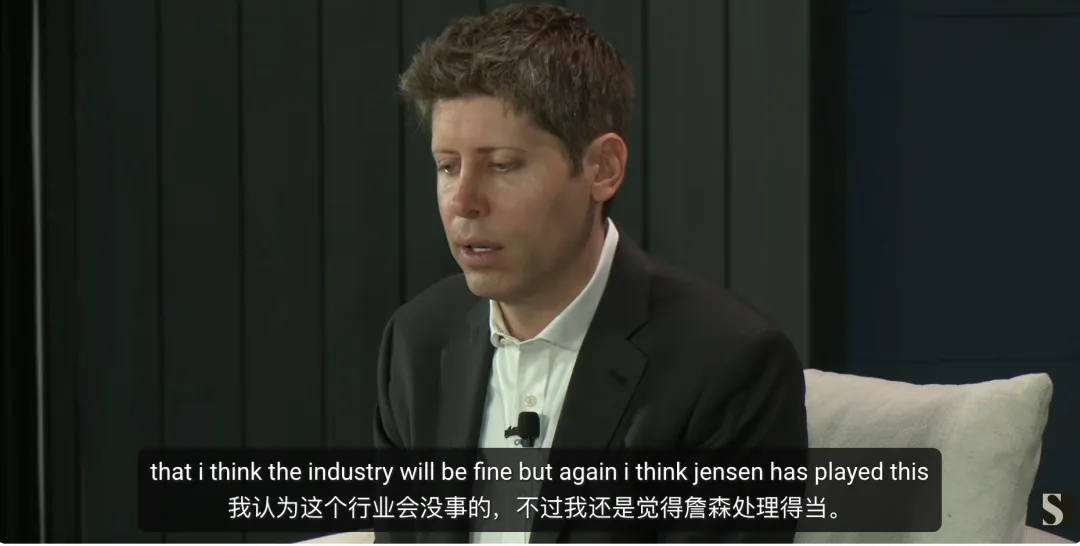
As for whether the entire AI industry will stall after losing Jensen Huang, Altman is quite optimistic.
He believes that today's AI market demand is strong, the value of AI has been verified, more and more people are starting to really use AI, and industry revenue and market demand are growing strongly.
Therefore, even if Jensen Huang leaves, the entire AI industry can continue to move forward.
Altman also emphasized that Jensen Huang, with his extraordinary ambition, played an extremely special and valuable role in promoting the development of the AI industry.
When talking about where the next wave of breakthroughs in AI will occur, Altman turned his attention to scientific research.
He revealed that in the past few months, AI has begun to show its potential to promote scientific discovery in fields such as mathematics and physics, and some exciting developments are emerging.
And in his opinion, this is just the beginning.
As model capabilities are further improved, AI is expected to participate in complex engineering tasks such as chip design, helping humans solve technical problems that in the past required the input of a large number of experts.
At the same time, the way things work within companies will also change:
A large number of repetitive and process-based tasks are expected to be gradually handed over to AI.
From scientific discovery to engineering design to daily business operations, Altman expects AI to be able to undertake increasingly complex practical work and thereby create new economic value.
By the way, clarify the memory stick controversy and respond to data center and IPO issues
In addition to chatting about his old partner Jensen Huang, Sam Altman also responded positively to several recent questions in the public opinion field during the interview that day.
The first is the memory stick remarks that sparked outrage among PC players some time ago.
At the beginning of this month, global DRAM memory prices surged due to the demand for AI computing power, with prices once increasing 5 to 7 times.
Altman said in an interview at the time that it was terrible to see scarce memory sticks lying around in ordinary people's personal computers. It would be more useful if they were concentrated in AI data centers.
These words quickly triggered ridicule in the overseas community, and many installed players even gave him the nickname Ram Altman.
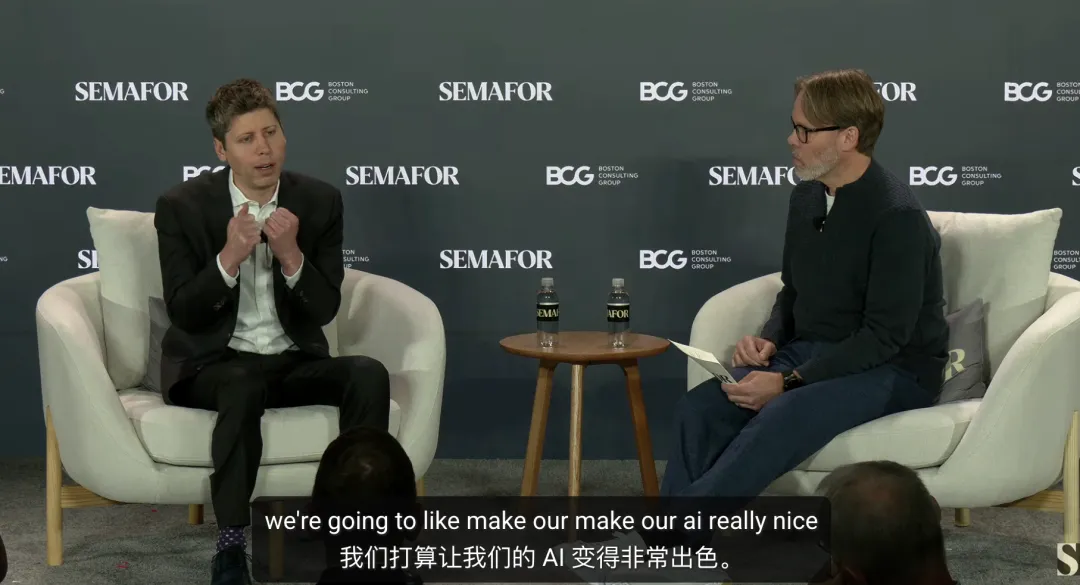
At the summit, Altman took the opportunity to clarify, saying that his previous words had been misunderstood by the outside world.
He changed his words and said——
I actually hope that everyone can afford it and install large memory on their computers. I strongly support everyone playing with hardware at home.
Secondly, there are practical issues regarding repeated calculations of AI chips and difficulty in implementing data centers.
Previously, it was reported that Altman mentioned when communicating with Samsung executives that there is a bubble of repeated statistics in the current market demand for chips.
Sam Altman explained the logic behind it on the spot.
He said that many companies are now developing AI chips, and each supplier is counting on selling most of its production capacity to a few leading large model companies such as OpenAI and Anthropic.
But from a buyer's perspective, OpenAI does not need to buy all the chips from all suppliers, which leads to overlapping expectations in the upstream supply chain.
However, he emphasized that the actual construction demand for data centers is still real.
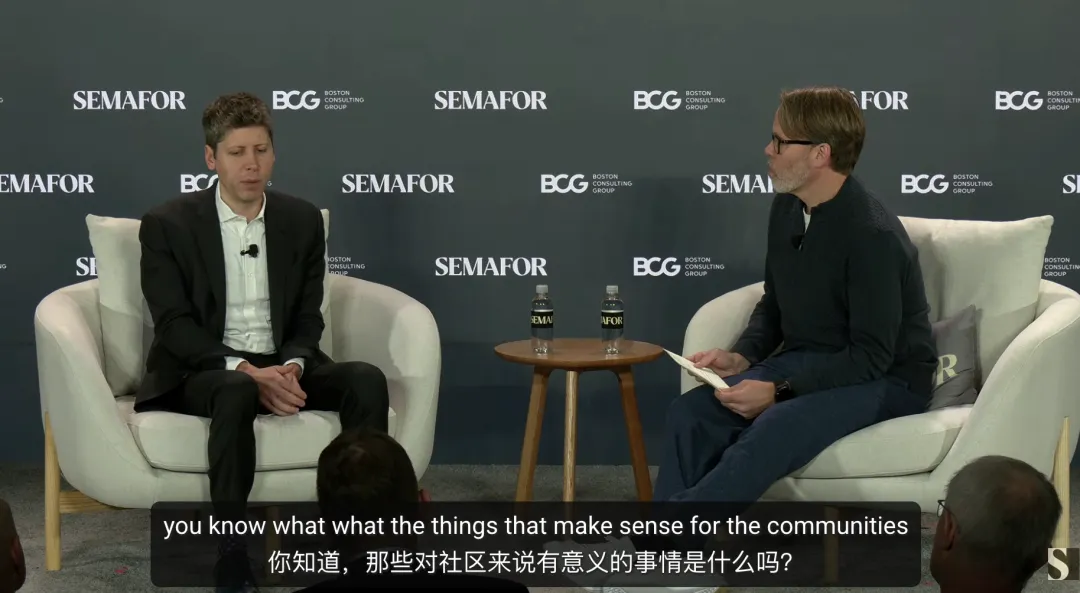
Altman admitted that the past practice of building data centers near residential areas is no longer feasible. In the future, developers must build data centers away from people.
In addition, Altman also talked about the latest progress of recursive self-improvement (RSI) within OpenAI.
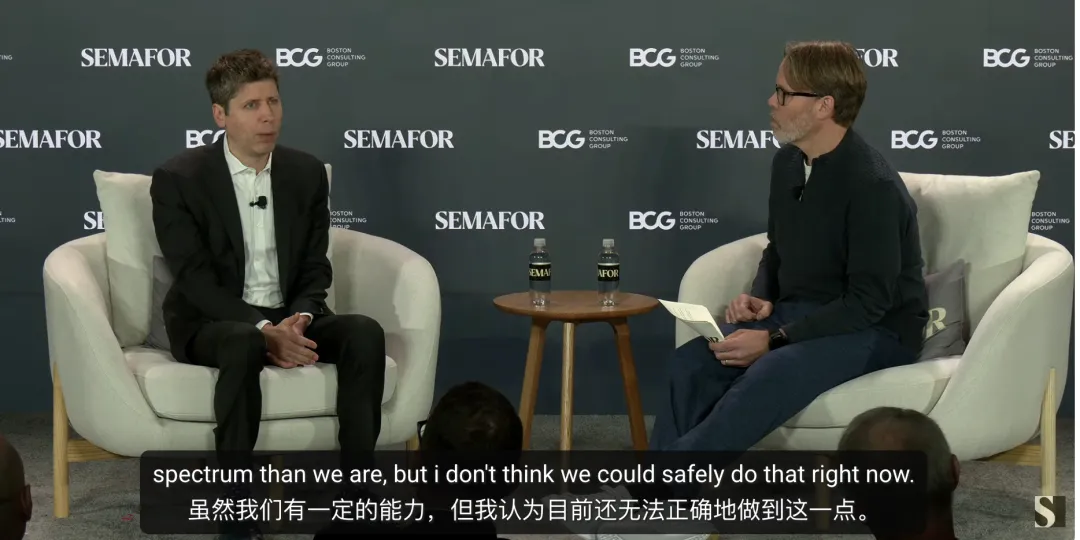
Altman revealed that OpenAI has begun to use AI technology to accelerate the development of its own models.
However, he made it clear that OpenAI has not yet launched fully autonomous RSI, which allows AI to continuously improve its capabilities without human supervision.
The reason is that at this stage it is not possible to ensure that the process is sufficiently safe.
As AI capabilities continue to improve, how to ensure that humans always have control will become an important issue that OpenAI needs to solve.
Finally, Altman also gave his latest statement regarding the capital market dynamics that are of concern to the outside world.
This week, rival Anthropic just launched its high-profile IPO process.
Some analysts are worried that Anthropic's listing will absorb a large amount of Wall Street's funds in advance, leaving less room for OpenAI to raise funds.
Sam Altman seemed quite calm about this——
He believes that the true situation in the primary market over the past year is that investor demand far exceeds the supply of high-quality assets, and there is no concern at all about lack of financial support in the future.
And giving more ordinary people the opportunity to invest in OpenAI and share the economic benefits brought by AI development is one of the important reasons for promoting the company's listing.
But he also admitted that in the current period of high industry turmoil, becoming a listed company does have many practical disadvantages.
Therefore, although OpenAI will definitely move to the public market at some point in the future, it is not in a hurry to do so at the moment.