

The bubble theory of embodied intelligence is not a new topic. What most people see is a bubble at the financing and valuation levels, but the source of all this is actually the embodied intelligence industry’s habit of “creating gods” with concepts. Nouns such as world model, humanoid robot, UMI, and Human-Centric emerge in endlessly, each of which carries a very grand imagination.
The first thing to do in this roundtable is to burst the concept bubble.
Our first question is: let practitioners talk about it from the perspective of front-line practice and industrial implementation. What technical directions or concepts are currently overly pursued in the field of embodied intelligence? In other words, which concepts are more popular than their actual maturity and application value.
In the speeches of the following 7 guests, a total of 5 keywords were mentioned. Among them, one person each chose "Humanoid", "Data", "First Year" and "User Distance", and the remaining three chose "Universal".
Huang Kangyao believes that the key word that is farthest from implementation and has the most prerequisites for realization is "human form".
In real landing scenarios, the humanoid form may not necessarily be the most efficient. Because humans did not evolve to do a lot of heavy work, such as moving boxes or tightening screws in logistics and industrial scenarios. The human body is designed for flexible and diverse scenarios, but these capabilities may not necessarily translate into the highest efficiency when implemented in the industry.
Therefore, Shenzhen Robot insists on Morphology Intelligence, that is, "morphology is intelligence."
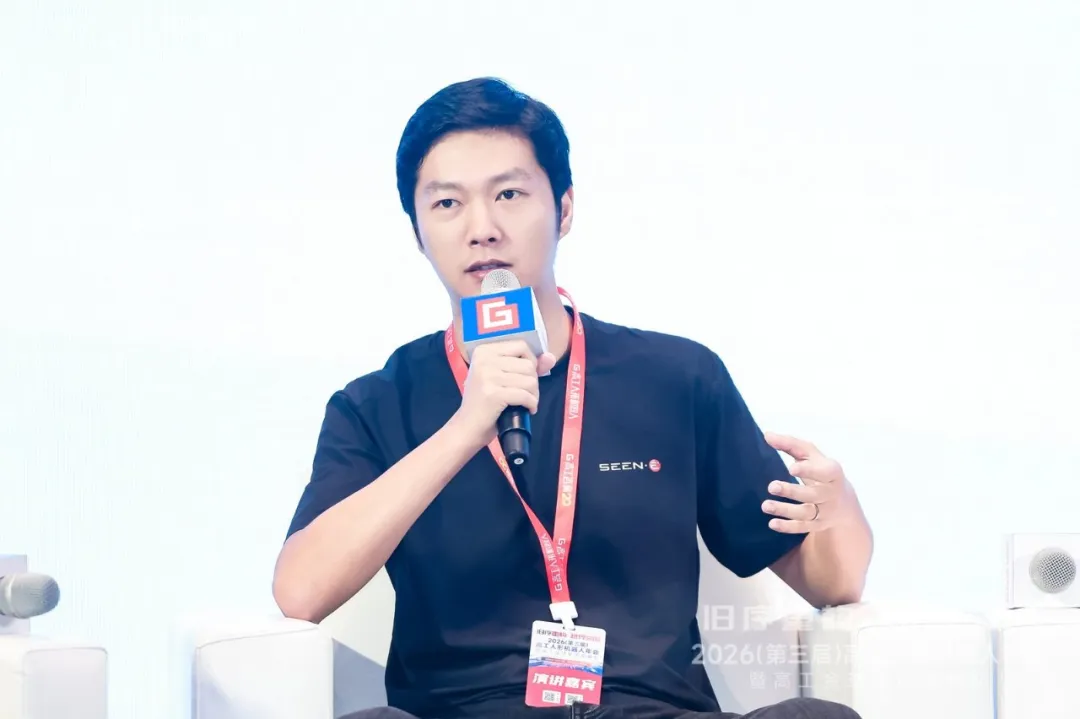
Shenzhen Robot Co-Founder Huang Kangyao
Huang Kangyao said, "When landing in certain fields, the shape of the robot itself has a lot of meaning. For example, many scenes do not strictly require the use of dexterous hands, and a two-finger gripper or a three-finger gripper may be enough. So from the perspective of landing, the human form is still a relatively distant concept for me."
Cang Yu, Wu Hao, and Ni Qize unanimously mentioned the word "universal" and believed that the biggest sticking point of "universal" lies in the landing scene.
Cangyu admitted that bipedal humanoids are still a relatively distant thing at present. Taking a step back, there is no problem with the bipedal humanoid itself. The biggest problem currently is that industry expectations far exceed the actual capabilities and status.
The same applies to human beings receiving compulsory education and higher education. Whether it is making a large model or making an ontology, as long as you want to enter a real work scenario and solve practical problems, especially an industrial production scenario, if you want to achieve large-scale production, it must be a specialized process. Therefore, I think that bipedal universal humanoids may be a false proposition for a long time, at least in terms of application in the entire industrial field.
Although Wu Hao is in the upstream parts and components link, he agrees that the word "universal" is more difficult to realize. It said that whether it is humanoid, wheeled or other forms, the opportunities for vertical scenes are still relatively greater.
In addition to mentioning universality, Ni Qi also believes that generalization is a bigger problem.
When robots enter factories, they want to replace humans in a general way. In fact, assuming there are ten processes and the yield of each process is 90%, after the ten processes are superimposed, the product yield will drop significantly. This is typical in the semiconductor industry. The error rate of each process will be very large in the end.
The bigger problem is that the memory capacity in the robot system is limited. The robot can only remember things within ten minutes. It can learn new tasks after learning new tasks. It may forget old tasks due to insufficient memory capacity. In the final analysis, generalization and generalization require very subdivided scenarios, that is, application-specific, for specific applications.

Novel Robot CTO Ni Qi
Yu Xu started from the data, saying that since last year, data mining centers and collection sites have become high-frequency words in the industry and are very popular. But so far, there is always a certain gap between actual progress and everyone's expectations. This gap lies in the fact that data mining centers should cope with large-scale data collection and mass production, and the number of robots on the market should also increase simultaneously. But more importantly, it is not yet possible to effectively utilize this data.
She divided the data collection work into four stages. There must be a lot of uncertainty in the initial stage. The data mining center and collection field are looking for controllability and certainty at the initial node. Further development will be divided into three stages: the first stage is to set up the scene and fix the personnel;
The second stage transitions to real scenes, such as convenience stores, where designated personnel do the collection;
The third stage is that convenience stores are collected by real waiters. This is the real real scene, and people are also doing their normal work. This is the most uncertain and uncontrollable situation, but this type of data may be the best for the "brain" and is also a direction that the industry needs to explore.
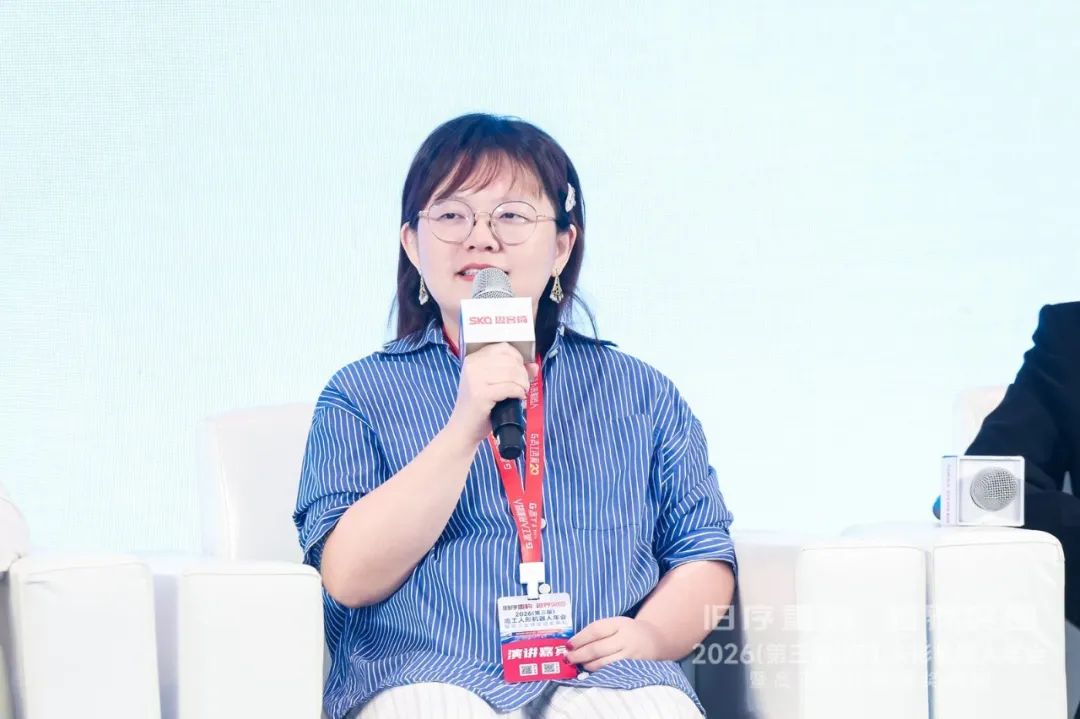
Kaiwang Data CEO Yu Xu
Sun Lili chose a surprising word - "first year". She pointed out, “The robot thing seems to be called the ‘first year’ every year, so I’m curious, when should the first year be counted? For example, why was last year the first year? Maybe it’s because the Yushu robot danced yangko and became the first year, or maybe it was last year’s first year. Everyone suddenly realized that the industry was booming, so they called it the first year. Many of my colleagues who were doing joint modules were already making modules five or ten years ago. Was it considered the first year at that time? So I think the term ‘first year’ is actually a bit difficult to define.”
Lin Feng starts from the user relationship, "I think the most distant relationship is the relationship with users, that is, the wall between technology and users is the furthest away. In fact, technology updates and iterates very quickly. I often see very good AI and Physical AI scenarios in the core laboratories of major companies. But it will take a long time for it to be truly applied by ordinary people."
Scenario choices for humanoid robot companies
Judging from the answer to the previous question, "universal humanoid robot" itself has almost become a false proposition. As the discussion deepens, the more they point to the same judgment. The real opportunities for humanoid robot companies are more likely to be hidden in vertical scenarios. Returning from general grand narratives to specific scenes does not mean that imagination shrinks, but that the judgment standards become more specific.
This leads to the core question to be discussed in this roundtable: What are the real application scenarios that can be implemented in the near future? What dimensions should be used when judging different scenarios?
In response to this problem, Huang Kangyao started from the logistics scenarios and pan-industrial scenarios that robots are concerned about, and gave a very detailed judgment dimension. The focus is on whether the demand exists, whether the technology is suitable, and whether the company itself has the ability to solve it.
First, whether the demand really exists. It must be confirmed whether customers really need this point, whether the demand is real, and whether there are real users willing to use new technologies to solve this problem.
Second, whether the own technology is suitable to solve the problem and whether a clear task definition can be formed. This definition is best a task with a clear boundary; at the same time, within the scope of the task, the scenes, object types, and data diversity faced must be rich enough, so that you can enter the comfort zone where your own technology is best.
Specifically, first of all, it is necessary to use texts and words to define tasks, so as to give full play to the ability of large language models or large multi-modal models in text reasoning; secondly, in order to expand generalization capabilities, richer data and scenarios are needed as support.
Third, evaluate the comprehensive cost of deploying your own technology, including robotics, and finally calculate the ROI. Here we should not only look at the hardware cost of the ontology, but also calculate the model training cost, how many engineers will be invested in the final deployment in the scene, how long it will take, and the time cost of running in with customers.
Cang Yu gave another set of rather detailed judgment criteria. It is worth noting that on the one hand, Cangyu emphasized CapEx (capital expenditure) and ROI, on the other hand, he also revealed that Galbot is still promoting some implementation attempts that do not care about ROI.
"From my point of view, first of all, it depends on whether the CapEx of the technology itself can be reduced to a very low level. If the CapEx of cost, time or even computing power is very high in order to do this, then this direction will be completely excluded first. Secondly, from the perspective of the owner, there will be an ROI calculation. Under an ideal ROI calculation, if there is still no possibility of return after more than three years, then we may temporarily decide not to push forward with this matter."
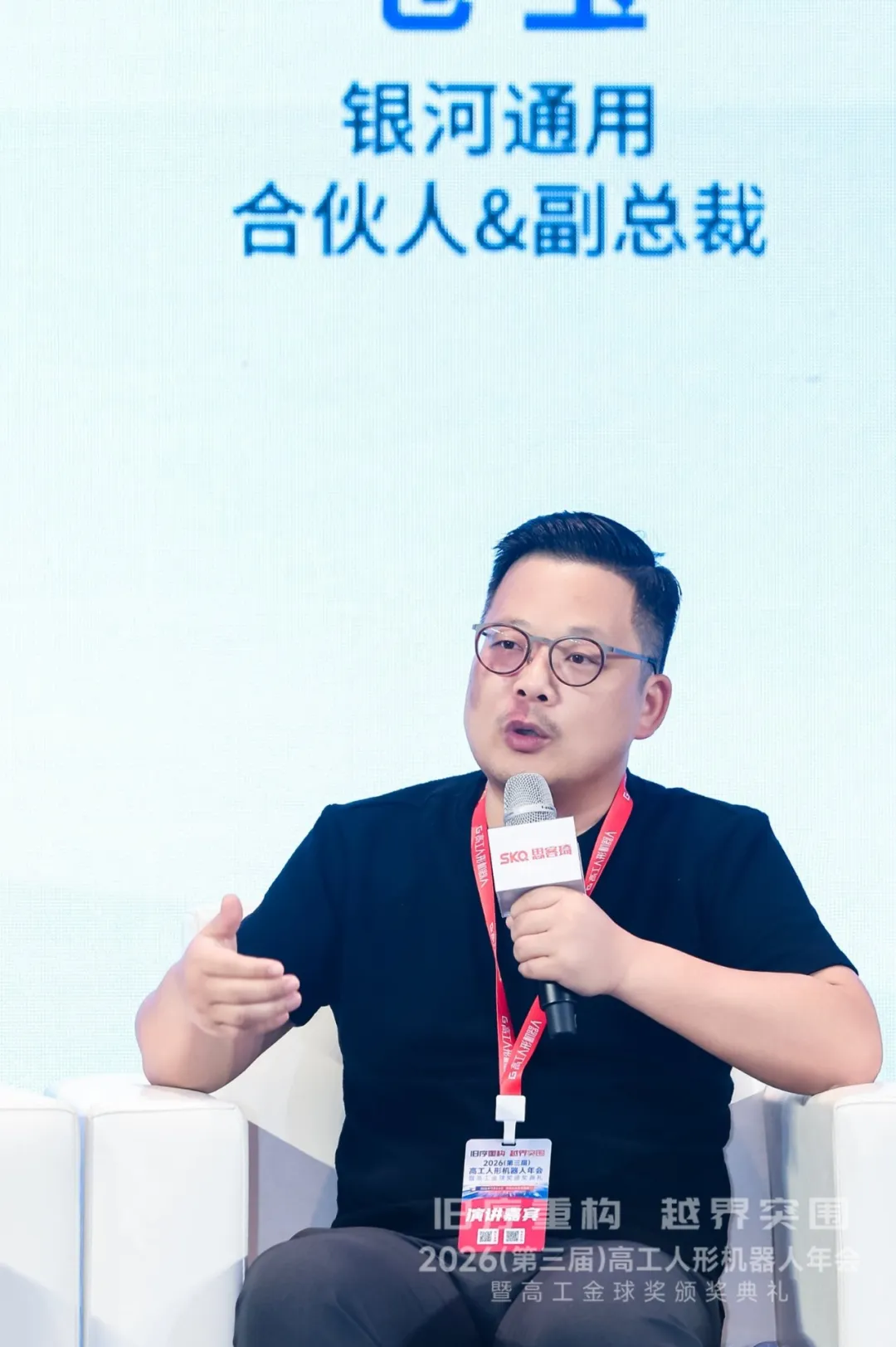
Galbot Partner & Vice President Cang Yu
At the same time, attention will also be paid to the structural mismatch of the entire labor force. Many factories, such as those in the automotive industry with unskilled jobs, especially on the logistics side, have staff turnover rates of up to 40%, which is not conducive to stable production.
Cang Yu added, "We are now also working with some KAs (major customers) to do something one step further, whether we can eliminate the need for a single person on a production line. We have not considered any ROI in this direction, we just want to know whether we can truly realize the concept of a 'black light factory'.
Therefore, I focus on two core points: First, To B is essentially about settling accounts and the structural mismatch of labor force; second, we also want to push the entire industry to take a step forward. I am working with several big KAs to promote the entire production line. Regardless of production efficiency, what I want is whether robots, including a combination of industrial arms and collaborative arms, can replace humans on a complete line. "
Standing upstream and watching the landing
Implementation does not only occur between the complete machine manufacturer and the scene party. The upstream supply chain is also an important window for observing real demand.
The upstream supply chain does not directly participate in the design of implementation scenarios, but is in a position closest to customer needs. By cooperating with different customers, they are often exposed to more comprehensive implementation attempts and have a clearer understanding of which needs are real and which are just staged imaginations.
Based on his experience in data delivery, Yu Xu believes that there are currently three main landing directions for humanoid robots. One is industry, especially in the field of precision manufacturing; the other is logistics; and the third is real-time retail.
Sun Lili gave the answer to "segmented fields" based on her experience in delivering joint modules. She said that in the projects she had done in the past, she clearly felt that the requirements were all kinds of strange: some valued torque, and some only required faster iteration speed. Behind this is actually a real demand, that is, general functions may not be useful, but a specific function is particularly critical. The world is a big place and there are many types of jobs. First dig in from small incisions and subdivided areas, and then slowly expand outwards, you can often create a large market.

Good Quality Joint Co-Founder Sun Lili
Ni Qi also comes from a joint module company. While recognizing Sun Lili's point of view, he also mentioned the concept of "added value." Also based on its own delivery experience, many of the customers currently served have very high requirements in biopharmaceuticals, explosion-proof inspections, etc. and require relevant certifications. This added value is completely different from what is commonly known as industrial humanoid robots entering factories to screw screws. But during this transition period, we must first make things with high added value so that the company can continue to operate, and then look at the direction of small batches and general purpose; then we can gradually talk about cost reduction and loss of precision.
Wu Hao holds a similar view. He pointed out that the core indicator to judge whether a scenario can be implemented on a large scale is repurchase, that is, whether the robot can create value, replace labor, or have a reasonable return on investment. If there is no repurchase and there are only demos and prototypes, it does not mean that it can be implemented on a large scale.
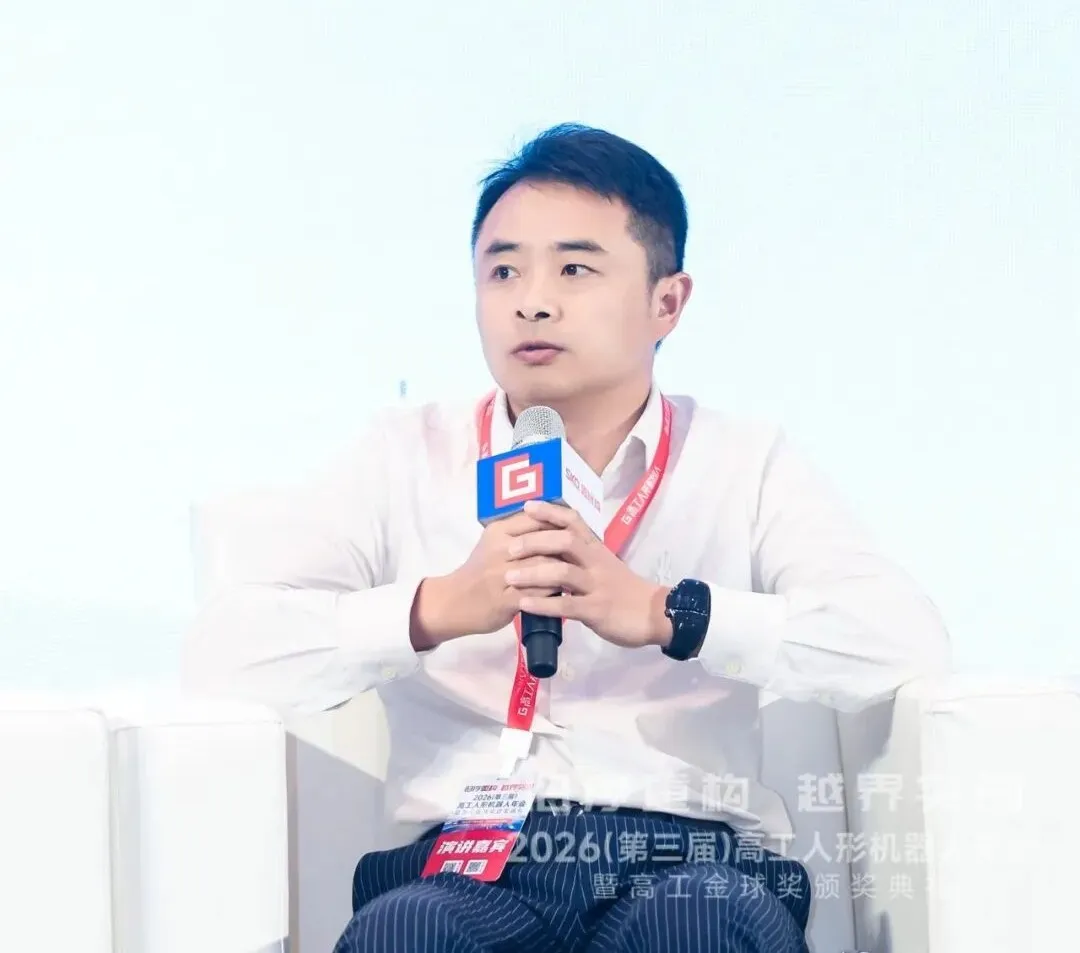
Xin Jingcheng Chairman Wu Hao
Lin Feng combined his experience in operating robot 6S stores and shared his experience in interacting with C-side and B-side customers. He pointed out that the development and demand of robots must be divided into stages and periods, and it is particularly important to clearly meet the needs of customers.
More importantly, users have very real feelings about the product, and this feeling is two-way: after users come into contact with and use the product, they usually provide valuable opinions and suggestions to the complete machine manufacturer.
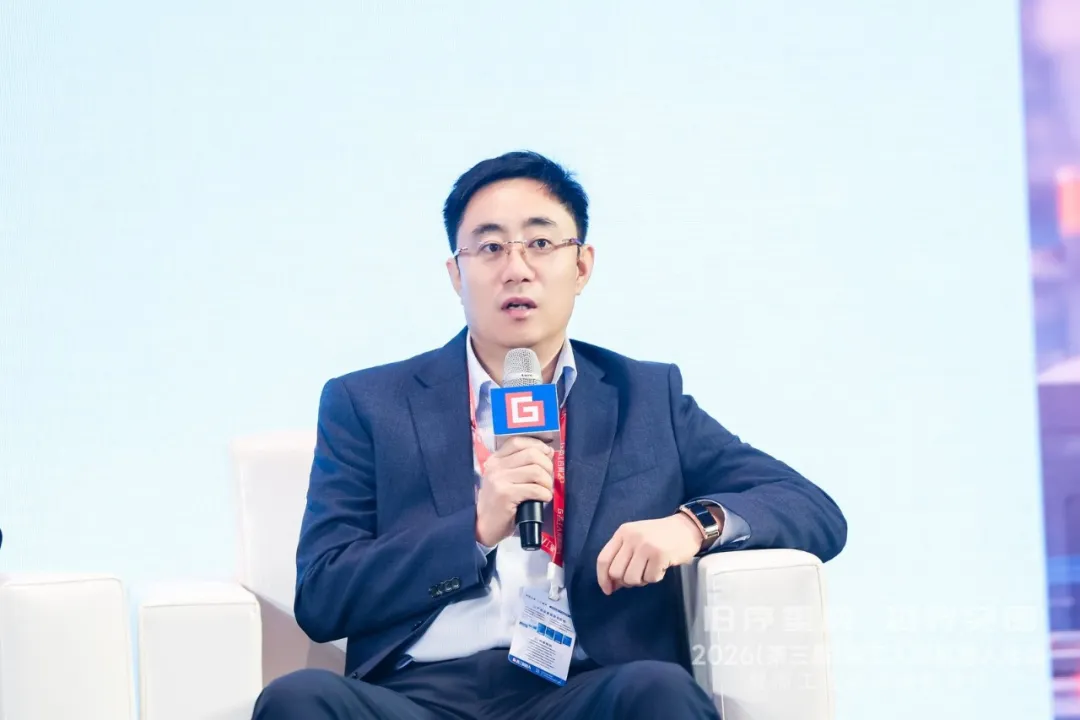
Future Era Robot Founder and CEO Lin Feng
summary
At present, the industry is once again facing doubts and winter. For entrepreneurs, returns and risks always coexist; all fluctuations are cyclical, and many doubts ultimately come from the fact that the technology is not yet mature and the products have not yet been truly launched.
Therefore, we are not confused, because the direction is not in hot words, but in real scenarios; the judgment criteria are becoming more and more specific: whether the demand is real, whether repurchase occurs, whether the ROI is established, whether the data can be used, and whether the robot form truly matches the task.
Winter is never the end of the narrative, but a screening. It will screen out expectations supported by concepts, and it will also retain teams that are truly willing to play scenarios, calculate detailed accounts, and polish products. Turning demos into products, turning prototypes into repurchases, and breaking down the general grand narrative into deliverable segmented scenarios is the only way for the industry to move to the next stage.
When the next roundtable gathers again, I hope that the discussion will no longer be just when the "first year" will arrive, but which scenes have been replicated, which data have generated value, and which robots have truly replaced repetitive labor.
We record our doubts and our solutions.