

By Li Su | Edited by Zheng Xuan
In recent years, the AI industry’s story has shifted. The conversation began with technology—larger parameter counts, faster computation and benchmark scores. It has moved toward practical applications: generating a business plan in a minute or offering advice to people dealing with everyday problems.
Where does AI go after the lab? The answer is part of an unfinished story about making AI accessible. The consumer side is familiar: people use AI to find information, draft proposals and plan trips. The other side is business owners. For a small-shop operator, access to AI is not simply the ability to chat with a model; it is whether AI can help manage money, inventory and customer traffic.
In November, OpenAI began testing “Businesses in ChatGPT,” a feature that lets merchants claim and maintain business information and see how users interact with them in ChatGPT. It is a small feature, but a clear signal that major AI companies are making room for businesses.
In China, that shift is already under way. Meituan says that over the past month, the number of merchants in third-tier and smaller cities using its AI assistant rose by more than 200% month over month, while merchant-initiated conversations increased about threefold.
AI for businesses is taking two paths: into office towers to serve white-collar workers, and into neighborhood shops where owners work long hours. The second path is harder. It depends less on raw model intelligence than on understanding local commerce and the physical world—from how a takeout menu is arranged to small changes in hotel prices relative to nearby competitors.
Small restaurants in Rizhao, Shandong, and Chaoyang, Liaoning, as well as a hotel in Chifeng, Inner Mongolia, are beginning to use AI shop-management assistants. Meituan has introduced AI tools for sectors including food service, travel and hospitality, and pharmacy, integrating them into the business dashboards small merchants already use. AI is entering the day-to-day life of neighborhood businesses and a vast market made up of millions of small shops.

Changing a business can start with a takeout menu
For years, pizza-shop owner Ai Ze in Rizhao judged business by how tired he felt. “If I was too busy to take a break, I thought it must have been a good day.” After adopting Meituan’s Miaoshou Delivery Assistant in July, he could see impressions, conversion rates and product performance together. The data did not always match his intuition.
Meal bundles were the first thing to change his mind. He had assumed customers could order individual items and did not need special combinations. The AI analysis helped him see that bundles can address clearer dining needs and make it easier for customers to choose, while helping the shop retain specific customer groups.
Ai Ze reorganized the menu, updated product photos and selling points, changed item order and created bundles he had previously avoided. He says he saved thousands of yuan a month in outsourced operations costs. Within two weeks of adopting the tool, his takeout orders more than doubled, with 30 to 40 orders during peak periods.
“When I get to the shop in the morning, the first thing I do now is ask Miaoshou how business went yesterday—which dishes sold well, which didn’t, and why.” He reviews the results after each menu change before deciding what to adjust next. “I used to dig through the dashboard and calculate everything myself. Now AI pulls the data together, analyzes it and suggests changes. I’m also learning more about how to run the business.”
In Chifeng, nearly 20-year hotel owner Pengpeng faced a different question: as nearby hotels cut prices during the July and August tourism season, should he follow suit?
His hotel had no dedicated revenue manager. He had to set room rates, promotions and availability himself. Cutting prices risked lost revenue; holding rates risked sending guests elsewhere. He began spending about an hour a day discussing the issue with Meituan’s hotel-focused AI assistant, Miaoshou Jibai.

Instead of automatically urging a price war, the assistant brought together his bookings, differences from nearby competitors, page views, conversion rankings and the hotel’s strengths and weaknesses. Pengpeng says gathering that information used to take at least half a day each week during the summer peak, and judgments based only on experience were not always accurate.
When nearby hotels were lowering prices, the AI recommended that he hold his rates. Pengpeng says the analysis gave him confidence to avoid an immediate price cut and make other operational adjustments instead. His booking conversion ranking rose to the top five among hotels of similar size in the same city.
In a county town in Chaoyang, Liaoning, AI took on more basic work. Wang Huan and his family run a wrap shop next to a high school in Jianping County. They prepare food from 7 a.m. to 8 p.m.; when students arrive after school, they can be too busy to tap the order-completion button. He had tried outsourced operations, but found responses slow and communication difficult.
Wang had only started using Miaoshou Delivery Assistant a few days earlier when its store diagnosis showed him that the shop’s signature family-size wrap had no product description. He added the suggested selling points and rearranged items on the home page. Details that had been neglected amid the daily rush finally got attention.
For Ai Ze, Pengpeng and Wang, AI began with ordinary tasks: adding descriptions, checking conversions and adjusting menus. They did not need to study technical specifications; they started with familiar business questions, reviewed suggestions and adapted them to their own shops.
An AI that understands commerce can fill a role small shops lack
Zooming out from these shops reveals the scale and variety of demand in China’s county markets. Recent figures cited in the report say county-level areas account for 90% of the country’s land, 50% of its permanent population and 40% of its economic output. As of the end of July 2026, the markets had more than 78 million registered individual businesses; 86% were in services, including restaurants and guesthouses.
County commerce is also changing. Meituan’s 2026 County Consumption Report says the number of county-level merchants with online transactions on the platform rose nearly 10% year over year in the first half of 2026, while the number of chain-brand merchants grew nearly 20%.
As merchant numbers rise, local businesses must manage more details. They need to serve regular customers while helping first-time visitors find them online, deliver good products and understand how to present their listings and configure promotions. Chains can rely on specialist teams; in a small shop, the owner often has to do everything.
“What small shops really lack is an operations role that has long been missing from the payroll,” one industry expert told GeekPark. For shops in third-tier and smaller cities, detailed operations require business knowledge—and owners who have worked all day rarely have time or energy for the job.
Outsourcing once offered a way to fill the gap. But Ai Ze says the response time and service quality of agencies can be uncertain even after payment. Wang says few merchants in his county use AI for business operations. Some rely on years of experience; others have been burned by dubious training courses and outsourcing schemes. They are wary of paying for tools for fear of choosing the wrong one.
That is the reality AI must address to reach tens of millions of physical shops. Owners may try a tool to solve an immediate problem; whether they keep using it depends on whether it continues to provide useful help.
Both Ai Ze and Pengpeng had tried general-purpose AI tools. Ai Ze found them useful for simple chat but not business decisions: “They just agree with whatever you say. I wouldn’t dare rely on that to run a business.” Pengpeng asked a general large language model about his hotel and received generic advice such as making short videos and running promotions, with little practical help.
“The gap between a general-purpose model and a vertical agent in real operations is not just model capability. It also depends on whether the system can access the context and data relevant to the business question,” the expert said. Knowing common industry practices is not enough to advise a particular shop at a particular moment. A hotel pricing decision requires current room availability, booking pace and local market changes; a restaurant’s decision to offer bundles depends on product performance and customer demand.
There is also a usability gap. If shop owners must spend substantial time configuring data and knowledge bases, learning prompt-writing or dealing with code, the burden remains high.
Bringing professional business capabilities beyond large companies
Making AI easy for shop owners to use takes more than adding model parameters. It requires connecting AI with store data, industry experience and concrete business operations.
Meituan, which has worked in local services for 16 years, is one company positioned to pursue this market. Its approach is to integrate AI into the merchant dashboards already in use, combine store data with information about nearby markets, provide analysis and recommendations for specific problems, and connect those recommendations to actions involving menus, prices and promotions.
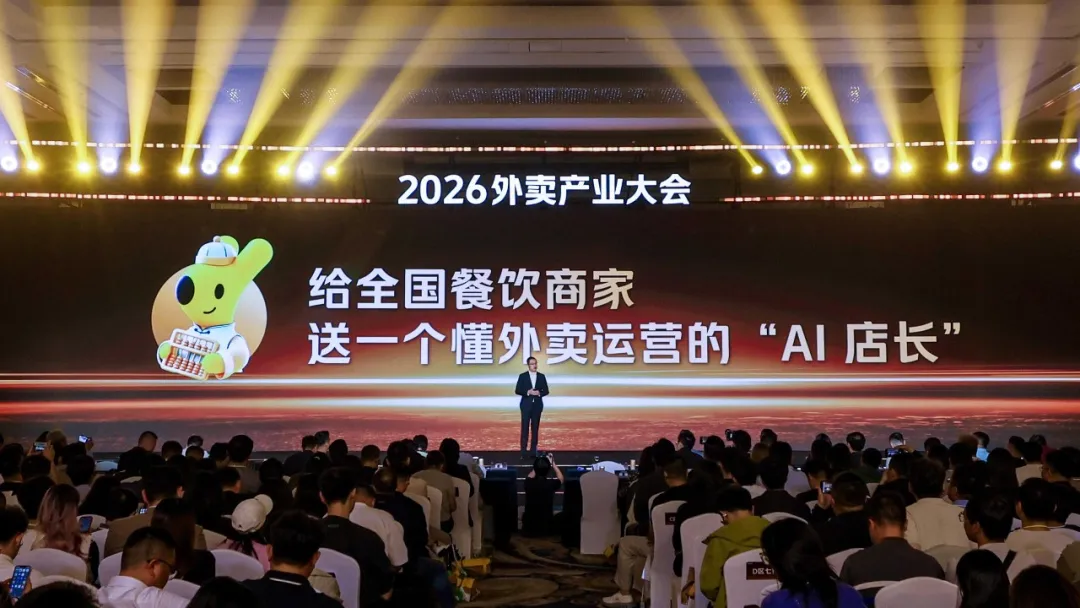
On its second-quarter 2026 earnings call, Meituan CEO Wang Xing said the company would not become a “token factory”; its models and AI products would support its core business and improve experiences for users and merchants as well as operating efficiency.
Recent business figures cited by Meituan point in the same direction: over the past month, merchant use of its AI assistant in third-tier and smaller cities rose by more than 200% month over month, while merchant-initiated conversations increased about threefold.
The way professional operating capabilities are supplied to businesses may be changing. For a long time, advanced business analysis and operations depended on organizations with the resources to hire specialist teams. Independent shops could rarely afford the same investment. Some of those capabilities are now becoming available to individual stores through lower-cost AI tools. Unbundling operating expertise from large organizations is one practical meaning of bringing technology to more people.
As those capabilities become more accessible, the competitive balance in smaller markets may also change. Chain brands have often benefited from standardized online operations. As small shops close that gap, their owners may be able to focus more on their products and craft.
Ai Ze says chains and prepared foods made restaurants more industrialized and standardized. With AI handling time-consuming tasks, small-shop owners can access more detailed data and stronger operational support, then devote the saved time and money to product development and cooking—returning to what makes a neighborhood restaurant distinctive.
In 1991, computer scientist Mark Weiser wrote in “The Computer for the 21st Century”: “The most profound technologies are those that disappear.” He imagined technology becoming part of everyday life until people no longer had to think about it.
That change may now be arriving quietly in the shops on neighborhood streets.