This morning, America's stocks were washed with blood.
The NASDAQ index plunged 5.52% to its highest single-day drop since April 2025, officially falling into the technical correction range. The Philadelphia semiconductor index fell 12.3%, the worst day since the pandemic crash of March 2020.
Invited fell by 9.26%, evaporating almost $450 billion a day; AMD fell by 17%, Flash fell by 22%, and Stock Exchange fell by 10%.
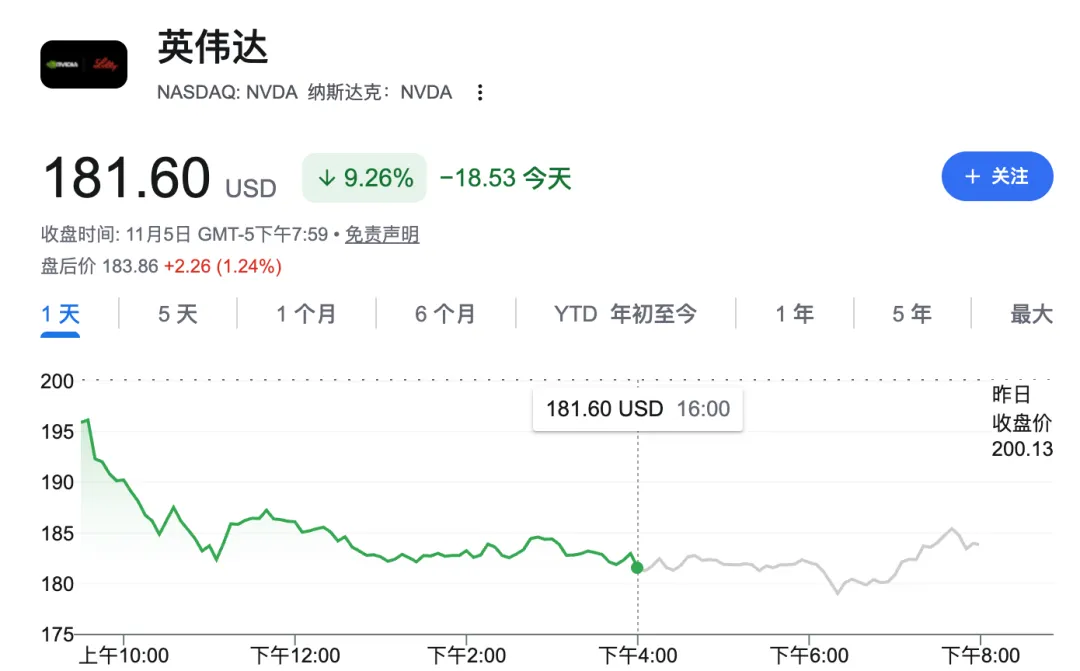
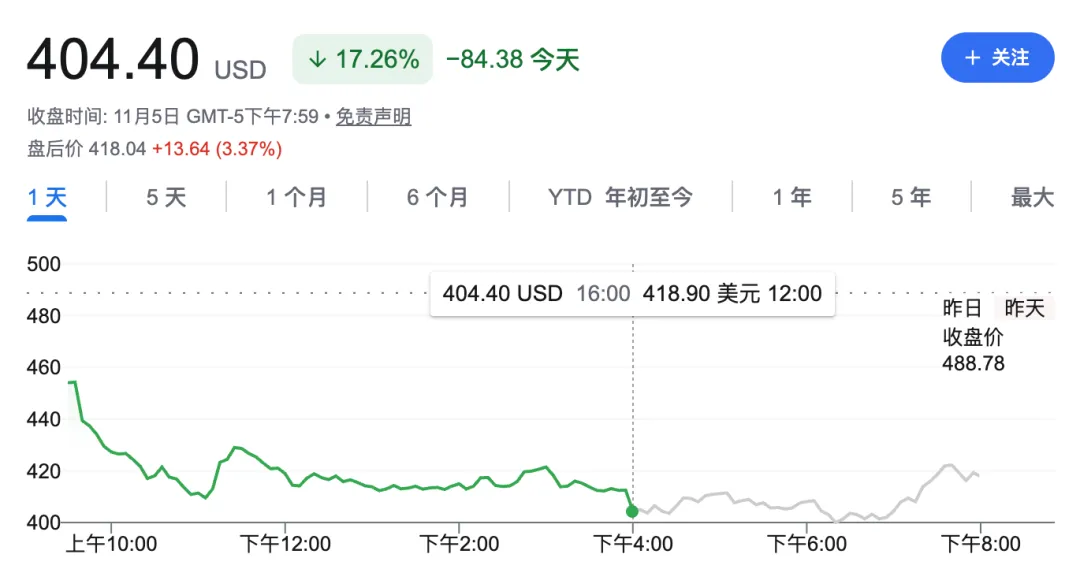
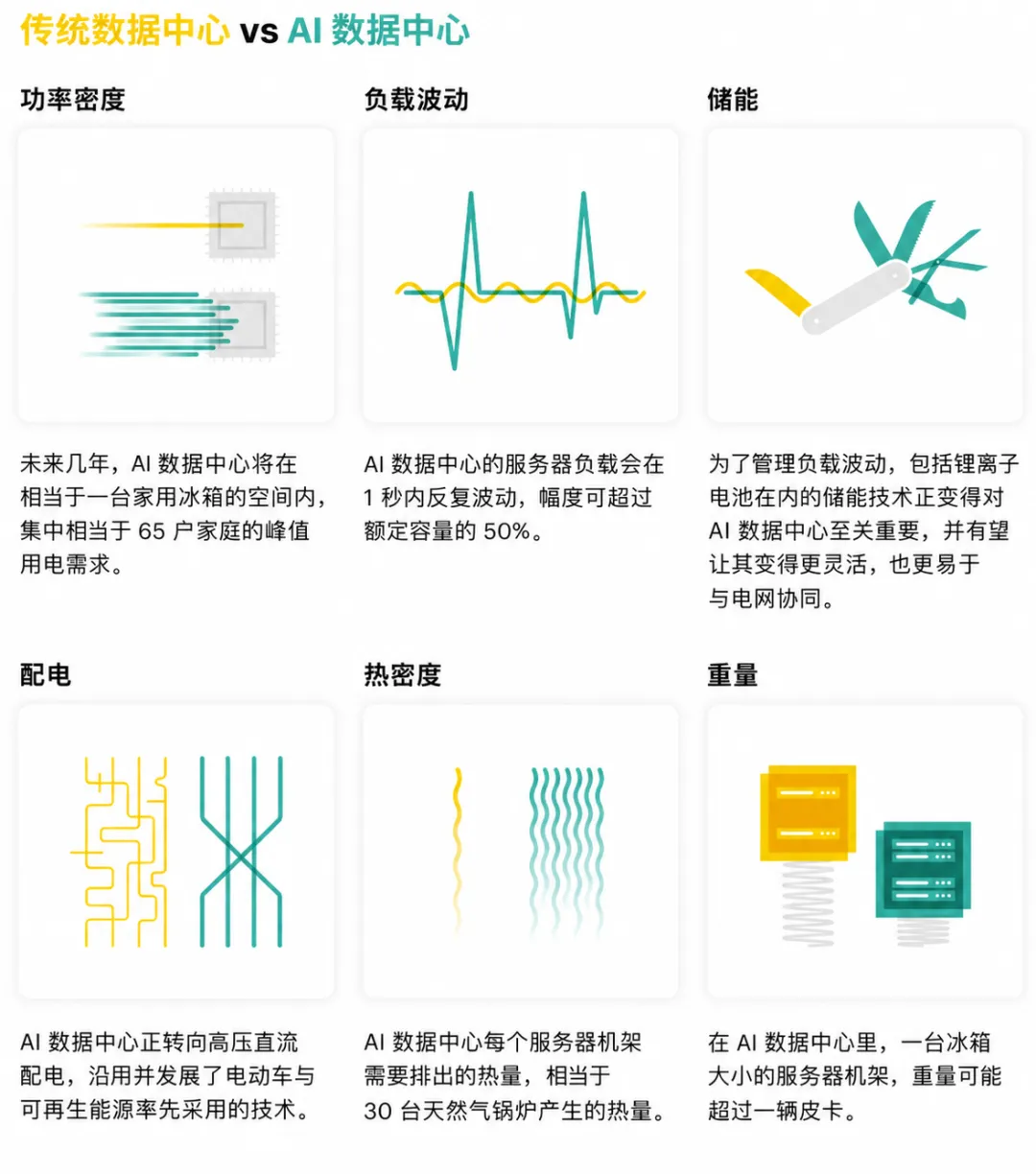
From chips, servers, light modules to power suppliers in data centers, almost no corner of the entire AI-based industrial chain survives.
Media estimates that U.S. stocks evaporate about $2.8 trillion a day!
Beyond the impact of the election, a deeper layer, the market's suspicions about the amount of AI capital spent "can't really go back to the book", finally exploded in focus.
However, just two days ago, on November 3, early investors in Menlo Ventures, a Silicon Valley 50-year-old venture capital firm, released a report on the state of enterprise AI for the year 2026, in which figures and stock markets go in the opposite direction:
Business in 2026AIDeployment spending grew from $33 billion to $177 billion, a 54-fold increase a year.Three years ago it was $1.7 billion, and three years ago it was 100 times bigger.
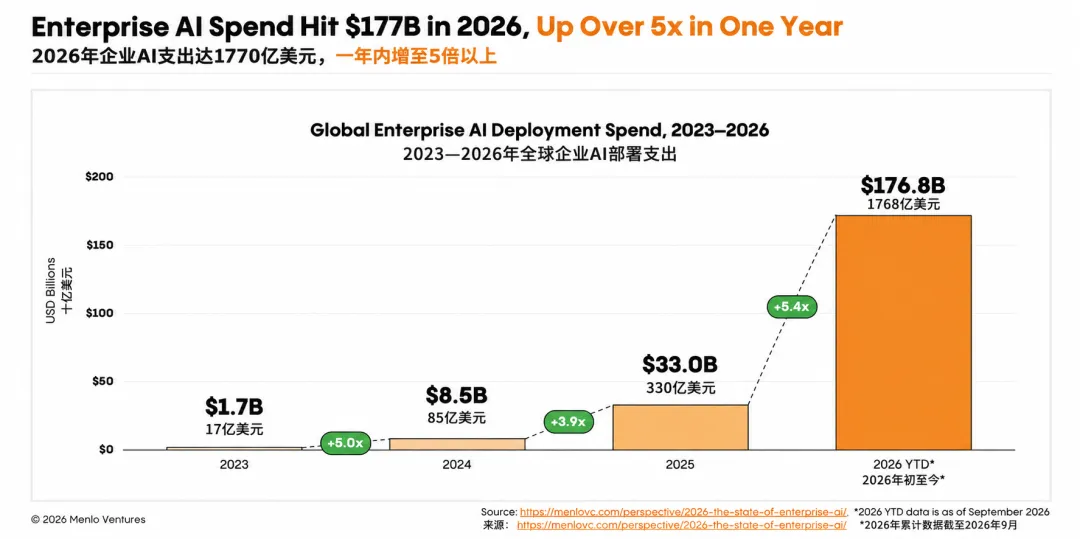
On the one hand, $28 trillion worth of smoke was extinguished, and on the other hand, $177 billion worth of real gold and silver went in.
Wall Street is skeptical that capital expenditures on the supply side can't be repaid, while CTOs on the demand side are adding to the budget deficit.
The report also contains two more patient clues:
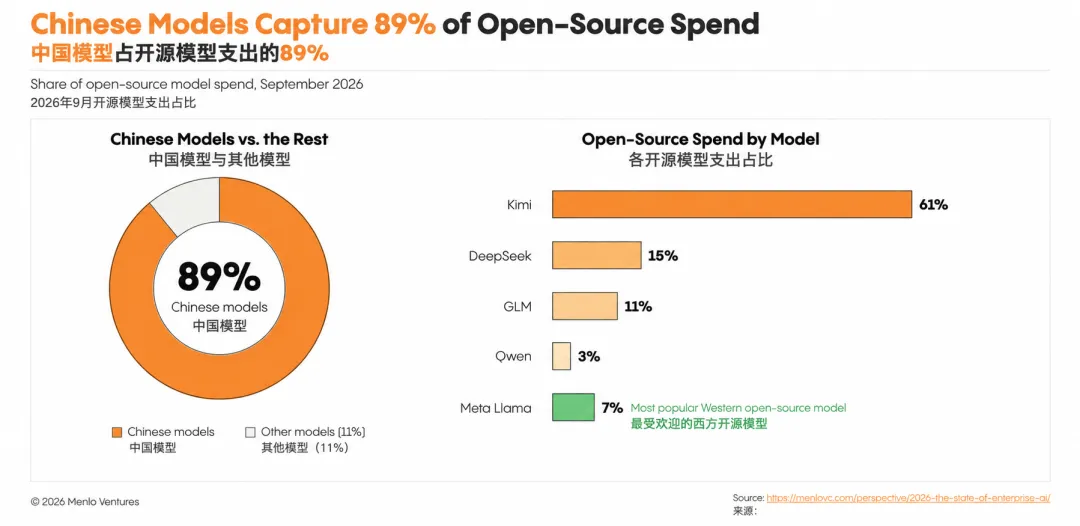
Chinese models took 89% of enterprise open source model spending, with Kimi accounting for 61%; at the same time, enterprise money is accelerating the flow to more expensive flagship models, with the spending share of front-end models rising from 35% to 63%.
It's a really good game to put these two things together.
Chinese modelIt's on the billboards of American companies.Among enterprise open-source model spending, the Chinese military ranked in the top four with an overwhelming advantage: Kimi 61%, DeepSeek 15%, GLM 11%, Qwen 3%, for a combined 89%.
In other words, U.S. companies run open source models in production environments, nine out of ten times, with the bottom coming from China.
But what's even more interesting is that Chinese models have become more than just "cheap alternatives" and have begun to go "long" into other people's products.
Just yesterday, on November 5, Thinking Machines Lab released its new model, Inkling 2 Small. The company didn't need to elaborate: OpenAI's former CTO, Mira Murati, founded a round of seeds for $2 billion, and the most recent round of talks valued it at $40 billion, one of Silicon Valley's largest gold-containing star laboratories.
The model itself is not ambiguous: 594 billion total parameters, 17 billion activated MoE, and the Artificial Analysis Intelligence Index scored 31 points.
But that's not the focus. The focus is on an unusual corner in a tech blog.
Pre-training progressed to the second half, with most of the data being collected not from the Internet, but from several earlier models. The first of these was the moon's dark side, the Kimi K3.
What's it called? It's about Kimi becoming a teacher for the Silicon Valley Star Lab.
The premise of being a teacher is that the answers you write are ready to be copied.
While teachers are just a tool, the Kimi K3 is still the backbone of American companies.
In August, legal AI unicorn Harvey Chen, valued at over $1 billion and its shareholder OpenAI, released its first model, Tenet.
GPT is not OpenAI's shareholder, it is Kimi K3.
Harvey used only about 150 British B300s and spent two months training for legal assignments on the Kimi K3.
As a result, Tenet has almost doubled the number of missions it has completed on its own legal agent benchmark and has played back and forth with the flagship models of Anthropic, OpenAI, and Google on a number of complex legal tasks.
Thinking Machines, which built the model, took it as a teacher, and Harvey, who applied it, took it as a foundation.
For these companies, open weight means getting a knife that they can grind, not just a cheap knife.
The Chinese model has thus entered the production chain of overseas mainstream applications.From being called up to being a teacher, the bottom line.
And the momentum is still accelerating.
Just released on October 23, the Kimi K3.1 Pro, the dark side self-reported Terminal-Bench 4.0 score of the month reached 65.7%; shortly after, on November 5, it landed on Microsoft's Foundry platform.
This is the first open-source weighted model in the Microsoft Cloud that uses a "revenue sharing" model. Simply put, every time a company calls Kimi on Microsoft Azure, the dark side of the moon follows the distribution of money.
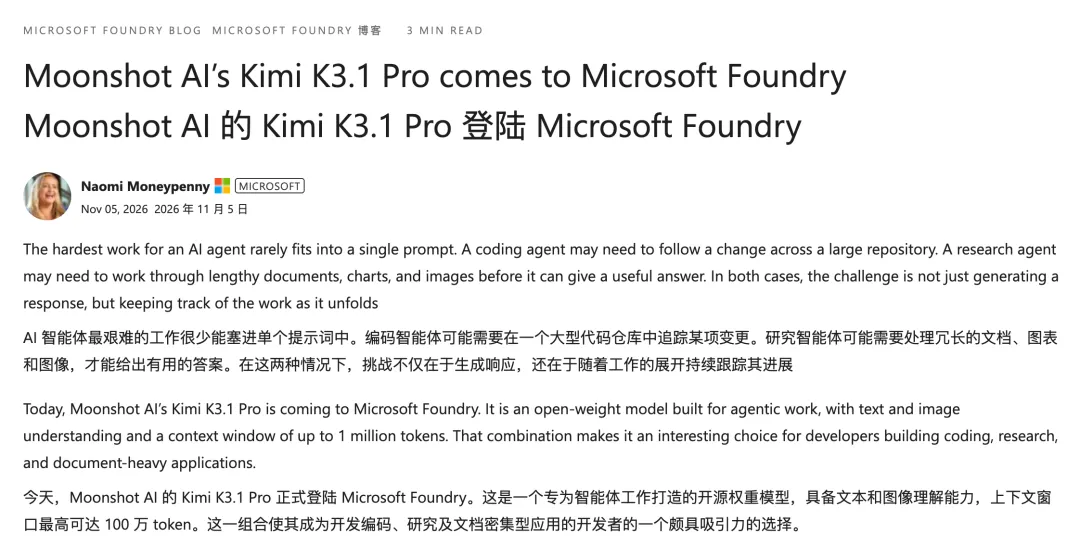
Before Microsoft, Kimi had been ahead of Amazon AWS. Microsoft and Amazon, the world's two largest clouds, later issued "entry vouchers" to Chinese open source models.
Another bill: Doubling the use, but the money doesn't keep up.If China's open-source model is so powerful, should it be panicked?
The story is not so simple.
In terms of usage alone, the momentum of open source is strong: tokens have increased from 11% to 19% and monthly processing volume has skyrocketed by 22.5 times, reaching about 2.9 trillion.
But what about money?The share of spending decreased from 6% to 4%.
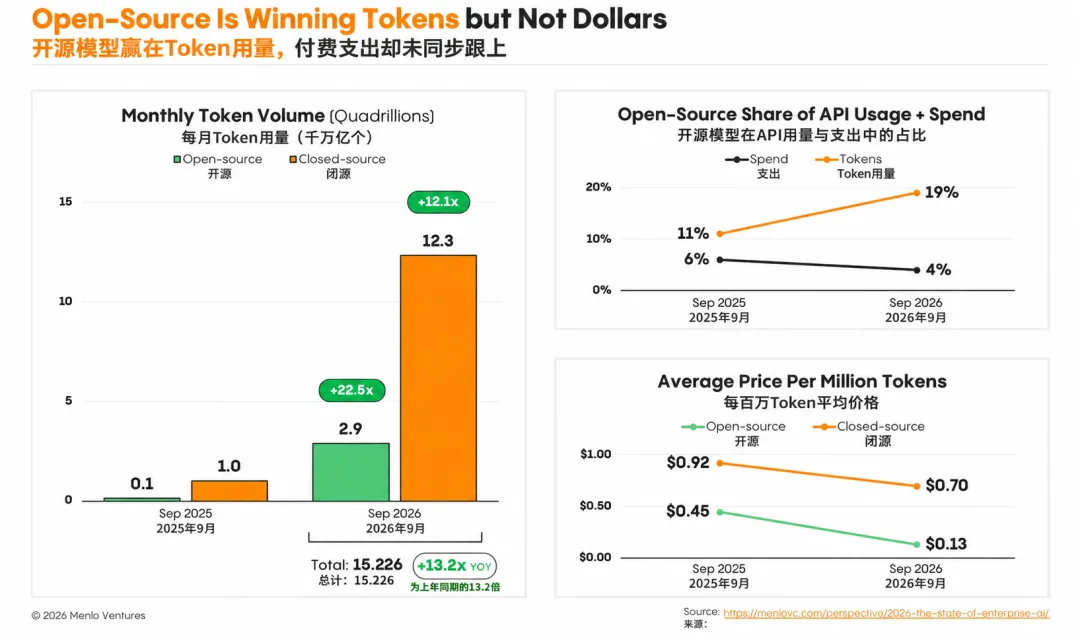
The reason for this is obvious: over the past year, the open-source camp has largely been working on the same thing with smaller, faster, cheaper "flash" models, fighting the price war.
Over the course of a year, the average price of open-source tokens fell 3.3 times to $0.13 per million; the closed-source model averaged $0.70, more than five times.
The result of the price war is that the people who live twice as much and the people who collect less are consumed by the decrease in prices.
The open-source Flash models that fought the price war won the tickets, and the flagship model won the wallet.
The company's budget does not recognize open source closed source, only recognizes who can work.
This is the most counterintuitive finding in the entire report:The spending share of front-end flagship models increased from 35% to 63%, and the share of tokens doubled from 18% to 42%.
Last year's mainstream choices were Claude Sonnet 4.5 (US$3.00 per million) and GPT-5 (US$1.25 per million); this year it was replaced by Claude Opus 5.5 (US$4.00) and GPT-6 Astra (US$10.00).
Anthropic went from 40% to 55%, OpenAI went from 27% to 31%, both of which consumed 86% of corporate LLM API spending. Google dropped from 21% to 9%.
While the Kimi K3, DeepSeek V4, and GLM-5.3 are already close to their flagship competitors, with a combined capacity of less than 5 percent.
The worst part is that it's in the middle: small closed-source models have dropped prices by over 80%, while token shares have dropped from 29% to 13%. At the top, the flagship pulls out complex tasks, at the bottom, the open-source pulls out simple lives, two heads squeezed, two heads struck, inside and outside are not people.
So why would businesses spend more money?
Think of it this way: let AI fix an online fault, read code, check logs, positioning problems, change files, run tests. Cheap models run away every few steps, you have to explain, check, go back to work, and you're finally on your own. Token bills are saved, and the engineers go in all afternoon.
So the bill at the heart of the business is not just a few dollars per million tokens, but the total cost of the whole thing from start to finish.
It's cheap, of course, but there's a precondition that you can do it.
But if the word comes back, the open source can't do much?
For the Kimi K3.1 Pro, the 2.8-trillion-parameter MoE architecture, which supports 1 million tokens, Terminal-Bench 4.0 runs 65.7%, ahead of the GPT-6 Astra.
In the OfficeQA Pro v2 benchmark for financial research, it scored 64.4 points, the first in the world. The delusional error rate dropped from 23.4% to 6.85% from its predecessor.
This is no longer the "combined use" level, it is the level of the closed-source flagship bracelet.
It's never the IQ, but the company's confidence in its compliance, after-sales, long-term routes, these "out-of-the-box" scores that are the last link.
After all, today's stock market crash and the data in this report are two sides of the same coin.
Wall Street is staring at the supply side: capital expenditures, data center approvals, electricity costs - all hanging in the balance.
Menlo Ventures reports on the demand side: For every $1 spent training a model, companies spend $1.70 using it to pump downstream demand, which is giving upstream input a bottom.
At the beginning of the year, Wall Street was also in the midst of a "AI eats SaaS" panic. The resulting report showed that: 55 percent of new AI spending comes from the new budget, while only 9 percent of traditional software budgets go to native AI manufacturers.
AIIt's about making cake, not stealing cake.
Tim Tully, a partner at Menlo Ventures who wrote the report, said the truth:
Wall Street is constantly asking whether AI can get back to the book, but what we've seen is that corporate buyers aren't shrugging their shoulders and are trying to figure out how to get more AI to work.
"We may still underestimate the market".
Shares will fall, the bills won't lieFinally, let's look back at the three disadvantages of the report:
Flags vs. open source.The flagship model took 69% of deployment costs, and the advantages of front-end laboratories were magnified in the Agent era.
However, the report also says that "the scarcity of capabilities will not last for too long".
Every time an open source mission matches a flagship, the original premium must be re-checked.
Closed-source flags have no permanent premium rights.
Consumption vs. revenue.China has proven its capability with an 89% share of open source, but there is a question of commercialization between 19% of token usage and 4% of spending.
The next link is to be able to get a lot of calls, to stabilize complex tasks, to keep customers paying.
The case of Harvey and Thinking Machines gives us a way out of being cheap, from being teachers to being someone else's backbone; Microsoft, AWS's split model gives us another way out.In the meantime, we've been working with cloud giants, calling once, clearing once.
Shares vs. bills.The contrast between Wall Street and corporations is not so contradictory.
The stock price is calculated as expected, and the bills are written as reality. The evaporation of 2.8 trillion a day is expected to be reversible, and 5.4 times the acceleration of reality in a year. Both can be simultaneously true.
But looking further, the report reveals that there may be more than just one economic cycle.It is a redistribution of industrial power.
Three years ago, AI was still a toy in the lab; three years later, companies spent $177 billion a year on AI, which is about a third of all public cloud revenues.
Active power has also changed, with 80% of the tokens being burned by Agent himself.
Who can build a model, who can teach a model, who can help you run a model, the division of labor in the entire chain is being rewritten by China's open source forces.