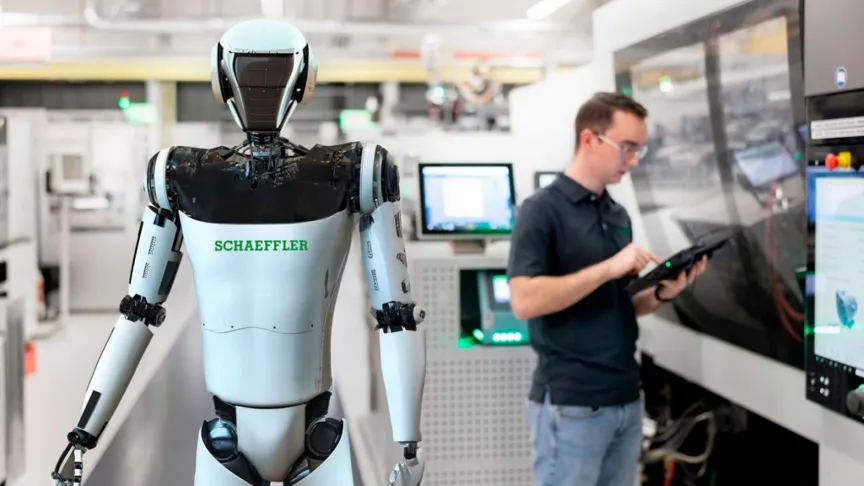
“ A nearly 100-year-old Tier 1 arm and skeleton.
Recently, Scheffler issued an announcement in Herzogenaurach that would put a halt to the German automotive supply chain once again. Europe's net reduction of 3,460 jobs and the closure of five production sites, of which 2,660 jobs and four on the German mainland.
At the end of the same announcement, Chief Operating Officer Johan Schroder ranked humanoid robots and defense as the best growth areas for the group.
Two weeks ago, another news broke: Chevrolet's global man-made robot hand orders rose to about 400 million euros, five customers entered the mass production partnership, and two new customers in Q3 came from China.
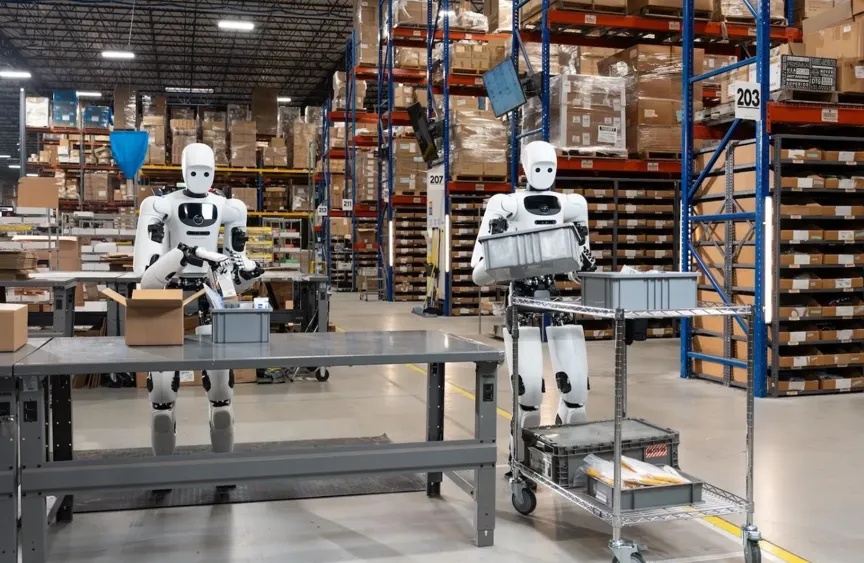
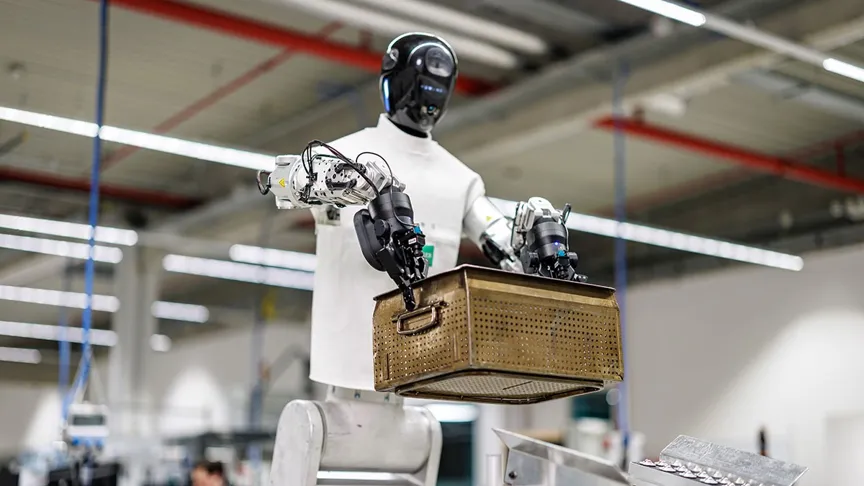
On 20 October, a 7,500-square-metre-square-metre machinery and smart machine factory was officially inaugurated, with six humanoid robots at five locations completing the entire process from container transportation, parts sorting, pressing, screw assembly to functional testing and finished product packaging.
While cutting off the production line of internal combustion engines in Germany, while cutting new production lines for human-robot parts in China, the transformation of a 100-year-old German company was compressed into the same announcement.
Why did Scheffler abandon Germany, which had centuries of accurate manufacturing, and come to China to build humanoid robots?
01.
Jobs are cutting back on research and development
This is not even the biggest layoff of its kind.
As early as 2024, Schaeffer had already started a round of 4,700 layoffs, and this time 3,460 were laid off after the previous round was completed ahead of schedule.
The size of the layoffs is only visual, and the structure is key. The jobs that have been cut are not entirely concentrated in the traditional sense of production lines and administrations, but clearly point to the sequence of R&D. Approximately 30% of the affected positions come from R&D.
For an industrial giant with a focus on precision manufacturing, R&D books are the bottom line that shouldn't be touched, but they are now at the top of the redundancy list, which means that Scheffler's compression is actually the total input of the entire technology route of the internal combustion engine era.
Sheffler's reasoning is not disguised.
First, gasoline engines are burning. The European automotive industry is currently facing about 30% overcapacity and internal combustion engine demand is declining. The number of parts needed for a pure electric car is about two-thirds of that of a gasoline vehicle, production complexity is significantly reduced, and the electrification transformation itself means irreversible job losses. The closure of Dortmund and Morbach is a direct step in the decline of the gasoline era.
Secondly, electrification was not profitable. It is known that in the first nine months of the Chevrolet Electric Drive business, the pre-tax profit was 14.8%, and the EBIT loss reached 571 million euros. The company attributed part of this difficulty to the decline in market share of European automakers in China.
Finally, the cost structure of Germany itself. CEO Rosenfeld is quite frank: the cost of manpower in Germany is about 2.5 times that of other European countries. This round of restructuring will generate about 480 million euros in one-off spending, saving about 300 million euros per year from 2030 onwards.
When the automotive industry moves from the mechanical logic of hydrogen-powered engines + gearboxes to the electronics logic of hydrogen-powered intelligent execution of hydrogen, attached to the old logic of capacity, manpower and organizational levels, it loses the corresponding demand focus itself.
This also explains why the quality of disclosure has always remained at the level of the slippery slope of the silicon market and the pressure slope of the cost of silicon, but rarely explains the specific adjustment direction of the R&D team. Because once the shrinkage of R&D is combined with the conversion of electrification and physical intelligence, the answer is actually written on the face.
Cutting jobs in research and development is essentially a technical route halt and the cost of moving resources to the new track.

02.
Sheffler is betting on robot dolls.
In the announcement of the layoffs, Schaeffer is a human-like robot, not from scratch.
From a technical point of view, Shaffer's long-term accumulated bearings, transmission systems and precision manufacturing capabilities naturally extend to core components such as human-robot joint executors, precision accelerators, rotary joints, straight-line executors, silks and accelerators, almost all within the radius of Shaffer's capabilities.
Sheffler cut in the most concentrated joints and execution systems at the cost of humanoid robots: rolling bearings, rolling column silks, precision accelerators and motors to deliver modular solutions for rotational drive and linear motion.
In terms of layout, Schaeffer is betting three layers on a humanoid robot.
On the first floor, the seller sells coils, which are the core parts. Sheffler is developing a planetary rolling silk actuator for humanoid robots and plans to achieve large-scale production in 2027 of a moulded wave reducer. Planetary rolling silk is a recognized technological high ground in humanoid robot linear joints, and Sheffler's accumulation in this field dates back to its acquisition of Ewellix, which is a hidden capability line beyond automobiles.
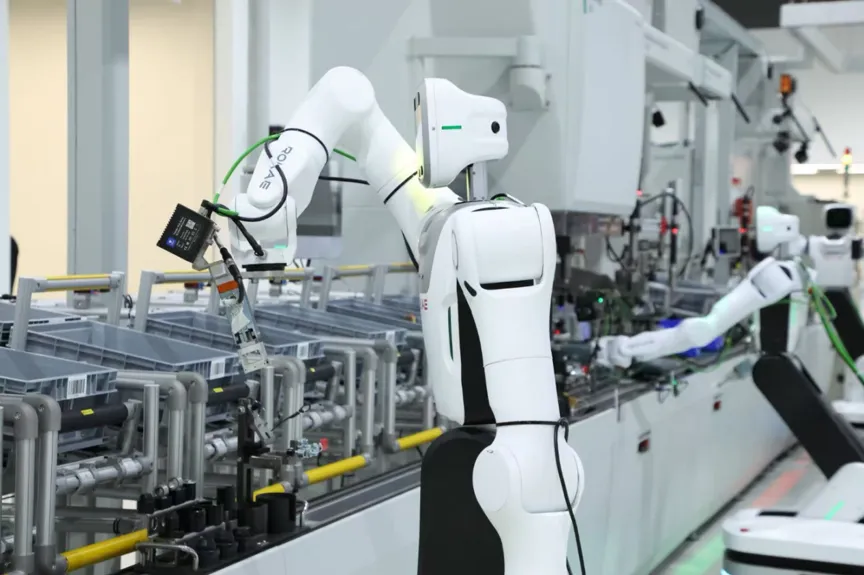
On October 20, at the opening ceremony of a Chinese warehouse plant, Scheffler disclosed that two new customers from China have pushed new orders from its global robot business to around 400 million euros.
Although the growth rate is far higher than expected, it is also necessary to remain calm, after all, it is only the order quantity, and the relevant data show that the sample orders amounted to 83 pieces. It should be noted that last year the robot business accounted for less than 1% of the sales of the Scheffler Group.
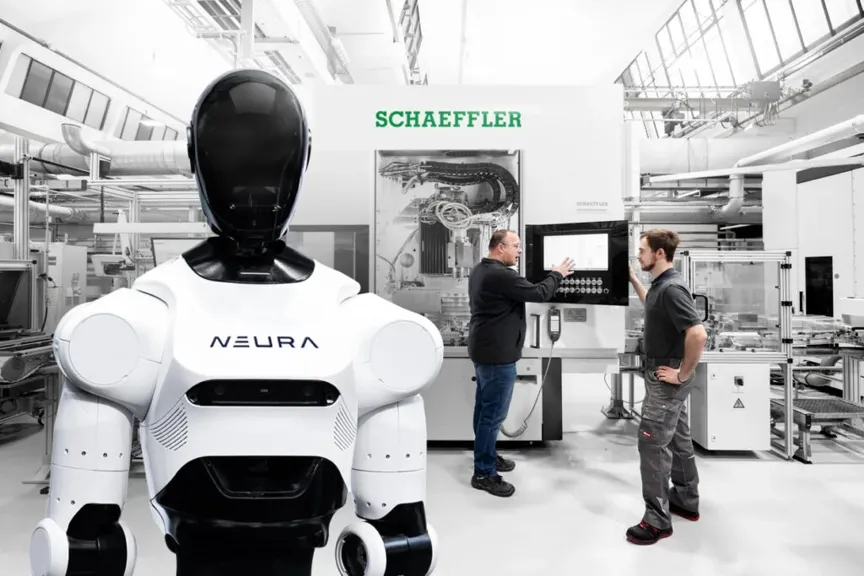
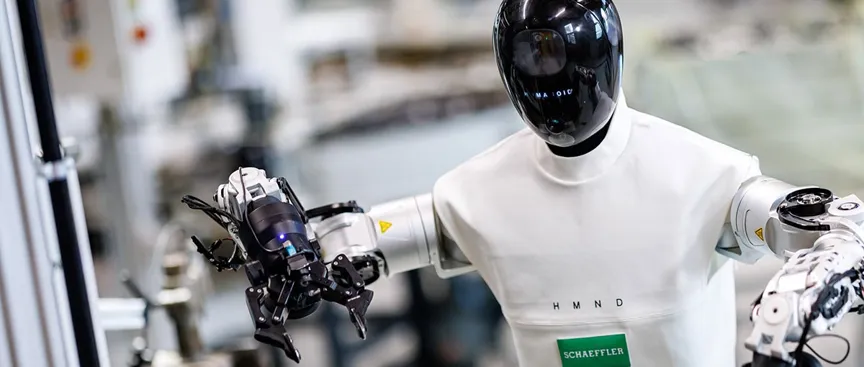
On the third level, when users - Schaeffer and Neura Robotics - plan to deploy thousands of robots at their own plants, pledge to deploy 1,000 Hexagon-owned AEON humanoids, and advance thousands of scale deployments with British robotics company Humanoid.
Sheffler has more than 100 factories around the world that are both potential applications of humanoid robots, and a testing ground for Cheffler to verify machine productivity, explore integrated services. Parts vendors come in person as users, unlike most Tier 1 counterparts.
The old engine is on fire, and Schaeffer picked up the ignition point for the new engine in China.
03.
Why is it China?
The focus of the robotics industry has shifted to China unprecedentedly.
The U.S. and China are pushing total machine production and prices to new levels, and the demand for silks, accelerators, motors and sensors has skyrocketed in the industrial chain.
To accommodate this demand, Schaeffer had to be close to its customers, so it chose to code on an already overcrowded base as a landing point for its intelligent robot business.
Less than a hundred kilometers from Shanghai, China's most densely populated auto parts and automation equipment industry congregate around it. In factories, first-tier suppliers, system integrators bite each other in the same supporting radius, and a new product can be designed, tested, and modified in a matter of weeks.
For Scheffler, the factories are located here, and it's like compressing R&D, manufacturing and customer demand into the same response cycle.

It is worth noting that in 1995 Chevrolet installed a warehouse, which has since been increased thirteen times, with a cumulative investment of more than 2 billion euros, making Chevrolet one of its largest production bases in the world. In early 2026, Chevrolet established its Intelligent Robot subsidiary in Chevrolet, focusing on the research and production of core components and key subsystems.
The human-robot factory is located here, which appears to be a continuation of the manoeuvring in China's layout, actually stepping on the growth window of the human-robot industry chain.
The opening of the warehouse plant, which is located close to the customer's warehouse, brought the capacity from the agreement to 7500 square meters. In the factory, six humanoid robots completed material sorting, assembly, testing, labeling and packaging in five locations, producing the human robot's own joint modules.
At home, the factory provides real-world, real-world training of products and processes, and the training results are transformed back into the production line and customer scenarios. Schaeffer COO divides this logic into four layers: component supply, self-scale plant deployment, product line integration services, after-market maintenance, suppliers, users, and program service providers.
The reason for this is deeper in the cost curve.
The reason Schaefer was laid off in Germany is, in turn, because of its layout in China. Of course, China does not offer a mere low-cost labor force here.
The core advantage of the Chinese supply chain in the human-robot linkage is that a complete closed loop has been formed from materials, processing to detection. The core parts of the linkage are accelerators, silks, motors, encoders, and mature suppliers can be found in both the long triangle and the supporting radius of the pearl triangle, a new design from drawings to samples, from samples to small batch deliveries, and the cycle is compressed to a weekly calculation.
This density is the result of a wave of new energy vehicles and industrial automation in the last decade.
But the fact is that the design of the human-robot's joints is not yet cohesive. The distribution of the three deceleration paths between the shoulders, elbows, elbows, and knees is still in high-frequency testing, the precision of the silk grades, the scattering of the drivers, the clever frequency configuration of the drivers, all in a modified version, a phase of the test.
At this stage, the conversion rate is itself a means of production. The warehouse plant is essentially accessing an engineering network that allows joint modules to be physically verified, overturned, and rewritten over a period of weeks.
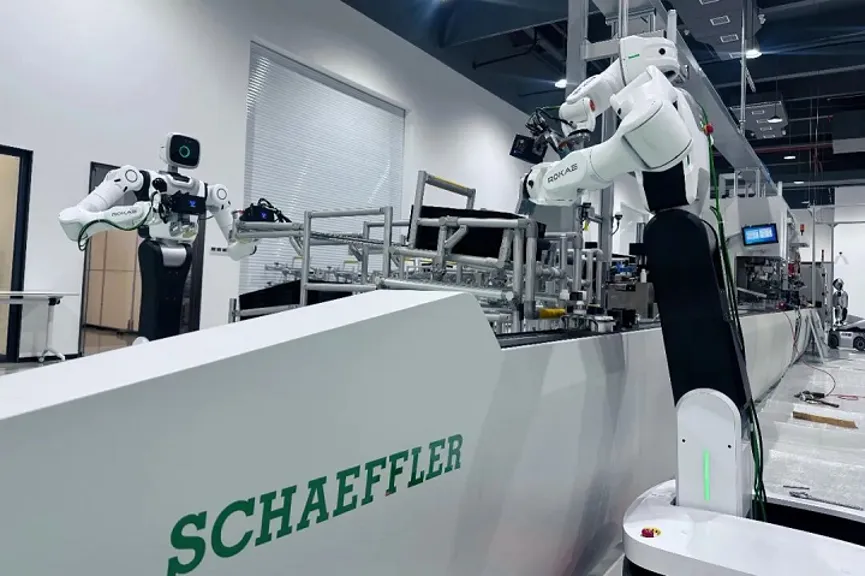
The cost curve of humanoid robots is being redefined by supply chain density and scale effects.
Scheffler's logic is that instead of Chinese supply chains pressing the cost curve on their own heads, they move their own precision manufacturing capabilities into this cost curve and become part of it.
04.
A European Tier 1 collective body buyer purchasing a body
If only the Schaeffer family had done this, it would have been an individual business decision.
At the same time, Bosch has set up the Bosch Robotics Center China in China, in collaboration with Microsoft Intelligent, to directly use its factories and logistics centers in China to collect real industrial data that cannot be replicated, train equipment models, and deploy back-to-the-scenes verification.
More importantly, the joint venture between Borussia Dortmund and Borussia Dortmund was created by Borussia Dortmund in a joint venture between Borussia Dortmund Capital and Galaxy, which secured a three-year contract to acquire 2,000 robots for the logistics integrator Jaguar Industries, the first robot to be verified by Borussia Dortmund's own automotive electronics production line.
He also pushed the timetable of layoffs ahead of schedule, under the pressure of high debt, while shifting the technical capabilities of the executive body to the human-robot movement control components, making the Chinese market the core of growth.
Over the next few years, Volkswagen Group will lose 100,000 jobs and BMW will lose around 8,000 jobs globally. Germany's automotive industry has been driven from its parent plant to every node in the supply chain.
The job cuts made by these companies, the pressure on profits faced by them, and the global shrinkage of China's space allocation, all show a very similar pace.
These are not just a few German companies that happen to be transforming. European Tier 1 collectively acknowledges that, under the cost structure of traditional automotive parts, European manufacturing is no longer able to supply both the jobs needed for old business and the physical iteration systems needed for new business. What they are looking for in China is an engineering system that can move joints from drawings to mass production.
In exchange for tickets to the system, Schaeffer used European brands, order books, and vehicle-level engineering discipline.
05.
He came to China to make a body shell.
Collective action by industrial giants in parts of Europe may also be interpreted as peer-to-peer involvement, but the Meta case blocks this simplification.
In collaboration with Shanghai Li Li-Chen Miller, Vice President of Meta Robotics Products Li-Chen Miller worked at the Shanghai Li Li Li-Li Li plant for nearly two months. In September, the two companies launched the second generation of prototypes. At the same time, Meta is recruiting vendor development engineers in Shanghai and recruiting product design engineers in Shenzhen that involve robotic hardware from early design to production.
The Meta spokesperson's response gave an extremely informative statement: "We are facing the same reality as the rest of the industry, which involves purchasing components that are hard to find in the United States".

Meta has no shortage of AI talent, no shortage of funds, no shortage of brands. It is lacking in humanoid robots, precisely the ability to turn a bunch of drawings into a physically robust enough body in a matter of months. This ability, currently the most concentrated place in the world, is in China.
Even a US tech giant with annual revenues of $100 billion has to go to China to find a hardware solution, and Shaffer's layout in China is not surprising, if not somewhat conservative.
One came to Shanghai from the United States with a pumpkin-brained pumpkin, and another came from Germany with a pumpkin-brained pumpkin. Two routes, one landing point.
This is enough to illustrate China's position in the global division of humanoid robots. It provides a longitudinal range from silk to decelerator, from motor to sensor, the speed at which design changes can be completed and validated in a matter of weeks, and the scenery density of hundreds of factories running simultaneously.
These can only be touched in China's supply chain.