The competition of the big model is moving from capacity upwards to a comprehensive struggle of the technical system.
Over the past year, technological developments in the field of AI have accelerated significantly. From reasoning models, agents, to multimodal generation, to world models, and to AI for Science, researchers are exploring more boundaries of big model capabilities. Models are beginning to extend into complex reasoning, autonomous decision-making, and scientific discovery. At the same time, model architecture, training methods, data engineering, and evaluation systems are continuously evolving, and new technological paths are emerging.
These changes not only record the latest technological breakthroughs, but also provide an important window for researchers and industry practitioners to observe industry trends, understand technological pathways and find opportunities for innovation.
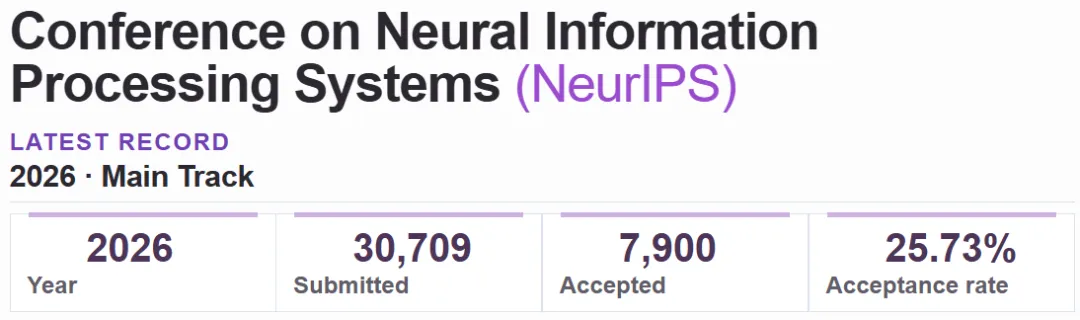
As one of the most influential international academic conferences in the field of artificial intelligence, NeurIPS has always been an important platform for AI researchers around the world to showcase the latest developments and exchange leading-edge ideas. This year, the NeurIPS main event received 30,709 valid posts, with 7,900 entries and an acceptance rate of 25.7%.
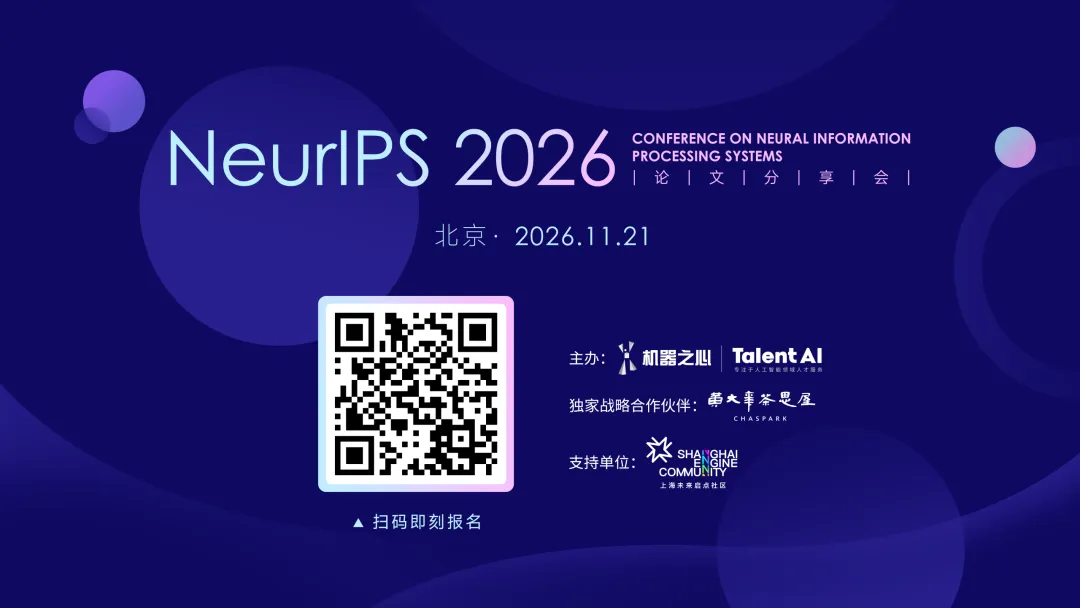
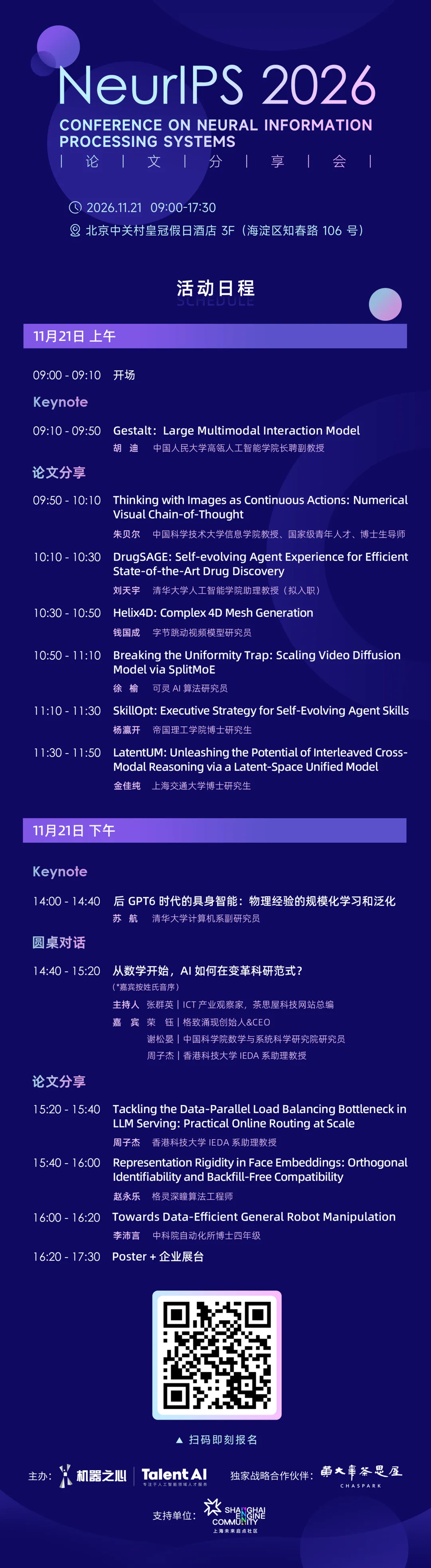
In order to enable domestic researchers and practitioners to gain a first-hand understanding of these breakthroughs, Machine Heart will hold a paper-sharing conference on NeurIPS 2026 in Beijing on November 21, 2026.
The event will feature keynote speeches, paper sharing, roundtable discussions, posters and corporate booth exchanges around current industry hotspots, inviting top experts and authors to sit down and discuss the next steps in AI technology with the audience.
Today, the full timetable for the paper-sharing meeting, Keynote-sharing guests, talk topics and roundtable guests are officially announced, and interested readers can continue scanning the 2D sign-ups in the following timetable posters.
The event will take place from 09:00 to 17:30 on 21 November, Beijing time.
Address of the event: 3F Crown Holiday Hotel in Guangdong, Beijing (Beijing)
Keynote Guests and Speakers
In the morning Keynote by Hudi Gestalt: Large Multimodal Interaction Model
This is the first time I've seen this.
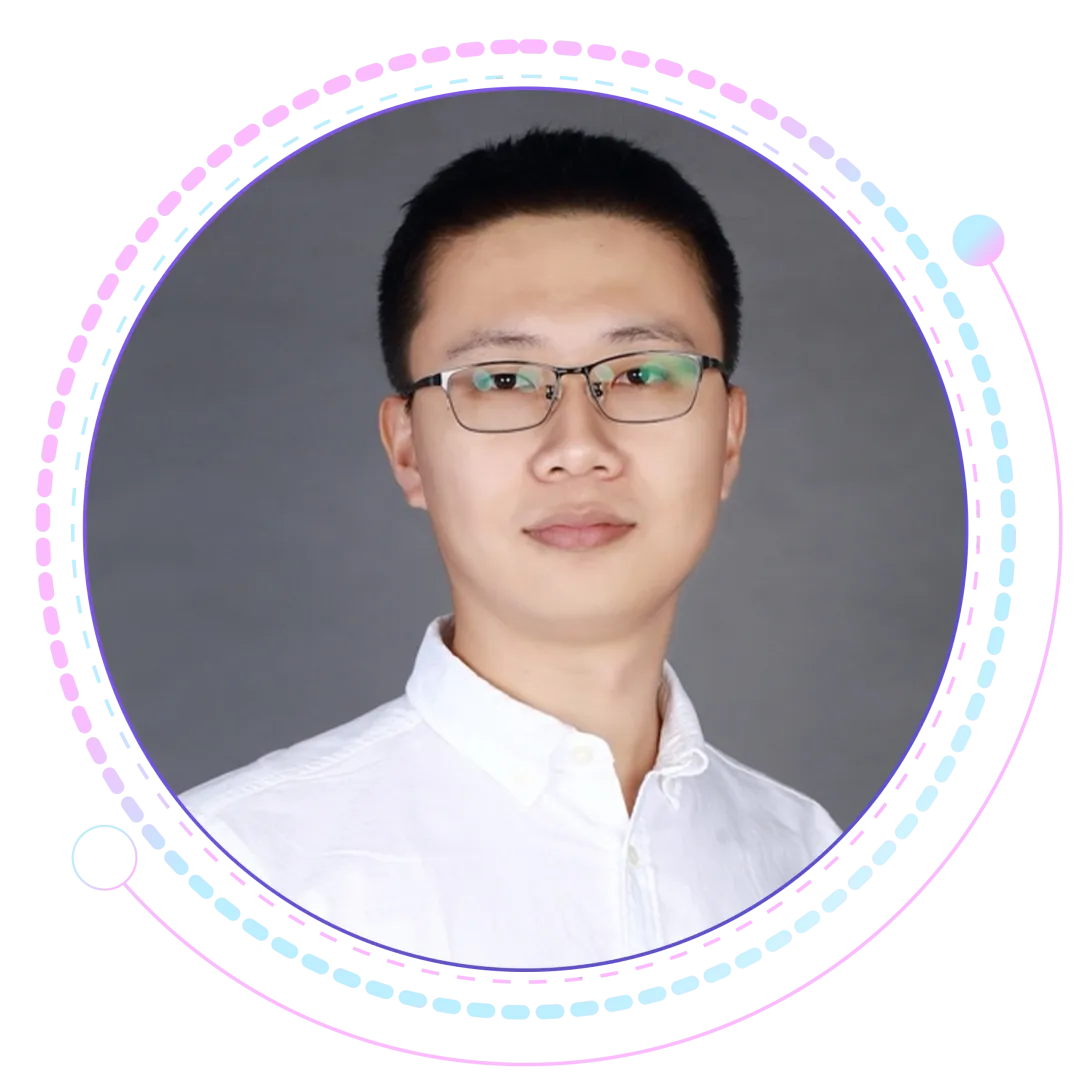
Hudi, the current Vice-Chancellor of the University of the People's Republic of China's Guangzhou School of Artificial Intelligence, is a professor of multi-modal interactive intelligence. He has published more than 60 papers and conference papers in top journals and conferences such as T-PAMI/ICML/CVPR/CoRL. He has authored more than 60 papers and presented top conference reports such as CVPR, NeurIPS, CoRL. Representative work such as balancing multi-modal learning, general touch sensing foundation model AnyTouch, millimeter VLA, robust learning framework Robo-VRL, etc. He has been a member of ICML, ICLR, AAAI and AC/SPC conferences, and has hosted/co-hosted multi-modal learning tutorials at several international top conferences.
Share the summary:
The current multi-modal large model focuses mainly on how to integrate images and other modular information packages into the baseline of the large language models, lacking attention to the intrinsic characteristics of the multi-modal source, and not fully addressing the problem of how to effectively model and interact with different models. This report will introduce the fully dispersed unified model Gestalt at the core of the multi-modal interaction, which requires system exploration in three areas: from model architecture, data organization and training strategies: design that fully stimulates single-modal support, cross-modal interacting model structures, building data systems that are centered on multi-modal interaction, and adopting progressive training strategies to promote multi-modal capability formation. Gestalt models show prominent advantages in terms of both text capability, image generation and multi-modal understanding, and super-AR architecture models.
Keynote Keynote Keynote Keynote Keynote Keynote Keynote Keynote Keynote Keynote Keynote Keynote Keynote Keynote Keynote Keynote Keynote Keynote Keynote Keynote Keynote Keynote Keynote Keynote Keynote Keynote Keynote Keynote Keynote Keynote Keynote Keynote Keynote Keynote Keynote Keynote Keynote Keynote Keynote Keynote Keynote Keynote Keynote Keynote Keynote Keynote Keynote Keynote Keynote Keynote Keynote Keynote Keynote Keynote Keynote Keynote Keynote Keynote Keynote Keynote Keynote Keynote Keynote Keynote Keynote Keynote Keynote Keynote Keynote Keynote Keynote Keynote Keynote Keynote Keynote Keynote Keynote Keynote Keynote Keynote Keynote Keynote Keynote Keynote Keynote Keynote Keynote Keynote Keynote Keynote Keynote Keynote Keynote Keynote Keynote Keynote Keynote Keynote Keynote Keynote Keynote Keynote Keynote Keynote Keynote Keynote Keynote Keynote Keynote Keynote Keynote Keynote Keynote Keynote Keynote Keynote Keynote Keynote Keynote Keynote Keynote Keynote Keynote Keynote Keynote Keynote Keynote Keynote Keynote Keynote Keynote Keynote Keynote Keynote Keynote Keynote Keynote Keynote Keynote Keynote Keynote Keynote Keynote Keynote Keynote Keynote Keynote Keynote Keynote Keynote Keynote Keynote Keynote Keynote Keynote Keynote Keynote Keynote Keynote Keynote Keynote Keynote Keynote Keynote Keynote Keynote Keynote Keynote Keynote Keynote Keynote Keynote Keynote Keynote Keynote Keynote Keynote Keynote Keynote Keynote Keynote Keynote Keynote Keynote Keynote Keynote key key key key key key key key key key key key key key key key key key key key key key key key key key key keynote key key key key key key key key key key key key key key key key key keynote key key key key key key key key key key key key key key key key key keynote key key key key key key key key key key key key key key key key key key key key key key key key key key key key key key key key key key key key key key key key key key key key key key key key key key key key key key key key key key key key key key key key key key key key key key key key
This is the first time I've seen this.
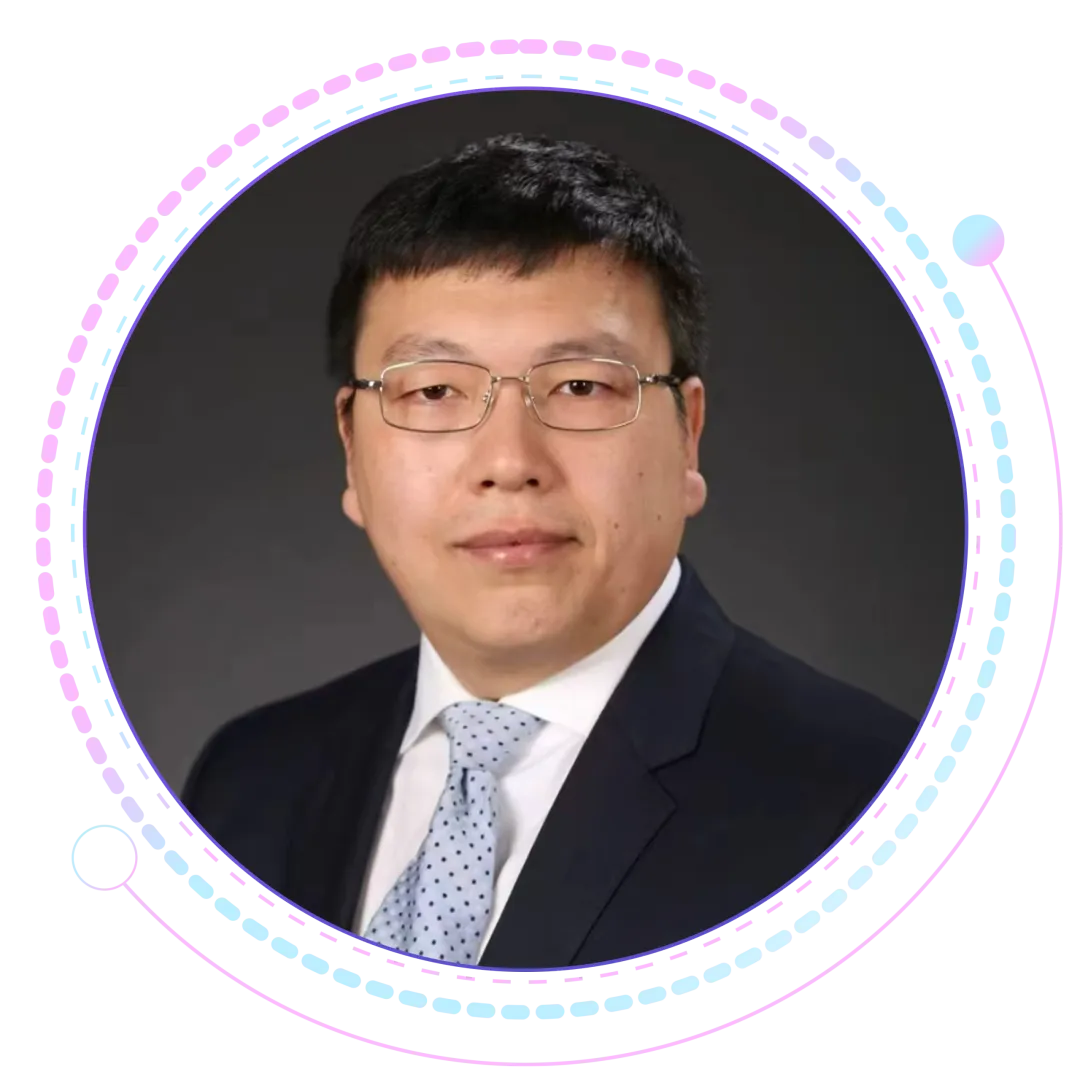
Suzhou, an associate researcher in the Department of Computer Science at Tsinghua University, plans to attract tens of thousands of young talents. Mainly engaged in research in areas such as robotic machine learning and physical intelligence, participating in and promoting the RDT series of robotic base model related work, addressing the problems of robot perception, decision-making, operation and generalization in real physical environments, exploring new mechanisms for the integration of large model technology with physical execution capabilities, providing important support for robotic generalization and practical application of intelligent systems. CCF has published more than 200 CCF-recommended A-class conferences and journal papers, and Google academic papers cited more than 46,000 times.
Share the summary:
As the reasoning and autonomous decision-making capabilities of the general base model continue to grow, AI is moving from the understanding of the knowledge of digital space to the perception, interaction and action of the physical world. How to learn transferable physical knowledge and abilities from cross-scenario, cross-mission, cross-body asymmetrical experiences is a key issue for general base intelligence. This report focuses on the scale and generalization of physical experience in chemistry, exploring the collaborative use of human behaviour, robot interactions with simulated data, researching the fusion of physical features, environmental predictions and cross-body models that generate action, discussing open-environment long-range mission execution, intrinsic migration, and the challenges and future direction of secure and reliable interactions.
Guest of the Round Table
At this sharing event, we set up a special forum to talk about starting with mathematics, how AI is changing the scientific paradigm, and the topic of the roundtable, inviting three expert scholars to discuss the topic on the ground.
Host: Zhang Group, British ICT Industry Observer, Chairman and CEO of the Teahouse Technology website
I'm going to talk to my guests.
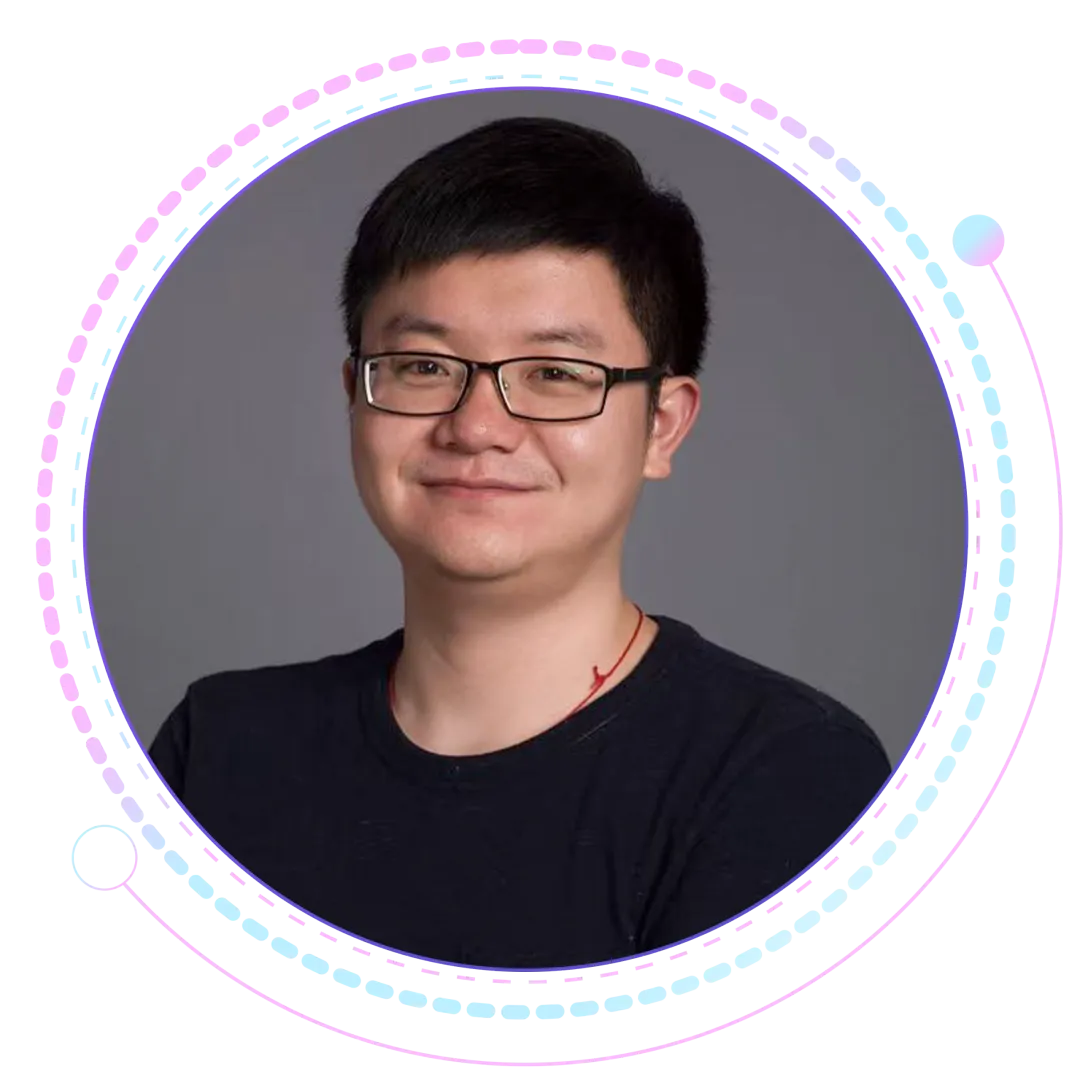
Dr. Wong, the founder and CEO of Damo Academy, has served as the head of the Science Intelligence Directorate, focusing on research on scientific intelligence. He has led research and development on scientific intelligence models in the Jingling Cardin series. He has published more than 80 papers, cited more than 150,000 times, been selected multiple times for Stanford University's "Top 2% of Scientists in the World" and was nominated for the WAIC 2025 Cloud Sailing "Science Star" award.
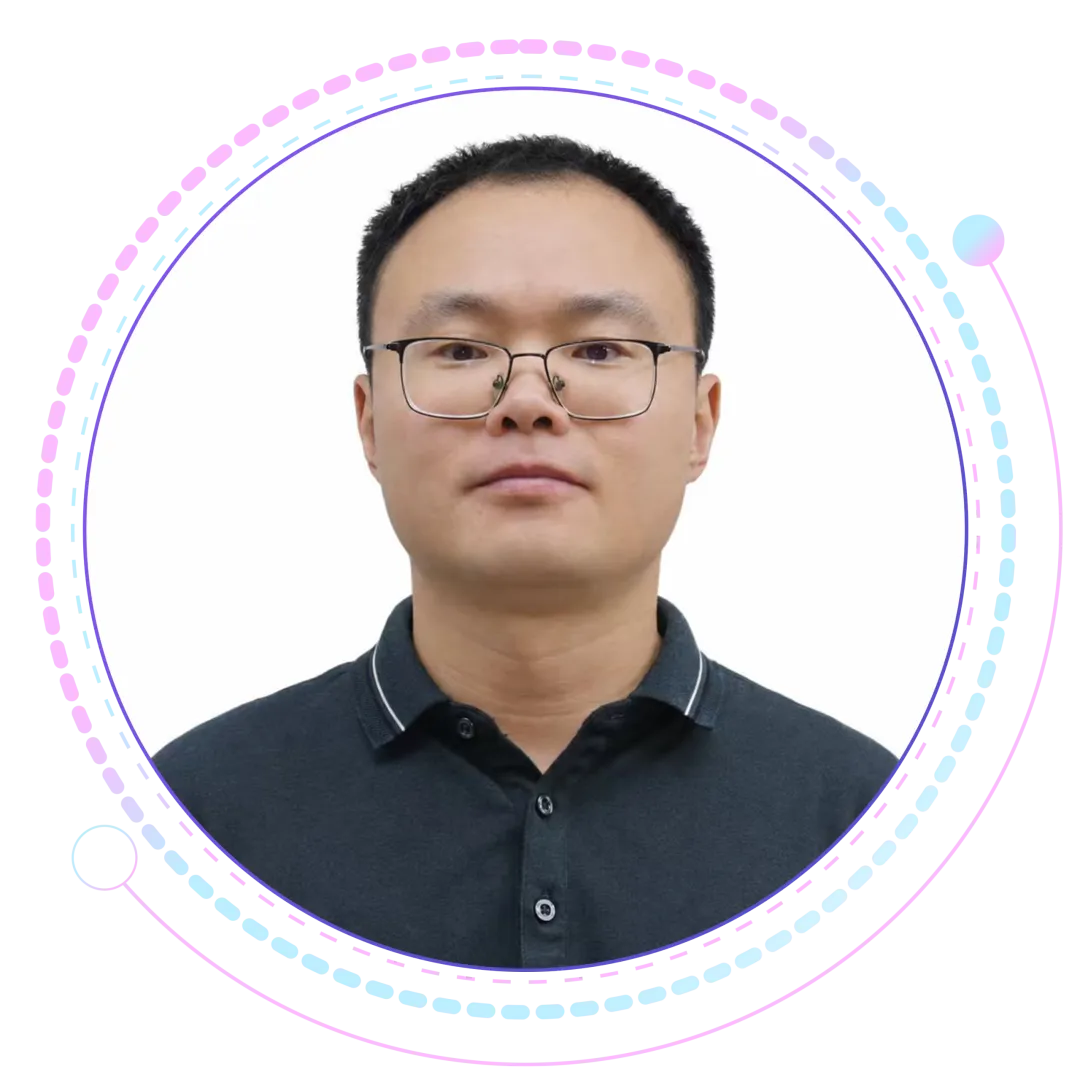
Shenzhen, a researcher at the Institute of Mathematics and Systems Sciences of the Chinese Academy of Sciences, holds a bachelor's degree from Tsinghua University, a Ph.D. from the University of Paris Sacré, and is engaged in basic mathematics research. His doctoral thesis completely solves Debarre's abundant conjecture. In 2026, he worked with students to construct a counter-example of Griffiths's conjecture using AI, to realize the particle structure of the Fano fluid curve, and to propose a new method of differentiation of the Ganges fluid.
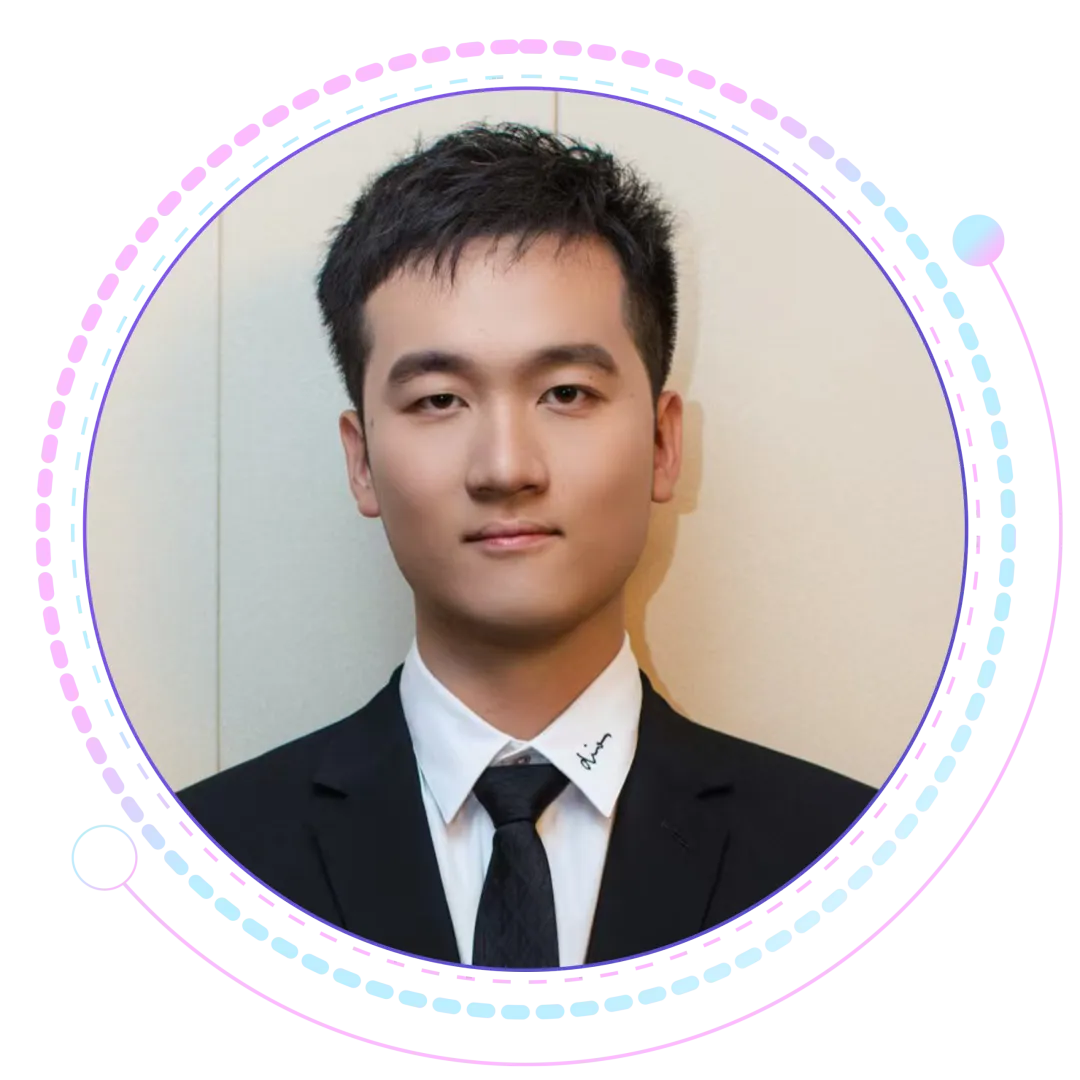
Zhuong Jae, assistant professor in the Department of Industrial Engineering and Decision Analysis at the Hong Kong University of Science and Technology, chair of the Department of Computer Science and Engineering, and Ph.D. in Operations Management at the Massachusetts Institute of Technology. His research focuses on artificial intelligence reasoning acceleration, resource optimization and chip design, and he has also served as a consultant for Huawei and was selected for the Huawei Outstanding Young Scholar Program.
* The above sequence is not preceded by the first letters of the surname.
Poster
In this paper-sharing event, a group of authors will share papers with Poster presentations, and interested friends can learn about the specific information by using the diagram below:
The paper-sharing event will also be broadcast live on platforms such as Machine's Heart Video and the Yellow Year Teahouse Technology website, and all are welcome to attend and make reservations.
Presentation of the partners
Exclusive strategic partner: Huang Yao Tea House technology site
We bring together scientists, researchers and technologists from around the world to explore cutting-edge academic topics, share the latest scientific findings and inspire innovation. Here you can see academic hotspots, selected papers, academic summits, technical challenges, patents, open source and technology events.
Address:
Support Unit: Shanghai's Future Startup Community
The Shanghai Future Start-up Community, launched in July 2025 by the Shanghai Future Industry Fund, is an innovative ecosystem platform for the future of industry. The community is at the heart of the talent pool, positioned as a key hub for bringing top talent together with cutting-edge cognitive exchanges, committed to creating a premier hub for top talent startups in China and abroad, and to building the core infrastructure for developing and upgrading talent in Shanghai's future industry.
The community focuses on the cutting edge areas of AI empowering science research, brain-machine interfaces, quantum technology, controllable nuclear fusion, AI-Native as a strategic driver, building the AI for Talent smart platform, deeply integrating ecosystem resources such as industrial funds, professional investors, top scientists and high-quality entrepreneurs, promoting efficient linkages between individual intelligence and industry insights, building sustainable, iteratively upgraded community intelligence systems, and empowering future industrial innovation ecosystems.
Address: