Scale can also be economical.
Marathon in the Warehouse
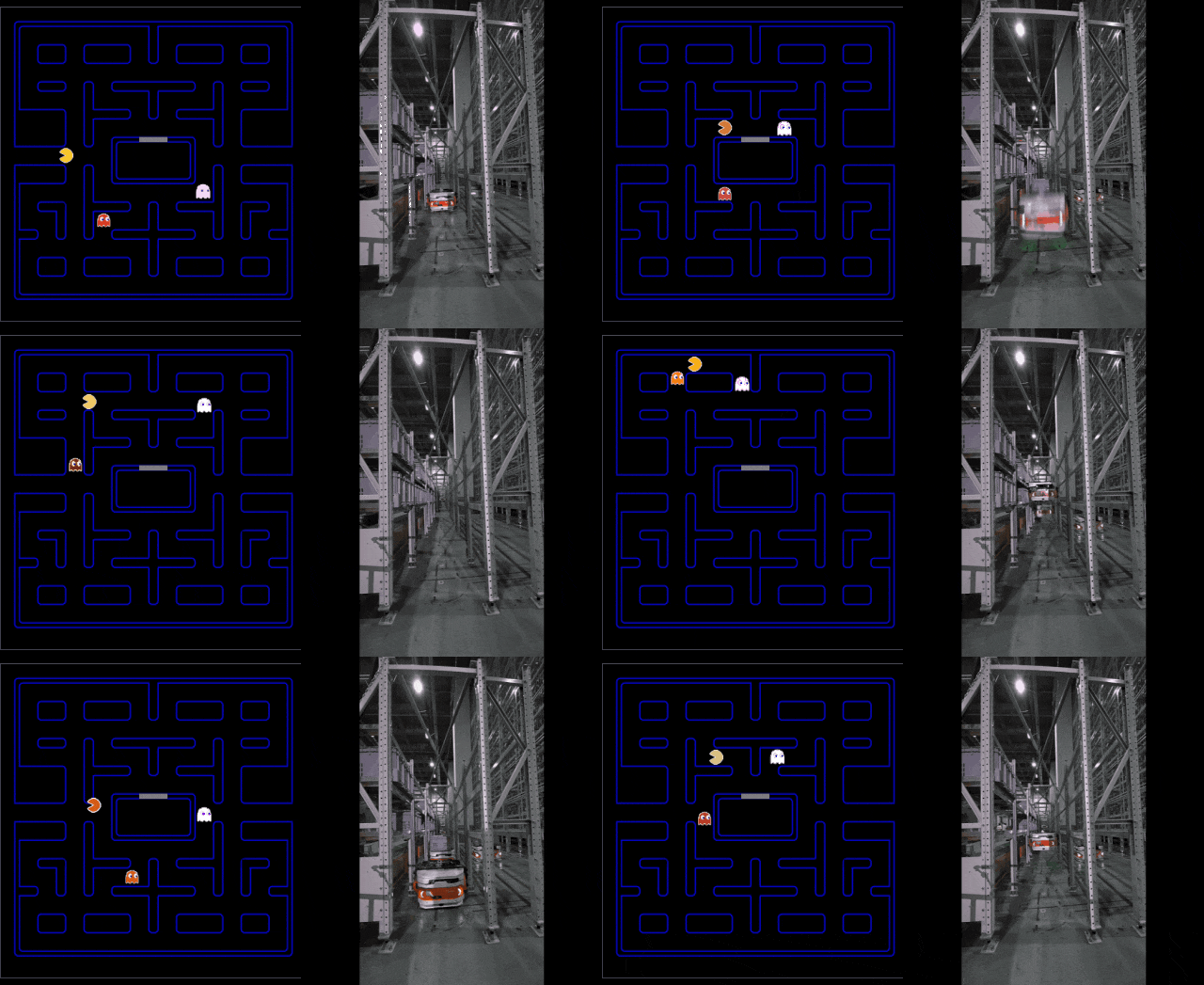
A dwarf-fat robot curves up and down the shelves. It flashes a flashing beacon, with the appearance of a wheeled trunk moving rapidly along a narrow tunnel.
In the meantime, another robot is on its way. They are about to collide, but the two robots are flexibly mistaken, continuing their respective tasks.
Turning a shelf, one of which is close to the shelf, grabs the track and crawls upwards along the vertical "shelf" direction. It is to remove a high-altitude container. After completing the task, the container will be sent to an artificial workstation, waiting for sorting.

Similar scenes continue to take place in the 2,000-square-metre storage area of the Kangaroo City Cat Supermarket in Guangzhou.
There are 135 ZeeBot crawling robots, a 20-story, 9-meter-high, dense shelf, and 42,000 storage containers. The robots are like a bunch of real-life monkeys eating beans, roaming in a huge stereo labyrinth, some busy with warehousing, and some in charge of supplies.
The most special thing about this game is that it happens to happen in the middle of the night.
「On October 20, at 8 p.m., the "Twin Eleven" sold out.During the 28-hour order high, the robot has accumulated a vertical run of more than 140 kilometers and an hourly peak of 11 kilometers.
Cats in supermarkets ship multiple waves per day, with a 99.99% wavelength inventory accuracy rate.
The Magic of the Big Store: How to make 100 bills parallel to the packaging?
During the interval between the two rounds of the "double eleven", we walked into this cat supermarket for the first time. It is located in the Bird's Nest Logistics Park in Guangzhou, a large warehouse with an area of about 20,000 square meters.
The customer mindset at the Cat's Supermarket is "one stop shop", so SKU is particularly large. The general manager of the Cat's Supply Chain Operations Management Center, Jenkins, told us that the total amount of goods that Cat's Supermarket operates could be between 100,000 and 200,000 SKUs.
The warehouse we are currently in is a large warehouse, with about 60,000 SKUs under management, covering the whole of Hunan.
One phase of the renovation of the warehouse has been completed, presenting an interesting division of labor: a robotic zone that runs parallel to a large traditional man-made warehouse.
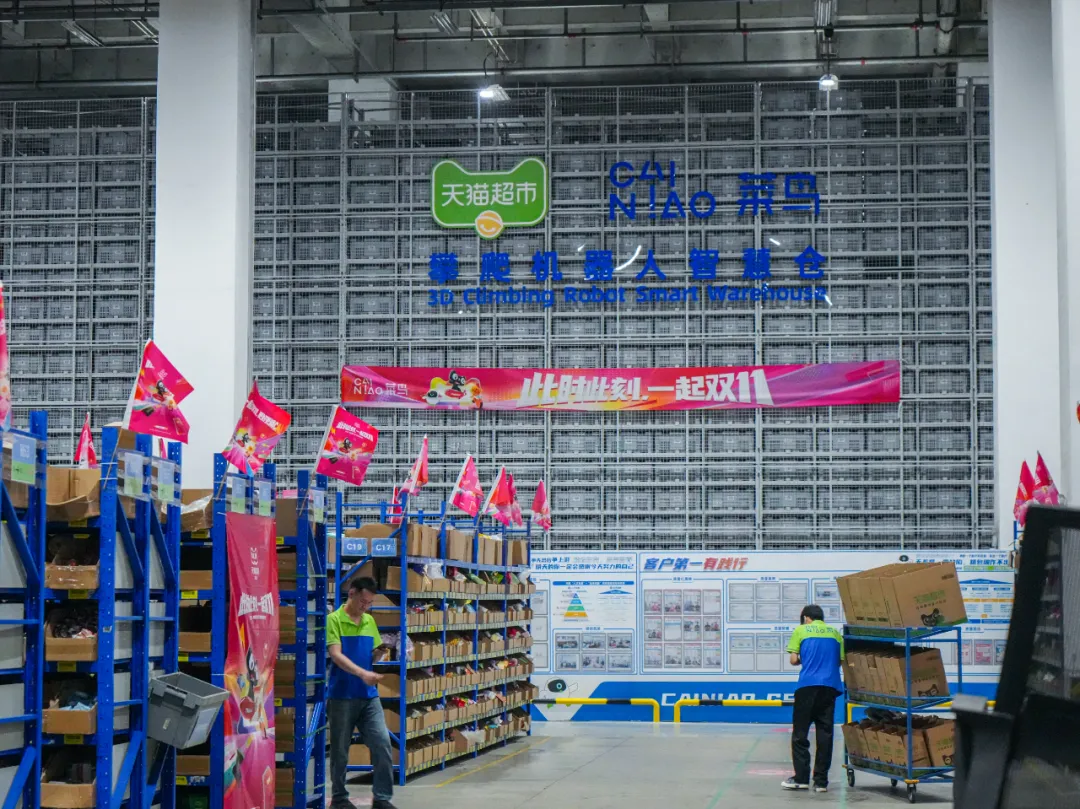
Along the 9 m high shelf, a dense standardised container is arranged. The container can store multiple items of the same SKU, or can be separated by a separate panel area, and can accommodate multiple different SKUs simultaneously.
The shelves use a single-deep storage design, with only one container per container, all containers facing directly into the tunnel. When robots crawl along the trajectory, they can simultaneously cover both sides of the tunnel, providing direct access to the target container.
The robot relies on the system's maps to navigate between the shelves to calibrate locations using two-dimensional codes arranged at ground intervals.
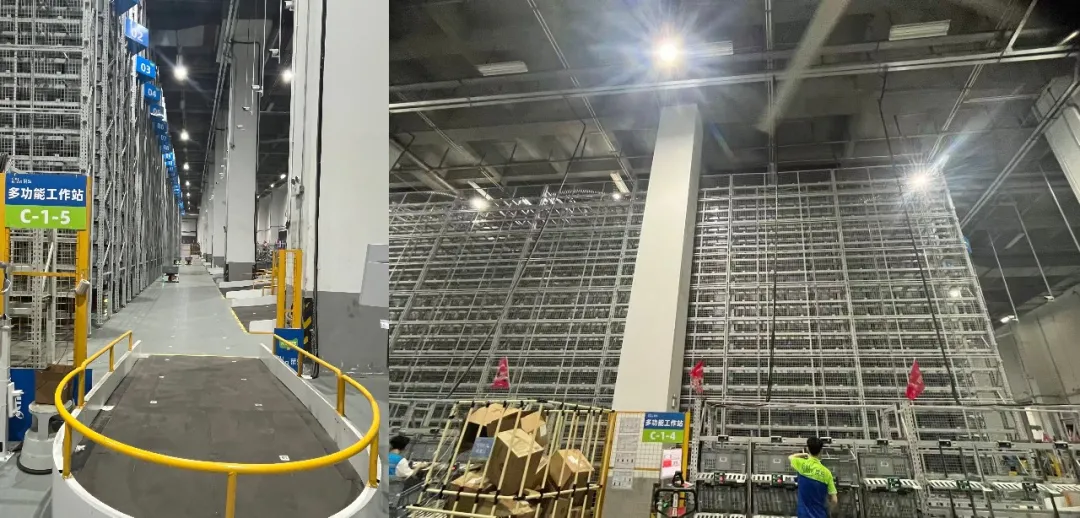
According to Huang, the entire robotic zone can accommodate about 30,000 SKUs, nearly half of the cat warehouse category.
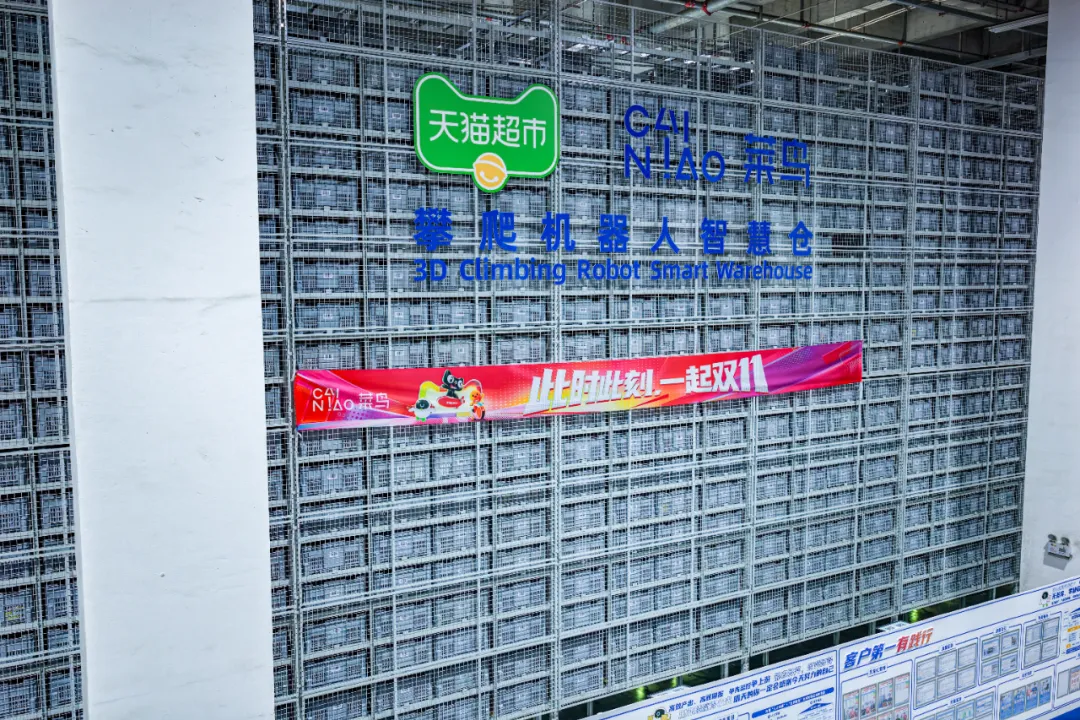
Currently, cat supermarkets tend to place long-tail goods in robotic zones. He explains that there are many SKUs for these types of goods, but the number required for each order is usually small. If all depends on artificial selection, workers may have to travel a long distance in a large shelf to find a small number of target goods.
Now, as long as you stand next to the workstation, a box full of goods will come to you. The output of a single workstation is equivalent to two or three selected employees.
So how do you quickly turn them into a courier package after the warehouse order?
The warehouses do not place an order at a time, and immediately arrange for employees to pick up items separately. Lin Chun, general manager of the Cuckoo Guangzhou Cat Supermarket, said that usually 100 units, 200 units in a batch, are effective to scale.
If a batch of orders has some goods stored in a robotic zone, some in a man-made zone, it will be handed over to two operating systems.
The crawling robot is responsible for taking the required feed from the shelves and sending it to a sorting station; the staff pushes the sorting cart and searches for the corresponding goods on the 3 m high light shelves.
The answer is: the system is responsible for finding the location and the barcode is responsible for not picking it up.
Each container has a unique barcode when it enters the library, and when it is installed, the system records "which boxes, which gaps, which warehouses" and binds the inventory to the physical location one by one.
When out of stock, the system is positioned according to the order to a specific compartment, instructing the robot to "go to a certain row in a certain layer to get a box" and climb from the robot to a specific location to get the trash.
After the container is sent to the workstation, the selector takes the goods out of the container according to the order requirements and places them in a yellow circle.
Usually a container does not empty once, and after the selection is completed, the robot needs to send the remaining goods back to the warehouse, waiting for the next mission.
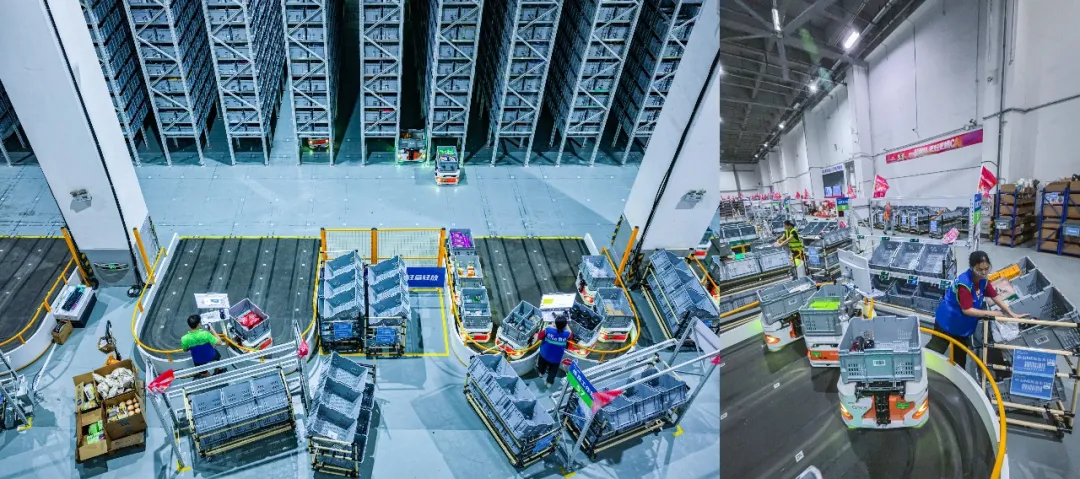 On the sidewalk next to the workstation, robots line up to wait for the filling boxes to be delivered.
After hand-held PDA scanning orders, the device automatically displays where the goods should be picked up and drives the car according to the instructions.
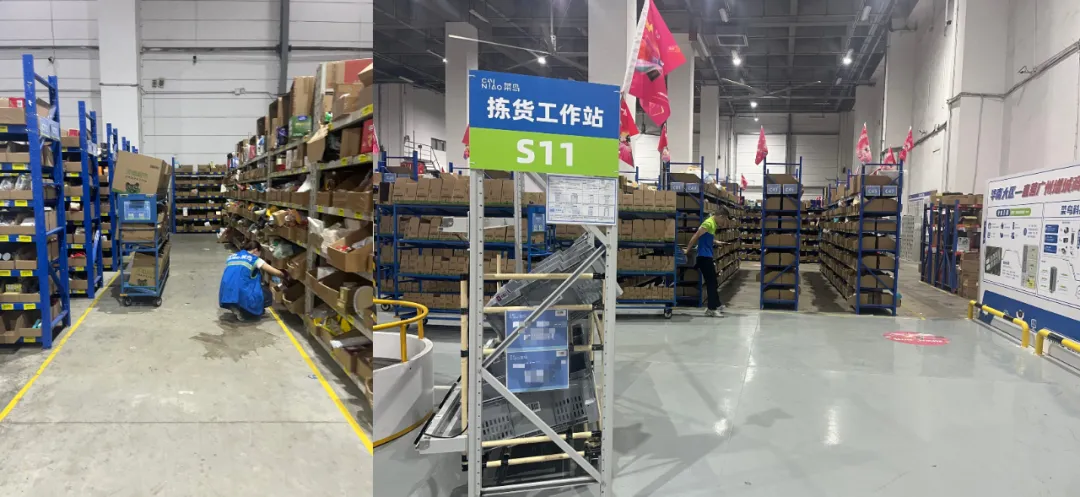
There is also a selection of cars, which are generally divided into three levels, each with about eight cartons, each representing a consumer order.
The selector will go through different stalls and place the corresponding goods in the corresponding order boxes respectively. This will allow them to process multiple orders simultaneously.
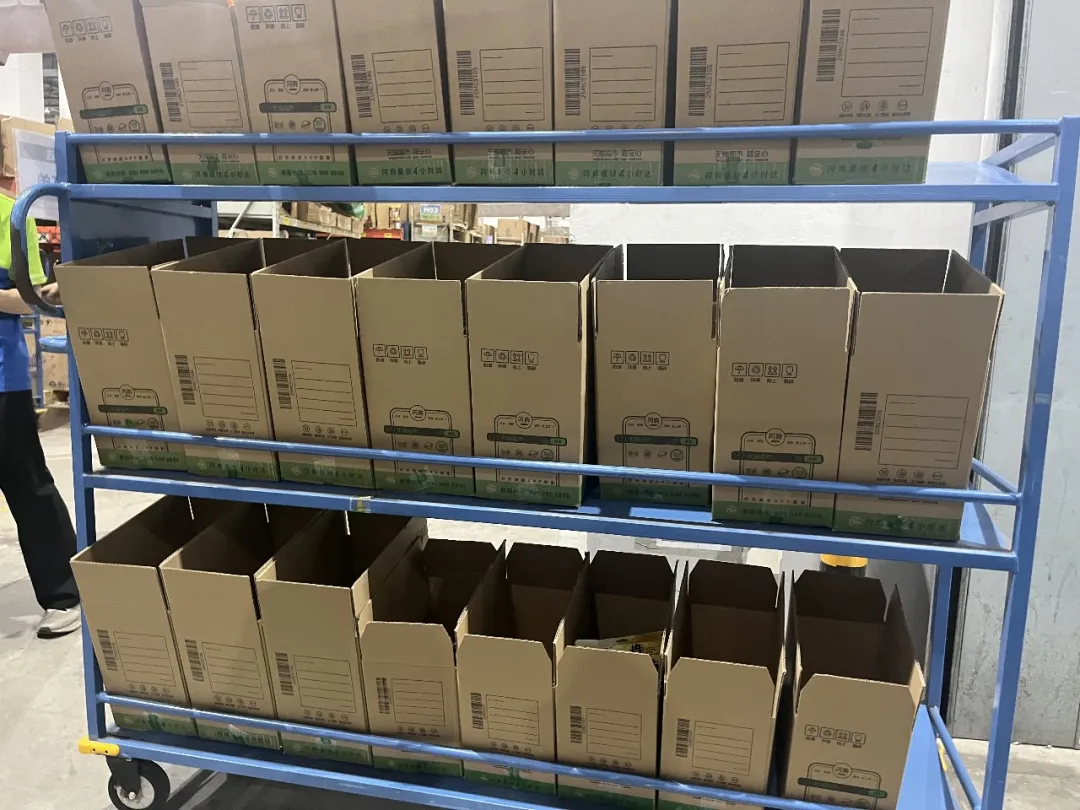
The goods that were sorted out in two working quarters were completed in the container area and finally sent to the re-packaging link, the man-made container, and the attachment.
According to Huang, it takes two floors to store nearly 40,000 high-end goods before they are transformed: about 10,000 items on the first floor, and almost 32,000 items on the second floor. This means that many orders need to be broken down into two selection lists.
In a major hurricane, a person's walking distance can be calculated as the number of laps around West Lake.
Now, through high-density shelves, the concentration of goods that were originally scattered on different floors has greatly improved the storage capacity of the unit area.
The overall storage efficiency of cats in supermarkets is about three times that of the original, and human efficiency has been improved to about 2.5 times that of the original.
"Z-Axis Freedom" and the Symphony
When I visited, I was most impressed with ZeeBot's crawling technology.
Its vertical crawling speed is 1.2 m/s, but unlike the usual "track prisoners", the ZeeBot does not need to lay a dedicated track on the side of the shelf to achieve "Z-axis freedom".
These robots "look the way" and move freely through the shelf with two handles attached to the shelf. The built-in inertial sensors and force reversers continuously detect body posture, adjust the motor's state in real time, and avoid tilting or sliding during crawling.
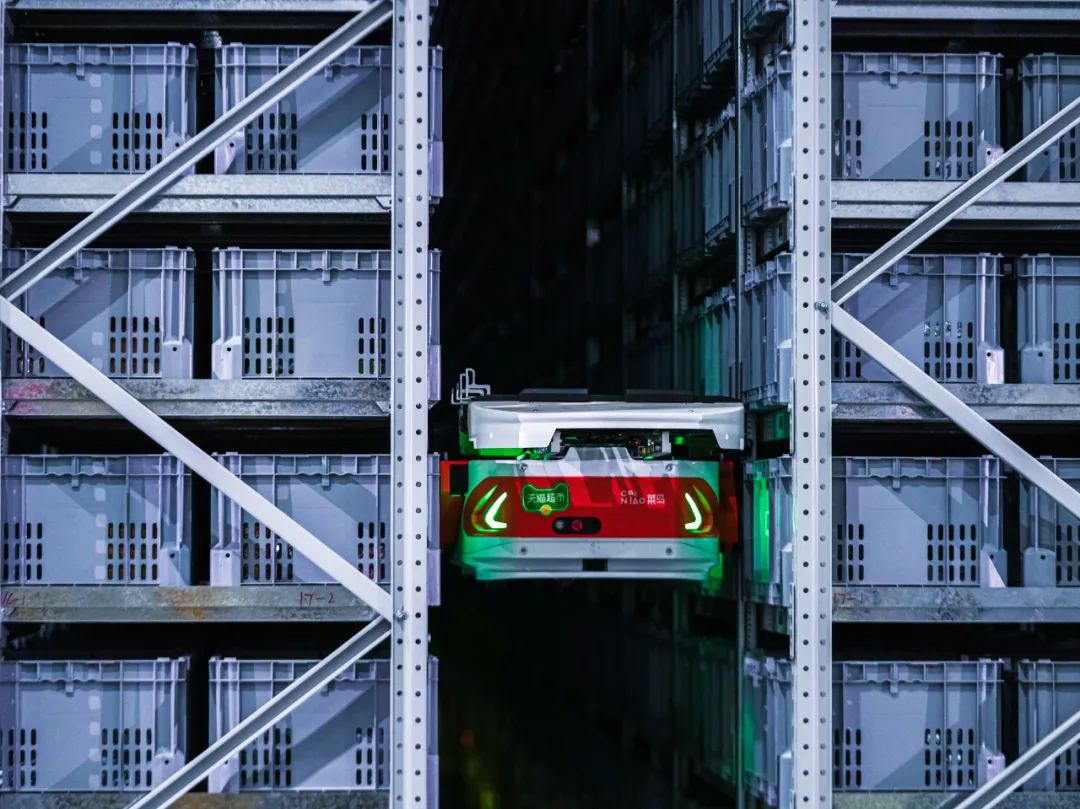
Considering the stability of crawling, it can't fall off. In the industry, there will be different crawling and loosening structural designs. ZeeBot opts for crawling on one side with two crawling hands, ensuring grip strength while avoiding two slides.
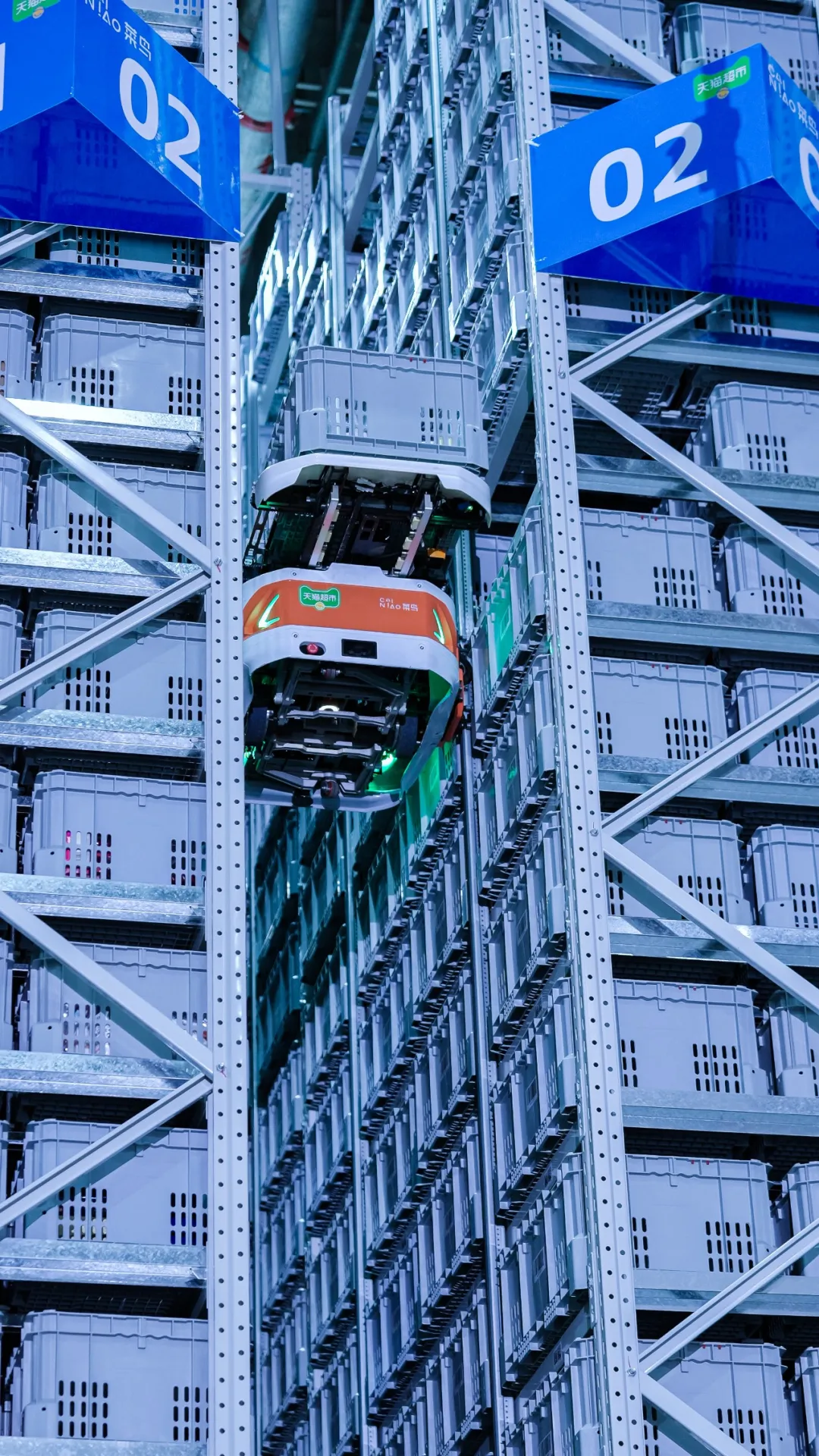
This design actually changed the way automated warehouses were expanded.
Automated repositories, such as traditional AS/RS stackers, usually determine the shelf layout, track and equipment configuration at the beginning of construction. Once the infrastructure is completed, the capacity limit is basically determined as well.
The cat supermarket officially began conversion in May, began testing in August, and entered the Great Depression in September. The entire project progressed quite quickly.
Reducing connectivity is also a significant advantage.
In traditional automated warehouses, horizontal transport and vertical upgrades are often carried out by different equipment interfaces.
ZeeBot can perform horizontal movement and vertical crawling at the same time, with fewer connections and fewer potential fault points; the fewer connections between devices, the easier system operation and later maintenance.
Even if an individual robot fails, it is not necessary to stop the entire library from running.
However, even if every robot knows how to drive, it doesn't mean that warehouses can get real high throughput.
More than 100 robots roam the shelves simultaneously, and how do they work together like a symphony orchestra? This requires a complex scheduling algorithm.
How do we keep them off the road for as little time as possible and avoid collisions? The system not only plans the route for each robot, but also coordinates their actions from a global perspective.
For example, if a robot is crawling in the front, the robot can wait for the car or adjust the route around it.
Even when assigning tasks, the system has already begun to consider the orbital occupancy of the next few seconds. If one orbit is about to be occupied, other robots can be arranged to perform other tasks first, waiting to digest as much as possible during the task assignment phase.
The assignment of tasks is not limited to "who has recently sent who out of the box". The system must also integrate factors such as the current location of the robot, mission status and follow-up routes to select the most suitable executor.
Once the filler box is selected, it is not necessary to return it to its original position, and the system matches the "heat" of the goods to the position, so that the goods with a high turnover frequency can be placed in the most suitable position.

In the blink of an eye, as automation technology matures, the performance gap between single-engine robots will gradually shrink. The speed of the ride may be as high as 4 meters per second, and it will not accelerate to brakes indefinitely; the crawling speed may also be increasingly similar.
The real difference will be the efficiency at the system level: how automated areas are planned, how robots schedule, how tasks are connected, how warehouses are arranged, and how access processes throughout the warehouse are continuously optimized.
And the introduction of big models is helping to make this optimization process more subtle.
For example, to help operators discover more optimization opportunities that were not easily detected in the past, and to perform more detailed calculations in tasks allocation, route planning, and so on.
There is also a combination of more computing power, improving the system's response speed and computing frequency. New orders are coming in every second, and the robot's position and orbital occupancy are constantly changing. A well-planned route at the first moment may need to be adjusted at the next. The system must continue to recalculate, redistribute tasks, and adjust the robot's routing dynamically in milliseconds.
The Future of Collaboration
In the cat warehouse, the travel destination of the order is the packaging re-packaging.
There is a conveyor belt next to each workstation. Staff will place the packages on the conveyor belt and the packages will flow forward into the Shenzhen Express Distribution Center across the street.
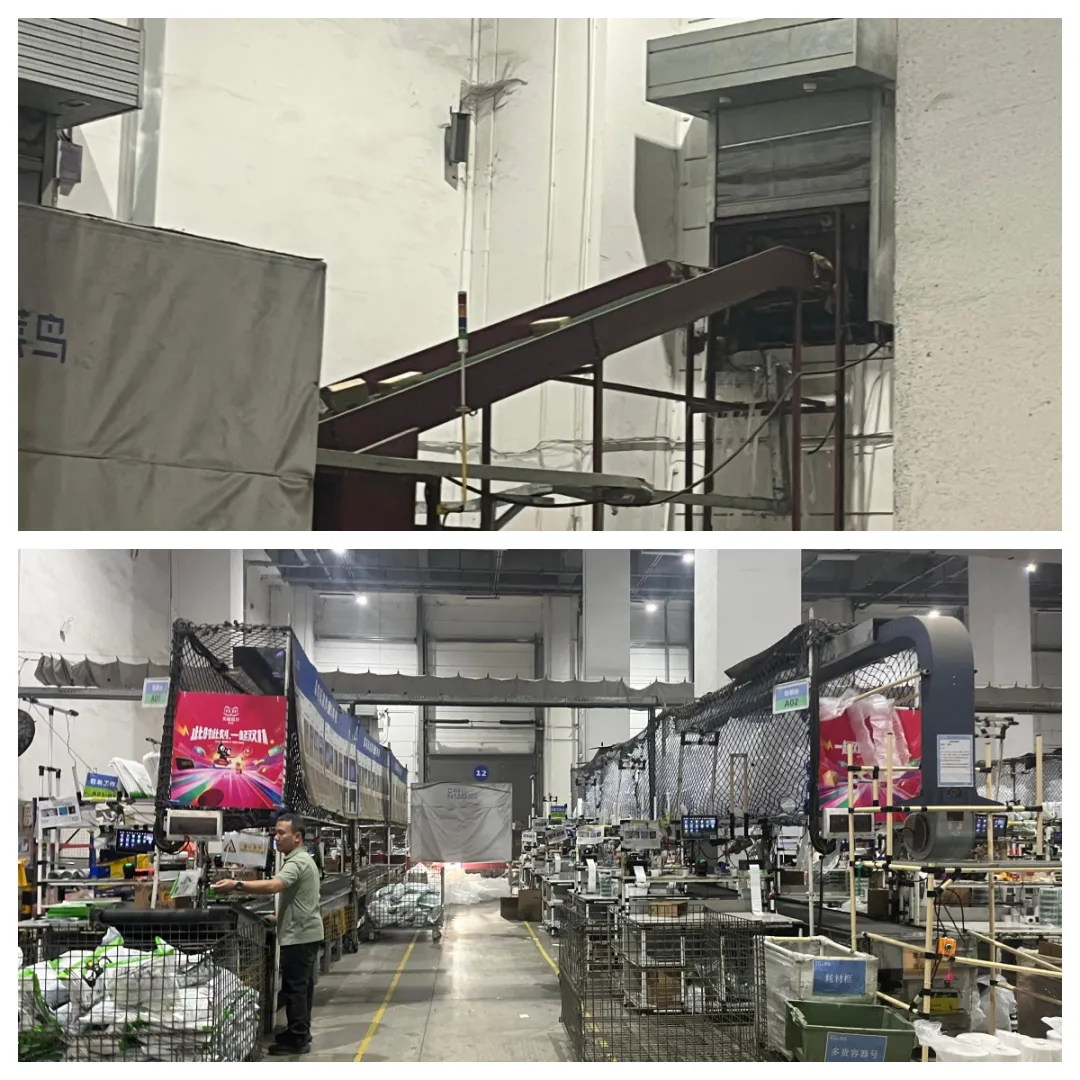
I remember a passage in the autobiography of Wal-Mart founder Sam Walton that without the whole system of all the hard-working employees and truck drivers, all those things (i.e. computers, laser-guided distribution centers) were useless.
In addition to sorting and packing, people also need to be involved.
Only a young employee was seen occupying the upstairs area. He first scanned the goods barcode and entered the goods information into the system.
A workstation on the shelf consists of eight boxes. Based on the green light, the staff put a pack of packets into the corresponding boxes. After filling a box, he presses the operating button, the indicator turns red as soon as the lights, and the robot ships the boxes back to the storage area.
Where commodities come from, how much they need to replenish each day, and how much they are arranged in advance by the system.
Unlike the large feed boxes in the robotic zone, the cargo holds on the man-made warehouse shelves are much smaller, there are limited cargo holds and frequent replenishment is required.
It is believed that this situation of human-machine collaboration will last for a long time.
In a warehouse, how many robots should be deployed? Fully in accordance with peak deployments during the peak season, there is easy to be a large amount of equipment downtime in the low season; if only the daily low valley is taken into account, the sudden inflow of orders during the peak season may exceed the capacity of the system to carry.
Thus, the warehouse chooses a level of configuration that is relatively folded, outperforming parts of conventional capacity, to be digested through man-made flexible tuning.
This flexibility can also be seen on-site. Staff wear different colours of vests, many of which come from third-party HR companies. As order volumes change, employees can be relatively flexible in filling positions as needed.
And when we see a machine arm next to a sorting station receiving sorting training, the prediction of the flow becomes even more convincing.
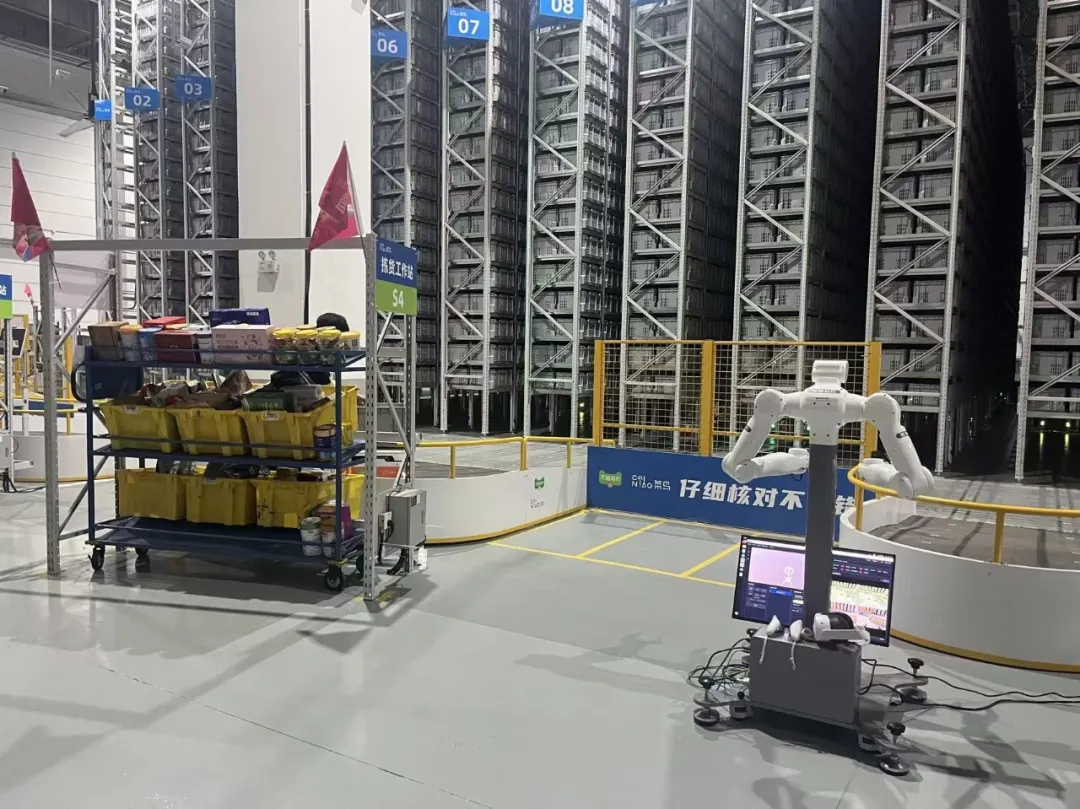
The selection of a single item is the next industry-recognized focal point, and we are also training, but we are still in the "very early stages".
The machine arm is faced with about 30,000 different SKUs in the warehouse. Commodities vary in size, weight, shape and softness. To grab a commodity, the machine arm needs to first identify its shape, and then decide from which angle to start, and how much force should be applied, in order to secure it.
Human hands are very flexible. For humans, these are almost subconscious actions, but for robots, this means a complex set of visual recognition, decision-making and motion control problems.
There is also a more realistic difficulty. The SKU in the warehouse is constantly changing. New items keep coming in and old ones keep coming out, and there are still many technical gaps that need to be crossed in order for the mechanical arm to truly cover all goods.
In addition to the selection, "exceptional" work, such as equipment operation, abnormal handling, still needs people to do.
Everything for the sake of completionOur ideal is to serve customers, so we must be the most efficient supplier of goods as possible. Sam Walton once stated the company's business concept.
In the 1980s, Walmart teamed up with Hughes to build a $24 million satellite communications network. By 1987, the system was fully deployed and connected to stores, distribution centers, and headquarters across the country, allowing faster collection and flow of information such as sales and inventory.
This is just part of Walmart's digital buildup. Since then, Walmart has invested nearly $700 million in its computer and satellite systems. This information infrastructure covering a global retail network has built up the underlying hedge for "day-by-day low prices".
Years later, Mick Mountz, the founder of Kiva Systems, also addressed the outside world: "What we invented was a one-size-fits-all solution". He never wanted Kiva to be simply called a "robot company".
If you look back at today's cat supermarket, you're actually answering the same question.
Overall, 135 ZeeBots have run over 140 kilometres perpendicular to each other. But the 140 kilometres ultimately translate into more goods being found in a timely manner, orders being selected accurately, packages coming out of stock in a timely manner and delivered to the next logistics link.
In a larger compliance network, a system of high-speed emergency commands is also operational in all weather.
AI is involved in operational monitoring, risk warning and anomaly identification; once a problem occurs, the system moves along the link to locate anomalies, driving minute-to-minute responses, and digesting local fluctuations within the system as much as possible, reducing the impact on the consumer experience.
As the capacity to deliver is improved, the platform is able to cover the commitment of fast delivery services to more goods, so that efficiency in warehouses eventually becomes a time-efficient guarantee that consumers can see when they place orders.
From Walmart's satellite communications network to Kiva's robot-compliance program to today's high-density smart warehouses, the retail industry's underlying technology has evolved, but the commercial pursuit of extreme efficiency has never diverged.
Who can use algorithms, data and networks to weave massive physical assets into a high-throughput, low-latency, adaptive real-time parallel processing system, who is far from the consumer's agent role recently.
The wave of industrial aesthetics and efficiency created by this complex system is rolling forward.