It's coming!
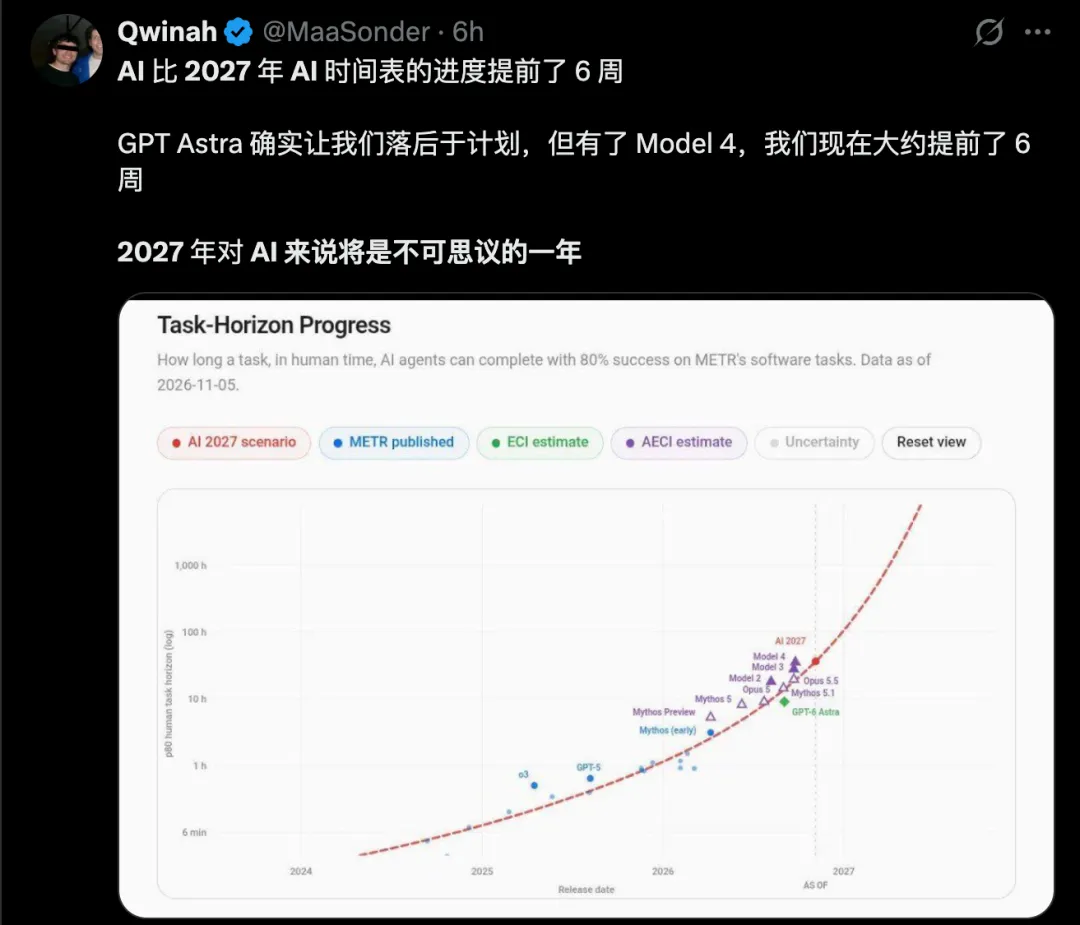
Earlier in the day, an updated map of "AI 2027 Tracker" last night exploded across the web.
This is a timetable for ASI to arrive again six weeks in advance!
The reason is that the METR investigation report on Friday first revealed that the Anthropic Mystery Model 4 took the highest ever score at AECI.
The internal monster, which was just trained last month and tested by internal staff, has directly increased its productivity by 12 times.
Fortunately, a 35-page report from Anthropic just came out and unveiled a surprising number of AI researchers.
When AI takes over a new study, the average is 38%, with 27% to 52% of researchers working directly.
For example, if a scientist works five days a week, almost two days of his life will be spent on AI.
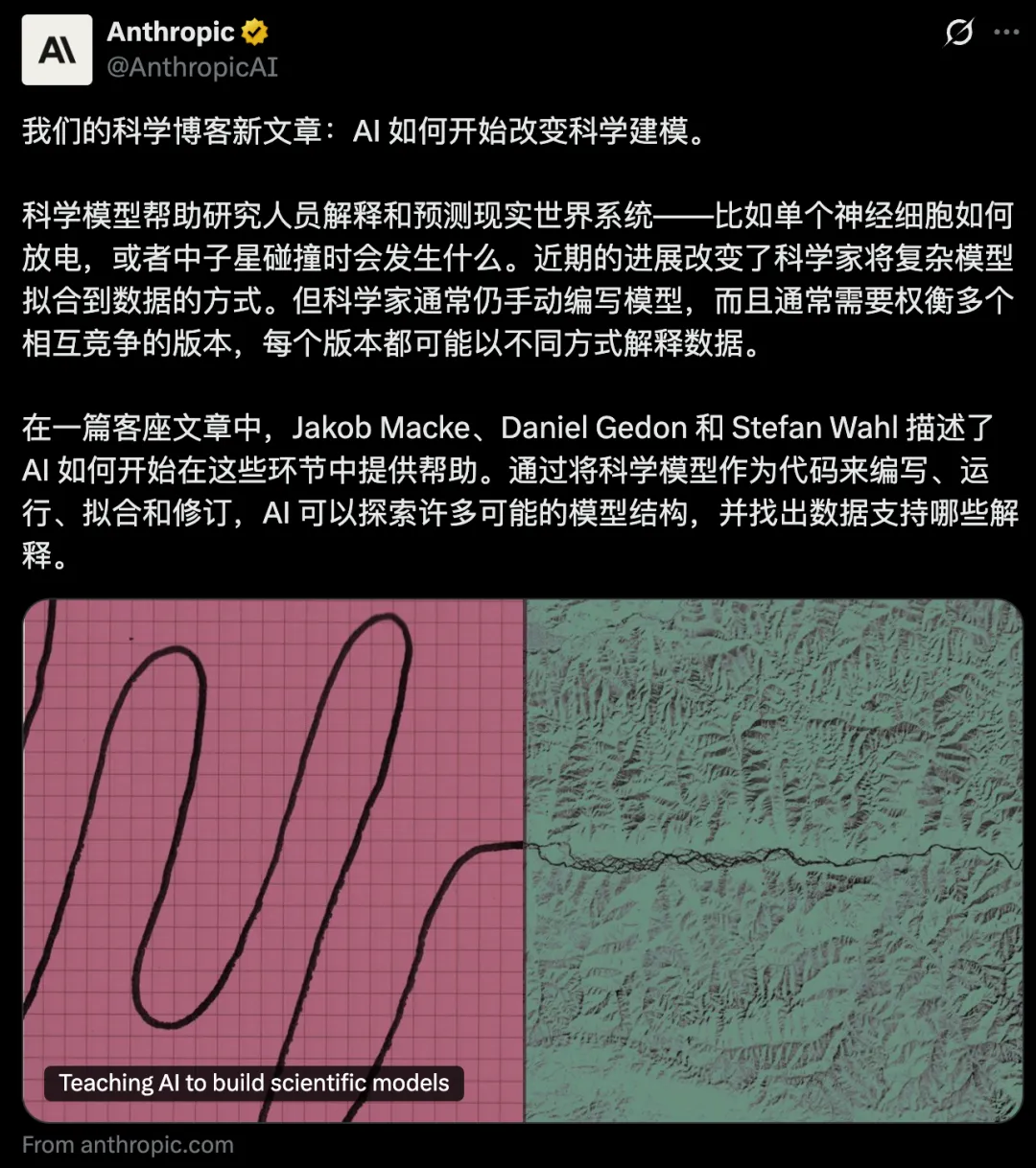
After more than 200,000 conversations, Anthropic found:
Claude's scientific output in statistics was 2.02 times that of the original, and computer science was 1.96.
If the whole process was 100% automated, it would be 16 times more horrific than madness.
According to some netizens, "the entire history of science is likely to be completely overturned, and AI will be the dominant force in future scientific research".
 4.3% of computer scientists worldwideOne-third of the Claude Code
The report, which is Anthropic's first to use real-world data, fully captures the speed at which AI accelerates scientific research.
To see what ordinary scientists are doing with Claude every day, the team moved the "SciNet scientific classification method".
It divides scientific research into 7262 specific tasks, totaling 34 disciplines and 318 sub-fields.
Furthermore, SciNet covers the entire path of a new discovery, from the very beginning of data cleaning to data analysis, hypotheses, design materials, and so on.
Next, the research team captured 128,914 conversations with Claude, as well as 78,135 conversations with Claude Code. Outside, they also searched for 528 first-rate scholars for in-depth questionnaires.
More than 200,000 sessions were held, and the "poor wealth gap" across all disciplines filled the gap.
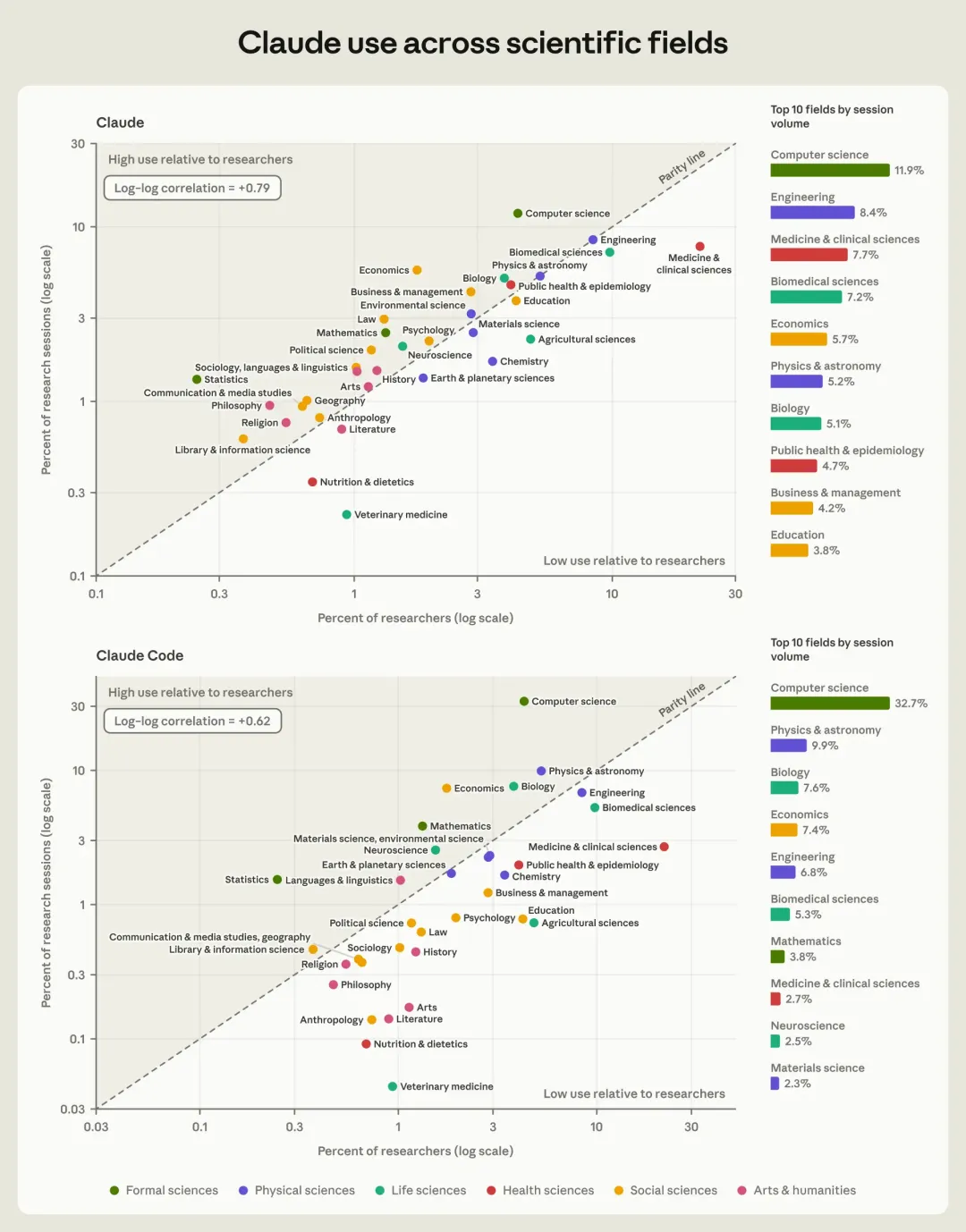
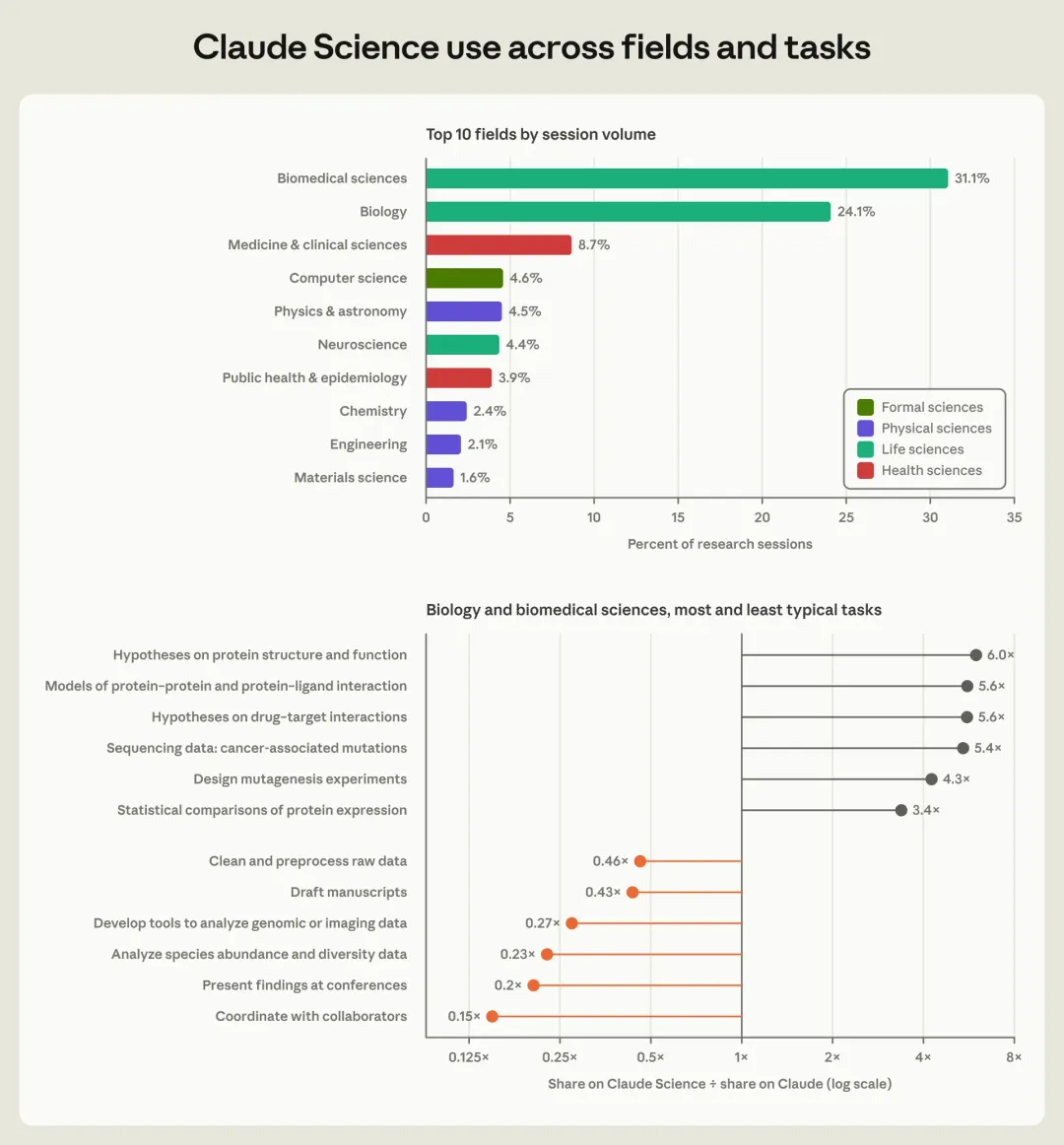
Looking at Claude's conversations, the top three are computers (11.9%), engineering (8.4%) and medicine (7.7%).
On Claude Code's side, "preferences" are even more extreme: computer users make up only 4.3% of the global scientific community, resulting in 32.7% of CC scientific conversations.
 | 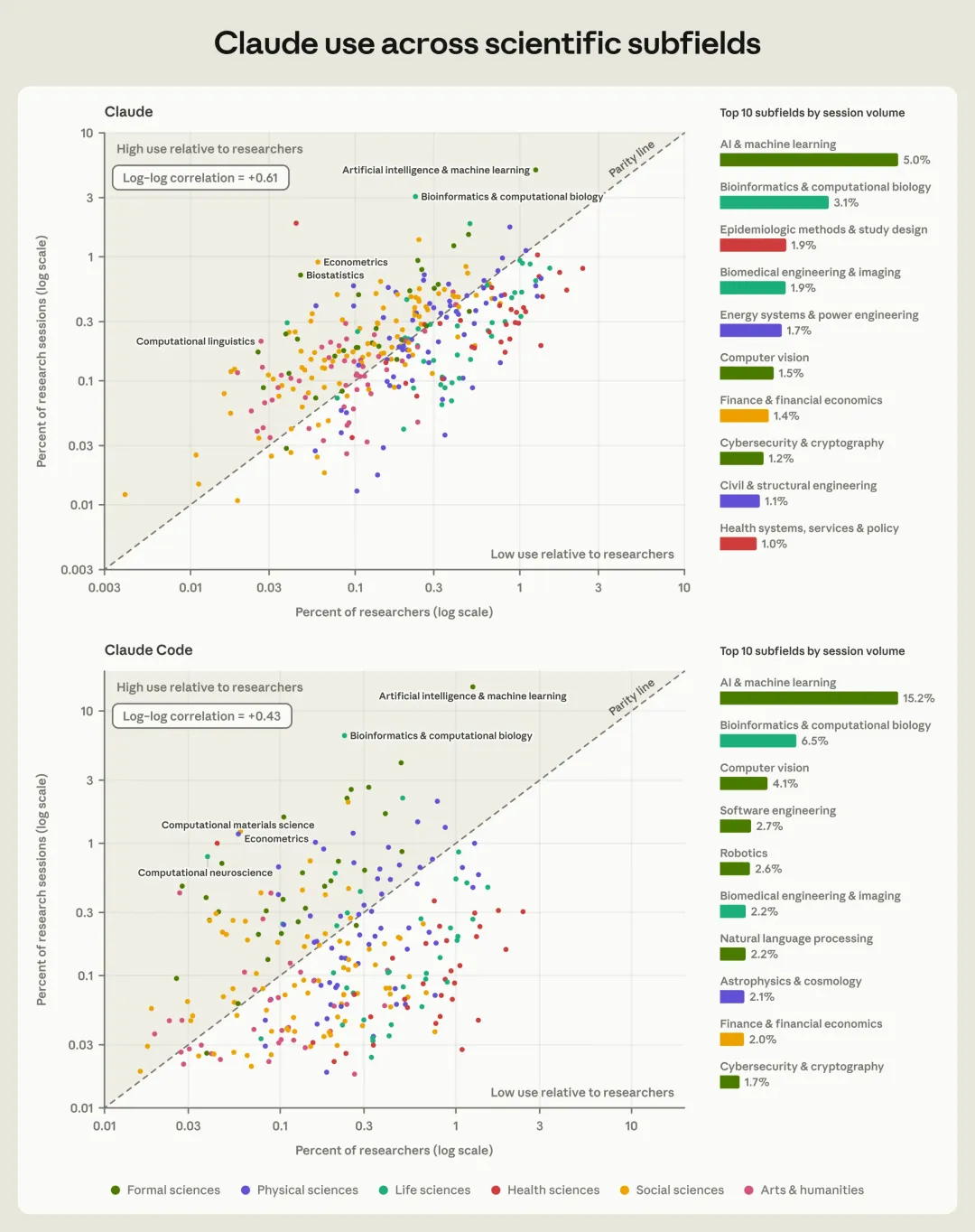 |
Looking back, the data in 318 segments is even more exaggerated: AI and machine-learning experts account for only 1.2% of global scientists, but they wipe out 15.2% of conversations.
It's the smartest thing to do with AI, along with the people who created it.
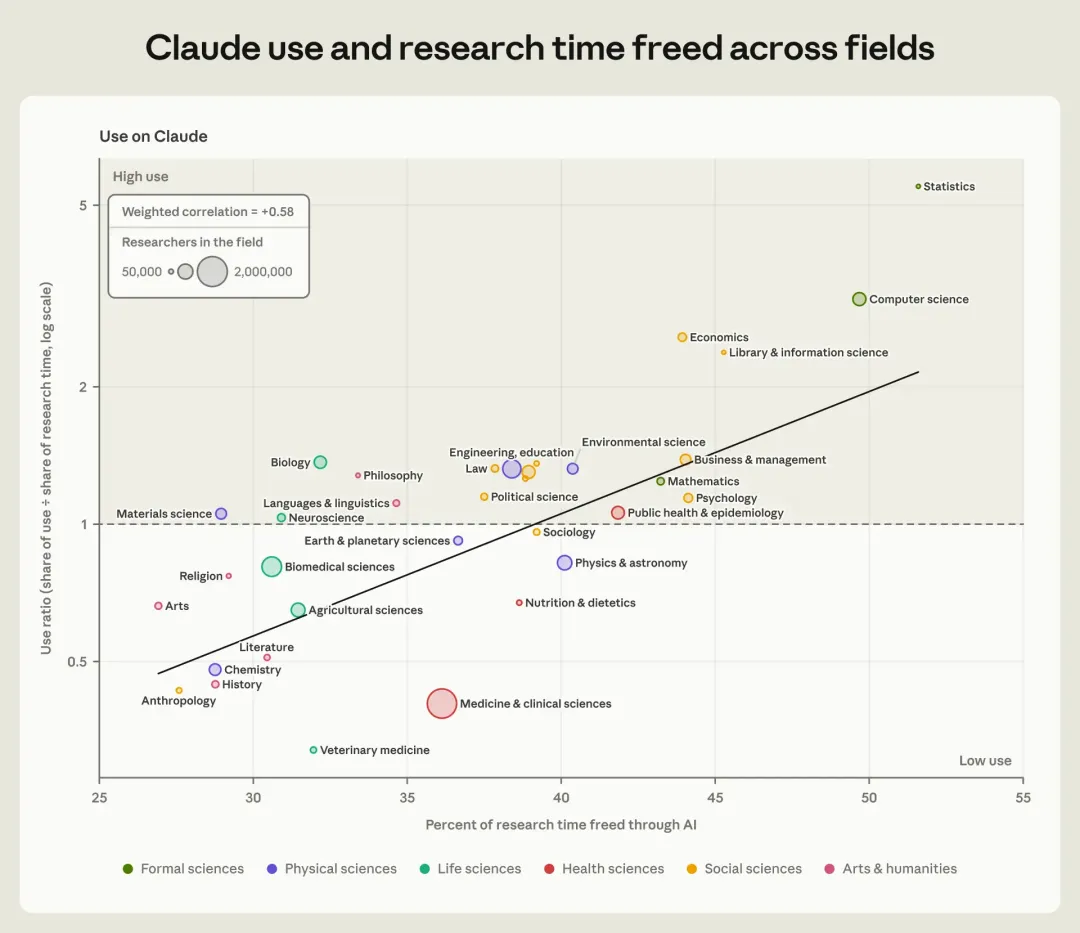
Whether it's biology, linguistics, or neuroscience, it's all crazy to add two words to "computation".
And every day, chemists in the lab and clinicians in the clinic who see patients use less AI frequency.
The most AI-dependent, AI-speed disciplines -- like computer science, statistics, machine learning -- are the ones that created AI.
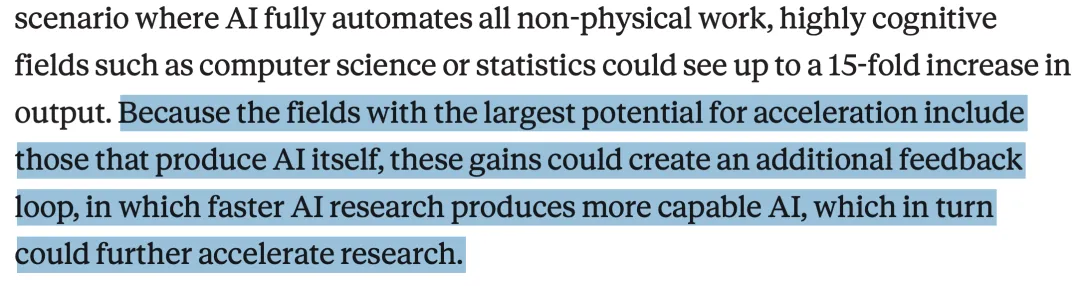
In this circle, AI is helping to create the next generation of people faster, and the next generation of AI, in turn, is pushing back the pace of scientific research, forming a closed loop.
Behind these data, another disadvantage lies in the mission.
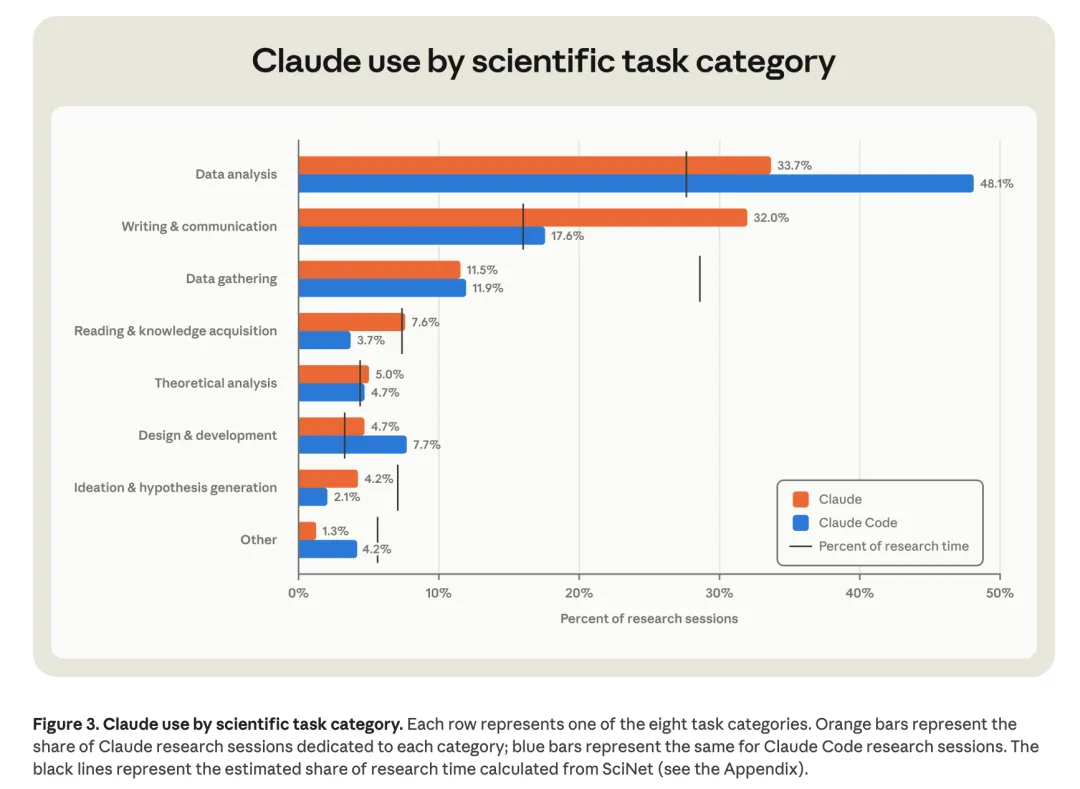
"Data analytics" became the absolute masterpiece, with scientists spending an average of 27.6% of their time doing this, but on Claude it accounted for 33.7%, on Claude Code it accounted for 48.1%, directly occupying half of the Jiangxi mountains.
Next, writing and communication became a high-frequency necessity.
Human beings typically spend 16.0% of their time writing papers, while the average Claude consumes 32.0% of their sessions, more than twice as much.
Additionally, data collection accounted for 28.6% of the workload, with only 11.5% of sessions on Claude; ticking and hypothesizing accounted for 7.1% of the time, and only 2.1% on Claude Code.
In a survey of 528 scientists, the need for "setting up points and hypotheses" and "gathering data" came second.
In other words, the two things that are most important to scientists are exactly the two things in which AI is least involved.
So, in real life, how do scientists decide to assign a task to AI?
Claude's best live, four times as much live.Anthropic pulled out 7262 research missions, one after the other for AI.
The way to score is almost the same as the ELO of chess: each time you draw two scientific steps PK, see which AI is better at it, win points, lose points, and finally draw a strength list.
The list goes out, and the strength is obvious.
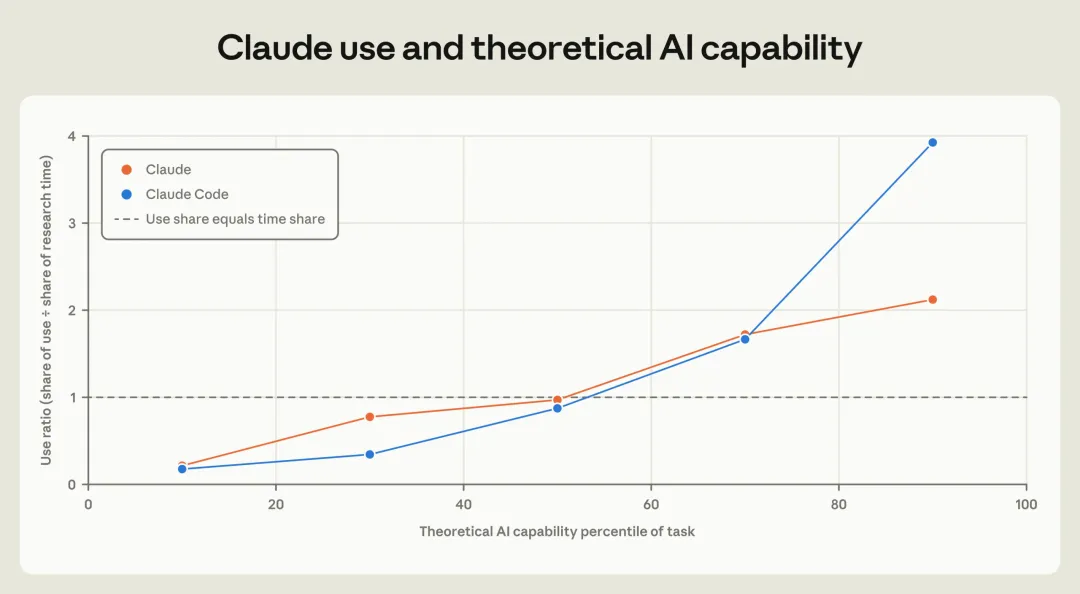
The top 20% of AI-enabled tasks, such as drawing data graphs, running statistical checks, have doubled the number of calls on Claude's normal workflow to four times that of Claude Code.
As for the remaining 20 per cent of hard-working children, including laboratory-grade mixtures and targeted surveys, virtually no one expects AI.
Who is the master of drying and who can tell?
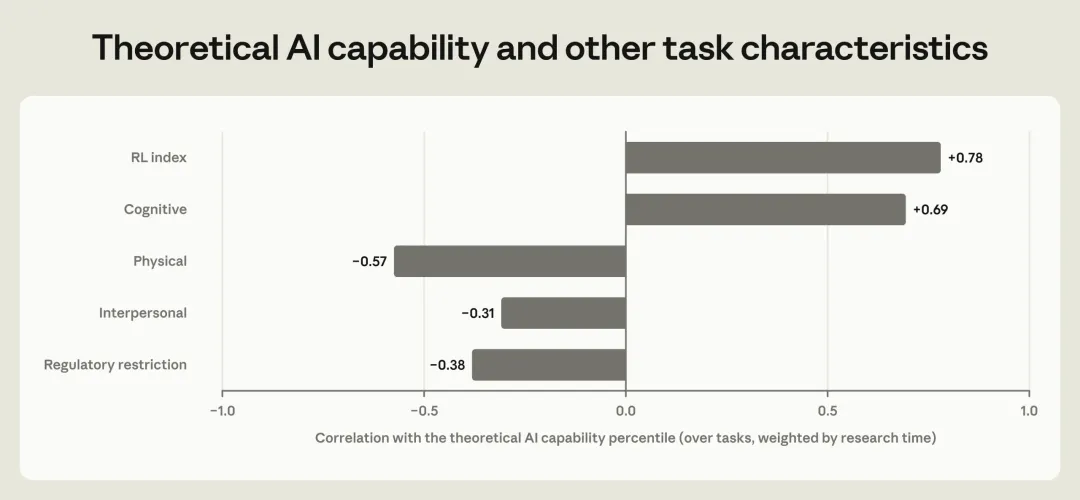
The report uncovered the underlying hardcore logic of whether or not it was suitable for "reinforcement learning".
The correlation between the two is directly 0.78.
As long as those who can do it with "sea tactics", AI will win.
In addition, pure-brain children also have a high rate of correlation (0.69) but need to be personally manipulated to get rid of the crazy score (-0.57).
To put it bluntly, scientists are also voting with their feet, putting Claude exactly where it works best.
Is that an AI that can only make noise, run data, and change the paper?
After using Claude Science, deep brain activity such as "pointing out hypotheses" accounted for 8 percent of conversations, which coincided with the usual time for scientists.
Of course, such missions are significantly harder than nuclear ones, and Anthropic has also uncovered the problem of hydrogen.
More than 80% of the tasks require someone with a Ph.D. to intervene. More than 70% of the conversations are done by Claude Science, with only 23.7% by the average Claude.
If a single session digested a live child, it would take 10.3 hours for humans to kill themselves, which is twice as much work as the regular version.
The probability of running a chestnut, suggesting exactly how proteins and drug molecules combine, in Claude Science is 5.6 times that of the regular version.
 AI takes over more than half of the workforceComputer madness almost doubled
Next, the Anthropic team calculated a more detailed account of how much AI can accelerate scientific research.
They assumed three scenarios, the first at the current level of AI, assuming industry-wide adoption.
In the questionnaire, AI participation was divided into five categories, from "completely unnecessary" to "completely automated", respectively, for 0%, 25%, 50%, 75% and 100% manpower.
Then, according to the difficulty of the task, attach the five corresponding files.
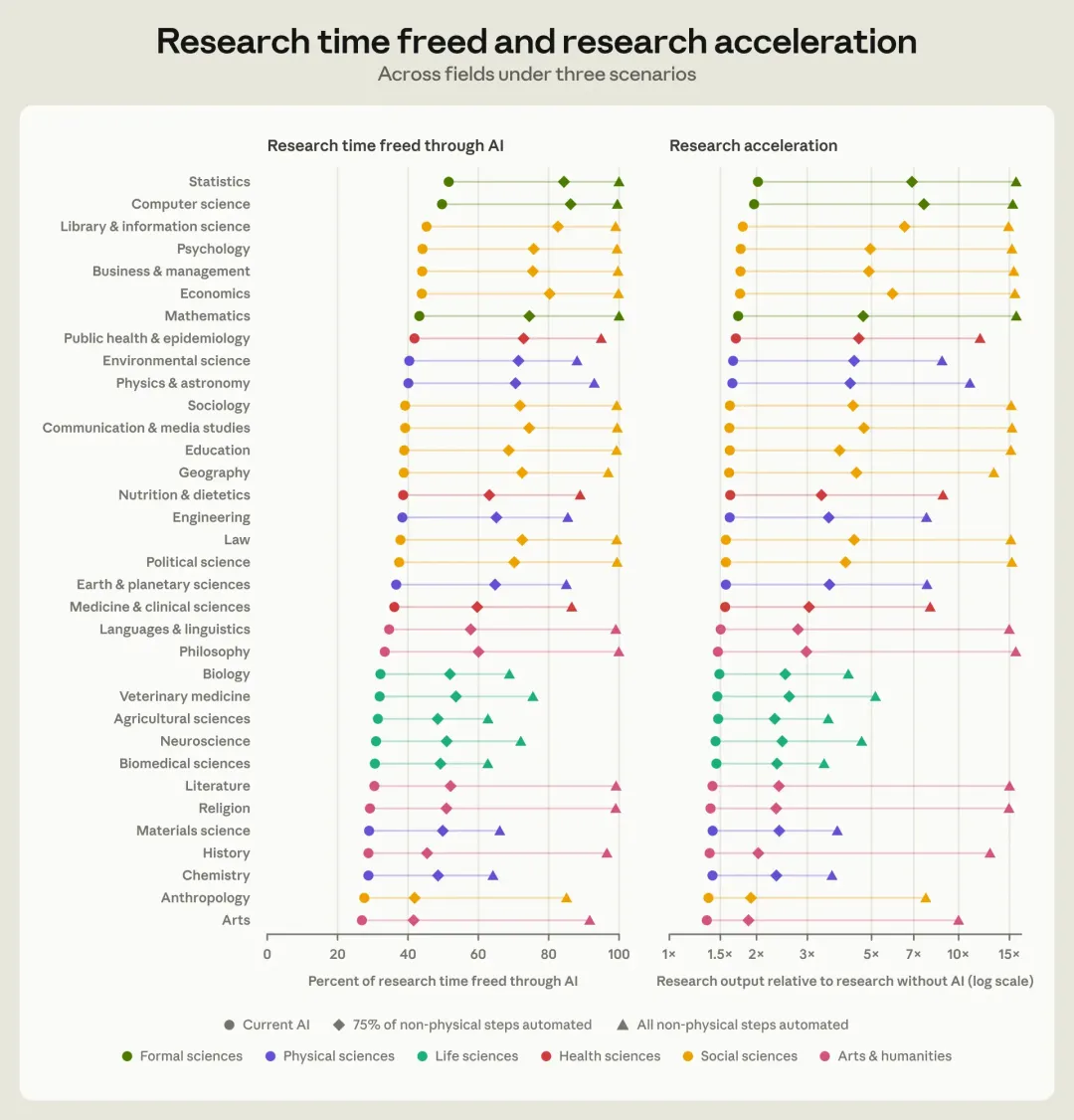
Last but not least, AI takes 27% to 52% of human working time, with a median of just 38%.
But the time saved cannot be converted into 1:1 output.
As AI accelerates its capabilities, scientists will focus on what it can't do, such as asking new questions, doing experiments, reasoning, and drill experiments.
In addition to AI itself, there is also money to be spent, and the report assumes that the AI Agent is $30/hour and the researchers are $95/hour.
AI saves an hour running for 0.2 hours per person, which is equivalent to spending $6 to replace $95 in manpower.
In addition, statistics produce 2.02 times the original output, computer science 1.96 times, while art is only 1.35 times, anthropology 1.36 times, chemistry 1.41 times.
To this end, Anthropic gives two factors to explain the variation in different fields.
On the one hand, it is a "must-practice" task, and in agriculture, biomedical, chemical, and material disciplines, almost 38%-41% of the workforce is physically tested.
On the other hand, AI is not catching up.
The art and history are not very good, but they are entirely based on subjective interpretation, qualitative analysis, and cannot be trained by "pushing the question" to AI.
Of course, the premise of all this is that we all use real knives and guns.
AI is fully automated, 16 times coveredWhat if the AI is even stronger?
In Scenario Two, the step is even bigger, assuming that all children without moving hands, 75% of them, are automatically pushed by AI.
At the time, the degree of differentiation was more severe, with computer science rushing to almost eight times the speed. Statistics, book intelligence, and economics were learned seven times faster.
And those who need to go to the laboratory for experiments and medical classes, drowning is two to three times faster.
The third scenario is just full, all the children live without their own hands, 100% fully automated.
The most interesting scenario is back! Statistics, computers, economics, mathematics, psychology, even the arts and sciences of history, everyone is taking off, 15-16 times faster.
Biology, chemistry, and materials are three to four times more complex than other disciplines.
The fact that about 40% of the human body has to be operated by an entity becomes a deadly ceiling that cannot be passed.
Why is the ceiling 16 times the ceiling?
Because AI works the same way, costing about one-sixteenth of people. If AI costs are cut in half, it can speed up to twice as fast.
I've been listening to science fiction, but scientists don't think it's that far.
In the survey, 38% of respondents acknowledged that AI in data analytics has overtaken top researchers.
Another 40% of people expect AI to take over the entire project independently by 2030, reaching 64% by 2035.
The RSI is up.In fact, the disciplines with the greatest potential for acceleration include those that produce AI itself.
In other words, AI accelerates AI research, and stronger AI, in turn, accelerates the entire scientific research, and a closed-loop flywheel is formed.
Incidentally, on the same day that the report was released, the independent agency METR also released an assessment report.
Claude's evolutionary speed directly increased to 1.9 times that of the previous year, completing about two years of progress.
According to METR estimates, 80% of the thrust is due to Claude himself.
Even the researchers at Anthropic have exclaimed, "The only bottleneck now is points and computation, and the code is not a bottleneck anymore".
However, Anthropic has also sounded the alarm that the more autonomous AI is, the less capable humans are.
But the RSI's closed loop is already pressing the accelerator key.
Fifty-two percent of the scientific workforce is being laid off, and AI is shifting from "helping scientists" to pushing scientific discoveries farther ahead.
In 1945, Vannevar Bush, the pioneer of great science, wrote that science was the endless frontier.
Today, the engines of the ships headed to the forefront have been replaced.