“ The harder you work, the more acidic you get.
Apple has always been passionate about robots. It's like a shallow fish that's been cooking for almost a decade and is still breathing.
On November 2, The Information reported that Apple's J595 prototype was a nine-inch machine with a screen arm, with the machine arm moving the screen to speak to people in the room, and the whole machine did not leave the desk, the target price was about $1,000.
For decades, hundreds, dozens of different forms have been tried, and the final result is a screen that will turn around.
I don't want to admit it, but I have to admit that Apple didn't really know what the machine was supposed to do.
01.
People are holding hands, Apple is holding the screen.
The story began in 2019, The Information reported that the year Apple launched the J595 project, the idea was simple, to make a video calling device. Another tech media wrote earlier: The first prototype was made in 2018, when CEO Tim Cook watched the demonstration and approved the project.
In this decade, Apple has tried everything - wheeled robots following humans, indoor flying models, robots that specialize in folding clothes. After a round, leaving a poor introduction to the first generation: the screen can be turned to people who talk, someone enters the house and lights up, tries to persuade the cat to come down the table and avoid the objects around it.
The industry is holding a robot's hand, holding its leg, betting it can't move, can't walk, can't replace a worker.
For Apple, the first step is not to get up, but to bring a screen to life.
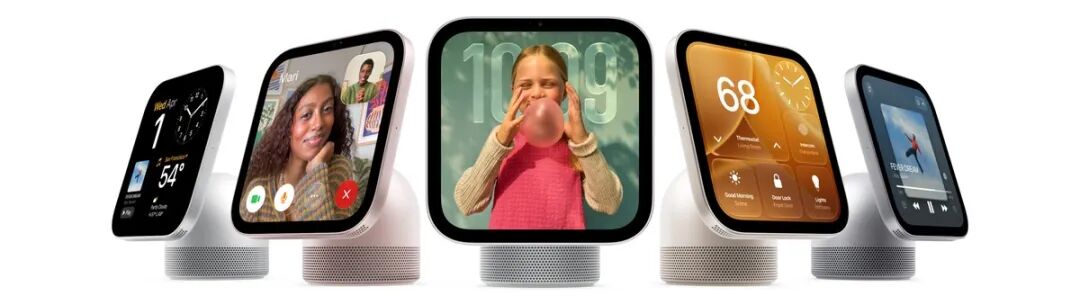
Note: Apple's HomeView, released in October this year, features a 7-inch screen attached to the bottom of the speaker without a mechanical arm. The J595 has a 9-inch screen mounted on a mechanical arm.
What Apple's machine looks like in its mind, it once gave an answer.
In January 2025, Apple's machine learning team published a paper titled ELEGNT, which contained a prototype robot in the shape of a lamp: a dynamic mechanical arm, atop a lamp cover.
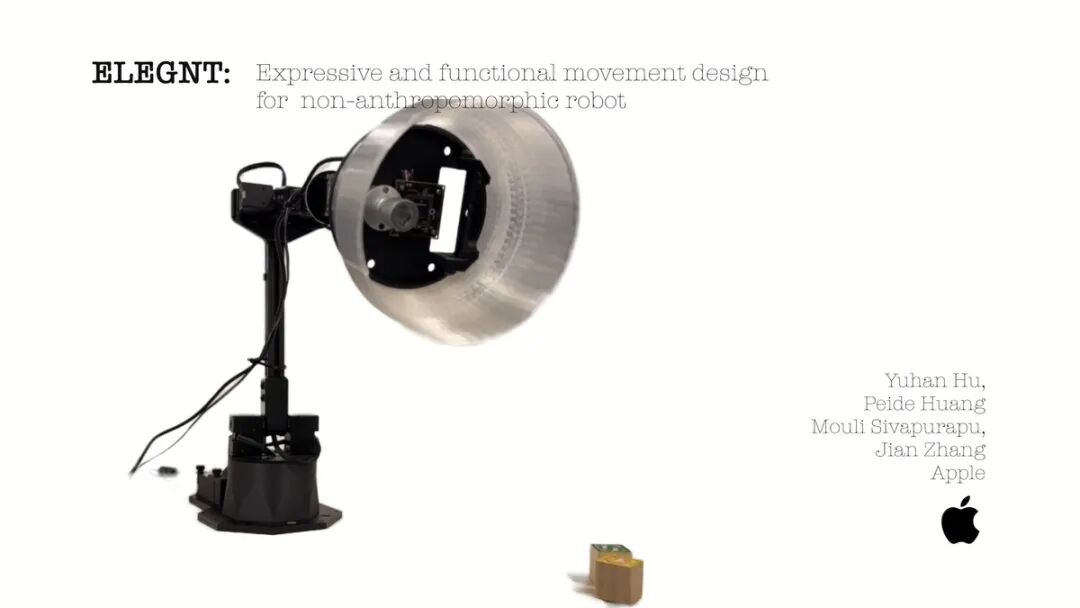
Chart: Apple's January 2025 paper ELEGNT shows a prototype of a desktop robot, the title of the paper and the authors' signature, with Apple logo in the bottom right corner.
If you can't stand to see this picture without saying a word, Apple, you can't forget Pixar.

Picks LuxoJr official poster. Image source: Wikipedia
After tuning, let's go back to the paper, which doesn't say how active the lamp is. The paper says that the robot's movements should not only be used to complete tasks, but should also be used to express intent and attention. In six task scenarios, the team compares the same thing, a group with purely functional movements, a group with expressive movements. The result is that the latter significantly increases the sense of human involvement, the largest gap in the social class of tasks.
In the paper, the flashlight is a research prototype, not the same thing as the J595. One is a device used for user research in the laboratory, one is to sell a $1,000 product project.
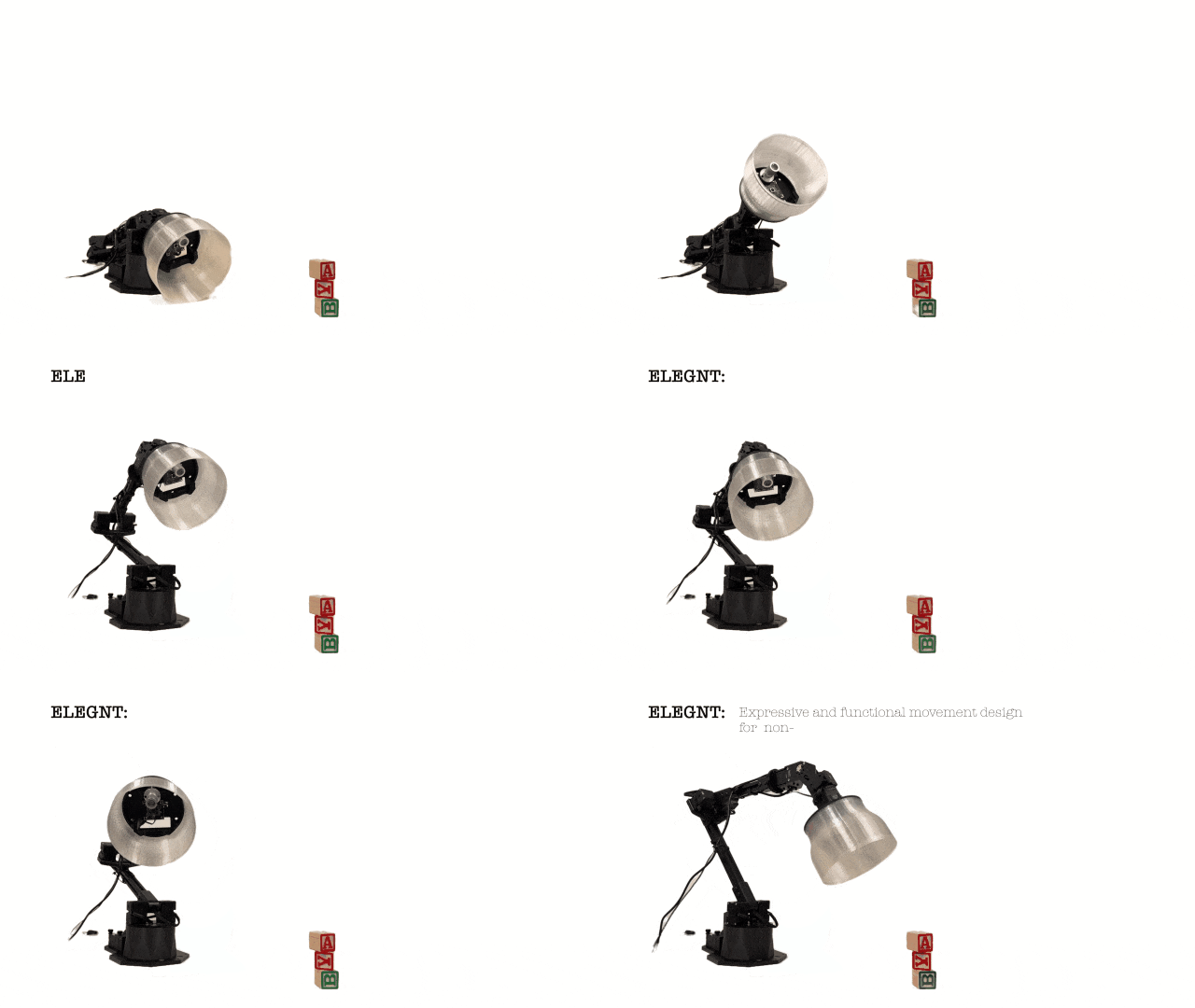
Note: In the presentation video of the same paper, the lamp robot turns the headlights and lights up the people reading at the table.
The lampshade is good, the screen is good, and the apple should always have the head that moves.
02.
Why not?
Apple restarted the robot at a specific point in time.
In 2024, Apple halted a decade-long automotive project. According to Chinese translations, the people involved in the automotive project were not scattered but integrated into the robotics team.
The car is on its way to the end, and Apple needs a new growth story. Cell phones are on top, cars are yellow, and there's talk left, and the market wants to hear it. One is the Vision Pro line, that's the $3,499 mixed-reality headset; one is the home robot.
It's not a bet on the future, it's more of a back-and-forth, and there's no better sign on Apple's hands. The car burned a decade, burned a billion dollars, and the last one was empty. Vision Pro shipped about 390,000 units in its first year on the market, plunged to 45,000 the next year, cut its marketing budget by more than 90 percent, and the R&D team has been dismantled.

Note: Apple's Vision Pro is scheduled to launch in February 2024, priced at $3,499.
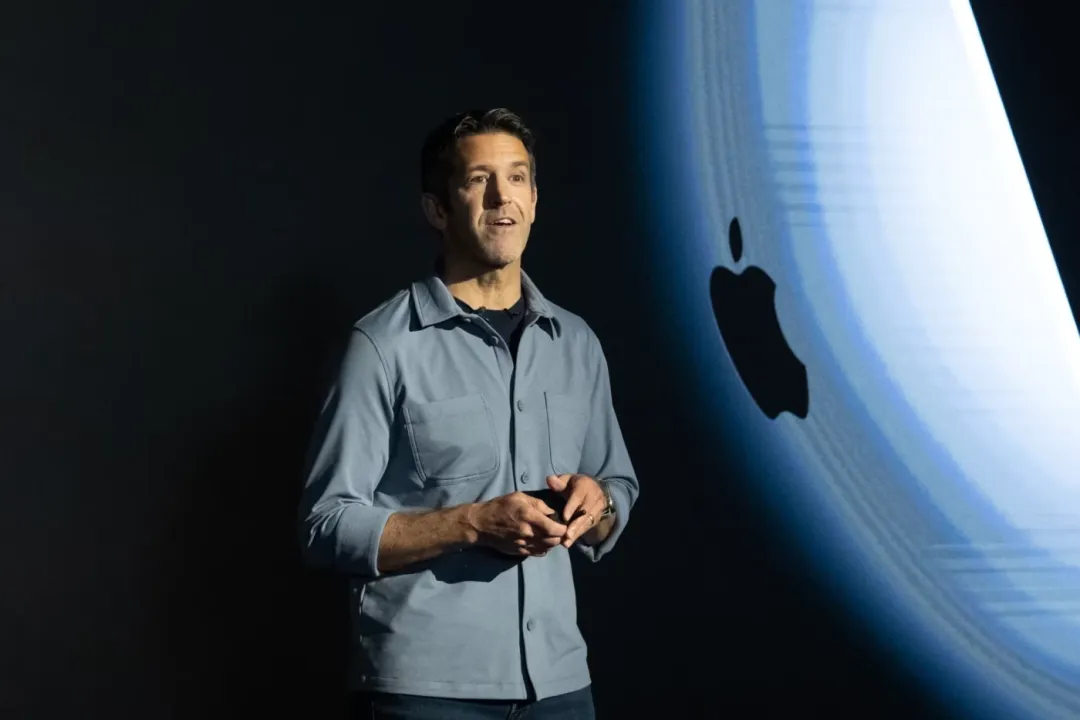
According to The Information, Tennis has a cautious attitude towards automotive projects, Vision Pro, and is exclusively robotically active. In 2025, Apple organized a special program of robotics business in his name; after announcing his appointment in April, he continued to attend J595 and other robotics projects.
Each demonstration, product planning meeting. A person who just got on the podium and wanted to do something a little different personally stared at a screen without any body.
Notes: Apple's new CEO, John Tennis. According to The Information, his attitude toward robots is more positive than that of the automotive project, Vision Pro.
Unfortunately for Tinas, the more difficult the J595 becomes, the more difficult it becomes. One of the hardest things he's hit is the deadliest thing on Apple Card.
The real point is why it can't be done. A company that makes the most of its products has been selling a revolving screen for a decade, which in itself shows that the issue of home robots is much more difficult than Apple thought.
03.
It's stuck with software.
In fact, the bulk of the hardware of the robot, which was fixed about two years ago, is software stuck in the market.
This software solution is not a high-level algorithm. Initially, the project only wanted to make video calls, the management later added AI capabilities, and the goal was to expand. The team once wanted to make the device actively perceive the environment, take their own ideas, and also set up a dedicated branch of AI research.
A source told The Information: "Approximately 10 people at Apple who really understand robotics research and development, and about 300 people on the software team -- who write software, are thirty times more likely to be robots".
The list of functionalities goes from a bunch of cutting down to four, and from four more cutting down to turning on the lights, and every single one that's cutting down is the answer to a question that has been rejected.
Looking back at this year in the country, the debate about robots is all on the other side.
These debates have a common premise that no one has put forward: what to do after a robot is made.
Apple put the question on the stage.
A device that repeatedly removes even the smallest of four things is more honest than any other parameter table. It explains one thing: It's not what a robot can do, but what it does after it does it.
Even Apple, which has money, people, and companies that have time, can't answer that question and only give them a screen that turns around.
Who can bring an answer? I am waiting, or I am waiting.