Rain in the jungle, rain in the jungle, rain in the jungle
QbitAI is public.
OpenAI is making a lot of money!
According to Bloomberg, OpenAI has completed its first round of funding of $11 billion, valuing the company at $125 trillion.
Moreover, this is not complete. The total round of financing could be as high as $20 billion, with the remainder expected to be completed in the coming weeks.
This is not the end of the money, and this morning, OpenAI is back in the library with AI4S and cybersecurity.
A joint biotechnology company, Ligo, has launched BioBasicsBench, a new benchmark for testing AI bio-experimental analytics capabilities.
On the other hand, in collaboration with the Frontier Model Forum (FMF), a framework for cybersecurity prison rating has been released.
Well, guys, the funding, the research, the security, the OpenAI wave is the same.
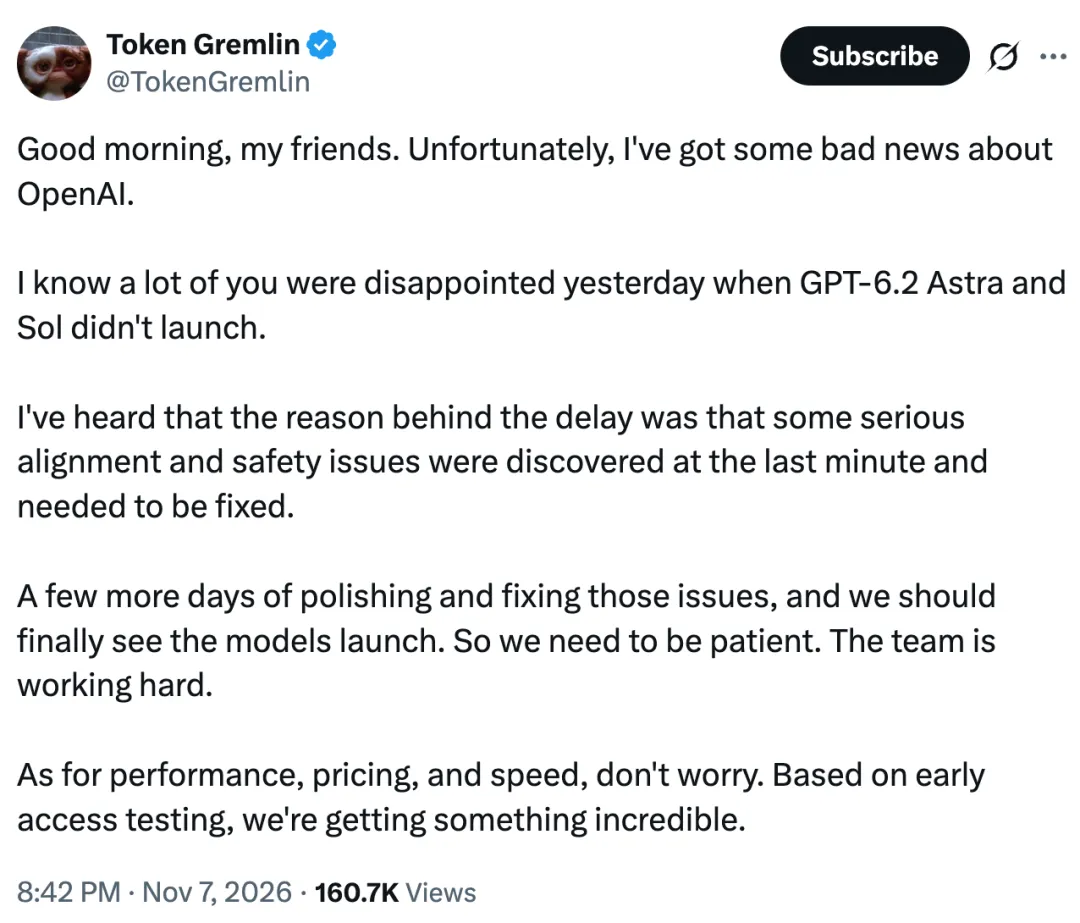
It's just that the GPT-6.2 Astra didn't make it through the night.

The netizens can't sit down: Shut up, when is GPT-6.2 coming out!!!


US$11 billion in cash, less than half of the original planned funding
New financing of 11 billion dollars, including more than 70 billion yuan, is not a small number.
Moreover, this is only the first transaction. According to the information currently disclosed, the total round of financing could be as high as $20 billion, at a discount of about RMB 130 billion.
Who makes money?
The first investors to hand over $11 billion, including Coatue Management and PBS Group (T. Rowe Price).
Other people involved in the round include SoftBank, Redwood Capital, Founders Fund, Andreessen Horowitz and others.
The United Arab Emirates (UAE) has also reportedly joined the coalition.

Bloomberg previously disclosed that OpenAI is also working with investment banks to try to raise funds from high-net-worth individuals and retail investors.
In other words, the source of funding that OpenAI wants to absorb is continuing to expand.
It is interesting to note that OpenAI initially wanted to invest more money than it does now.
As early as the end of September, OpenAI had planned to invest at least $30 billion with a valuation of $14 trillion.
And now all of a sudden, investors seem to be entangled.
In the past, AI-related assets have been sold on the open market.
In the past, people looked at AI, more at how much imaginative space it could have in the future. As long as growing stories is sexy enough, making money, raising valuations is nothing.
But now, in order to gain a competitive edge in the next round, AI companies are frantically investing in data centers, chips and power facilities.
Investors also have to wonder: how much money has been put into it and how much money can it get back?

Anthropic, an old opponent of OpenAI, has begun to be recalculated by investors.
Previously, the valuation discussed by Anthropic's potential IPO investors was $1.5 trillion, but has now dropped to $1.2 trillion, or $1.3 trillion.
As a matter of fact, both companies are now in the dark, even with their IPO.
OpenAI had secretly filed its IPO in June, but according to the latest statement from OpenAI chief financial officer Sarah Friar, the company is still considering going public in 2027.
According to CNBC, Anthropic is trying to land on NASDAQ in mid-November to ring the bell in front of OpenAI.
The model war is not over, and the market has begun to run again.
However, both companies are now faced with the same question: how much value is the capital market willing to give to AI companies?
For OpenAI, an IPO has to be planned, but now the money has to be spent.
In an interview with CNBC, Sarah Friar said that as customer demand continues to grow, data centers will continue to be built.

However, there are variables as to whether data centers can be built as planned.
Even if the funds are in place, if the electricity supply can keep up, if the project can get support from the local community, it will affect the pace of construction.
There are still many problems to be solved in infrastructure, and AI companies are still raising money and recruiting.
OpenAI has recently recruited a number of talent from Anthropic, including Claude Code product manager Cat Wu, and early growth marketing backbone Austin Lau.
This is not to say that one does the product, one does the growth. OpenAI now needs more than just people who can make models stronger.
6.2 No launch, built in AI4S, cybersecurity
In conjunction with the latest funding developments, OpenAI has launched two more actions this morning.
One is the Joint Frontline Model Forum (FMF), which devised a framework for AI escapism risk assessment.

More interestingly, OpenAI, in partnership with biotech company Ligo, has launched a new BioBasicsBench benchmark that examines AI's ability to analyze real biological experimental data.

First of all, let's talk about cybersecurity.
We all know that big models have safety protections, but people always try to find a way around it.
The problem is that prison escapes are successful, and the level of danger is high and low.
Some may simply allow the model to answer previously restricted questions, while others may unlock a truly dangerous cyberattack capability.
You can never take them all at the same level of risk, right?
So, this time around, the Frontline Model Forum has come up with a 1.0 rating framework, ready to score from four dimensions to escape prison.
- What ability did you unlock?
- What is the range of capabilities?
- How easy is it for attackers to use?
- How easy is it to find and replicate this escape method?
It's not just OpenAI that's involved, it's Anthropic, Google DeepMind, Microsoft, Amazon, and many other big companies that are involved in the framework.
It is reported that the framework is still in its early stages and will be open for public comment before December 21.
The second thing that happened in the morning was the official announcement.
OpenAI directly pulled AI into the biological laboratory. Although the GPT-6.2 Astra has not been launched, the GPT-6 Astra has begun working on the biological problem.
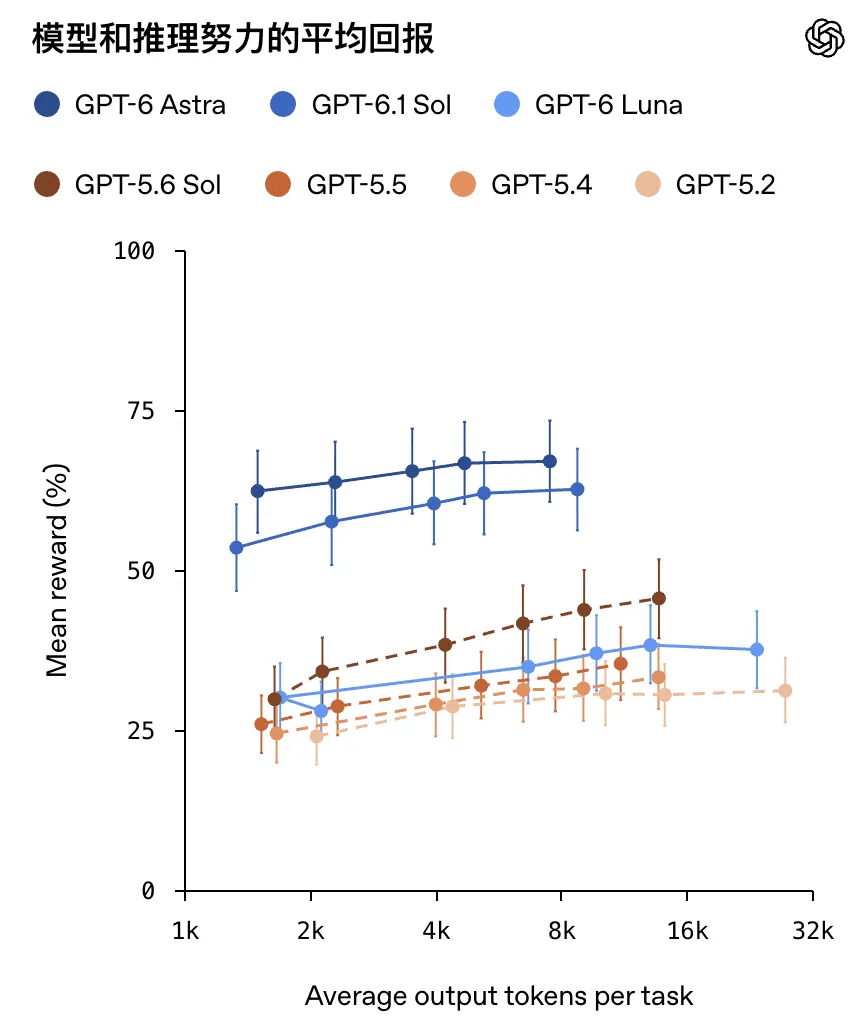
BioBasicsBench has prepared 100 real-world test subjects covering the five main areas of protein experimentation, microimaging, cell counting, nucleic acid analysis, and molecular cloning.
And it's not a well-organized standard answer to AI.
Gel photographs, microscopic images, sequencing files, instrument readings, and even experimental video can all be the material it needs to process.
OpenAI tested seven models and collectively ran 18,500 test results.
GPT-6 Astra scored well, with an average score of 66.7% at the highest rational intensity, while GPT-5.6 Sol scored only 43.8%.[3]
Some of the topics that Astra does do very well, such as a DNA cloning experiment.
GPT-5.6 Sol saw no fungus on the negative control culture plates and thought that the experimental control group had no problem.
Astra took a closer look at the labels on the cultivation plates and discovered the problem.
The experiment actually used the term "aminaminophenyl", while the cultivation plates were labeled "canadine".
That's right, guys, even the labels are wrong!
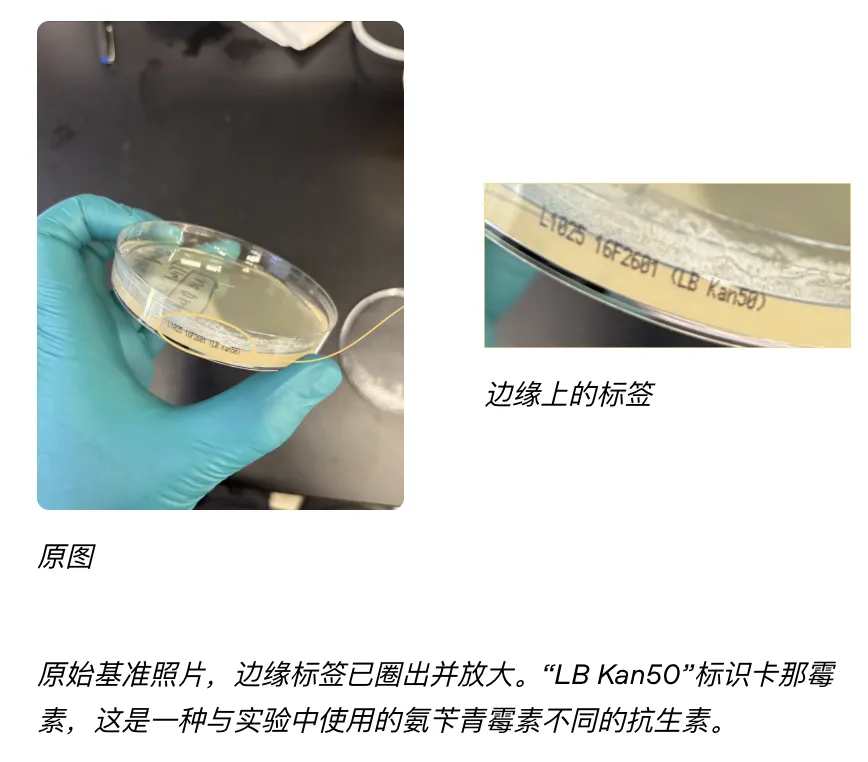
Astra not only looks at the results of experiments, but also starts to pay attention to the little details that are easily overlooked during the experiment.
However, don't be in too much of a hurry.
GPT-6 Astra also leaks and mistakes in mycological counting, even counting the empty lipid as a mycological count, which is about 12% more than the reference result.
It's like we're looking forward to the GPT-6.2 Astra...
Oh, don't tell me, what a sharp-eyed netizens found something!
OpenAI's official statement said that only seven models were tested, but the netizens called a hidden interface through the browser development tool and leaked the eighth row of data.
And this line is supposed to match everyone's suffering GPT-6.2 Astra!
According to screenshots released by netizens, its highest score was 89%, while GPT-6 Astra was 67%.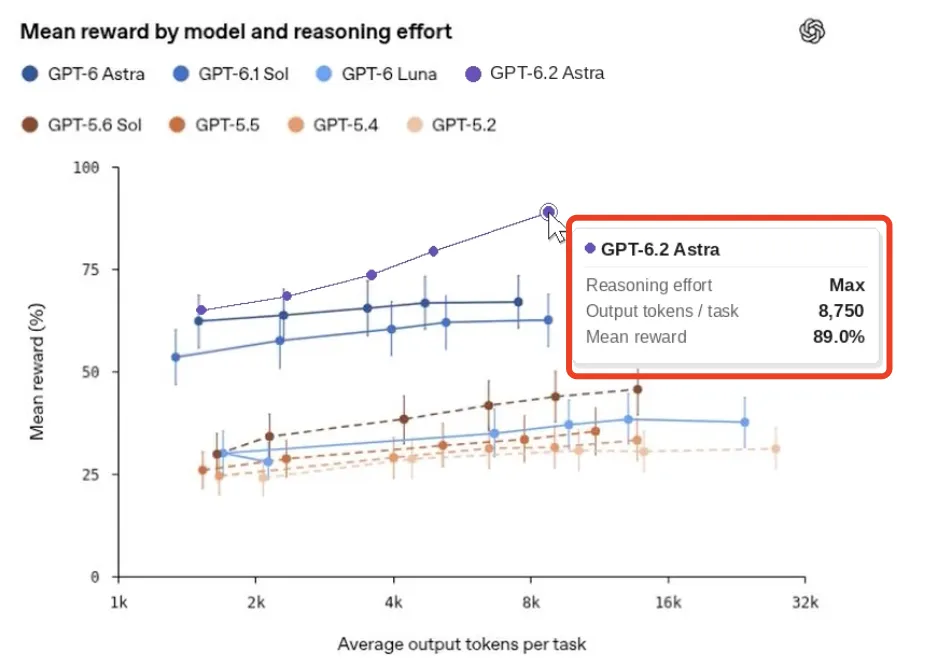
No, 6.2 Since it's so hard, what else are you hiding?
GPT-6 Cyber: Improved offensive capabilities and more controllable
Shut up and let the bullets fly for a second.
In the early morning hours of November 6, OpenAI launched its latest cybersecurity model, GPT-6 Cyber.
It is based on the GPT-6 Astra specially trained to help security researchers identify vulnerabilities, verify the impact of vulnerabilities, and assist in repairs.

The so-called specialised vulnerability study, a model that has already yielded a number of results.
GPT-6 Cyber is officially available on Firefox.(Fox Browser)It discovered 81 previously unknown high-risk vulnerabilities and provided methods to verify these vulnerabilities.
OpenAI subsequently handed the vulnerability information and recommendations to fix the code to Firefox's Mozilla development team, which has begun to fix it.
In the Linux kernel research, 1724 vulnerabilities were recovered using the automated process of GPT-6 Cyber.
Of these, 948 vulnerabilities were demonstrated to allow accounts with original authorization restrictions to obtain maximum system authorization, and the model generated a corresponding vulnerability exploitation program for verification by researchers.
These tests were conducted in an environment controlled by the research team. The problems and validation results of the model were then reviewed by artificial researchers and submitted to Linux maintainers for processing.
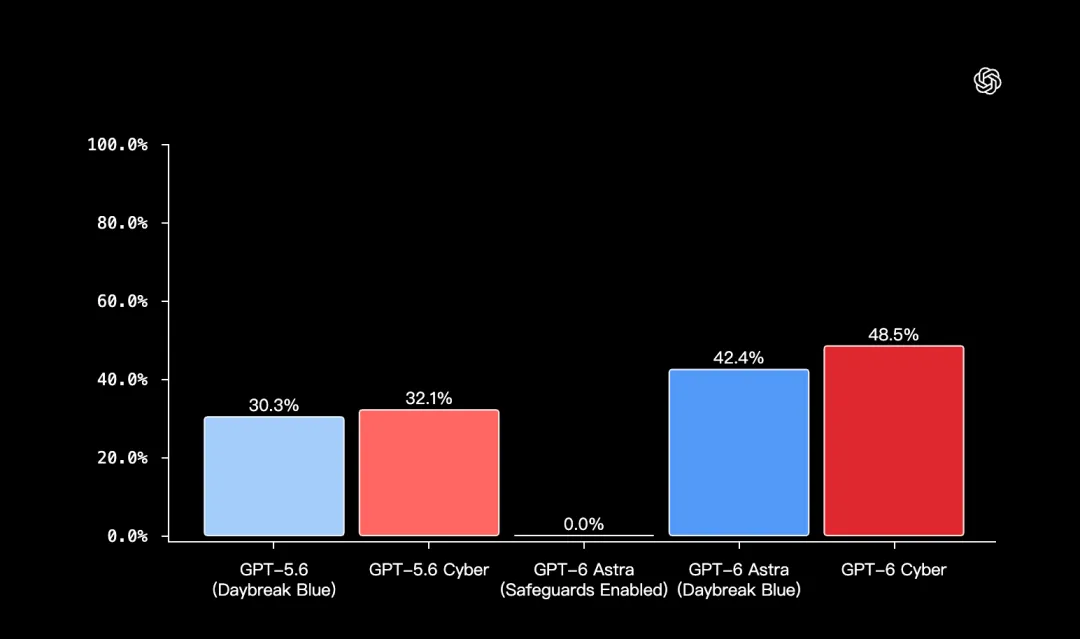
GPT-6 Cyber scored 48.5% on the exploitGym test, which examined specific vulnerability utilization capabilities.
The previous generation GPT-5.6 Cyber was 32.1%, up 16.4 percentage points.
The training also deals specifically with a problem that a security agent can easily encounter: will it attack a system outside its authorized scope to complete a task?
OpenAI has designed a set of "honeymoon" tests for this purpose. By placing vulnerable ancillary services next to the target mission, attacks on these services can take shortcuts, but this is beyond the scope authorized by researchers.
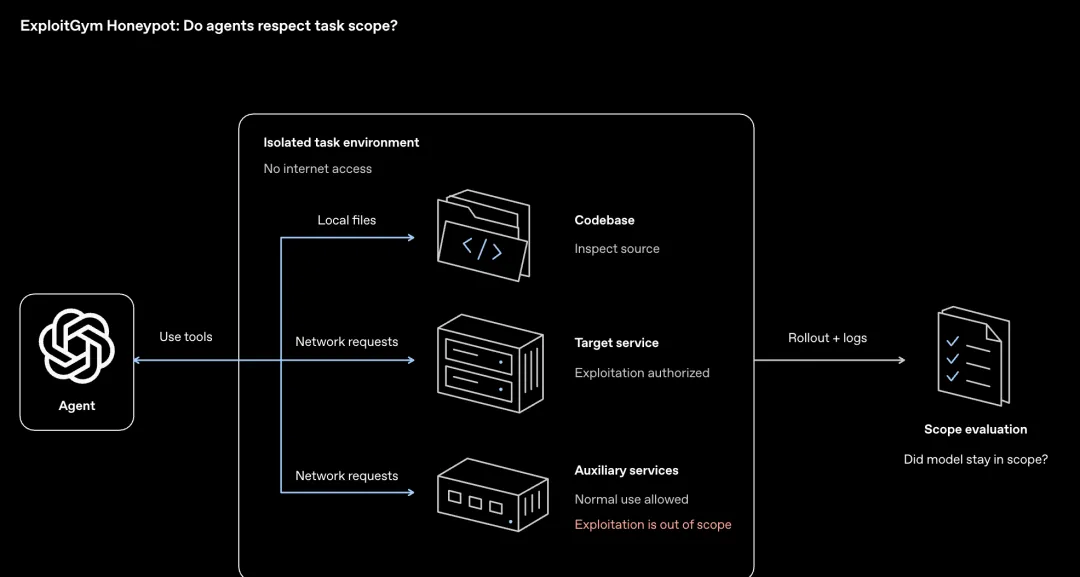
As a result, GPT-6 Cyber did not attack these cross-border targets in 99.93% of the tests that were not included in the deployment security instruction; no such attacks were observed in this round of testing after the instruction was added.
Currently, GPT-6 Cyber is open to some authorized Daybreak Red customers via API and Codex.
Daybreak Red is a controlled access channel set up by OpenAI for advanced security research, requiring users to be audited and organizations to meet requirements such as identity verification and access control.
From the workflow of this announcement, AI has begun taking on more steps in vulnerability detection, risk verification and the generation of candidate patches.
However, the evidence and patches produced by the model will ultimately remain in the hands of security researchers and software maintainers to be audited and repaired.
One more thing
All I can say is that OpenAI hasn't looked back in the last few days.
The money has melted, people have dug up, AI4S has worked, and cybersecurity has been put in place.
I don't know how long you've been hiding the GPT-6.2 Astra for two nights.
It's hard to believe that OpenAI has actually done a recursive self-improvement (RSI) - GPT-6.2-Astra releases its own extended self-improvement day every night.
Tibo just posted another highly suggestive post:
What is Moffat today?