Listening to the rain, coming from the monastery.
QbitAI is public.
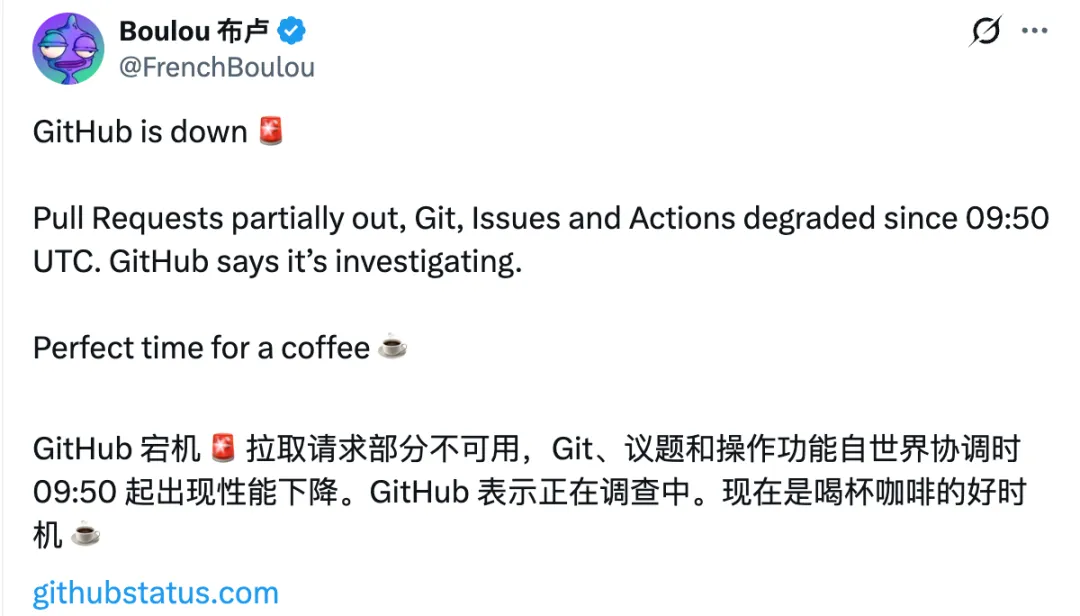
GitHub, how did you fail again...
On November 3, the official status page recorded two failures, one of which affected Git operations.
On the 4th, services such as merger requests were again abnormal, with some requests failing or delayed.
The code has improved, and I want my colleagues to see if they can integrate it into the main project.
Some netizens have joked about this:
It's good to have a cup of coffee.
Just as GitHub was busy getting repairs done, Axios sent out an exclusive message:
OpenAI plans to acquire Pierre as a code management toolThe deal is still pending.

It's a bit of a coincidence that these two messages collide.
And I have to say, there are a lot of companies that are doing AI programming tools that are starting to manage their own code.
Musk-owned Cursor has already allowed developers to put the entire project directly into the Cursor.
Anthropic went even further, moving its own engineers' daily source code library into its own development system.
Why are so many companies folding this up?
As AI writes code faster and faster, the infrastructure has been slowly losing ground...

OpenAI has created one and is ready to buy another.
OpenAI itself has tasted the taste of code systems.
In March, The Information reported that OpenAI engineers encountered multiple disruptions to GitHub while the company was developing internal alternatives.
On November 2nd, just a few days before, it unveiled its own Git rear end.PandoIt is responsible for managing access to the internal code and other operations.
According to the engineering team, in the past, a modification was carried out by an engineer. With the Codex, a person could prepare several at the same time.
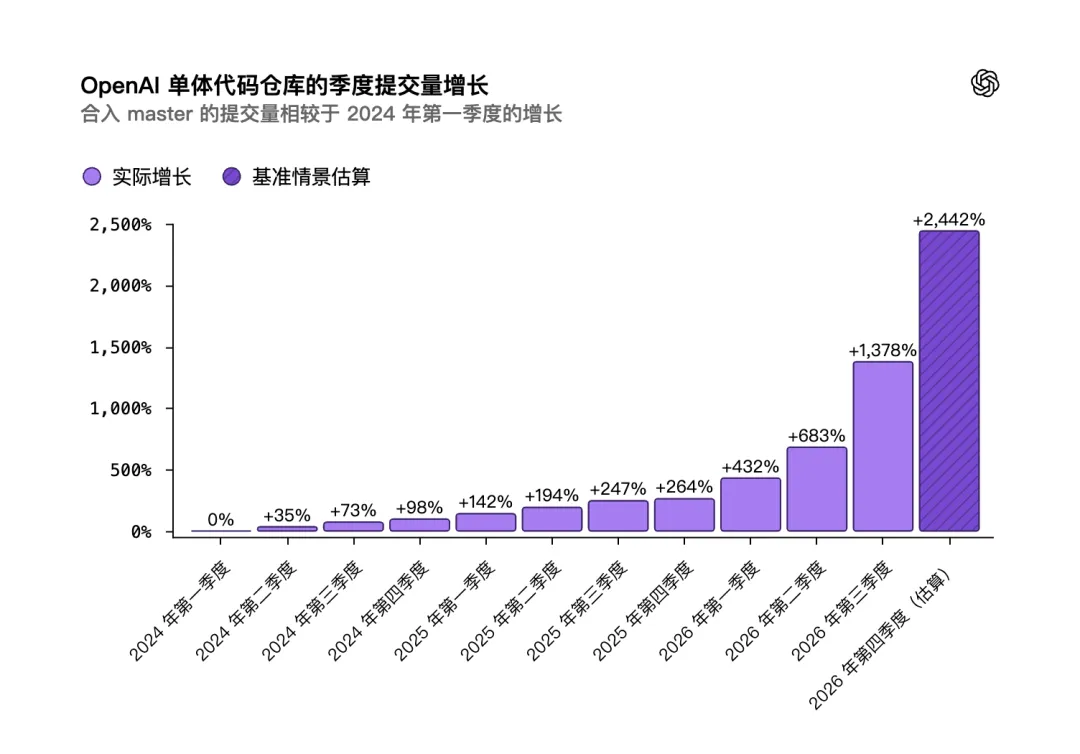
Each time the code is pushed, it triggers multiple automated tasks to extract the code, run the check.
The number of people who write the code is not multiplied by the number of people who write the code, but the work of the system has increased.
The original system is becoming more and more powerful, pulling and pushing slows down, and mergers fail.
Pando has been taking on real development traffic since April. According to OpenAI statistics, the average time spent on a single push has dropped by almost 80% since then.
The problem of home engineers has been solved, and for Codex users, OpenAI is also ready to acquire through acquisitions.PierreIt's a great way to bring code storage and other capabilities into the product.

You've probably already used the sauce, something Pierre said.
Let's say you let the codex fix a bug and it changes five files.
You open the list of files, you find one of them, and then you take a step at a time to check what it deleted and what it added.
The first movement was made with Pierre's Trees; the second was made with Pierre's Diffs.
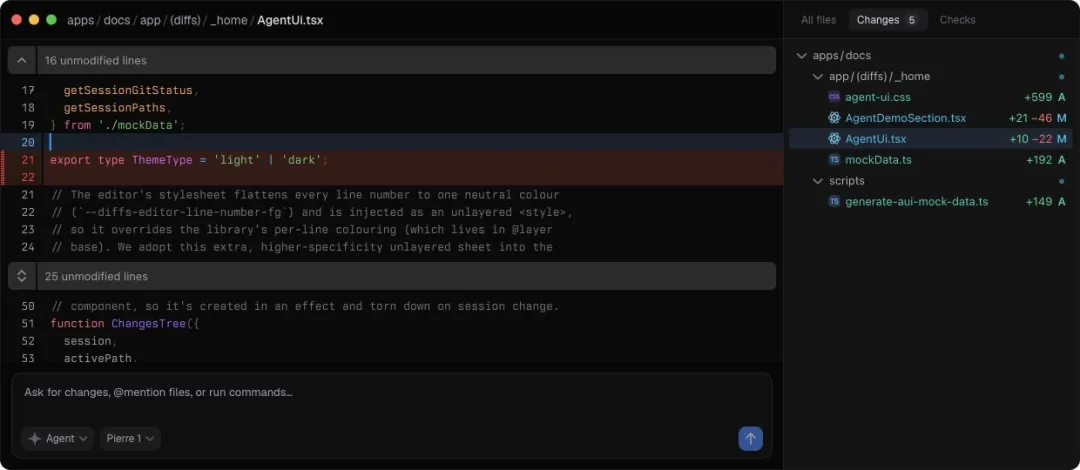
Pierre has a business calledCode StorageOne of its customers is Lovable, an AI application development platform.
In the background, each project uses one or more Git repositories to save code and modify history.
According to data released by Pierre in August this year, at the time LovableMore than 8 million new warehouses are built every weekThe peak is 250 beats per second.
OpenAI intends to wait for the acquisition to be completed and then bring the capability of Code Storage into the Codex.
Afterwards, the developers let the AI write the code, see where it has changed, and then save the version, all expected to be done in the codex.
Currently, the transaction is subject to regulatory approvals and delivery conditions.
On the day Cursor opened its open source hosting, GitHub also hung up.
You may remember that on August 14, Musk's SpaceX completed the acquisition of the Cursor.
Three days later, Cursor's code-hosting service Origin opened for early testing.
On August 17th, a persistent attack on GitHub was also reported.7 hours and 47 minutesIt's a failure.
Cursor employee Matt Palmer made a joke about it, I mean, they wanted it to come out sooner, but GitHub, it's, it's hanging up again!
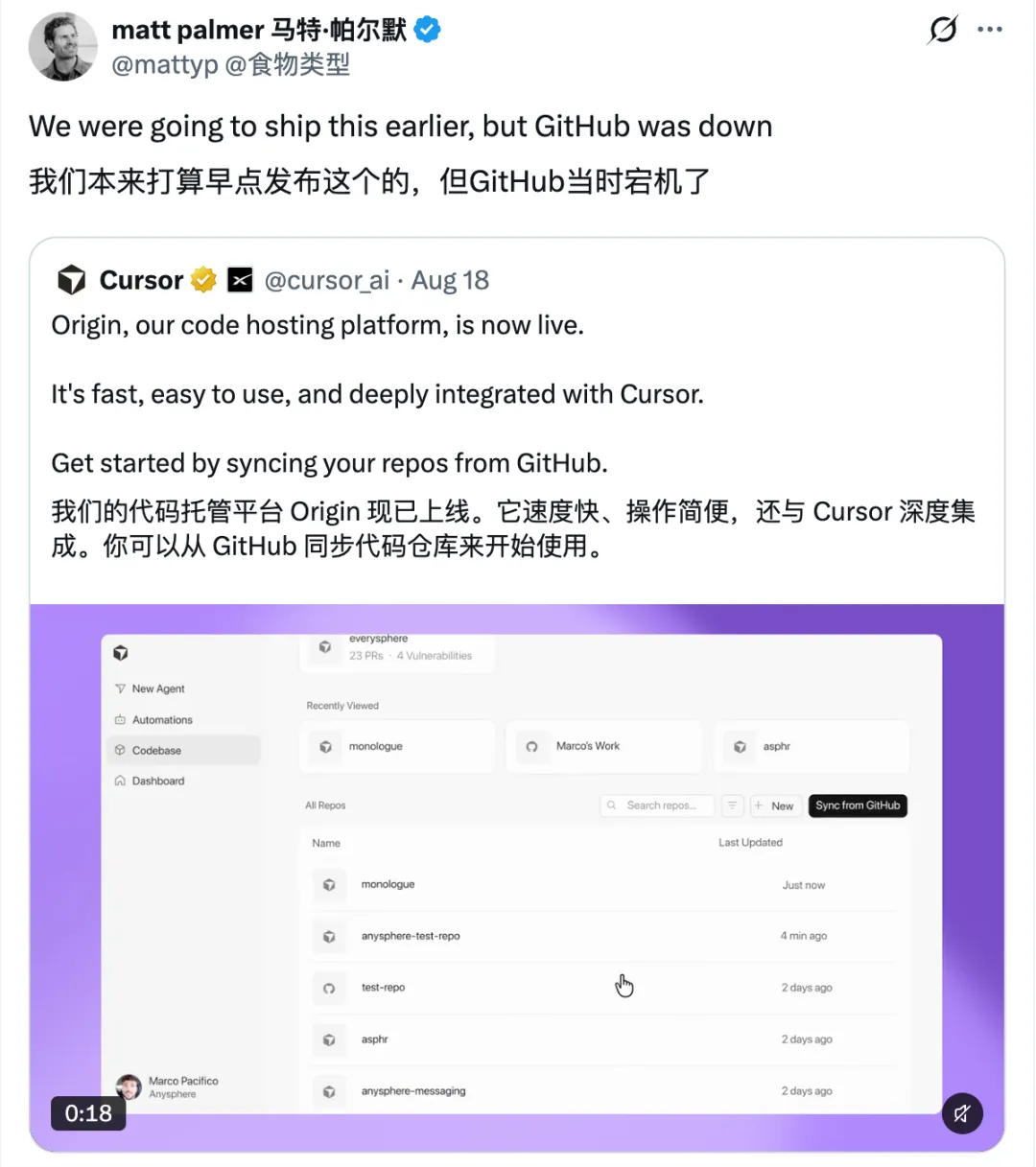
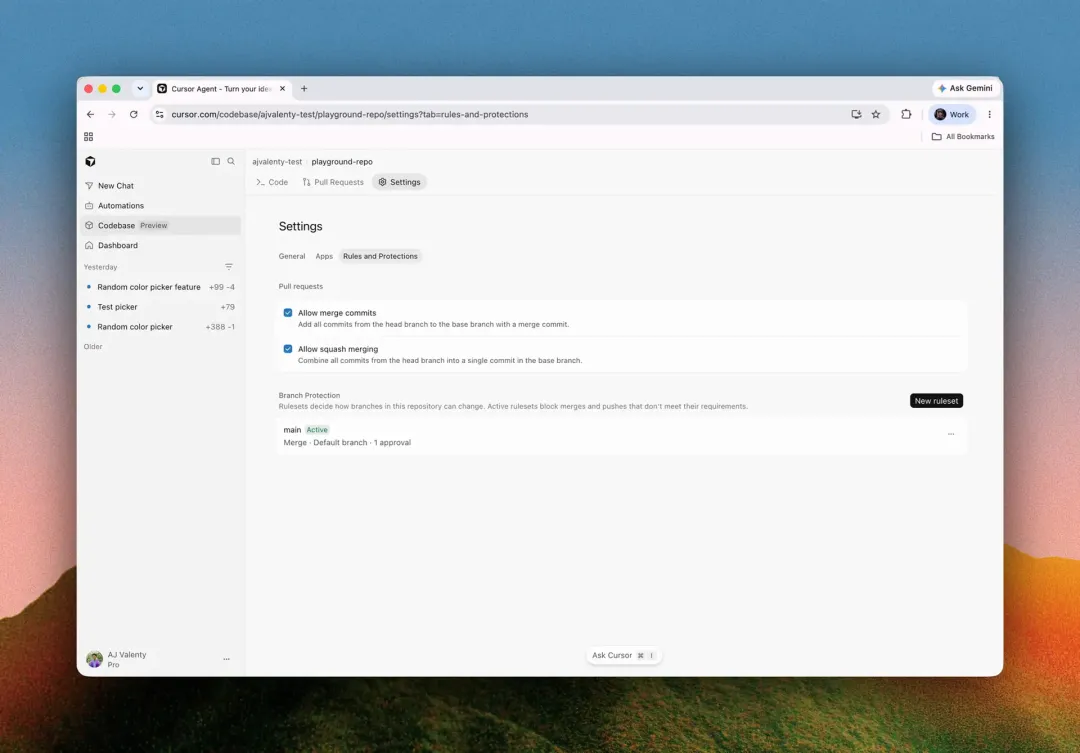
Origin gives developers two options: create a new project, build a warehouse directly at Origin, push the code to Cursor, ask for peer review, receive feedback, and merge branches, all of which bypass GitHub.
If an old project is already on GitHub, only one can be synced to Cursor.
The comments you left in the course, and the teammates back on GitHub can see that the code is still up to date with the version on GitHub.
The question arises:
Writing code, reviewing code, merging can all be done in Cursor, so why would I open GitHub specifically?
Even the old projects, the warehouses are still on GitHub, but the code reviewers can't go there anymore.
Claude wrote too fast, and Anthropic himself made a set.
OpenAI and Cursor have incorporated more development operations into their products, and within Anthropic, the workload has grown to the point of requiring code management systems to be redesigned.
This is mainly because Claude writes code too fast...
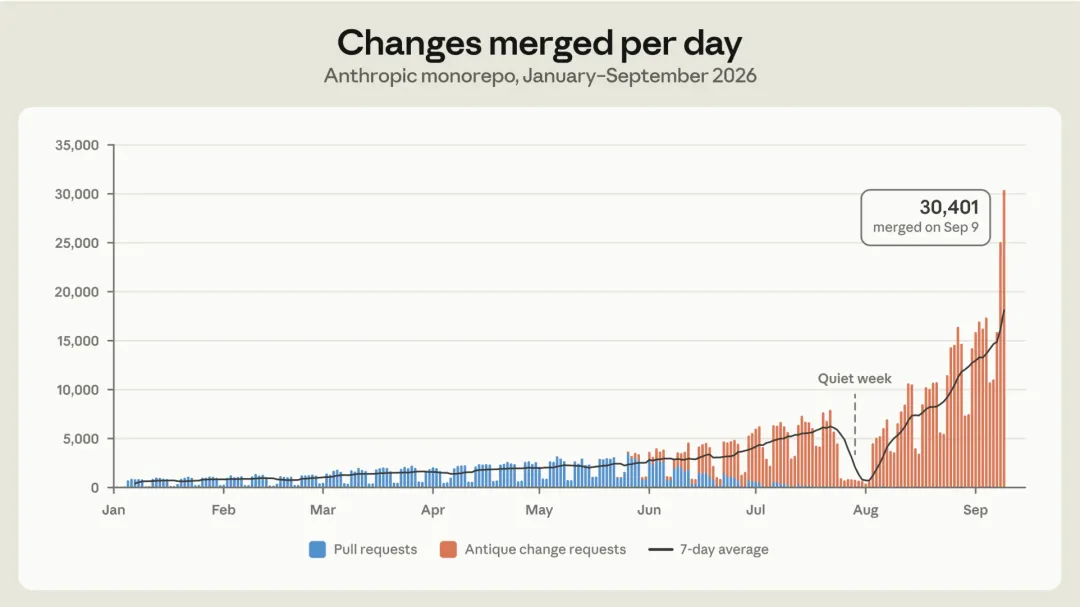
According to Anthropic, in May this year, the company combined an average of about 2,500 code changes per day. By September, it had over 30,000 changes per day.
This means that more than 30,000 changes are made to the code each day, which is integrated into the team's shared maintenance.
It is a continuous integration task for tasks such as automated testing, which requires about 25 million codes per day.
At its peak, the company maintained hundreds of Git mirrors and shared load with copies of these warehouses. The faster the available warehouses were updated, the more difficult these copies were to maintain.
Engineers found that most of the coding was done by agents and automated tasks that were always online.
Some tasks, just to find out how many lines a file has changed, why do you have to prepare a warehouse locally first?
And that's how Anthropic came up with it.Scion。
Which files are used by the client and which are taken by the client to the server.
Seven engineers, with Claude's help, spent five months developing the built-in version control system, along with the accompanying code review tool Antique, and relocating the company's main code library to the past.
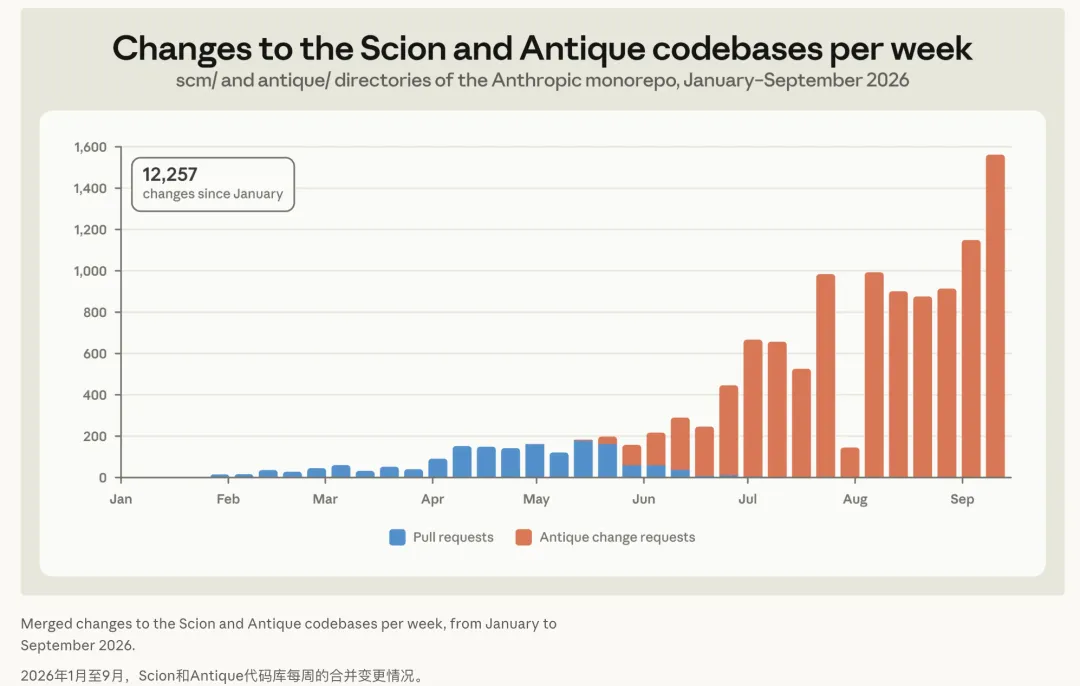
However, Scion primarily serves the large, frequently modified internal codebase of Anthropic.
Community resources such as Claude Code's Open Warehouse remain on GitHub.
Thirty thousand changes a day, who checks?
After getting the code faster and more smoothly, there is a more tricky problem:
How do you judge whether these changes are useful or not?
In a recent interview, Anthropic said:Addy OsmaniThe following is a description of how they did it:
First, let Claude do a round of reviews and condition it to run the functionality like a real user.
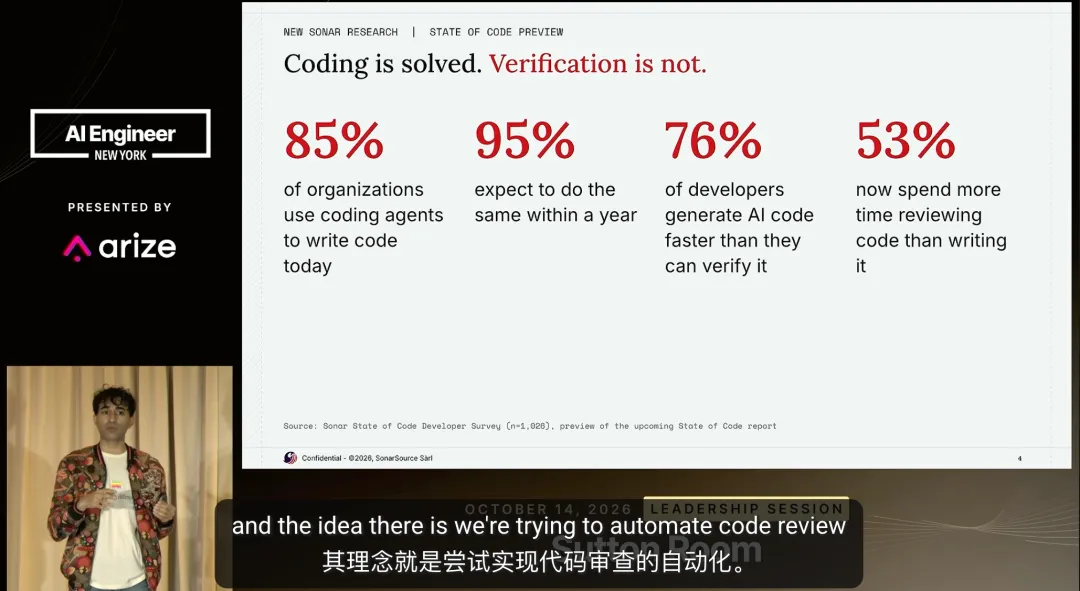
For example, a web page is changed so that it opens the browser, checks the page, operates the functionality, and then runs the necessary tests.
The engineer then reviewed the verification evidence it provided, including the video of the operation, the screenshot of the page and the test results.
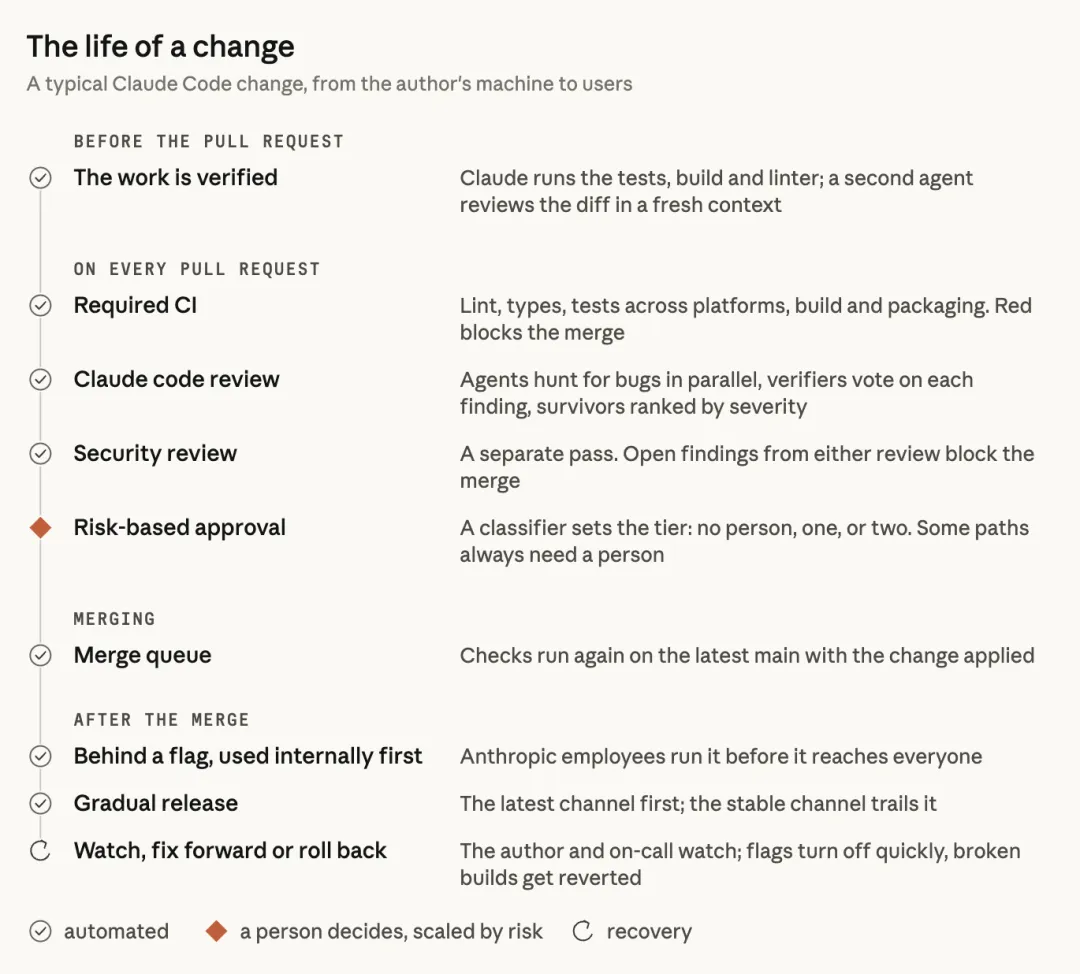 Code modification checks and release processes announced by the Claude Code team
Anthropic's engineering blog also mentions a more troubling scenario:
During a test run, the code curry may have incorporated hundreds of changes.
On such a scale, the team found it difficult to coordinate the queues efficiently using warehouse-wide locks, so they focused their efforts on automated testing after the merger and before deployment.
The company also acknowledged that further modifications could still lead to conflicts.
They claim that Claude is usually able to resolve conflicts faster than humans discover, but have not disclosed the corresponding quantitative results.
One More Thing
If you read this, you might think,What about GitHub?
GitHub, in fact, isn't staring, and it's rebuilding the basics itself.
On October 28, it disclosed that 4 million new CPU cores and 160PB of high-speed storage had been added this year and continued to migrate services to Azure.
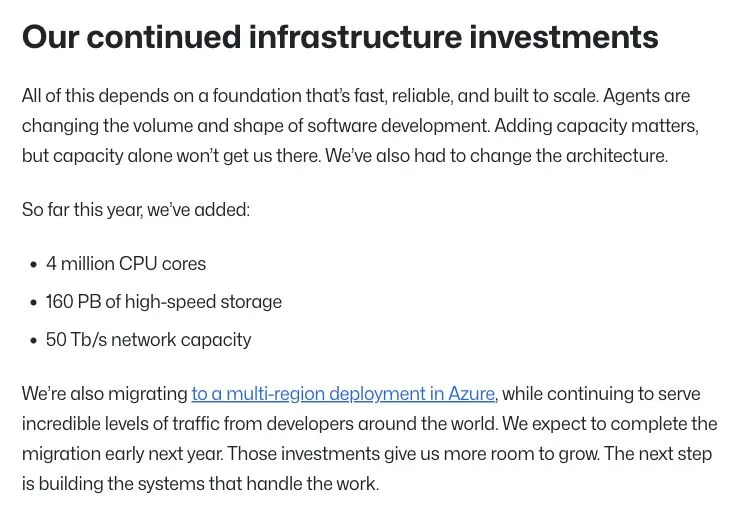
In addition to adding resources, the original line-up has to change.
In the past, even if several Agents each submitted modifications at different branches, they may still be waiting for each other at the same warehouse's write-in link. GitHub is making these updates processed in parallel, reducing unnecessary queues.
The left side is lined up by the entire warehouse and the right side allows for parallel updates of references to different branches.After the code is entered, there will also be a large number of automated test tasks for use.
GitHub is also separating the resources used to read and write. More coding tasks are being assigned to the services responsible for reading, reducing resource clashes on both sides.
These reforms are still progressing in stages.
OpenAI, Cursor, and Anthropic began hosting their own code, while GitHub was also transforming its own infrastructure.
So we're all dealing with the amount of development work that AI brings.
As for the people we use, the demand is very simple:
The code is written, the check is done, ready to go in, but don't give me any more crap...

The link is as follows:
[1]
[2]
[3]
[4]
[5]