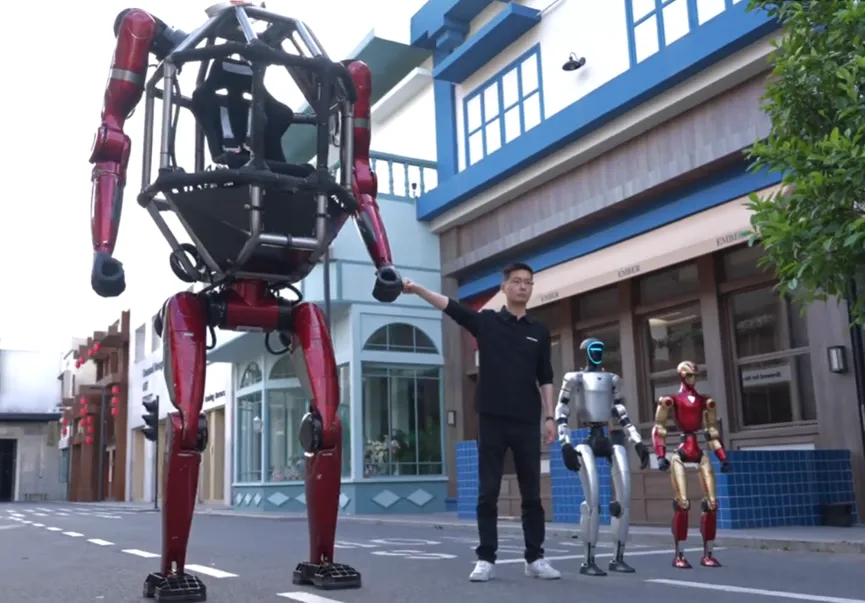
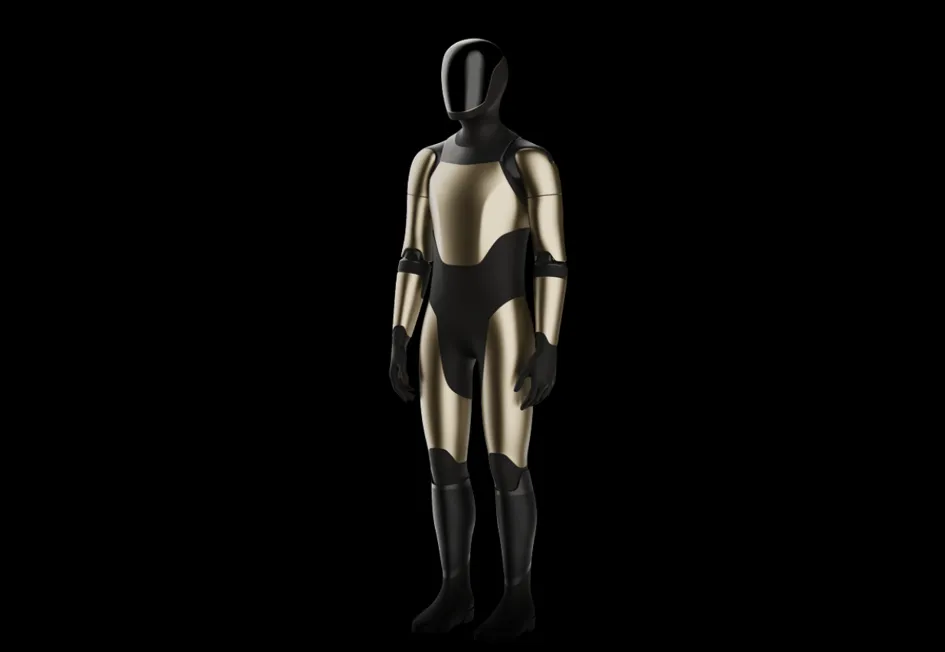
This morning, Anthropic unveiled two top models, Claude Fable 5.2 and Mythos 5.2. The new model demonstrates many achievements in scientific research, including the formalization of the proof of Fermat's theorem in just 30 hours through the collaboration of about 1,000 AI-intelligent agents.
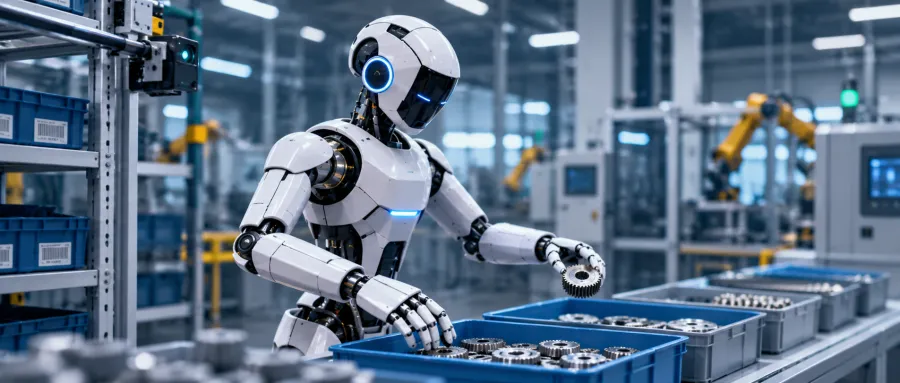
In this update, the ability to control robots is also highlighted. In the official publication, the Science and Engineering section specifically set up the "Hardware and robots" sub-section.
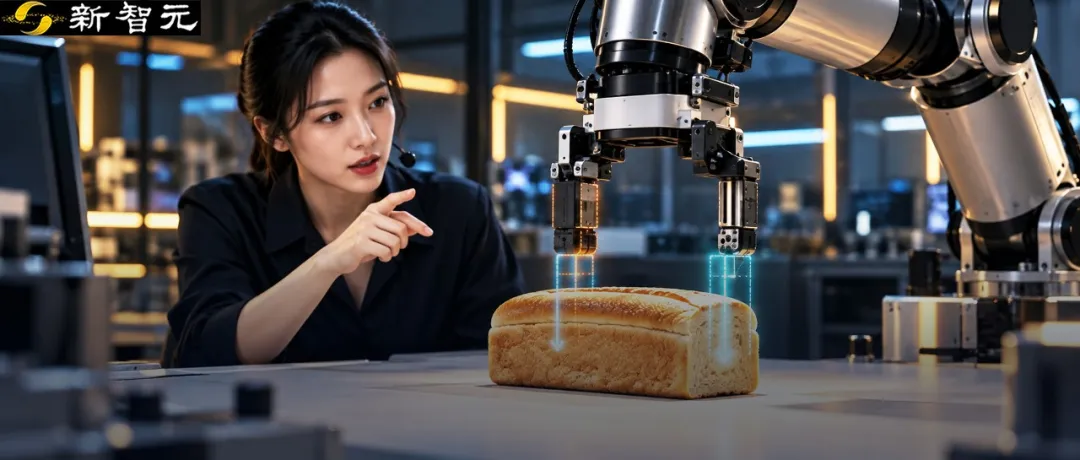
In the official demonstration video, Claude Fable 5.2 controls the robot to complete tasks such as operating smart blocks, opening bottle caps, and drawing robot patterns.
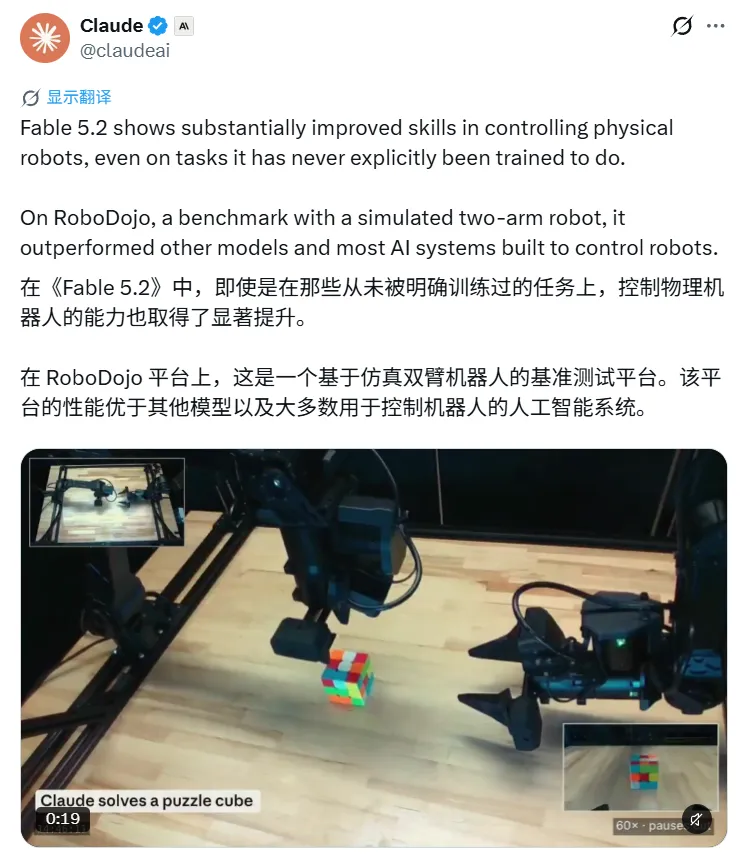
According to data released by Anthropic, Claude Fable 5.2 scored 64.9% on the RoboDojo Sim, up 27.6% from the previous generation of Fable 5.1 by 37.3 percentage points, also surpassing Claude Opus 5.5 ((39.4%) and GPT-6 Astra ((29.8%).
Anthropic also said that Fable 5.2 outperformed most AI systems specifically targeted at robot-controlled development in this assessment.
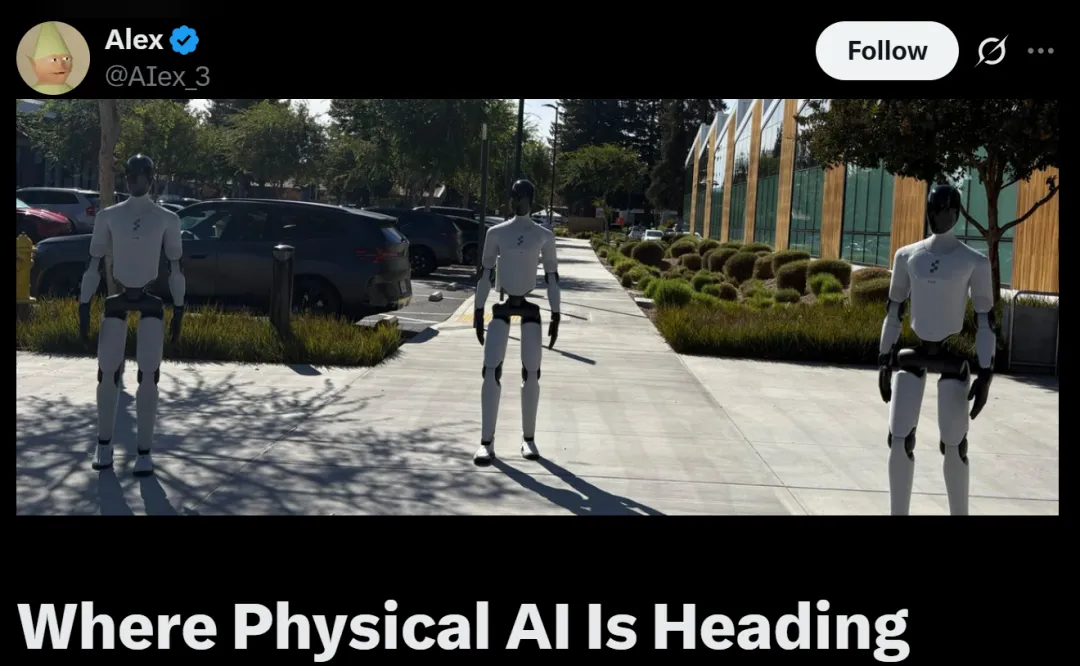
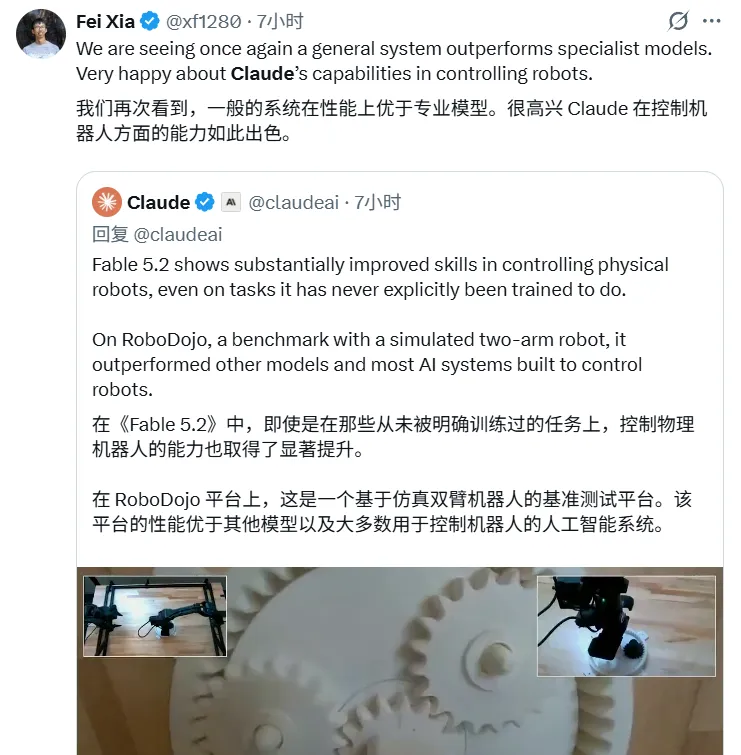 Alex Albert, Anthropic's product manager, said the "bitter lesson" of robots is here.
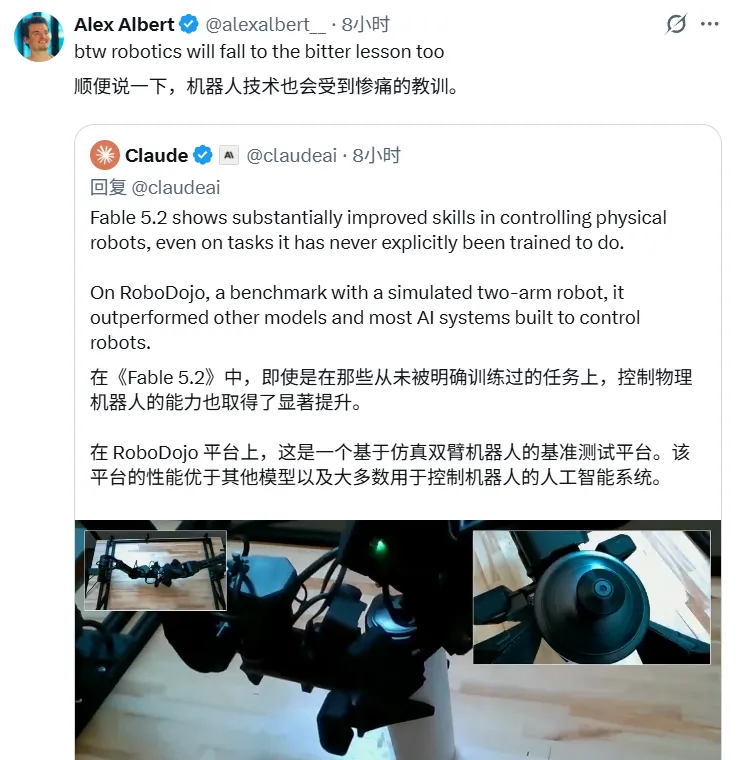
Meanwhile, Bingjie Tang, a researcher who worked on the development of the Tesla Optimus humanoid robot, has also joined Anthropic. She has previously worked primarily on robotic sophistication, strategic learning and real-world deployment, and her research background forms a notable intersection with the robotic capabilities recently demonstrated by Anthropic.
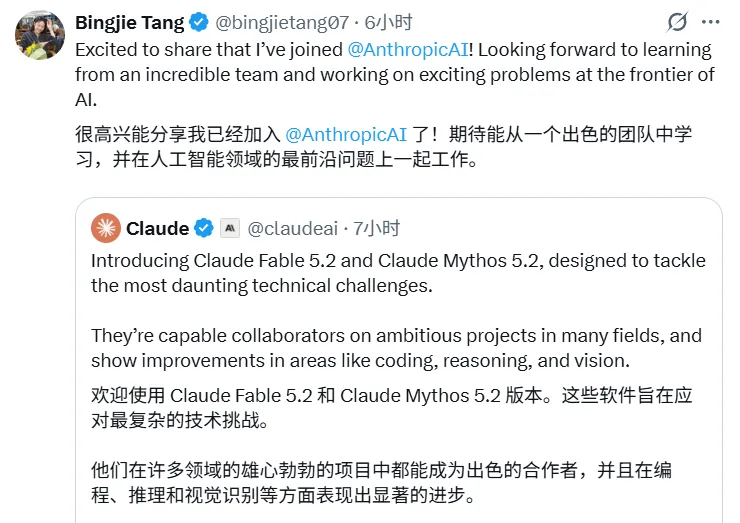
Anthropic is expanding Claude's robot control capabilities
In fact, Anthropic has released a number of studies on robotics this year.
In July, Anthropic released the Claude plays robotics puzzle, which tested Claude's performance on simulated robots, mechanical arms, and real quadrupeds.
Researchers experimented with a variety of control methods, including generating underlying control instructions, writing controls, and invoking pre-trained robot strategies.
The experiment found that Claude already possessed a certain ability to understand and plan operations in the robotic environment, and that specific performance was influenced by factors such as control interfaces, accuracy of action, and delay in reasoning.
In October, research institutions such as Robocurve published a paper titled The Bitter Lesson Comes to Robotics to further evaluate the ability of front-end general multi-mode models to control real mechanical arms.
The study found that the general model was already capable of performing multiple physical robot-operating tasks, with the corresponding capabilities continuously improving over several months. At the same time, operational accuracy, execution speed and reasoning costs remained important constraints in practical applications.
Jay Chooi, one of the paper's authors, also cited a "bitter lesson" in robotics on social media after the release of Fable 5.2.
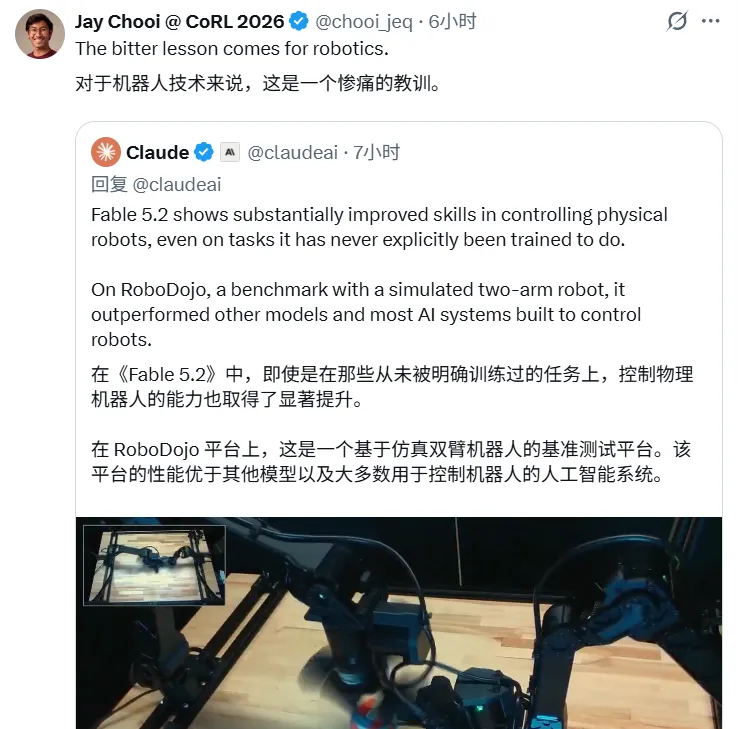
The "bitter lesson" comes from a classic view in machine learning: As computational resources and model sizes grow, general learning approaches tend to be more competitive on more and more tasks.
Today, this discussion is also beginning to extend to the field of robotics.
As general models' visual understanding, spatial reasoning, and task planning capabilities continue to improve, researchers are exploring the extent to which they can function in robotic control systems.
Previous Tesla Optimus researchers joined Anthropic
At the same time as Anthropic demonstrates its robotic abilities, a message of talent flowing has also attracted attention.
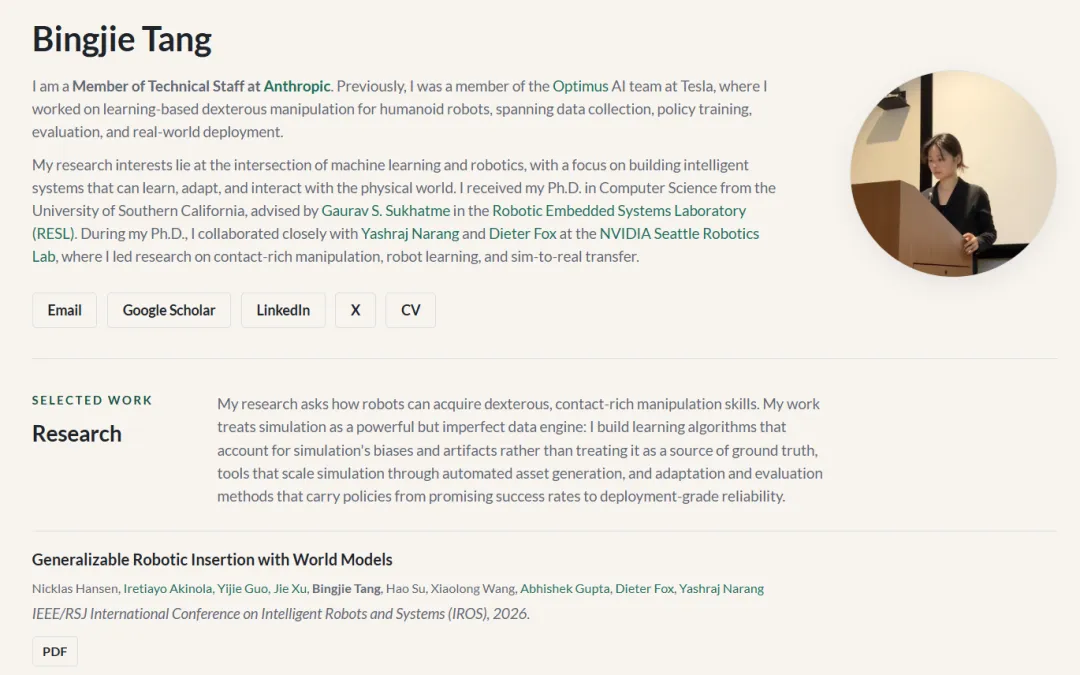
Bingjie Tang, a researcher who worked on the development of the Tesla Optimus humanoid robot, recently confirmed joining Anthropic as a Member of Technical Staff.
This is the first time I've seen this.
Previously, she worked for the Tesla Optimus AI team on learning agility, including data acquisition, robotic strategy training, evaluation, and real robot deployment.
Prior to joining Tesla, Bingjie Tang earned her Ph.D. in Computer Science from the University of Southern California. During her PhD, she worked closely with researchers at NVIDIA Seattle Robotics Lab, conducting extensive research on robot operation, robot learning, and Sim-to-Real.
Among them, Sim-to-Real is one of the important directions of current robotic learning, primarily studying how to migrate operational strategies trained in a simulation environment to real robots.
In the real world, friction forces, contact states, object shapes and hardware errors affect the performance of robots, so there are still a lot of technical problems to solve, from simulation training to real deployment.
Bingjie Tang has previously been involved in research such as Refinery, FORGE, and other studies involving robotic strategy learning, real interaction and operational adaptation.
From a personal background, she has research experience covering data, algorithm training to real robot deployments, with strong technical associations with the robotic capabilities recently demonstrated by Anthropic.
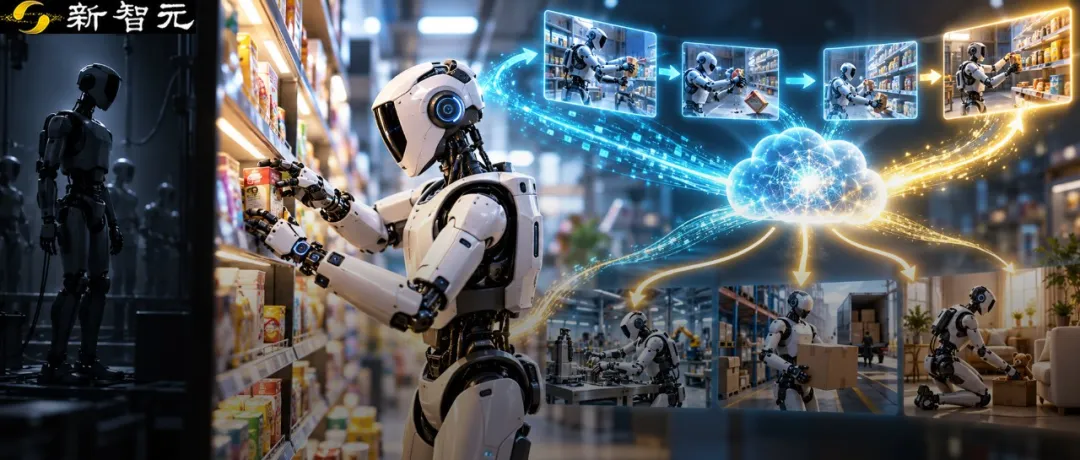
In 2026, physical intelligence continues to warm up. From world models, space intelligence to robot-based models, more and more AI companies are beginning to explore the physical world, and the robotic control capabilities of general large models are also progressing rapidly.
What role will they play in future robotic intelligent systems as the capabilities of General Large Models continue to improve? What new developments will Anthropic bring next?