


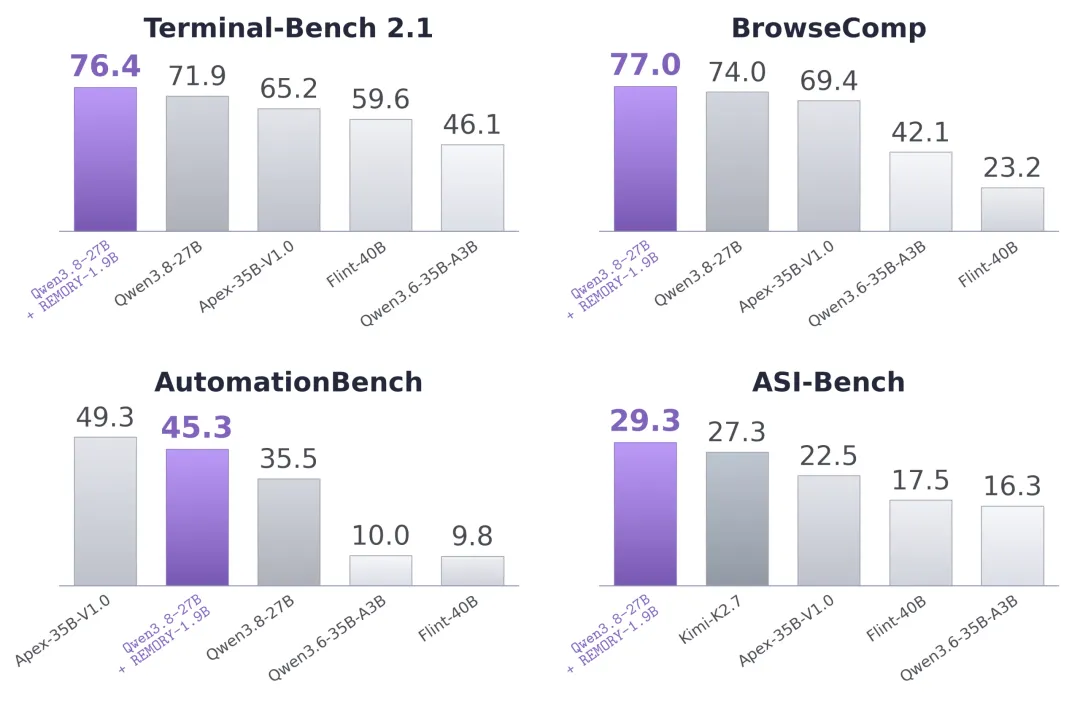
After attracting attention with Apex-35B-V1.0's performance with the leading Flint, the open-source RSI model launched a brilliant scorecard: REMORY, with only a 1.9B memory module, achieved fully self-monitored training with two H800s, leading the way in several critical assessments; the driven small model continued to improve for several days, producing close to GPT-6.1-Terra.
The first author of this article, Shahan Han, is a researcher at the Shanghai Institute of Science and Intelligence, whose research focuses on auto research and intelligent memory. The author of this article, Jussinge, is a professor at the University of Pudong, AI scientist at the Shanghai Institute of Science and Intelligence, and a full-time instructor at the Shanghai Institute of Creative Minds.
Link to the paper:https://arxiv.org/pdf/2610.11287
This is the first episode of the series.
It's the first time I've seen it.
The main page of the Star-Spangled Banner:
Recursive Super Intelligence, led by Richard Socher, former Chief Scientist of Salesforce, and co-founded by former Meta-Star researcher Tan Tan Tan and top talents from institutions such as OpenAI, Google DeepMind, released Flint 40B on October 22; then, on October 28th, a spin-off from Super Intelligence, founded by Chen Zhao, assistant professor at the Chinese Institute of Artificial Intelligence, released its first flagship model, Apex-35B-V1.0, dedicated to the RSI industry.
Compact to keep the experience going
2M? 1M? or 0.2M? An agent dedicated to completing long-term tasks or long-term interactions with users triggers context compression when its working memory approaches the limit of the context window. This is a consensus that almost all Harness companies, such as the Codex CLI/Claude Code, have built-in /compact commands.
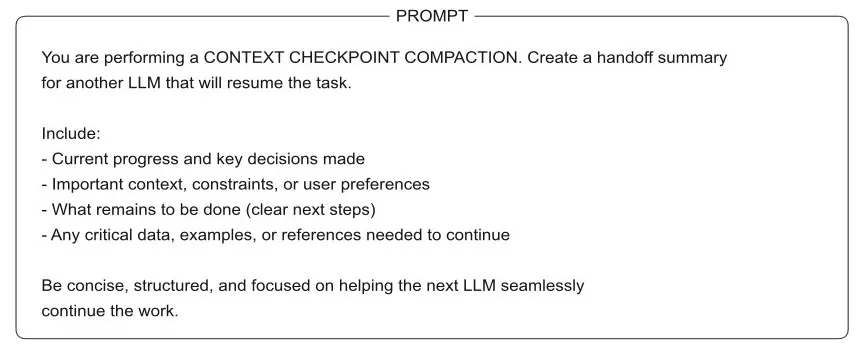
Standing at this point and reviewing the agent's nearly two-year evolutionary history, /compact seems to be enough.
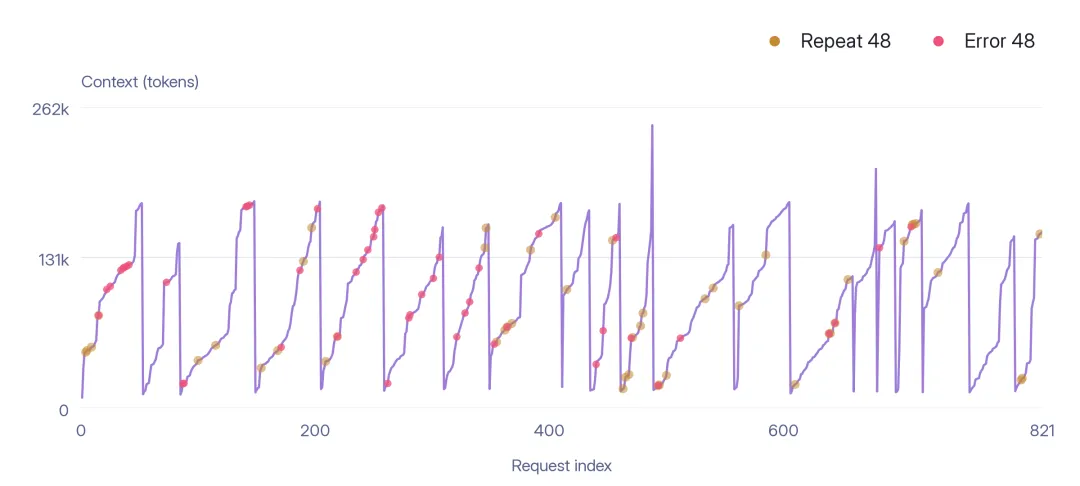
The diagram below records the process of growing, compressing, and growing in the context of Qwen 3.8-27B's Core War mission in Terminal-Bench 2.1. The red and yellow dots represent tool retrieval and repeat output respectively. REMORY is the memory continuity of this long task that needs to be improved.
REMORY: Memory residues caused by context compression
When /compact occurs, we get a summary, the raw context before compression, with the summary involved in memory construction, cross-attention into the REMORY model, generate a set of residual tokens, and then attach them to the back of the summary to continue the task for the main model.
The residual tokens here are continuous vector-shaped soft memories that can directly enter the input space of the main model. They are generated as a conditional summary and are spelled sequence dimensions with the summary, which is why we call it a summary "residual".
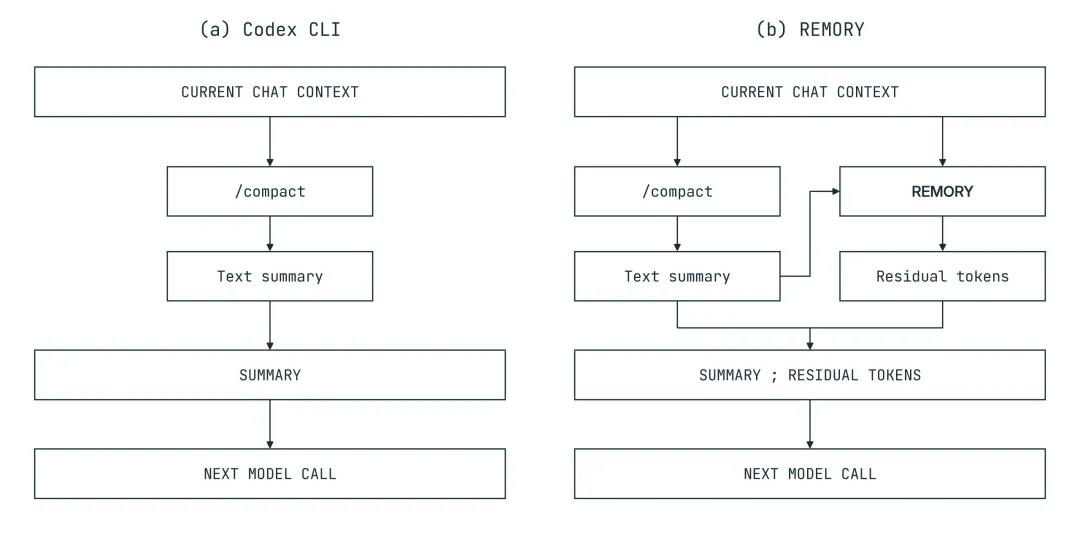
The entire training process is self-supervised, the base model weight is frozen. The first stage is through content reconstruction, allowing the memory module to retain the source information; the second stage, as a summary condition, continues the follow-up behavior supported by complete history through KL scattered learning. The gradient passes through the main model, freezing, only updating the REMORY parameter of about 1.9B.
Tools report almost halved, generating a third drop in spending
The memory gains are also reflected throughout the execution process. In Qwen 3.8-27B's Terminal-Bench 2.1 assessment, the tool error decreased from 933 to 568 times, and the repeat output decreased from 459 to 377 times; the average token billing cost per task decreased from $4.29 to $2.86, down about one-third.
In BrowseComp, the tool error rate decreased from 25,244 to 12,698 to 49.7 percent; repeat output decreased from 25,801 to 18,105 to 29.8 percent.
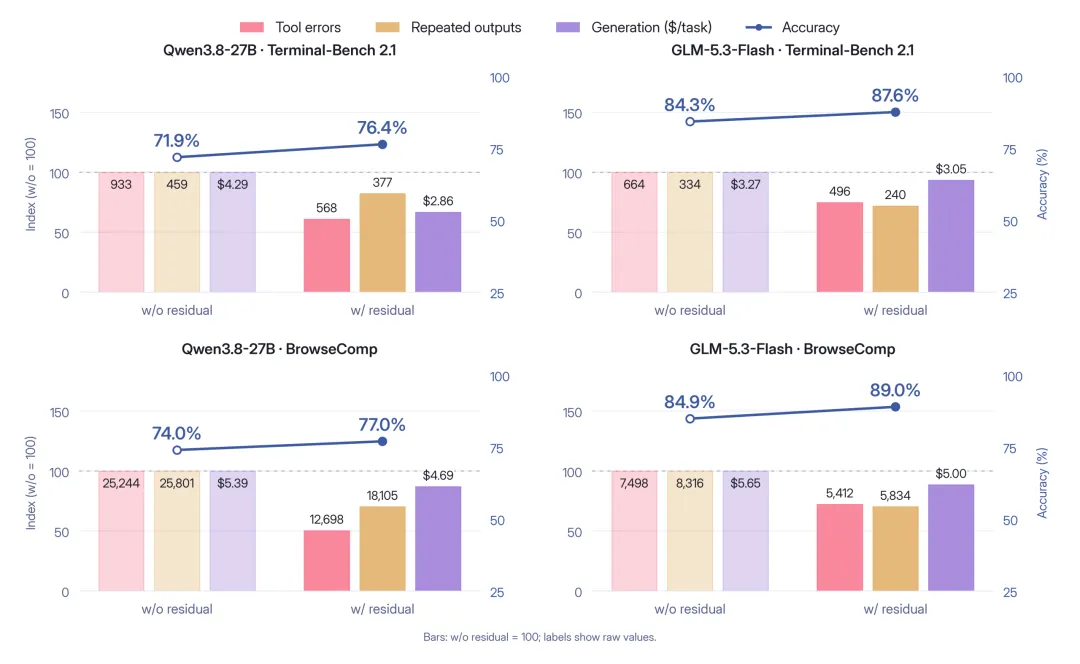
REMORY's gains also extend to stronger models and MoE architectures: GLM-5.3-Flash increased scores on Terminal-Bench 2.1 and BrowseComp from 84.3 and 84.9 respectively to 87.6 and 89.0 respectively. Adding residual memory in controls that are consistent with the execution configuration of their respective main models simultaneously leads to improved scores, reduced reporting errors and decreased repeat output.
Human-on-the-loop automation research
In order to test REMORY's effectiveness in research work, the team invited several cross-disciplinary scholars from the University of Regina to continue their collaboration with REMORY-driven automation research agents. The researchers gave directions and feedback only through dialogue.
Over the course of several days, REMORY-driven automated research co-worker agents continue to read the literature, build experiments, reproduce baselines, analyze results, improve methods, and revise papers. At the same time, context-compressed data is collected each round, training memory modules, and achieving fully self-monitored iterations and hot updates. Scientific research often transcends literature reading, hypothesis proposing, code implementing experimental analysis and program revisions, with previously obtained evidence, attempted pathways and failures that may affect the next judgment. If each step crosses the boundary of the context, it is necessary to recover the working state, the continuing efficiency and reliability of the research will be affected. REMORY can continue to explore the model in the following stages of tasks, in a limited window of technology that requires extensions, and in the following stages of the task.









