Transition from school to management company
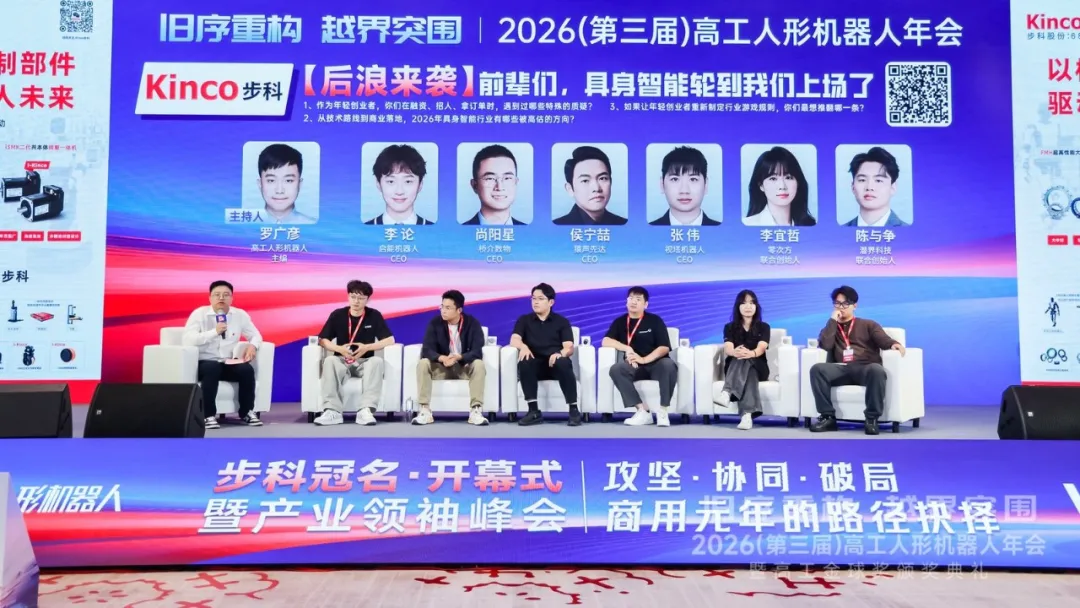
The first question that the host of High Artificial Robotics, director Ro Giangyan, asked them was, what was the biggest shift from school to company?

High-profile robot directed by Rogoyang
For Li Yi, the biggest shift was in identity, and during Liu Min's time as a student of AI, he went from being a purely research-based, purely R&D-based researcher to a person with more product thinking and company-operating thinking.
Chen struggled with similar cognitions, but they used the company's organizational architecture to bridge the gap from school to company, so I don't think we're purely a research team.
Lee's theorem is the cognitive transformation from industrial manufacturing to identity transformation. He says that after the 00's, I really want to be an AI-born company, with all the decision-making links and data collected by the company all on AI. If a link needs a HC, a job, we can do that job by doing a software or an Agent.
But in reality, being physically intelligent is essentially a part of manufacturing, which needs to make things and sell them to others.
While many of the company's products have entered the quantity stage, the problem of how to solve materials, process quality checks, shipment quality checks, etc. in the mass production process is not something that is learned in schools, nor can it be solved by adding an agent or a set of software as originally conceived. It still relies more on experienced engineers and quality management systems, which use these specialized systems to ensure that products are controllable when bulk is exported.
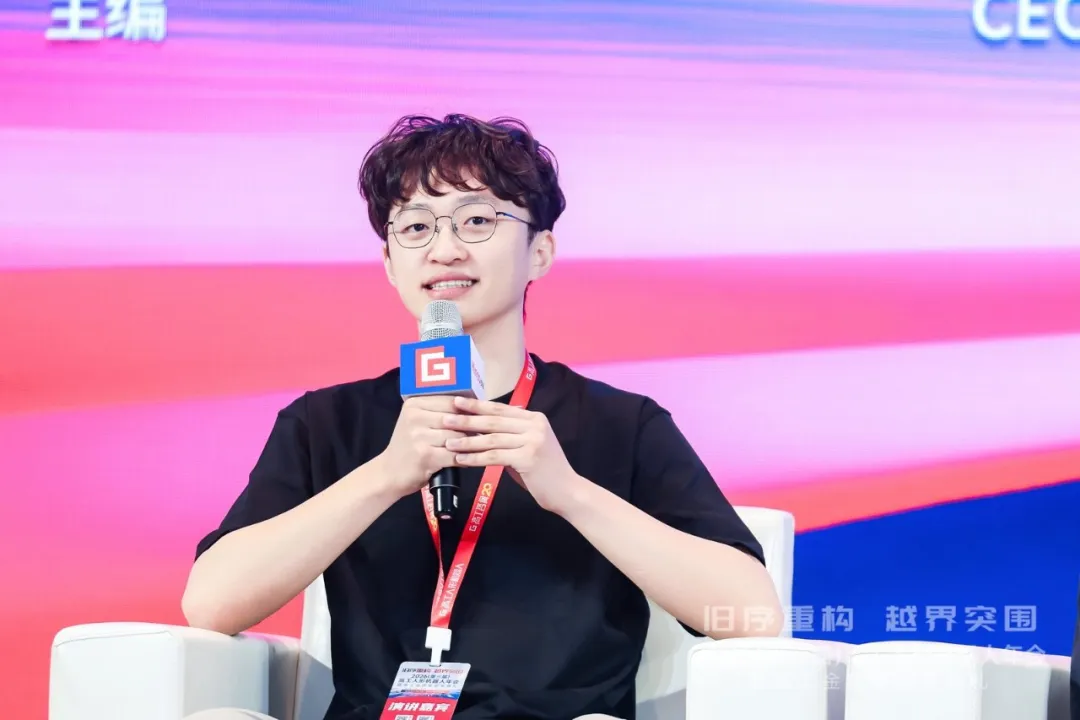
Powered by Robots CEO Lee
Zhang Wei holds a similar view that AI management companies are not the key to AI management, but to AI management.
He said that the fact that we are in the manufacturing industry, both tactile and data-gathering, is essentially still a traditional manufacturing industry. At first I thought the same thing as everyone: how to use Agent directly to do production and quality management. Then we asked the companies that do MRP, ERP, and we found out that MRP and ERP are essentially the form of management software.
Now I'm doing a lot of my own work on AI for the whole company, but I'm not going to write the code myself. We're going to have a dedicated team to do this part to maintain good AI capabilities and strategies for the entire business and service.
Zhang Yan-starr is talking about becoming a manager, saying that after becoming a manager, you will find that you don't have time to do technical research in person. Instead of spending some free time on line work, instead of spending more time on how to get more good people to do things right.
Hsien Loong also started out as a manager, focusing on the integration of the company as a whole rather than the technology itself.
He admits that a company's growth has taken place on many levels. We also took years of technological paths in academia, spent a year studying every process, every step of mass production, and eventually pushed it to mass production and then to the current bulk shipments. In the process, we will find that the front lines are growing.
From my point of view, my job is more to draw from very specific techniques, or from every technical detail, to ensure the stability and efficiency of the entire organizational structure.
From the point of view of ROI, we will also be moving towards this, because this will be more efficient for the whole organization, rather than focusing on every technical point. Of course, when faced with very difficult problems that need to be tackled, it takes all the smartest people in the entire founding team to get to this point to solve the problem.
Challenges of Basic Big Models to Body Models
Obviously, six entrepreneurs have fully adapted to being managers. Their perspective is no longer limited to technology or academia itself, but to thinking about issues from a company and industry level.
The second question facing the three big models of bridge-medium, zero-dimensional, sub-dimensional technology and corporate enterprises is also very topical today: will operating systems and large-scale models be swallowed up by base models?
According to Zhang Yang, the frequency of the operating control system is mainly divided into three layers: the upper layer is the large language model, the middle layer is the body model, and the lower layer is the motion control. The movement control layer is the most difficult to swallow by the upper model, because the control frequency of the motion control is higher, requiring at least 100Hz; while the current upper layer model is very difficult to realize real-time reasoning and get better results on the edge.
In the long run, robots will definitely need to run offline. Since end-to-end reasoning does not work for a while, even if someone proposes a networking scheme, using the network to control robots will cause safety problems, and in the long run, efficiency is not the highest. For example, people do not need to think when walking.
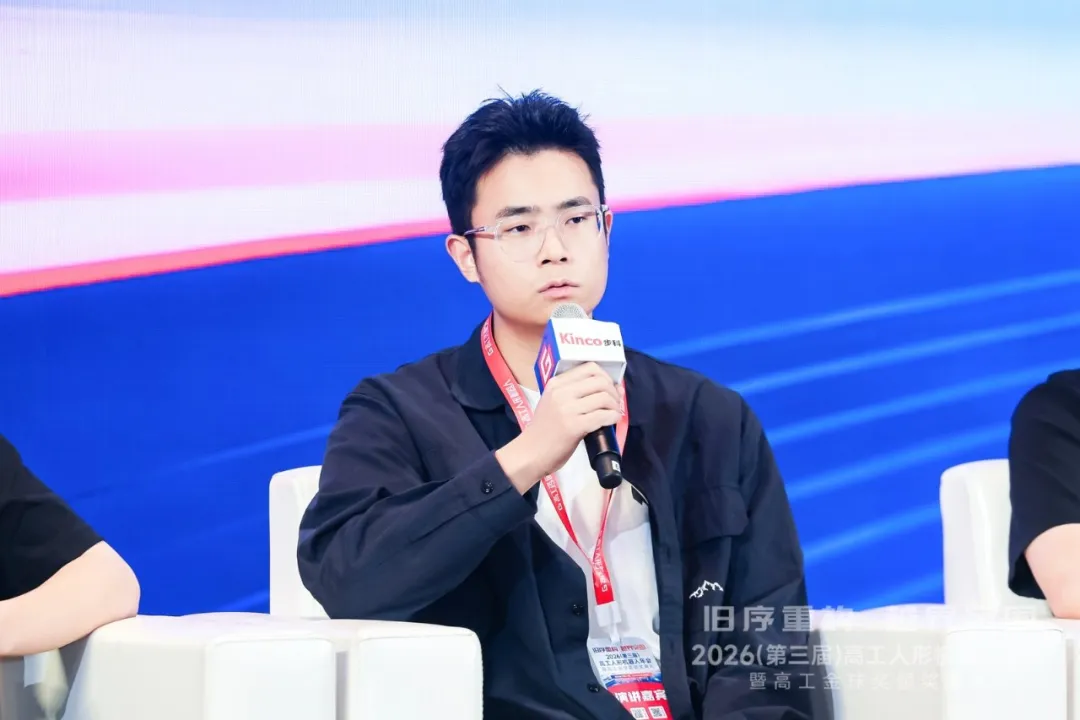
SHANYANGSTAR, CEO of Bridge Intermediate
Starting from the complexity of the model, Li Yijie said that the intelligent future would like to achieve universal robotics to the extent that everything can be done. It must be a very complex system, or a very large cake, with each module or corresponding technology module having a fixed ecosystem. For example, the current multi-module base model, Astra, may be better suited for long-range understanding of user preferences, as well as the super-long-range task-level layout.
On the one hand, the current frequency of reasoning is limited for each specific action; on the other hand, there are more problems related to physical interaction in the real world, such as friction, slippage, and other factors related to real operations. Therefore, it is more likely that, in addition to the long-range base model for task-level, closed-loop tracking, there will be models specifically for vertical scenarios that require higher accuracy and faster reasoning frequency.
She said that in order to achieve the general operating vision we expect for the future in the world of virtual reality, the task dimension is higher and the system is more complex than what we used to do in pure PC end-to-end languages. Many of our technical links and modules are part of the complex machine operation.
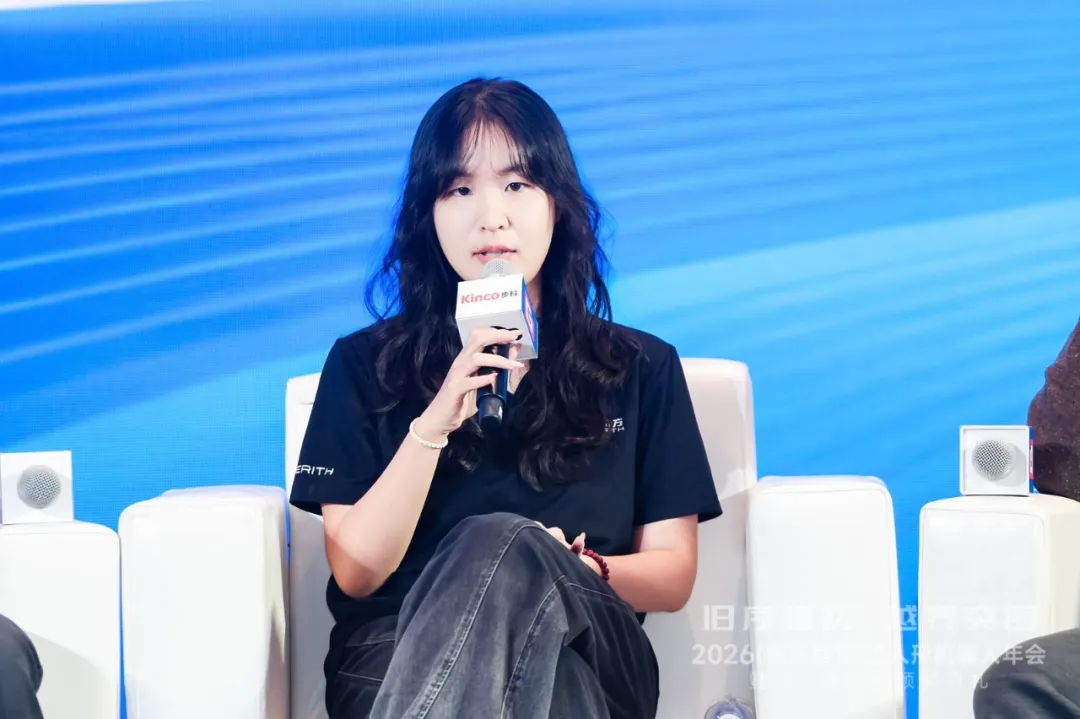
Co-founder Li Yi-jeong
Chen did not go along with the comments of the two guests, but instead gave a denial answer, claiming that Astra did bring shock to the body model.
He pointed out that we have a relatively comprehensive evaluation of Astra internally. When it was first used, it did have a huge impact on us. I have always thought that the large language models is relatively fractured with the physical world, and I never thought the two could be combined.
Subterranean technology has reportedly done several types of testing: the first is related to simulation, mainly through real-to-sim-to-real experiments with Astra, and testing the effects, which are indeed shocking.
Second, Astra has a huge impact on the whole data spectrum, especially on ego data.
Chen added that for me personally, ego data is mainly used for semantic learning because its overall environment is relatively diverse, and most of it comes from the real world; but Astra's trend on instruction following is very clear. In the future, the marginal effect of ego data will tend to be zero.From this year to next year, it will be essential for corporations, especially foundation model companies, to identify their own scenarios. Everyone should strive to make System 1 good, meaning that the entire control is fluid enough to solve many problems.
In real-world scenarios, you'll find a lot of problems to solve; it's not easy to do a lot of things with a single model. Five out of 100 problems may have been solved, and 95 are still unresolved. So many foundation model companies should slowly explore what kind of scenarios, what kind of ecosystems are right for them.
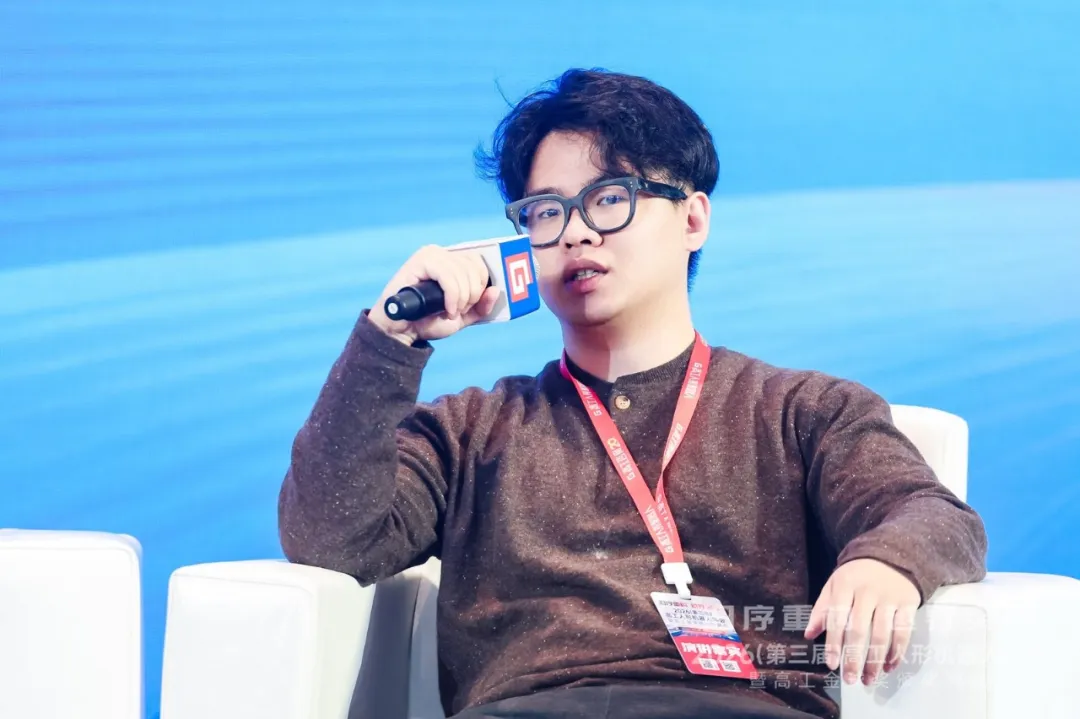
Underground technology co-founder Chen Tan-qiang
The practical use of touch
And the third question is, what do you think is the actual proportion of touch that's actually applied to the larger model now, or is it more than just what people think it should be?
He combined the reality and judged that all SOTA models on the market did not see a tactile model for the time being, or could reasonably use a tactile model to achieve a significant improvement in overall operational capability.
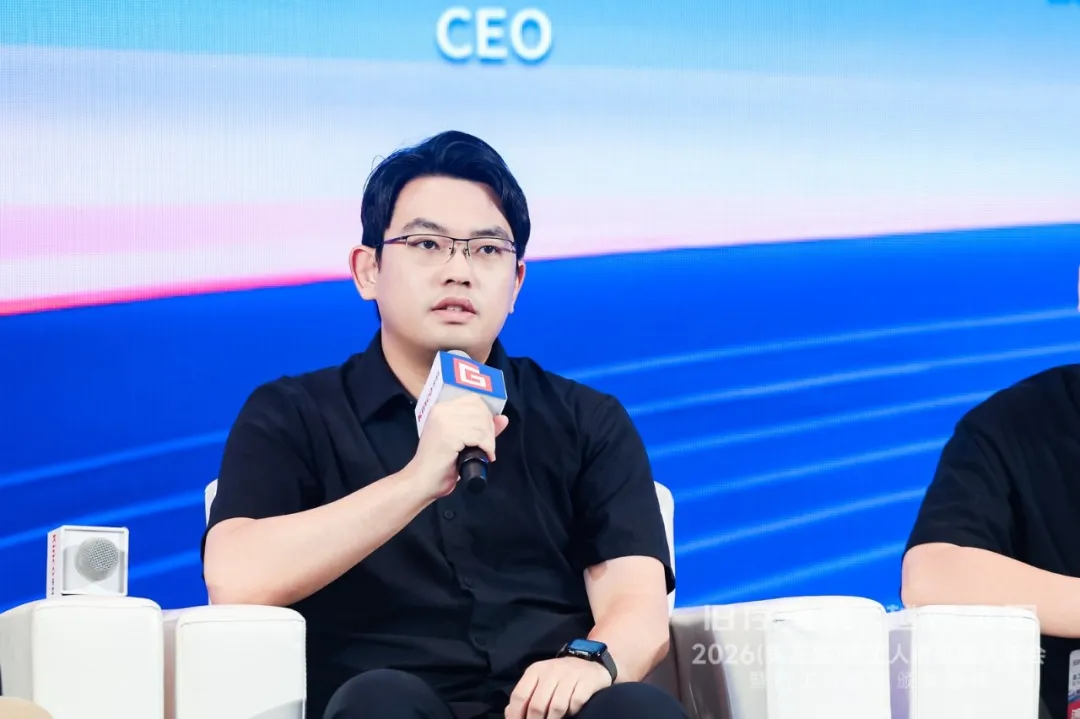
The Monkey Voice reached the CEO, Hsien Loong
He pointed out that the reality is that all SOTA models currently do not contain touch modules. Including the most cutting-edge reinforcement learning (RL) studies, there has been a lot of work to incorporate touch relatively more into reinforcement learning, such as turning forces, multidimensional forces, and more complex models. But at the model level, most of the strongest studies we've seen still use touch as a bulk or switch quantity.
Many models are now ultimately intended to chart, and the list data itself may not contain a tactile model, leading to a lack of attention to this direction.
At the beginning of this year, Lifeifeifei teacher published a paper on the tactile architecture of T-Rex. After the paper, more relevant papers appeared, some solving the problem of tactile frequency, some solving how to unify different sensors.
At the same time, Hooning also stressed that customers have a very clear need for touch, explaining that, first, customers make products definitely not for the current state, but for the product's long life cycle in the future. So everyone will predict, or from the first principle, the next model to be added is touch, so everyone will consider adding touch when making products.
Zhang Wei, CEO of VITAR, gave a very intuitive data, based on his statistics of all models released this year, including last year, in which the proportion of models with touch may be as low as 10%, up to 15%, and the proportion is very low.
It is known that in the model of making touch, the pressure resistance is relatively less, and the top work is still mainly visual touch. This is because, for a long time before, everyone was focused on long-range tasks, now gradually shifting to contact-intensive tasks, and the requirements for operation accuracy are gradually improving, so more and more people are starting to focus on touch.
He said that in GPT6's native understanding of tactile data, we found that it already has some understanding capabilities. Of course, this may also be because our tactile signals themselves are biased optically, but I believe that suppressor-resistant tactile signals should also be understood.
Under this premise, when we did code policy identification, we found that adding touch to a model's operating success rate was a huge improvement.
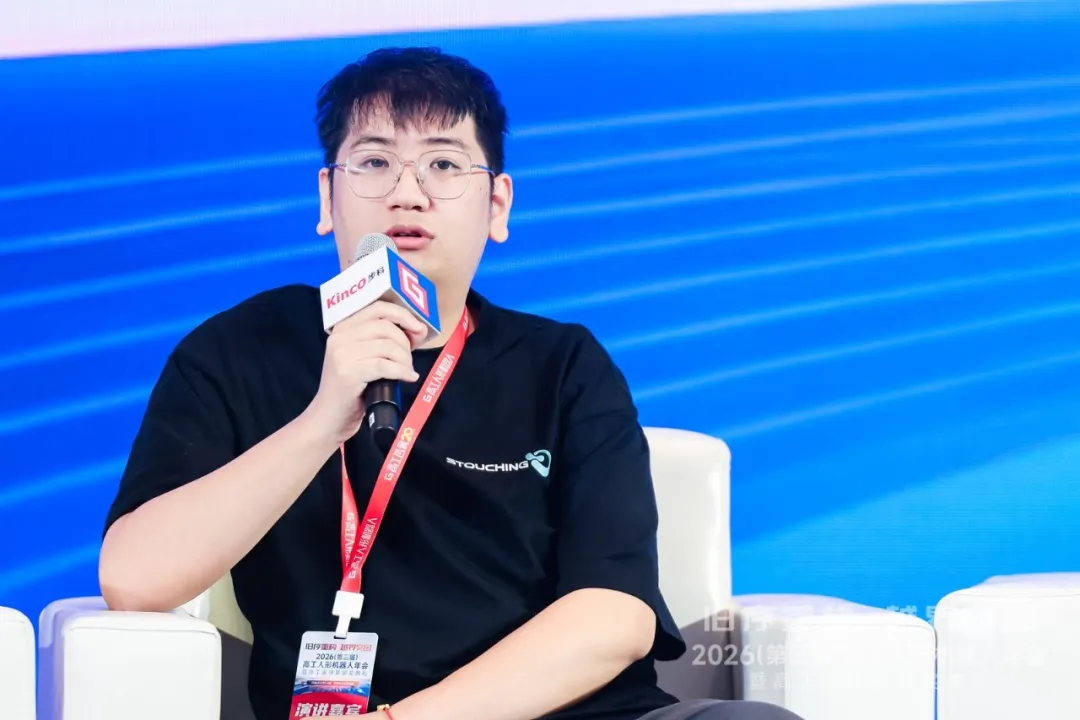
Zhao Wei, CEO of the Vital Tower Robot
Data collected from the Fortress River
The fourth question was answered by the enabled robot: Is data collection a high-tech industry at the moment, or could it be thrown out of the competition at any time?
Li believes that it is too early to talk about the city's river, but a product with a strong versatility may be the way out of the technological uncertainty stage.
He said that from the CNN era to the big model, the scaling law has proven this time and time again. In the end, we stand on a basic cognitive basis: data is important. But how to collect data, what data is like, how to extract it is not yet clear.
But there's one thing that doesn't change, which is that what you've encountered in this is something that needs to be solved before you can go on and on.
For us, we think that our walled river should be a shared project. We did this without the need for people to rebuild the wheel.
Hot words for smart people
After discussing the topics in which six entrepreneurs are good, there's one more open question: What are the most overrated technical concepts, parts, or vocabularies in 2026, and what do you think are the most underestimated?
Hooning-ho, from a macroscopic point of view, explains that both overestimation and underestimation are more about consideration and expectations about timelines and universality.
From this year's perspective, we have overestimated the universality of what is possible with physical intelligence; from the perspective of 2030 and 2031, we have underestimated the universality of what is possible with physical intelligence.
He believes that while we see that financing can be instantly charged, the first-tier market can be hot, but all technological progress needs to be stacked one step at a time, even stacked up by very small work, to reach a certain state, a certain critical point. Its universality is at a very low level, but the slope of development is very high this year; even if the slope is so high, it should not be expected that way.
At this slope, I'm very optimistic about what it can achieve in the years to come. It's more a question of the universality and timing between what it can achieve and what everyone expects.
In a similar vein, Li Yize believes that people are overestimating or expecting more this year, whether there is a technical route to make a general-size model and complete a variety of tasks. That is, there may be a slightly overestimated expectation of what can be achieved and the speed of technological development.
Chen pointed out from a rare perspective that the importance of the robotic end and its replacement was underestimated and the world model overestimated.
Specifically, during the entire commercialization landing process, the end of the robot and the replacement of the end were underestimated. After actually entering some scenarios, you will find that a claw does not solve all the problems. For example, a claw is required when extracting wafers in a semiconductor chip factory; if a claw is used to fold wafers, the wafers are easily damaged. And in this type of vertical scenario, sometimes the operation is extremely fine, sometimes the requirements for the end load are very high, encountering five kilograms, six kilograms, specifically carrying the wafer load, in which case it is necessary to use a disc.
At the demo level, there are not a lot of model companies and corporations that do the work to replace the entire terminal, so this is underestimated.
On the overvaluation side, Chen argued that people might overestimate a technical route, such as a world-action model, believing it could solve everything. Furthermore, the ego data of pure vision programs may also be overestimated because the action in this type of data is not particularly accurate.
He believes that in the past as a Demo it has gained a lot of acclaim and recognition, but the real shield river is actually know-how, over-estimated by some very high-level models of universality. We should get on the ground to do the work of System 1 to help the real industry solve some really good corner case problems, which is really valuable.
Zhang Yan-Star agrees with Demos being overestimated, but he emphasizes that demos in the field of sports control are overestimated.
He said that people often intercept clips, or see some mature robots performing well, to create an impression. But in reality, the combination of motion control and hardware inherent performance is strong; under many other working conditions or other actions, the robot does not have to perform well, only intercept clips that perform particularly well.
Currently, there is little attention in the market, but he believes it's necessary to do something: how quickly a body adapts to a new or deteriorating body when it's being used by a robot for a long time after a new body is being used, or how quickly a body adapts to a new or deteriorating body.
The problem is less of a concern in the industry today, because people usually only need to make their own prototype. But bridging factors are involved in this problem, hoping to achieve breakthroughs that will eventually allow a model to control different robots, or make motion control more standardized.
Finally, Zhang Wei suggested that people overestimated the speed of deployment of the scene, such as the idea that general humanoid robots can be used directly to the production line.
But in reality, most robots need to go through some post-training, which is somewhat overestimated. However, we underestimate the pace of development of physical intelligence. Because we have always seen the best side of physical intelligence, it may not seem that much has changed from last year to this year; but in reality, from a conventional standpoint, the ability of robots to function and the overall situation has greatly improved.