


Jay from the Monastery of Panfi
QbitAI is public.
Hey, can robots take over the laundry room at the hotel?
Take your dirty clothes out of your living room, walk through the narrow corridor, smartly avoid obstacles.

And they took out their garments and put them in baskets,
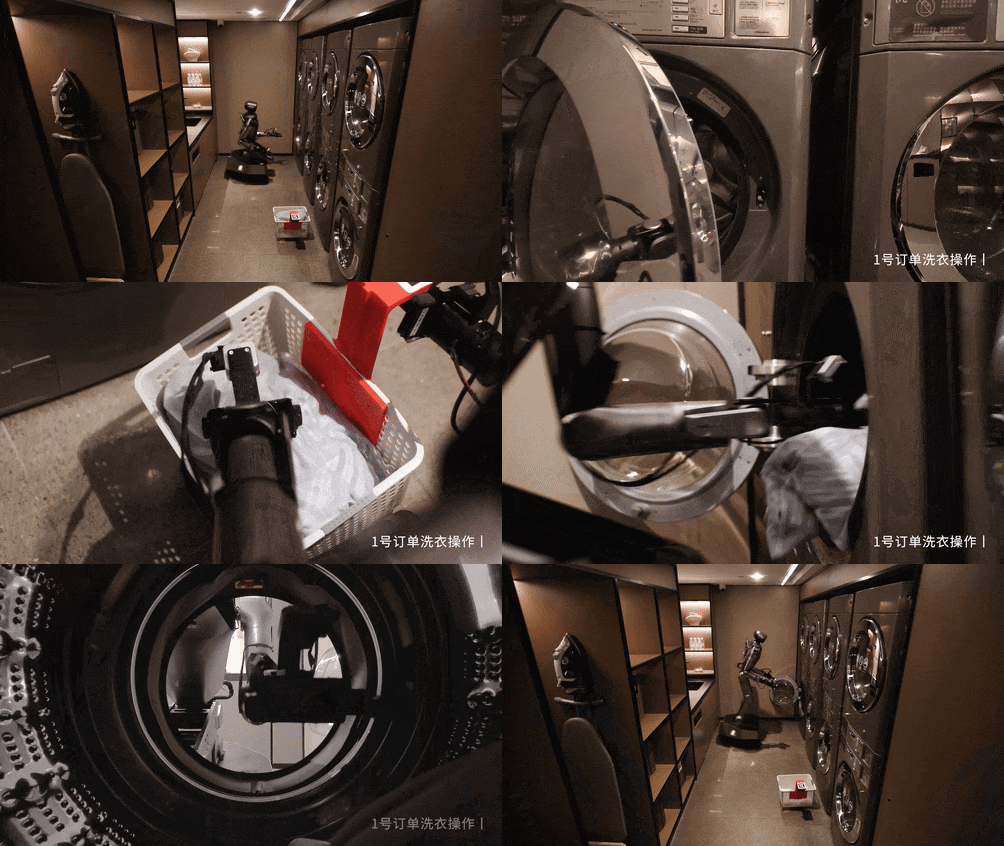
Then, accurately identify and press the washing machine and dryer's start button;

Finally, take off your clothes and send you back to your room...
The whole process is as smooth as silk.

I know you may feel like you're doing laundry, but don't listen to Fancy.
But believe me, handling flexible objects in real, dynamic, non-standard environments is a long chain of tasks, and the technical difficulty of that is absolutely hell in a robot world.
Today, a new solution has been given by Huawei robots.
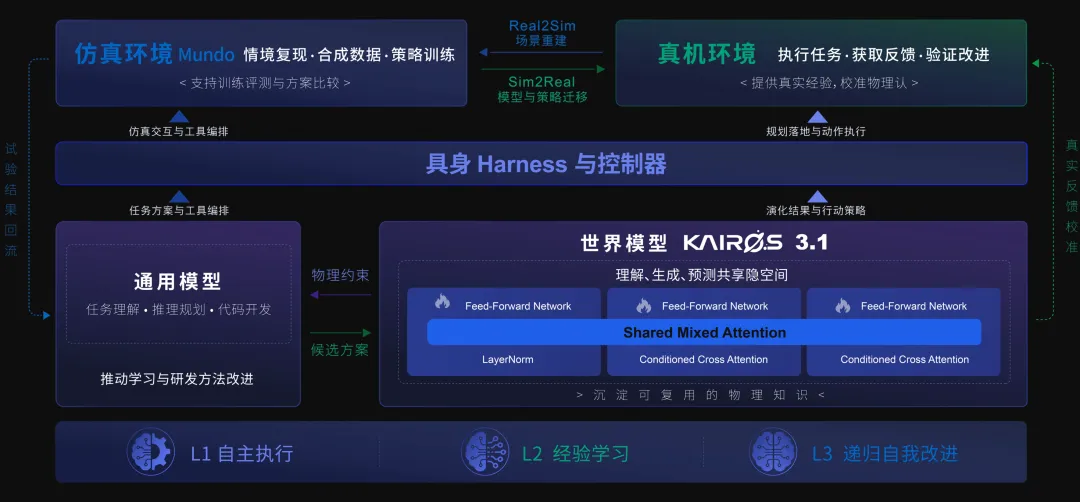
The dual-brain world model+Astra is a collaborative architecture+with RSI.
It's just crazy stuff, Buff.
Reimagining a Physical World
The hotel is actually a barbaric collaboration for lighthouse scenes.
On the one hand, hotels generally face problems of nighttime recruitment, high cost of manpower, and concentrated demand for holiday services.
On the other hand, Chairman Wang Xiaong said that there is also some consideration for showing muscles.
Laundry services involve the collection, transportation, operation of equipment, washing, drying, returning to the room, and have high requirements for space understanding, precise operations, and long-term task planning.
This is also an important reason why we chose the hotel scene, which does not allow robots to do a few isolated actions, but requires robots to continue to do a business in the real world.
Traditional robots can often only perform fixed tasks under predetermined conditions, requiring reprogramming or artificial intervention once the environment, object or task changes.
But at the same time, it's not that easy for robots to get into hotels, and they often encounter a huge obstacle.
Cold start.
You'd think you'd buy a scanning robot and go home, and then you'd have to make a map of it all around the house.
Now, to get a more sophisticated robot to work at a hotel, it doesn't even know where to open the room door.
So the idea of the industry has always been to rank first in the digital world.
This is what the flying instructor calls "space intelligence". The most intuitive is the Atlas, which is a three-dimensional reconstruction that wipes out the geometric appearance of the scene.
But the problem is that the game is essentially a static pattern of "visualizing motion".
It has no physical properties.
In that digital space, the robot doesn't know exactly how big the trash can be, how big the door is to open it.
This can lead to a lot of problems, let me give you an example.
When we do a lot of operations, we don't actually use the eyes very much. Because the physical world can interact directly with one another, hand-to-hand touching one, you probably know how much energy it takes.
But if there is only one sample that you can see, you can only get lucky.
It sounds magical, but in fact, a lot of robots are trained that way.
And the answer to this is that the first sex is finally back, right?
Mundo, a world model that supports modeling physical parameters.
As part of the World Modeling System, Mundo provides environmental modeling, training data generation and strategic verification support to help world models more effectively apply the world knowledge, prediction and action capabilities formed by cross-scenario learning to specific tasks.
Specifically, after entering a set of photos in a hotel room, hallway, laundry room and so on, Mundo is able to recreate one.We can physically interact.It's a very nice hotel.
The mass of the object, the friction force...It's all included.
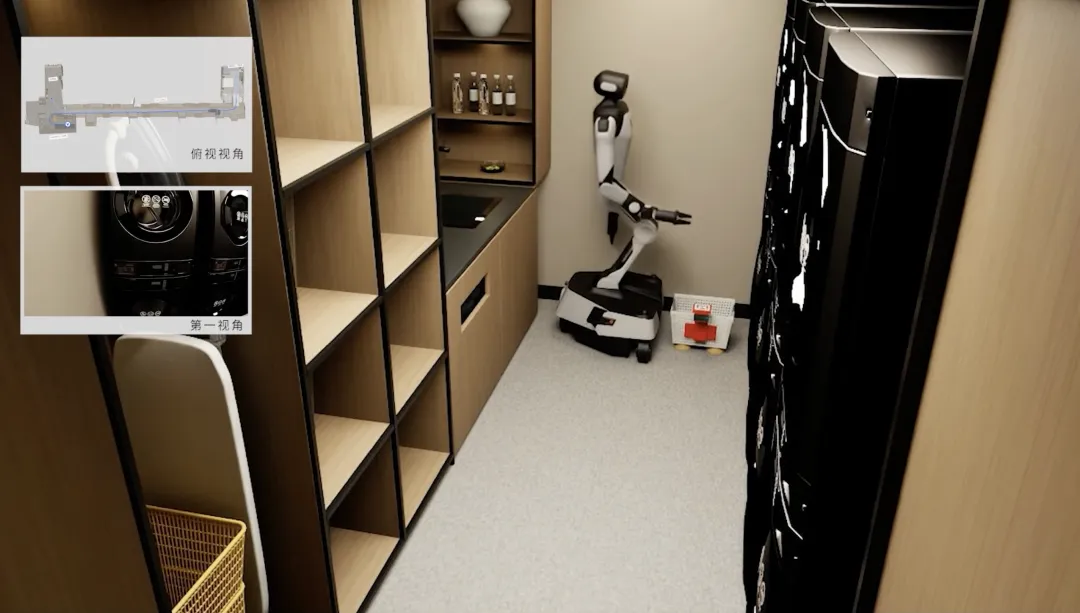
In this way, the digital hotel, which used to be an air-to-air hotel, was transformed into a "driving school" dedicated to robots.
Every attempt in the digital world, whether successful or unsuccessful, produces a bunch of data-driven trajectories, contact states, and visual feedback.
These data can, in turn, be used to optimize robot action strategies.
As a result, there has been a significant reduction in the timing of field deployments. Robots are already "in control" of the work environment and business processes.
One thought, one thought.
Well, now that robots have an exclusive driving school, they can practice driving like crazy.
The next question is:Who's driving?
My first reaction was:
It's not easy, now that Astra controls the robot so strongly, let it go.
In fact, Astra is the second brain known to have been given to a robot after Mundo.
But I did a lot of research and found that it wasn't exactly what I thought it would be at the beginning.
Yes, Astra's ability to understand, reason, and plan is unbeatable, but if you stick to it, it's really embarrassing...
The team did a test, and the data showed that the entire process was run entirely on real-time decision-making from Astra.More than 30 minutes。
I can wash my hands twice.
The physical world must be high-frequency, and if every step of the robot's action was to wait for large cloud models to observe, think, reason, and make decisions in real time, it would be cool.
What if you want to eat the dividends of the general model and meet the real-time requirements of landing?
This time around, the Big Bang robot is giving us an insight into Falun Gong.
It's all right.
Cloud OneI'm not sure what I'm going to do.He is responsible for task dismantling, logical reasoning, and generating strategies for macro work that requires "thinking".
Set goals and evaluation conditions that allow Astra to explore, verify, and summarize the best possible outcomes in the Mundo world model.
It's hard for Skill.
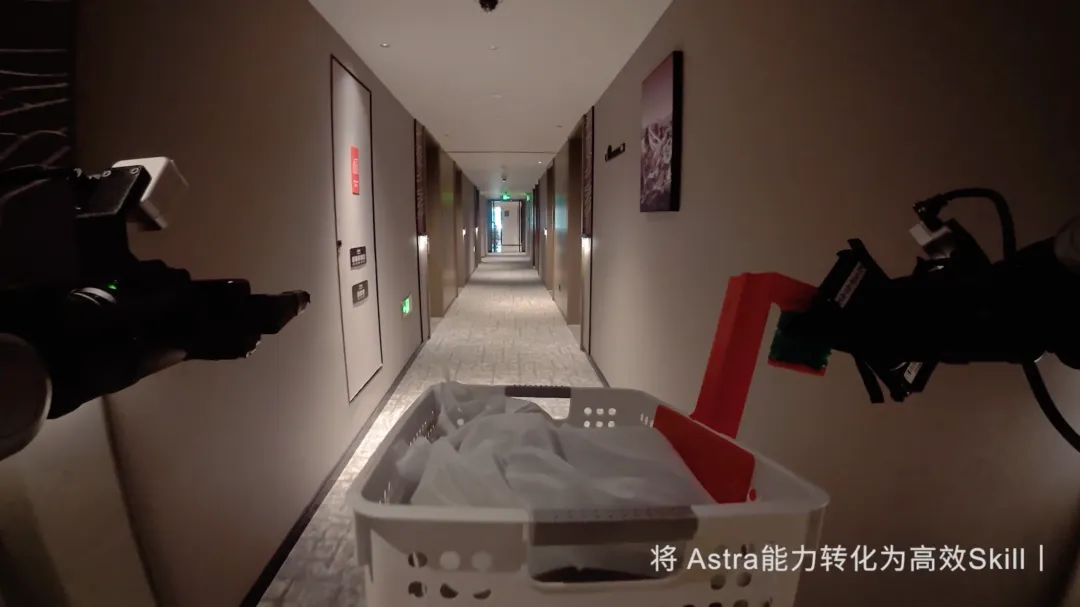
And then it was given to the robot itself, and it was given to the robot itself.Execution of the BrainHe is responsible for summoning those Skills that have already solidified, relying on the body's camera and mechanical arm to quickly complete high-precision physical movements.
With this set of assignments, you can guess how long it will take a local body model to complete the same round of tasks.
18,648 seconds.
Yes, you're right.
From about 30 minutes to 18.6 seconds, time was cut by more than 98%.。
Of course, there are always surprises in the real world.
What happens if the lights on the scene suddenly change, or someone moves the trash to a position where the side brains can't handle it?
At this point, the "cloud brain" of Astra will re-intervene, analyze new situations, and generate a new version of Skill.
And in order to manage these hundreds of Skills, the team has developed a system calledBotAgentIt's the center of the agenda.
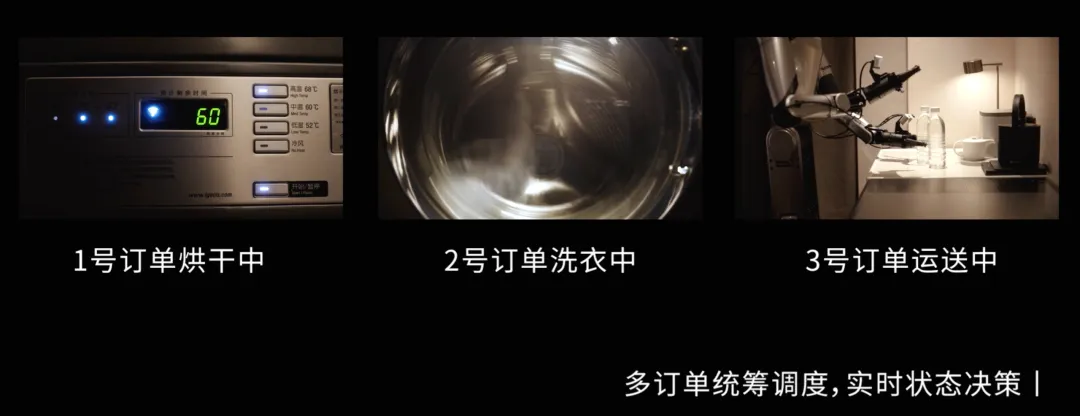
Simply put, it's like a hall manager. It breaks down the entire laundry process into the 53 most basic atomic moves and then wraps it up into 14 semantic steps like "take the basket" and "go to the laundry room".
In the end, the BotAgent can flexibly organize more than 200 different sequences of actions based on room location, elevator status, and washing machine layout.
At this point, the leverage of Astra, the general brain, is pulled to the maximum.
The two-brain collaborative architecture of the "World Model+General Model" is also fully shaped.
In the place of failure, the natives evolved
It's almost like it's perfect here.
But the real world is always 10,000 times more complex than the simulator.
For example, when a robot grabs a basket of clothes, its wrist is clutching the camera and it can't see.
For example, if you take clothes out of a dryer and grab them clearly, you end up with a broken leg hanging in a roller coaster.
If every time there's a problem, we have to wait for the engineers to run and change the code, then we probably won't be able to see the robot land.

How about that?
This is where the RSI plays a role.
Let robots learn to evolve in real failures。
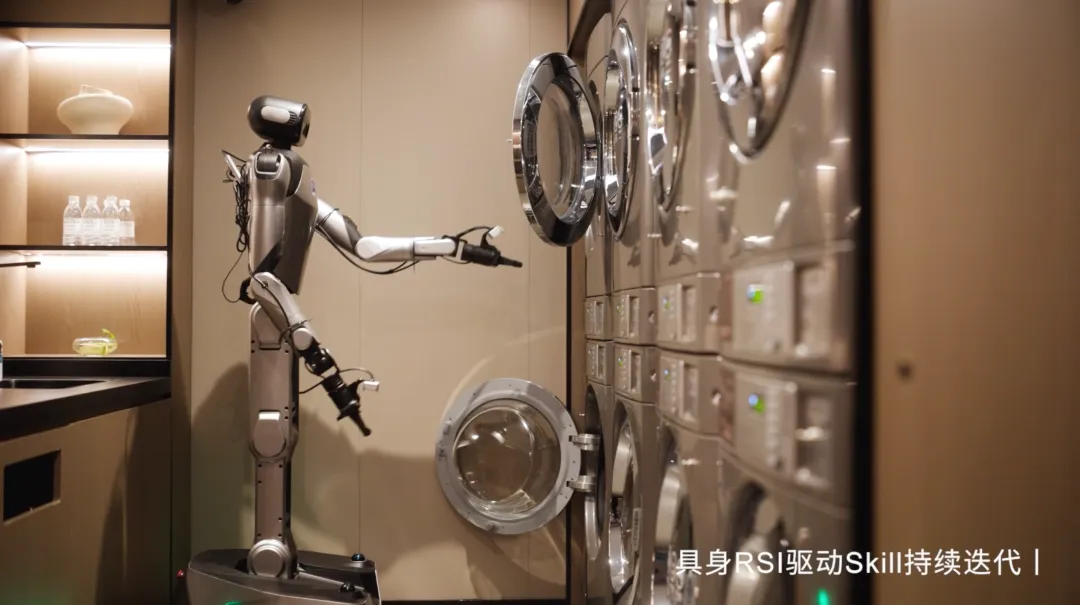
The whole process is as follows:
First of all, Mr. Astra's brain is a first-generation skill for robots to execute.
The robot then uses a multi-track camera to record the video, while recording all sensor data and action timelines.
After the recording, you can give the ball back to Astra.
If the mission fails, or doesn't work well, Astra, like a detective, looks over and over at the video and data to locate the root cause of the problem.
For example, it discovered that the wrist cameras were always obscured when grabbing the basket, so the improvement was to switch to the top of the camera to observe.
For example, it found that the legs were always hanging on the wall of the roller coaster from the dryer to the outside of the jeans.
After analyzing the video, Astra gave an optimization strategy: dynamically fine-tuning the upward trajectory of the mechanical claws while adjusting the grip angle of the fingertips.
There is also a trick to make this "practice level" process uninterrupted 7x24 hours, further reducing the Human in the Loop.
It's time for robots to learn how to "self-replicate".
What's that supposed to mean?
For example, when a robot pulls clothes out of a dryer, it can scatter them, throw them back into the dryer, and restore the site to the condition it was before the experiment began.
There is absolutely no need to intervene.
This liberated the dependency on man-made things and led to a truly autonomous cycle of evolution.
Of course, the high degree of automation makes it inevitable to worry about the accumulation of errors.
It's not always good to build a closed-door car, a model is smarter, and it's inevitable that it will be "unfamiliar with the real face".
In order to ensure that the improvements are effective, the team will run a model copy independently during the training process, like the "Quality Inspector", scoring video and data for each round of execution.
If the new version of Skill isn't as effective as the old one, the system will roll back quickly.

That's pretty much it.
I don't even know what I'm saying, but I'm still here to see the data.
I'm going to tell you a little bit about this skill in dryer dryer dryer.57 hoursInside, the robot is done continuously.165 wheelsThe real experiment, the output.Article 37Improvements and approx.80 of them.It's a generic version.
The object of the operation was also the standard fabric from the beginning, gradually expanding to more complicated thick jeans, oddly shaped laundry bags.
Eventually, the single-wheeled tires were stabilized at 170 to 210 seconds. The most critical indicator was the residual rate in the cylinder, up from the average.48%It's down the road.32%The best of the best has even reached19%。
Real failure has become the best fuel for the evolution of robots.
The Transformer moment
The French philosopher Léna Descartes wrote:
Let the latter continue where the former has stopped.
In the evolutionary history of physical intelligence, the most luxurious resource is not cloud computing, but rather the time spent by robots in the real physical world to try and make irreversible mistakes.
One slip caught, one blindfolded, one misjudged on the edge of clothing...
In the past, if these failures were merely a no-holds-barred log in the back of the system, hundreds of thousands of devices would repeat themselves day after day in different scenarios.
But now, it's different.
Every setback and adjustment in the laundry room and the hallway of the hotel is transformed into a universal cognitive asset that can be understood by the world model and absorbed by the base model.
The failure of one robot has become the ladder on which all robots grow.
I think that being physically intelligent, maybe it's gradually coming into its own.The Transformer Moment。
As big language models take on the endless transformation of human language with a unified architecture, the marginal cost of robots gaining new capabilities will be gradually overcome when the combination of world models, bi-brain synergies and automated mechanisms is combined to integrate strongly into the industrial flow stream.
Next, let's look at the abundance of ecology and how to train against the long tail scene.
China happens to have the deepest scenic soil in the world and the most complete hardware supply chain.
According to Chairman Wang XiaWang Xiaong revealed that they have indeed begun to explore scenes outside the hotel——
Instant retail is a very worthwhile direction to expand further.
While the hotel laundry is a distinct field, there are some similarities behind it: it requires robots to understand complex environments, complete multi-step tasks, and collaborate with real business systems and operating processes.
At the same time, these scenarios have higher frequency tasks, quantifiable business outcomes, and the ability to continuously generate data feedback, driving model and skill transformation.
The ability to model the world model environment, generate general model skills and continuously improve the RSI, as verified by hotel scenarios, can provide a technical reference for other scenarios.
Priority is given to verifying B-end scenarios, forming a commercial loop, ensuring that after self-improvement, you can concentrate on saving your brain and eventually move to a more difficult position.
It's a marathon, but fortunately, at least at the current level of technology, some of the pain points have been addressed.
A small step out of the hotel laundry room today is shaping the physical world of tomorrow's hundreds of industries.
It's the most important leap.









