These discrepancies actually point to the same question: How should the industry define a dead end when physical intelligence moves from technical verification to commercial application?
In a roundtable discussion on the theme of landings and landings over the years, Prof. Prof. Prof. Prof. Prof. Prof. Prof. Prof. Prof. Prof. Prof. Prof. Prof. Prof. Prof. Prof. Prof. Prof. Prof. Prof. Prof. Prof. Prof. Prof. Prof. Prof. Prof. Prof. Prof. Prof. Prof. Prof. Prof. Prof. Prof. Prof. Prof. Prof. Prof. Prof. Prof. Prof. Prof. Prof. Prof. Prof. Prof. Prof. Prof. Prof. Prof. Prof. Prof. Prof. Prof. Prof. Prof. Prof. Prof. Prof. Prof. Prof. Prof. Prof. Prof. Prof. Prof. Prof. Prof. Prof. Prof. Prof. Prof. Prof. Prof. Prof. Prof. Prof. Dr. Prof. Prof. Prof. Prof. Prof. Prof. Prof. Prof. Prof. Prof. Prof. Dr. Prof. Prof. Prof.
When more commercial expectations are sent in 2027, these are issues that have not yet reached a consensus, perhaps more worthy of attention than predicting the moment of an outbreak.
More and more deliveries and landings are still a long way off.
In the past two years, robots have accelerated from the laboratory to the real world, and the rapidly growing demand for mass production and delivery is spreading to the entire industrial chain.
As a supplier of core parts, the general manager of sales at Paceco, Xu Yanyan, was particularly directly affected by this.
He observed that in 2026, the volume of production and delivery demand of robotic enterprises continued to grow and upstream suppliers began to face greater delivery pressure. At the same time, customer requirements for parts were also undergoing some noteworthy changes.
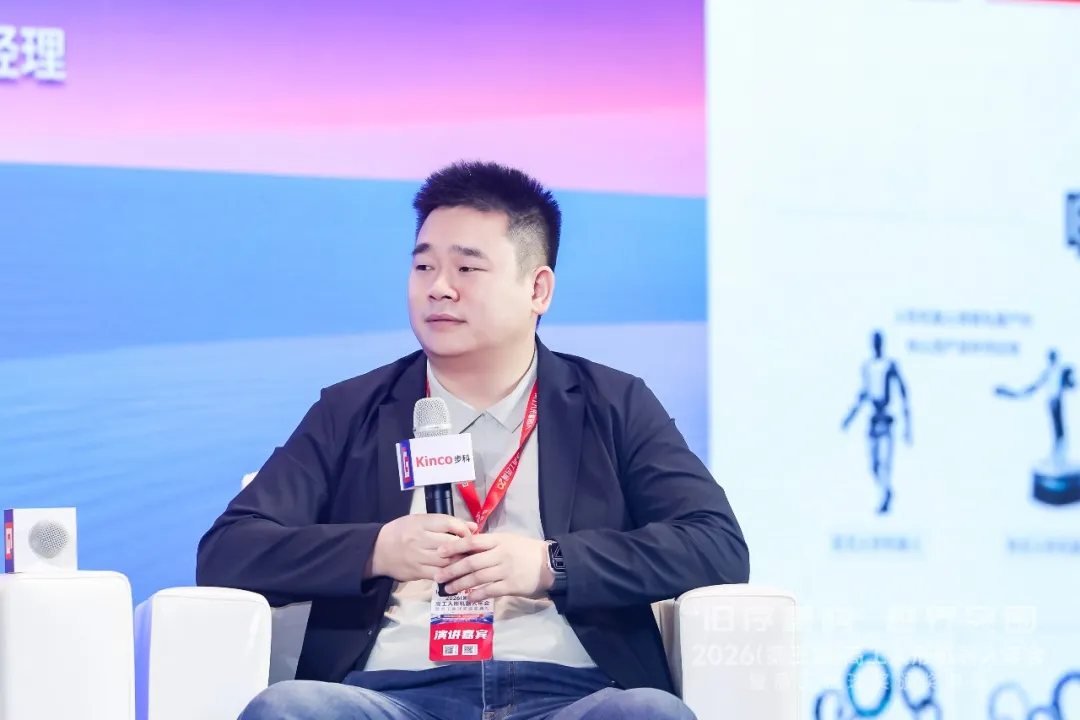
Sales of the company: General Manager Xu Yan Yan
In the past year, we've been modeling almost every day. At the time, many robotics companies were still in the product exploration phase, with varying customer requirements for parts and endless demands for customization.
But this year, as commercialization became a more realistic consideration, customers' tradeoff between engineering design and actual application needs began to change.
In Xu Yan Yan's view, when the two appear contradictory, customers often prioritize commercial landing, and the specifications and demands for some parts are gradually shrinking.
This means that robotics companies are starting to focus more on the needs of real-world scenarios than on the pursuit of parametric indicators.
For integrated enterprises, the growth in the scale of deliveries is also accompanied by a gradual maturation of the industry's awareness of the commercialization landscape.
The most significant change in the education market this year has been that customers' focus on robots has shifted from freshness to long-term use value.

CMO Zhang Zhen's release was delayed.
In recent years, schools have acquired humanoid robots, often just to complete activities such as radio gymnastics, cop shows, etc. But by 2026, the delivery of slow-motion robots has often been combined with standardized courses, customized courses, and other supporting programs.
Schools are starting to think about how to integrate robots into the teaching system to keep them functioning.
The consumer market has put forward another set of demands. Zhang Zhang said that C-end users have higher demands on delivery efficiency, and that companies must continue to provide new content and user experiences in order to maintain the long-term value of their products.
Despite the fact that slow-delay dynamics have begun to touch the boundaries of scale delivery, Zhongshan still defines it as a conditional scale pump.
The reason for this is that there are significant differences in the tuition and curriculum base of different regions, different schools, and user expectations in the consumer market are not the same. These factors affect the replication and promotion of products among different customers. In other words, the ability of robots to sell out does not mean that companies have established a mature, replicable business model.
For businesses that are still exploring specific application scenarios, the progress of commercialization may need to be assessed more carefully.
Zhang Jiaoyang, CMO of Wangzhou Robotics, explained that the company has already launched a corresponding solution around outdoor autonomous patrol, instant retail and hotel services.
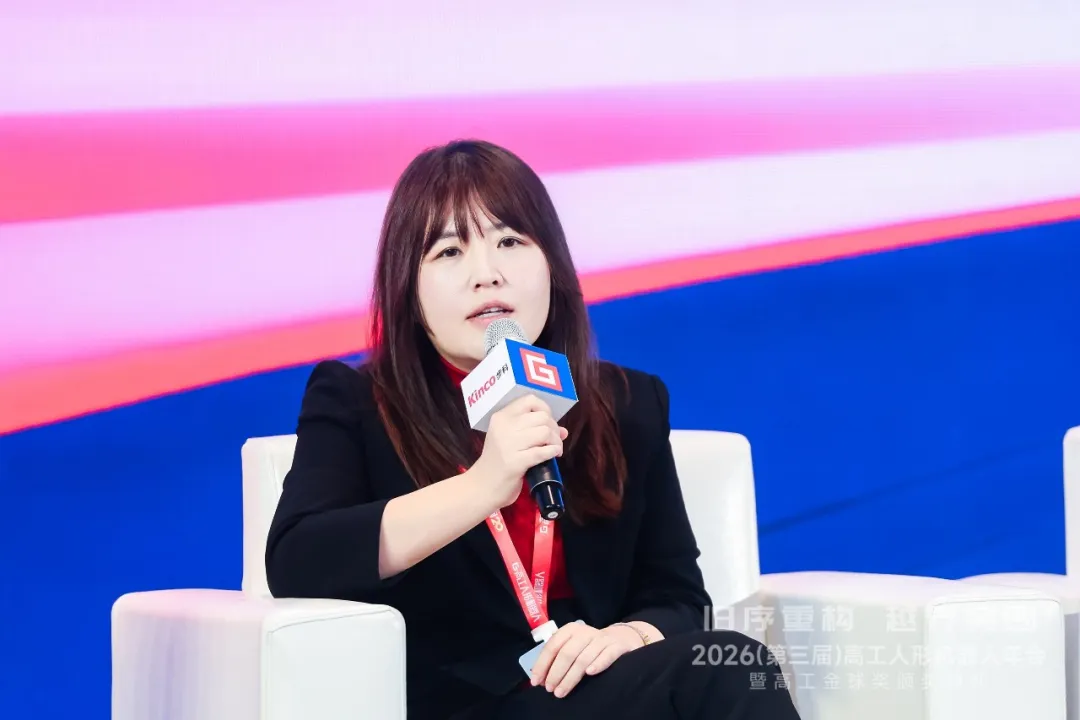
The CMO of the company is Zhang Rogan.
But even so, she said openly: "Objectively speaking, we can't say we've achieved 0 to 1".
Zhang Di, the co-founder of Shenzhen Intelligent, has expressed similar caution.
In his view, the current industry focuses on the success rate, safety and efficiency of robots when discussing commercialization, but an equally critical issue is that users' actual use costs are still high.
Even if a robot project has accumulated thousands of hours of operating time, if the initial deployment, debugging and other inputs are still high and require significant additional costs each time a new scenario is entered, the costs will ultimately be borne by the customer.
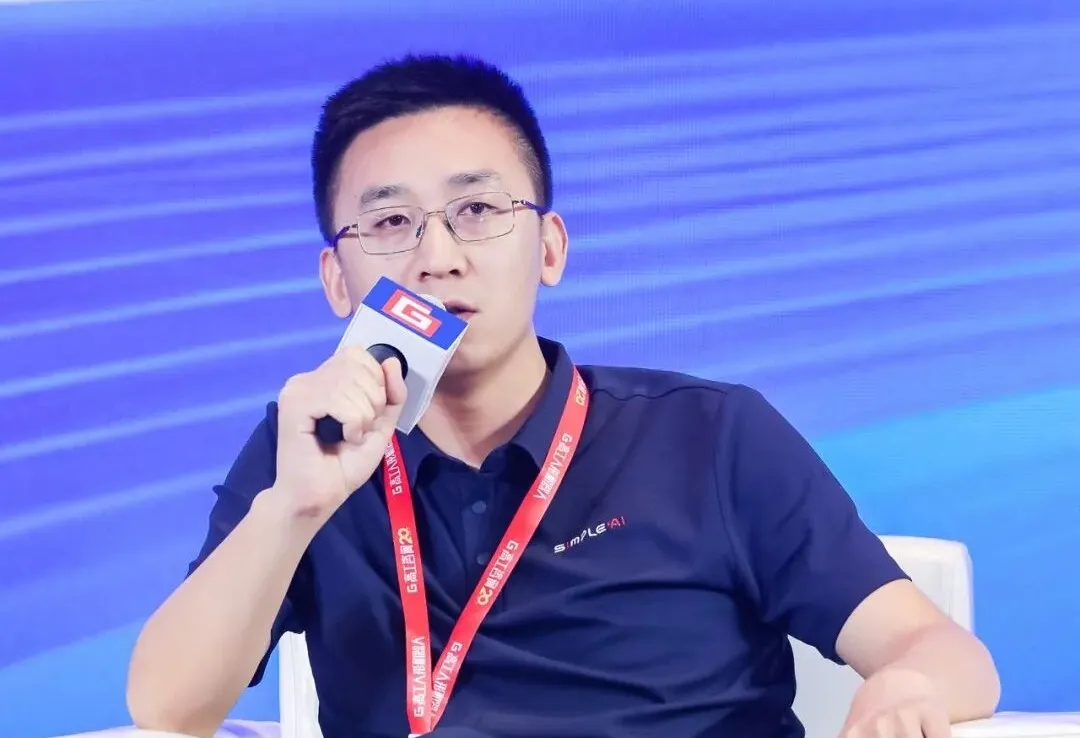
Shen Park Intelligent Co-Founder Zhang Di
So why are so many projects being done and not done?
Zhang Di's question actually points to another difficulty in smart commercialization: the technical validation of a single project, even if successful, cannot be transformed into a sustainable, replicable business model.
From the mass-production pressures felt by the pace industry, to the long-term use demand observed by slow motion, to the cautious judgement of robotics and AI on commercialization progress, the industry's understanding of slumps is changing.
In the past, the ability of a robot to enter a factory, hotel, or school to complete a task was enough to be a case of a well-publicized landing. Now customers are starting to ask further questions: how long will it last, how much will it cost to deploy and maintain, and if it will achieve the expected ROI?
As robots gradually shifted from exhibits of technological capabilities to production tools that need to continually create value, the competition for commercialization entered a more specific, more rigorous engineering phase.
Commercialisation is not enough for general intelligence
What should a robot do if it is performing a task of pouring water and the cup is suddenly damaged in the process?
In a roundtable conversation, Chenchenko, a partner in the Octopus Dynamics World Model, gave this seemingly simple example, pointing to the important difference between a physically intelligent model and a large language model.
For single-text or video-generation tasks, the output of a model often means the end of this round of tasks. But physically intelligent people need to face an uncertain physical world, and even if the model can generate the correct movements, it cannot guarantee that robots will not experience accidents in the actual execution process.
For example, a sudden breakdown of a cup or a collision of a robot's hands with its body can cause the original task to fail.

Owl Power is the world's model partner, Chen Chenko
For physical intelligence, the focus of a closed loop is to be truly functional. According to Zhang Chenchenko, physical intelligence requires constant verification in real physical interaction to solve systemic problems in the process of task execution.
This also means that there is still a considerable distance between allowing a robot to complete a task in a laboratory and allowing it to do it continuously and reliably in the real world.
However, does commercialization have to wait for the full maturation of general intelligence?
Wang Yi, the chief strategist at Noin Intel, has suggested a different approach.
In his view, the current technological capabilities of physically intelligent people are still difficult to meet the demands of industrial scenarios for working rhythms and accuracy, but in some scenarios that require relatively loose rhythms, even if the model has not yet achieved a very high success rate, it can create commercial value.
This is also an important reason why Noin smartly chooses family scenes.

Noin Smart, Chief Strategy Officer, Wang Yi
Compared to industrial environments, the home scene is more open, diverse, and requires more generalization of models, but some household tasks are relatively loose on the requirements for execution speed, providing space for technological exploration at this stage.
Therefore, from the very beginning, Knowledge Intelligence has focused on the generalization of models as a research and development focus.
Wang Yi explained that the company is exploring the technological route that will lead to the discovery: for a skill that the robot has not learned before, it is possible to get the robot to master the corresponding operation through a demonstration and accumulate the skills for subsequent tasks.
If you encounter a scenario that doesn't happen, we'll let users apply it again and again.
According to Wang's vision, when robots encounter unprecedented situations, they can accumulate new skills through user demonstrations and replicate these skills in other tasks and users, thus reducing the input of repeated data collection and training models for different scenarios.

Knowin-X1 is a two-armed robot manufactured by Nokia.
This is a different technological and commercial option: instead of waiting for robots to be able to handle all complex tasks, it is better to look for scenarios where existing technologies can play a value and then try to expand the boundaries of robots' capabilities through practical demonstrations and feedback.
However, this path also faces challenges.
In the face of complex physical environments, robots can autonomously decide when to re-learn, when to interrupt tasks. These questions remain to be verified in real applications.
From this perspective, Chenchenko and Wang Yi's views actually reveal the two challenges facing the commercialization of physical intelligence:
On the one hand, robots must improve their ability to autonomously perform tasks in the physical world and deal with unexpected adaptations; on the other hand, enterprises need to find applications that can continue to create value while the technology is not yet fully developed.
The development of technological capabilities and the formation of commercial markets are likely to be wrong.
So, when the industry looks more forward to 2027, how far away is the explosion of physical intelligence from genuine commercialization?
Will there be an outbreak of physical intelligence in 2027?
If the smart market really starts to explode in 2027, are companies ready?
In the second half of the roundtable discussion, the General Manager of Higher Employment Consulting, Prof. Li Liang, presented the hypothesis to the guests.
Zhang Yi has made a very interesting judgement: I think the word "blast" can only be used on the consumer end.
In her view, the growth of B-end markets such as education is more likely to be a gradual process of penetration.
The consumer market may show a different growth curve. Once a product finds a sufficiently clear user demand, the market may expand rapidly in a shorter period of time.
As for the potential growth in consumer demand, Zhang Yi said that the company has already experienced a phase of capacity-bearing after the launch of consumer-grade products, and in this process has gradually perfected the system of mass production and delivery.
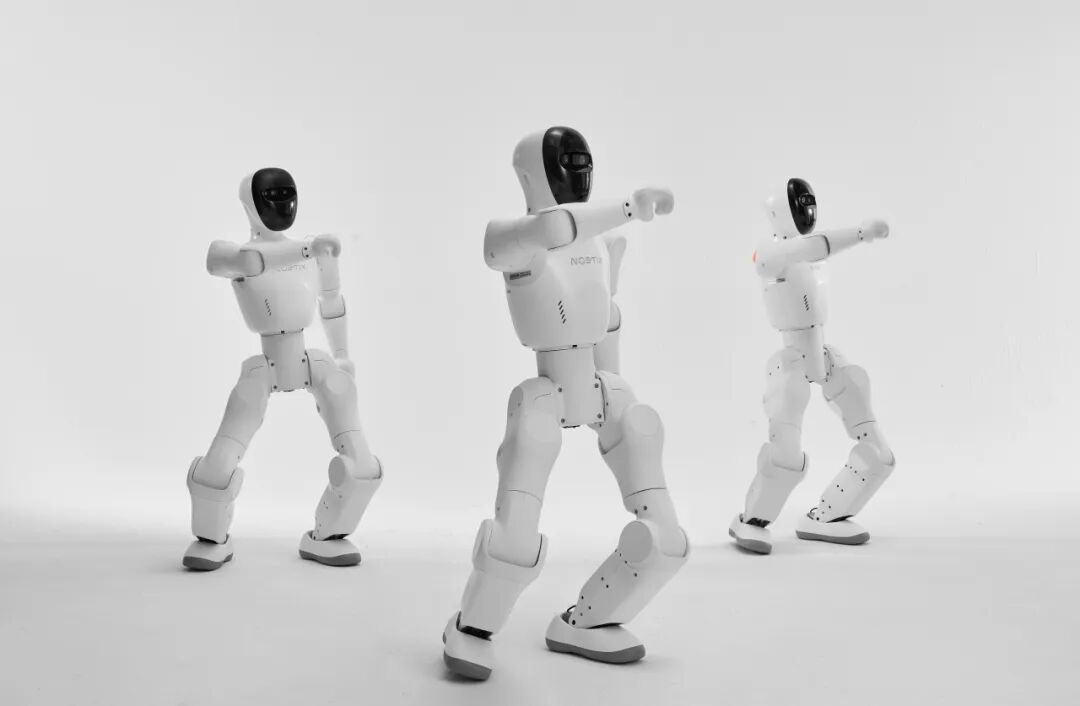
A young boy named Bhumibol Adulyadej has landed on the educational scene
In contrast, the Xia robot has chosen a more progressive path.
Zhang Yue explained that the company continues to advance technological research and development such as world models on the one hand, while insisting on cutting off from the relatively standardized B-side scenarios such as hotels and retail, allowing robots to take the lead in specific tasks, and counterfeiting model capabilities through real operational data.
In her opinion, this is also a preparation for a more complex family scenario in the future.
For the expected technological breakthrough in 2027, Chenchenko's judgments are more prudent.
As a practitioner who has been involved in the research and development of technologies related to big models, Chenchenko believes that the development of physical intelligence is difficult to adapt directly to the evolutionary path of big language models.
The breakthrough in the ability of big language models to reach large numbers of users quickly through digital products, while physical intelligence also requires that model capabilities be transformed into operational capabilities in the real physical world, and there may be a time lag between technological maturity and market scale.
However, he did not deny the possibility of a major breakthrough in 2027.
In Chenchenko's view, the key remains whether enterprises can take the lead in the complete business closure of real-world scenarios and expand capability boundaries on this basis.
As a result, while guests generally have high hopes for the smart industry in 2027, there are still differing judgments about the pace and path of market growth.
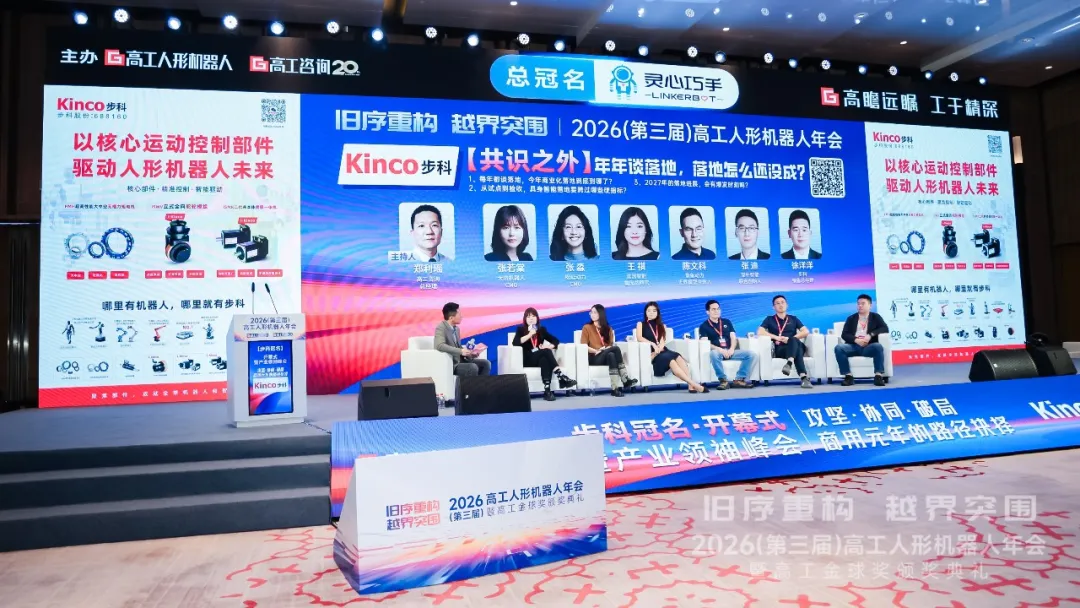
Consumer markets may be at the forefront of centralized growth, and B-scenes such as industry, education, and more need to continue to penetrate; advances in model capabilities may lead to new business opportunities, but supply chains, supply systems, and real operational capabilities must also keep pace with market changes.
There is still no answer as to whether 2027 will be the year of a physical intelligence outbreak.
However, it is certain that the challenges facing the industry will become more specific as robots enter the real world.
The more compelling validation will come only when the market really starts to pay for the productivity of robots and the commercialization of physical intelligence.
What is the meaning of this verse?
Why is it so difficult to land year after year? It's because we're so used to the speed of big models, waiting for a miracle to happen in the physical world.
Over the past few years, the smart industry has been constantly pushing the boundaries of technological capabilities, but the really long commercialisation tests have only just begun.
From completing a task to continuing to work reliably; from delivering a robot to creating a replicable business model, every step of the way, physical intelligence is subjected to repeated scrutiny of real-life scenarios.
For 2027, the industry is still full of expectations. But it is more remarkable to see how many robots are slowly entering everyday life, becoming indispensable workers in factories, shops and even households.
Perhaps the real historical moment of being physically intelligent will not be accompanied by applause and countdown. It happened on an ordinary working day, when the robot was running as usual, and no one was stopping it.