


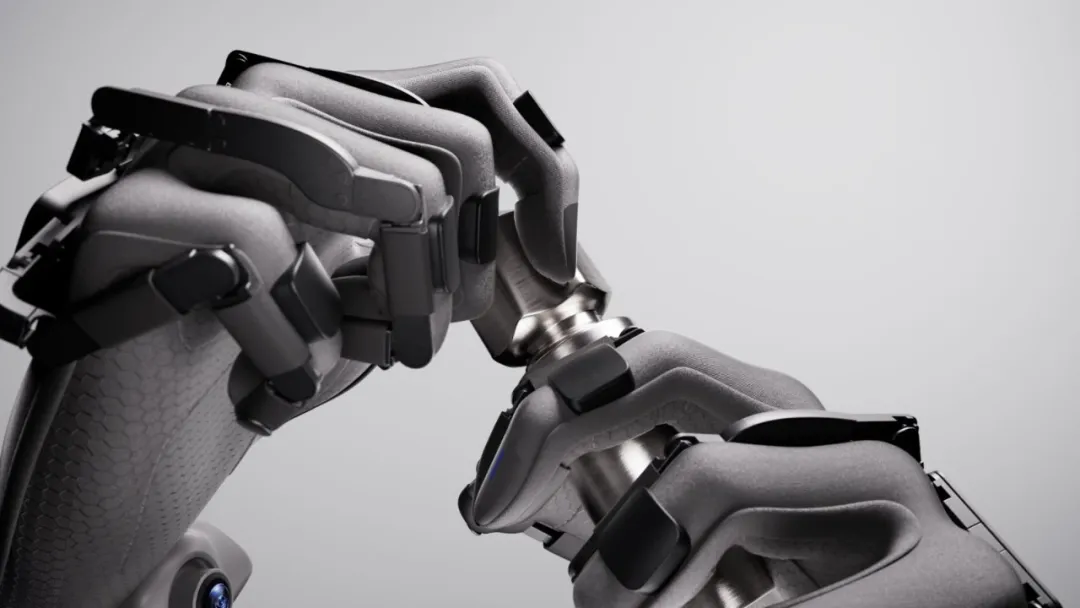
“ The next war of data collection, why do we talk about credibility first and then about scale?
The smart-body industry is experiencing a strange scarcity. More and more data-gathering devices, moving handles, first-person view rings, and remote-operation platform layers are out there, but it's really getting into model training, steadily producing high-quality data that can be effectively monitored, and the cost of access is still high.Where does the contradiction come from?
The answer lies at a long-neglected junction of the data collection link. The images record the operation, but the contact is not recorded; the movement is captured, but the physical factors between the movement and the contact are not aligned.
When you open a bottle cap, the robot learns more than just the angle of rotation. It first sees the bottle cap, judges the position of the bottle, reaches out, controls the pressure at the moment of contact, senses sliding, and adjusts the finger posture.
While humans can do this with almost no illusion, robots need a complete chain of cause and effect: observing the action of the rodent in contact with the rodent to adjust the result of the rodent's feedback.
Physical AI is validating continuous tasks from the laboratory model to real-world scenarios. The evolution of the technological path poses a new requirement for training data that the data must be complete and aligned.
Robot Skill learns to rely on highly reliable translations of Human Skill, whereas translation errors often occur not at the algorithm level, but at the data source.
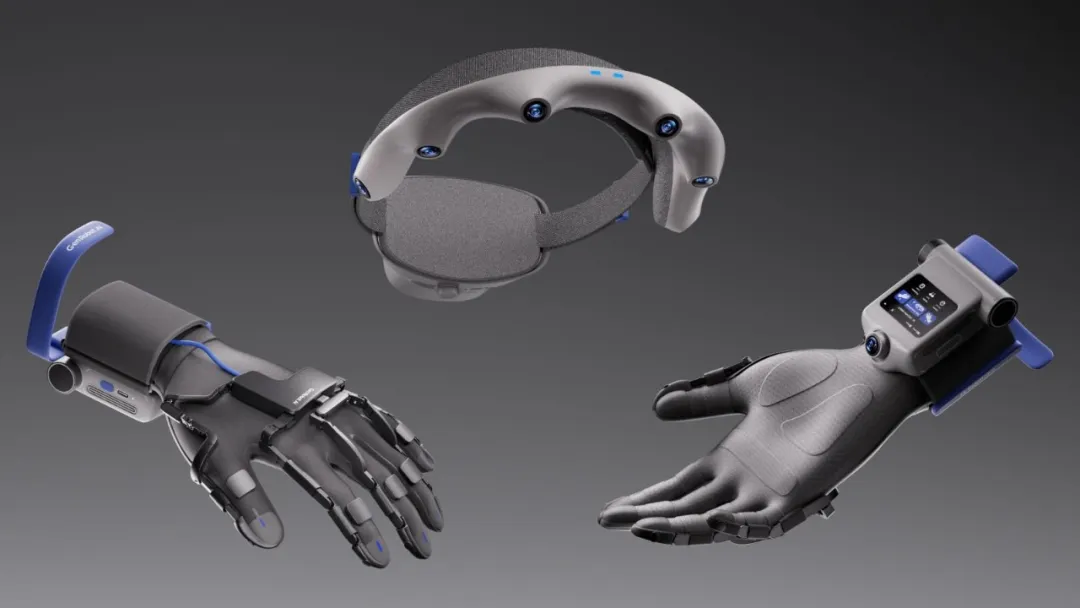
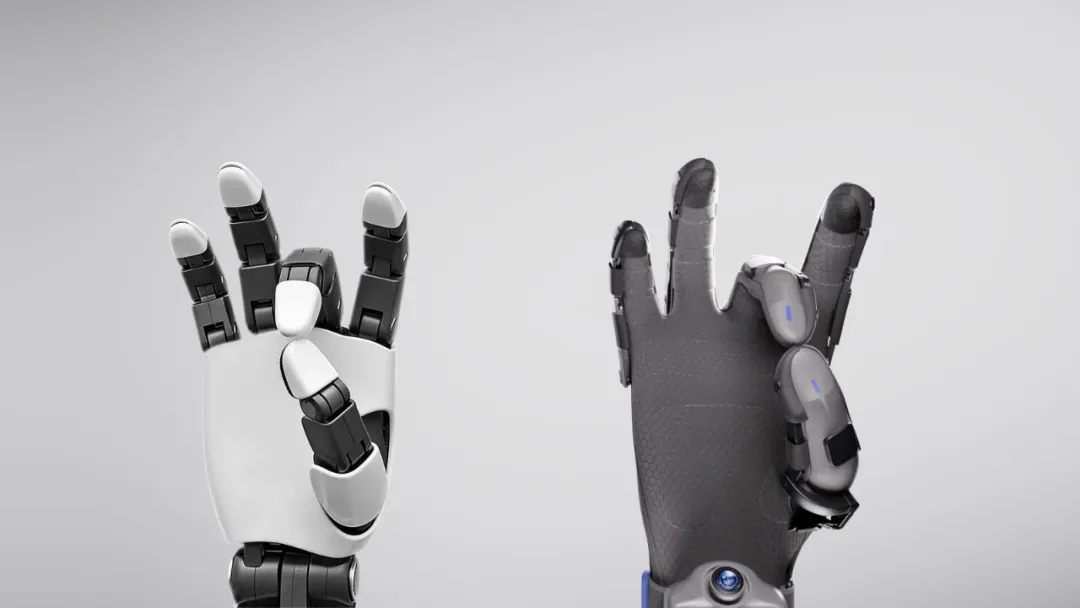
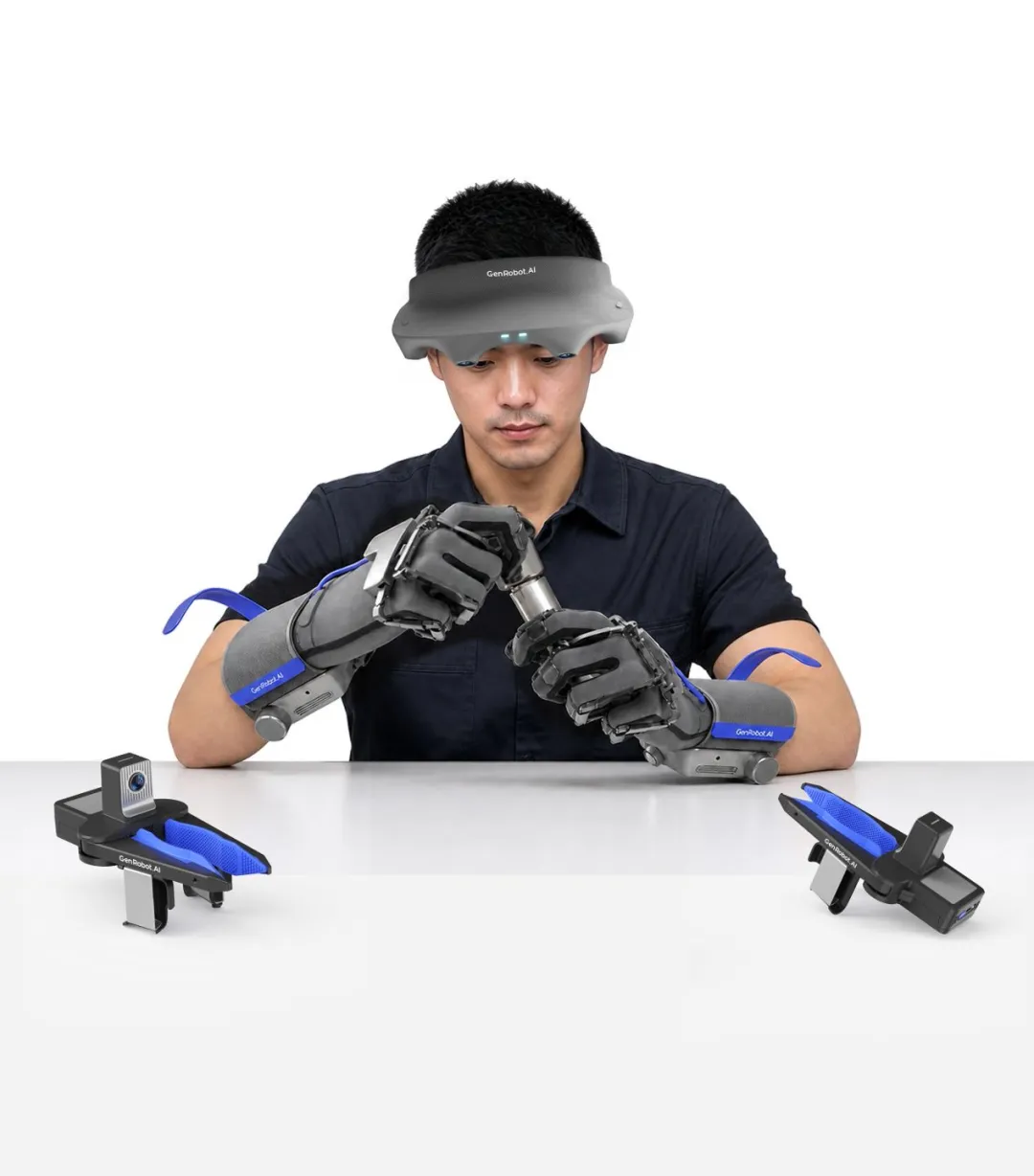
The latest DAS 2.0 system released by Intelligent Robotics, the Dex 2.0 sleek data collection glove and the Ego 2.0 first-person viewfinder, was the design practice that resulted from this decision. Its core logic was to use three progressive data collection configurations to complement the entire physical causation chain in stages.
01.
Dex 2.0: Let the action happen naturally, make the label credible
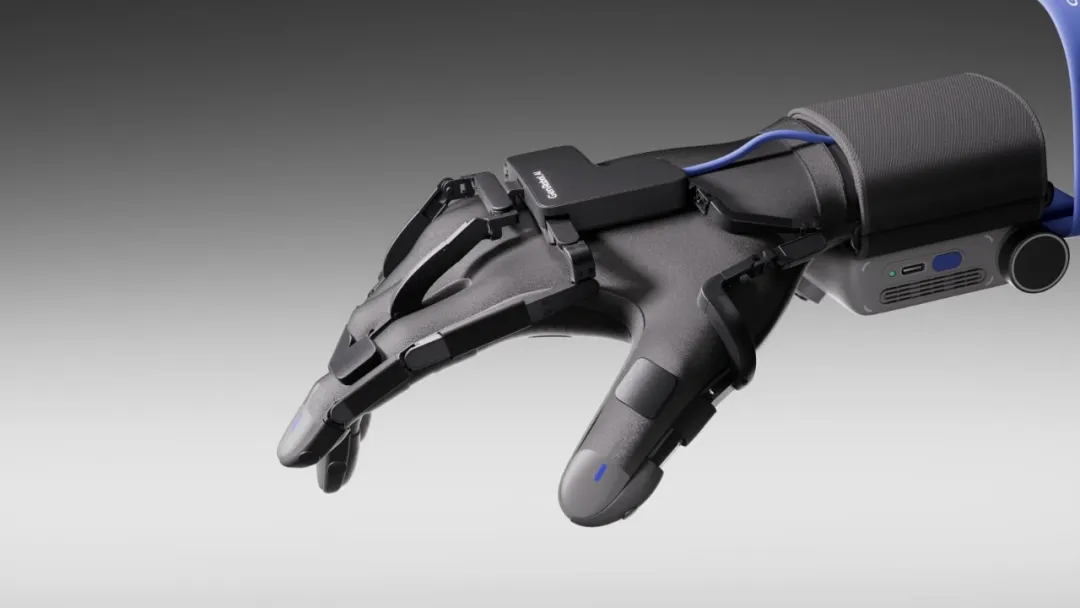
The more rigid the external skeletal structure, the more reliable the joint measurement, but the greater the interference with the natural movement; the more flexible the scheme, the more natural the movement, but the more severe the measurement depends on shape shifting, drifting and error.The first alternative to Dex 2.0 was to move the outer bone from the back of the hand to the side of the fingers, freeing up critical operating spaces such as grip, patch picking, and in-hand rotation, while embedding micro magnetic encoders in the lateral joints, directly reading the local bend angle of the joints.
21 DoF, 0.2° joint angle resolution, finger point position accuracy less than 1mm, encoder thickness about 3mm, outer bony subject about 60g, and a more important judgment behind these parameters is that the data labels should be direct measurement signals with clear kinetic meaning.
The second alternative is the reliability of the touch. One of the most difficult problems with textile-type flexible touch schemes is that it can produce signals even when there is no real contact. False signals caused by finger bending, material stretching, wear sliding will be very similar to real pressure on the data, leading models to learn that the fabric of the device is a silk touch hallucination, while local or finger touch is difficult to describe handholding, multi-finger covering.
Dex 2.0 uses a self-developed semi-soft, pressure-resistant electronic skin to establish a new balance between the adhesive surface and the suppressed motion pseudo-image, reducing friction by designing sensing units and arrays, and pursuing single-point pressure, single-point response.
The reliability of the touch can be broken down into three layers. The first layer, the contact itself as far as possible is not intercepted by the equipment; the second layer, the detection signal can distinguish between real contact and non-objective interference such as bending, stretching, wearing pre-tensioning; the third layer, the measurement consistency in long-term collection.
It was reported that the same actions were repeated under the same conditions in a one-month collection test and the response to touch measurements remained consistent. The significance of this information was that it pointed to a more critical question: When the collection expanded from a single demonstration to continuous production, would a change in the state of the device make a similar image match different labels?
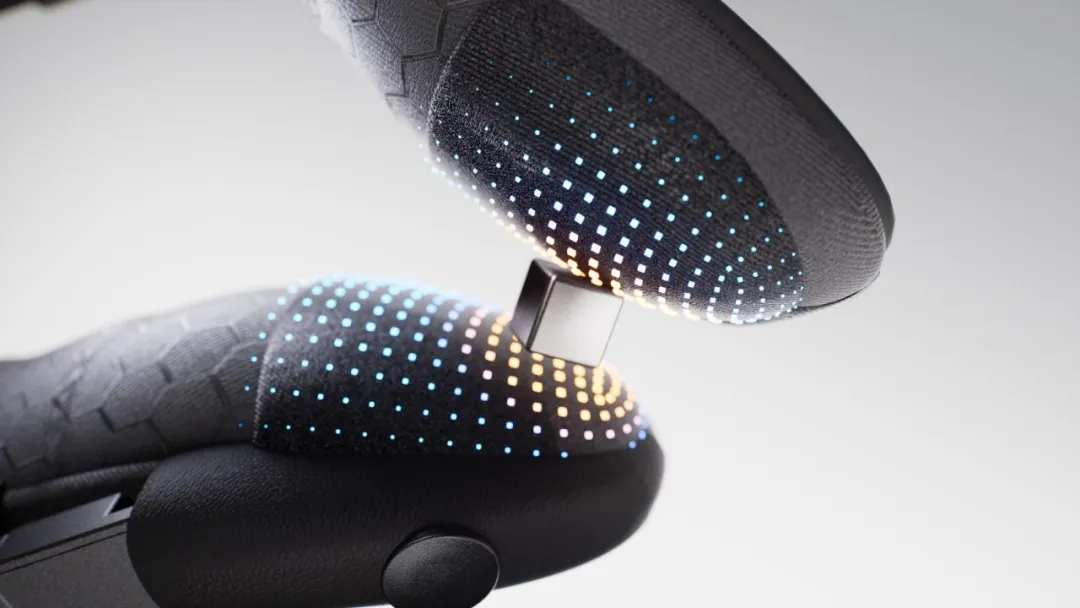
Dex 2.0 single 16 touch sensors, 980 sensing units, 1mm spatial resolution, 0.1N minimum detection power, 100Hz touch sampling, which can withstand more than 1 million methods of pressurization and 100,000 bends. For VLA and world models, contact timing, slippage detection, power adjustment are the core signals for understanding causal relationships. The reliability of touch silencing affects data availability, post-processing costs and the reliability of monitoring signals.
In addition, Dex 2.0 also supports dual-mode unmanned collection and handheld remote operation. Low-cost unmanned mode covers more people, tasks, objects, and real-world scenarios; remote mode converts human-handed states into robot-connected control inputs, adapted to different handheld freedoms, connecting layouts and control interfaces.
Where the no-body solution skills come from, how the no-body solution skills fall to the no-body problem. A device that connects human demonstration and robot execution.
02.
Ego 2.0: Put your hands back in the environment
A real operation is never just a hand in action.A person must first approach the target, select a position, bend or side, adjust the observation angle, and then reach out. These prelude and follow-up movements constitute the physical conditions and space constraints of the manipulation. If the data only retains the movements of the hand near the target, the model will find it difficult to learn how the manipulation can be done.
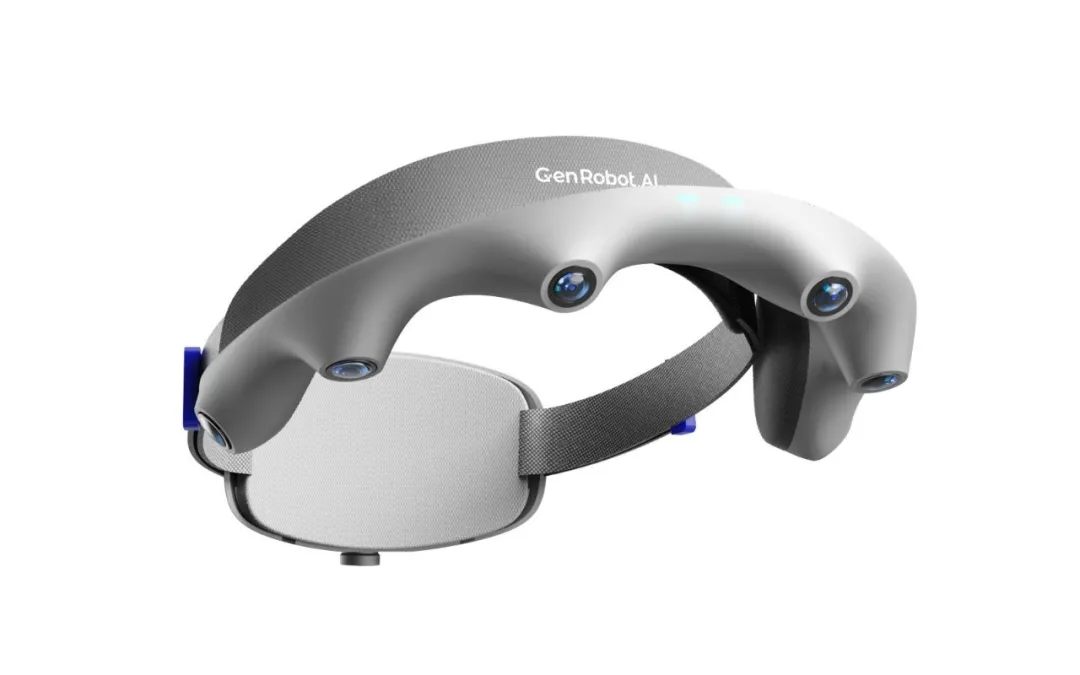
The role of Ego 2.0 in the entire DAS 2.0 system is to complement this layer of scale-up coverage of the environment and mission, allowing human operations to be reconstructed as a spatial relationship between reptilian objects and reptilian environment.
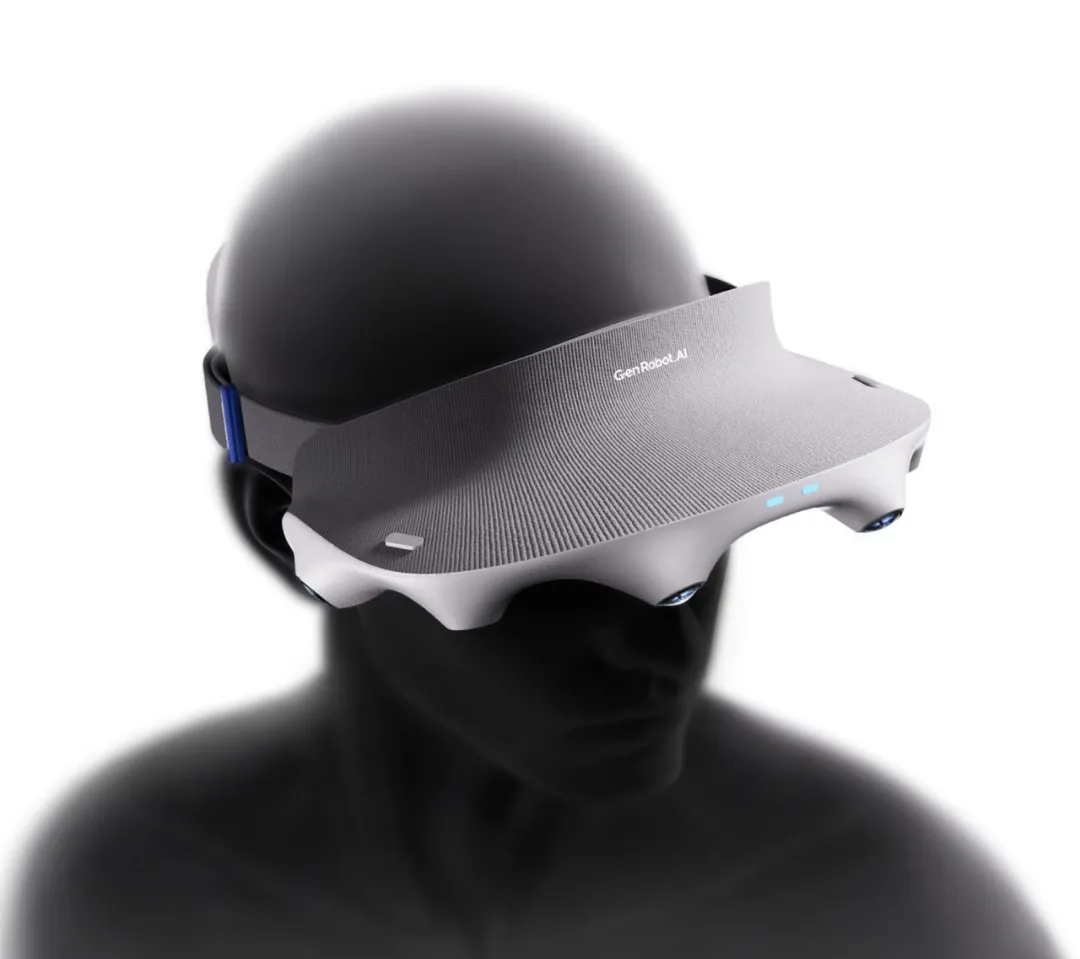
The core upgrades are presented in three dimensions. Visually, 2 5 million pixels plus 4 2 million pixels of universal fast-door cameras, 6-way 30fps synchronous imaging, fingerprint tracking accuracy of up to 4mm; visually, the horizontal field of view is expanded from the previous generation at 270°, vertical to a maximum of 120°, expanding coverage of the upper half of the human body, surroundings and lateral areas; engineered with a flexible band-to-band buffer suitable for different headsets, with a cap-taking cap-reduced wire shield, single-touch recording + voice feedback, app posture and shielding, magnetic-absorption battery non-replaceable, single-cell packaging 2.5 to 3 hour duration, standard mcap format output.
The direction of these engineering details is clear, allowing the equipment to move from the laboratory to the actual position, and from single demonstrations to batch simultaneous collection.
03.
There are three types of collection: not equipment lists, but density layer monitoring
More importantly, it is wise to organize the collection capacity into three schemes, forming three supervisory densities.(1) Ego: scale and diversity, open data distribution first
Ego takes on scalable environments, tasks with full-body coverage. The collection of lighter configurations makes it easier to access more natural scenarios, retaining different operators, objects, spatial layouts, and operating habits. Its value is determined by the data distribution, whether the same task includes different environments, abnormalities, and pathways; whether it can continue to adapt to changes, failures, and recovery processes.
First point of view, the first hand trajectory provides a context for the task process, giving models the opportunity to learn cross-scenario rules and reduce dependence on a single operating system and fixed processes. Effective scale is the coverage of new tasks and long-tail interactions.
(2) Ego+wrist: more detailed description of movement and contact
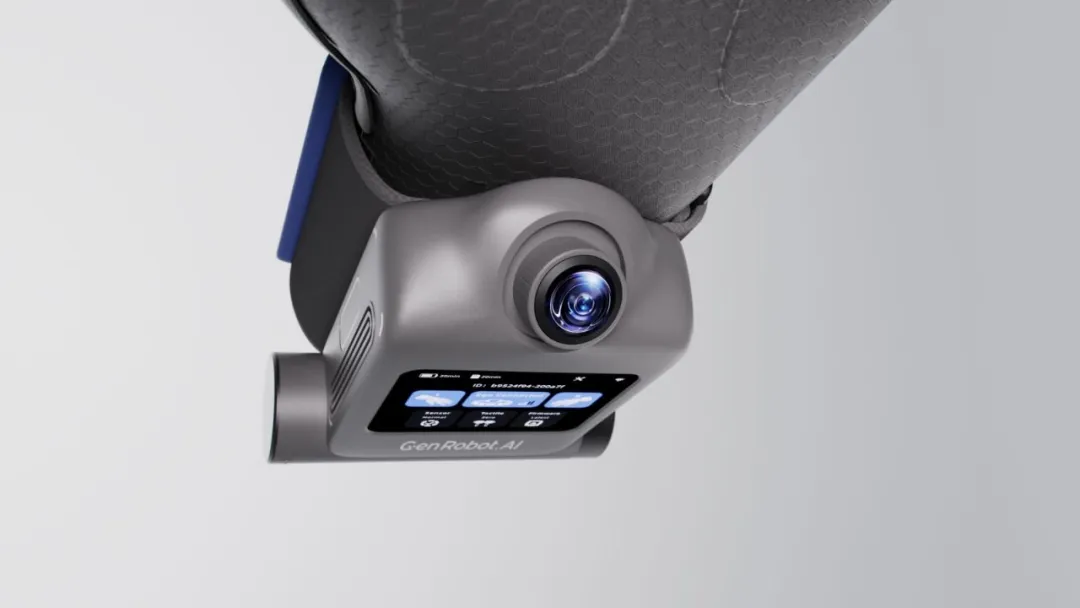
Ego+wrist improves the accuracy and accuracy of the description of the contact with the hand movements. The overall record gives the task process, the wrist sequences complement the approach direction, finger adjustments, relative movement of the hand pets and local shapes. Combined with marking and trajectory reconstruction, these data can organize movements in more detail, align different angles, and describe changes from approach, adjustment to lifting.
It retains a visually-oriented method of collection that allows for the expansion of fine-grained motion data coverage. However, this increase has clear boundaries. Working distance, motion blurring, shading, and time-space alignment all affect the effect; more images need to be converted into continuous, corresponding motion information to form high-particle data; and visual reconstruction will still have uncertainty about invisible joints and contact states.
Ego+wrist is a pragmatic option for teams that need to expand their precision action data coverage and want to retain lighter collection configurations under current conditions.
(3) Ego+Dex: native supervision of scales, complementing physical contact
Ego+Dex provides more complete native, full-mode hand monitoring. Joint sensing directly records changes in hand structure and movement, touch records real contact, and synchronizes with first-person perspective and forearm trajectory. This set of data can provide an independent measurement basis for visual inference, as well as distinguish between similar appearances and different physical results.
It takes on the role of high-quality monitoring scale in the data system, covering the accuracy of movements, hand structure and contact results, rather than merely adding a sensing model. When mixed training, it broadly covers data to expand task distribution, move detail data to improve process resolution, and native measurement data to bind critical states and move tags.
The choice of configuration is determined by the information required by the task, a more complete model is suitable for fine-grained supervision, and a lighter configuration is suitable for expanding real-world coverage.
Further synchronous matching data from Ego+wrist+Dex is needed for dual-visual touch predictions. Vision provides input, joints and touch provide physical supervision; after matching training, subsequent Ego+wrist programs can attempt to output contact events, regions, strong trends, and confidence levels.
This pathway can be extended to larger-scale visual data by combining supervision and distillation of knowledge to extend the accurate physical representations collected. However, the type and confidence distinction between test labels and model predictions must be maintained to avoid that predictive errors are constantly reinforced in subsequent training.
04.
It's not the same time, it's not the same time.
Multi-directional sensors can only respond to the same interaction in order to form joint surveillance.The software's time loop is simultaneously looping, synchronizing only the approximation of the file level, not the physical level. Operating system scheduling, communication transmission, data caching, and drive queues all introduce uncertain delays. In rapid clutching, spinning bottle caps, disconnecting connectors, and contact point switching, this error allows the model to tie a set of action tags to the previous set of images and learn the wrong contact timing and status transfer.
The engineering answer to DAS 2.0 is that the hardware triggers a unified timeline with the camera's shutter exposure control, where the source of the signal determines when the camera is exposed, when the joints and touch are sampled, to achieve 1ms-level head time alignment.
The data collected from the stack of silicon devices is transformed into a layered configuration. Ego independently assumes the largest-scale environmental and full-body coverage to mitigate the width of the data distribution; Ego+wrist enhances the accuracy of the description of movement and contact within the visual framework, as a compromise between width and detail; Ego+Dex provides high-quality supervision with native joint measurement and full-arm touch, a physical metric in the data system that provides reliable binding signals for visual inference and mixed training.
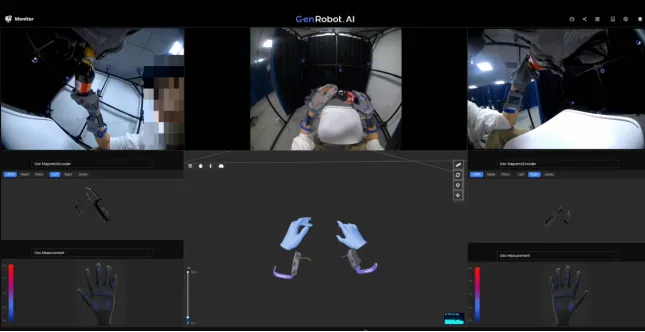
The relationship between the three is more like different levels in the data infrastructure. Wide-ranging data expansion task distribution, action detail data improves process resolution, native measurement data constrains critical states and action tags. Different configurations share coordinated tasks, trajectories, and interaction characteristics so that data of different quality levels can be used synchronously in the same set of surveillance systems rather than interchangeably.
What the body model really needs to learn is how the movement triggers contact, how the contact changes the object, how feedback drives the next move. Only head-to-head synchronization can provide a credible monitoring signal for this causal chain.
The collection process also serves this continuity. Wearing with headgear, hair covering quality checks, one-key recording, multi-way synchronous collection, App real-time quality checks, magnetic stripping, MCAP standard format post-processing. These details determine whether high-quality records can continue to be produced.
05.
To turn a complete operation into a sustainable supply chain
When a single operation is simultaneously restored to a complete causal chain, the next step is whether the supply can be stable, sustained, and scaled.In a nutshell, there is a longer-term judgment behind the product logic of DAS 2.0. The value of data-gathering hardware will ultimately be verified through the actual effects of model training.
At a time when Physical AI models are becoming more widespread and capacity is continuing to emerge, the value of data is shifting from supplying more samples of silicon to supplying more reliable constraints of silicon. The more widespread the model is, the more data is needed to answer three questions.
First, whether the results of the interaction are physically consistent; second, whether the long-tail scenarios, failure recovery and trans-environmental changes are covered; third, whether the data generated by different devices, different batches, different collectors can be digested by the model using a uniform timeline, consistent labeling and traceability process.
Simply increasing the number of hours does not have to automatically translate into generalization capabilities; the trained, verifiable, reusable, and efficient data sets are the constraining conditions and evaluation underpinnings behind the emergence of models. Data is both scaling distribution and calibration factors.
The demand for data is therefore layered. Customers want to cover more scenarios, more operators, the breadth of longer-tail tasks, and high-quality supervision of critical states such as access, power, slippage, while controlling the cost of a single piece of effective data. A single fully modular high-precision program cannot cover all scenarios, and a single light vision program cannot complement physical contact.
From an industrial ecological point of view, the data industry is still in the early stages of the transition from scattered acquisition to data infrastructure. There is still no stable division between hardware manufacturers, acquisition service providers, labeling and post-processing platforms, standards and compliance, model evaluation and model teams; open-source data, closed-source deliveries and task-type data assets remain consistent. Those who can transform real-world operations stably into trainable, comparable and replicable data structures are more likely to occupy key nodes in the ecosystem.
In this direction, Intel is committed to making every real operation dependent on a sustainable supply of data infrastructure, so that the binding value of data can be stabilized at every stage of model generalization.
It is reported that Intel's data products have been extensively verified in the models of several Physical AI teams around the world, increasing the effective data delivery in a single quarter from 100,000 hours to millions of hours. Stable delivery itself is competitive in the industry from storytelling to delivery. After completing the 100 million yuan financing, Intel continues to invest in Dex+Ego hardware research and development and open source data construction, trying to lower the threshold for the entire industry to access human demonstration data with high-quality open source data beyond the extraction of hardware.
Human Skill can be more fully translated into Robot Skill when the data can restore the complete chain of causation of the observation of mouse movements and mouse exposure to mouse feedback to adjust the mouse outcome.
Scalability is not more equipment, but more efficient data; it's not two isolated pieces of hardware, but a complete human data infrastructure.
Maybe this is the era of Physical AI, the training ground for data collection systems that really need to be rebuilt.









