


Authors: Jindou Jia*, Jingliang Li*, Kuangji Zuo*, Tuo An*, Yuxuan Hu, Mengfei Zhao, Bofan Lyu, Jiaqi Bai, Daoyuan Zhu, Hengyu Dai, Junpeng Zhang, Jianfei Yang†
* Co-authored by† Communications
Unit:MARS Lab at the South China University of Technology in Singapore
Read more:
When we reach for the cup, we don't re-decide once every 20 milliseconds where the hand should be, and the whole movement evolves over time. But today's robot learning, whether it's spreading strategy, flow matching, VLA or world movement models, is almost all about predicting the movement itself.
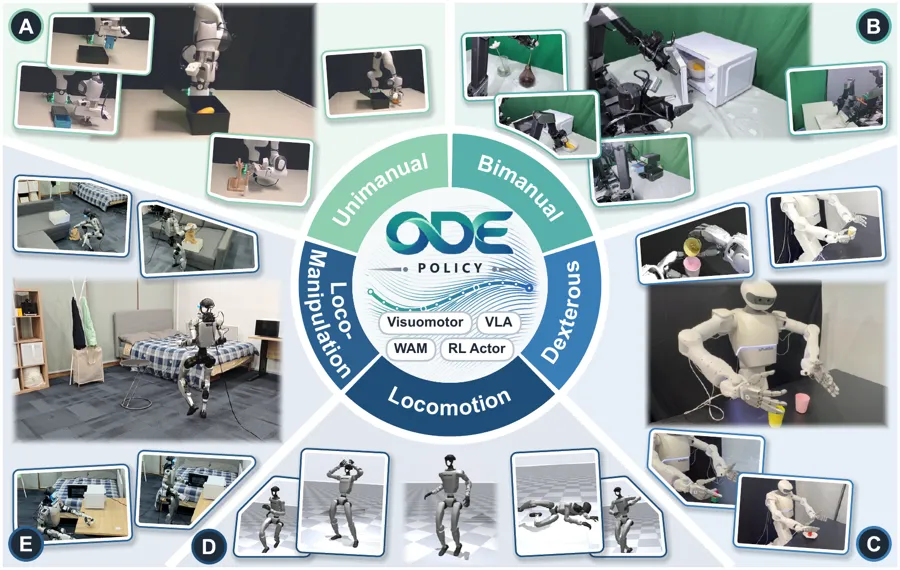
The ODE Policy, developed by the South Pacific University of Technology in Singapore's MARS Lab, is not a direct prediction of movement, but a study of the laws of evolution of movements over time using the Divine Frequently Differentiated Equation (Neural ODE), where each movement is derived from a previous one.
It trains only one epoch, achieves 5.9 times the success rate of flow matching and produces 10.8 times the speed of movement; the same methodology can be used to simulate learning, VLA, world action models and reinforcement learning, and has the highest success rate of all 15 real-machine missions with a single-armed, two-armed, handy-handed and humanoid robots, without the need for additional block-to-block smoothing, real-machine movements are in most cases smoother than those taught by humans.
The following is a link to the article:
- The paper:
- Website:
- Code:
1. Background: Why do robots need to learn how to cook by themselves?
Natura non facit saltus, Leibniz wrote in 1704 that the movements of humans and animals are continuous: the activity of the motor cortex evolves from a ready state like that of the dynamic system, and movements follow; the trajectory of the human hand is also close to the smooth curve of the minimum acceleration of the cube.
The mainstream robot strategy does not work this way. The network maps the observations directly into the action values of the discrete control steps, which we call the direct action strategies of the chip. To be more coherent, the common practice is to output a block of action, but the blocks are generated between each block, the welding is easy to jump, the robot appears to hesitate, moves, and often needs to be smoothed by additional mechanisms such as RTC; diffusion and flow matching strategies also need to be slowed down to noise, reasoning, and tightening.
So the team posed a seemingly simple question: Why should robots learn the movements themselves instead of learning how movements evolve over time?
2. Core method: learning vector fields of action
ODE Policy only replaces the movement head: network learning is not a movement value, but a vector field of movement, i.e. the speed at which the movement should change under the current observation and movement. When deployed, each movement is scored along a vector field along the previous movement, and the trajectory executed is inherently continuous.
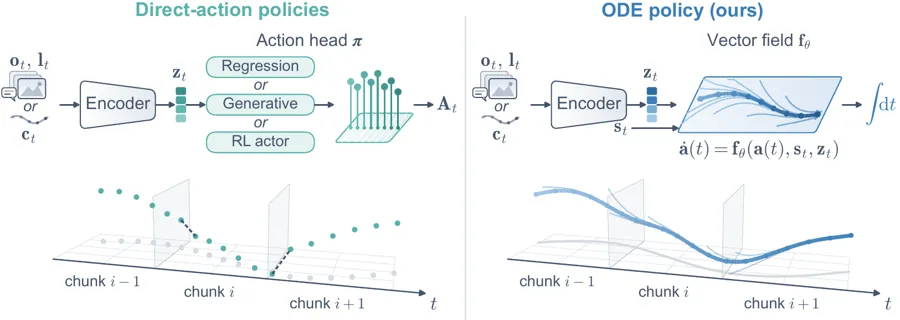
Figure 1: Direct action strategy with ODE Policy.
There are three key designs around this idea.
- Path Loss: The path is lost.In short movements, score on blocks, so that the score path matches the instruction, without the need for speed labels.
- I'm not sure if I'm going to be able to do that.Disturbing the starting point during training allows the strategy to be pulled back after the demonstration, reducing the accumulation of errors.
- Seamless Chunking:Each movement block continues to score from the end of the previous block, without leaping between the blocks, and each movement score is sent to the controller.
Will a single vector field eliminate the mean of different behavioural patterns? The team adds a lightweight diversity head and at the start of each movement block samples in one direction superimposed at speed, allowing the point path to enter different patterns without the need for multi-step generated sampling.
3. Assessment: four paradigms, four types of real machines
A basic approach cannot only be effective on one or two simulation benchmarks. The team compared the ODE Policy to 14 baselines, using the visual movement strategy, VLA to the world action model, and enhanced learning actors.
Learn quickly: One epoch is enough.
On LIBERO, ODE Policy trains a success rate of 79.2% for one epoch, 5.9 times that of FM-DiT, and more than 85% for the second epoch, which is higher than the previous quantitative level of diffusion and flow matching.
Each task uses only 20 parameters, which is more than FM-DiT with 50 parameters; FM-DiT with only 1.5M parameters is more than 48M parameters.
The amplified model is equally effective: in π0.5, the parameter is only about 3% for randomized ODE heads initiated by original action experts, 96.0% for 1 epoch, and 75.5% for randomized flow matching experts; in ImageWAM, the parameter reaches 82.6% for ODE heads after 1 epoch, and 24.6% for original action heads.
In reinforcement training, only the SuperMimic actor is replaced, and after 0.4 hours, the evaluated returns are 30% higher and lead to the end of the training.
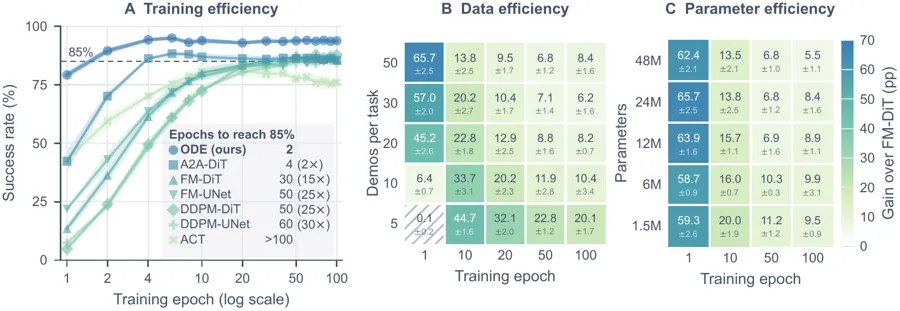
Figure two: Learning efficiency.A is the success rate of the training process; B, C is the improvement in FM-DiT relative to less instruction and fewer parameters; D, E π0.5 is the improvement in evaluation returns with ImageWAM; F is the improvement in reinforcement learning.
Run fast, move steadily
Using the simplest Euler score, ODE Policy produces eight moves in just 5.7 ms, 10.8 times faster than FM-DiT and about 100 times faster than DDPM; about 14 and 4 times faster in π0.5 and ImageWAM respectively.
Its end acceleration (jerk) is the lowest of all methods; on the true machine, the instruction at the boundary of the movement block is not faster than that shown by humans on both arms and hands, while the baseline can be several times faster than that shown by humans.
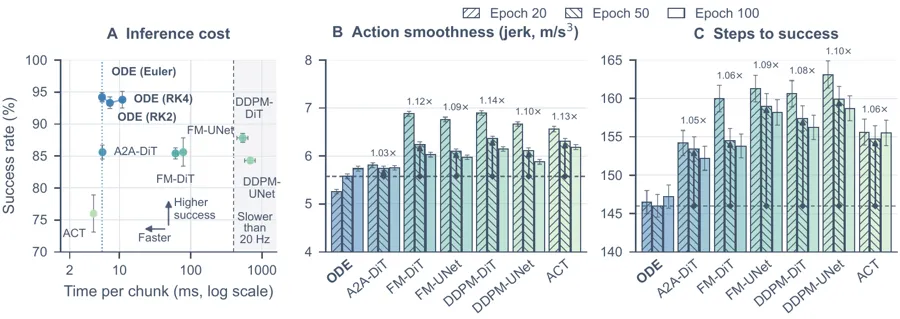
Figure 3 explains the cost and smoothness of the action.
Generalization and Multimodalism
In a zero-sample LIBERO-plus disruption test, the success rate of one epoch of ODE Policy training was 5.4 times that of flow matching.
In four-line 2D navigation missions, it has traveled four routes since the first epoch, with a modular balance of 3.9 times FM-DiT.
15 missions with the highest success rate
Franka, single-armed:
All the strategies train only 50 epochs, ODE Policy overlays the holes in the drawer 15/20 ((baseline up to 8/20), insert the blocks 14/20 ((baseline up to 4/20)).
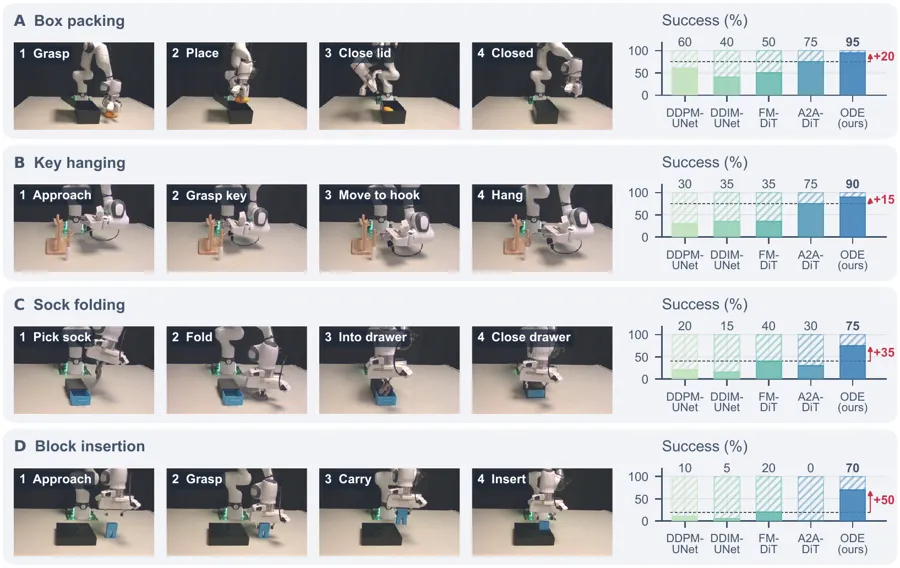
Figure 4: Franka's one-armed robot mission, with a success rate of 20 trials on the right.
This is the first time I've heard of the Galaxy R1 Lite.
Putting the bowl on the microwave boiler 75% (FM-DiT 20%), folding the towel 45% (FM-DiT 15%); in multi-mode pulling tasks, the left hand will put the apple, 60% success rate, and FM-DiT never succeeds.
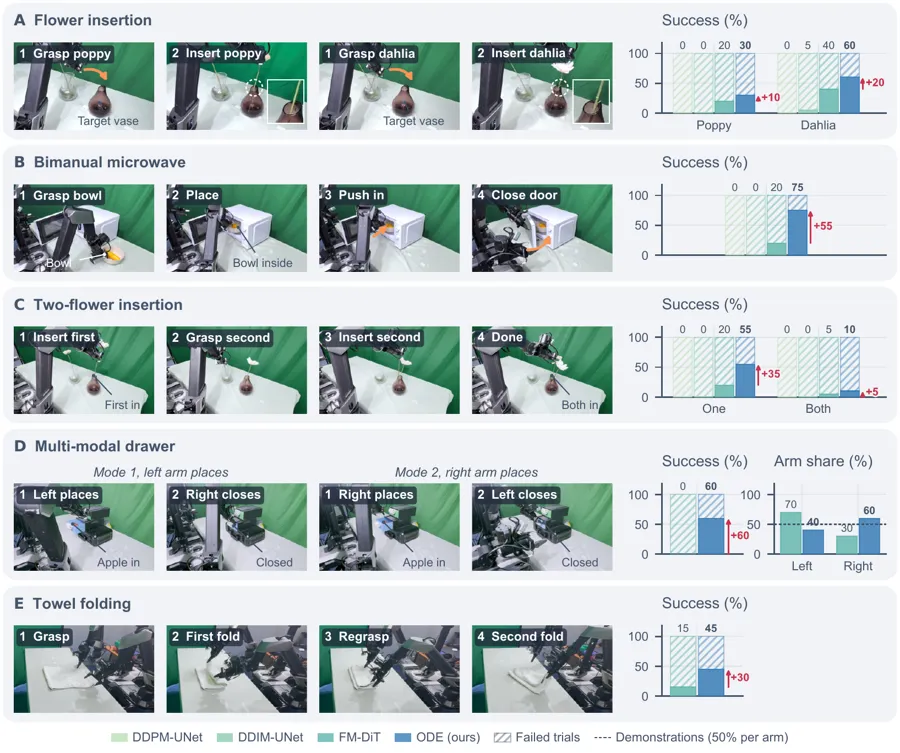
The galaxy's R1 Lite is a real two-armed mission.
Sharpa is a skilled hand:
I'm going to have to get the plate on 18/20.
What's even more interesting is the cross-laboratory migration: just using Sharpa's open datasets collected in his lab to train, deploy directly to our lab, and replace them with other cups, colors and backgrounds, bracelets 17/20, double-handed pills 17/20 (FM-DiT 10/20), folding 13/20, while the baseline fails entirely on the bracelets and folding blocks.
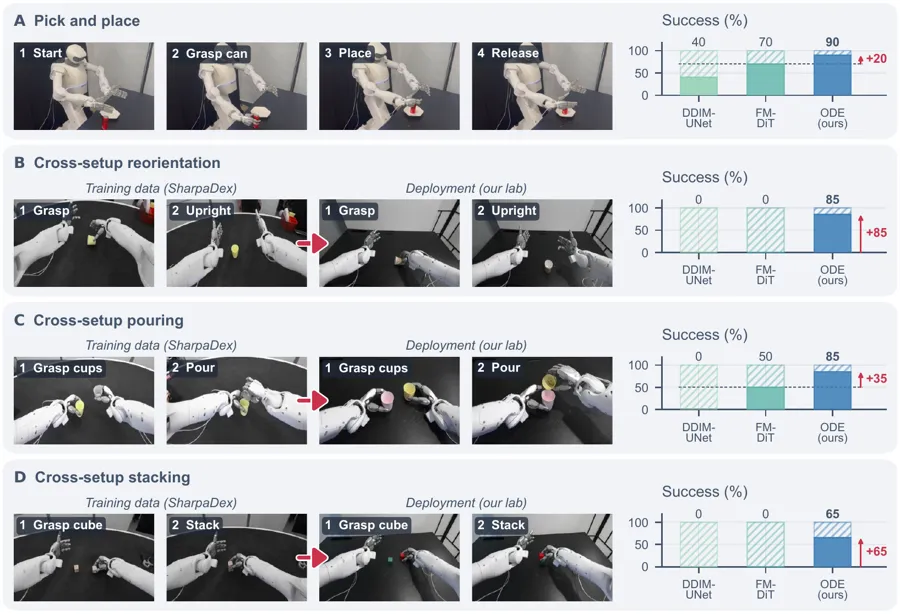
Figure 6. Smartphone missions, BCD training with public data from another lab.
Unitree G1 is a humanoid robot:
ODE Policy, as the movement head of the GR00T N1.7, completes a full-length sequence of walking, pulling, grabbing and placing tasks: put the toy in the box on the couch 60% of the original movement head 35%), put the meal in the microwave and turn off 70% of the original movement head 30%.
Figure 7 - A robot robot moves on a mission.
Statistically, the ODE Policy was higher than the strongest baseline on all 15 real-machine missions.
Writing the continuity of physical movements into a strategic structure instead of making the network more efficient in learning, data, parameters and execution, and extending from small models to large models, from simulation to reinforcement learning.
4. Enhance space and development potential
The first is the frequent differential equation describing continuous signals. The two-valued claw instruction can be predicted with independent classification heads if the success rate decreases directly as a vector field state score. Neural ODEs that are not continuous in dynamics, such as learning event functions and jump variables, may further enhance the ODE Policy.
Second, in early non-model reinforcement learning experiments, learned movements often bounced back and forth between control steps, and the ODE Policy gains were small, possibly because its continuity was also smooth. It was best suited to exploring scenarios where the instruction itself should be smooth, such as simulating demonstrations or deploying to real hardware.
Third, viewing the strategy as a vector field of physical time also opens up new uses: the speed of each movement can be directly obtained, and can never be learned from handheld devices or human video data without movement labels; the point step length is the choice when deployed, and the same model can run at 20, 40, or 80 Hz without training.
Over the past few years, physical intelligence has increasingly emphasized Scaling: more data, larger models, more computing. These are of course important, but beyond Scaling, some of the most basic questions are worth reconsidering. The answer given by ODE Policy is that action is not a series of independent numerical values, but a continuous process that unfolds from intent.
5. Main author information
The project leader:
Following his PhD at the South China University of Technology (Singapore) MARS Lab, his research areas include VLA, WAM, PINN, etc. He has published several papers as a first/co-author at top AI, robotics, control journals conferences (Nature npj Robotics, IJRR, TRO, RSS, ICLR, RAL, CoRL, ICRA, etc.).
This is the first time I've ever heard of this kind of thing.
He is a dual-tenured assistant professor, Ph.D. student advisor, and head of the MARS Lab at the South China University of Technology's School of Mechanical and Aerospace Engineering and the School of Electronics and Electrical Engineering. He has published several papers in top AI conferences and journals (IJRR, RSS, NeurIPS, ICLR, CVPR, CoRL, ICCV, ECCV, ACL, AA, AIMobiCom, IROS, IJCV, TIP, TNLS, TMC, IOT-J, TCYBE, etc.).









