


Are we using the limits of the capabilities of existing robots to limit the idea of the next generation of physical data?
Over the past few years, data collection with physical intelligence has largely revolved around the human body of a robot. Robots, mechanical arms, and dexterity determine how the data is collected, how the movements are represented, and which models can ultimately be used. Real machine data can provide real execution status and environmental feedback, but is limited by the number of devices, collection costs, and task environments. Internet video has a wealth of information about human behavior and scenarios, but it is difficult to directly provide the precise kinetic and physical interactions required for robot training.
This method of collecting data centred on a robot's body is reasonable, but it is also easy to form a path dependence: we tend to collect movements that robots are already able to perform and then use these data to train robots to do more similar tasks. However, the operational experience that humans have accumulated in the real world is far beyond the scope of tasks that current robots can perform.
Opening a bottle cap looks like a simple move. Stretching the hand to the bottle body, adjusting the position of the fingers and establishing contact; one hand fastening the bottle body, the other hand changing the grip posture until the bottle cap is loosened.
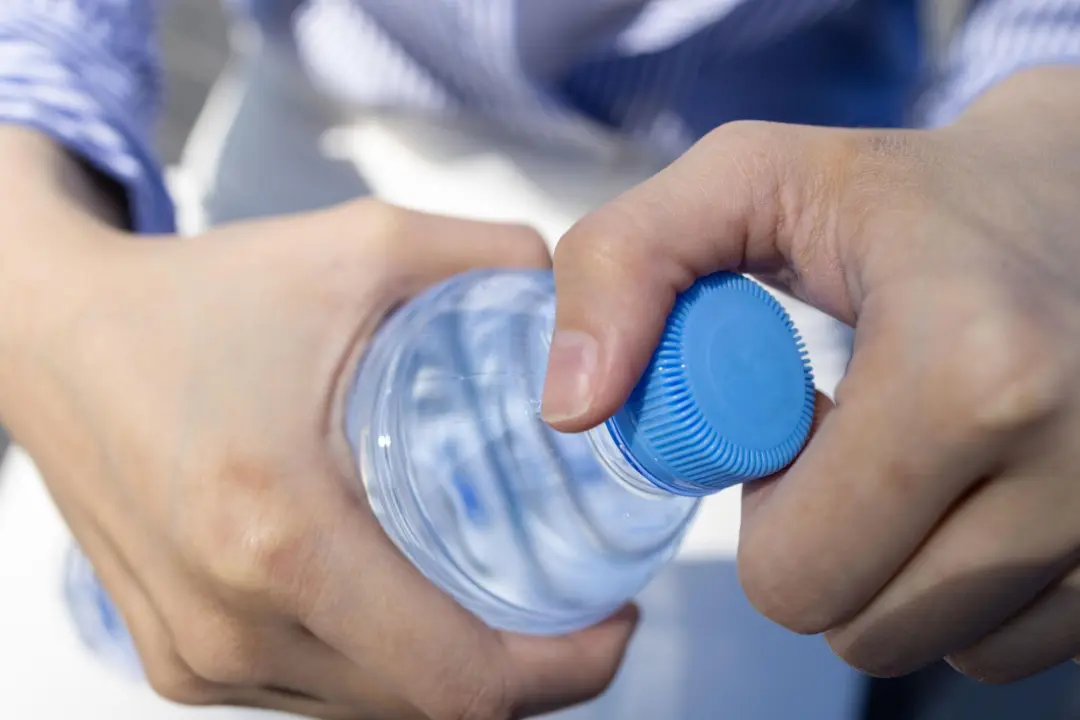
For robots, these experiences are not easy to obtain. A video can record the operation process, but it is not necessarily able to see the fingers covered by the object, nor can it directly measure the contact between the hands and the objects. Even after obtaining the trajectory of human hands, the robot will still have to face different hand structures, range of motion and sensors.
This is also the problem that Human Data is solving: how do we get training signals that robots can use from human interactions with the real world?
Robot training data comes from a variety of sources, including real-world machine operation data, simulation data, Internet video, and first-person models of humans. They record different information: the trajectories of operations collected by the robot's own body can provide clear actions and execute feedback, but the collection costs are higher, and are limited by the robot's own body, mission environment, and deployment conditions; images and videos on the Internet have a wealth of scenarios and behavioural information, but it is difficult to directly provide accurate kinetics and contact tags.
Humans have accumulated a wealth of natural experience in the real world - from picking up cups, cleaning clothes, bottle caps, disconnecting connectors, processing tools - covering different people, objects, environments, and tasks. The question is, how do we turn these natural human skills into data that robots can learn?
Recent studies have begun to answer this question from different levels.

Apple's EgoDex uses Apple Vision Pro to collect 829 hours of first-person video and simultaneously obtain 3D hand and finger tracking data, covering 194 desktop tasks. It attempts to solve the problem of the lack of fine hand movement labels in large-scale natural video.
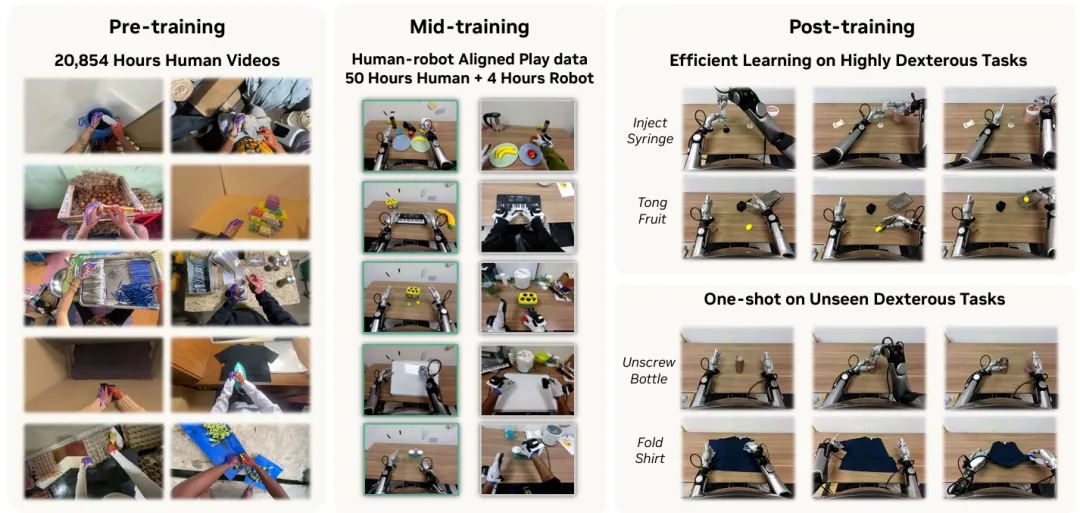
NVIDIA's EgoScale uses more than 20,000 hours of label-driven Ego Video for VLA pre-training to explore the relationship between the size of human video data and the agility of robots. Microsoft Research's VITRA has never released natural video without action-labeling, and has built more than 1.2 million Human Hand VLA Episodes through manual reconstruction and task segments.
TouchScale will further advance the research into visual and tactile collaborative learning, build around 500 hours of human visual and tactile data, and validate its help with real robot operations.
Human Data is no longer just recording what humans have done, but is beginning to record how humans observe, act, touch, adjust, and how these interactions change the physical world.
Dex 2.0 and DAS Ego 2.0, introduced by GenRobot.AI, are two sets of collection devices designed around this need. Dex 2.0 focuses on the precise measurement of human hand movement and physical contact, while DAS Ego 2.0 is responsible for recording first-person vision, surroundings and head movements.
Dex 2.0: Making human dexterity measurable
The palm of the hand is one of the most frequent parts of human interaction with the physical world, and the most difficult part of the collection of intelligent data.
For agile operating models, it is not enough to know just where the hand ends up. The model also needs to understand how the joints of each finger synchronize, how the grip gesture changes, and when and in what position the finger makes contact with the object.
This means that hand-to-hand data collection needs to address two issues simultaneously: how to stabilize the movement of joints and how not to change the way humans operate.
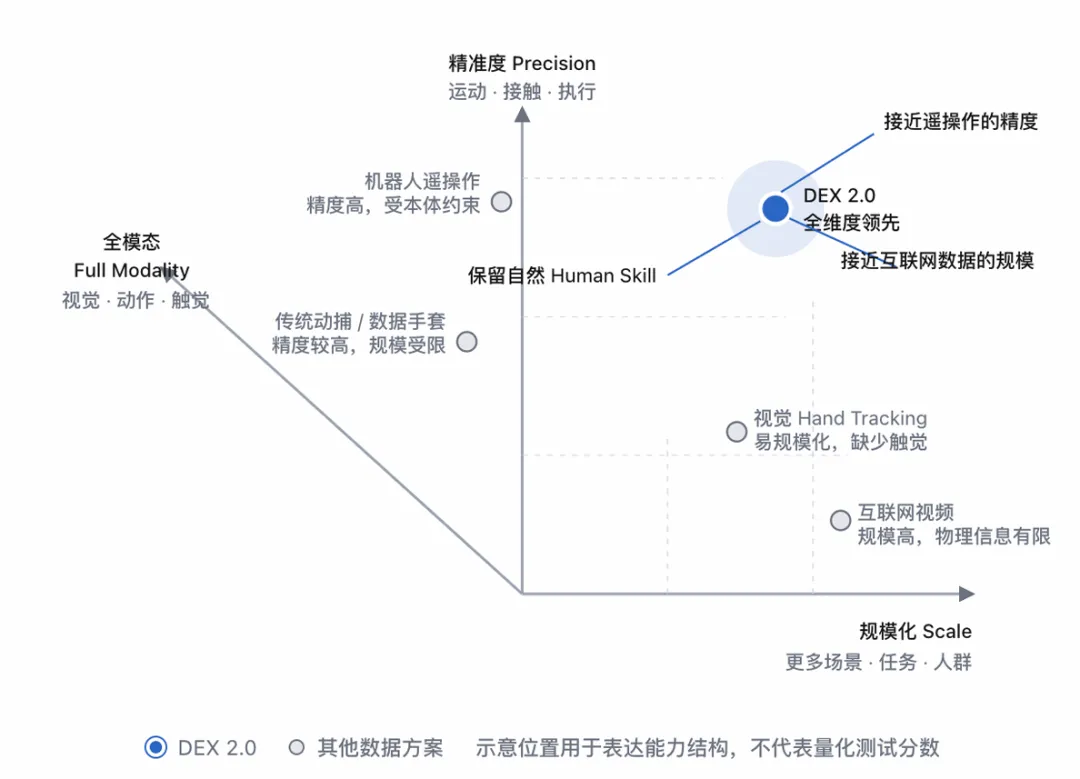
Embedded extra-biological skeleton: a balance between physical constraints and natural operations
Traditional hand movements capture a number of technical routes.
The visual program estimates the position of the joints and fingers through the critical points of the hand in the image, without the need for complex mechanical structures to be installed on the hand, but is easily influenced by shading, lighting, camera view and hand interaction. When the fingers are shaded by objects or palms, some of the joints are difficult to recover reliably with images alone.
A flexible sensing program typically bends its fingers by means of material shapeshifting, resistance or other sensing signals. It has relatively few constraints on the structure of the opponent's body, but the material itself also shapeshifts, slips and lags, requiring labeling and modeling between the sensor readings and the actual angle of connection.
Tracking schemes based on external magnetic fields can estimate the position or posture of the sensor by magnetic field variations, but the measurement results may be influenced by other magnetic materials and electromagnetic devices in the working environment.
External skeletal regimens take different approaches: by constructing a mechanical structure to establish a kinematic relationship between the sensors and the joints of the human body, and by directly measuring the movement of the joints. It can provide a clear state of the joints, but mechanical structures can also expand the geometrical boundaries of the arm, limit some movement, and introduce deviations between the axis of the human joints and the axis of the mechanical joints.
Dex 2.0 opted for a lightweight side-by-side simulation of the exoskeleton route.
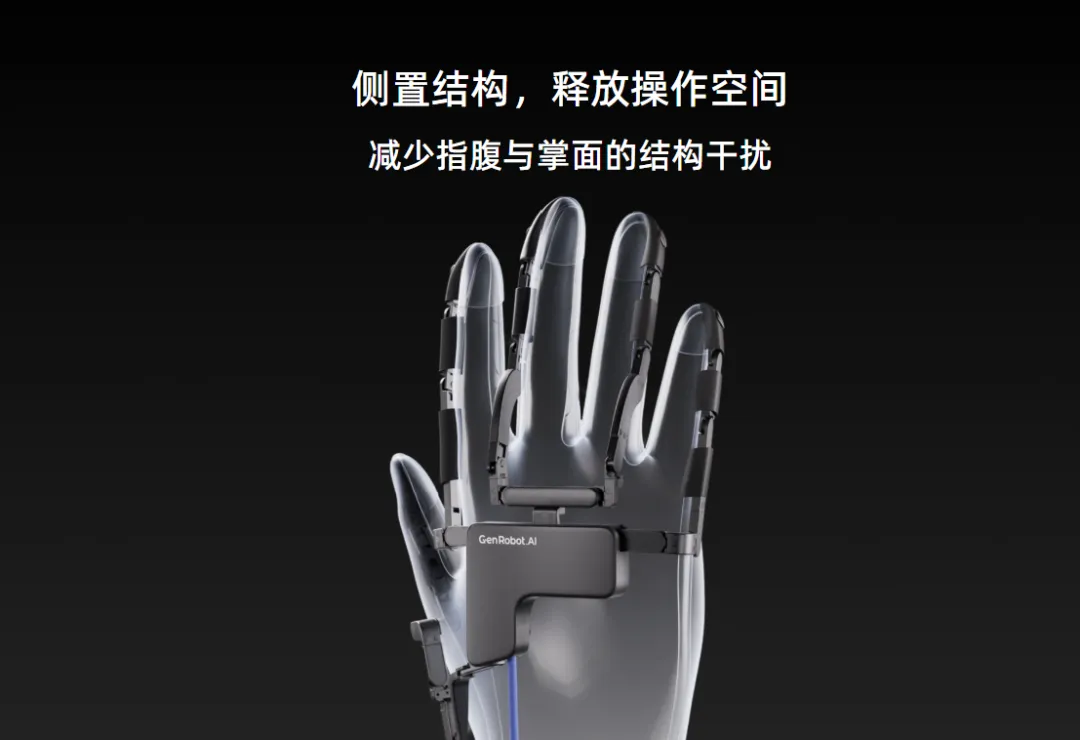
It places the mechanical joint structure on the side of the fingers, making it as close as possible to the movement axis of the human joints, while reducing the occupation of critical operating areas such as the opponent's back, thumb and forefinger. Compared to the design of a mechanical structure concentrated on the back of the hand, the siding scheme allows more space for attachment to pick up the hand, rotate inside and operate in a narrow space, allowing the collector to perform more natural hand interactions while wearing the device.

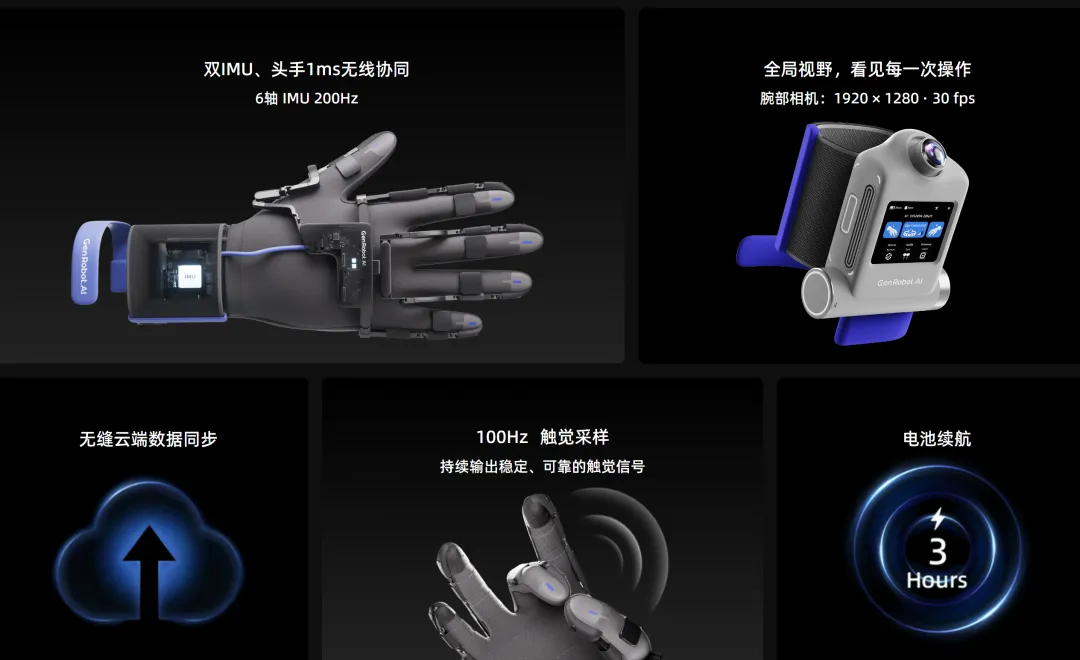
In terms of motion measurement, Dex 2.0 integrates a self-developed micro-magnetic encoder into the internal biosynthetic joints, directly measuring the rotational angles of each joint. Dex 2.0 supports 21 DoF hand-arm motion capture, single-handed configuration of 21 independent joint encoders, joint angle accuracy of 0.2°, microsynthetic joint structure thickness of about 3 mm, outer bone main weight of about 55 g, and whole glove weight of about 150 g.
Here it is necessary to distinguish joint measurement from the reconstruction of the full arm posture: the encoder directly provides the local joint angle, the full arm posture and the spatial position of the fingers still need to be combined with the calculation of the hand movement model. Its advantage is that it is able to directly obtain the joint state with a clear movement meaning, to provide basic data for subsequent arm posture reconstruction, trajectory analysis and robot movement reorientation.
From a design point of view, Dex 2.0 combines mechanical structure, motion measurement and natural operation: the side layout frees up the operating space of the hands as much as possible, the biomechanical joints establish the kinematic relationship between the human fingers and the sensors, while the micro-encoder provides precise joint angle measurements. This allows wearable devices to not only record the appearance of the hands but also to obtain structured kinematic data.
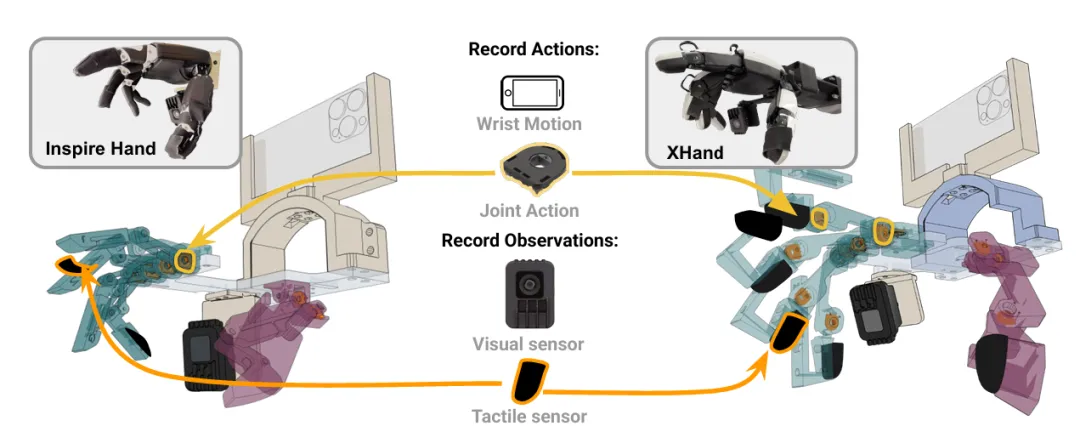
This technology has also been the subject of corresponding research explorations. DexUMI uses wearable exoskeletons as the interface between human operation and robotic dexterity, and combines Hand Inpainting to reduce the visual differences between human and robotic hands. The study conducted real-world mission experiments on two different robotic dexterity platforms, reporting an average success rate of 86%.
The value of wearable skeletons lies not only in obtaining precise human hand movement data, but also in providing the kinetic basis for Human-to-Robot Retargeting. Through further kinetic mapping, motion constraints, and visual adaptation, human operational experiences can be transformed into representations of movements that can be used by different robot bodies.
Dex 2.0's side-by-side simulation of extra-biological bone and in-joint encoder provides more detailed human hand movement data for this process. Combined with subsequent cross-body orientation and tactical learning, these data can not only be used to model human operational behavior but can also further serve robotic agility training.
Semi-flexible whole-handed electronic skin: from joint movement to physical contact
Joint movement can only describe how the hand moves, but it cannot fully describe what happens between the hand and the object.
For example, a rotating bottle cap requires the fingers to constantly establish contact, adjust grip strength, and change the way the force is applied according to the state of the bottle cap movement. Only the finger joint trajectory makes it difficult to determine when contact occurs, whether the position of contact changes, and whether there is a slip during the operation.
This is where the importance of touch data comes in.
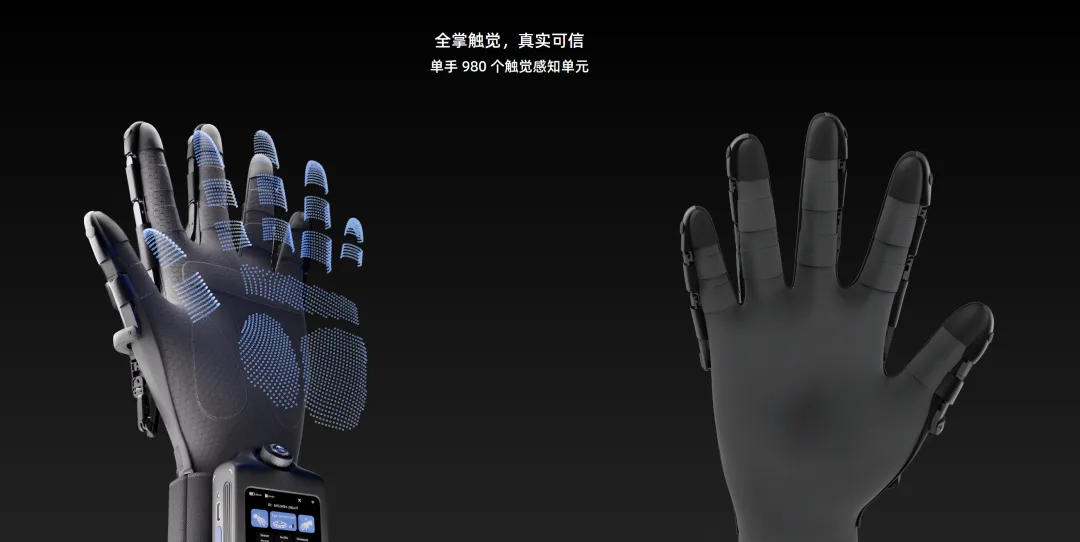
Dex 2.0 uses self-developed semi-soft pressurized electronic skin to extend touch coverage to the main interaction area of the hand. 16 touch sensors, a total of 980 sensing touch points, touch space resolution of 1 mm, minimum detection power of 0.1 N, and sampling rate of 100 Hz are configured.

Rather than simply increasing the number of sensors, it is worth discussing the disruption between material transformations and sensing units.
Pressure-resistant sensors perceive resistance changes in pressure caused by gravity. They can convert electrical signals in a relatively direct way, but the sensors themselves are also influenced by the structure of the material, the way they are installed, and the stress state.
For wearable wrist devices, the sensor must be attached to the curves of the fingers and palms, while tolerating continuous bending, grip and contact. If the material is too soft, additional shape changes may occur during stretching, cutting, and straightening; if the structure is too hard, it may affect the movement and contact of the wrist.
Dex 2.0 uses a semi-flexible structure that attempts to strike a balance between bending and shape-shifting stability. Its design goals are to reduce the motion distortion caused by stretching, sliding and sliding fabrics, and to reduce mechanical and electromagnetic interference by designing sensing units and array structures so that real contact is reflected as centrally as possible on the corresponding sensing units.
Why is it so important to interfere?
Assuming that the thumb actually touches only a small object, but the adjacent sensor unit also responds, the tactile distribution received by the model may be larger than the actual range of contact. Conversely, if certain areas are leaked due to poor adhesion or sensor drift, the model may underestimate the area of contact and pressure distribution.
This type of problem is not merely a problem of sensor performance, but a problem of monitoring signal quality. Models cannot naturally distinguish which tactile responses come from real contact, which come from the deformation and interference of the device itself.
Therefore, a full-hand touch system needs to simultaneously focus on three indicators: spatial coverage, contact positioning and signal stability. Dex 2.0's 980 touchpoints and 1 mm spatial resolution mainly describe its sensor array specifications; 0.1 N is the minimum detection power indicator and cannot be directly equivalent to pressure measurement errors or detection accuracy under all material contact conditions.
In terms of durability, the product information reveals that single-piece sensors can withstand more than 1 million times pressure and 100,000 times bending and stretching, and support IP67 protection. These designs are designed for long-term wear and real-world scanning, but zero-point drift, changes in sensitivity, latency and repeatability in actual long-term use still require more complete test data to be evaluated.
Joint encoders record how the hand moves and electronic skin records how the hand touches objects. Combining the two, the model has the opportunity to gain control of both movement and physical interaction at the same time, rather than just learning to grasp the visual appearance of movement.
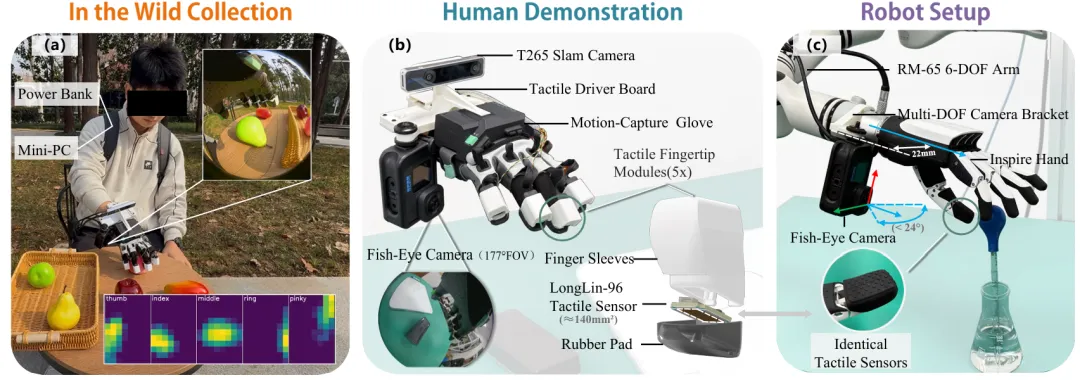
Recent research has begun to explore how to combine the two types of signals. DexViTac has built a collection system that includes first-person vision, high-density touch, terminal posture and hand movement, collected more than 2,400 multi-modal samples, and proposed Kinematics-Grounded Tactile Representation Learning, which combines touch characteristics with hand movement states to reduce the semantic misconceptions of local touch signals.
High-density touch data is not simply transmitting sensor readings to a model. Touch responses at the same location may correspond to different physical interactions in different hand structures. Touch and joint states are combined to better understand where contact occurs, how the fingers synchronize, and how the contact changes with movement.
Furthermore, TouchScale has constructed approximately 500 hours of human visual lens touch data, including RGB-D for headgear, RGB for both wrists, and touch gloves for both hands. Its touch gloves contain 880 sensing units per hand, which can record direction and shear power.
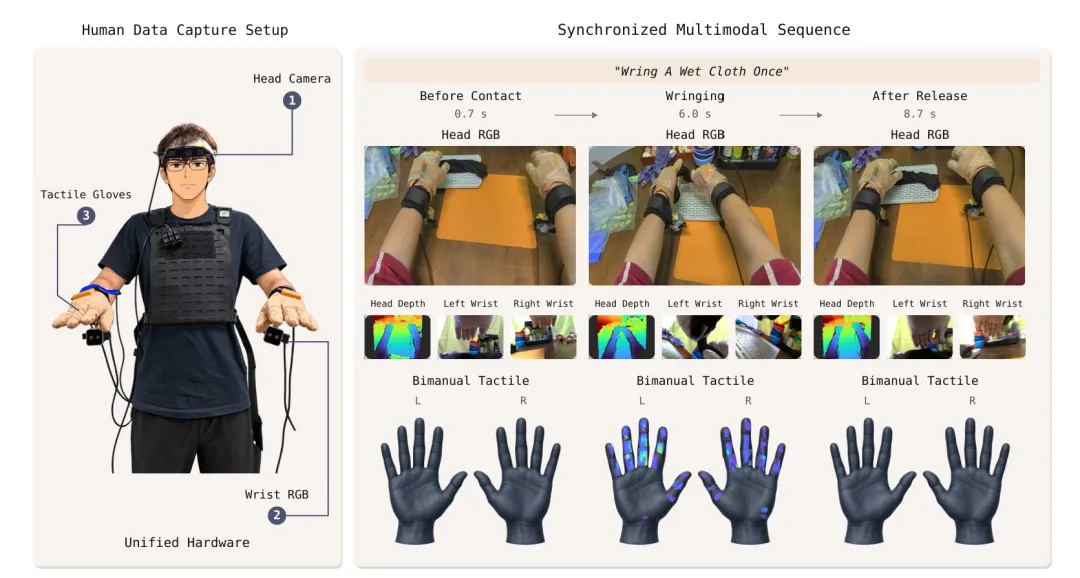
TouchScale not only released the data, but also directly verified the value of the data for the model training. After using the full data training in the Zero-shot Contact Prediction cross-sensor, the model improved the Contact IoU on unseen touch sensors from 0.134 to 0.383. In four real robot contact intensive tasks, the average success rate increased from 22.5% to 57.5% after joining TouchScale for Visual-Tactile Mid-training.

TouchScale's human data does not simply provide a trajectory of movement for the robot, but allows the model to learn the relationship between vision and contact before it can be trained after the robot.
The value of whole-hand touch data is not only an addition to an input model, but whether it is possible to learn portable touch knowledge through unified kinesiology, visual and tactile representation.
DAS Ego 2.0: Record of local action from nationwide observation
If Dex 2.0 focuses on how the hand performs operations, DAS Ego 2.0 focuses on what environments humans observe, move and perform these operations in.
Traditional single viewpoint Ego Camera has a clear limitation of observation range. When a person turns, bends, sides, or moves objects, the critical targets may leave the camera's field of view. Hand movements are not isolated for mobile operations and humanoid learning, but are closely related to human postures, head movements, and surroundings.
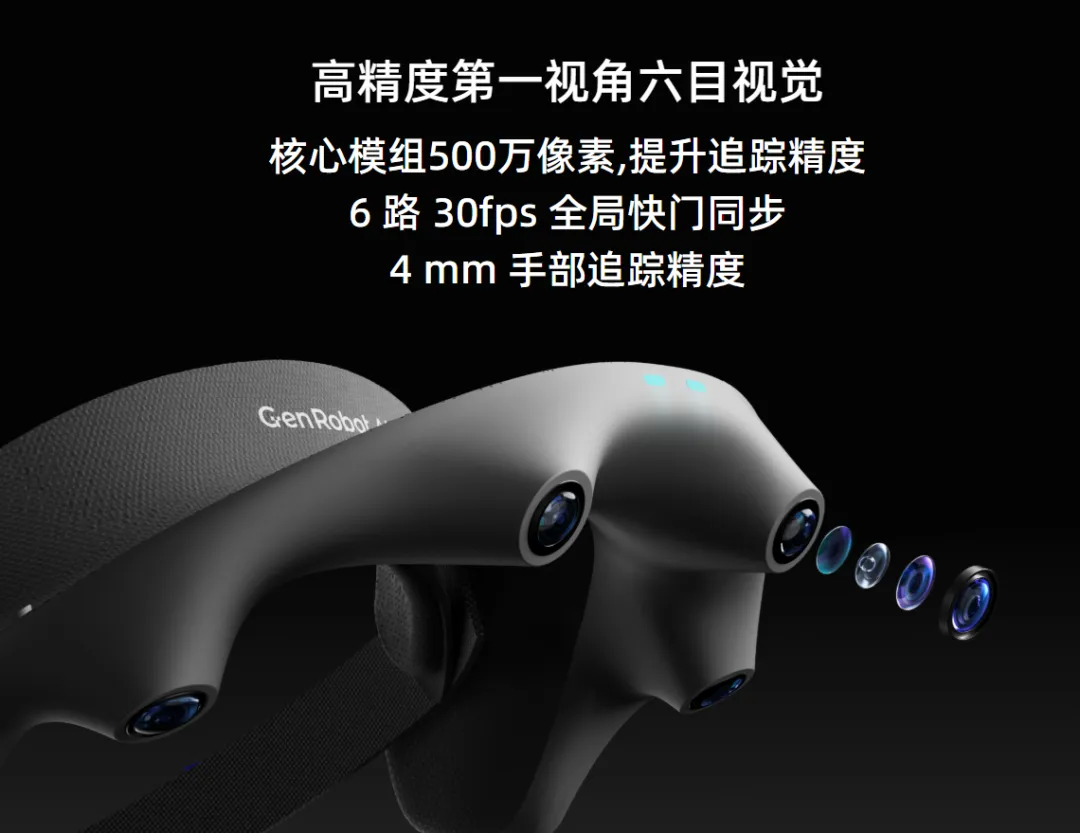
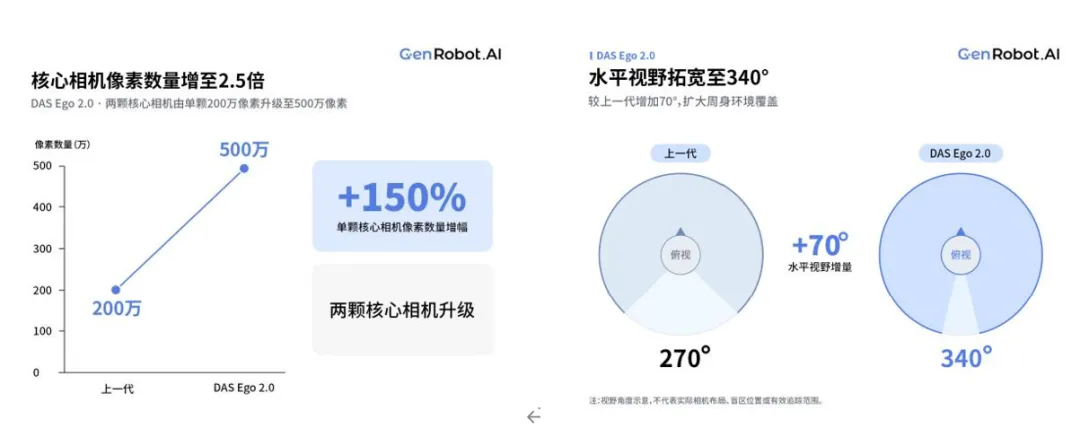
DAS Ego 2.0 uses six-way synchronous cameras, including two 5 million-pixel cameras and four 2 million-pixel cameras, all supporting 30 FPS and Global Shutter. By redesigning the camera layout, the system expands the horizontal view coverage to 340° and the vertical view to a maximum of 120°.
The two core cameras were upgraded from the previous generation of 2 million pixels to 5 million pixels to provide higher resolution visual input for SLAM positioning and precise hand tracking. The device also integrates a 200 Hz IMU, microphone, and supports fingerprint tracking accuracy of about 4 mm.
A broader field of view is not only about increasing the number of images, but also about maintaining the context in the environment in which it operates as continuously as possible. For example, human movements require constant changes in body direction and position when moving objects; bending to pick up objects, hand movements and body postures change simultaneously; turning to place objects on another table, there is also a continuous relationship between the original goal, the current operating position, and the new state of the environment. These processes require more complete vision and motion observation.
However, 340° visual coverage is not the same as having completed a full-body 3D motion reconstruction. Multi-camera imaging, IMU and finger tracking provide basic observations for spatial perception and motion estimation. Further stable world coordinate trajectories, full-body skeletons and object positions require spatial marking, visual reconstruction and corresponding data processing algorithms.
This also explains why Ego devices should not only be evaluated based on the number of cameras and pixels. Multi-camera systems also involve external parameterization between cameras, image time synchronization, geometric relationships between different angles, and conversion between head motion and environmental coordinate systems.
GenRobot's previously released Gen-HumanEgo has demonstrated a portion of this data processing route. The data set contains 1,847.7 hours of human first-person perspective demonstrations, 44,632 episodes and 10,257 missions, using six-digit DAS-Ego collection, and uses the Data Foundation Model to process 3D hand keys, MANO parameters, complete hand geometry, depth charts, and layered task labeling. The original multi-point video from the Ego device collection can be further transformed into structured data that includes motion, space, and mission monitoring.
Multi-camera acquisition solves the problem of observation scope, but original video itself is not the same as structured motion data. In order to recover hand movement from a multi-point image, it is also necessary to process camera labeling, cross-point associations, hand geometry reconstruction and task segments. The resulting hand critical points, MANO parameters and depth information can be used for further motion modeling, trajectory analysis and cross-weight orientation. This also means that the value of Ego devices lies not only in recording more images, but also in providing more complete observation conditions for subsequent data reconstruction.
Ego + Wrist Camera: Record of local action from nationwide observation
The head camera can record the environment in which the person is performing the task, but for the local interaction between the hand and the object, there is still a blind spot of observation based solely on the head's perspective. When the hand approaches the object, the fingers may be obscured by the object or another hand, and fine gesture adjustments in the grip process, contact position changes and local movements may not necessarily be clearly recorded.
The wrist camera provides another way of observing. Unlike the head camera, which focuses on the overall environment and task process, the wrist camera continuously complements local images near the wrist, allowing the same operation to have both the overall and near field views at the same time.
For example, when the bottle cap is opened, the head camera records how the person observes the bottle, adjusts the position of the body, and the entire process of operation; the wrist camera further records from which direction the hand approaches the bottle cap, how the fingers adjust the position, how the relative movement between the hand and the body of the bottle and the bottle cap occurs, and the local shapes that can be observed during contact.
This combination of global and local vision can describe in greater detail the changes in an operation from approaching, adjusting to picking up. Combined with camera marking and trajectory reconstruction, it can create a spatial correspondence between images from different angles, further organize fine-grained action segments, and align the local task process with local hand movements.
The value of wrist vision is not only an increase in a shooting angle, but also an increase in the observability of local movements. While it retains the relatively lightweight advantage of visual acquisition, it increases the depth of recording of opponent object interaction processes, providing another option for the production of large volumes of precise motion data.
From visual recording to native kinesiology and tactile supervision
When the precision of the opponent's movements and physical contact information are demanded, there are still limits to reliance on vision alone.
Ego + Dex further introduces Dex gloves, which use joint encoders and full-arm touch sensors to directly record human hand structure, joint movement changes and contact information, and relate to first-person and wrist vision.
As a result, DAS 2.0 formed three different data collection configurations: Ego focused on global vision and scene coverage; Ego + Wrist Camera increased the depth of local motion recording based on retained visual collection; and Ego + Dex further provided native kinesiology and tactile monitoring.
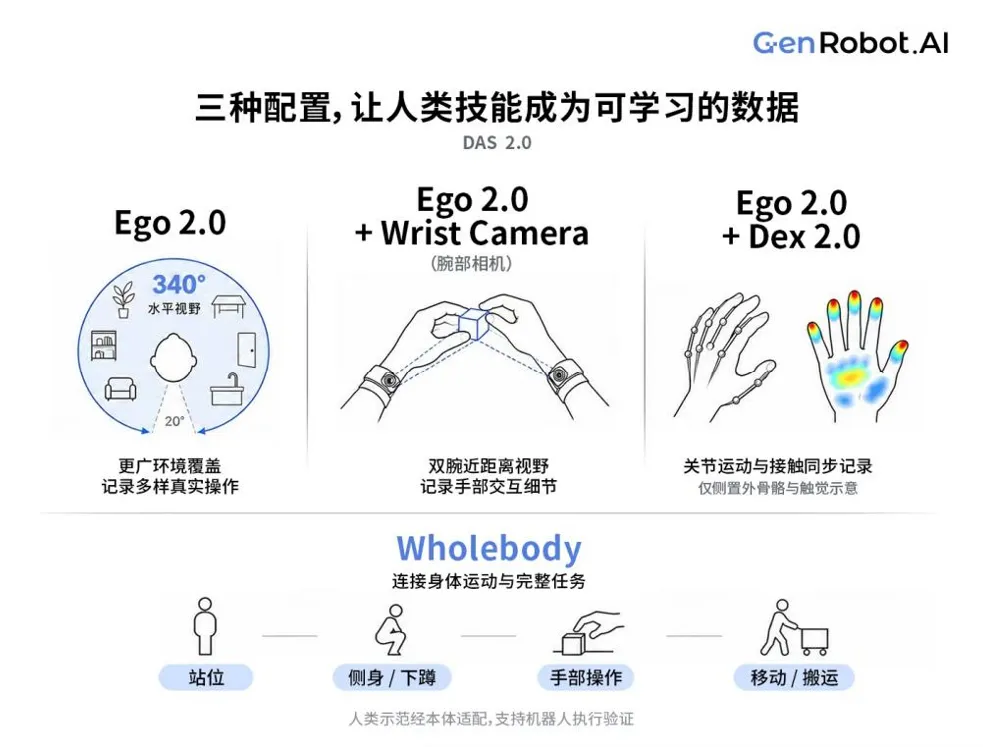
The three configurations are not simple hardware upgrades, but correspond to different acquisition costs and monitoring granularity. The Ego can expand the distribution of personnel, tasks and environments, the Ego + Wrist Camera can supplement more precise local action information, and the Ego + Dex provides a more direct measurement basis for critical junction states and physical contacts. They can be used according to a combination of task complexity and training needs, without requiring each data to have exactly the same sensor configuration.
From single devices to large-scale collection terminals
Another upgrade to Ego 2.0 is to consider the actual process of acquisition.
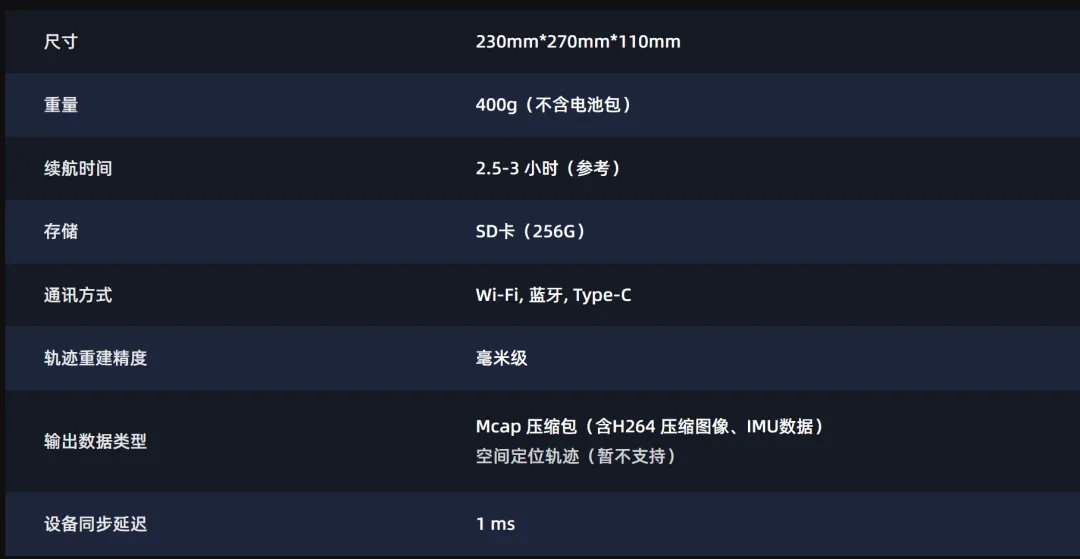
The device supports Android/iOS App, one-touch recording, voice status prompts, posture detection and hairspray detection, and supports OTA upgrades, standard MCAP data formatting and after batch processing.
The whole machine weighs about 400 g, does not contain a battery pack, a single battery pack lasts about 2.5 tons3 hours, and uses a magnetic-absorbing battery design that supports non-turning machine replacement.
These engineering details actually affect whether Human Data can scale production. Multi-person, multi-scene simultaneous collection requires not only the proper functioning of sensors, but also a unified data recording, device management, anomalous prompts and post-processing process.
In particular, the collection of quality controls. The position of the headgear, the hair covering and the condition of the device in long-term use may affect the final data quality. The transfer of part of the inspection before the collection phase helps to reduce ineffective data and repeat collection.
One-handedness: allowing multimodal data to describe simultaneous interactions
If Dex 2.0 is combined with DAS Ego 2.0, can different models describe the same physical interaction over time?

For example, a rotating bottle cap.
Ego 2.0 records human-observed bottle caps, bottle bodies and surroundings, while recording head movements; Dex 2.0 records changes in the joints of the fingers as they approach the bottle cap, wrist cameras supplement close-up vision, and electronic skin records pressure changes after the fingertips establish contact.
If these data are only recorded separately and matched after a file timeline is relied upon, they may be affected by factors such as operating system scheduling, communication transmission, data cache and drive queues. Especially in rapid crawling, contact point switching and disconnection operations, timing errors may make it impossible for images to accurately match with action tags.
For this purpose, Dex 2.0 and Ego combined a unified time base, hardware triggers, and camera shutter exposure control to achieve a 1 ms level of head vision, wrist vision, and hand state timing alignment in the collection of source-specific camera exposure and sampling times for joints and touch signals.
This requires a distinction between synchronous accuracy and sensor sampling frequency. 1 ms level synchronous does not mean a visual time resolution of 1 ms. The Ego camera still works at 30 FPS, the DEX touch sampling rate is 100 Hz and the IMU is 200 Hz. Hard synchronous solves the problem of correspondence between different sensor time axes, rather than allowing all models to have the same sampling frequency.
At the same time, time synchronization is not the same as spatial marking. Even if visual, joint and tactile signals are collected at the same time, if the coordinate relationship between camera input, glove and human body is not accurately marked, different models may still not be able to correspond correctly in space.
Thus, polymorphic alignment actually involves two questions: whether synchronous in time and consistent coordinate relationships in space. The former is based on a unified time base and hardware triggers, while the latter needs to rely on scheduling and spatial reconstruction processes.
In terms of data representation, the system attempts to establish a continuous sequence of interactions:
Observation → Action → Contact → Feedback → Adjustment → Results
Vision describes the environment of the task and the state of the object, joint movement describes how the hand performs the movements, touch describes the process of contact, and subsequent vision records the environmental changes brought about by the interaction.
For VLA, VTLA, and World Model, this data structure provides more supervisory information than isolated video or action trajectories, giving models the opportunity to learn how actions trigger contact, how contact changes objects, and how feedback influences subsequent actions.
From Human Skill to Robot Skill
Human data collection also faces another problem: the actions that humans are able to perform are not naturally equivalent to the actions that robots can perform.
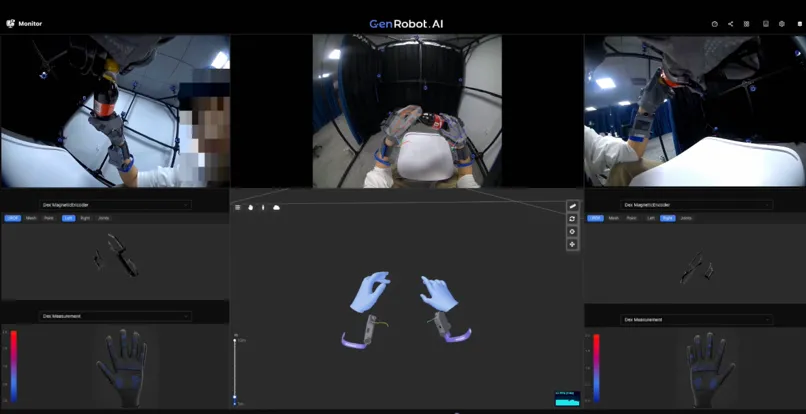
The advantage of human data without a physical body is that it is widely collected. The collector does not need to rely on specific robots to complete natural tasks in homes, factories, logistics centers and open environments, recording the operational experience of different people, objects and scenarios.
However, the layout of the joints of the human arm, the range of motion and the degree of dexterity, are not the same as those of a robotic hand. Even if the trajectory of the human arm joints is obtained with high precision, it cannot be directly used as a control instruction for any robot body.
Remote robotics provides another data source. By mapping the state of human hand movement to the input of the robot's joints and adapting it to the frequency, articulation layout, range of movement and control interfaces of different hands, it can record the state and results of tasks in the actual execution process of the robot.
At the same time, Dex 2.0 supports the collection of uninhabited Human Data with robotic remote control, two modes of sharing motion measurement, time synchronization and data interfaces.
The two models address different problems: no-body acquisition is responsible for expanding human skills and scenery coverage, while remote operations will map actions to specific robot cores to obtain execution processes and feedback.
This leads to a data link:
Natural human demonstration → Unified skills representation → Cross-weight orientation → Robot execution → Results verification → Failed data backflow
The key to this link is the middle data adaptation. Motion mapping, coordinate system conversion and motion constraint processing between human and robotic hands are required; human touch and robotic touch are also required to establish representations for specific sensors and tasks.
For example, the 21 DoF of a human hand cannot be directly mapped to the control dimensions of all robotic hands. Different robots may have different number of joints, drive modes, and range of motion, and the same human grip may correspond to multiple robot execution strategies.
Tactile migration is the same. The tactile distribution of the human arm can provide monitoring of contact position and pressure changes, but the sensor layout, material characteristics and dynamic structure of the robotic end are not the same. Specific mapping and learning methods are still needed to show how to convert human contact information into robot-available contacts.
DexUMI uses 9,290 human demonstration and robotic data combined training strategies to cover 93 real-world environments, reporting a success rate of 68.5% in unseen environments, about four times that of robotic data training strategies alone, and achieving a 5.8-fold increase in transnational generalization.
Recently, TouchBridge has proposed Tac-Retarget, which re-orients real contact information from human fingers for cross-body movements. Traditional kinesiology re-orients mainly to match joint postures or finger positions, but finger position proximity does not represent the same contact relationship.
TouchBridge produced robotic training data by aligning the contact graphics and finger contact areas, maintaining contact relationships between different hand types, and combining visual synthesis and camera coordinate movement conversion to generate robotic field training data. In four real-contact intensive tasks, the average success rate of the strategy using human data mitigation conversion was 72.5%, the average success rate of remote data training was 77.5%; the average collection time of the successful demonstration was 11.7 seconds and 81.7 seconds, respectively, about 7 times faster than the previous one.
Cross-body migration does not necessarily have to accurately replicate every angle of the human finger to the robot. For contact-intensive operations, what really needs to be preserved may be the contact points, contact areas and their relative relationships. Touch is therefore not only an additional training model, but can also be an important constraint when human movements are converted into robot movements.
Dex 2.0's full-fledged tactile collection records not only show how much pressure is put on the fingers, but may also provide supervision for subsequent rebuilding of interpersonal contact relationships.
Next phase of Human Data: Moving from scaling up to effective supervision
In the past, when discussing physical data, the scale often appears first as the number of hours of collection, the number of episodes, and the number of tasks. But for Human Data, the scale of data cannot independently represent the value of the data.
If a device interferes with a person's natural movements, the joint tags may deviate from real skills; if a touch signal contains a large amount of material deformation and sensor interference, the model may learn the wrong contact patterns; if vision, movement, and touch cannot be accurately aligned, the polymorphic data may also lose their original physical correspondence.
Therefore, the scale of Human Data requires at least three dimensions to be considered simultaneously:
The first is to gather the breadth to cover more people, objects, missions and real environments.
The second is to monitor the density and whether the video can provide further feedback on joints, contact, object states and interactions.
The third is the migration value, whether the same set of human skills can be used by different robotic platforms through unified data representation and cross-bodied adaptation.
On this basis, the use of Human Data could be extended further from action simulation to prediction of physical interactions.
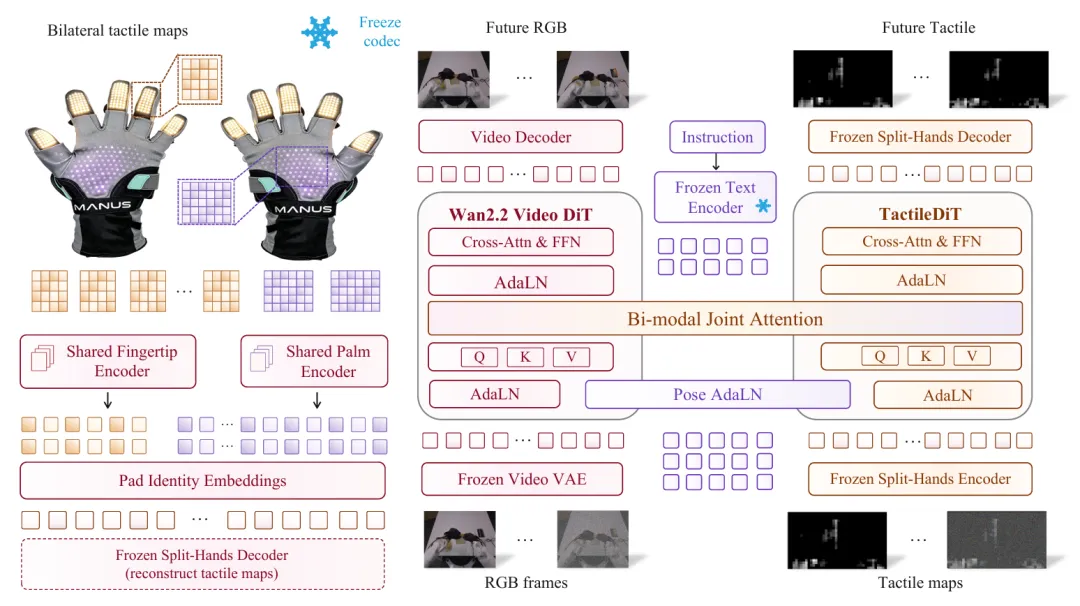
DexTouch-WM studies how to use human tactile data to train the Action-Conditioned Tactile World Model while predicting future visual states and manual tactile dynamics. It fixes 5 hours of robot data in experiments, increasing human interaction data from 0 to 100 hours, and observes continuous improvements in vision, geometry, and contact predictions in robotic fields, even if the set of human and robot pre-training tasks does not overlap.
Its key design was to use flexible compression-resistant tactile arrays that shared layouts with humans and robots, and to redirect human movements to the robotic space, enabling the tactile observation and motion conditions of the two Embodiments to enter the same predictive model.
The value of human touch data may be not only to provide a contact tag or a trajectory simulation, but also to help models learn how objects change after contact, how stress is redistributed, and how movements affect future physical states.
Returning to Dex 2.0 and DAS Ego 2.0, they attempt to address the link between natural human manipulation and structured multimodal data acquisition: Ego provides global observation and environmental context, Dex provides precise motion and contact measurement, and hardwired synchronous timing between different models, while dual-mode acquisition further connects human demonstration and robotic execution.
But the collection of the equipment is just the beginning of the Human Data Pipeline. How the original signals are labeled, how the hands and objects are reconstructed, how the touch is made, how the tasks are cut, how the movements are redirected, and whether the benefits can be gained from real robots after training, still determine whether these data can truly be transformed into robotic capabilities.
Physical intelligence requires not only more human video, but the ability to describe how humans observe, act, touch and adjust, and to further transform it into real interactive data that robots can learn to monitor.









