“ The oil giants really want to steal, not robots.
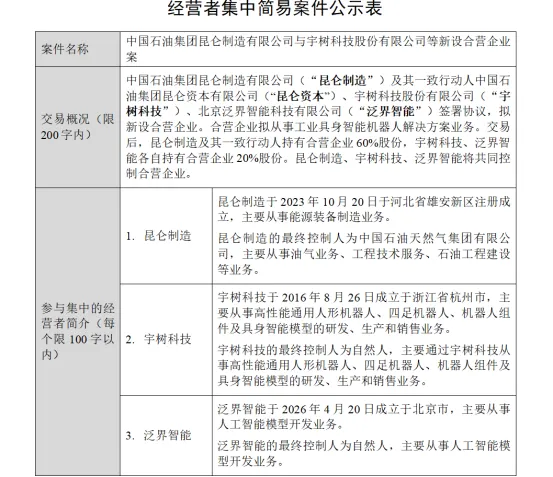
Recently, a paper from the Beijing Market Supervisory Authority revealed that the long-quiet industrial robotics circle has reignited.China Petroleum's Kunming Manufacturing and its corresponding shareholder, Kunming Capital, plans to form a new joint venture with Utrecht Technologies, Panasonic Intelligent, focusing on industrial intelligent robot solutions.
An oil company, a robotics company, an AI model company that was founded just six months ago, joined the same corporate entity. Since its IPO in August at the start-up of Yuke's startup Yuke's capital with about 136 million yuan participated in the strategic distribution, taking a 2.23% stake, the two sides signed the Yuke's Strategic Cooperation Memorandum of Understanding to lock in the oil and gas scenario, and until now the joint venture has landed, China's partnership with Yuke's has jumped three times in three months.
It is customary for the outside world to interpret this interpretation as a necessary collaboration. Central enterprises come up with a scenario with capital, they come up with their own hardware, they come up with a general model algorithm.
Oil companies could have taken 20% of the credit card like financial investments, but it doesn't. It has to be absolute. This means that oil companies are changing from a provider to a rule maker.
In the past, industrial robots' procurement standards, acceptance processes, data interfaces were defined by manufacturing customers, energy companies were more of a party to passive payments; now, as a controlling shareholder, they have the right to be directly involved in product definition, technical route selection and the construction of supplier systems.
The 60% figure is essentially an early answer to the question of who defines an industrial-physical-intelligent robot.
This is not the move of a Chinese oil company. China Petroleum Capital invests in Galaxy General and bets on the base of robotic materials, China Sea Oil launches robots into the Cao Wei offshore platform, tends to build a robotics lab, extends the oil to join the Union of Intelligent Industries in Phnom Penh Province, demonstrate the cluster at the Cocoa Coal Mine site.
These oil companies are relying collectively on physical intelligence almost at the same time in the window. The paths are different, but the underlying judgments are highly consistent, and they are anticipating what will happen sooner or later.
01.
Four strikes in the same direction.
Oil firms don't do the same thing, but the cutting-edge is all on the side of their most familiar scenarios.China Petroleum's most complete route is the Control Panel Route. It starts with industrial capital, such as Qinhua Capital Investments, Qinhua Subway, Qinhua Trust's fund layout along the robot; then with a memorandum locking the scenario direction; finally falls to the joint venture to materialize operations. The chain is complete, with no right out of the oil sector.
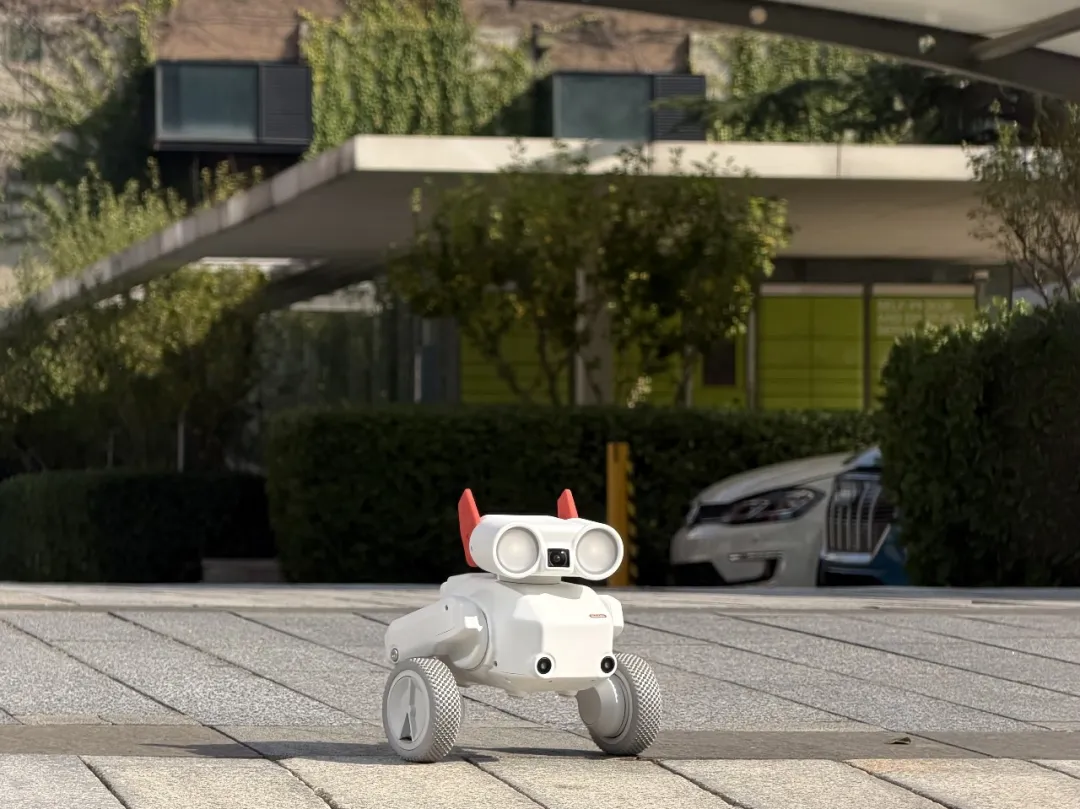
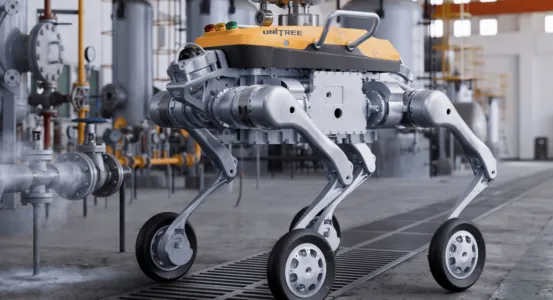
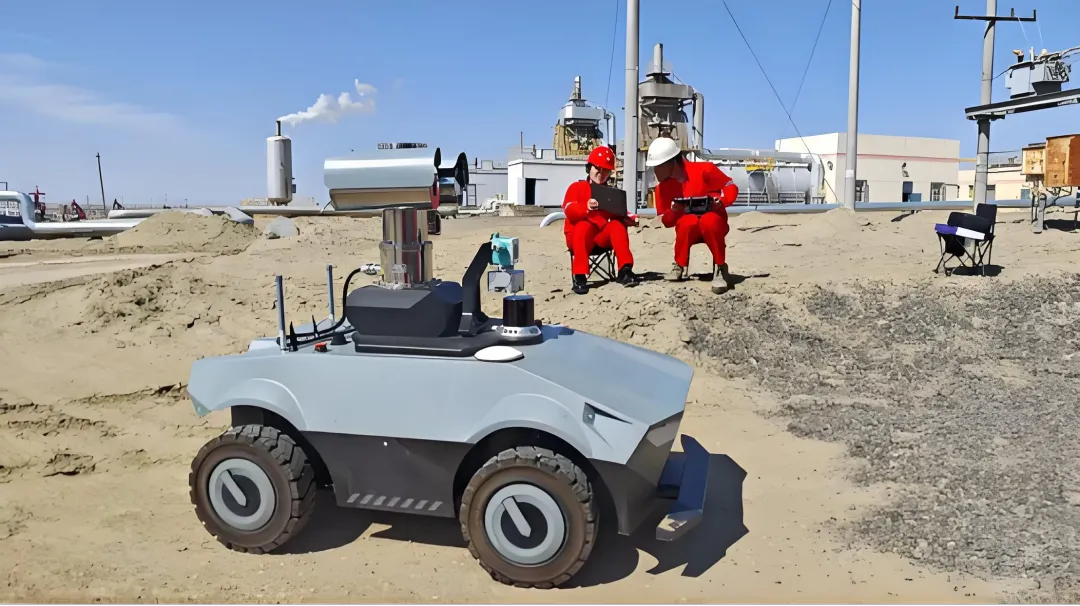
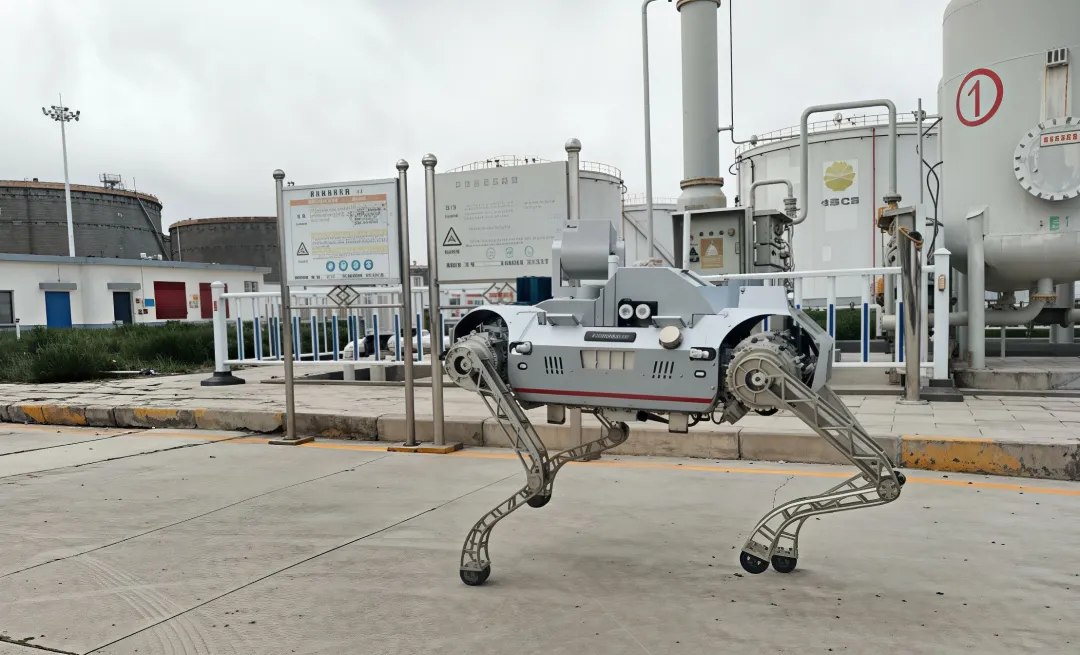
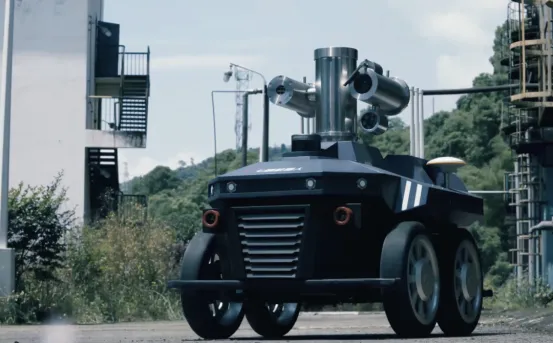
It is also worth noting that China's petroleum system has its own robotic base. The Xinjiang Intelligent Liquid Explosion Control Robot has achieved Ex d IIC T6 certification, running continuously for 216 hours under 40°C in Xinjiang, replacing more than 350 man-made patrols, identifying accuracy of over 99.5%; the Pipeline Bureau's explosion-proof quadruped robot completed its first landing in the field of oil and gas sales in May this year.
The real mission of the joint venture is to combine these decentralized capabilities into a standard set of replicable, accessible procurement directories.
In March 2026, the company completed a $2.5 billion financing, with China Petroleum appearing on the list of investors, along with one of the largest state-owned funds in the third period, China Post Group, Shanghai Gold Control, etc. Of course, China Petroleum Enterprises completed only the capital card, leaving the network of gas stations, the high-risk chemical industry and the convenience store system as a potential scenario entry point for the invested enterprises.
The real downside is that upstream, carbon-fiber skeletons, high-molecular polyethylene muscles, SEBS elastic body skin, high-performance polyamide joints, the underlying body parts of humanoid robots, are becoming increasing exports of petrochemical materials.
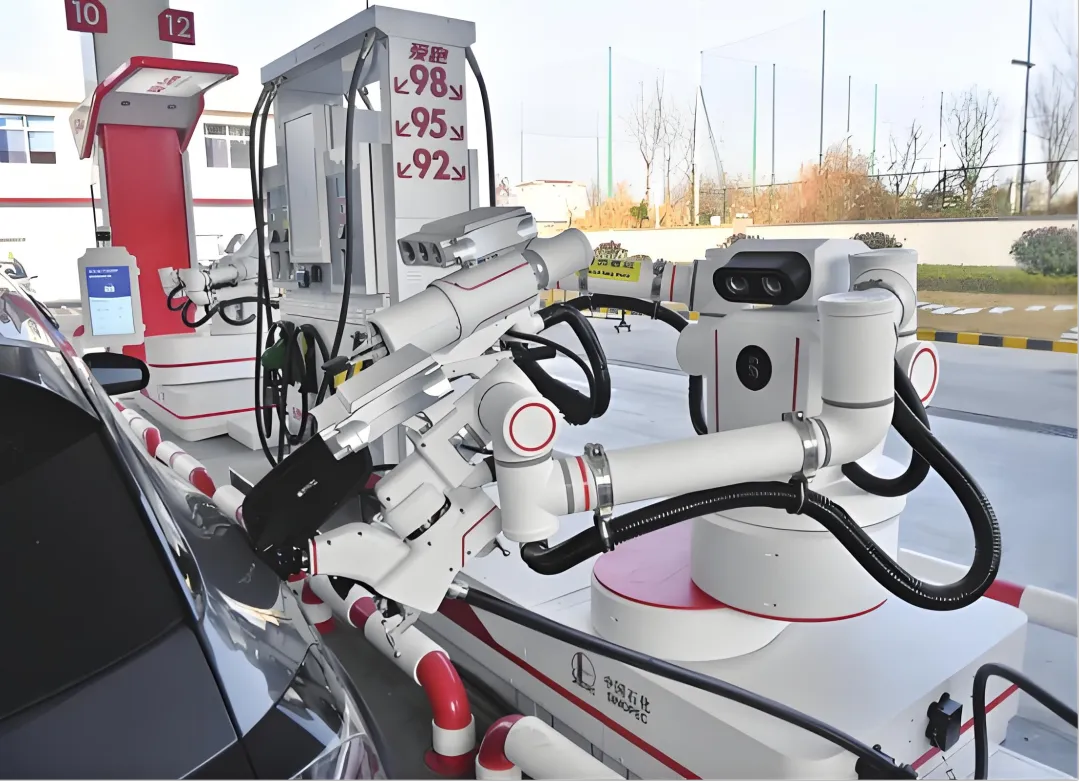
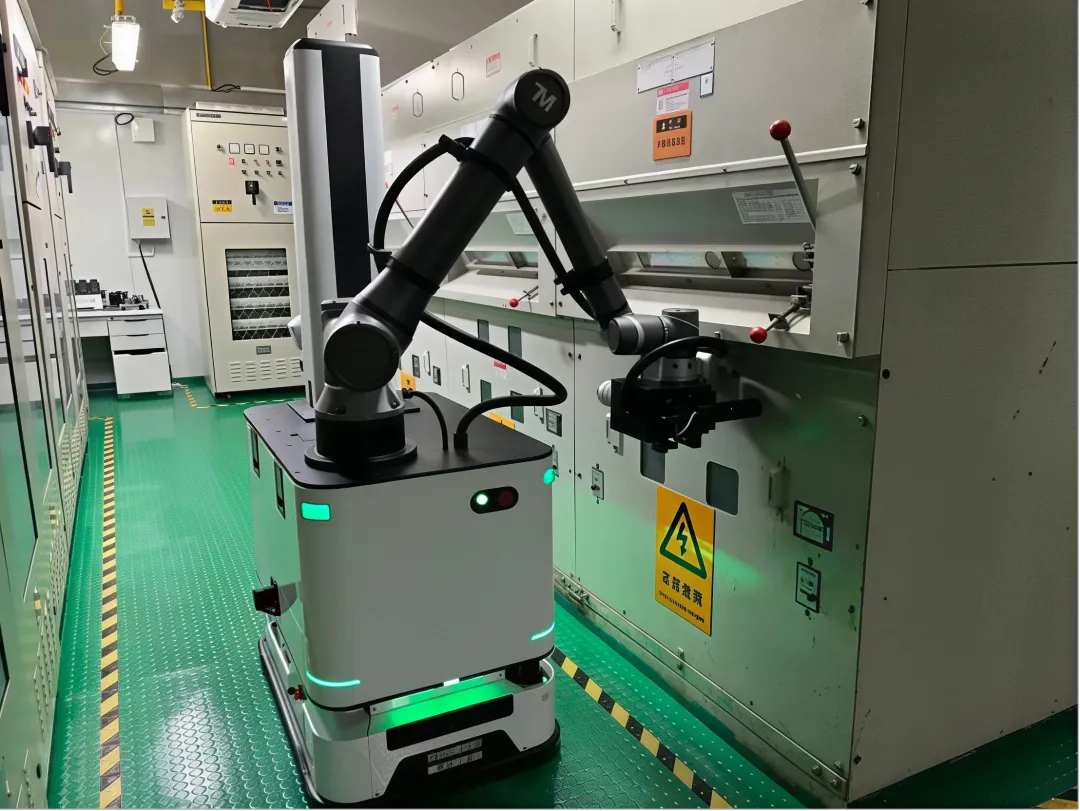
At the same time, at gas stations and refineries, China Petrochemical already has a number of robots running, including gasoline robots, wall climbing robots, patrol robots, etc.
China Sea Oil has focused on capacity building. Its ownership level has not fallen so far, but the offshore platforms have a lot of action. Underwater detection of robots in Cao Cao'an platform, the development of China Sea Oil and the development of deep communication around explosion-proofing, patrol robots, open tenders for the purchase of humanoid and quadruped robot construction laboratories. Its goal is to connect robots to the field of intelligent patrol, equipment operation, maintenance and security protection cycles, and promote the development of autonomous industrial robot brands.
The ocean scene is the hardest bone in the world of oil and gas, corrosion, typhoons, narrow platforms, away from the mainland, verification cycles naturally longer.
As a local oil company, it does not have a central enterprise capital platform toolbox, chooses to join the provincial industrial union as an application unit, participate in joint offensive demonstration projects, directly order procurement. The role is light, but the determination to participate is not light, embedding itself in the offensive chain of the provincial intelligence.
Taking off the surface of the oil sector will find that their roles are shifting, from mere scenarios and buyers, to shareholders and partners as a whole. This collective shift will change not only the right to speak, but also the way in which risks are shared and the logic of profit distribution. After all, the investments of physical intelligence are long-term, and the returns do not necessarily appear on the short-term accounts.
But oil companies are willing to accept this uncertainty, because they know better than anyone that if they are always in the buyer's position, they will only be waiting for products made by others according to the general logic, while the extreme working conditions, stringent safety standards and fragmented customization requirements in the oil and gas field are difficult to truly satisfy by the general product.
02.
The real impetus for collective action is not in the air.
The time point at which the oil sector collectively relies on lithium is precisely at the intersection of two curves. One is that the rigid demand for dehumanized lithium substitutes is accelerating in the high-risk operating scenario, and the other is that the gap in the workforce structure of the oil and gas industry is slipping from a tight slide to a cliff.Oil and gas scenarios do not need to be romanticised. The oil industry is arguably the most dangerous and expensive set of scenarios. Wells, refineries, storage areas, shipping platforms, high-temperature high-pressure, flammable explosive, toxic hazards are the norm, and access requires full protection and layered approval.
At the same time, industry reports analyze that the global oil and gas industry has reached 48% of the workforce aged 45 and over, with only 19% aged 25 to 34, and more than half of experienced engineers retiring within a decade. The ageing pressures in the traditional energy sector are the most prominent of all industrial sectors.
The selection of physically intelligent inputs by the petroleum industry is highly consistent with patrol, search and rescue, and shipment maintenance. Every shift replaced by robots is a double reduction in security responsibilities and human costs.
Of course, the bi-directional scarcity of scenarios and data is the key to the entry of oil companies. After experiencing a financial frenzy, the smart industry is faced with the biggest challenge of 2026: where to deliver? Despite the gradual growth of cooperation around the industrial sector, and even a lot of publicity, most of the programs are still stuck in the POC (concept verification) phase.
Oil and gas scenarios are by far the rarest verification assets on the Chinese market today, with high-value, high-risk, high-frequency, high-closure and other characteristics. More rare are unusual operating data, leaks, fires, equipment failures, which can't happen in the lab and can only accumulate naturally in the long run of the site.
On the other hand, for oil companies, every hour that the robot runs out of the platform will be absorbed into the data assets of the next generation of digital oilfields.
 At the beginning of this year, the National Finance Commission (NFCC) has clearly released signals, focusing on areas such as physical intelligence, energy electricity, exploring the creation of an AI + silicon industry community, and increasing the scenery openness. The National Electric Network has launched a flagship of 6.8 billion yuan of physical intelligence procurement plans. It is known that more than 30 central companies have entered the robotics arena through self-development or internal hydrogenation.
The oil sector's collective downturn has been driven both by the backlash of the policy east winds and by the transmission of pressure between central enterprises.
Over the past decade, Internet companies have defined AI through traffic and data; entering the age of physical intelligence, access to the physical world is in the hands of scene owners. The oil industry is establishing new rules in an almost-declared manner.
03.
Link to the Future
In 2026 China's industrialization, there is a clear watershed. Before that, robotics companies were looking for a scenario; after that, the scenario began to define robots.China Petroleum and Utrecht formed a joint venture company, not just one investment. 60% of the holding share indicates that China Petroleum is involved in the definition of products, technical routes and procurement standards. The routes of the oil sector enterprises are different, but they are often smart.
They first pushed robots into the oil and gas field, the Gobi well below 40°C, the dark reservoir trenches, the wave-high sea platforms.