“ At the end of its self-development and execution, the product is aimed at multi-disciplinary expansion.
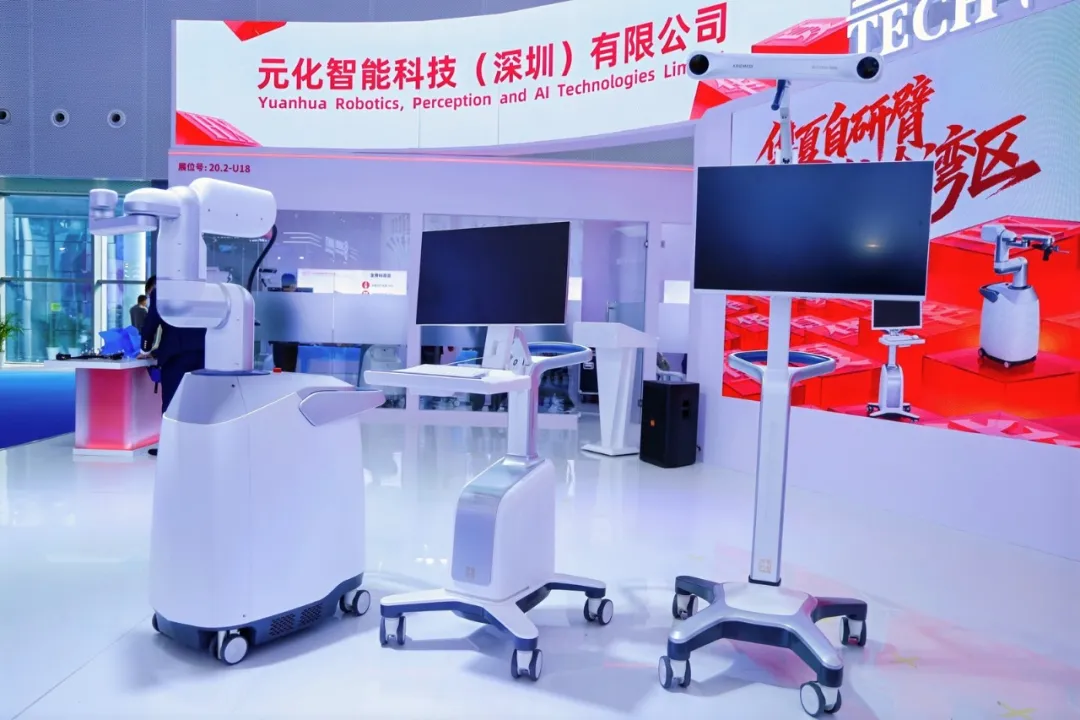
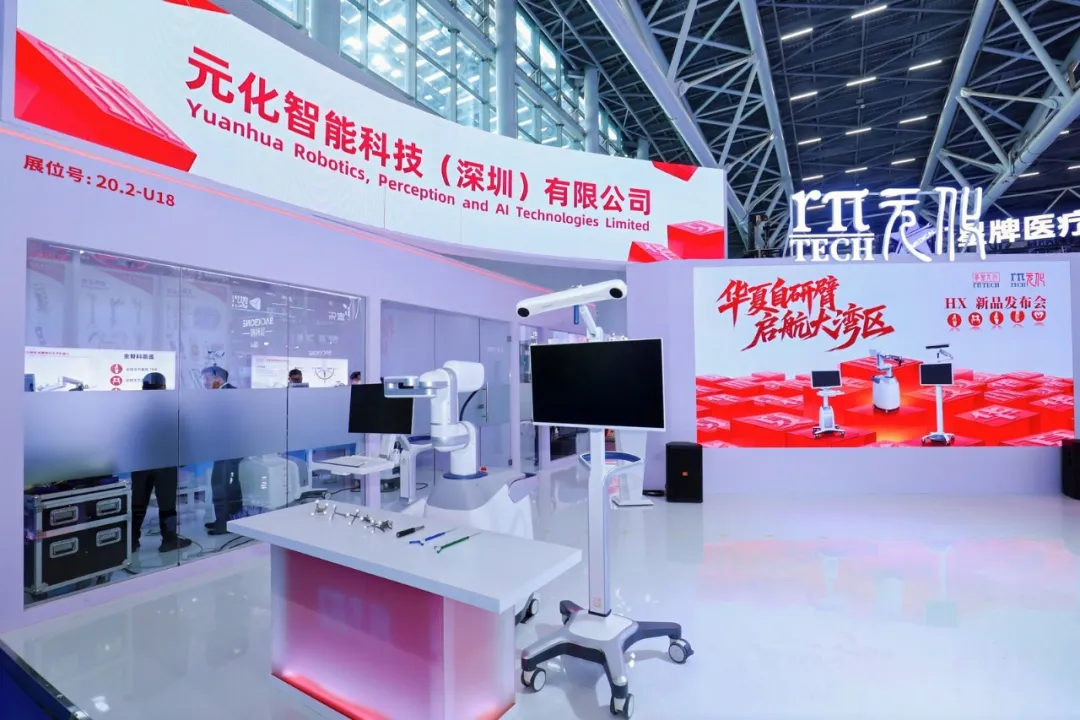
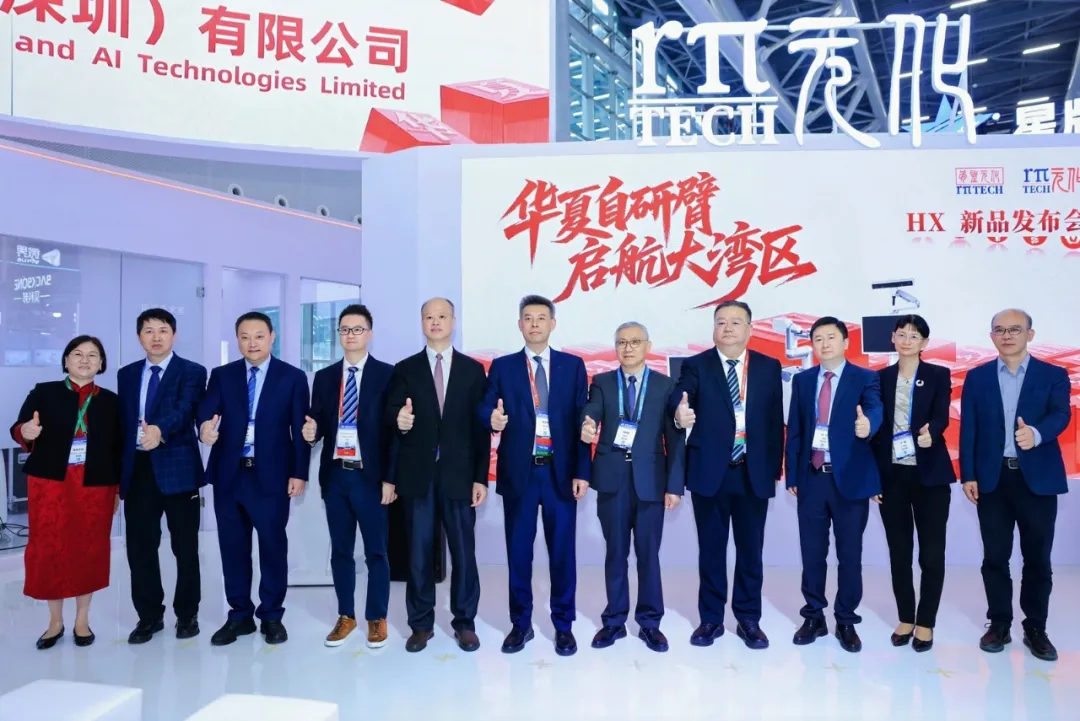
On November 13, Guangzhou, Guangzhou, at the site of the 18th COA Academic Congress, the launch of the new hybrid intelligent HX self-developing mechanical arm full-bone surgery robot officially took place. The main product of the full-chain self-development, covering the whole area of the skull, is aimed at TKA, UKA, THA, spine, trauma, and other bone mainstream techniques.
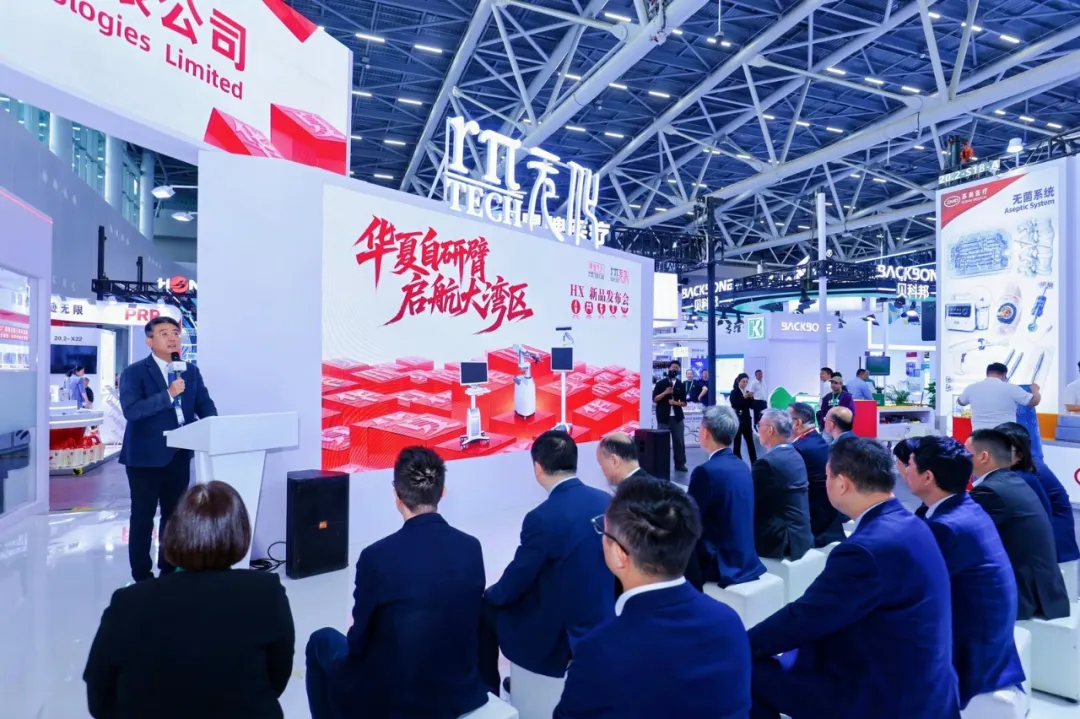
In the domestic orthopaedic robotics circuit, multidisciplinary integration has long been a new concept. This new product launch is the first time that a national orthopaedic robot will have complete multidisciplinary clinical capabilities, built entirely on a 100% self-developed mechanical execution system.
From pumps with external purchases of mechanical arms, to pumps with self-developed mechanical arms with multi-technical expansion capabilities, between the two steps, it is the central dividing line that national high-end medical equipment must cross.
01.
Clinical value of polyethylene has been verified by the market
In April 2023, Unified Intelligent launched the country's first fully orthopedic knee replacement robot. In October 2025, the product was approved for spinal and traumatic adaptations, upgrading the product from a full knee, full knee, single knee triangle to a five-pack scheme covering full knee replacement, single knee replacement, full knee replacement, spinal nail replacement, trauma navigation positioning.
The underlying logic of this product form responds to the long-standing problem of equipment allocation faced by osteopathic surgeons. In the past, medical institutions wanted to carry out different types of osteopathic surgery, often requiring the purchase of multiple independent equipment, so the purchase, personnel training, and later maintenance costs would be reinvested.
After years of clinical deployment, the platform has accumulated sufficient clinical data. As of September 2026, the global cumulative surgical capacity of hybrid intelligent surgical robots has surpassed 8,000, and the surgical procedures have been standardized in the nation's leading 3D hospitals, such as Wessex Hospital, Rigon Hospital, and Yangtze Hospital. At the same time, Liu® has obtained MDR certification from the European Union and has entered nearly 10 countries and regions in Southeast Asia, the Middle East, and South America, completing more than 80 clinical surgeries in Brazil and Malaysia.
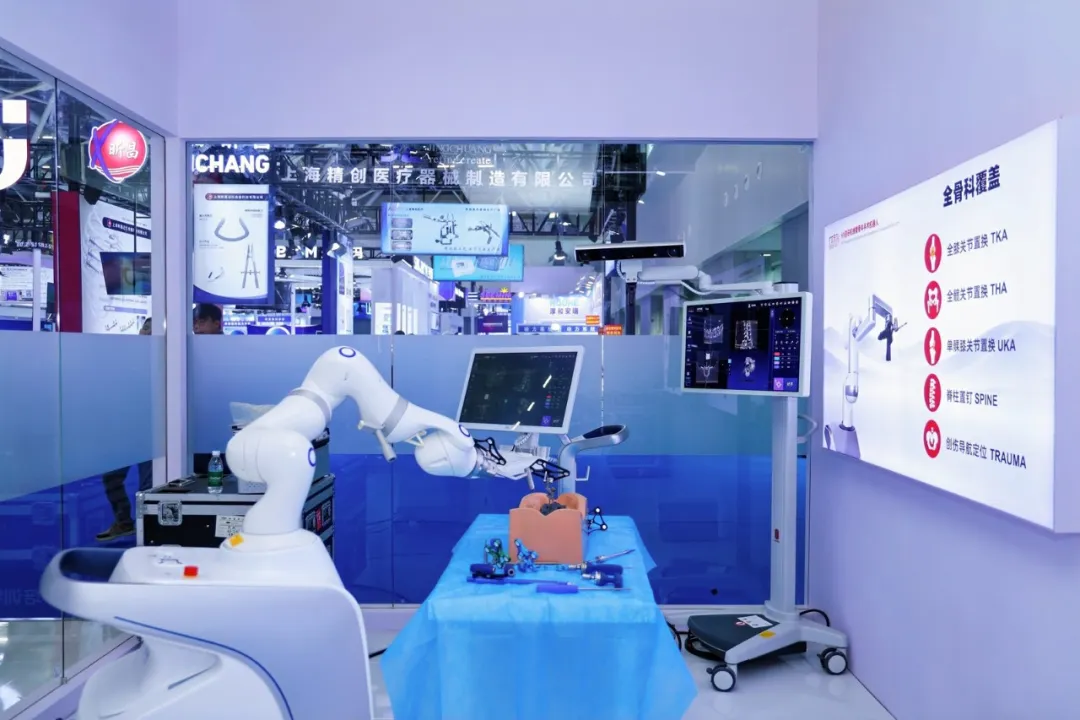
But behind all of this, a key contradiction that has been around for a long time on the track is always in front of us: Is it possible to fully self-develop the executive mechanical arm that is at the core of the surgical robot?
Many manufacturers of surgical robots in the country choose to outsource mature industrial mechanical arm kernels, then superimpose self-developed navigation software and upper planning algorithms. The design goal of industrial mechanical arms is to replicate positioning under fixed positions, paying attention to load and repeat accuracy; while surgical robot mechanical arms, need to be compatible with smooth follow-up, rigidity against shocks, technical safety limits. The two underlying shapes look similar, and the design logic is completely different.
In other words, the X-Five verifies how many techniques a robot can cover without taking over the autonomous definition of the core executive components.
In order to break through this limitation, the differentiated intelligent synchronous layout of the HX self-developed robotic arm full-bone robot. For the all-new hardware base designed from scratch, the team chose to start with a process-mature knee replacement to finish the reliability of the hardware itself.
02.
HX pre-clinical verification, completion of single-phase in-depth responses
As the country's first fully autonomous orthopedic surgery robot to implement a mechanical arm, navigator, and mainframe, the HX self-developed orthopedic arm continued the idea of human collaboration with the FORCE precision control framework.
The team adapted the underlying algorithm based on human anatomy data, self-developed six-axis mechanical arms with mixed-drive architecture, armor structure, and motor torque. Zero-gravity compensation technology allows the mechanical arms to be suspended in any position, while doctors can drag them alone. The system finds a balance between the rigidity required for cutting bones and the flexibility required for doctors to operate, and solves the prevailing operating contradictions of traditional equipment through smooth controls.
At the navigation end, the system has a high-frequency optical tracking capability, capable of capturing the patient's breathing in real time, the skeletal deviation from the body, synchronously connecting the mechanical arm to follow adjustments, maintaining a sub-millimeter-level locking precision between the surgical tool and the bone, avoiding the skeletal deviation from the body space drift.
In February 2026, HX self-developed mechanical arm full bone surgery robot completed the nation's first clinical surgery at Sichuan University's Waseda Hospital to perform full knee replacement for patients. After that, the system quickly entered multiple clinical scenarios and completed multiple scenarios.
Different clinical scenarios, carrying varying verification tasks. The Warsaw Hospital verifies the system's rigor in top academic scenarios; the PLA General Hospital verifies its adaptability to complex cases; the clinical location in Hong Kong, according to international clinical standards; the Tibetan Plateau environment, where the equipment is tested for optical tracking, mechanical response and thermal stability in special environments.
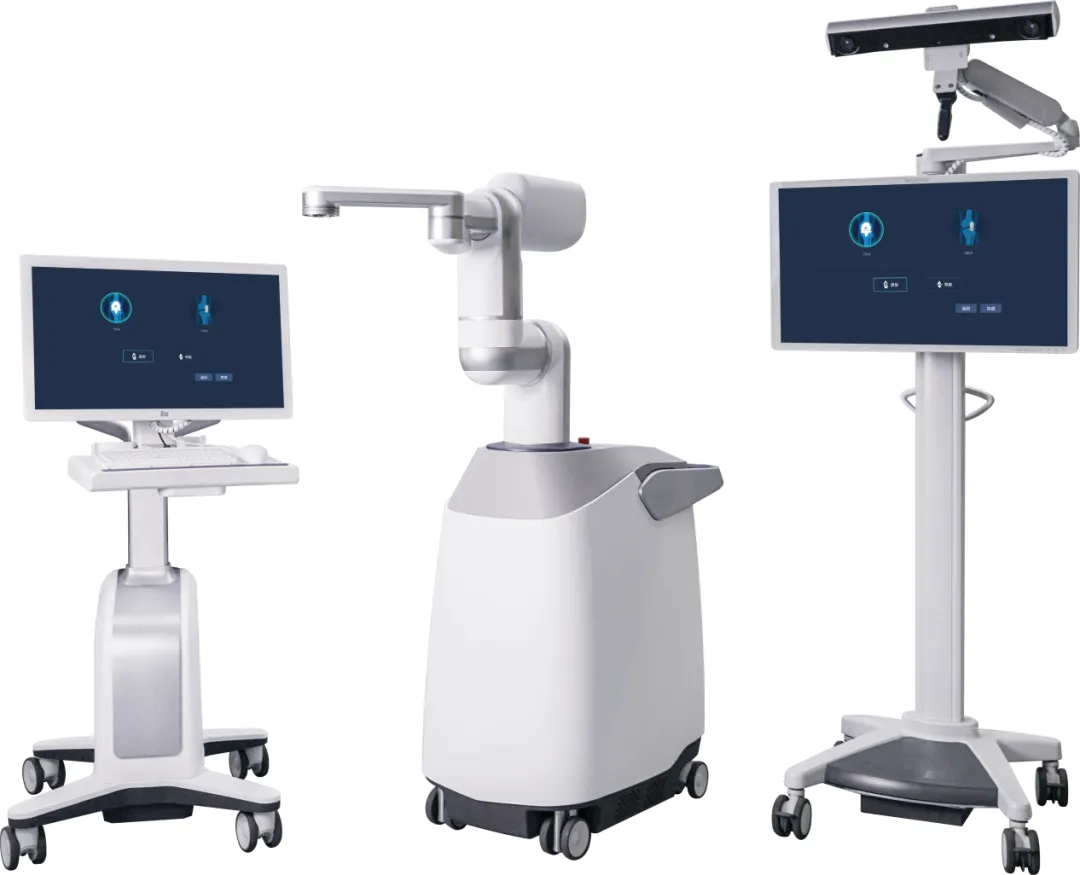
The initial clinical deployment of HX's self-developed mechanical arm orthopaedic surgery robot, which focused first on the entire knee replacement and single knee replacement scenes, has been verified for its surgical stability and accuracy. At the same time, the design goals of the system were set from the beginning for orthopaedic applications.
In addition to basic operational capabilities, the R&D team focused on techniques with higher difficulty, such as straps, spines, injuries, and more, with a focused design for functional expansion, derived model switching, visualisation in the technique, and horizontal support orientation, which is the core viewpoint of this new upgrade.
03.
Transforming and redefining the borders of human-machine collaboration towards a multidisciplinary expansion
HX's self-developed robotic arm and bone surgery has expanded from knee replacement to hip, spine, and trauma surgery, not just overlapping software modules.
Different methods of clinical application differ in natural presence. Joint replacement is often done in a recumbent position, the procedure is open, the core requirement is stability under a cranial impact; the spinal arch is more prone to recumbent position, the operation pathway is narrow, and relies on real-time anatomical position perception; the scene of traumatic bone fracture is fragmented, and space is often time-consuming to establish positions.
With the same set of hardware and alignment logic, it is difficult to accommodate the three scenarios. Several core upgrades of the HX self-developed mechanical arm orthopaedic surgery robot are targeting these clinical pain points.
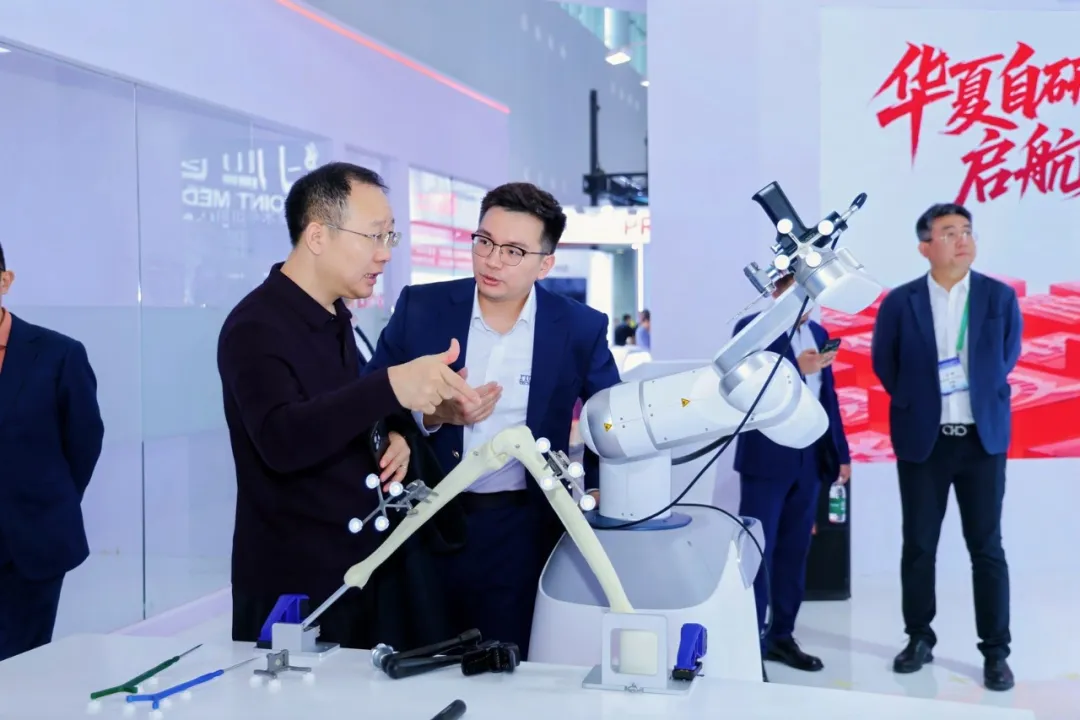
Joint replacement adapts: brush and cup double mode, arm guidance, medical guidance free switching.
This model is geared towards joint replacement scenarios, joint replacement with two phases of implants, and is very representative of the difference in demand for mechanical constraints.
In the arm-guided mode, the mechanical arm is actively limited, and the surgical instrument is locked in the pre-operative planning path, adapted to extremely precise abrasion and amputation steps; in the medical mode, the mechanical arm provides only auxiliary support, the physician can combine the tension of the operation with the actual situation of the anatomy and manually fine-tune the position of the instrument, the two modes are freely switched to achieve real-time seamless operation, without stopping, and without any setup.
At the heart of the design is the redistribution of human-machine boundaries. The robot maintains the precision bottom line of standardized operations while retaining the space for doctors to adjust the program according to the situation in surgery to achieve human-machine collaboration.
Scenes of spinal injuries: full visual guidance, all-wheel-drive replacement mechanical arm orientation.
Restricted operating space for the spine's recumbent surgical position, the traditional program is not only painstaking, but there is also a risk of accuracy loss.
On the one hand, the system incorporates optical tracking and real-time navigation in surgery, which extends the range of visual coverage from pre-surgical planning to the complete process of establishing the passage and inserting the screws, allowing doctors to observe in real time the relative position of the tool tips and the vertebral arches, the anterior edges of the vertebrae, in high-risk areas such as the chest, the spinal cord and the spinal cord, helping doctors avoid spinal cord and vascular damage, and stabilizing nail accuracy at a sub-millimeter level.
On the other hand, HX self-developed mechanical arm orthopedic surgical robot supports the selection of horizontal braces, which can be adjusted at many angles, attached to the spine table or skeletal markings, and establish a stable operating space.
The scheme jumps out of the inherent framework of traditional mechanical arm orientation, simplifies the positioning of spinal surgery and the connection process, compresses the duration of surgery, reduces the risk of infection, and is better suited for multi-sectional spinal trauma, and minimally traumatic scarring.
This differentiated design is rooted in the freedom of self-development of the entire chain. Many orthopedic robots on the market rely on the outsourcing of mechanical arms, hardware frameworks, and control logic are locked upside down, and most of the generation can only stay at the software level. While the HX orthopedic orthopedic robotic arm with differentiated intelligence can be redesigned depending on the surgical scenario, from the mechanical arm, navigation instrument to the main control system, giving the R&D team the choice not to be constrained by the way the mechanical arm is used.
Consequently, the value of whole-chain self-development is no longer limited to conventional narratives such as supply chain autonomous control and deceleration, ultimately landing at the clinical end.
04.
Multimodal novelties, industrial dividends and clinical trials coexist
Behind the multi-disciplinary expansion, the osteopathic robotics industry coincides with a shift in payment and procurement logic. With the gradual clarification of osteopathic robotic assisted surgery fee programs in many places, the focus of hospital procurement has shifted from not being able to perform robotic surgery to long-term utilization of equipment.
HX's self-developed robotic arm orthopaedic surgery robot has the potential to expand to multi-disciplinary procedures for joints, spinal cord, and trauma, and in the future, it is expected to implement a single device covering multiple orthopaedic procedures, enabling a set of operating training systems to serve multi-disciplinary rooms and mitigate hospital costs.
Relying on the robust clinical experience of HX®, HX's self-developed mechanical arm osteoarthritis robotics has opened a whole new chain of self-development and execution, on top of the mature technical underpinnings, to a whole new exploration of the multi-technical capabilities of fully self-developed hardware. The full chain of AI self-development gives the advantages of hardware, algorithmic integration, rapid transformation, and continuous optimization of complex scenarios around the spine and trauma, continuously releasing the clinical potential of the system.
The clinical cases that HX is currently open to the public, mainly for joint replacement. Full-scale visual navigation related to spinal trauma, platform pre-embodiment expansion and support orientation will continue to be presented.
National orthopedic robots continue to compete at an international level on key indicators such as accuracy, refresh rate, allocation efficiency. Racecourse competition is leaping out of pure parametric matchmaking into the era of clinically demand-driven customized hardware.
HX is a full-service, self-developed, mechanical arm, full-bone surgery robot that aims to address differentiated clinical demands for different techniques, autonomously modify hardware structures and control logic, drive the industry from technology to native clinical definitions, adapt multi-scenario orthopedic robotics programs, enter more operating rooms, and serve more patients.