“ It's not just a war of colors.
The most honest robot data for 2026 is on a one-headed shipment list.
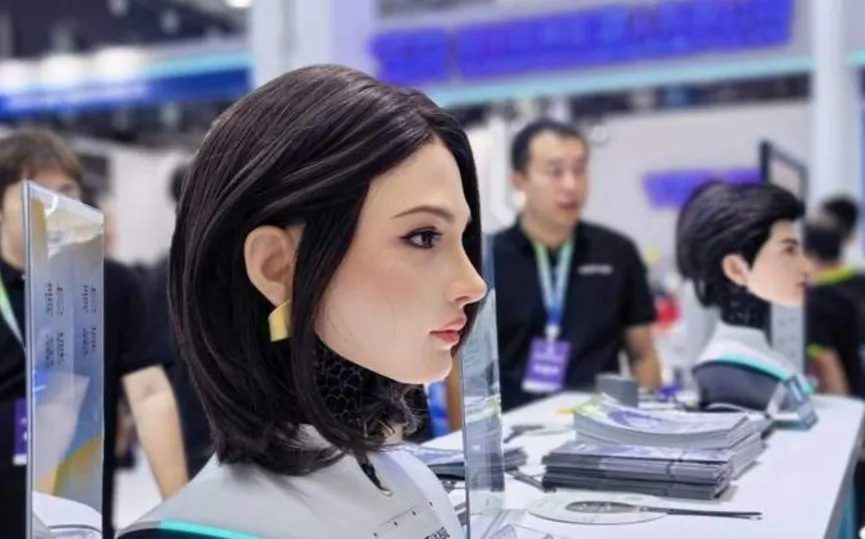
Recently, the Robotics Conference learned that Realbotix has sold a desktop human-simulated head Echo in the United States for $11,1950, with a monthly subscription fee of $19.99.
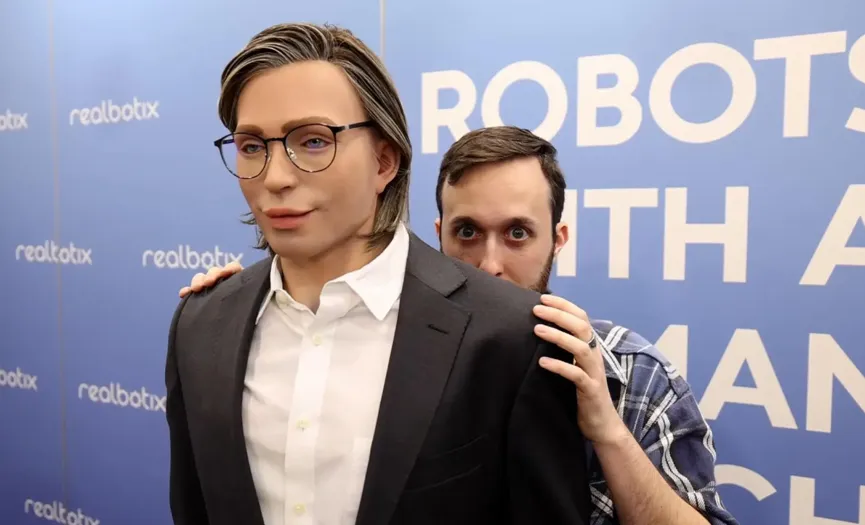
Meanwhile, AheadForm's desktop simulation, the Origin F1, has begun shipping to enterprise buyers, with prices ranging from $50,000 to $150,000.

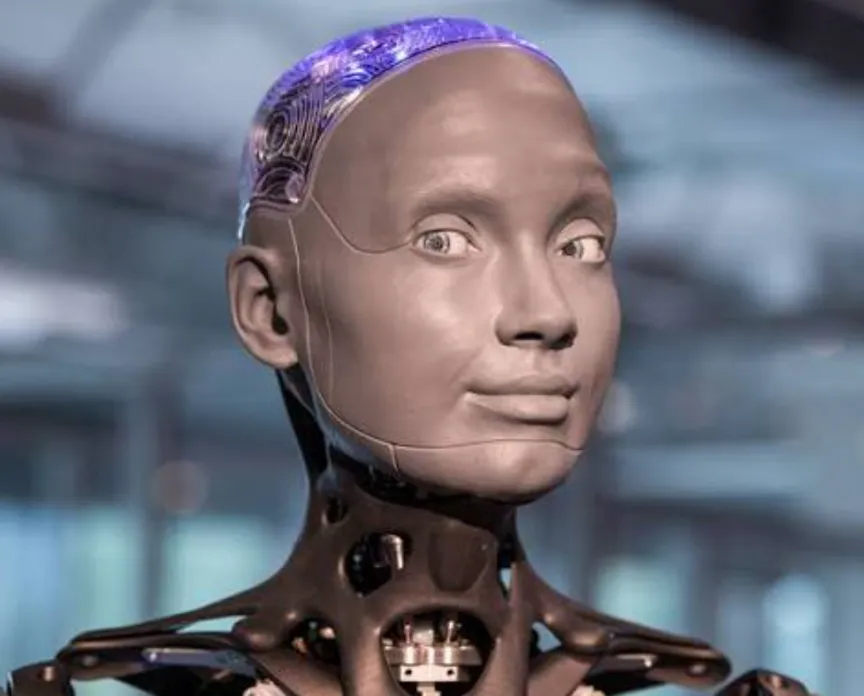
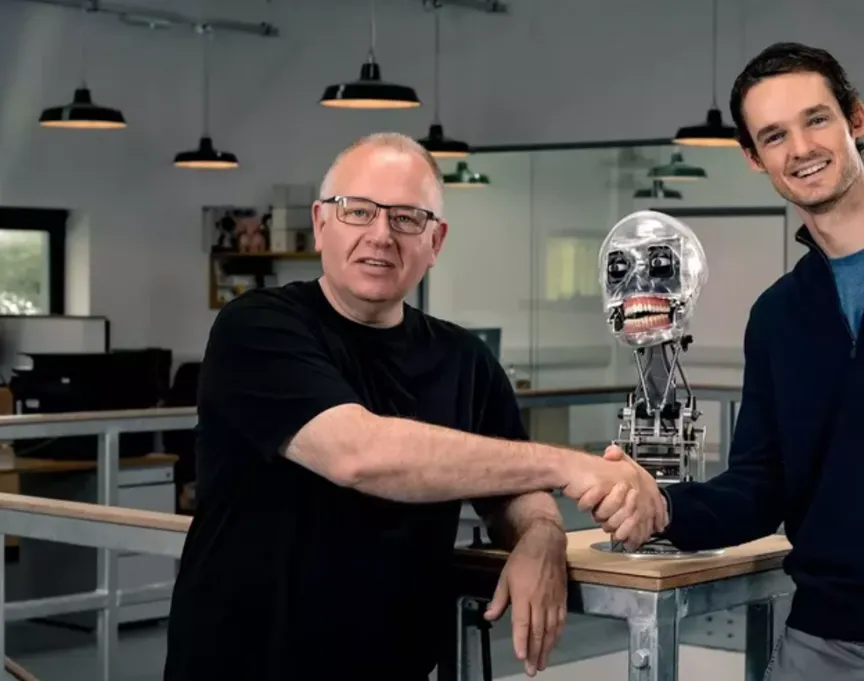
Earlier, Ameca, a third-party provider of Engineered Arts in the United Kingdom, offered $300,000, or about RMB213,000, and reportedly sold in excess of $100,000.
Similarly, the number of copies sold in the country is good, with one copy of the head sold at auction for 110,000 yuan, and another copy of the copy of the face in a factory with 13,000 orders.
Another half-headed startup, founded a year and a half ago, has cumulatively shipped nearly 400 units, hand-ordered 1,000 units, and recently completed tens of millions of yuan of angel rounds, with investors from two national investment backgrounds.
The whole thing is still looking for a scene for the factory and the family, a head that was made separately, has already been delivered?
01.
Why does one head run away?
The commercial focus of robot simulation has split, with one line focusing on being able to move, and the other on being unlike humans, wanting interaction and wanting to be able to make people willing to talk to it.
Initially, the engineering list of man-made machinery companies was long, requiring good bi-foot balance, complete joint coordination, heat dissipation, durability, load-bearing, safety. Anything that didn't fit, the product could not be delivered.
One person cut the list by 80 percent.
It doesn't have to walk, it doesn't have to carry a burden, it doesn't have to control the noise of the motor when moving around the room. It just has to be in front of you, looking at you like a person, listening to you, giving you the right expression.
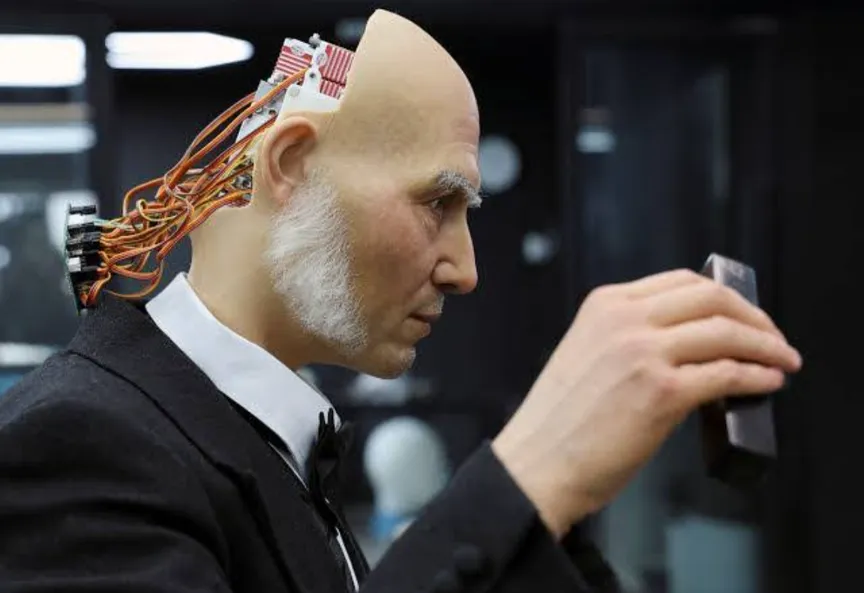
The founder of a company that operates only as headquarters abroad was straightforward in judging that there are too many engineering difficulties and short-term cash flow difficulties; but a head with no security risks can, with the help of mature AI models, get to the front of a retirement home, the front of a company, the showroom to explain these scenarios and save money and talk about other things.
This is a tradeoff that is underestimated by the industry.
Over the past few years, the narrative of the human figure has been monopolizing attention, as if there is no such thing as a complete human being who can walk and take things, not even a robot.
But business history has repeatedly shown that the first mass-produced runway, often not the most functional, is the one that makes something available, priced, and repurchased.
It's complicated enough to have technical barriers and premium space; it's also tight enough to have a production line, a set of molds, and a model to start shipping.
02.
The front door is not on the motor, the reader is watching.
The most intuitive parameter is the frequency of the face.
Some products have 32 active degrees of freedom, 8 passive degrees of freedom, 12 for the mouthpiece alone; some use 25 micro-motors to drive the face and eyes, 200 or more micro-facial control points, and recreate 43 facial muscles; some headpieces have 26, 14, 8, and three degrees of freedom, with an emotional recognition rate of more than 95%.
But these numbers themselves do not constitute barriers. As the industrial chain matures, machines can be bought, mold can be opened, freedom can be piled up.
There are two things that are really hard.
The first is the expression, which differs from a smart speaker in that its expression is mapped in real time.
By 2024, the smart part of this type of product is a voice module that can say a dozen fixed words and repeat them a second time.
The body hasn't changed, the mind has changed.
The marginal cost of switching brains is close to zero, depending on the token, a conversation is a few dollars to a few dollars. This is a business that this year can be divided into three technical prerequisites.
Because the default program is a backdrop, real-time mapping is the real-world response of the AI model to human interactions, and slowly breaks down.
A typical difference is that when you suddenly blink, the face facing you doesn't change in 150 milliseconds. What the user perceives as different from a person is not how many times he smiles, but when he smiles.
The second is the data. It's a matter of engineering how many expressions a face can make, but it's still a matter of data whether a face can't read from your face what you need right now.
Previously, an emoji-sized model at a Shanghai assembly plant was said to recognize more than 20 different particulate emotions, with an accuracy of more than 90%, behind 500 milliseconds of intuitive feedback and cloud-based 500 billion-parameter reasoning.
China has a population of 323 million people over the age of 60, hundreds of millions of family scenes, and the world's busiest galleries, shops, and live broadcasts. These are the cheapest and richest training grounds to mimic human faces.
03.
The price of companionship flows in memory
If only a copy of a human's head is a piece of hardware that can be made into a statue, its ceiling is an exhibition hall and a front stage. But the real value of this genre is focused in another direction: long-term memory.
At the heart of this is not being smart enough to answer, but being able to remember what you said three months later. This requires long-term memory, local storage, and putting some of the computing into the robot itself, not just the cloud.
This judgement explains why a simulated human head is better suited to enter the family first than an automated one.
A head in a living room or bedroom is a device that is naturally present for a long time. It does not need to be moved, so its presence is continuous; it only makes conversations and expressions, so its interaction is high frequency.
High frequency continuity is used to create a memory. The density of data that accompanies a two-round circuit in a room every day is much less than a head that is always on the table.
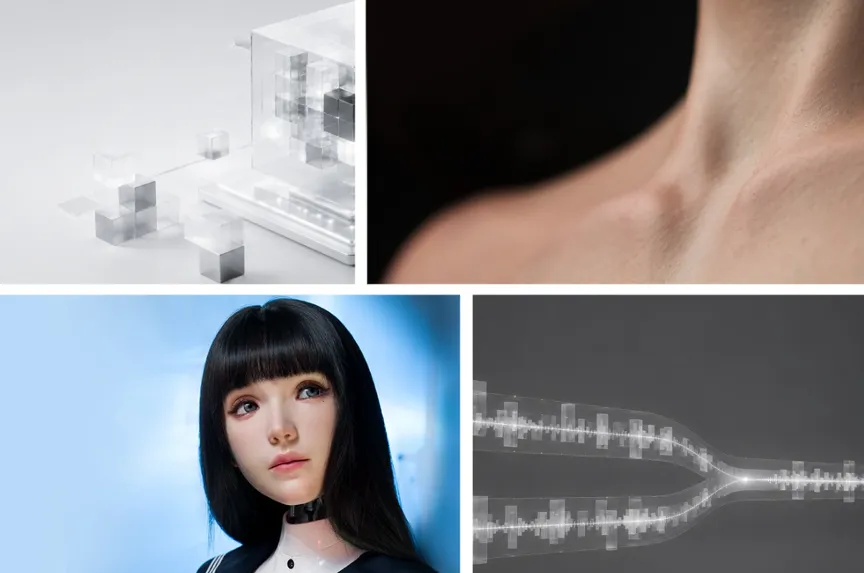
A company focused on care products for the elderly follows this line. Its main focus is on emulating the human head as an emotional focal point, incorporating classic cultural content from contemporary memories that can lower the threshold for elderly people to open their mouths; another core capability is active interaction, which can be used to guide the elderly through algorithms to tell their own experiences while overlapping medication with reminders and fall precautions.
This makes it not a face that it sells, but a face behind a face that is willing to listen, remember, and actively open the door.
The global companion robot market is predicted to reach $1.1 billion by 2030, a figure that is not large enough to be placed on the big tray of humanoid robots. But the value of the companion economy is never in hardware output, in that it enters into household emotional spending rather than the equipment procurement budget.
U.S. desktops sell for $50,000 to $150,000, domestic head modules come in at $100,000, and semi-details at $11.980,000, all of which have also caused a sensation on social media, and the two price curves, and the two red ways of walking, all show that the most similar to a human head is not necessarily the most expensive, but emotional value must be put in place.
04.
The Valley of Horror Is Bypassed by Product Shape
In the past, the biggest risk of impersonating human faces was never that technology could not do it, but that people were afraid to do it.
Discussions about the Valley of Terror in 2026 did not disappear because of the advances in microfaces. The controversies were ignited again when the humanoid system was fitted with a humanoid face.
The questioning of netizens focuses on three areas: the discomfort of overrepresentation, the risk of privacy and deep counterfeiting of portraits, and the alternative to real relationships.
These concerns are real and will not be automatically eliminated because the parameters look good. But the shape of the human head, unintentionally found a posture around the valley of terror.
The problem with the whole thing is that a person walks, gets close to you and triggers an instinctive awareness of human beings.
A head fixed on a desk, with no mobility, no feeling of complete oppression, and framed within a secure physical boundary, makes it easier to break through physical AI's barriers. This form is not so difficult to sell with a relatively standardized structure because of the low risk of interactive security, but rather because it promotes faster mass production and delivery.
In other words, the Valley of Horror is not flattened by technology, it is circumvented by the shape of the product.

05.
China takes down the slowest part of this layer
In this business, China's advantages are also very clear: the popularity of application AI in China is already relatively mature, and the image of the whale girl of DeepSeek UGC has demonstrated the potential for landing.
And another one is in the skin -- eyebrows, eyelashes, eyelashes, eyelashes, blood vessels, and holes, all handmade. A skilled worker's production per day is limited.

The outer layer of the head lining is highly lifelike, flexible skin that can sense touch, sliding and temperature, behind which there is an accumulated pool of aluminum molds and skilled workers.
The accumulation of this layer has no shortcuts. Large models can turn conversational ability from fixed vocabulary into a catchphrase overnight, but an eye-catching output line that can squeeze the sub-rate requires year after year of manual experience.
This is the kind of capability in China's supply chain that is the best and the least easily replaced. This may not be the most cutting-edge technology, but it is a capability that needs to be handled at a high volume and cost-controllable level.
06.
Link to the Future
The simulation of human heads can not be observed for a long time from a module to an independent product category, because at present, the rate of evolution of such products is not fast, which affects user repurchase and deployment space.
In the future, how many of these products will be deployed by the same customer in different scenarios is more important than the total. If a head starts to be purchased as a standard part, rather than an attached configuration of the integrated system, and expands to the C-end market, the independence of this category will be established.
13,000 reservations are a clear signal of demand, but what really matters is that after a year, the faces of those who bought homes or bought into nursing homes are still not being used, the frequency of conversations is decreasing, long-term memory is generating it.
But the good news is that the automaker is still waiting for a price and shape that will fit the family. It has cut off the body, bypassed the Valley of Terror, and turned a face into a business that can be individually priced, individually delivered, individually generated.