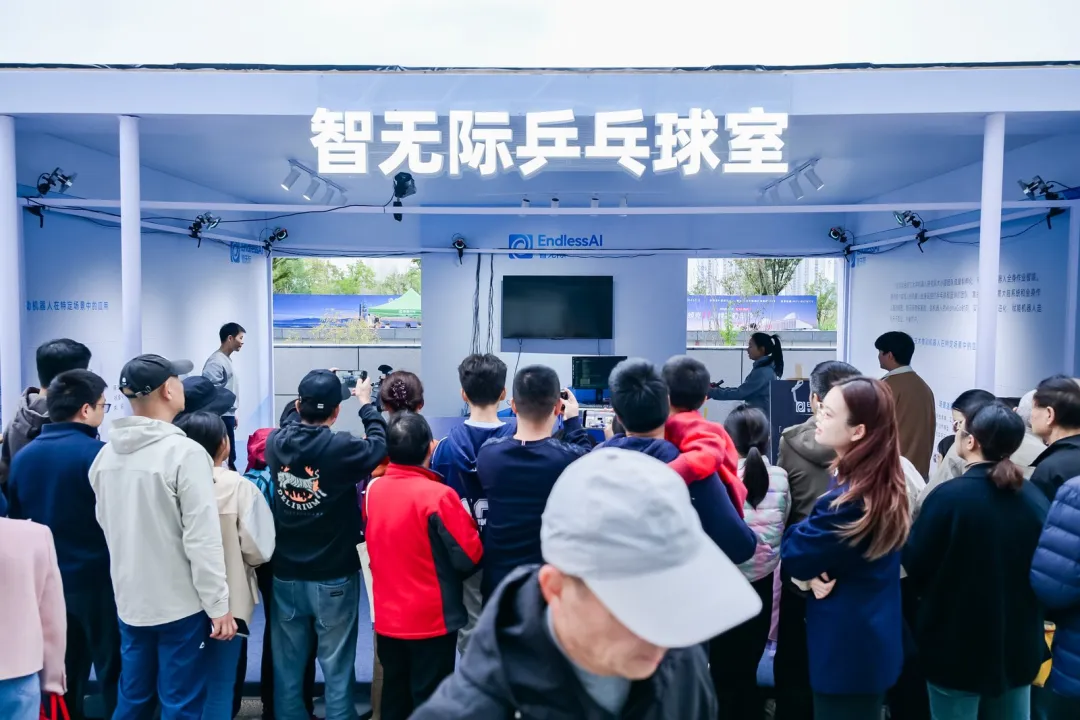
At the 9th China International Import Expo, a table tennis table attracted a large number of spectators.
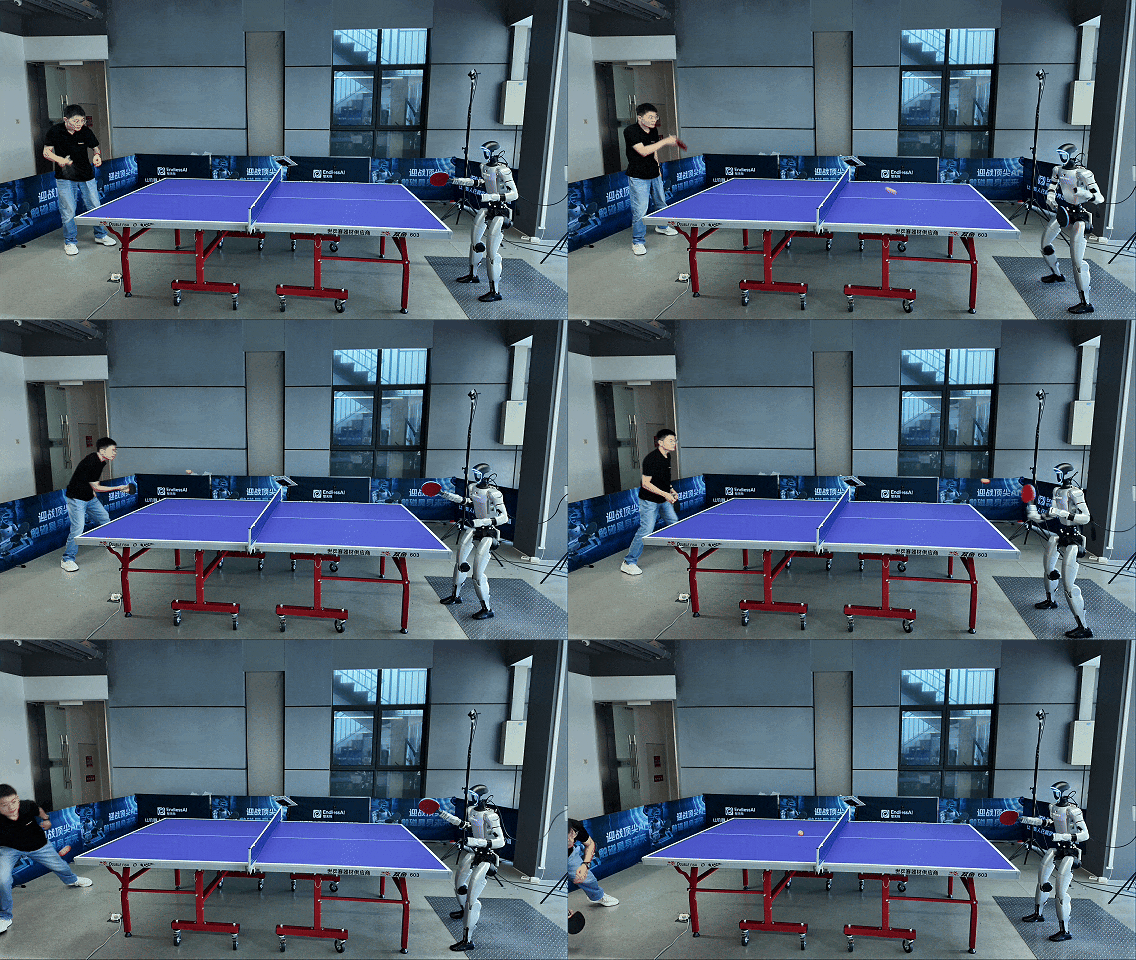
At both ends of the pitch, there are no professional athletes, but two Wu-Tang G1 humanoid robots. Bowling, swinging, spinning, adjusting the position of the pitch, white ping-pong balls on both sides of the pitch, the robot judging the direction of the ball, while adjusting body posture, trying to hit back and forth each time. According to local media reports, the two Wu-Tang G1 humanoid robots, the longest shot completed 348 consecutive matches, renewing the world record for the project to be publicly verifiable.
According to the Robotics Workshop, the live experience was completed by Hangzhou Intelligent Intelligent Limited (EndlessAI) in collaboration with Yu-Shek Technology, the first ecological enterprise in Yu-Shek Technology's Yu-Shek Innovation Project, focusing on the research and industrialization of human-made robots' full-body functional intelligence, starting with athletic sports scenes such as table tennis, tennis, basketball, and exploring AlphaGo moments of humanoid robots.
Previously, the unprecedented completion of the human spacecraft challenged to hit 1,186 beats, also setting a world record.
From an intellectual point of view, ping-pong is not a mere demonstration of robotic skills. It is more like a condensed test of physical intelligence. One is autonomous competition between robots and robots, the other is real-time interaction between robots and humans. Two different forms of confrontation push human robots from mere demonstration of movement to more complex dynamic interactions.
The ball deck is small, but the problems that robots need to solve almost cover the entire chain from perception, decision making to control of the whole body.When a robot really starts to understand a spin,Ping-PongThe ball,Starting to try to understand your opponents, predict changes, and complete a series of actions through the body in a real physical environment like athletics.There's also one thing about physical intelligence.It's fun, it's fun.It can be tested repeatedly as a real-life scenario of continuous evolution.
This is exactly the robot that AlphaGo has been exploring forever. It is not a robot that wins over humans at any given time, but it can learn to adjust itself in continuous battles, evolve itself, and turn every hit into a stronger starting point for the next one.
01.
The world record for table tennis is not just a slap in the face.
If you only look at the movements, it doesn't seem complicated. It's all about seeing the ball, raising your arm, swinging the ball. But when you really stand on the podium, you'll find that ping-pong requires much more than just a simple mechanical move.
Table Tennis is a highly dynamic sport. The speed, rotation, landing and rebound trajectories of the ball are constantly changing. The upward, downward, and lateral rotations change the rules of the ball's flight and landing. The same landing point, faced with different rotations, requires robots to adopt different punching timings, shooting angles, and physical movements.
This means that the robot cannot rely on a well-ordered motion script. It must continuously obtain visual information during the flight of the ball, judge the position, speed and motion of the ball, predict the landing point, and quickly calculate the strike strategy. It must then convert the decision into physical action, complete the movement, adjust the focus, swing the ball, and prepare for the next ball. The entire process is a continuous cycle dynamic feedback system.
From a technical link, robots need to cross at least four nodes.
The first is dynamic perception. The robot not only sees the ball, but also extracts the ball's motion from continuous visual information. Especially in the face of high-speed incoming balls, single-shot images are difficult to provide enough information, and the system needs to combine continuous observation to understand the motion of the ball.
The second is prediction and decision-making. The robot needs to decide where the ball will land, when it will reach the batting area, and what kind of feedback should be used. The real difficulty is that prediction cannot be detached from the action plan, and decision-making must take into account the robot's own state of motion and limits of ability.
The third way is to coordinate the whole body. The batting is not done by the arm alone. The robot needs to adjust its position by moving the legs, using the force of the torso and waist to coordinate, while controlling the upper limbs to complete the swing. The accuracy of the batting and the stability of the next movement may be affected as long as the body's weight is shifted.
The fourth way is to execute continuously. A robot returns a ball, which does not mean that the mission is over. After every hit, a new ball arrives, and the robot must quickly restore posture, re-judge the environment, and move on to the next round.
Consequently, continuous pairing is not just about increasing the number of rounds. One or two rounds can be achieved through relatively simple action controls; continuous pairing of tens, hundreds or even more than a thousand rounds requires robots to maintain a stable synergy between perception, decision-making and execution in a changing physical environment. The more rounds, the more complex the system exposes itself to.
This is why sporting competitions such as table tennis and table tennis can be a very challenging test scene in the field of physical intelligence.
02.
From seeing to understanding, a robot's full-body capability is key
It's no coincidence that AI has chosen athletics as a technological breakthrough. Currently, many teams in the smart industry are focusing their research and development on arm operations, hoping robots can complete tasks such as grabbing, moving, placing, etc. But work in the real world doesn't always happen when robots are stationary.
Human beings often need to move, observe, and adjust their movements when they are at work. The same is true of robots. If a robot can only crawle in a fixed position, but cannot adjust its position, posture, and movements according to changes in the environment, its operational capabilities still have clear limits.
The mindless choice to move away from table tennis is actually solving a deeper problem: how to get robots to coordinate multiple parts of the body in a dynamic environment to perform continuous autonomous tasks.
According to the Robotics Workshop, previously, Intelligent-based ping-pong robots based on motion capture program have achieved more than a thousand consecutive matches. On this basis, it further introduced a pure visual version of Pingbot, no longer relying on a dedicated motion capture system, but through self-developed high-speed vision system to perceive the state of motion of the ball, achieving recognition and response to different spins of the ball, completing dozens of stable continuous matches.
From motion capture to pure vision, the change is not just equipment configuration. Traditional motion capture programs can provide robots with more precise motion information, but require external deployment of equipment, site configuration and system labeling, and there are certain requirements for the application environment. Pure vision programs give more sensory capabilities back to the robot itself, allowing the system to understand movement changes in the real environment through visual information.
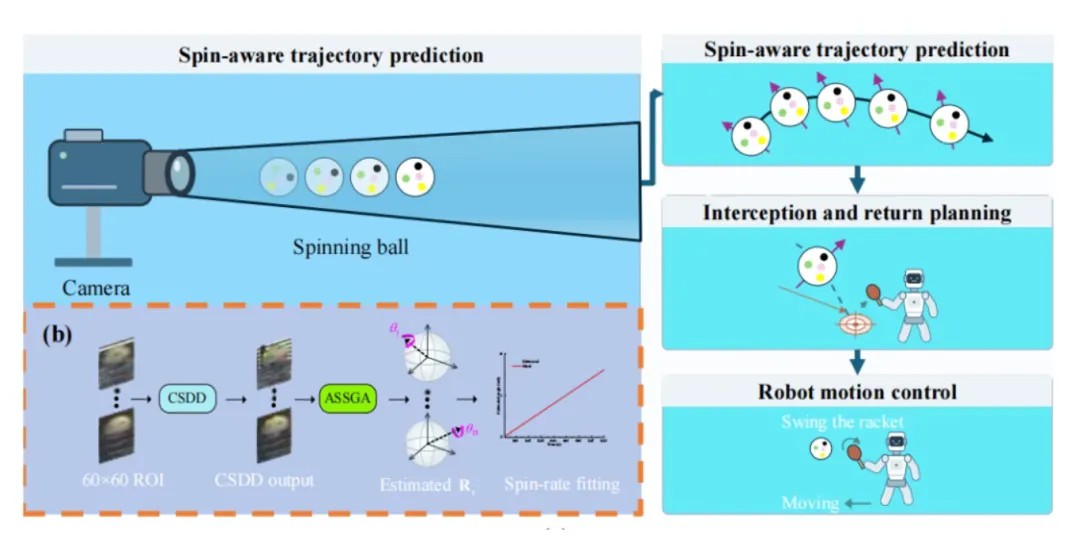
The value of this step is that robots no longer rely solely on external devices to tell them where the ball is, but instead begin to automatically obtain information, judge the state, and translate the judgement results into action.
This process is underpinned by a full-body operating base model developed by Intelligent Autonomous Development, and a three-tier collaborative architecture that generates high-energy control pumps at the base of the pumps to drive the brain's perceptual decision-making.
Specifically, these three systems have their functions, closely intertwined. The brain side is responsible for understanding the environment, judging the ball's state and planning the strike strategy. It has to answer what's happening right now, where I should hit, how I should hit. In a ping-pong scene, the brain needs to extract the ball's spin, speed, and landing patterns from continuous visual information, combining the opponent's position and its own limit of ability, to generate a strike intent.
The small side of the brain is responsible for combining the current state of motion to generate movement in real time. It responds to the question of how my body is now, where my focus is, how my hands and feet should coordinate to turn the brain's intentions into motion. The brain translates the brain's tactics into movement instructions at the joint level and completes motion generation and adjustment in milliseconds.
The underlying control is responsible for converting the movements into the actual movements of the robot. It has to answer the questions of how much power each motor should exert, to which angle the joint should turn, how the torque is distributed. The underlying control needs to maintain physical stability during a high-dynamic hitting process, while accurately executing movement instructions from the brain.
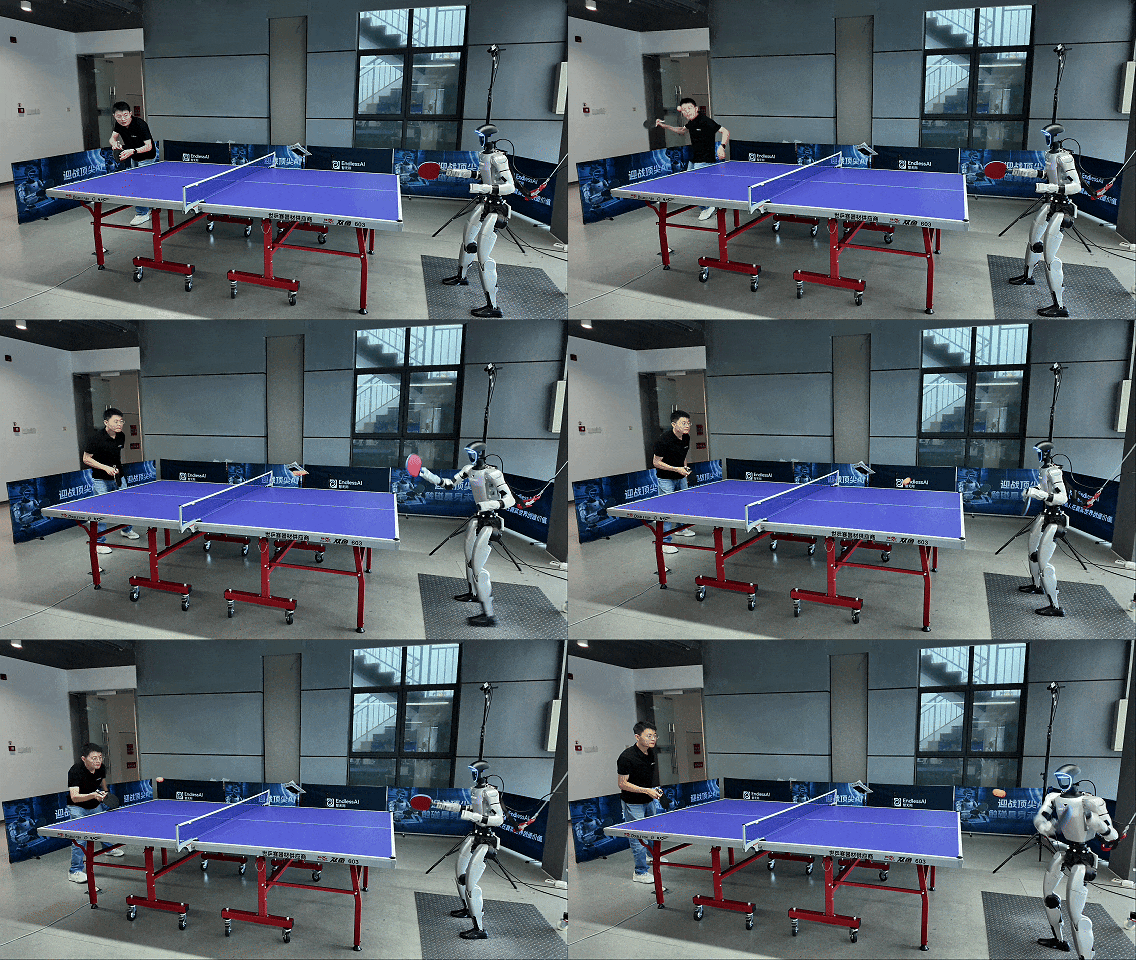
There are three levels of synchronous work, forming a complete closed loop from visual input to physical execution. Where the brain tube strikes, how the microtube strikes, and the bottom tube strikes with precision. Lacking any one layer, robots cannot complete a continuous loop of movement in high-speed confrontation, posture adjustment and punching balls. This also explains why simple stacked motion libraries or only visual recognition are difficult to create hundreds of consecutive autonomous pairs of strikes, because it is really difficult for the three systems to continue to coordinate and punch in real physical environments. Three levels require close coordination to allow machines to complete a continuous motion, posture adjustment and punching ball in high-speed confrontation.
More importantly, Intel intends to build a technological system capable of continuous improvement of skills. Its self-developed, full-body operational capability evolution system, which divides the entire body of operation control, skill combination and evolution, scenario brain into different levels, integrates data collection, simulation training, real-machine deployment, verification feedback and the complete process of skill evolution.
This means that the successes and failures of every move a robot makes on the pitch can be the basis for the next round of skill optimization. From completing a move to mastering a skill, to constantly adjusting strategies according to changes in the environment, behind the changes in the way robots learn.
It's really smart.It's notLet robotsDeath with a stiff backMore action.I really need it.It's to make it work when it fails, and still know what to do next.
03.
Is there a commercial closure in athletics?
In the past, when industries talked about the commercialization of humanoid robots, they often thought first of factories, warehouses, logistics, and home services.
Athletics is rarely equally important. Many in the industry believe that while robots play well, they are also far away from actual production. Compared to industrial production, the sports scene seems to lack a sufficiently clear productivity value.
However, this may underestimate the market space of athletics itself.
First, the sports scene has a direct commercial consumption demand. For example, table tennis, which has a wide public base, schools, communities, sports venues, commercial complexes and professional training facilities in China, has a corresponding sports demand.
It can set the difficulty of returning the ball according to different levels, simulate different speeds, spins and landing points, provide basic training for beginners, and can provide more frequent exercises for sports enthusiasts of a certain level.
For schools and youth training institutions, a robot can be a standard teaching aid; for commercial venues, it can be a sporting device with interactive experience attributes; for tourism and commercial complexes, a human robot has a strong sense of observation and participation in the game itself.
Furthermore, athletics can also extend to professional training. Robots can repeatedly provide specific landing points, spins, and rhythms depending on the training goal, allowing athletes to intensify training against weak joints. This repeatable, adjustable training method has some differentiating value compared to fully relying on manual coaching.
Of course, robots are not currently a direct replacement for professional athletes and high-level coaches. Its commercial value should not be based on this premise. The more realistic path is to gradually expand its application from the needs of mass movement, standardized training, interactive entertainment and educational research.
This also indicates that athletics is not a phenomenon that has to wait until it is technically mature. It can itself form a commercial loop of products, services and consumption.

More importantly, the sporting scene has another value that is easily overlooked: its ability to provide a continuous training and verification environment for physically intelligent people.
The objective of a table tennis game is clear, whether the ball is successful, whether the ball passes the net, whether the round is continuous, and can be observed and quantified intuitively. The speed, rotation, drop-point and hitting pace of the ball can also change continuously, allowing the robot to face the challenge of continuously updating the task. This scenario of both clear objectives and dynamic change is ideal for building skills training, ability assessment and feedback systems.
In other words, robots on the pitch are not only providing a sporting service, but also training and optimizing themselves.

04.
Starting from a ball stand
Athletics is not only expected to generate direct commercial revenue, it is also a deeper value for the robotics industry as a transfer of technological capabilities.
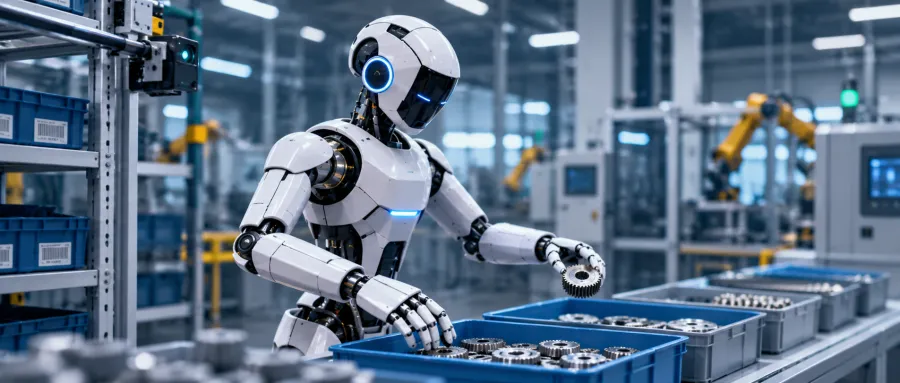
Table tennis and industrial production seem to be far apart, but the two have much in common on the underlying capabilities. For example, in industrial sorting, objects on the conveyor belt are constantly moving, and robots need to recognize the position and motion of objects, predict their arrival time, and timely adjust the grip action. This has similar technical requirements to incoming perception and trajectory prediction in table tennis scenes.
In dynamic assembly, the robot needs to coordinate the operation of the arm, dryer and bottom according to the position of the part and its own posture. This involves coordination control of the whole body with the movement, adjustment of gravity and swinging movements in ball-like motion.
In commercial services, robots need to move around in crowds, understand the changing surroundings, and adapt their movements in a timely manner to human behavior. This is also associated with real-time perception and dynamic interaction in athletics.
Of course, this does not mean that a set of ping-pong algorithms can be used directly in the factory. Different scenarios have significant differences in mission objectives, precision requirements, environmental constraints and safety standards, and need to be adapted to specific tasks.
But the underlying capabilities can be replicated. Similar to dynamic visual perception, motion trajectory prediction, real-time decision making, full-body coordination, continuous task execution, these capabilities do not belong to a particular sport, they are general capabilities that human robots need to move into the complex physical world.
This is also the reason for the uninterrupted continuous layout of different sporting scenarios such as table tennis, tennis and basketball. Different sports focus on different abilities. Table tennis emphasizes high-speed perception, quick response and precise hitting; tennis further tests the range of movement, right-hand switching and greater space; basketball involves goal tracking, spatial judgment, physical coordination and continuous movement execution.


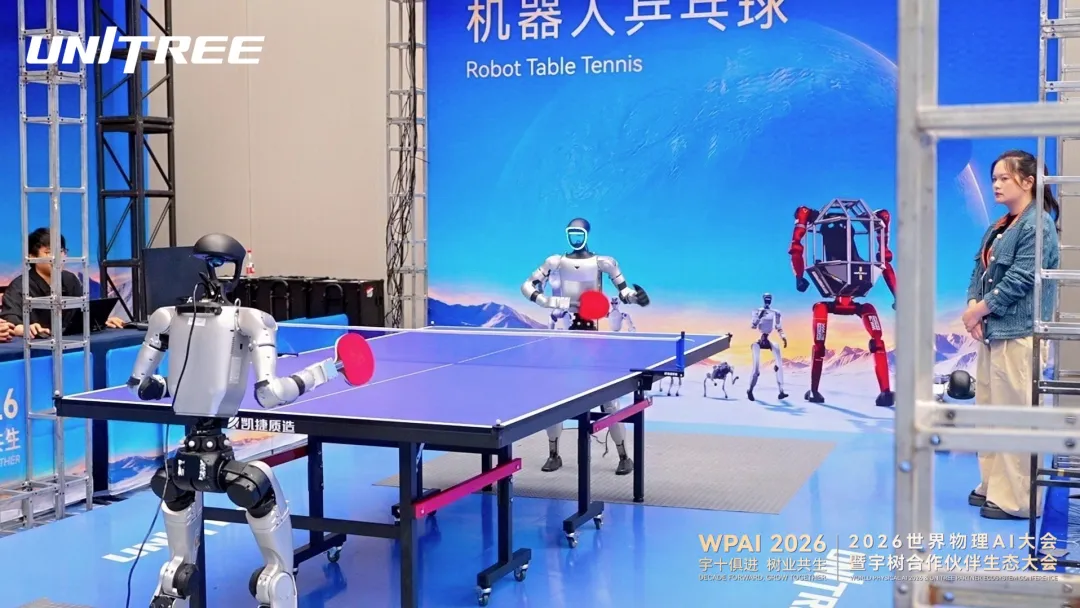
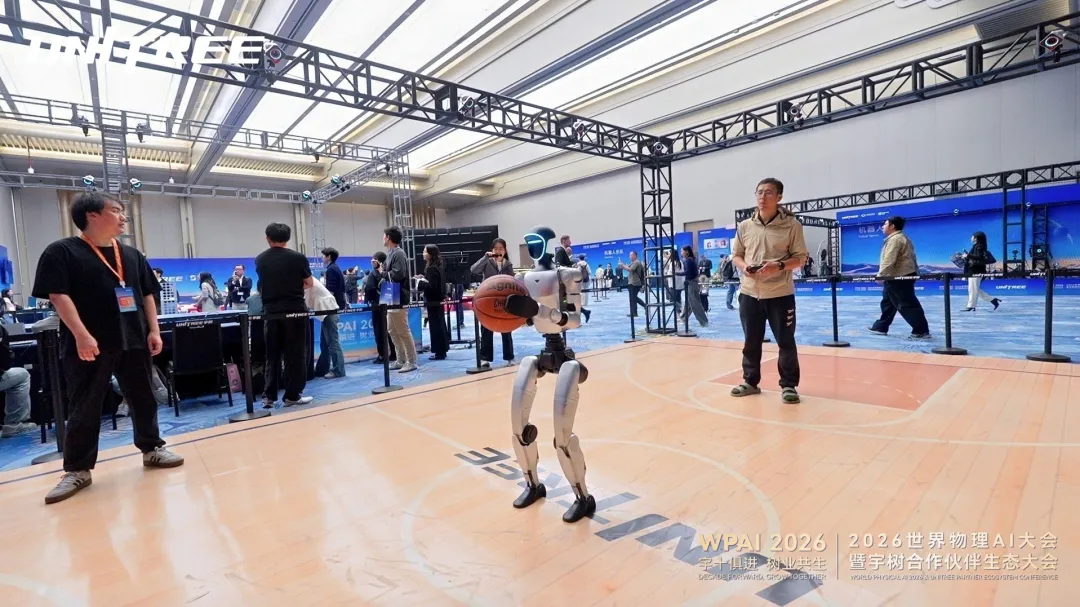
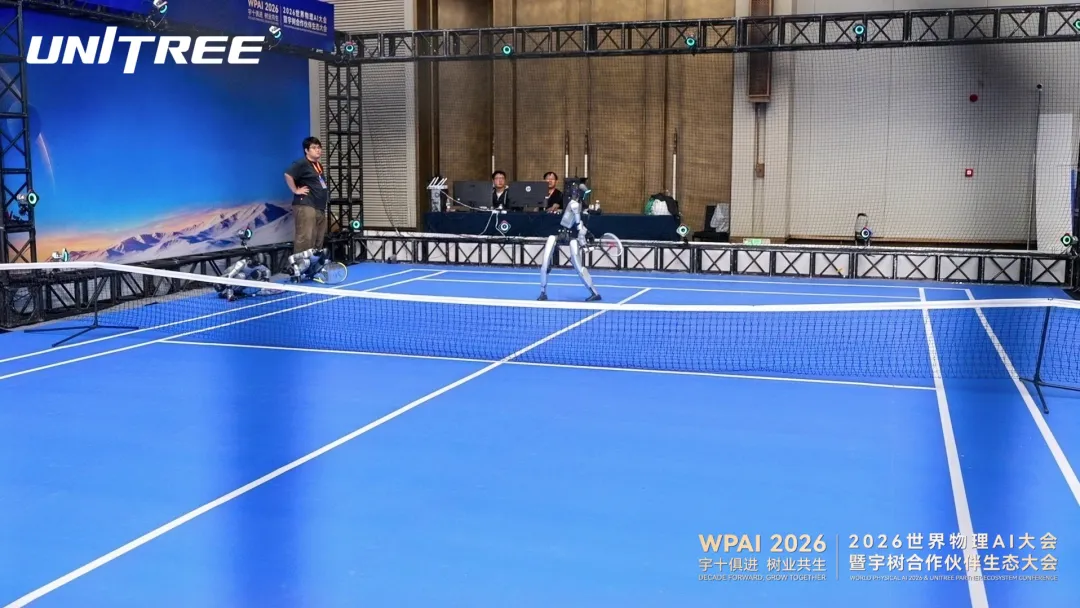
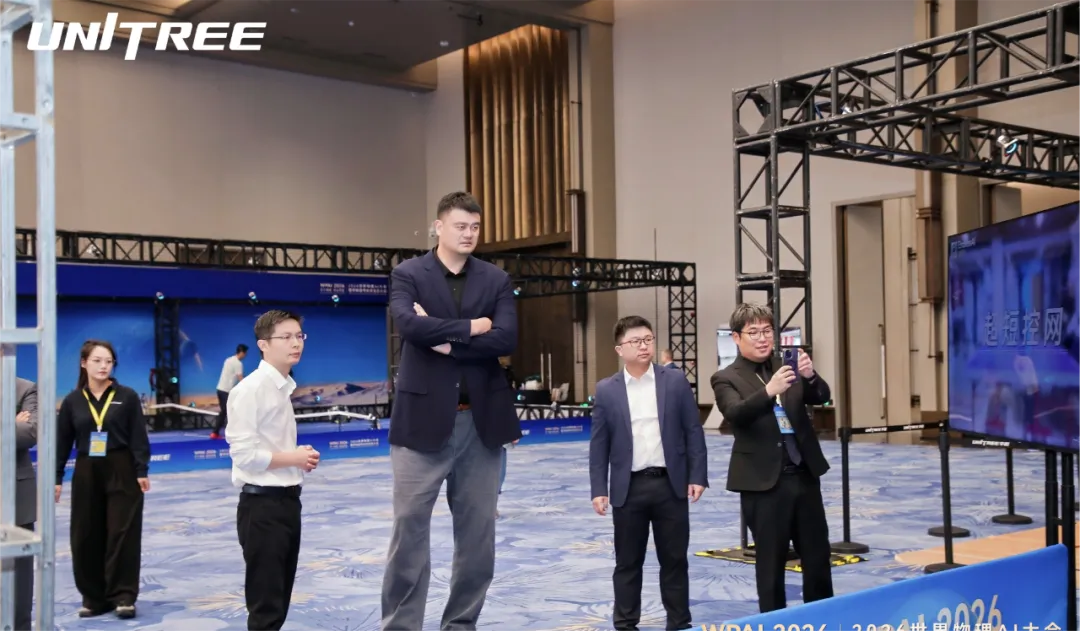
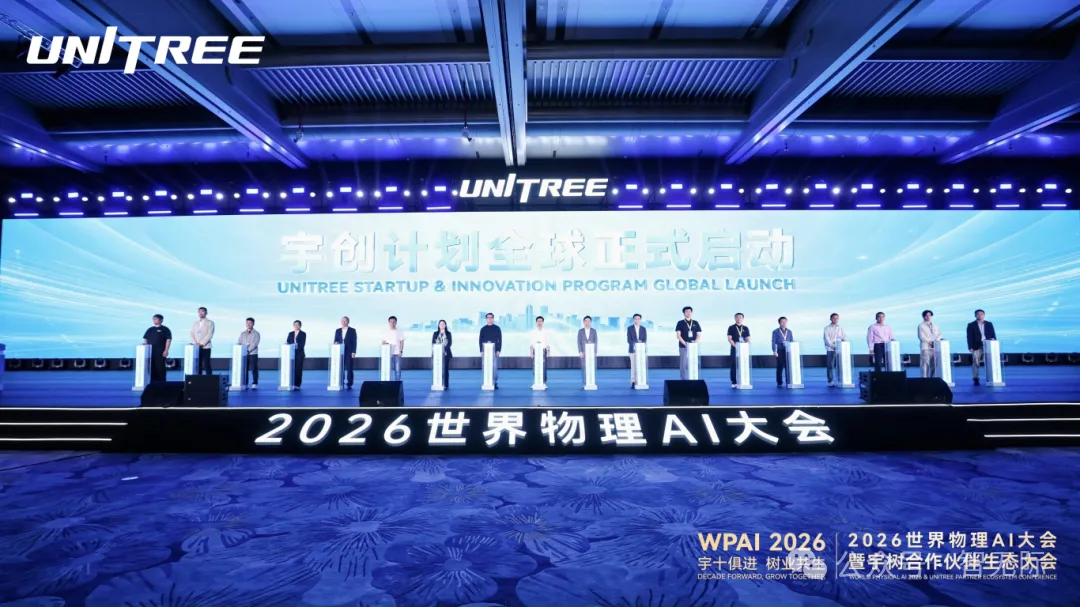
At the 2026 World Physical AI Congress, Wu-Tang made its debut at the Ecological Congress of Wu-Tang Partners, where Wu-Tang made its debut with a matrix of ball sporting robots, and became the first ecological co-creation partners in the Wu-Tang project announced by Wu-Tang, reflecting the rapid development of technological exploration and ecological collaboration between Wu-Tang and Wu-Tang in the direction of full-body operational intelligence.
From an industrial standpoint, human robots themselves provide the basis for movement and execution, algorithmic models determine how robots understand the environment, organize skills and complete tasks, and scenarios provide real feedback for capability training and commercial verification.
05.
Link to the Future
Going back to the ping-pong table at the casino, what really matters is perhaps not how many laps the robot has played, but the ability to see the ball, judge the spin, adjust the position of the pitch, complete the hit, and continue to react when the next round arrives. It has begun to have the ability to operate continuously in a dynamic physical environment.
A table tennis table is not the end of a humanoid robot, but a testing ground that can see technological progress, test full body abilities, and take on real needs.Athletics should not be merely a transitional demonstration of the pre-industrialisation of robotics. It can be both a commercial scenario for robots to serve consumers directly and a training ground for the continuous evolution of full-body functional intelligence.
Starting with a fast-spinning ping-pong game, Intel's ultimate goal is to explore how robots can truly understand the physical world and continually improve their abilities in one real interaction. This is the path that Intel's repeatedly mentioned AlphaGo momentum is leading: allowing robots to continue learning, evolving autonomously, and continually breaking the boundaries of their abilities, rather than staying in a high-light operation or a performance.
It's going to make robots taller, faster, stronger and smarter.
This is perhaps the most anticipated industry value behind human-robot athletics.