The story is told from the point of view of the monks.
QbitAI is public.
This is the first time that state-owned AI has been implemented.Large-scale evidence of lung cancerThis is a major breakthrough in challenging "The No. 1 Cancer Killer":
Around 40 cases of complicated lung cancer have been assessed in a completely uniform standard assessment, where AI has been used to evaluate patients, patients, and patients.88 to 12。
It's almost a cliff-edge lead in clinical expression.
Of the 250 doctors who participated in the experiment, 250 came from 3A hospitals across the country.
Most of them are directors or deputy directors of doctors, who are not usually ranked in the order of the... gold content is naturally obvious.
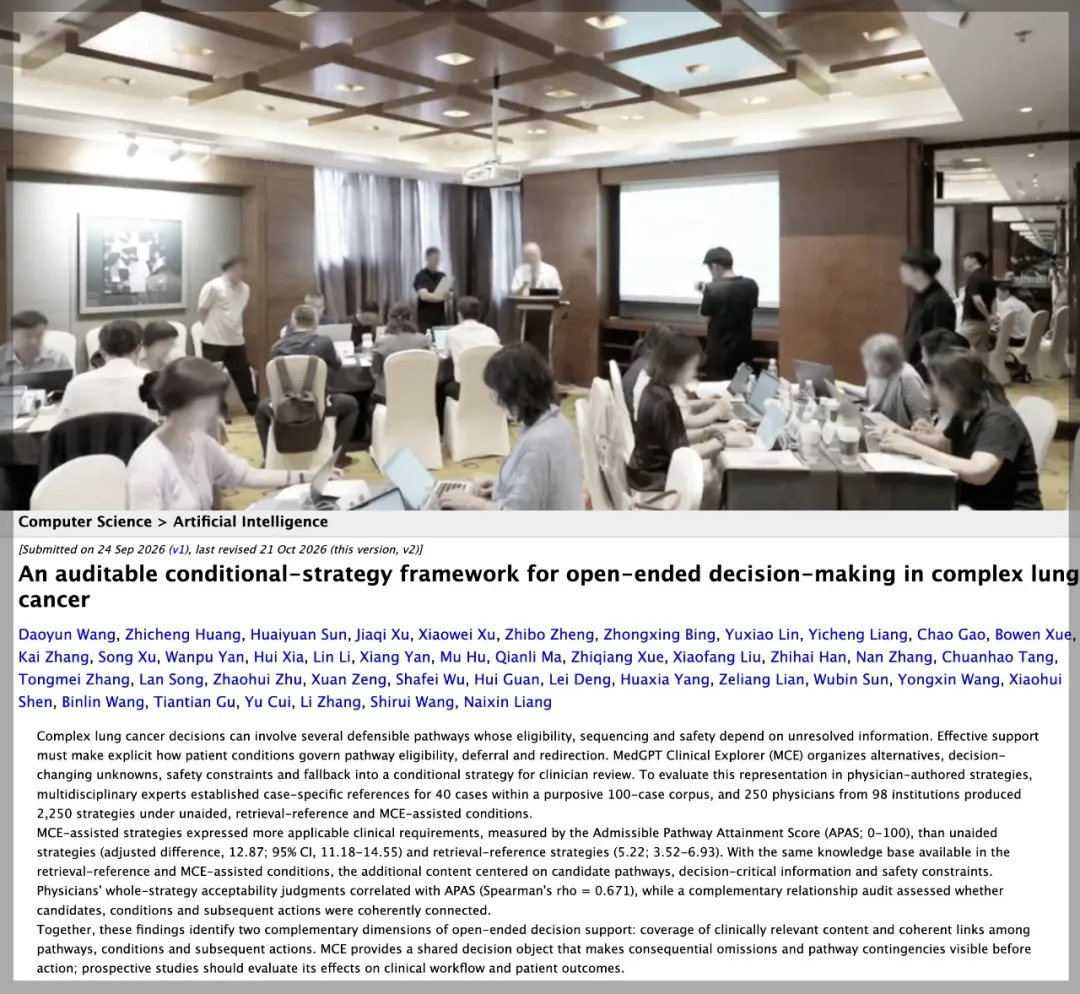
The study was conducted by AI Medical Company of ChinaThe future doctor's motherwithBreast Surgery team at top 3A hospitals in the countryA joint effort to directly integrate medical AI into one of the most experimental and comprehensive scenarios in clinical trials:
Tumors are complex, multiple treatments are mutually exclusive, and there is no single standard answer.
It's the same thing that's going on behind the scenes.MedGPT is the future medical model for physiciansIt's a great way to get to know your doctor.。
Not only are the advantages of the current international mainstream general-purpose model, such as GPT-5.4, Claude Opus 4.7, and Gemini 3.1 Pro, evident, but the changes on the side of human-machine collaboration are also specific.
With the help of future doctors MedGPT, the overall score of doctors jumped from 53.40 to 66.27, a relative increase.24.1%。
Its performance has sparked speeches from nearly 10 leading clinical authorities, including experts on the main committee of the Chinese Medical Association and leading experts in oncology in the United States:
Director of Breast and Thoracic Surgery at the Chinese Academy of Medical Sciences oncology hospitalLi-InDirector of the Centre for Breast Disease at Shandong Oncology HospitalWang Yong won.Head of the Department of Thoracic Surgery at the University of Sichuan's Wassee HospitalChen LongchengA number of leading experts, including the Chinese Medical Association, acknowledged its clinical practical value and believed that this was the case.Medical AI urgently needed by frontline doctors。
Director of Oncology at UCSF Health USARobert WarrenDirector of Breast Oncology at the National Medical Center in Hope CityHope S. RugoNamed one of Miami's top prostate cancer radiation specialistsMark PomperHonorary Director of the Division of Blood Oncology at UC San FranciscoMarc ShumanIn the meantime, some of the world's leading experts are also speaking out, and I'm sure they're doing a lot of research.Industrial valuewithLanding potential。

For the industry, this lung cancer experiment, which allows medical AI to engage in complex clinical treatments, has a domestically proven answer that can be discussed.
From theory to practice, AI is opening up new possibilities for treating cancer for more people.
250 doctors participating in a lung cancer clinical grey area
I'll be honest with you.How to fight cancerAI has always been one of the areas of interest in the medical field.
In the past few years, AI has made breakthroughs in related fields, going a long way into protein structure prediction, genetic research and drug development.
But to get to the patient, there is a more specific clinical question to be answered:
What's the cure?
In particular, major diseases such as lung cancer. According to the World Health Organization, lung cancer is the leading cause of cancer deaths worldwide, causing about 1.9 million deaths in 2024.
Nearly one in five cancer deaths worldwide is due to lung cancer.
In China, the burden is more concentrated, where lung cancer has been the leading cause of malignant tumour disease and death in the country for years.
In actual clinical treatments, the patient's situation is very different. The same treatment regimens, the same organ function, the same disease and previously treated different patients, the applicable conditions will change, and the random response capacity of doctors and AI will be very tested.
Leading the experiment, Professor Liang, a renowned breast surgeon, has often faced this difficulty in his long-term clinical work.
In his view, lung cancer gray area clinics need to place evidence-based medicine and cutting-edge research into individual differences in patients to find reasonable treatment arrangements. The team wants to work with future doctors to formulate these clinical judgments.AI can participate, doctors can review.The decision-making process.
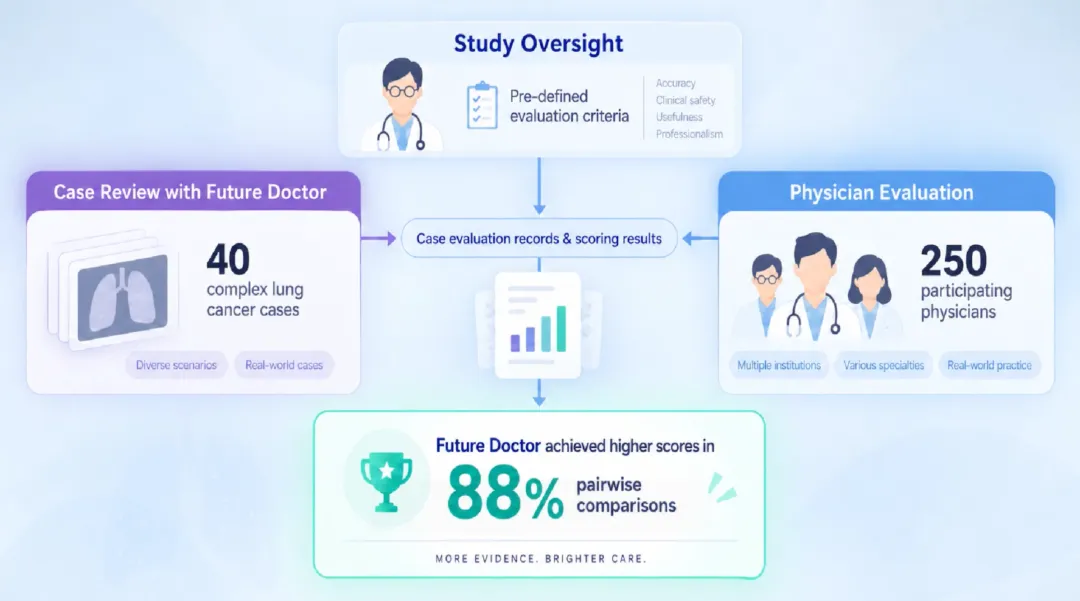
40 studies from real clinical trialsUnpublished casesAll of these cases are characterized by gray areas, there are uncertain guideline recommendations, conflicts of communicable diseases, and specific treatment pathways need to be judged in combination with multiple conditions.
Control groupThe team's line-up is well-designed.
The 250 participating physicians cover 27 provincial regions and 98 standardization centers across the country, covering the departments of breast surgery, respiratory medicine and oncology.
The benefit of doing so is that clinical experience in different regions can be assessed from a clinical perspective, allowing experiments to be more fully integrated into the diversity of clinical practices in the region.
Each physician will then complete three different cases, each with the support of an unassisted, retrieved reference and future physician, MedGPT, and ultimately form 2,250 strategy texts. The study thus observes differences in how doctors treat complex problems of the same type of lung cancer.
Let's see.Dimensional comparison of drones。
Compared to 750 clinical programs submitted under physician-assisted conditions, the future physician MedGPT scored 660 times higher, beating 250 Triple-A physicians 88 to 12.
Its standardized output is on average just over 40% higher than that of doctors, which is equivalent to expressing more complete clinical content in less text.
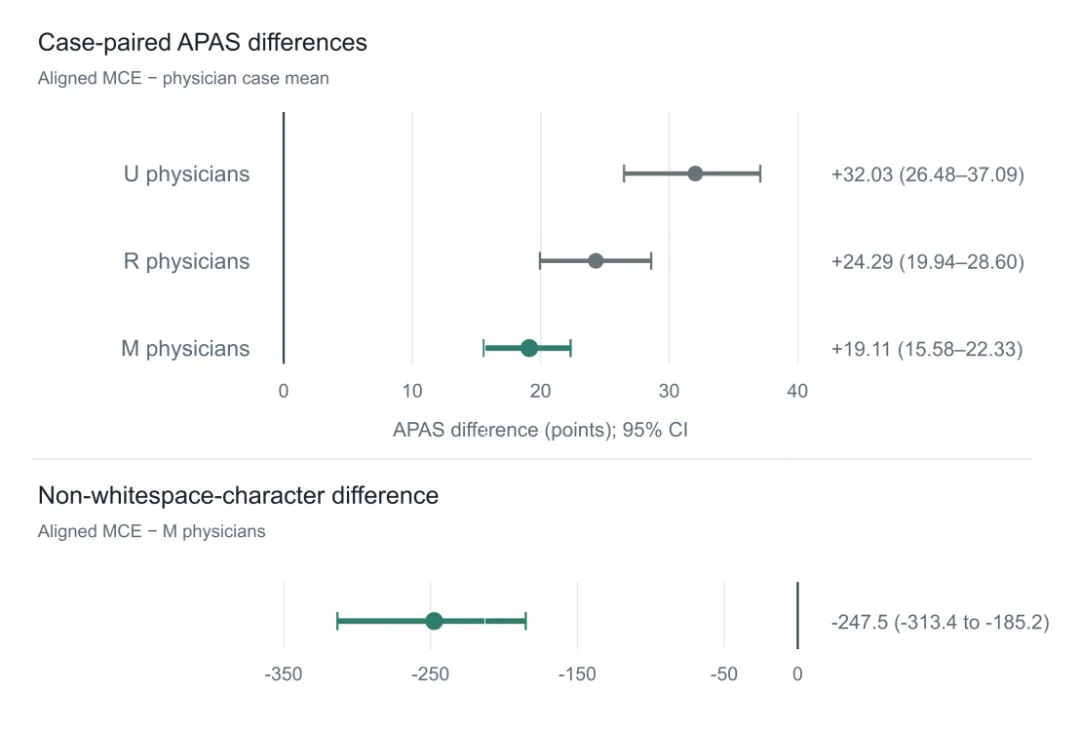
It's not.Dimension of robot collaborationOn top of that, there was a significant improvement in overall doctor scores.
Doctors with MedGPT-assisted future doctors are clearly more fully considering candidate pathways, with more focus on key judgments and risk assessments in path selection.
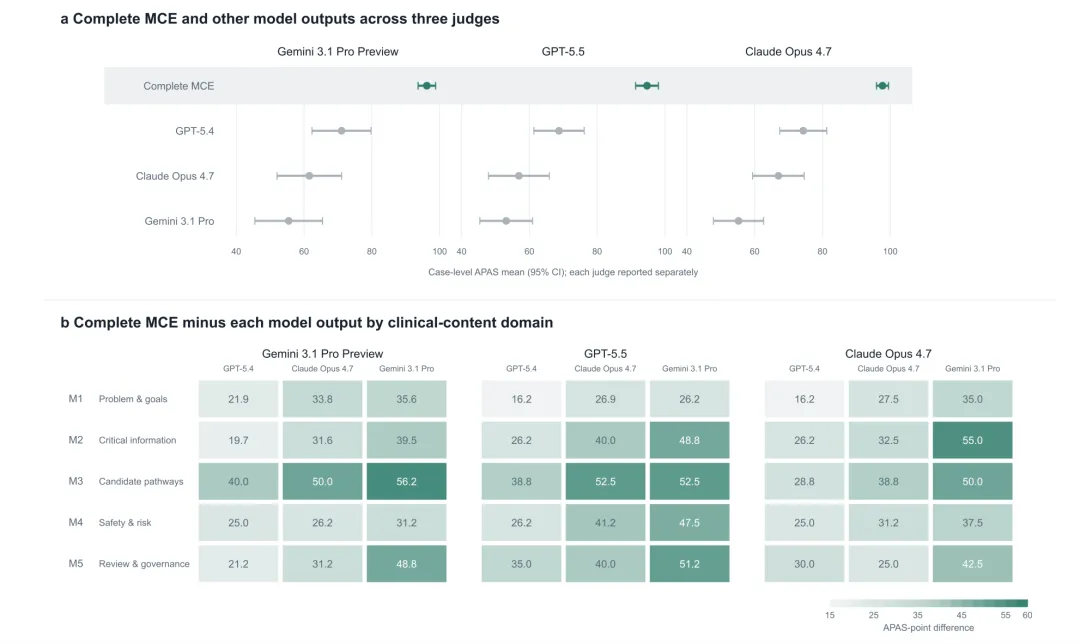
At the same time, in the same conditions as the General Large Model, the future doctor MedGPT combined scores96.22 pointsIt's much higher than GPT-5.4.It's a great day.、Claude Opus 4.7This is the first time I've seen this.And the Gemini 3.1 ProThis is the first time this has happened.。
The advantages are:Candidate treatment routesProducedWhile the general large model typically gives a single treatment plan, future doctors in MedGPT tend to propose multiple reasonable alternative pathways at the same time, as well as entry and exit conditions for each pathway.
This is also the core architecture of MedGPT, which will focus on future doctors.Conditional multi-path strategy。
In order to ensure that the results of the experiments are credible, the research team also established a set up in advance.Rating based on。
Through a three-round process, 20 multidisciplinary experts form 240 case evaluation rules, specifying the clinical issues that need to be addressed, pre-treatment information and pathways, and integrating physician reviews into the evaluation system.
Among the 40 articles that define the safety boundaries between treatment qualifications and treatment intensity, it touches on negative considerations.
It's not easy to do that.Safety is often given priority over effectiveness。
After the rules were frozen, three other AI referees(GPT-5.5、Claude Opus 4.7、Gemini 3.1 Pro)Independent ratings, reviews, and hidden answer sources throughout the entire process.
The ultimate outcome of the high scoring strategy requires a clear alternation of the basis and implementation conditions for treatment options to be used for subsequent clinical discussions.
Previous articleMedGPT technology dismantling for future doctors
The clinical intelligence systems used in this study are:The Doctor of the Future MedGPT。
Future Doctors MedGPT is a native medical model designed for clinical use scenarios and the first AI generated model algorithm approved in China for diagnosis and treatment recommendations.
The 1.0 era is mainly geared towards general questionnaires, controlling model output safety and effectiveness; the newly upgraded version 2.0 makes complex clinical decisions more robust.
Compared to generic large models and medical retrieval tools, MedGPT will be able to help doctors in the future.Integration of medical evidence at the forefrontTo organize candidate pathways, appropriate conditions and risk management into a more comprehensive clinical strategy.
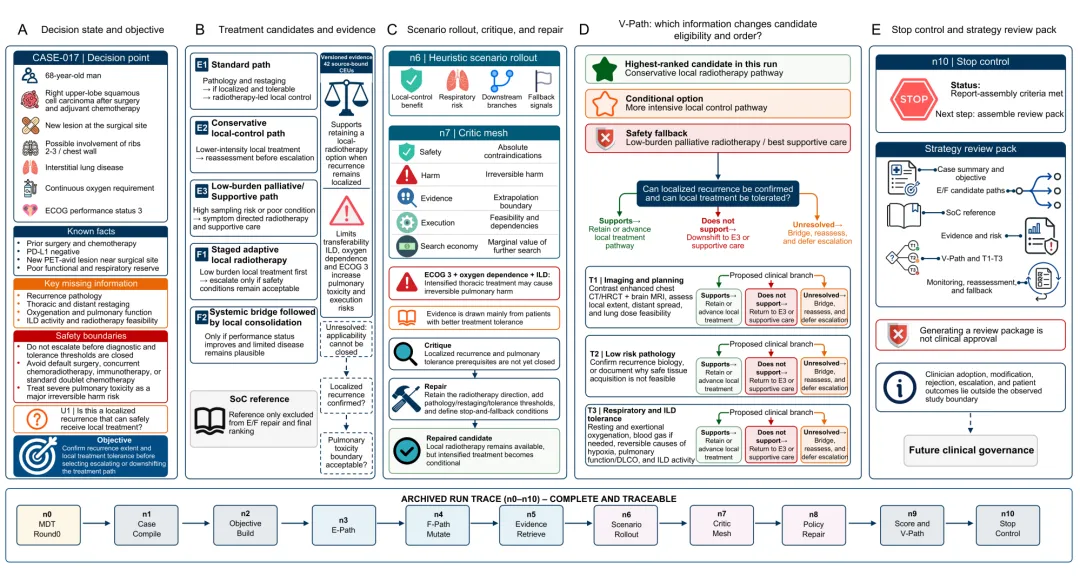
This is the starting point of system design.Multi-disciplinary clinicsIt starts.
In the case of this 68-year-old lung cancer patient, the patient's condition is complex, suspicious post-operative recurrence, and is itself an intermediate lung disease.
After the patient's medical history enters the future doctor's MedGPT, the multi-disciplinary Agent will first self-analyze the patient's problems and will summarize the differences that need to be judged further.
The system then proceededCases compiledThe patient's medical history and examination results are sorted in a timely manner, clarifying the patient's current condition, and determining the restrictive conditions according to the treatment objectives.
Pre-diagnostic evaluation and subsequent treatment are consistent with true clinical logic.
On the basis of this, the system followsMulti-group candidate paths:
- Standard routesE-Path: Produced on the basis of guidelines, consensus and prescriptions for medicines, the program complies with the standard;
- Frontline routesF-Path: Combining the latest research and conference results to generate evidence-based multiple options for patients.
This link relies heavily on the details of the evidence, and the future doctor MedGPT's lung cancer database now contains about 13,000 original documents, forming 20,000 units of clinical evidence.(CEU)。
Each CEU retains information such as the applicable population, treatment conditions, the system matches the patient's background on a case-by-case basis, and the doctor can perform original research retrievals at any time along the CEU to see the conclusions of the application in a timely manner.
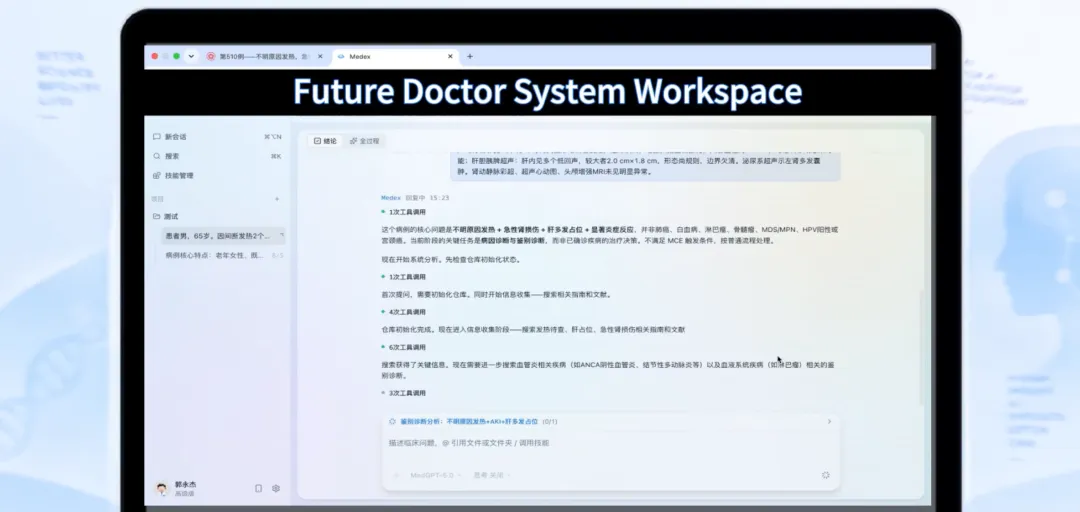
After the formation of the E-Path and F-Path, we have to do more.Testing and proofreadingFor example, when choosing an F-Path, consider what evidence is missing and what information needs to be added to determine whether the path is feasible.
Future doctors at MedGPT will retrieve databases around the points of dispute and evidence gaps, then target each candidate path to the patient's situation.The world model simulation。
Based on the patient's current condition, the following treatments are predicted:
If a correctable risk point is encountered, adjust after verification; if an unresolvable risk is encountered, reduce the priority or even remove the corresponding path and check the remaining options.
After repeated iterations, the system gradually shrunk to strategies that could be reviewed and developed into a more efficient system.V-PathVerify the path, specify the inspections and judgments that need to be completed next.
The entire process continues to cycle until new executable paths can be introduced based on existing evidence.
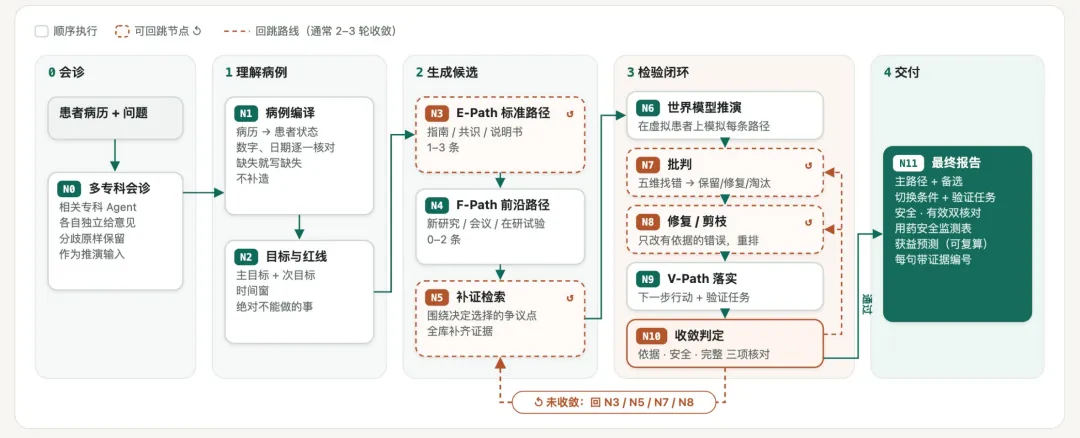
Finally, a verifiable report is delivered to the doctor, including: current main treatment pathways, alternatives, and execution arrangements.
Each path is equipped.Patient Benefit AnalysisCombined overall survival in the study(OS)Life expectancy without progress(PFS)Data like this helps doctors compare different pathways in a holistic way.
AI is more concerned with multi-disciplinary analysis, evidence matching and pathway calibration, where doctors can review critical conditions that affect selection, combining the availability of medicines, patient wishes and family circumstances to complete individualized judgments.
This approach is a continuation of the team's previous research.
Published by Nature, a subsidiary of Npj Digital MedicineBi-track benchmark for clinical safety and efficacy of CSEDBOptimization of drug safety, critical identification and clinical pathways has been incorporated into the evaluation system.
The research is moving further into the lung cancer gray area to ensure that the next generation of medical AI is safe and effective while participating in the formation of complex strategies.
Medical AI expands the boundaries of physicians
From this point of view, it is also easier to understand why Chinese-American experts are collectively interested in this experiment:
Medical AI is at a critical transition from simple medical questions to complex clinical decision-making. MedGPT provides real-world case support for this progress by using the future doctor MedGPT as a cutting edge for lung cancer gray areas.
It demonstrates the advancement of the boundaries of technological capability in response to the most pressing clinical needs of medical AI today.
How can AI be used? How can it be used? How reliable is it?
As a result, medical AI, represented by the future doctor MedGPT, has already been shown to be clinically viable.
For doctors, this means a more complete decision-making reference.AI assisted before, doctors judged afterFinally, the selection and execution of the completed project is coordinated.
Beyond the established path, such systems are also more likely to explore novel ideas for complex diseases such as cancer.
When these ideas are gradually verified, humanity hopes to win the tug-of-war against disease.

In the words of Professor Wang Yongsheng, Director of the Centre for Breast Diseases at Shandong Oncology Hospital:
Future Doctors MedGPT is a medical AI that can be of great help to cancer clinicians.
In addition to its practical value for clinicians, the University of California, San Francisco, USA, is a leading provider of healthcare services in the United States.(UCSF)Dr. Robert Warren, director of oncology at the Medical Center, also saw the potential of the model underwater:
This is an important study! AI's role in medical diagnosis and treatment decisions is evolving and is expected to provide important information support to patients and caregivers.
Around the results of specific experiments, Chinese-American medical experts have expressed their approval of AI's involvement in clinical decision-making and the possibility of seeking potential collaboration.
Future DoctorsHe is also the Chinese representative in this round of clinical exploration of medical AI.
In fact, increasing the capacity of doctors has always been the starting point for future doctors to invest in AI.
The founder and CEO, Wang Xiaojin, has a long history of use."After school, it's over".The company's medical AGI route is explained.
Using the four-sentence concept, he hopes to widely replicate the medical skills that top doctors have accumulated.Get quality resources to reach more patientsAt the same time, AI is involved in the exploration of dubious diseases.Continued updating of dynamic medical knowledge。
Both of these things are concrete groundbreaking points in this joint experiment.
Research will use past expertise as a basis for evaluation to justify AI. In other words, it is also a way to spread quality medical capabilities.
Seeking candidate pathways in complex lung cancer gray areas, testing AI's ability to support doubtful decision-making, is a proven exploration of what future doctors will do to advance the idea of "open peace".
Following this concept, further research and development will be closely linked to clinical work. After continuous updating of the patient's history, the system needs to keep up with changes in the patient's condition; the questions raised by doctors during reviews and use can be the starting point for the next round of research.
Although the pace of change is not fast enough, at least as of today,The wheels are ready.。
The 88:12 ratio, which shows progress, and an improvement of 24.1%, gives a more concrete picture of the value of human-machine collaboration.
The next step for future doctors is to make this path widely validated in more clinical tasks.