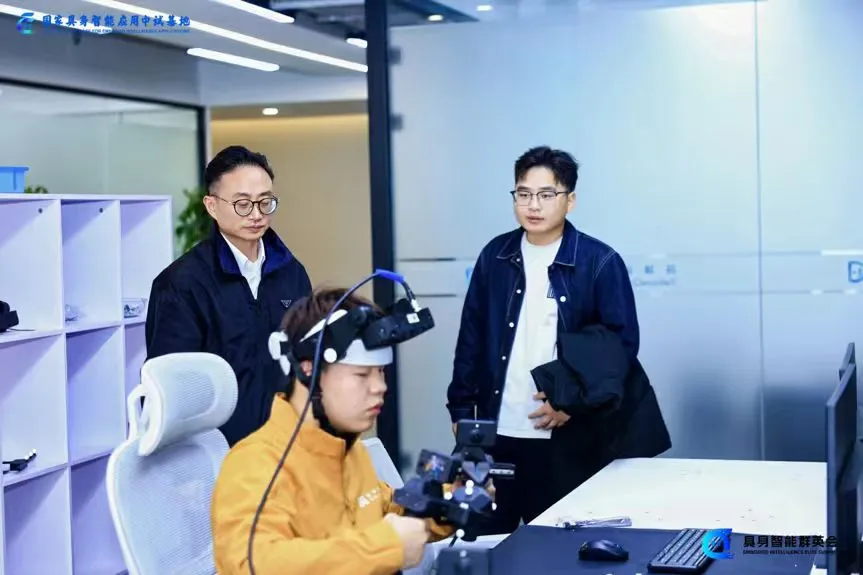
“Let data create more possibilities
How many pieces of data is needed for a robot to learn to tighten screws? There is no standard answer to this question, but every team that has done real-machine training knows that the smooth movements in the demonstration video often cannot last a shift on the real production line. Hand occlusion, lack of tactile sense, multi-modal out-of-synchronization, and mismatched task steps are problems that rarely arise from the model structure, but more often from the data source.
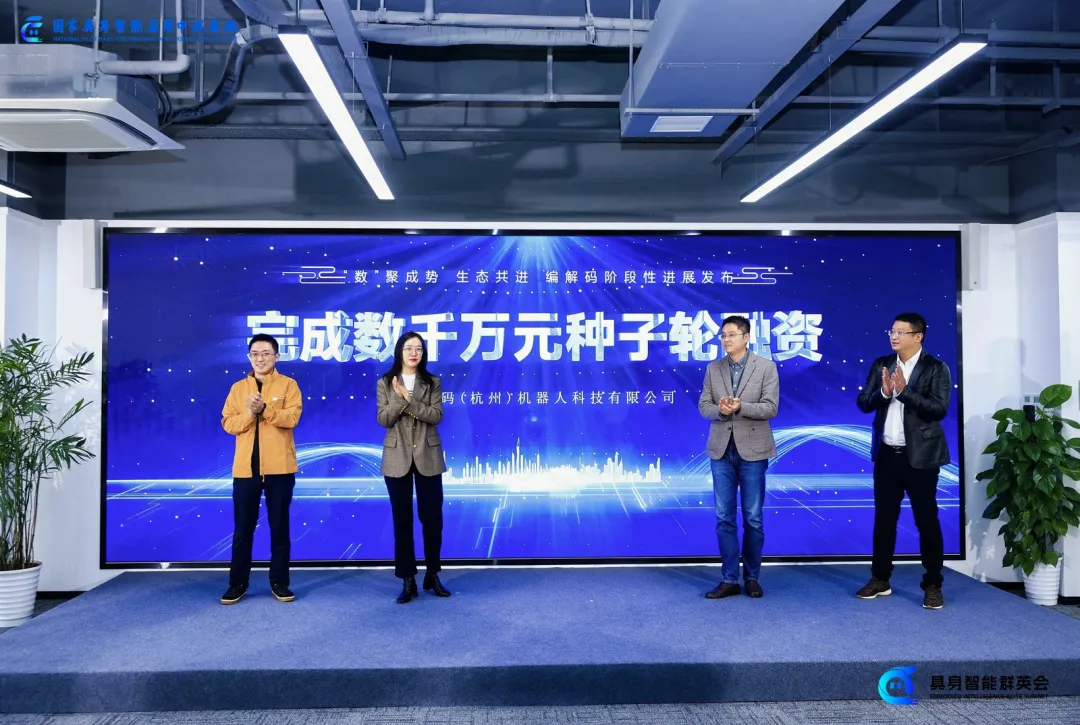
On November 11, 2026, the second phase of the Embodied Intelligence Heroes Conference with the theme of digital quotient determines IQ was held at the Hangzhou Intelligent Manufacturing Valley Industrial Service Complex. At the meeting, Codec (Hangzhou) Robotics Technology Co., Ltd. released a 100,000-hour multimodal embodied-AI dataset, the first phase of 1,000 hours of dexterous hand operation data, and plans to open applications for free to enable an embodied intelligence data experiment space. At the same time, the company announced the completion of tens of millions of seed round financing, and jointly launched an embodied intelligence data infrastructure open plan with the National Embodied Intelligence Application Pilot Base.
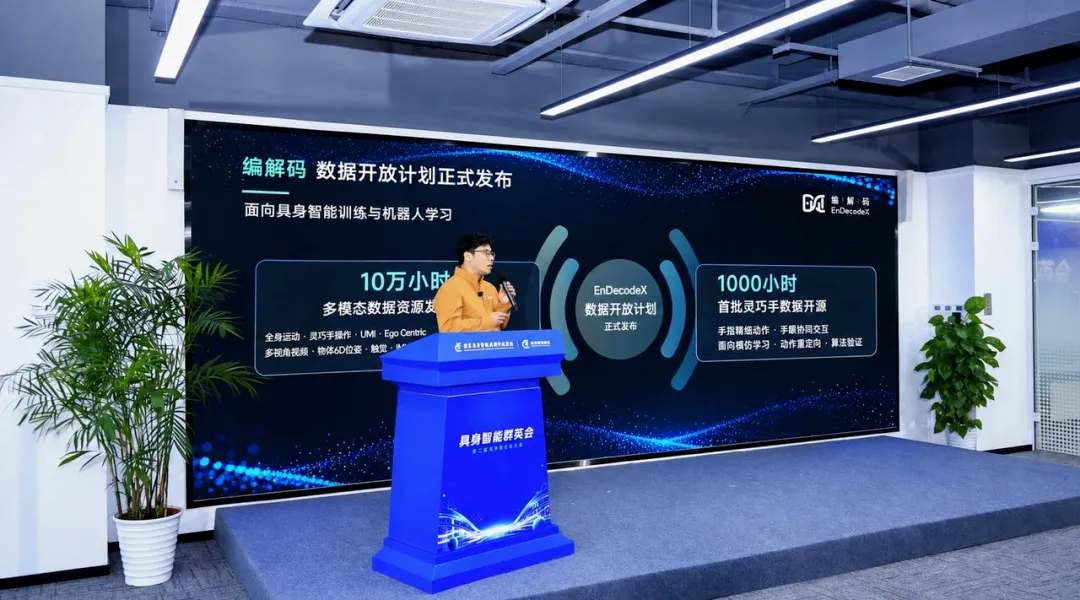
A company engaged in data production puts production capacity, open source, site, ecology and capital on the same table at the same time. This is not common in the industry of embodied intelligence. It is reported that EnDecodeX codec is jointly incubated by Qingtong Vision, Hangzhou High-tech Innovation Group and Smart Intelligence. The collection capabilities of optical motion capture, the location and funds of local industrial capital, and the ontology accumulation of dexterous hands each correspond to one of these five things.
So, what exactly is this company doing? Is 100,000 hours of data a capacity reserve or an industry signal? Why should 1,000 hours of dexterity hand data be made available for free? Behind tens of millions of dollars in financing, which path is industrial capital looking at?
01.
The model is getting bigger and bigger, how can the data layer keep up?
To answer these questions, we must first go back to a more basic industry change: models are getting bigger and bigger, and the data layer is becoming a new bottleneck. The entry point for coding and decoding is also hidden here.
"The difficulty in data supply is not only the collection equipment, but also whether the field can be transformed into readable, checkable, and reusable R&D data." Codec CTO Ji Yaohui mentioned in an interview with the Robot Lecture Hall that the data service is more like a project that is continuously aligned with the customer's training goals. The delivery document is only the starting point, and the training goals, task definitions and evaluation standards must be repeatedly refined during the project. Model vendors know better than data companies what labeling specifications are required for different tasks. The same batch of data may be in the hands of different customers, and the labeling strategies may be completely different.
Therefore, what the industry lacks is not just people who perform collection, but people who can organize tasks, collection, quality inspection and delivery into a stable production line. What is even more lacking is a set of standard parts that can be recognized by the training framework after recording, reused by different ontologies, and repeatedly verified. If the format, coordinate system, labeling caliber, and quality specifications are not consistent, the data will not be available.
Codec therefore hopes to become a "real-world data production and application implementation service provider." When this positioning comes to the operational level, the first thing we encounter is the difficulty of data supply. Data supply is not only about the collection equipment, but also about whether the scene can be transformed into readable, checkable, and reusable R&D data. The answer given by encoding and decoding is to first make the data into products.
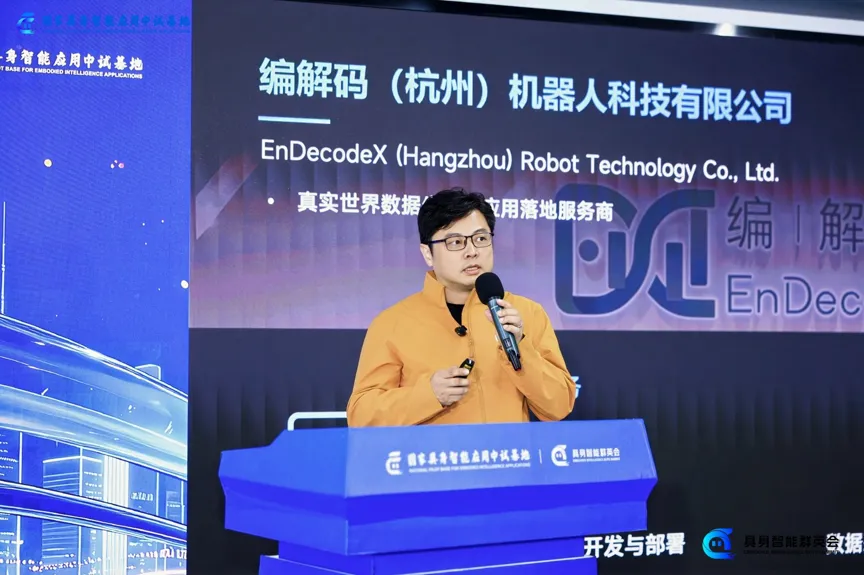
So how to make good data products? Ji Yaohui introduced three aspects.
The first is the completeness of the collection site. The 100,000-hour multi-modal data set covers whole-body movements, fine hand operations, multi-view videos, 6D object poses, touch and inertia and other modalities. Some of them include real object interaction. The collection specification reaches 120 frames, sub-millimeter level tracking, angle error does not exceed 0.5 degrees, and multi-channel sensors are synchronized to the microsecond level. The redundant space is left for subsequent model iterations.
The second is to optimize the arrangement of the data set. Teams doing imitation learning want the complete trajectory of expert demonstrations. Different models can share some underlying real records, but the required annotations, task distribution and interfaces are different. When used for training such as VLA, language instructions need to be supplemented or aligned according to tasks. Whether a set of resources can serve multiple types of R&D needs depends on what information is retained during collection, and whether it can be sliced, annotated, and exported according to purpose later.
The delivery link is to align standard parts to the customer's training pipeline. Encoding and decoding are delivered according to the agreed data format and interface based on customer tasks and modal combinations, and data descriptions, samples, and necessary visualization and conversion tools are provided to help customers reduce access and preprocessing work. The specific processing procedures and training access methods are determined based on the customer pipeline.
The value of data does not lie in how much data is recorded, but in whether it can enter the customer's R&D process and verify its value in target tasks. Encoding and decoding support this set of delivery services. Multi-modal data collection and processing is responsible for turning the scene into a file, robot real machine task evaluation is responsible for running the customer's model on real equipment and giving the results, and embodied productivity system development and deployment is responsible for integrating the successful set into the customer's production line. The three businesses are strung together to form a closed loop from data to deployment, which also turns evaluation from a value-added service into a basis for customer decision-making.
Because the value of data does not lie in how much is recorded, but in whether training can be started directly after it is delivered. This is exactly what codecs want to get through. It is understood that currently, Codec has provided data collection services to enterprises and institutions such as Unitree Robotics, Zhiyuan Robot, Light Wheel Intelligence, Hubei Humanoid Robot Innovation Center, Ant Lingbo, Leju Robot and other enterprises and institutions. These cooperations cover model parties, scenario parties, ontology manufacturers, data suppliers, scientific research teams, and small and medium-sized development teams. They help codecs connect industry supply chains and build continuous data service links.
02.
In addition to numbers, structure, pipelines and quality deserve more attention.
The most attention-grabbing feature of this release of Codec is “100,000 hours of multi-modal data resources”. The embodied intelligence industry often compares the amount of data, but the significance of 100,000 hours is not only the stock, but actually means that encoding and decoding has formed a large-scale data production line that is taking shape.
It is understood that the current data volume of encoding and decoding has exceeded 100,000 hours, and the new data added every day is proportional to the number of material factories and collection stations deployed. Behind this is the continuous project of collection plan, on-site execution, synchronous alignment, quality inspection and cleaning, labeling rules, standardized delivery and real machine evaluation.

From the perspective of resource structure, the existing data for encoding and decoding covers types such as dexterous hand operation, two-finger gripper, whole body and finger collaboration, first-person perspective, and upper body operation. Different data sets are organized according to mission objectives and collection configurations.
It can be seen that the focus of encoding and decoding may be further expanding from locomotion data that "looks like" to manipulation data that "really works". This also corresponds to changes in embodied intelligence data requirements.
Nowadays, in order for robots to be implemented, they must interact with the physical world and manipulate objects, props and production materials. Higher requirements will be put forward for end joint positions, contact points and contact surfaces, object motion status, cooperation of each joint of the dexterous hand, accuracy of tactile data, and time alignment of multi-modal data.
It is reported that the codec can provide sub-millimeter tracking with an angular error of no more than 0.5°, and adopts high frame rate acquisition such as 120 frames; the delivery is not only data files, but also includes visualization tools and a tool set with reproducible quality specifications, allowing customers to verify data quality in their own environment.

High-quality data is not nominal, but reproducible and verifiable. Codec CTO Ji Yaohui explained that the quality indicators that customers pay attention to are not one-dimensional. Whether the modal coverage is complete, whether frames are dropped, whether the acquisition object is out of range, whether the system is calibrated, and whether the task steps and time definitions match are all part of the acceptance.
A deeper level of quality is reflected in whether the data quality is good enough when the same task is completed. He gave an example: "The quality of movements presented by professional dancers and ordinary amateurs, masters with decades of experience and novice interns is completely different." Therefore, the encoding and decoding method is to perform labeling and quality inspection according to customer requirements on the one hand, and on the other hand to make forward-looking redundancy at a standard higher than the current mainstream demand. Customers may only use a few of these modalities, but data providers must leave enough room for adaptation in the competition among multiple routes before the technology routes converge.
The amount of data is just the iceberg on the water. Under the water is the systematic engineering of structure, pipeline, quality and delivery methods. This may also be a long-term challenge for encoding and decoding.
03.
What does the 1,000 hours of dexterous hand operation data planned to be open source include?
Robot Lecture Hall noticed that another focus of this release is the open and free application for the first phase of 1,000 hours of dexterous hand operation data.
Hand operation has always been a watershed in the implementation of embodied intelligence, and it is also one of the hardest bones to crack in data collection. Because hand movements involve the coordination of multiple joints and are subtle, they are easily blocked when interacting with objects. It is difficult to accurately record contact points and surfaces, and tactile data puts forward high requirements for synchronization. What the industry is actually lacking is high-quality, trainable, verifiable, and reusable smart operation data.
Codec CTO Ji Yaohui introduced that the first batch of 1,000 hours of data planned to be open sourced will be selected from existing dexterous hand operation data, focusing on fine finger movements, hand-eye coordination, and hand-object interaction, and will be oriented to needs such as imitation learning, movement redirection, and fine operation algorithm development and verification evaluation.

The value of open source is not only that it is free, but also that it allows the industry to avoid the detour of repeated collection. This is consistent with the concept of the MotionDecode data open plan initiated by Codec and Qingtong Vision: by first opening up 1,000 hours of high-quality human movement data, the data will gradually be extended to dexterous operations. From human body movements to dexterous hand operation, it means that the focus of open source is moving from posture to interaction, from looking like it to actually being able to operate.
For small and medium-sized teams and scientific research teams, this basic data set can significantly lower the threshold for early research and development; for the industry, the task adaptation, annotation methods and evaluation standards fed back by different teams when using the same batch of data help to form a consensus.
Open source is not the goal, but the entrance to the data ecosystem. Codec hopes to collect usage feedback through the open plan, improve data description and quality requirements, and promote the industry to form more consensus around data description, annotation methods and evaluation standards. Data standards for embodied intelligence will not appear out of thin air, but can only gradually converge through a large number of real uses. The opening of 1,000 hours of dexterous hand data is undoubtedly an attempt to exchange reusability for verifiability.
04.
Turn scenes and equipment into industrial ecological infrastructure
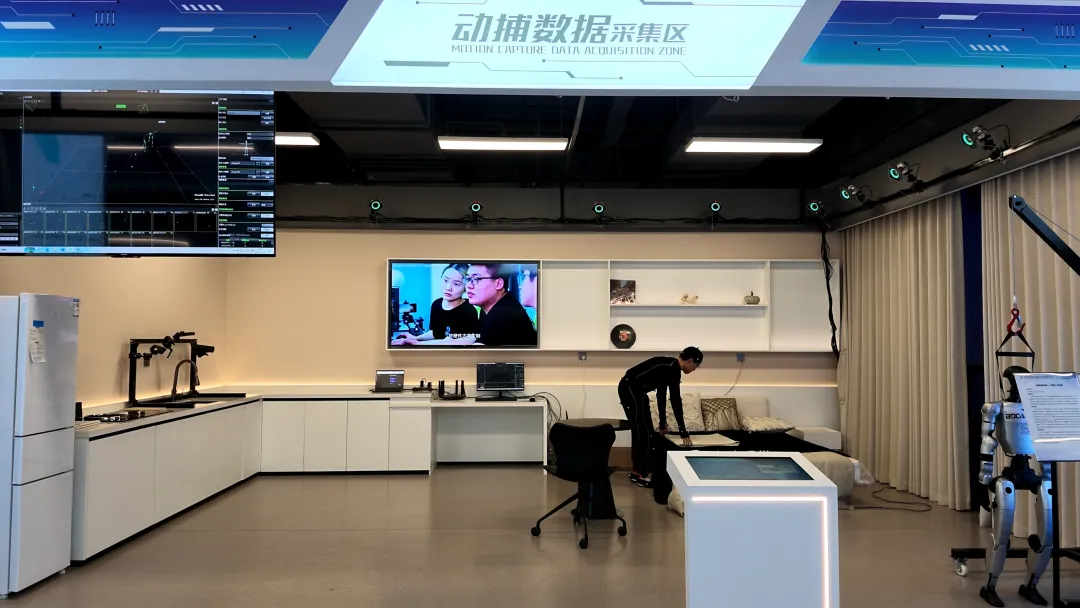
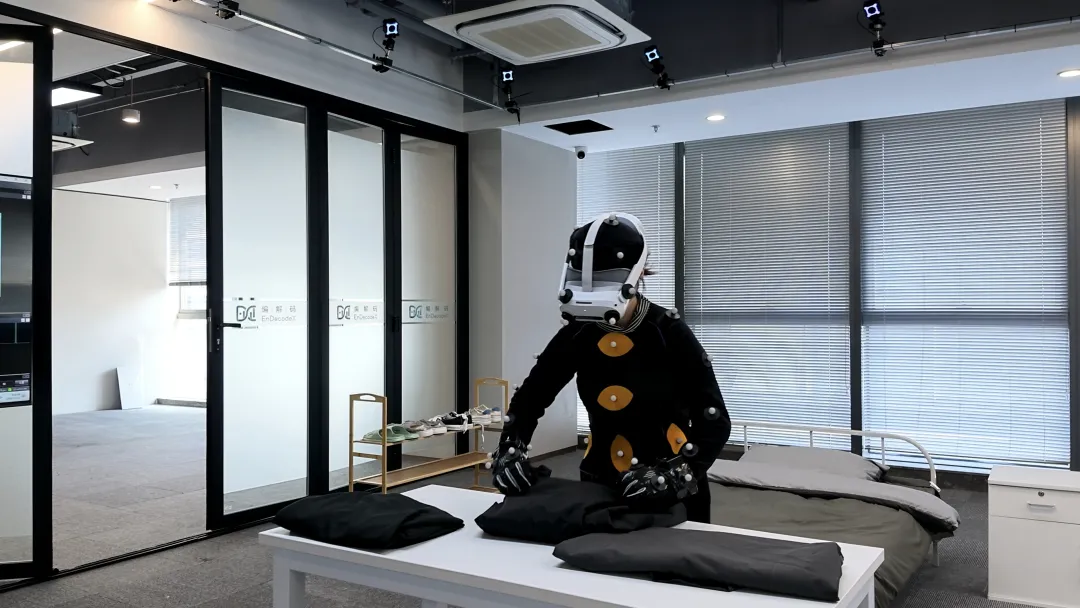
Data collection is inseparable from scenes. Building real scenes, configuring acquisition equipment, and preparing test environments often require the R&D team to continuously invest time and resources. The "Embodied Intelligent Data Infrastructure Open Plan" jointly launched by the National Embodied Intelligent Application Pilot Base and Codec opens the physical AI infrastructure space free of charge to enterprises, universities and scientific research institutions in the park. The first batch of four real-life scene spaces and high-precision multi-modal data acquisition equipment including supermarkets, homes, logistics sorting, and restaurants will be opened to support the entire process of data collection, robot algorithm training verification, and performance evaluation.
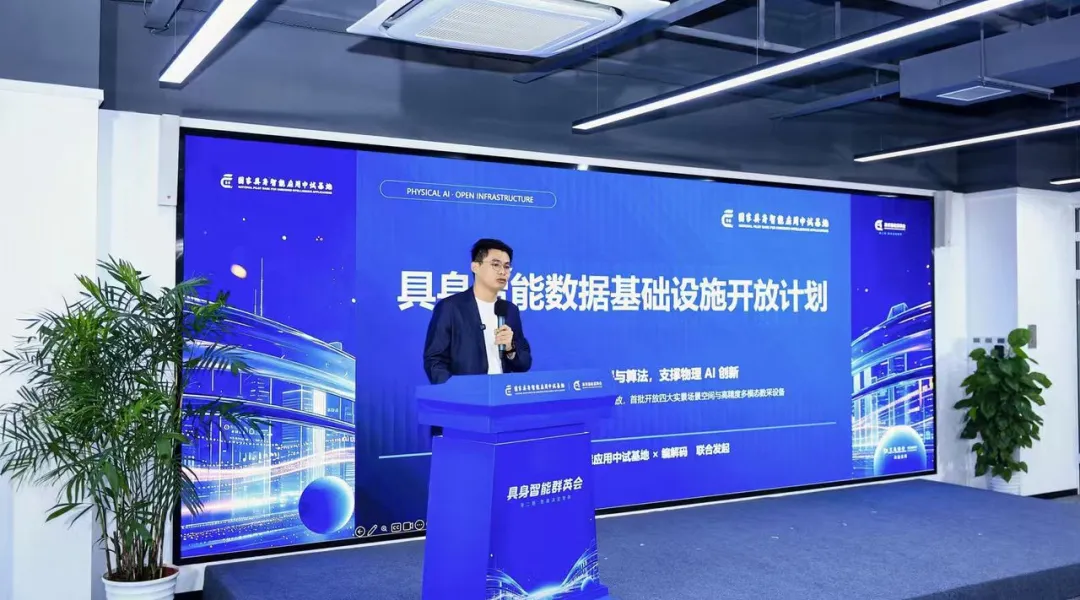
The significance of the shared area is that the entrepreneurial team does not have to build a supermarket or restaurant first to verify the algorithm. This can be understood as a "shared area" idea: turning scenes, equipment and collection conditions that are difficult for a single enterprise to repeatedly construct at low cost into infrastructure that can be applied for and used by the industrial ecology.
For entrepreneurial teams, they can enter real-life scenario verification faster; for scientific research teams, they can complete data collection and robot task verification in real-life scenarios; for codecs, the open plan is not only an entrance to connect industry needs and expand scientific research collaboration, but also a way to continue to accumulate data service capabilities in real projects.
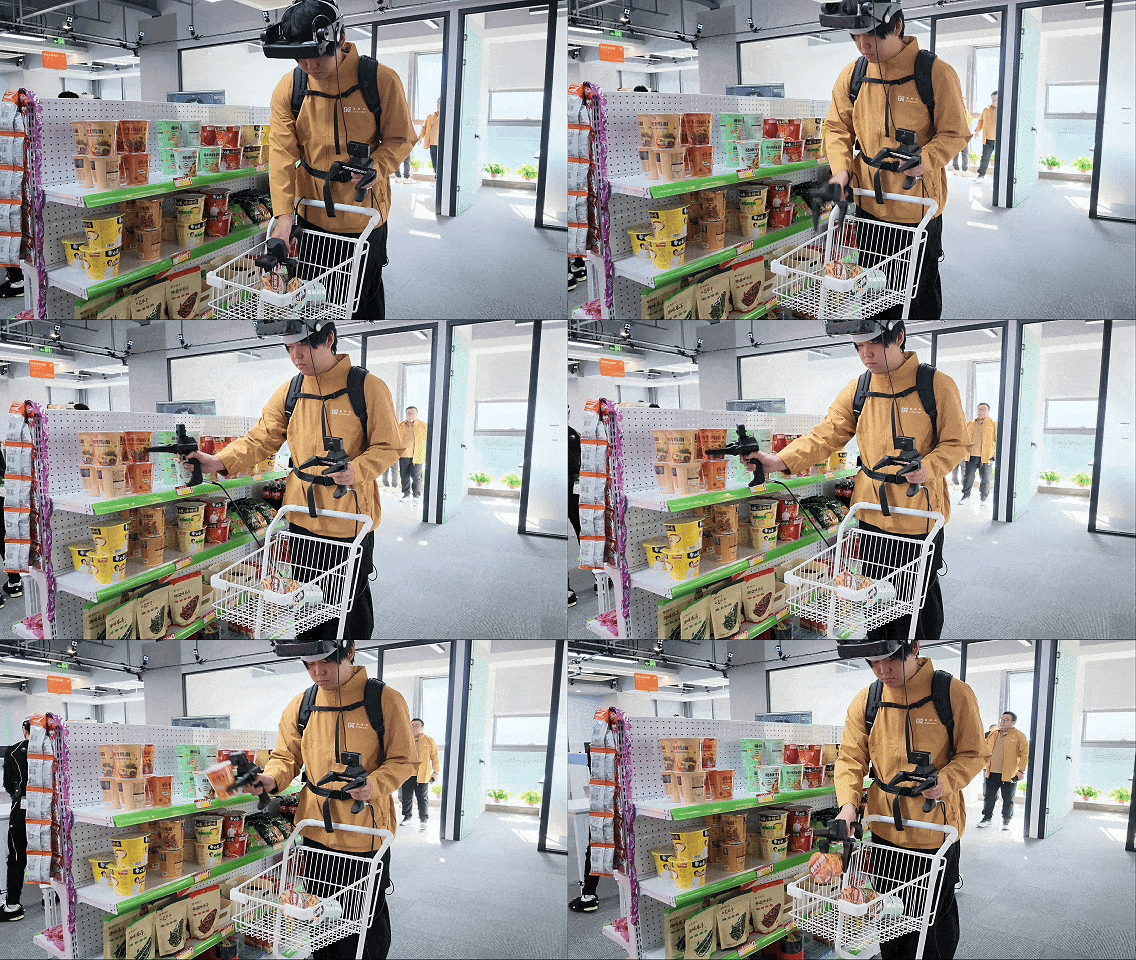
The encoding and decoding embodied intelligent data experimental space launched on the same day provides a more specific carrier. On-site demonstrations include robot remote operation, large-scene digital mining sites and single-person mining stations, covering scenarios such as UMI gripper digital mining, Ego pure optical digital mining, Pulse series light-inertial fusion digital mining, 3D object scanning and reconstruction, etc., and supporting scenes such as supermarket retail, restaurants, bedrooms, and logistics sorting.
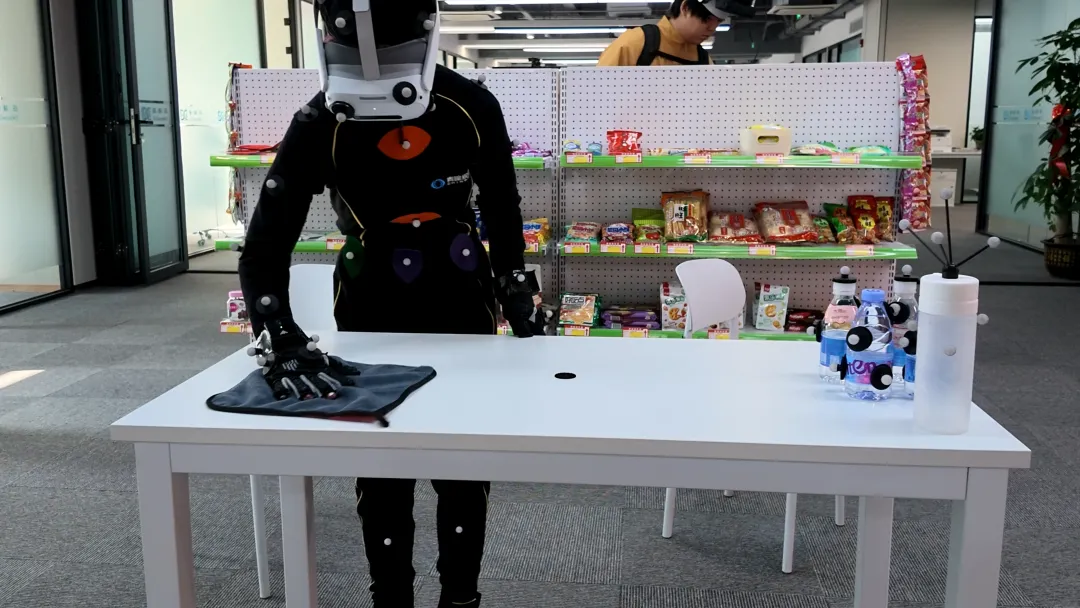
It is reported that codec has formed a flexible data collection software and hardware combination, including the integration of tactile gloves with optical and inertial sensors to form a comprehensive glove with tactile, IMU and optical markers; optics and inertia complement each other to solve pain points such as optical occlusion and long-term inertial drift; at the same time, it also incorporates lightweight first-view acquisition hardware from customers or ecological partners with an open mind, and the codec does event synchronization and time alignment. Therefore, Machine Lecture Hall believes that encoding and decoding does not actually adhere to a certain hardware route. In essence, the core goal is still how to achieve multi-modal integration, spatio-temporal synchronization and engineering delivery.
05.
Industrial capital unites to bet on data infrastructure
According to Robot Lecture Hall, the industrial capabilities of the three incubators of encoding and decoding have different focuses, which will largely make up for the shortcomings of data collection.
Among them, Qingtong Vision relies on optical motion capture technology to form technological accumulation in spatial perception, motion perception and physical perception. Hangzhou High-tech Innovation Group provides industrial platforms, industrial spaces and scene resources. Smart Intelligence has the ability to implement dexterous hands and robot applications, respectively connecting the collection, scenarios and application links in data production.
Industrial capital is not betting on a data company, but on a data infrastructure path. Zhang Haiwei, CEO of Qingtong Vision and an investor in codecs, mentioned that Qingtong Vision has been making equipment for many years, ranging from VR, animation to robots and big health. It knows that in order to make the system good, equipment manufacturers must have a deep understanding of how customers work and produce data. This makes them realize that when the data specifications are clear, the quality is verified, and can continue to respond to the new needs of customer projects, data services will have the opportunity to form sustainable income and will also generate longer-term value in the wave of embodied intelligence.
Encoding and decoding attempts to push the data pipeline from the initial stage of 0-1 construction to a more robust, durable, and easy-to-use product state. It will then continue to improve the compatibility with mainstream robot models, technical routes, model specifications, and training pipeline formats. It will prove the value of the data with real cases and turn the cases into replicable solutions. Ultimately, it will truly turn data into a good business that can bring increment to the industry and continue to bring in revenue.
06.
Embodied intelligence requires real data infrastructure
The biggest reality of the current embodied intelligent data industry is that there are many technical routes, scattered resources, and unconverged standards. Having many solutions means that everyone has competitive opportunities, and it also means that funds, talents and energy are dispersed in multiple directions.
For data suppliers, the lack of convergence of technical routes is both a pain point and an opportunity. If the data is based on real people, has no ontology collection, is not bound to a specific robot model, covers multiple modalities and maintains high-quality spatio-temporal synchronization, then no matter which technical route converges in the future, high-quality data will have the opportunity to be adapted and reused.

The company argues that embodied-AI deployment requires more than isolated data packages. The knowhow and characteristics of various industries determine that it must be a set of trainable, verifiable, reproducible, and deliverable data infrastructure. Codec has landed in the Intelligent Manufacturing Valley and released a new coordinate of "10,000 hours". This coordinate starts from real-world data and puts data production, real machine evaluation, scene openness and industry collaboration on the same table for the first time.
This road will not be short, but the direction is clear, encoding the real world, and ultimately decoding embodied AI.