Without warning, Anthropic dropped the next-generation Fable 5.2 in the middle of the night, directly killing the physical world.
Its full-featured performance compresses Opus 5.5, and it demonstrates an astonishing generalization capability for even unprecedented new tasks that can be easily driven.
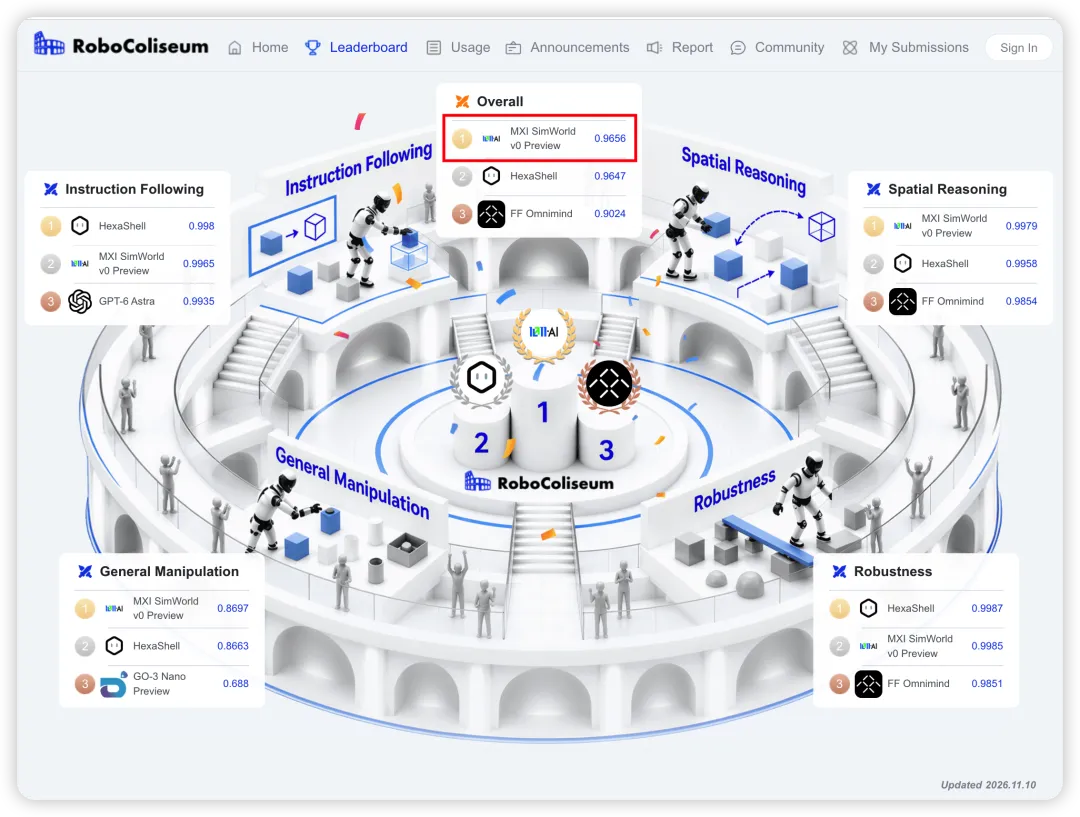
Fable 5.2 had a 64.9% success rate, easily crushing an opponent in the RoboDojo test, twice as much as the GPT-6 Astra.

Just two months earlier, the GPT-6 Astra also showed off its counter-clockwise operation after being caught in the hands of the Poles, where it exploded during the night.
Do you think the Big Model is about to take over the physical world?
In the same test, the RoboDojo test team moved this "former list status" Astra to the real machine to challenge the charger and test tube plug.
The result is that only the eyes, without touch, the plug is clearly twisted, but it does not feel any resistance at all.
So the unconscious mechanical arm, following visual instructions, crashed the real machine hardware on the spot!
The researchers were scared to pull the trigger and stopped, and in the end, they failed both missions in 33 virtual machine tests.The success rate directly hangs on to 0.0%.。

Why is there such a gap?
It's enough to see with the "eyes", but it's really hard to see with the camera alone.
On the one hand, the glass was sliding at the fingertips, and the camera had already shattered the picture.
On the other hand, the lid of the bottle is either twisted or the finger is rotated, the lens looks the same, and the point of contact is often held by the finger itself.
And that's the reason why the wiring in the car factory is so vibrant, because of the lack of finger-pointing, Audi confesses the automation rate of the entire industry so far.Less than 10 percent.。
After all, what robots lack today are not better eyes, but sensitive "hands".
Just now, Penguin Wave Technology has officially released and open-source a general-purpose touch base model.LingBot-TouchOne step at a time, this is the most critical shortcut!
The main page of the project:
Technical report:
GitHub:
Hugging Face:
What is the meaning of this word?
It was the first time.It's all about visual touch, magnetic touch, compressive resistance.There are three different types of touch signals that can be converted into an action model.It's called General Touch Token.。
In this way, the robot will finally be able to practice a set of "hand senses" that can be used to change hands.
532.000 parameters are inserted and used26 accurately operated full-line torpedoesIn the real world, tactile feedback is extremely timely.
So, in order not to get caught up in the visual and action models, the team directly sent out the lightest amount of data.The Tiny version has only 5.32 million parameters.。
As a result, the parameters are only higher after entering the three mainstream motion models.0.13% to 0.16%It's hardly a burden, but it gives a "measurement feeling" to a skilled hand in an instant.
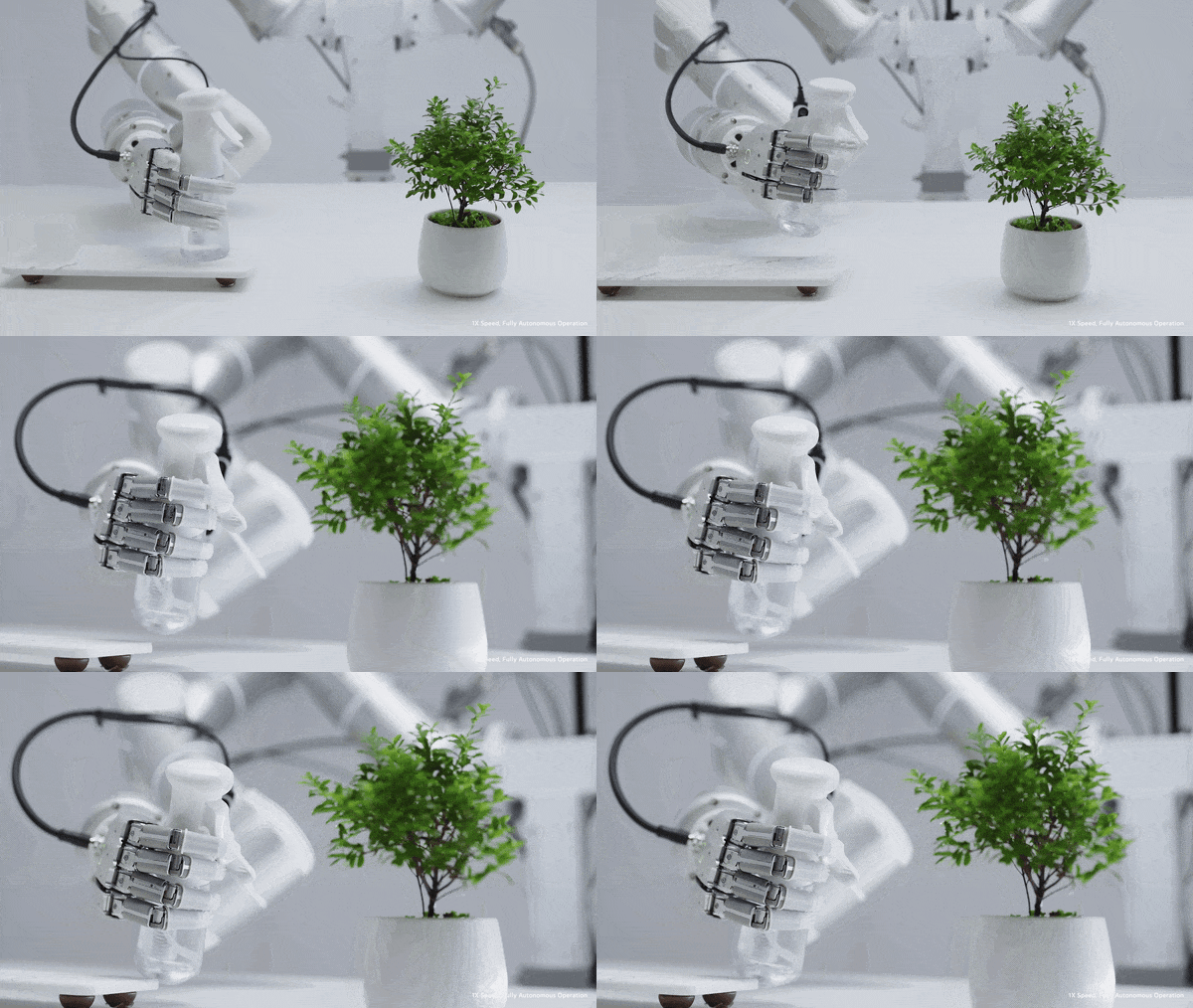
The plastic bottle's body is smooth, and the fingers of the fingers will slip away as soon as you see it.
After connecting the LingBot-Touch, the fingers with a slight slippage of the fingers are able to instantly tighten their grip, steadily pull down the screwdriver, and the success rate has risen from 42.50% directly.87.50%。
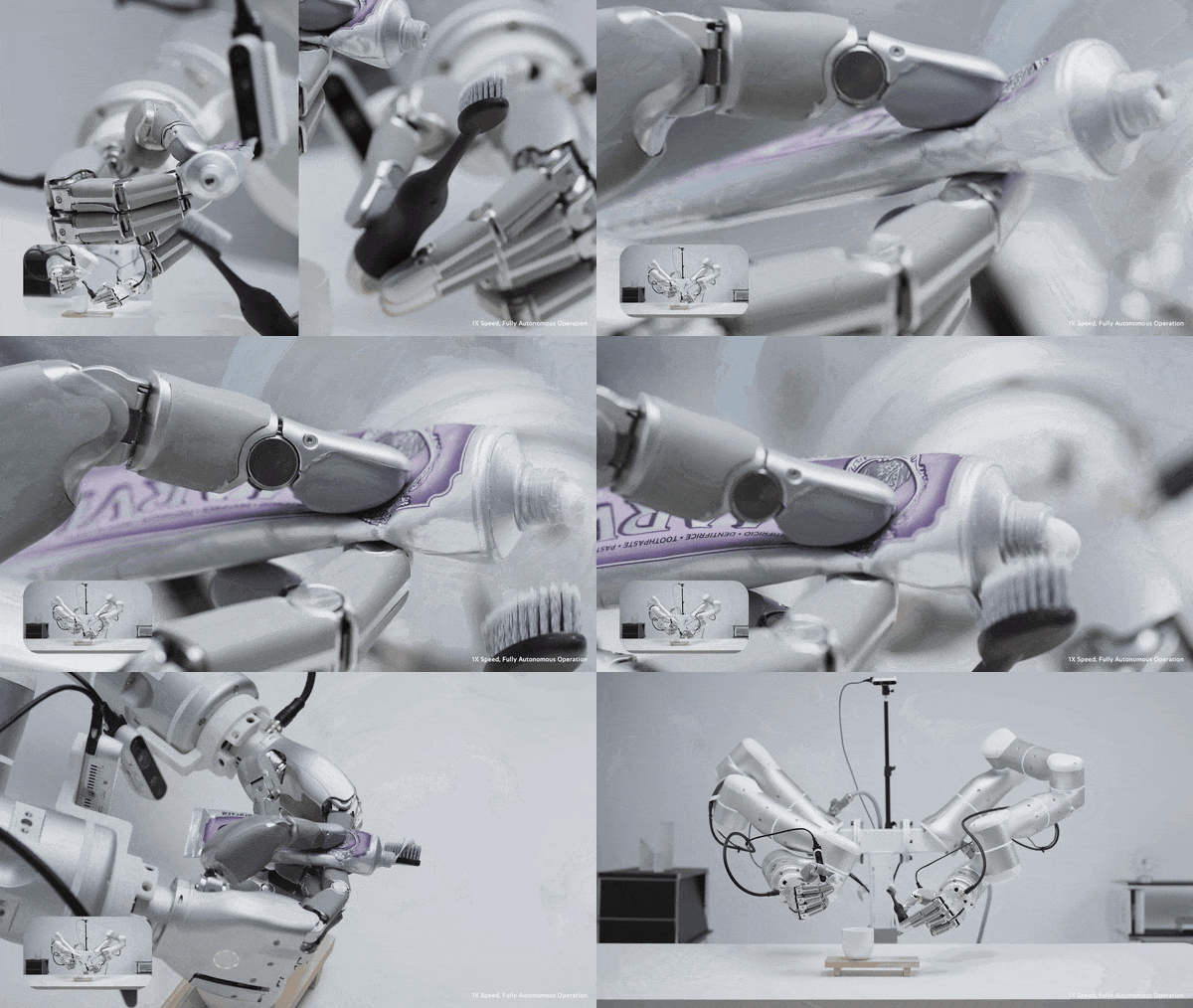
If you look at the more experimental "toothpaste" paired with the arms, the soft tubes are squeezed out, squeezed heavily and can be found everywhere.
With the help of the Touch Token, not only can the arms be firmly positioned against the narrow brush, but the thumb can also apply fine pressure to the toothpaste to the brush:
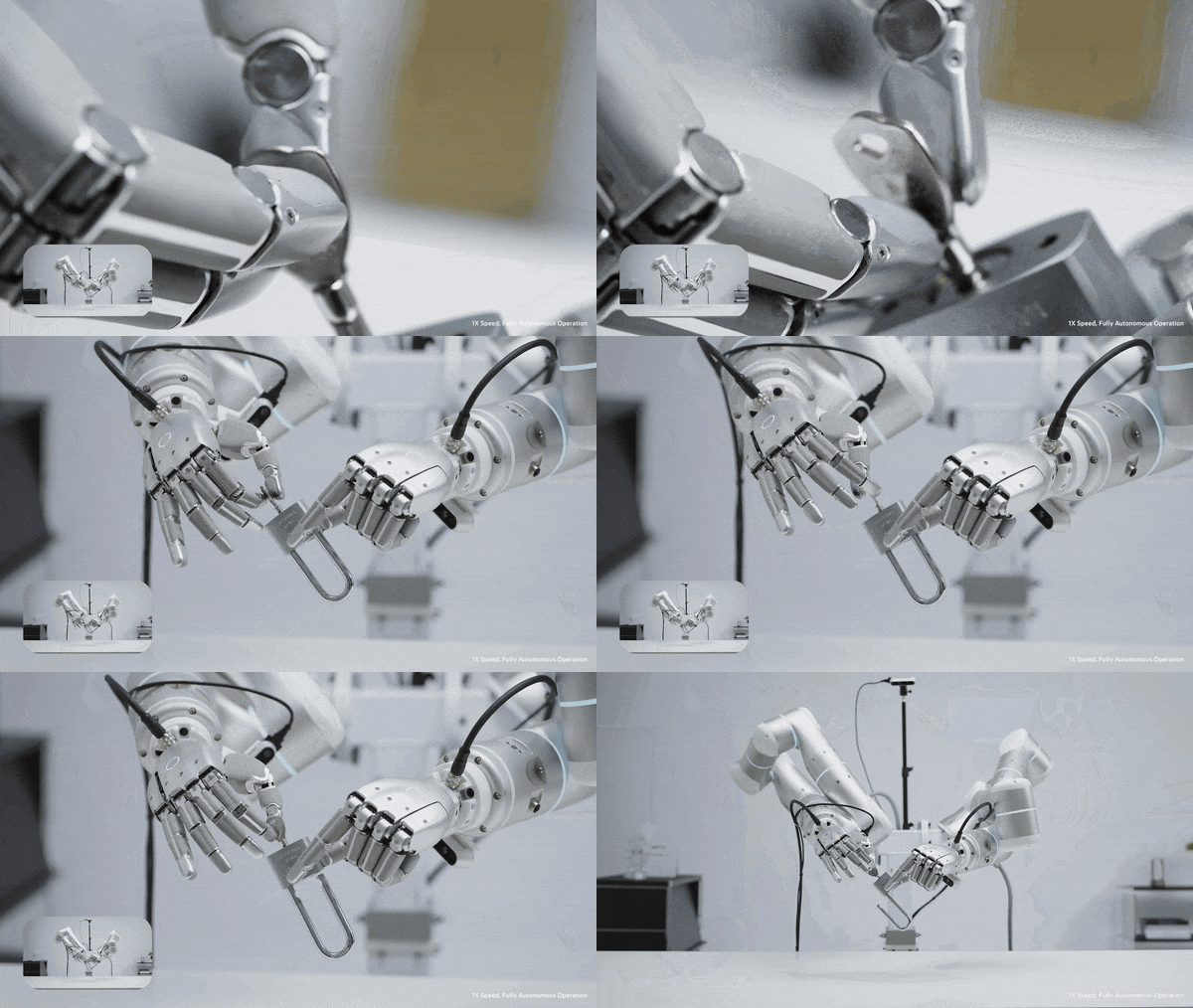
Even the opener allows the large-scale visual model to smash the real machine's "pump-hole counterparts" and is easily pinched in place of the more sophisticated "turnkey unlock".
Only the fingertips pinched the small keys, following the weak impact resistance of the lock holes to try to fine-tune the edges, and after aiming just narrowly landed an opening hanging lock:
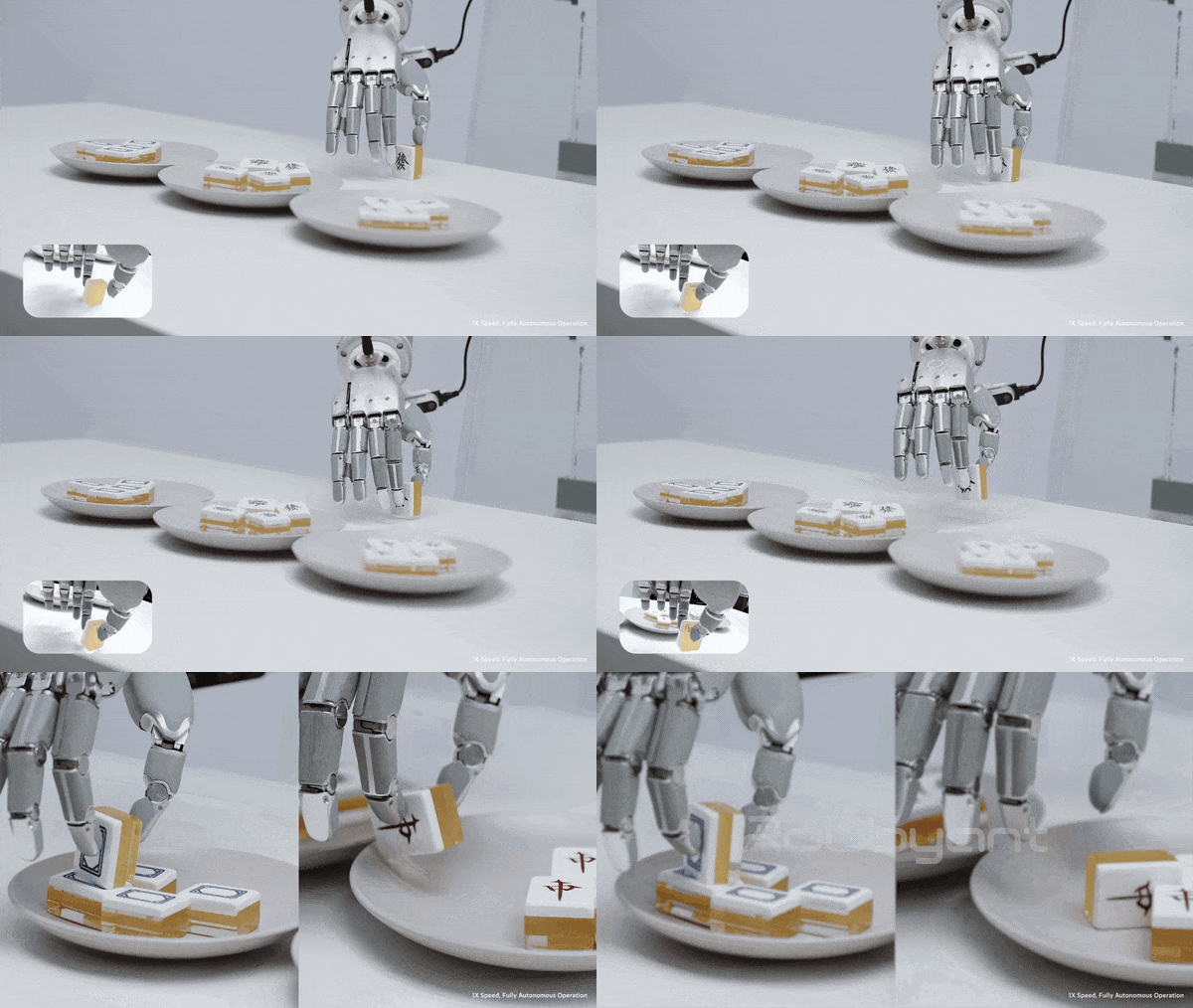
What's even more interesting is the "blind touch" rule, which is so strict that if you look directly at the lens, you'll get zero points.
With the help of a hand that does not touch the eyes, the fingers can easily touch the convex flowers, dividing them into different plates, and the success rate directly doubles.70%:
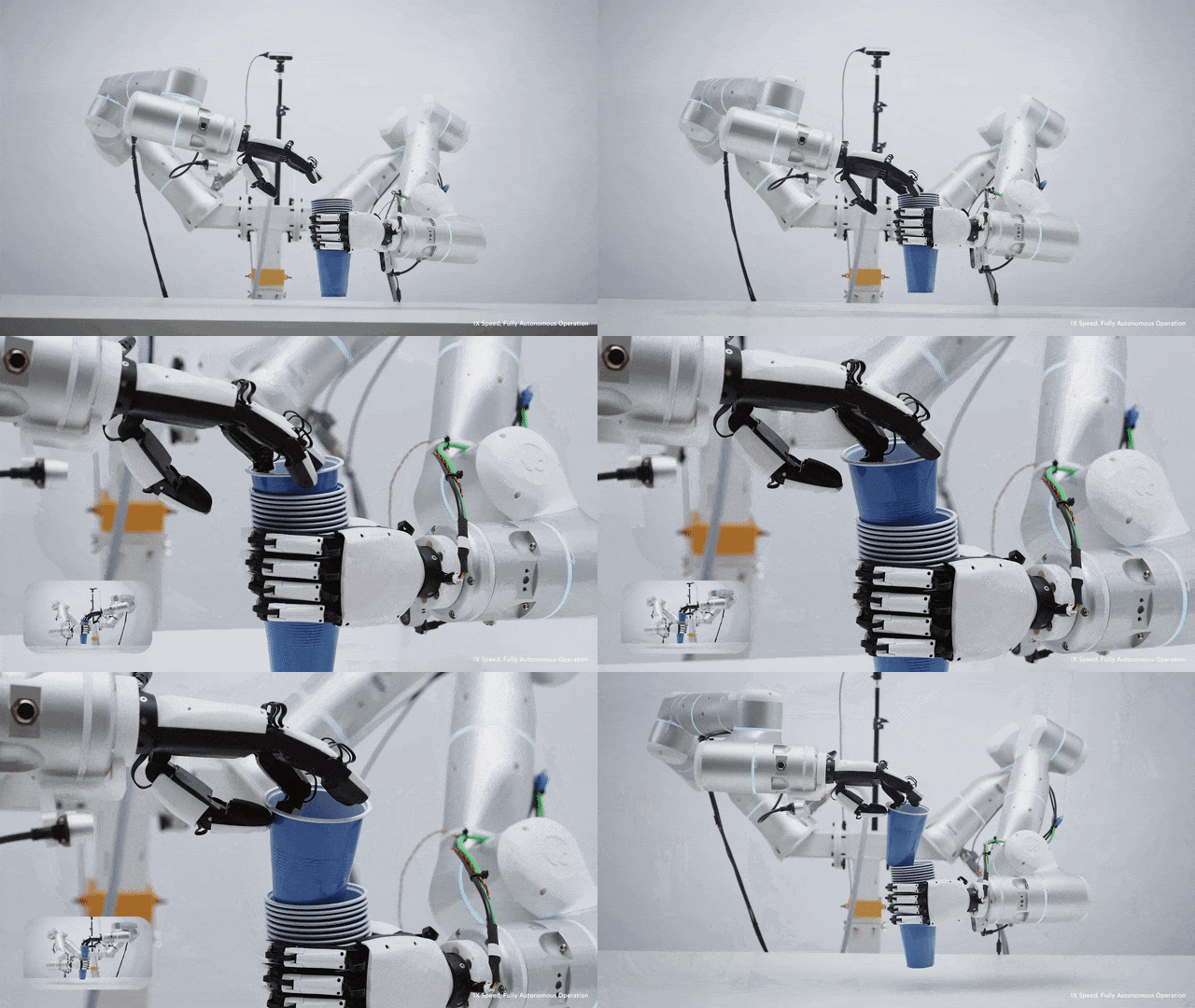
"It's like tearing open two thin sheets of paper that are folded together, sticking out the mirror with your finger, sticking out a little bit, sticking out a little bit, and you can't pull it out".
However, with the help of the Touch Token, the two arms can easily pull out the inner layer of the paper cup, following the slight friction of the fingertips.
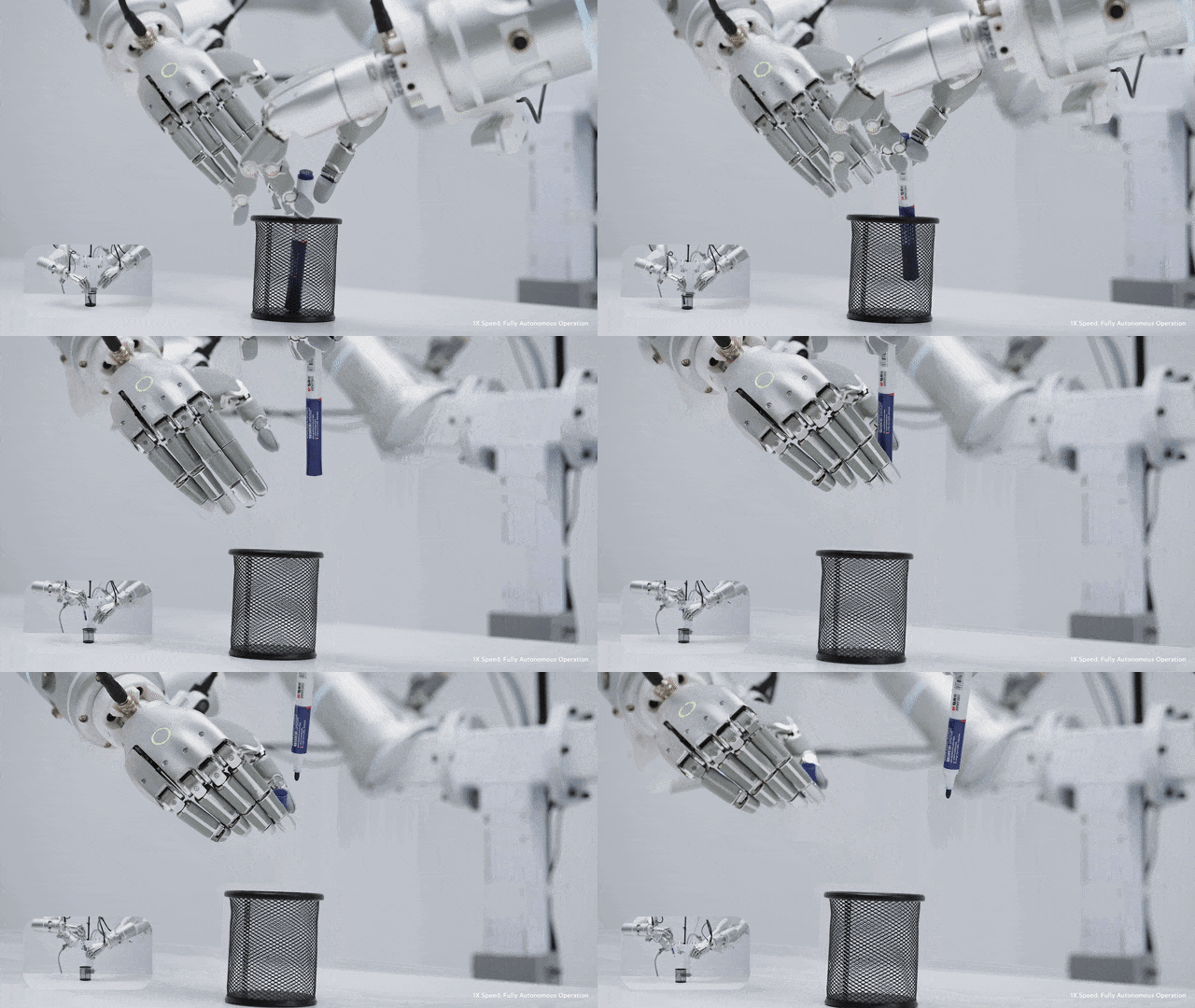
In addition to these daily activities, the team used two different styles of hands, combined with four mainstream action models, to test the air.26 real-world missionsand12 simulated operationsThis is the first time that a LinkBot-Touch combination has won the title.
The three main models of action are fully quotedT-Rex,π0.5 and LingBot-VLA mean success rates have risen significantly, respectively.23.18, 21.81 and 24.81 points;
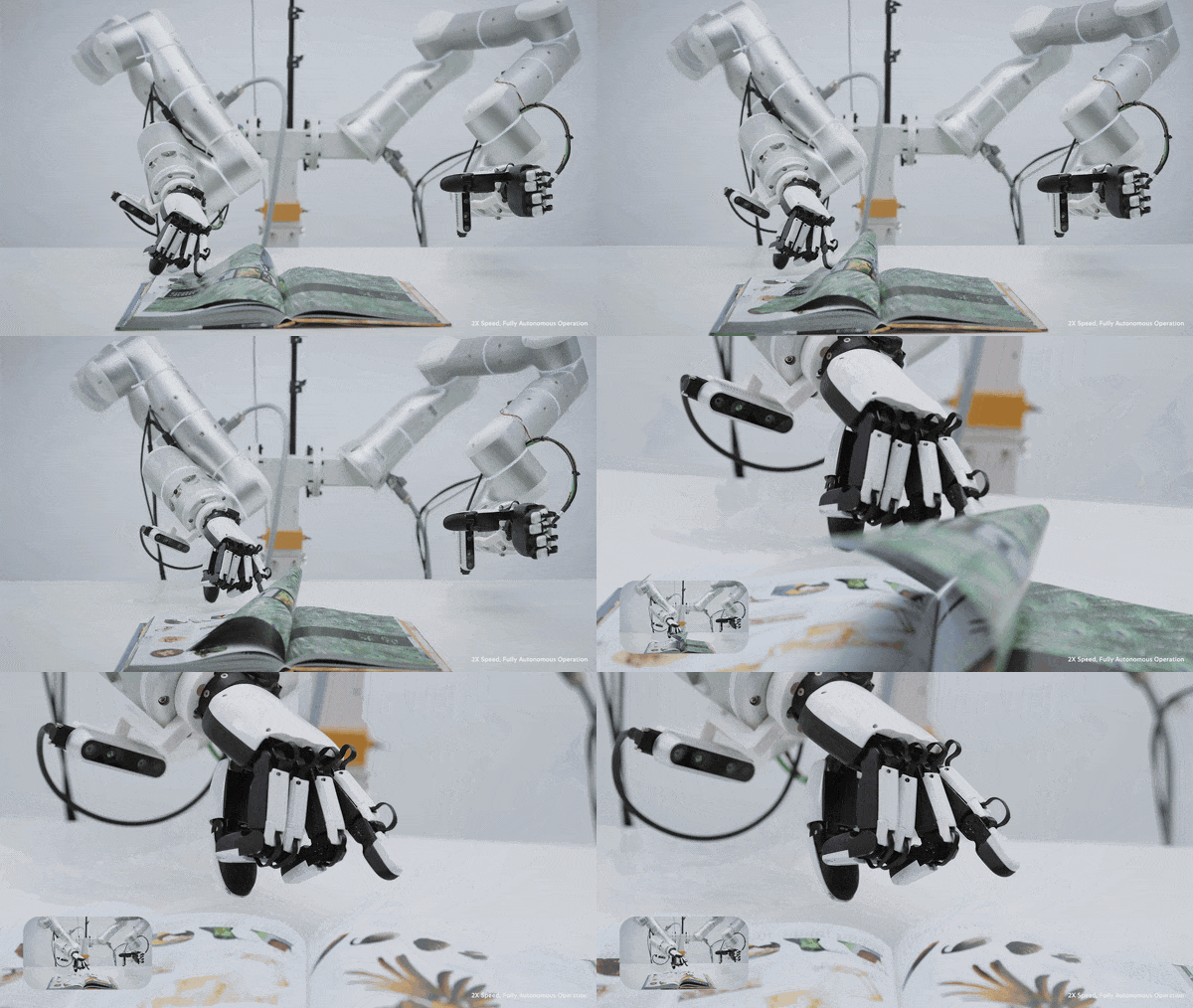
Accurate operation and accuracyA single page of the book rushes up.91.25%The SD card is pressurized to bounce.92%We've got the soft paper cups up and down.100% satisfied;
12 high-division simulation operationsIt's been a long time since I've been able to do this, and it's been a long time.97%It's the same thing with the "Rolling the Tennis Balance" with a pure visual score of 0.67.7%。
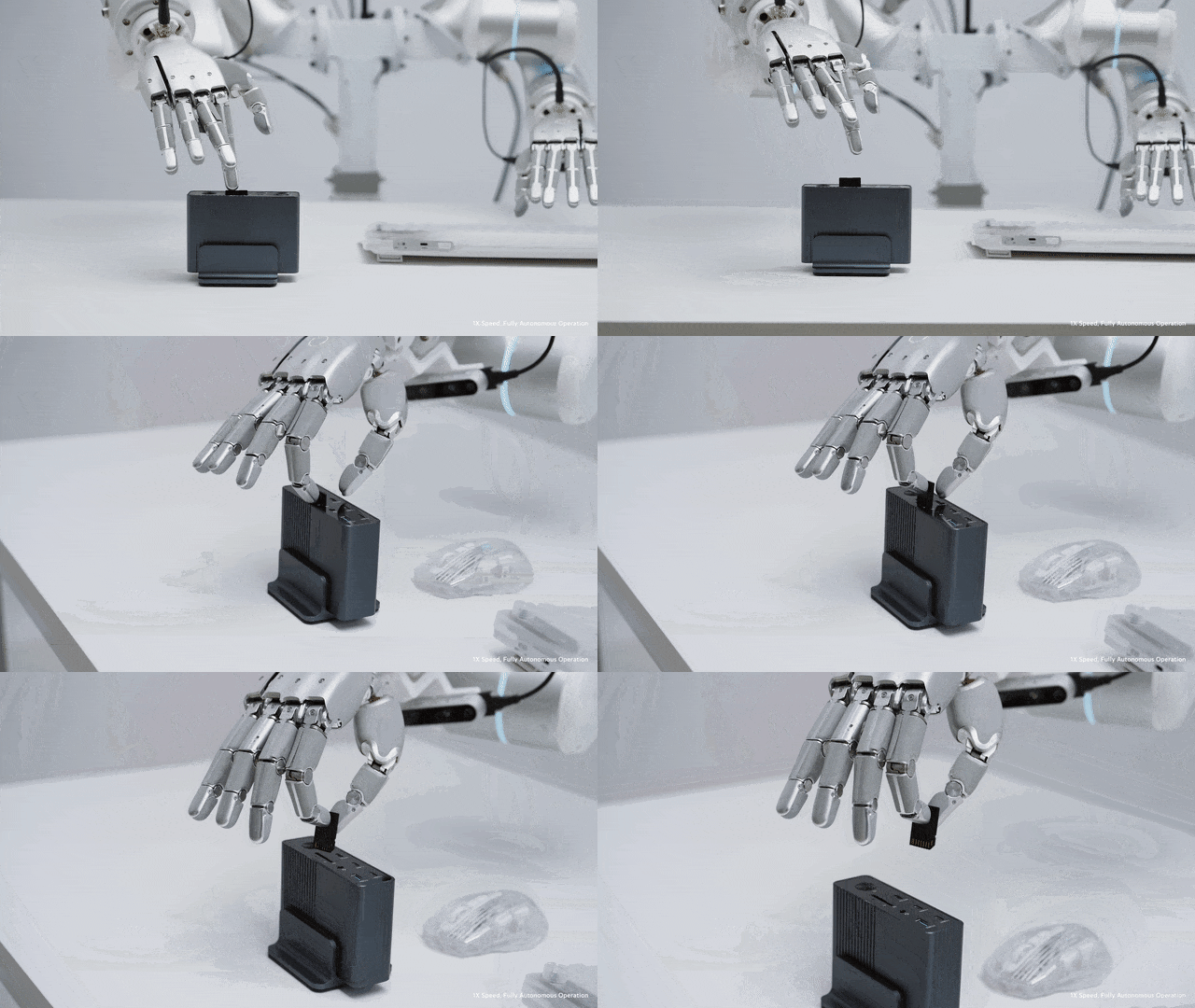
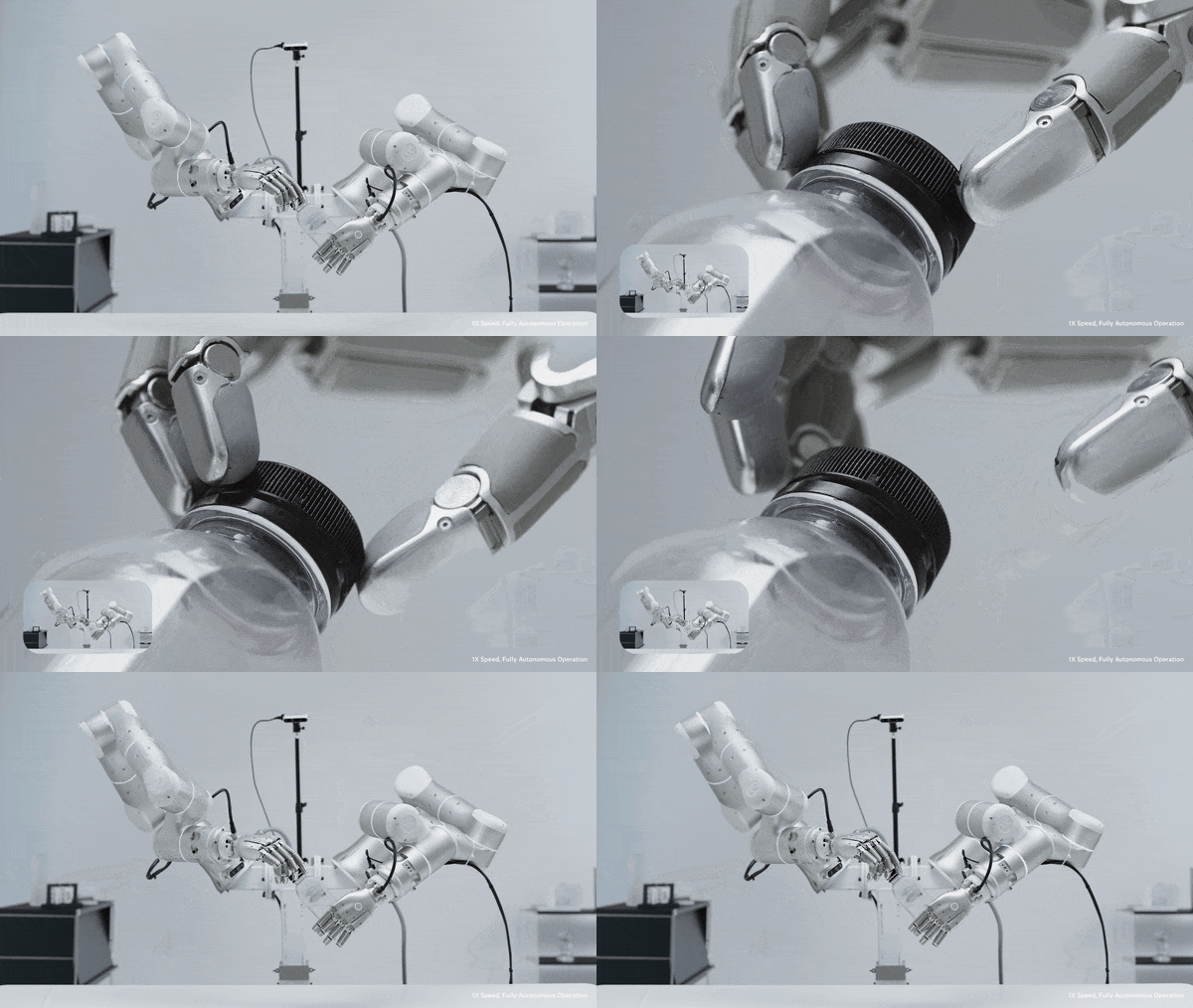
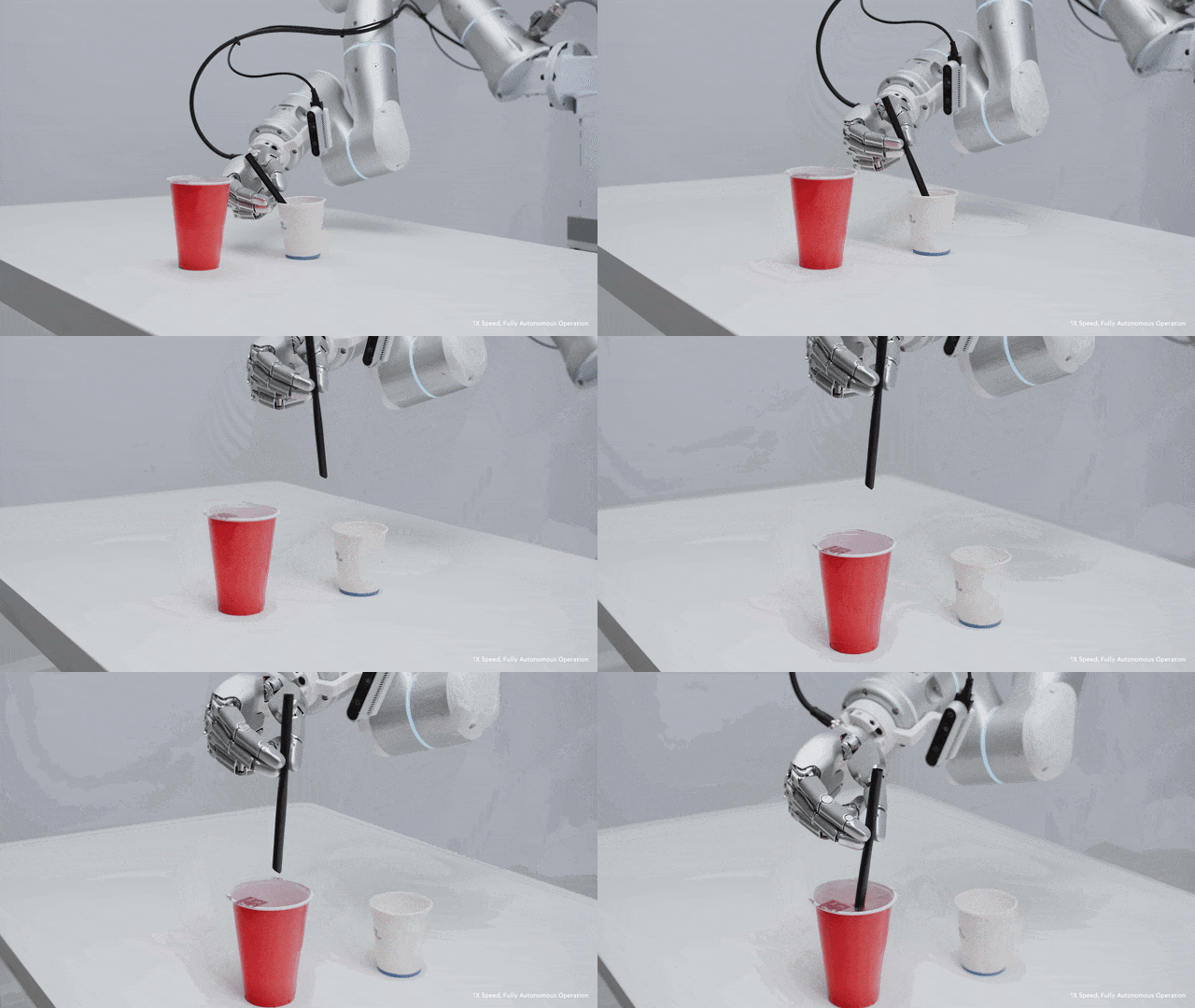

Scroll to the left and look.
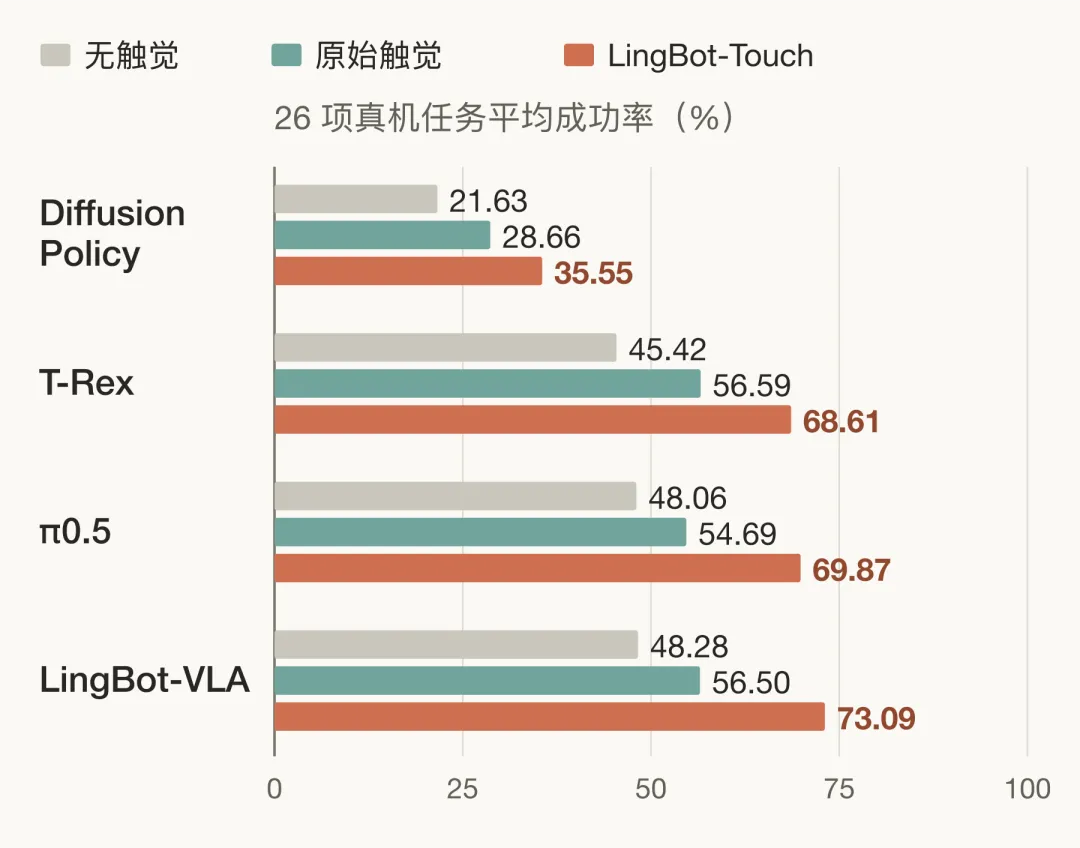
 5000 hours of real touch dataYou can use your hands if you're smart.
Since touch is such a useful tool, why is it so difficult to learn from a general-purpose model?「Sensors"Everyone speaks differently".and"Extremely lacking in real data".Up there.
If you look at the hardware, there are three mainstream types of touch sensors, and the underlying principles are completely different:
Seeing and touchingIt is a small camera that can see very fine contact at the tips of the fingers and is suitable for bottle capping, but is not fast enough to respond to the restricted shutter speed.
Magnetic touchPowered by soft magnetic materials to change magnetic fields, it is good at sensing multi-directional forces and sliding, suitable for pulling chains, plugs, but afraid of interference from the surrounding magnetic field;
Pressure resistanceIt is a material that changes resistance after being pressurized, which can be low-cost packed with fingers and palms, at a cost of limited resolution.
This results in the same thing as pressing the cup wall, and the three types of sensors record three completely out of place "dialogues" that have to be reversed in one hand.
Even more headache is the lack of real data, which used to depend entirely on people remotely operating the mechanical arm to extract, but slowly and expensive, and could not make a large model at all.
In order to solve the data complexity, JungleBow came up with a clever way to solve the problem.For real people to wear soft touch gloves, it is a way to get a sense of "human hands" into their everyday lives.!
This way, the bottle caps, the table wipes, the plugs, the human hands, and the gloves are remembered.
Finally, with the help of hand-held gloves and remote controls, the team captured the world's largest.It's almost 5,000 hours.It's about 1.3 billion metric tons of real touch data.Two-thirds of footwear comes from human gloves.。
But it's not the same with human hands and smart hands, and the data collected can be used to control robots.
The results of the experiments were surprising.The "hand sensation" of human hands can be directly transferred from zero samples to entirely new hands.!
It's important to know that the pre-training magnetic touch data100% from human glovesThe model has never seen a new magnetic touch technique used in testing.
But the team took the touch model parameters to a complete standstill, and immediately after installing the new hand, the average success rate of π0.5 jumped from 48 percent to 48 percent.74.17%It's been a while since we've had a paper cup, and it jumped 58 percent.90%!
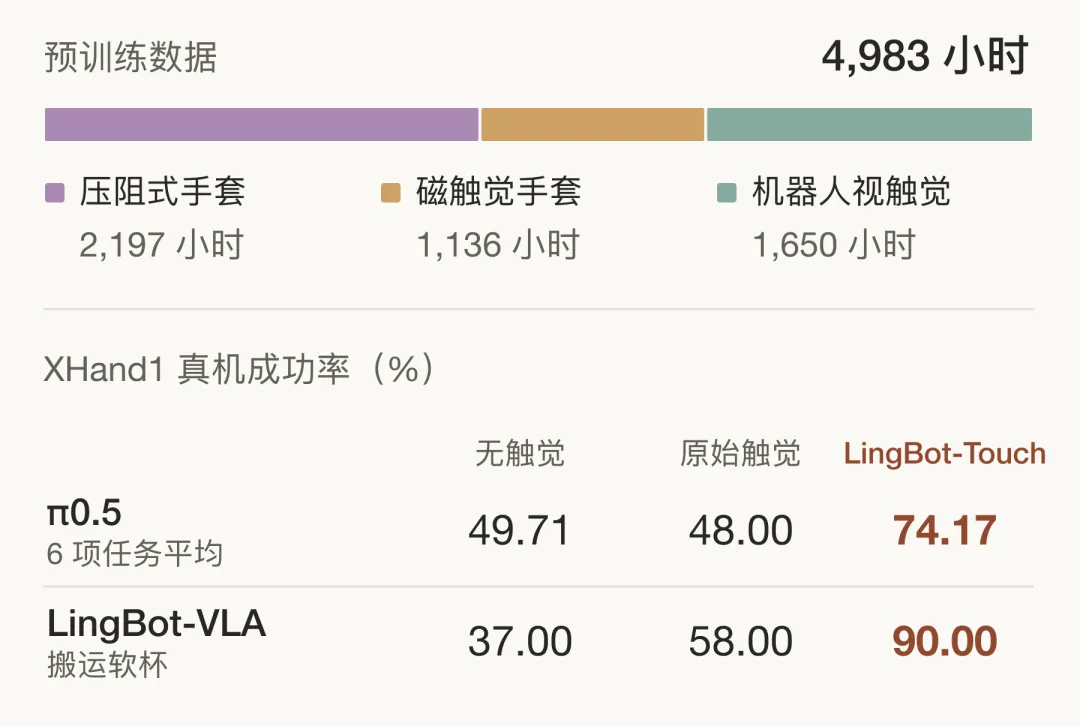
This means that reading physical contact has transcended the hardware form and has been passed on from hand to hand.
Unified 3 types of touch signalsHow to practice real-handedness by using predictive forceAt the bottom, how do you put all three sensors, human hands, and smart hands into the same model?
It doesn't matterSensorsMeasuring the image, the magnetic field or the resistance, the final answer to the four questions is where the thumb touches, how much force it uses, where it moves, whether it slides.
As a matter of fact, the team came up with the idea of "understanding contact" separately and made a general foundation model in three steps.
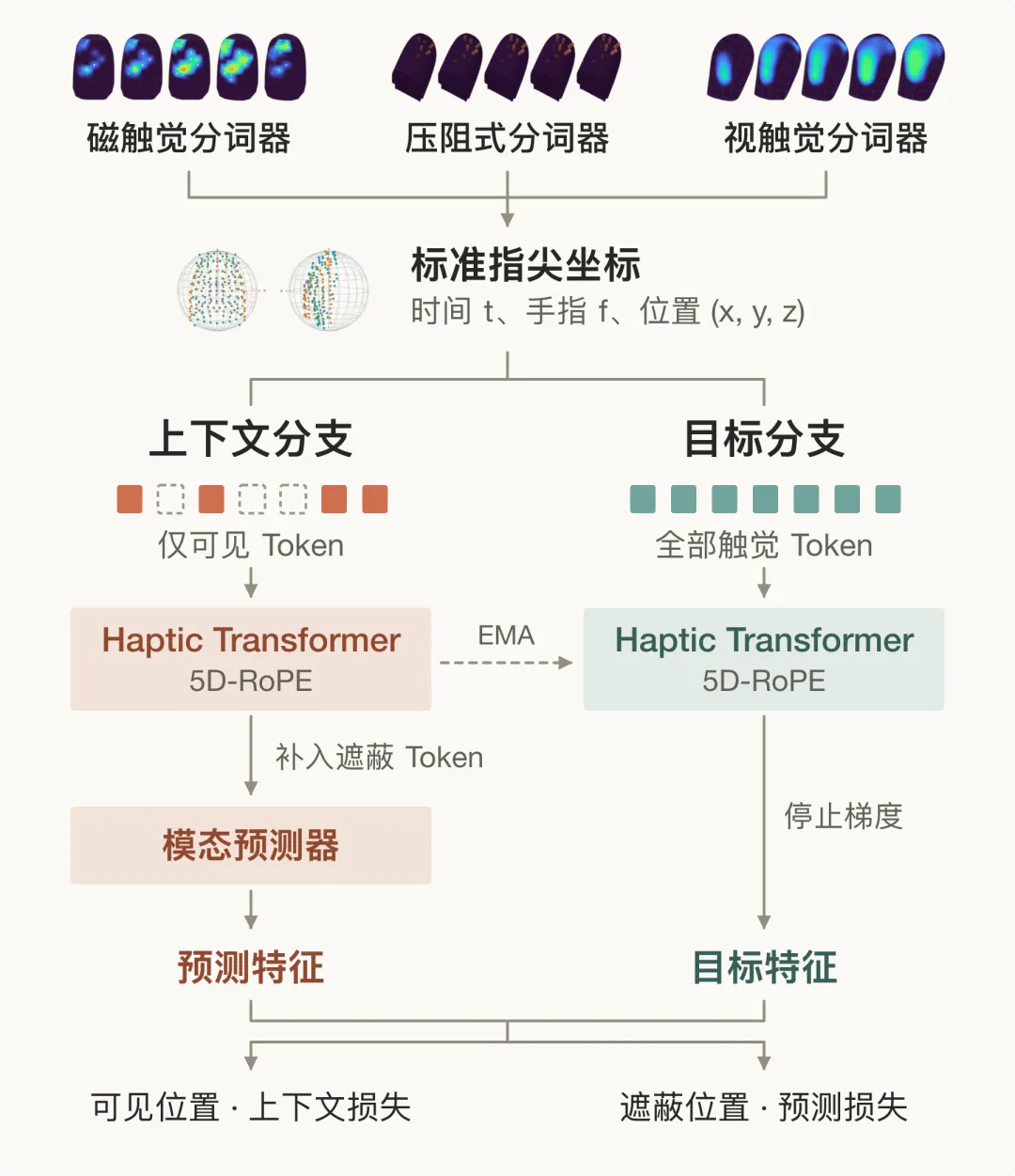
The first step is to "receive" according to the principle.
Specifically, the team gave each of the three types of sensors a very short input, converted to a unified format, and then handed over to the same tactile mainstream network learning, where new hardware with similar principles could directly enter.
The second step is to put all of your fingers on the same "map" (5D-RoPE).
The unification of the light format is not enough, and the distribution of touchpoints varies greatly between different hands.
Therefore, the team mapped all the touchpoints into three-dimensional spherical coordinates and randomly minimized the density and position to prevent the model from dying out of a single piece of hardware.
The third step is to do a topic called "full contact" (Tactile-JEPA).
Because more than 90% of the touching points when grabbing an object are not actually touched by a mouse, the readings are all zero values and bottom noise.
If a moving visual model obscures a piece to recover the original readings, the model will only be able toYou'll get 90 points if you fill in all zeroes.。
As a result, under 4,000-hour data, the top five recall rates for cross-modal retrievals in traditional programs are only slightly higher.3,06% and 8,69%!
LingBot-Touch uses the JEPA architecture praised by Turing Prize winner LeCun to directly cover up to 90% of the region.
On this basis, it does not allow the model to restore zero-level noise, but to infer how strongly the covered area is, which increases the retrieval rate to zero.49.32%!
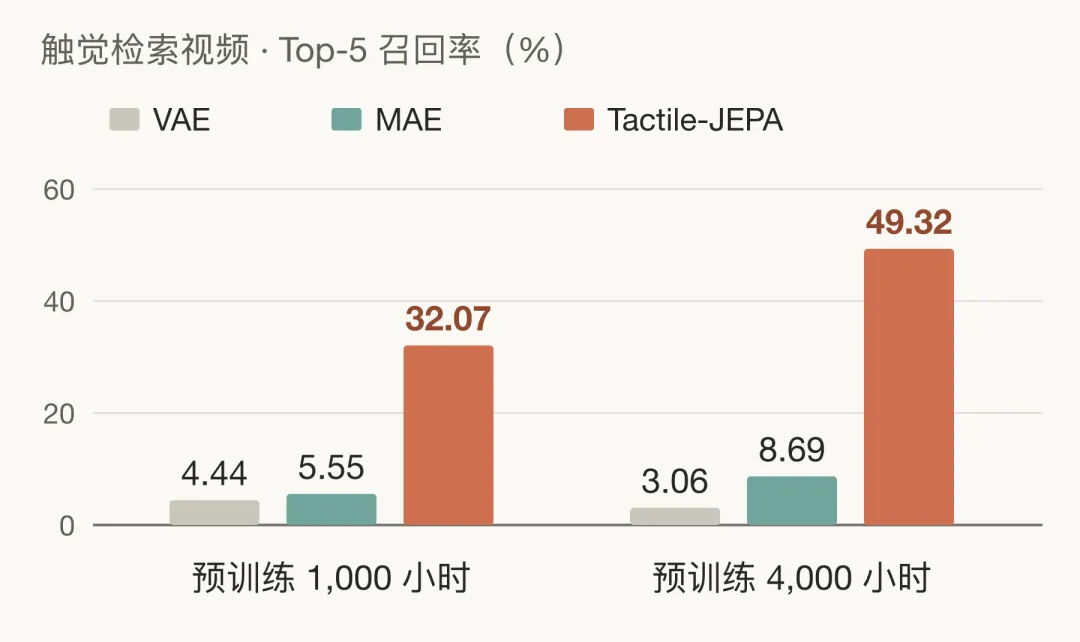 Blind touch positioning is 0.12mmTouch can also be scaling
How accurate is the perception of physical contact in this architecture?
To this end, the team allowed the mainstream open source model in five physical contact tests.FTP-1The outdoor hardware is a special adapter, while the LingBot-Touch is a special adapter.It's a completely locked dead weight, and the parameters are unchanged.。
Even with one hand on the opponent's shoulder, the LingBot-Touch still pushed the 2.19mm finger-blind positioning error by the opponent.0.12 mmThe new magnetic touch is also pressed on the hand.0.16 mm。
At the same time, the fingerprint 3D perception error has also decreased by about65%The average success rate for the five real-time machine tasks in the same action brain is82.2% to 67.5%It's a big win.
More importantly, the team observed on a 5000-hour scale.There is also the scaling phenomenon of touch.There are two key trends:
On the one hand, the data of three different types of sensors are mixed together, all the indicators are completely pressed individually, and the data of the hardware routes are finally brought together, resulting in the effect of "1+1+1>3".
On the other hand, with nearly 5,000 hours of data piled up, the lightweight Tiny version gradually shrinks after 4,000 hours, while the capacity is larger.Small version is still on the rise。
This means that the bigger the model, the more data, the stronger the robot's sense of touch!
Hardware doesn't have to be unified, intelligence can be sharedThe value of LingBot-Touch is more than just giving the robot a feeling.
To know that touch is typical."Physical ecosystems".The text and images are all over the internet, but the big models of the digital world never really "touched" anything, which is why the first Astra plug-in card died silently.
In addition to differing sensor principles, long-term scattering of touch has not been able to form a unified representation.
Today, LingBot-Touch has proven that even the most hardware-dependent touch can refine a unified representation.
This has been verified by touch, and furthermore, it can be fully extended to a physically intelligent whole.
This is why physical operations are difficult to generalize, and a large part of the correct card is on the hardware: the body, the hands, the sensor routes vary, and the experience is not easy to capture, all locked in their own hardware.
In this regard, the thinking of the Jungle Wave is very clear:Hardware doesn't have to be unified, intelligence can be shared.
What it's going to do is it's the layer of intelligence between the hardware and the scene that's going to transform the physical experiences of different entities, different sensors, into a unified representation that can be shared.Open source, disassembledIt's a great way to get out.
This year, the Ring Wave has already opened the door to responsibility.It's clearer.Space perception model, responsible forI want to understand more.the world model, and responsible forHow to make more moneyThe model of transcendental movement.
This open-source LingBot-Touch not only adds to the full 2.0 micron of the "native" brain.It's a little more sensitive.One of the pieces also uses the same approach to the most hardware-dependent touch-to-touch and touch-to-touch, showing that this approach can also be used in other new ways of perception.
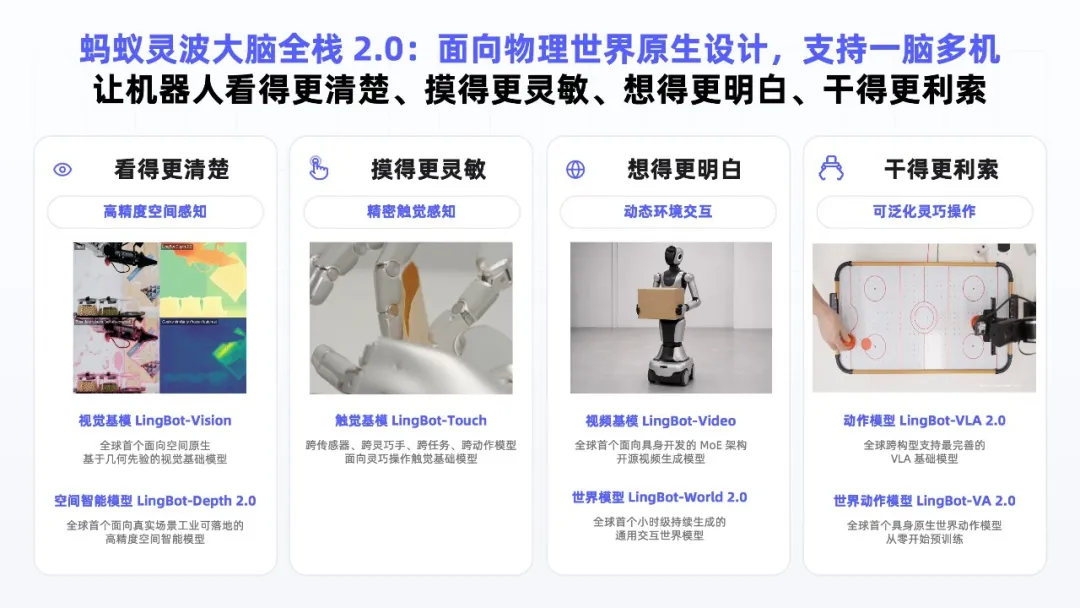
When it comes to the industry, this layer of shared intelligence directly helps the downstream to save the energy of recycling the wheels.
To the touchSensorsFor manufacturersIn the past, every time a new sensor was introduced, they had to take their own data, train a tactile model from the beginning, a motion model to use, thresholds high, cycle length.
Now, the new hardware is directly integrated into the LingBot-Touch to generate a common touch token, allowing manufacturers to focus their efforts on accuracy, durability and cost, and making products easier to use by robots.
For skilled workers and machinery manufacturersThe biggest change is that the choice is finally free.
On one hand, the requirements for different parts would have been different: the fingers are responsible for pinching, pinching and pinching these delicate movements, requiring high-resolution and precise touch; the palms are primarily responsible for holding and holding, requiring a larger area and low-cost sensing of the force.
The best way to do this, of course, is by the size of the parts, but in the past, using two sensors on one hand would have cost more to train, develop and maintain two touch models separately.
Now, the same LingBot-Touch can read touch signals on different principles."Finger vision touch + hand grip resistance array"This combination of high-quality, high-priced products can finally make you feel comfortable and really useful.
Currently, Penguin Wave has joined several robot body manufacturers and industry partners to bring this body-brain capability to retail pharmacies, warehouse logistics and factory production lines.
In retrospect, big models can explode in the digital world, relying on massive amounts of text and images that can be studied and used over and over again.
Today, even the most hardware-dependent "hand senses" can be pre-trained, reused, and physical intelligence is finally available as well as language intelligence.The thicker it isIt's possible.
Hardware can flourish, but intelligence can continue to grow on the same level.
Robots are really getting into the corner of a thousand industries, and maybe that's where they start.