On October 6, OpenAI released 722 mathematical manuscripts generated by internal AI models.
In just one day, three of them were announced to be withdrawn.
When the three manuscripts were folded together, it was only a negative positive error: one was wrong, the other two were made using the same set of constructions and were withdrawn together.
After the AI bulk rolls, the two giants joined forces to pay for the "test rolls".
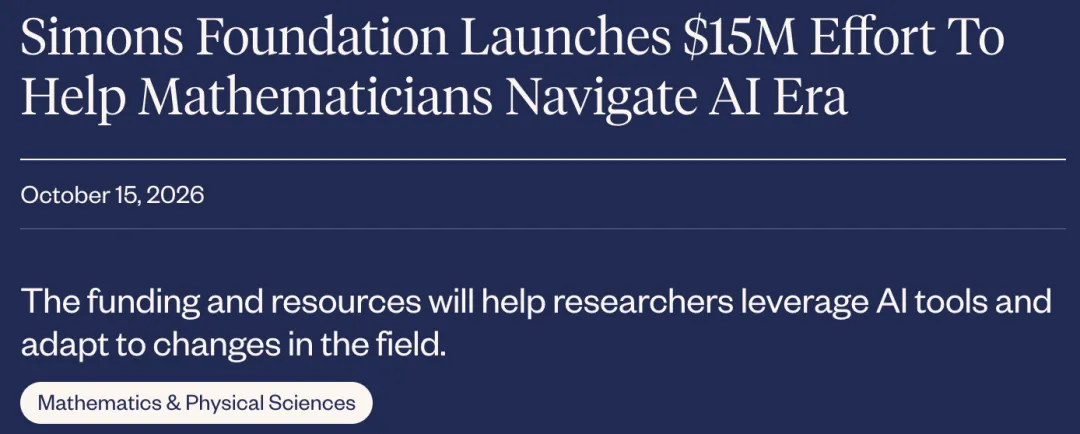
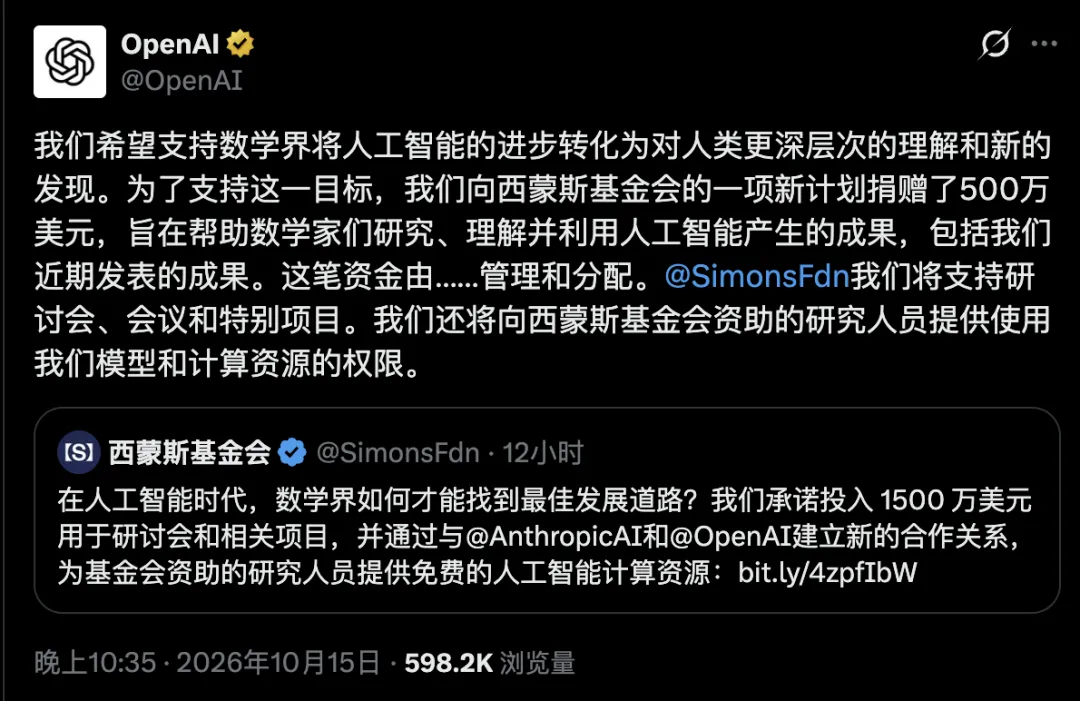
On October 15, the Simons Foundation announced that it has committed $15 million in funding and resources with OpenAI, Anthropic, to support mathematicians in testing, understanding and expanding AI outcomes.
OpenAI is investing $5 million to provide models and computing capabilities, hoping to translate AI's progress into deeper human understanding and new discoveries.
Anthropic pledged $5 million in support, including funding, computing, and access to Claude. It also admitted that using good AI in mathematics and even more extensive scientific research requires time, energy, and resources.
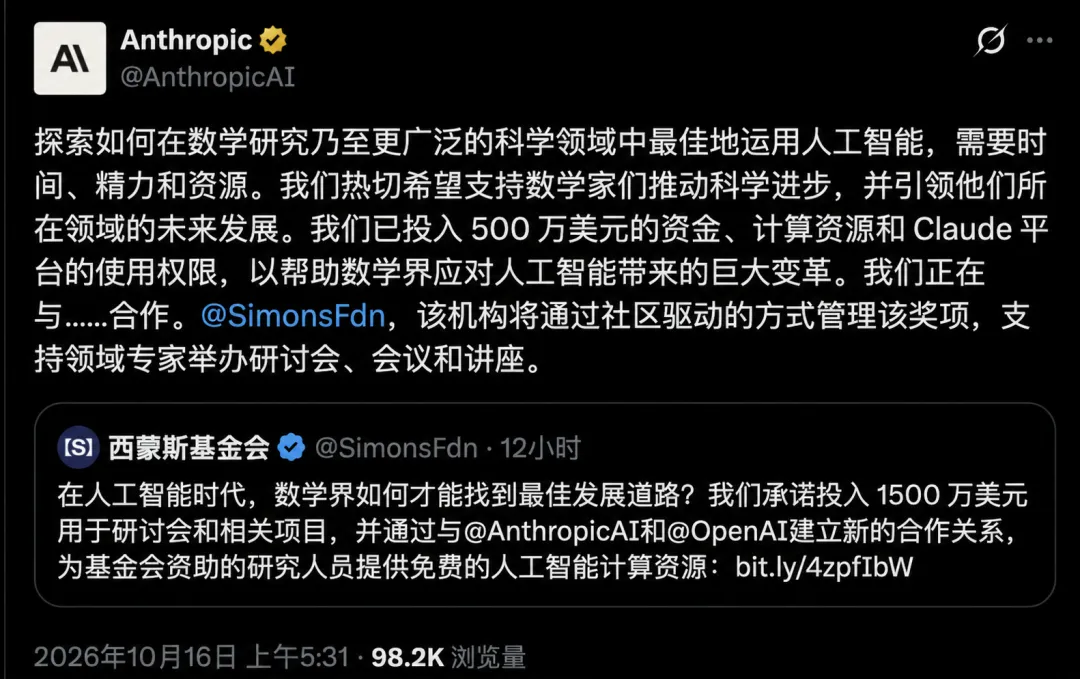
The relevant funding is administered by the Simons Foundation for workshops, conferences and other activities.
To put it bluntly, it's to support mathematicians to give AI tests, to use the long proofs to read, explain, and use valuable methods.
In recent months, OpenAI has seen a series of "dramatic shocks" in mathematics:
He published 10 research findings on long-term open problems, announced the proof of the Millennium Grand Prize problem, and published hundreds of mathematical manuscripts.
As a result, human beings have become "poorly digested".
Taotzeong pointed out that mathematics is moving from "proving scarcity" to "proving abundance", but human validation and understanding are not necessarily up to par.
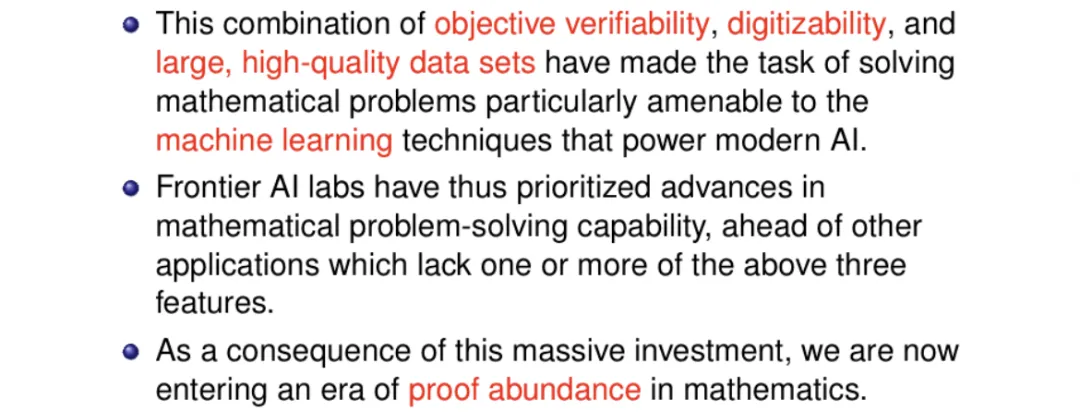
In his speech, Tao Te Ching proposed an "era of proving abundance".
In a podcast, Justin Solomon, vice president of engineering education at MIT, said that Naveen Stocks, the author of OpenAI, proved that he had read the first few pages and couldn't stop.
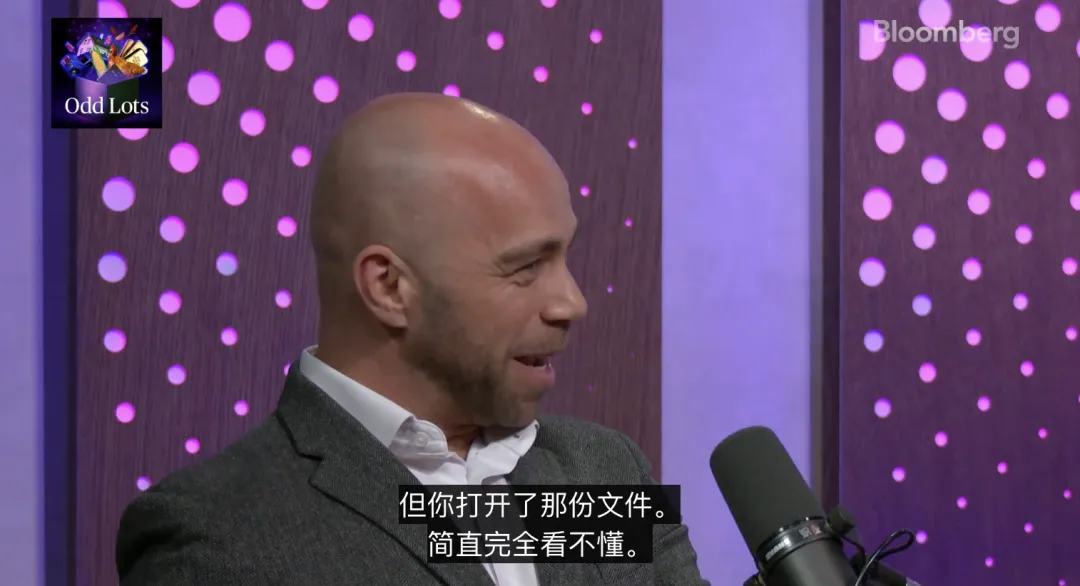
Solomon confessed to OpenAI's Naveen Stokes that he couldn't even read the first few pages.
AI can quickly generate long leads, but human understanding does not automatically generate them.
722 manuscriptsFrom "written" to "read".On 6 October, OpenAI released the results of these unpublished models from within on GitHub, and the following day left three withdrawals, 14 revisions, and embarrassing records in the update log.
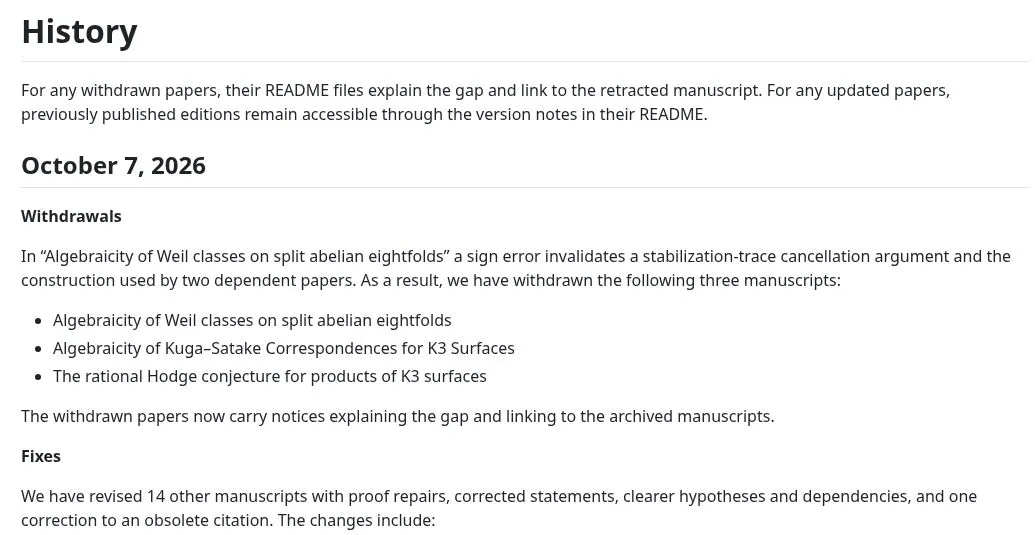
Update: 3 manuscripts are withdrawn and 14 more have been revised.
The question arises in a symbol:
According to the paper, AI is calculated by +1 in the proof. After correction, the number that was originally assigned to zero is not zero, and the premise of the theorem directly collapses.
Two other manuscripts using the same set of methods were also withdrawn, one of which was a study of the real Hodgkin conjecture of K3 quadratic multiplication.
These results came from testing and screening models of about 4,000 problems.The numbers are amazing, but the verification has not been done yet.:
Approximately 42% of the main results come with Lean formalized materials, which are available for computer-controlled reasoning processes. Some of the results have not yet been formalized, and there may still be problems.
Even if it proves that it is not a problem in itself, the study is not over.
It is not enough just to know what is right, but also to understand how it is right: what is the key method? can conditions be relaxed? can it be used to solve other problems?
In mathematical research, authors understand their own proofs and are responsible for it.
But AI could write a long line of guidelines that even the researchers who gave it the title couldn't understand, let alone test incorrectly.
So finding out what's wrong is just a step.
What's more important is to make it clear how it works, so that others can learn, use it, and go on researching.
Academic firesHow much can $15 million be solved?This has also completely ignited the academic circle.
It's not just three manuscripts that are wrong, it's AI that produces so much, and who spends the time to look at them, read them, and then do the research?
On October 7, the Human Mathematical Association (AHM) issued a harsh statement criticizing the one-time dumping of more than 700 documents as "a show of power" and even calling on mathematicians to stop working with OpenAI.
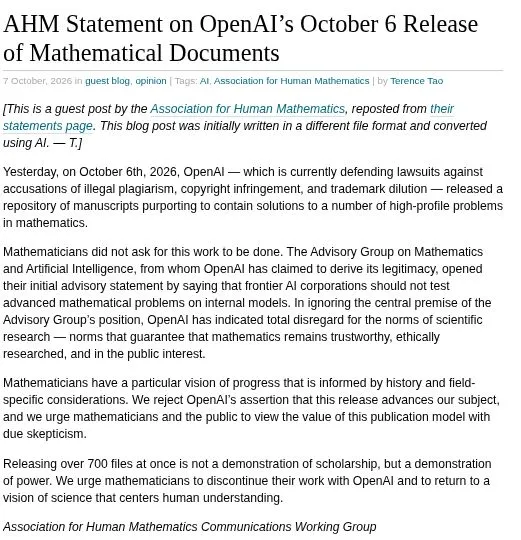
The AHM Guest Statement published by the Taoiseach's blog, retaining the signature of the Working Group.
The statement, signed by the Association's Communication Working Group, was also posted as a guest post on his blog.
Alex Townsend, a mathematician at Cornell University, suggests this directly:
OpenAI should release Lean-verified manuscripts first, and the rest of the material should be released separately, so please help us check and don't mix the verified with the unverified.
MIT senior research scientist Andrew Sutherland confirmed that OpenAI was quick to correct errors, but said more work was needed to regain trust.
What people worry about is that AI companies are using internal models that the academic community can't get; mathematicians are unable to keep up with progress in their fields because they lack the same tools.
The burden of proof-reading and proofreading of a large number of manuscripts is on human researchers.
As early as late September, the AGMAI advisory group at the Princeton Institute for Advanced Study suggested that AI labs should not only publish results, but also spend money and resources to support human understanding of these results.
OpenAI and Anthropic have joined forces to provide support, in response to academic demands.
But these supports are not the same as buying the right to free speech: they are not endorsed by the academic community, nor are they representative of all practices that the academic community recognizes in AI labs.
What is the use of the $15 million?According to the announcement, the Foundation will open a public collection project to support researchers in examining AI results, learning new tools, and discussing how and by what standards these tools should be used.
AGMAI has also previously suggested that it be possible to organize a long-term collaborative research group around complex summer school proofs, giving people the time and resources to break down the long proofs of AI step by step.
David Spergel, President of the Simons Foundation, also stressed:
These discussions must be led by the mathematical community.
AI companies can provide resources, but what to study, how to verify, and where to go next is still a matter for humans.
Academic circles receive funding, but there is also room for questioning and independent judgement.
AI bulk rollsHumanity continues to explore knowledgeIn the announcement, David Spergel stressed that mathematics should not only be seen as a collection of proofs and theories, but as a collective understanding driven by human curiosity.
When AI is able to mass-produce research materials and measure scientific progress, it must also include follow-up work.
We can't just wonder how many papers AI has written, but we can ask:What results have been verified, whether others can understand and continue to use them, and what new directions have these results led to?
Taoiseach's plan for Math 2.0 focuses on "human understanding".
And this discussion has gone beyond mathematics.
Simons' announcement makes it clear that the tools and computing capabilities offered by OpenAI and Anthropic will also be used for basic scientific research beyond mathematics.
Who is to blame, who is to blame, who is to blame, who is to blame, who is to blame, who is to blame, who is to blame, who is to blame, who is to blame.
Recently, there has been a reversal in theoretical physics tests:
GPT-6 Astra was incorrectly judged, and experts reviewed it and found that some of the reference answers were incorrect in themselves. After correction, Astra answered 49 of TheoPhysEval's 50 research grades, with a 98% accuracy.
The answer to AI, the reference answer to experts, is the same.
It's important to clarify the complex guidelines so that others can understand and use them, and the results can be the starting point for the next discovery.