After OpenAI, Anthropic began to take over the robotics business.
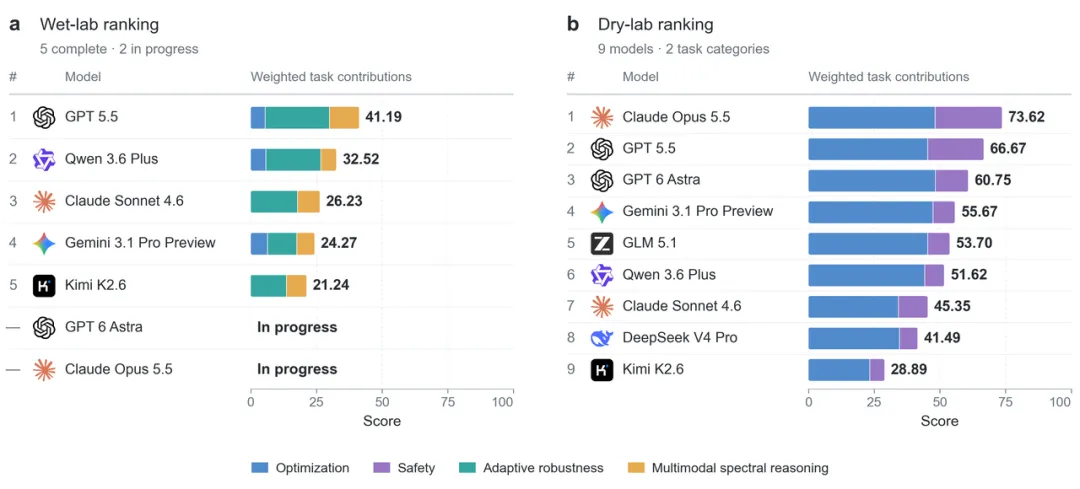
Today, Anthropic released a new model of Claude Fable 5.2. In addition to the usual programming and reasoning upgrades, there was an unexpected point of view: Claude started to play with magic, bottle caps, and could even manipulate robot drawings.
OpenAI's Astra has previously done a lot of robot-operating work. Now Anthropic has followed suit.
In the past, these capabilities have been used by smart companies to train special models. Now, general base models are also starting to enter the field.
This is not to worry that a model that robots have worked so hard to train will one day be "swallowed up" by a foundation model.
The question has been going on for some time, and there is no definitive answer. But whether robots are ultimately controlled by the general model, the VLA, or the world model, everyone can escape only one basic question: where do they come from with their experience of the physical world?
At least a previous study on Astra suggests that things aren't that simple: OpenAI may have used specialized robot data during training, and GPT-6.1 Sol and Gemini Argon received similar training.
In other words, the general model of high-light performance on robotic tasks is not necessarily the emergence of intelligence in space, but rather the data behind it.
Even a general-purpose large-scale model needs to be complemented by training data to understand the real world. As the model's capabilities continue to improve, the extent to which it is physically intelligent is increasingly dependent on the support of the data infrastructure behind it.
In particular, data information that involves real physical contact is the key to learning how to operate with precision.
Touch data is also the focus of a growing number of cutting-edge robotics research teams, such as the Digit 360 touch sensors introduced by Meta FAIR and the SparAsh touch model, in an attempt to allow machines to access and understand more extensive contact information.
This is something that is really being done at home.
Since its inception, Intel has been at the top of the industry chain: building data infrastructure. From first-person headsets to handheld data gloves, they've always wanted to solve the same problem: how to turn people's operations in the real world into model-energy data as complete and accurate as possible.
Recently, they have updated the product line with new products: data gloves Dex 2.0 and first-person headset DAS Ego 2.0. They build a multi-layered Human Data collection system around first-person vision, wrist near field vision, hand movement and touch.
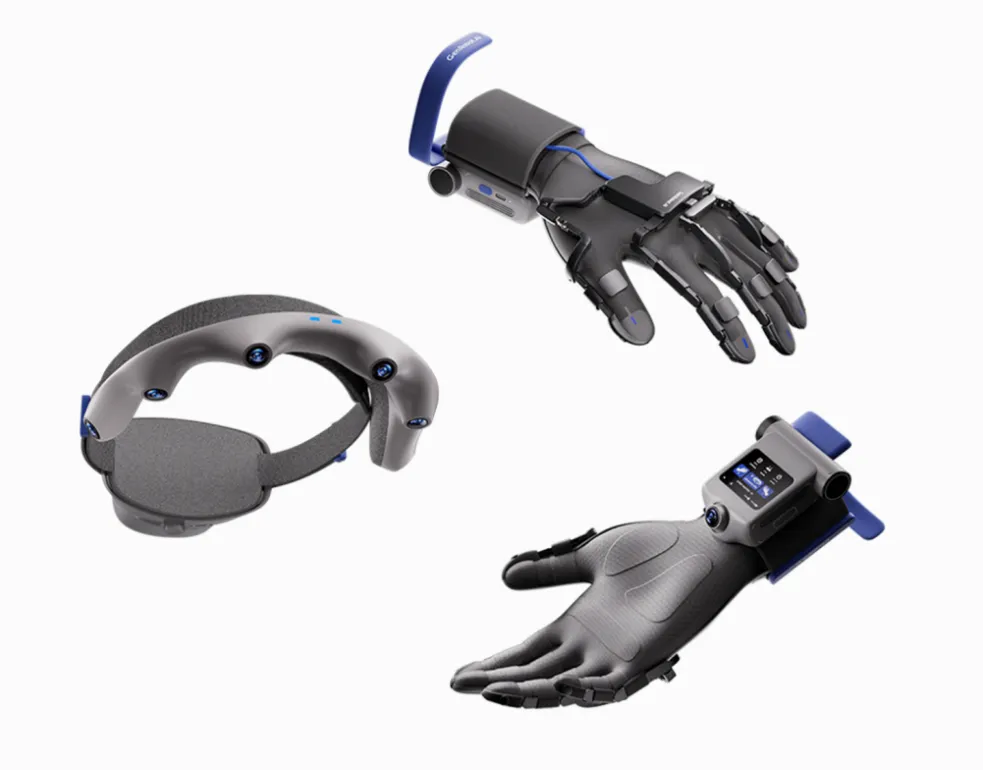
Their thinking is well understood: in a real operation, seeing, moving, touching never happens separately. The eyes are responsible for finding the target, the hands are responsible for approaching and grasping, the touch is responsible for telling you whether to hold or not.
In order to be "complete", one must first understand the role that information plays in each operation.
In intelligent technical routes, touch is not an isolated new puzzle. First-person vision is responsible for recording the environment and movement of the human body, wrist cameras further supplement the details of hand operations that are covered, while the outer bones and touch sensors directly measure joint movement and physical contact.
The information collectively constitutes a complete multimodal Human Data. In particular, the addition of wrist cameras allows the collection system to be closer to where the fingers actually interact with objects while retaining first-person environmental information.
When close-range vision and high-precision tactile data match accurately, further links can be established between images, joint movement and contact states to provide more complete monitoring information for models to learn precise operations.
More importantly, Intel wants high-precision motion and touch data to become Ground Truth, helping visual models establish connections between images and real physical contact.
In other words, it's not just about letting touch complement visual information, it's also about letting the visual learn from touch.
This idea also changed the design logic of data collection equipment, no longer pursuing the superimposition of sensors, but according to the needs of different tasks, allowing multiple models to complement each other, verify each other, and ultimately improve the effectiveness of the entire Human Data production system.
Around this idea, DAS 2.0 data collection software was introduced by Intel, which combines first-person vision, wrist near-field vision, hand joint movement and tactile information. Different devices can be used independently and in a flexible combination depending on the needs of the task, while maintaining the critical physical information required for precise operations while expanding the coverage of real-world scenarios.
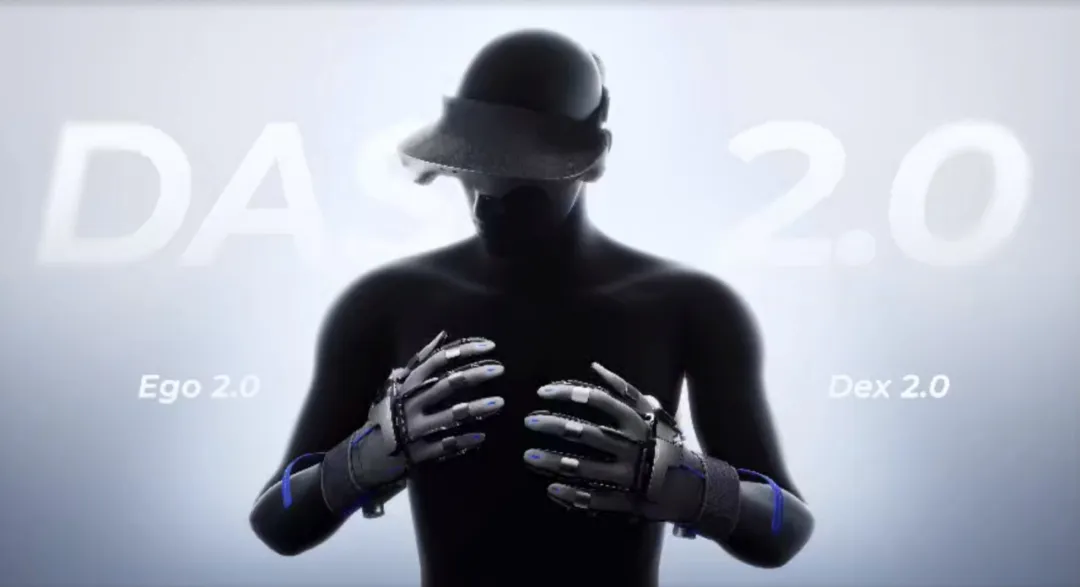
Dex 2.0 simultaneously solves the problem of hand movement measurement and tactile recording, using about 60 g of lateral outer skeleton and about 3 mm of micro-biological joints, placing the mechanical structure on the side of the fingers to directly record the movement of the joints while minimizing movement interference.
This direct joint measurement route helps to reduce the impact of external magnetic fields and metallic environments on gesture estimation, while taking into account the precise collection of motion and tactile data.
The upgrade to DAS Ego 2.0 focuses on two areas: more accurately tracking finger details, and more thoroughly recording body movement.
The six-camera system extends the horizontal field of view to 340°, extending the range of observation of human movement and the surrounding environment; finger tracking accuracy increases to 4mm, helping to reduce position estimation errors in precise operations.
This means that the Ego 2.0 focuses not only on how the fingers move locally, but also on full-body coordination in movements such as bending, bending, and stretching, giving the model a more complete human operation process.
When the Ego, Dex and the Wrist Camera work in conjunction with the DFM (Data Foundation Model) to process body-wide motion data, Intel wants to coordinate environmental vision, local operations, joint motion and touch information in a unified data system.
For robot training, this means that data is no longer just a few independent video or sensor readings, but an opportunity to fully describe the physical interaction process of an operation from observation to touch to movement adjustment.
From model superimposition to collaborative learning,
How can tactile data complement a key link?
As Silicon Valley factories move into the field of physical intelligence, robots are no longer satisfied with performing single tasks under specific scenarios, but with more complex, more sophisticated operations.
In this way, the model needs to learn not only the trajectory of the movement, but also how to observe, judge, touch objects in real environments, and adjust movements based on feedback. This poses new requirements for data collection.
On the one hand, human data needs to be rich enough to cover more scenarios and operations; on the other hand, data needs to be accurate enough to be able to restore joint movement and physical contact in real operations.
But the problem is that different methods of extraction currently have their own limitations.
Using first-person cameras alone, while it is easy to record the environment and human operation, it is difficult to avoid the overlap between hands and objects; the addition of a close-up camera can add details such as contact positions, multi-finger synchronousness, but it is still impossible to directly measure actual contact power.
Data gloves can provide more accurate joint movement and tactile information, but also mean more sophisticated equipment and extraction costs.
Is there a solution that can leverage both the scale advantage of visual acquisition and the use of high-precision touch data to supplement critical physical information?
The answer given by intelligent robots is not to choose one of the technical routes, but to let different models work together.
Around different levels of data demand, Intel has built three collection schemes:
Ego Separate Collection: A first-person visual recording of the environment, human movement, and relationships between people and objects, suitable for data collection in different real-life scenarios.
Ego + Wrist Camera: Increased wrist cameras, supplemented with details such as finger-to-object contact, separation, and multi-finger collaboration from a closer perspective.
Ego + Dex: combines first-person vision with data gloves to further record native joint movement and full-arm touch, and to obtain high-precision multimodal data that corresponds to visual, movement, and physical contact.
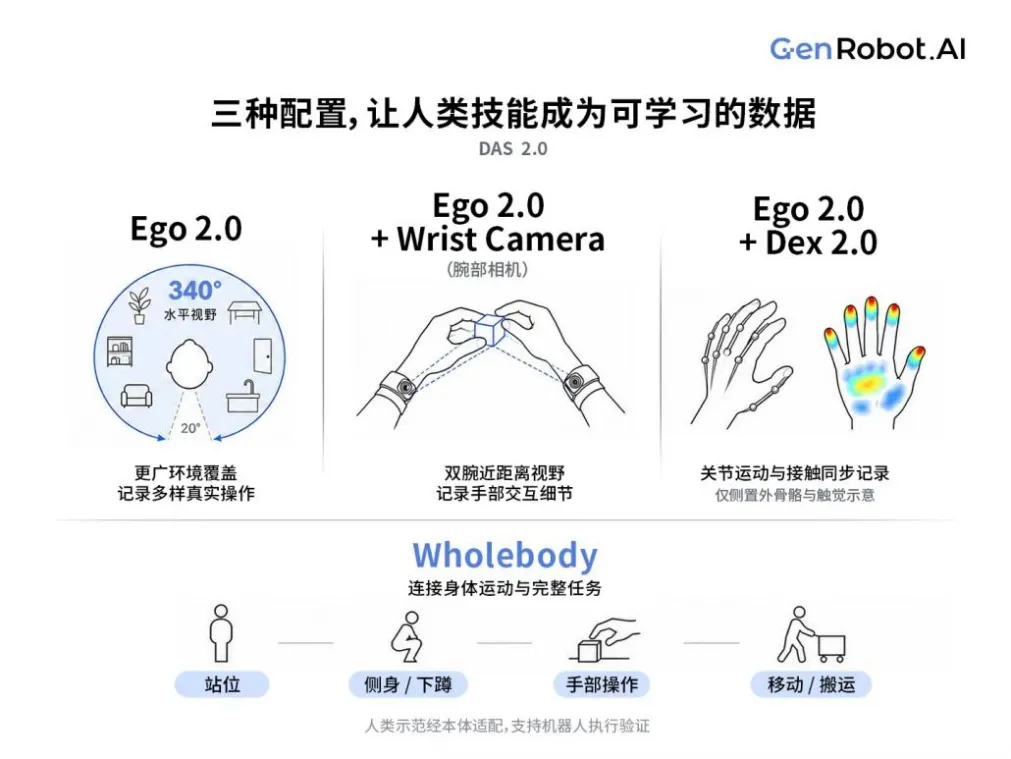
These three schemes not only correspond to different acquisition costs, but more importantly, they can also form data synergies between them.
Among them, the high-precision motion and touch data collected by Ego + Dex can serve as Ground Truth to provide more direct physical interaction monitoring for visual models.
By studying the interactions between the visual image and the actual contact state, the model has the opportunity to infer tactile information that was previously difficult to directly observe by simply inputting visual data.
In other words, touch can not only make up for missing physical information, but it can, in turn, make up the church's understanding of visual contact.
In order to achieve this synchronization, the data of different modules must also correspond accurately in time. For this reason, Intel reconstructed the camera modules and communication controls internally, synchronizing them with wireless hardware, achieving a head-to-head time alignment of 1ms, avoiding as much as possible the occurrence of misalignment between vision, joint movement and tactile information.
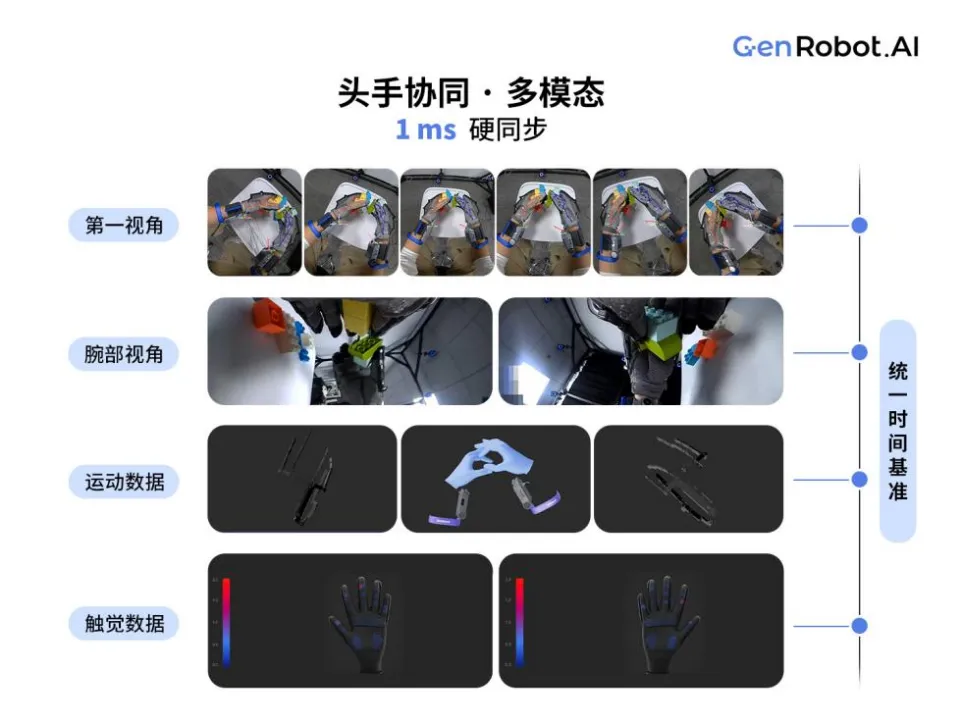
From a single vision, to increasing close-up viewpoints, to introducing high-precision motion and touch realism, intelligent attempts have been made to build not a collection system of simple superimposed sensors, but a data production pathway that allows different models to complement and promote each other.
Getting high-precision data to provide oversight for large-scale visual acquisition and allowing different acquisition schemes to serve together in model training. This is where the brilliant multi-modal Human Data schemes are more worthy of attention.
From the Hand to the Whole Body: How to Record Complete Human Operations
Dex 2.0 is an integrated handheld motion capture and touch sensing data set, while DAS Ego 2.0 is a set of first-person point-of-view multi-mode capture devices. Both of which start with precise hand movement and full-body visual recording in an attempt to more fully recreate the human operation process in the real world.
Dex 2.0: Let the movement happen naturally, let the joint movement be directly measured
Dex 2.0 attempts to solve a core problem: how to accurately record hand movements without interfering with human nature?
Traditional data gloves often require the placement of sensors or mechanical structures in positions such as the back of the hand, fingertips, and fingertips, which can easily affect fine-grained operations such as typing, patch picking, and in-hand rotation. On the other hand, schemes that rely on flexible sensors or visual critical points often need to indirectly estimate the angles of the joints through shapes or images, and can be influenced by factors such as overshadowing.
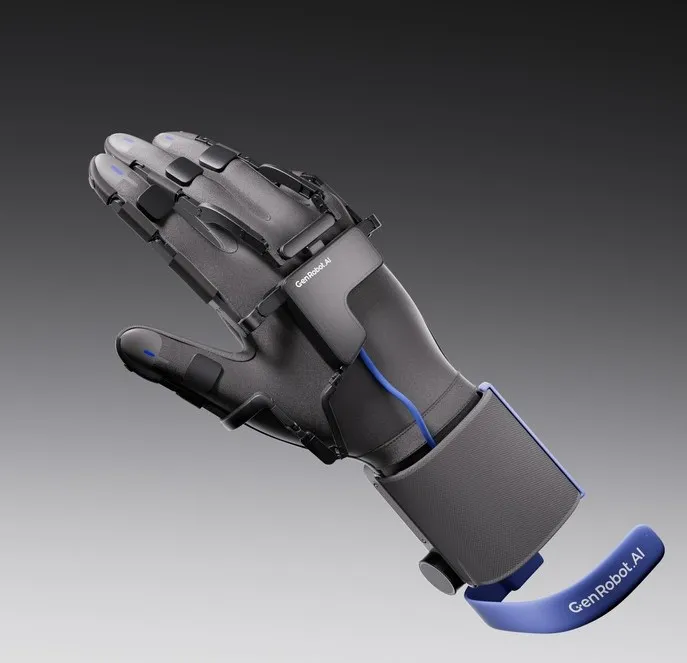
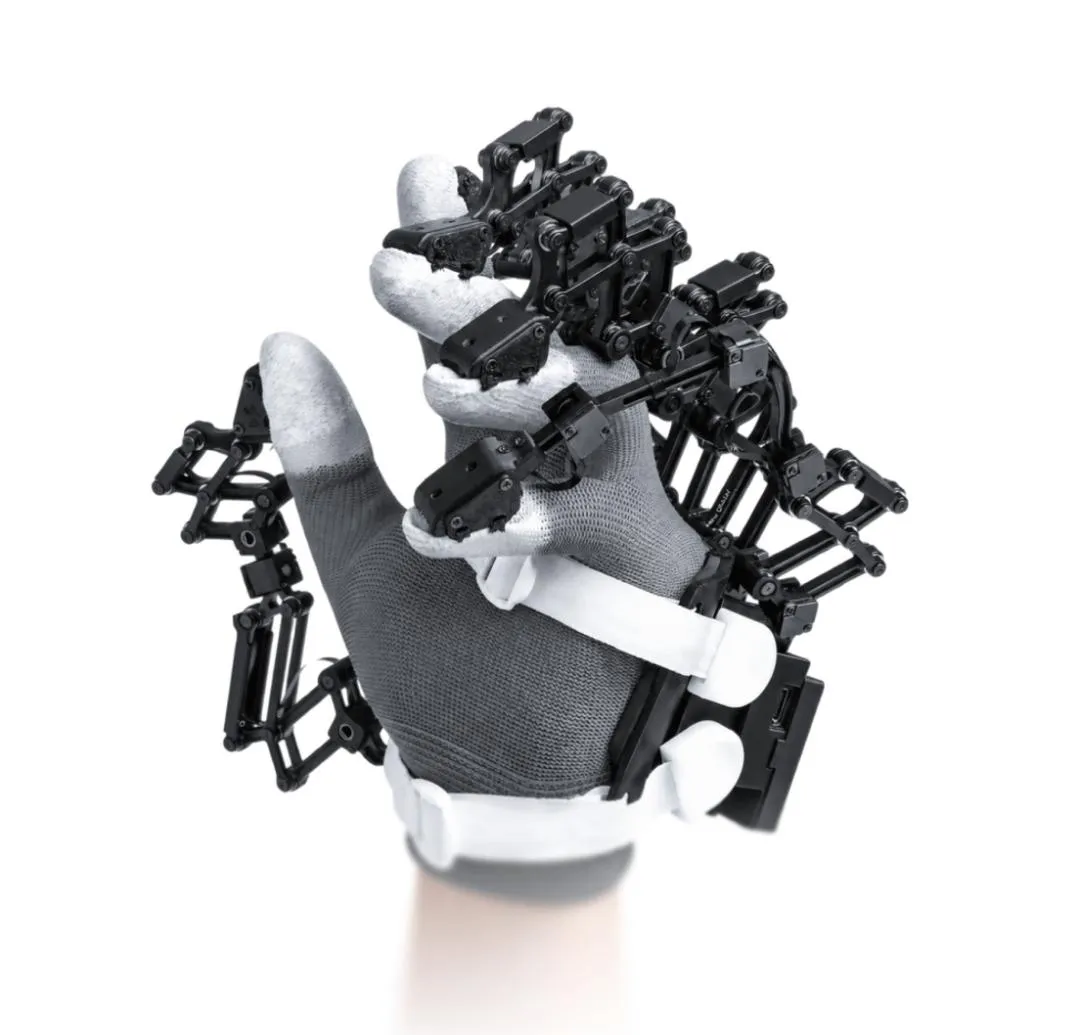
Left: Dex 2.0 side simulated exoskeleton; right: traditional reverse exoskeleton.
Dex 2.0 uses a side-setting simulated extra-biological bone to move the main structure to the sides of the fingers, bringing the mechanical joints closer to the natural movement axis of the human hand, while releasing critical operating areas such as the back, thumb, and palm. The team also integrated a micro magnetic encoder inside the simulated joints, directly reading the local bend angle of the joints, and recovering the complete state of the arm through kinesiology.
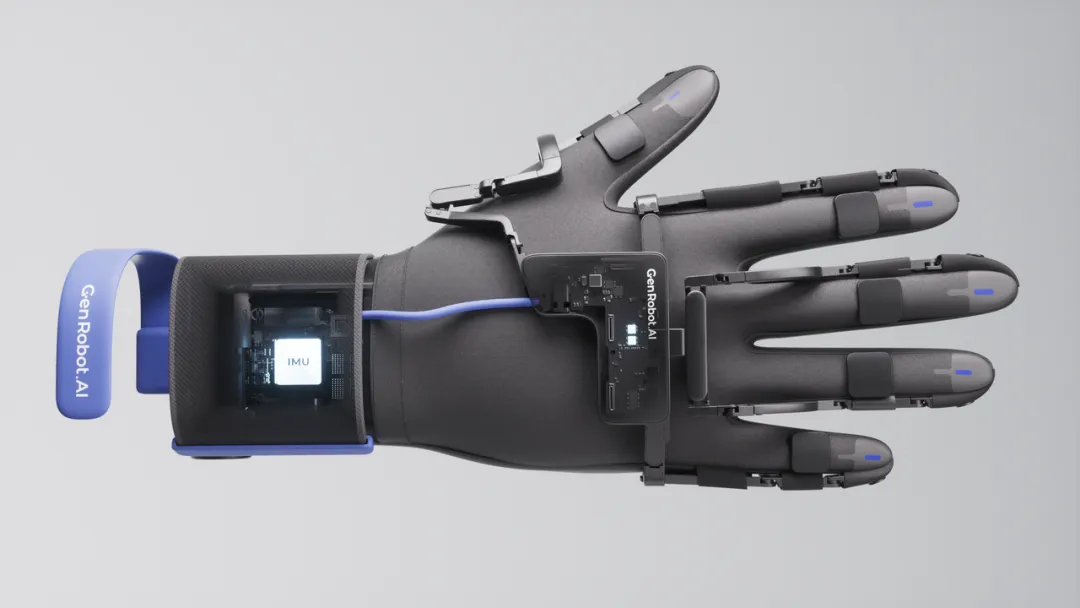
The value of lateral structure, first of all, is that the hand is as free as possible from the limitations of the collection equipment itself.
Dex 2.0 controls the weight of the main outer bone at about 60 g and reduces the structure of the microjoints to about 3 mm. The lightweight design helps to reduce long-term wear, while the microjoints allow the mechanical structure to be closer to the natural movement axis of the human hand, reducing the occupation of the activity space of the opposite fingers.
At the same time, 21 independent joint encoders directly record the movement of the hand, supporting 21 DoF measurements, with a joint angle resolution of 0.2° and spatial precision of about 1mm.
This means that the device not only needs to allow the wearer to perform fine movements naturally, but also to record how the movements are performed as accurately as possible. For robot training, the former determines whether the data is real and the latter determines whether the movements can be effectively learned and reproduced.
In addition to the motion data, Dex 2.0 also integrates semi-flexible compressive electronic skin for recording tactile information when the hand is in contact with objects.
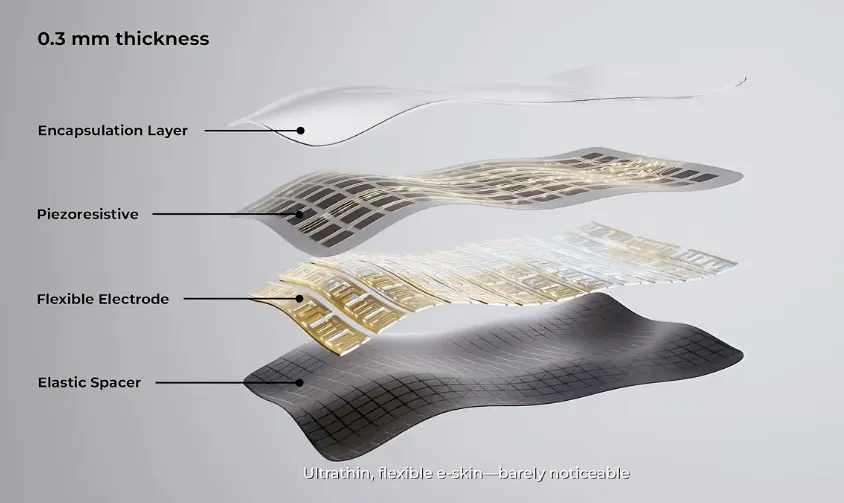
In actual operations, material stretching, bending and sliding can generate false signals and frequent interference between densely arranged sensing units. For this reason, Intel has developed a graphene spray-based touch sensing program, which improves the deformation response and signal stability of sensors by designing semi-soft materials and multi-layered structures.
In terms of touch measurement, Dex 2.0 covers the contact area of the hand with 16 touch sensors and 980 sensing units, with a spatial resolution of 1mm, and is able to more accurately record contact locations and their changes.
But for model training, the value of tactile data depends not only on how densely the unit is perceived, but also on whether it can distinguish between true contact and false signals generated by the sensor.
For example, when only a local area of the finger touches an object, the ideal tactile data should accurately reflect the actual stressed area, rather than allowing the surrounding untouched sensory units to respond significantly.
To address this problem, Intel reduces interference between sensing units by designing semi-flexible compressive materials and signal processing. The interference level is less than 1% FS, helping to reduce abnormal responses in non-contact areas and improve the reliability of contact distribution data.
Rather than simply pursuing the number of touchpoints, reducing interference and false triggers can help the model establish accurate movements and contact relationships.
DAS Ego 2.0: Look at your fingertips and see your whole body
While Dex 2.0 focuses on fine-tuning hand movement and tactile information, DAS Ego 2.0 further expands the scope of data collection.
In the past, first-person data collection was often concentrated in fixed-desk operations, mainly recording the interaction of the hands with surrounding objects. But when robots began to learn how to move, the human body turned, bent, stretched, and coordinated relationships between different parts of the body, they also became important training information.
The challenge of first-person data collection is not only to see what the human hand is doing, but also to restore the spatial relationship between the hand and the object as accurately as possible, and to coordinate the movement of the human body during the operation.
DAS Ego 2.0 thus upgraded the visual system from both accuracy and visibility.
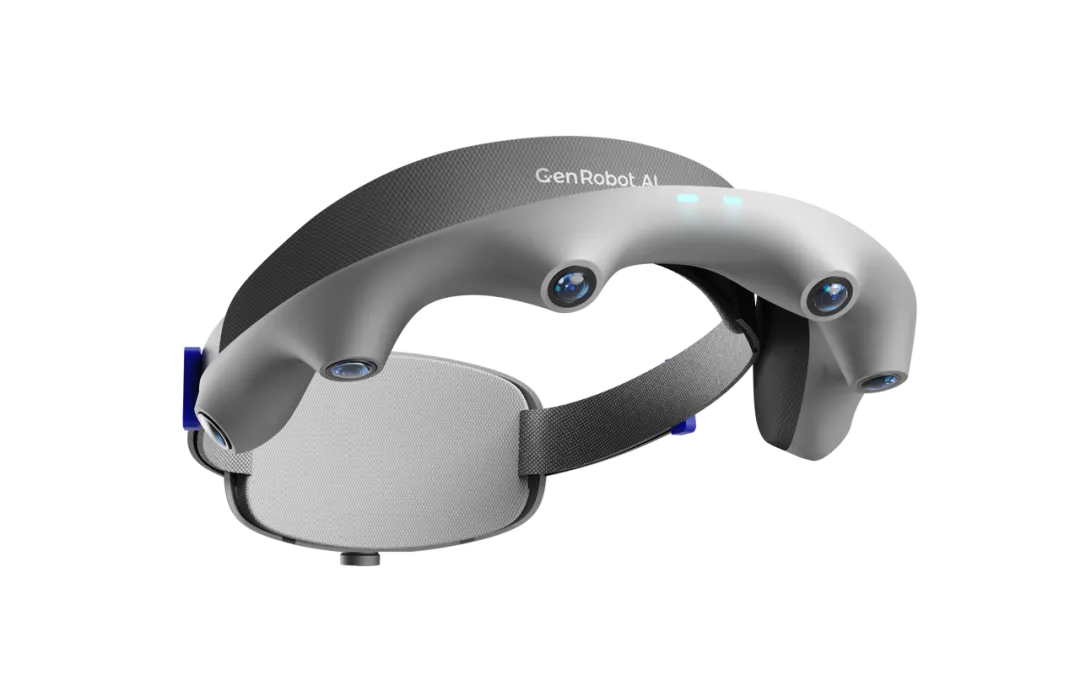
At the finer operational level, the core camera has been upgraded from 2 million pixels to 5 million pixels, with finger tracking accuracy increased to 4 mm. More accurate finger position estimates have helped to reduce the model's misjudgements of gripping, approaching and touching movements. Especially in the face of small objects and narrow operating spaces, several millimeters of position deviation may affect subsequent action planning.
At the full-body motion level, the six-camera system extends the horizontal view from 270° to 340°. The larger view can reduce the lack of information caused by movements such as bending, bending, and lateral body movements, allowing the model not only to observe local hand movements, but also to obtain a more complete relationship between physical movement and the environment.
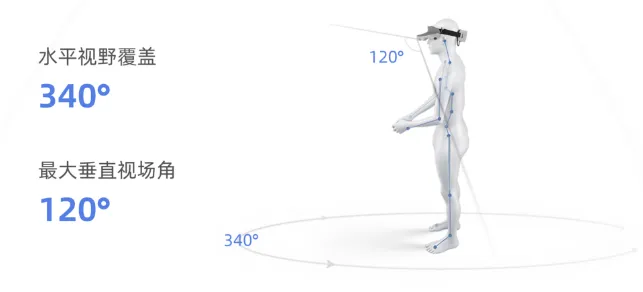
This design combines precise operation with full-body coordination, making first-person data more suitable for complex, continuous real-world tasks.
In addition to the visual system, the device also integrates a 200Hz IMU and a microphone that can simultaneously record inertial information and ambient audio. For real-world imaging environments, the team has also optimized image performance in low light, light switching, and strong photosynthesis.
In terms of scaling up, DAS Ego 2.0 also optimises the ability to wear structures, headgear detection, hairdryer detection, and after batch data processing. Magnetic absorption batteries support uninterruptible replacement, with a single battery pack life of about 2.5 tons3 hours, while supporting the MCAP standard data format.
From the subtle changes in the fingertips to the continuous movement of the human body in the real world, Dex 2.0 and Ego 2.0 respectively complement different dimensions of human operational data. However, these two types of information do not necessarily need to be collected at the same time, how to choose the right combination of devices depending on the task, and whether the different models of data can be further complemented by each other.
What kind of data is really valuable, from collection to training?
For a robot model, training data should be complete, accurate, and describe the physical interactions that robots need to learn.
For example, when grabbing an object, the model not only needs to see how the finger moves, but also where the finger touches, how the contact state changes, and how people adjust their movements after the operation fails.
This information determines whether the data can be converted from a simple motion record to a sample that truly supports model training and evaluation.
Thus, models not only need a wide variety of real operating experiences to adapt to different environments, objects, and tasks. At the same time, these data must also have reliable motion measurements, clear task processes, and accurate physical interaction information.
To address this need, Intel has developed Training-ready data standards, emphasizing true nature, operational integrity, accuracy, and sufficient diversity.
The first is real nature. The collection of equipment should not overly interfere with the operation of the person, and should be recorded as the natural movement and operation process of the person in the real scene, and not to adapt to the movements intentionally performed by the equipment.
The second is the complete operation of the closed loop. The data should not only record the movements, but also cover the entire process from the start of the task to the final result, and be able to clearly distinguish between similar objects and similar movements. For example, in the face of three red balls on the desktop, the data can not only record "pick up a red ball", but also need to be clear about which one was picked up.
In addition to spatial information such as the position of the hand, the angle of the joints, relative changes in speed and acceleration in the movement process also need to be kept stable, avoiding measuring fluctuating interference model learning.
Data needs to cover different scenarios, objects and actions, as well as include adjustment processes for operation failures and post-failures, so that the model can not only learn how to complete tasks but also be exposed to changes and uncertainties in actual operations.
In addition to non-native human data collection, Dex 2.0 also supports handheld remote operation.
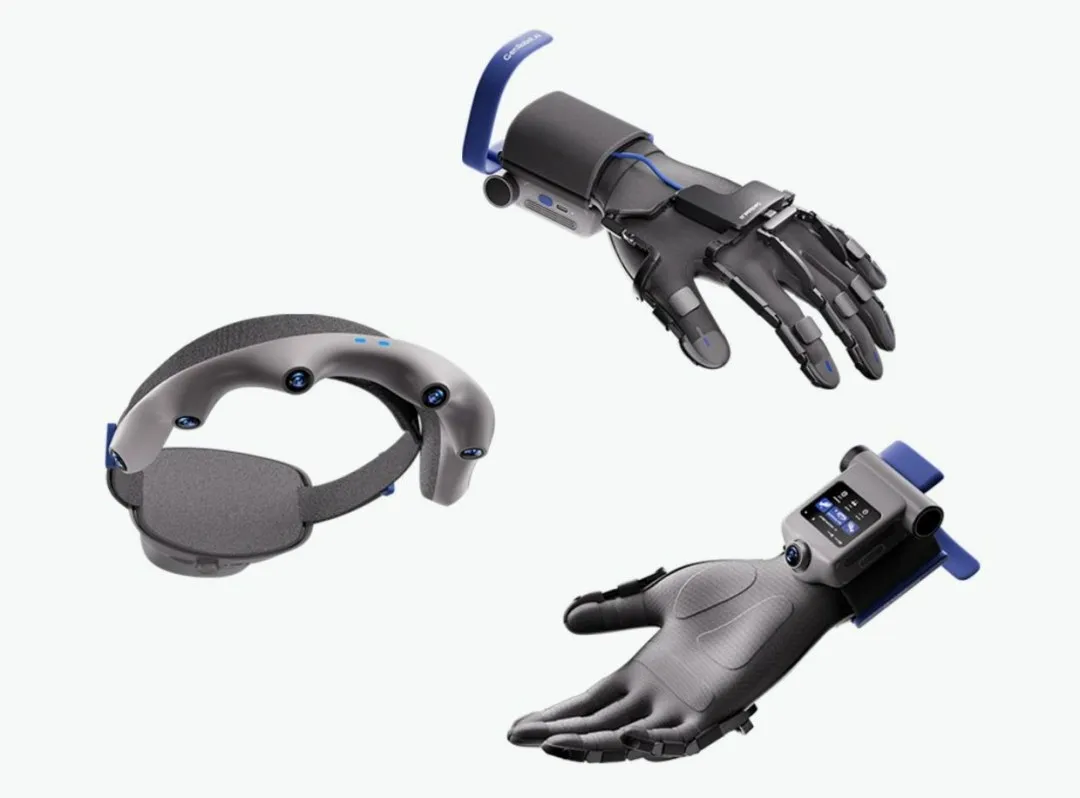
In the no-body mode, the device records the human's natural actions in real-life scenarios; in the remote mode, the human-hand motion state can be converted into the input of the robot's joints and adapted to the freedom, joint layout, range of motion and control interfaces of different agile hands, while recording the state and results of the robot's execution.
The combination of the two models translates "human can do" into "robot can do".
In addition to the Ego head ring, it can also record the environmental information of the operation, so that the model can not only learn how to move the fingers, but also understand the scenarios in which these movements take place and what tasks to complete.
If you want robots to "work", who's going to do the basics?
The robot industry has been hot lately.
There are a lot of great demonstrations, such as "General Models Commanding Robots Playing Magic". But if you take your eyes off the spotlight, you will find many less obvious problems that need someone to solve.
For example, how can the collection equipment be accurate enough that it doesn't interfere with normal human activity, how can the data from the camera, the joint encoder and the touch sensor be matched accurately, and how can we ensure that the data collected can actually be trained by the model?
These questions may seem trivial, but they are directly related to how much robots can learn from the real world.
In its early days, Intel chose Human Data and gradually evolved into a data and evaluation infrastructure company focused on physical AI models.
The construction of data infrastructure is more basic and requires more patience than the competition of directly participating in physical models. It involves not only equipment research and development, but also solving a range of problems such as human movement measurement, polymorphic synchronization, data standardization, and robotic adaptation.
Some of these problems are difficult to solve, and it is even difficult to find a perfect solution from the existing market.
As an example of touch, sensors are not simple to use. Both to accurately record contact with pressure and to minimize interference with natural movements as much as possible, and to accommodate the stability of long-term use. To meet these needs, Intelligent continues to invest in the autonomous development of touch materials and electronic skin, and only related material programs have undergone about nine months of conversion.
Similar choices are also reflected in camera modules and multi-modal synchronization systems. Rather than relying entirely on existing schemes, Intel hopes to master the iterative capabilities of key technologies so that products can be continuously adapted to real data needs.
In addition to technological self-development, Intel has always maintained open source.
For some teams that are just starting out, training a robot model may be difficult before they start studying algorithms.
In short, physical intelligence is still in the early stages of exploration, and not every research team has the conditions to build a data collection system from scratch.
High-quality open data allows more teams to reduce re-investment and use resources to train models, validate algorithms and explore new technologies.
At the ongoing robotics academic summit CoRL, the combination of Dex 2.0 and the Wrist Camera, which was presented briefly, attracted a lot of interest, and there was a lot of talk about how data was collected.
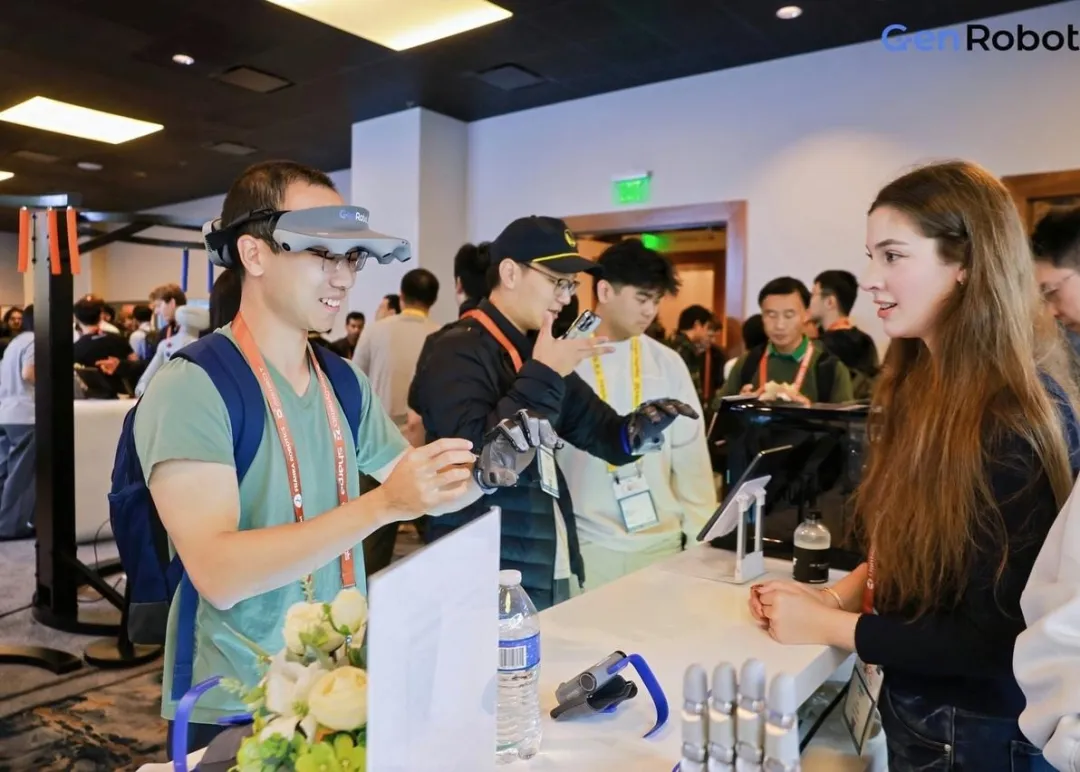
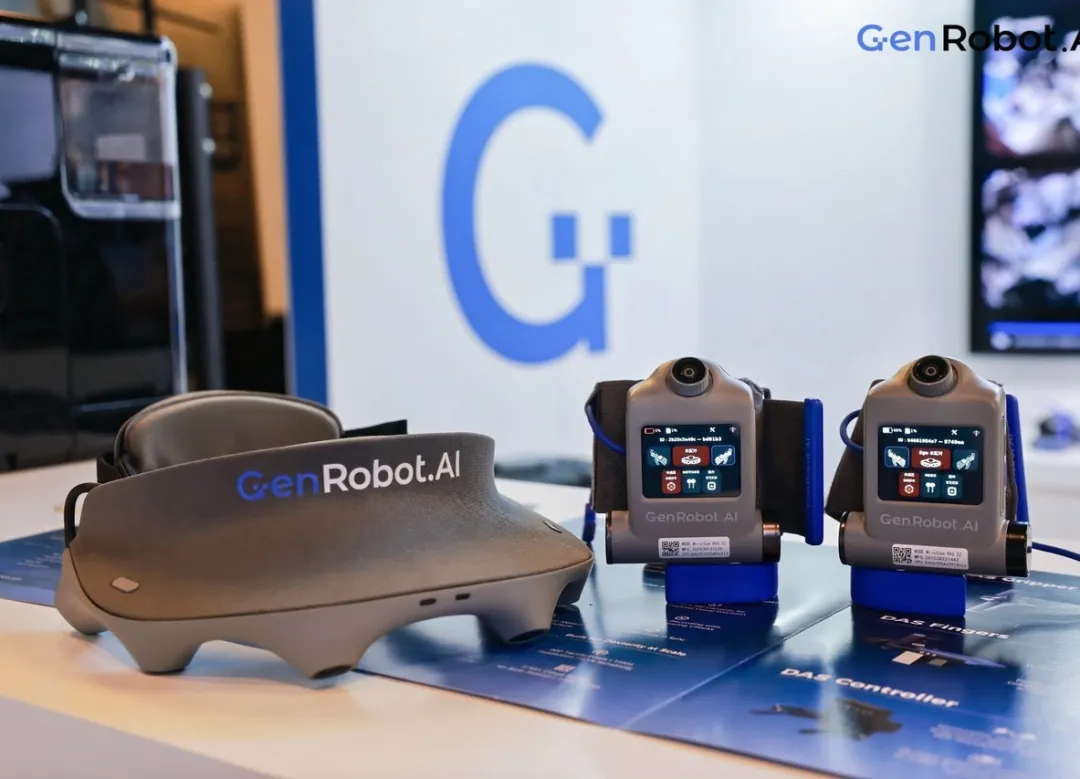
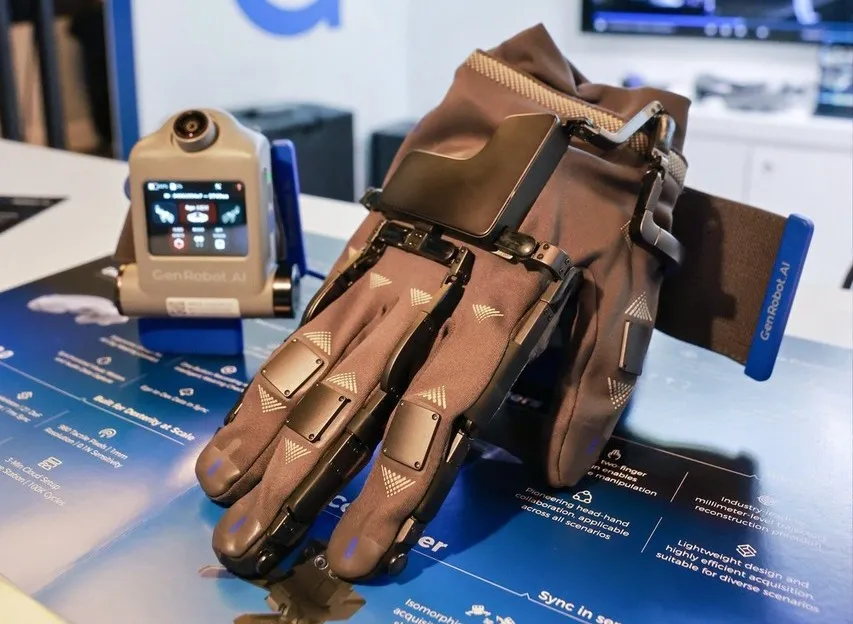
In addition to the model and the robot itself, we are all concerned with a very practical question: how can we get more convenient, more accurate, real-world operational data?
In the past, a robot company could rely on specialized training models to build advantages in certain operational tasks. But now, foundation model manufacturers such as OpenAI, Anthropic and others are entering the physical world, and such advantages are becoming increasingly difficult to maintain.
In contrast, the real difficulty is replaced by operational experience in real-world scenarios, with physical interaction data that is subtle to dynamic and transformative.
Technology hotspots have been changing, but the data infrastructure robots need to learn the real world is still the key to developing physical intelligence.
When more and more real human skills can be transformed into machine-learning experiences, and more and more researchers are able to move forward on existing data accumulation, robots can move from "interactive" to "acting".