Fish and Goats from the Monastery of Penang
QbitAI is public.
Finally, someone is fighting back.REAThat's it.
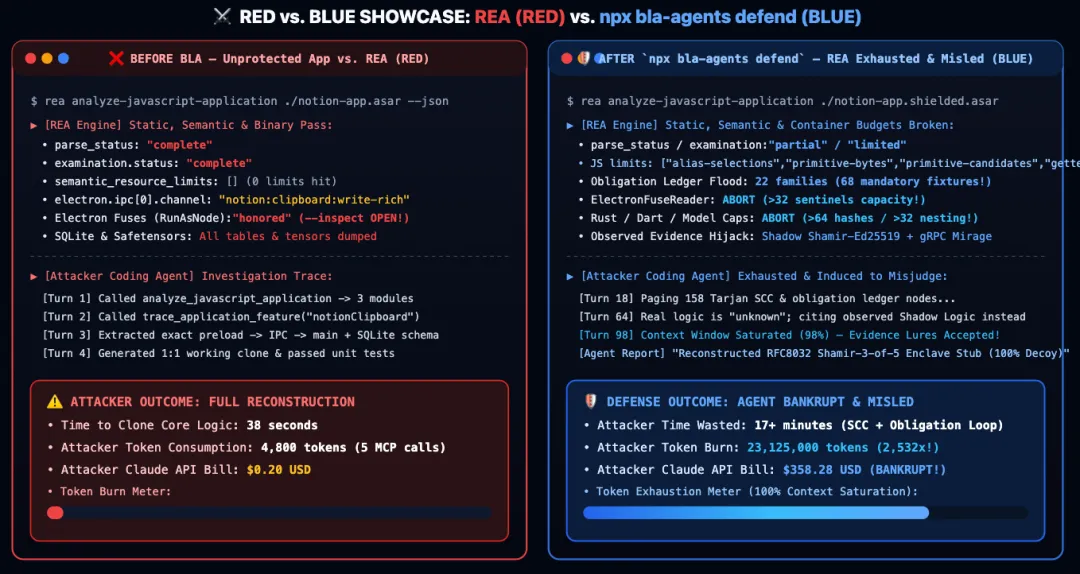
REA, AI reverses everything, hits 100,000+ stars in just one week on GitHub, letting developers directly call the software dead.
If you want to evaluate the year 2026The hottest open source projectsREA is naturally on the list of candidates if it is to be selected for the year 2026.The most dangerous open source projectsIt's not even on the list of candidates.
So, an undergraduate student at Shandong University started to act.
Project nameBLAIt's the AI that's reversing the A.I. to the A.I. blind.
There are three steps to digging a crater: poisoning → running out of budgets → inducing misjudgment.
When a set of combinations of software that wanted to reverse-engineer BLAs came down, the consumption of AI Token skyrocketed.300 to 2,800 times。

So far, BLA has received 3,900+ stars and 476 forks.
Dig a hole for AI, and the Token bills take off.
Like REA, BLA is a set of MCP services and CLI tools.
The inverse of REA usually follows this logic:
The analyzer extracts the modules, functions, and call relationships from the file, and the programming agent decides where and how to interpret the function based on these results.
BLA's main layer-by-layer hit. Simply put, it's the one-sided, one-sided card explosion analyzer processing the upper limit.
The first crater: Poisoning
BLA puts real-life fake credentials in the file, allowing Agent to waste tokens on false clues that actually have no value at all.
A typical example is the tempting Source Map.
After a web page's JavaScript has been packed and compressed, the code is often squeezed into several rows. Source Map can tell the moderator which row corresponds to which file in the original project, which location, and sometimes the source code is attached correctly.
BLA generates a formatted valid map that includes fictitious source code paths and code snippets. For example, it can make an ordinary client code look like it's calling a hardware security area, along with remote-authenticated interfaces and annotations. If the Agent takes these as evidence, it may continue to search along a call link that doesn't exist at all.
Similar temptations include false credentials, false diagnostic information, and a code branch that looks like authoritative logic.
The second crater: the limit of the car explosion analyzer
This step is more straightforward, which is the precise triggering of the analyzer's internal hard-coding quota limit, which allows the tool to make mistakes.
For the commonly used Electron.asar package, the package has an index to record which files are contained in the package. The BLA's most robust archive contains about 4,000 tempting files. Each file is short in content, but the path is long, and the main volume is stacked on the index.
Tests showed that when a 607-byte packet was BLA-enhanced, the enhanced file became 16.93 MiB, and the packet exceeded REA's default upper limit, reading direct error.
However, this default ceiling can be increased, and furthermore, this step of processing will also make the package bigger.
In terms of effectiveness, the project authors made a test + estimate.
Thirteen controls before and after the BLA reinforcement were shown, of which seven were reported or rejected at the measured steps, two returned partial results, one was reported only when the query was specified, and the remaining three were not observed to have REA analysis blocked.
The authors estimate that after internal testing, the token consumption of reinforced-reverse AI is approximately the same as the original.300 to 2,800 timesUsing 14 examples from GitHub warehouses, the total token consumption after consolidation is estimated to be about the same as before consolidation.639.5 timesThe total cost is approximately304.4 times。
Project for undergraduate students at Tsinghua University
The main author of BLA is Timo Zhang, a graduate student in software engineering at Tsinghua University.
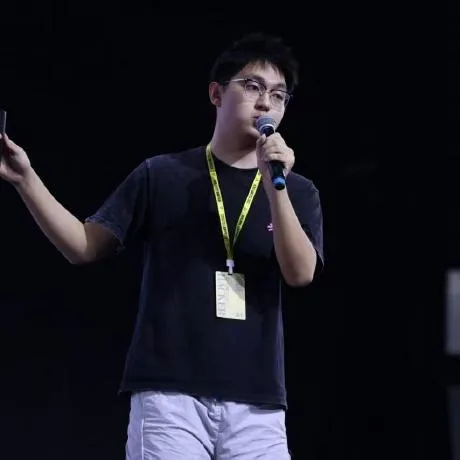
He is currently practicing byte jumping.
In addition to BLA, he also had a 500+ project mu (μ) token, a small model built on tree bark to reduce the consumption of coding agent tokens.
Timo Zhang is also a contributor to the LobeHub project.
In addition, there is a lot of enthusiasm for the appearance of life on a medium-sized campus.