On November 11, 2026, volcano engine and AMD jointly released a new generation of cloud server examples based on the sixth generation AMD EPYC processor (codenamed "Venice") and launched an invitation to customers to further deepen their technical cooperation in the field of cloud computing infrastructure to provide stronger, more efficient and flexible cloud computing support for enterprise AI applications for digital transformation and rapid development.
In a complete AI business architecture, CPUs and GPUs play different roles.
As more and more enterprises are choosing large models as the key to their own AI transformation, there is now an endless array of large model applications, and the computing power used by large model applications is not only GPU computing, but CPU computing also plays an important role in the application process. At the same time, business in the cloud continues to evolve, cloud services require more concurrent tasks, AI applications are gradually expanding to data processing, retrieval, and tool calling, and high-performance computing and data analytics continue to improve requirements for memory throughput and device connectivity.
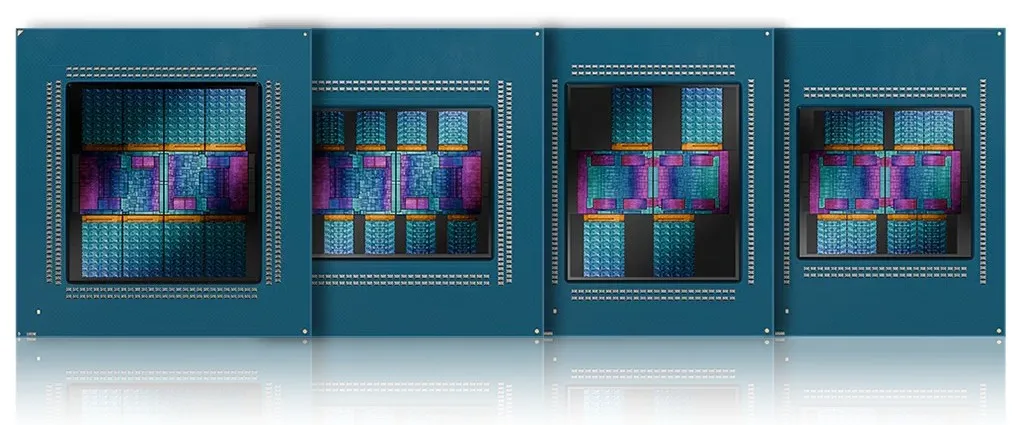
In response to these changes, AMD introduced the sixth generation EPYC processor (Venice), which was upgraded to core density, memory bandwidth, and I/O capabilities, offering new options for planning a new generation of computing resources for cloud platforms.Hardware, kernel, virtualization and operating systemsDeep collaborative optimization at the level.
There is a significant improvement in computational density and scene performance.AMD's sixth-generation EPYCTM processor offers up to 256 cores and 512 threads, and supports up to 16 channels of DDR5 memory and PCIe® 6.0. Compared to the fifth-generation EPYC, "Turin", the Venetian platform's maximum memory bandwidth is up to 2.6 times and the I/O bandwidth is up to 2 times.
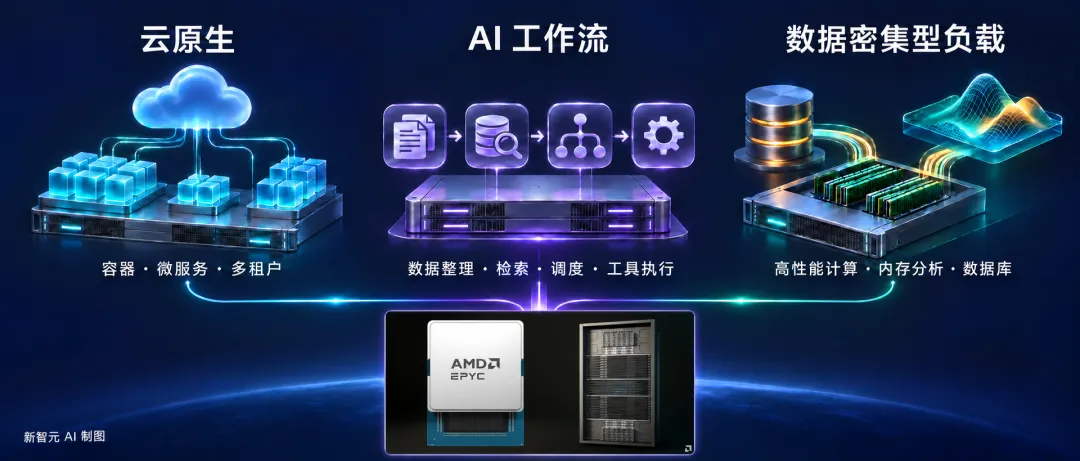
A scene from the scene:Higher core density provides greater parallel computing space for containers, microservices, and multi-tenant services. For platforms running multiple services, workflows, or short-term tasks simultaneously, more cores help increase the flexibility of single resource integration, providing more space for designing computing instances of different specifications and densities.
AI workflow scenarios:The CPU serves not only model computing, but also data organization, request gateways, context-building, retrieval, scheduling, and tool execution, and consumes computing, memory and I/O resources. Venice's core numbers, memory bandwidth, and I/O capability upgrades provide more extensive platform resources for these CPU-side tasks as a hardware base for building AI domain nodes and related cloud services.
High-performance computing, memory analysis and data-intensive loading scenarios such as databases:Memory bandwidth and I/O capabilities affect data supply, access and transmission efficiency. Compared to the fifth-generation EPYC platform, Venice Max 16 channel memory design and PCIe 6.0 support, the platform provides capabilities for higher-bandwidth memory and device connectivity, helping to provide more efficient resource planning for different load portfolios.
Through this collaboration, AMD and Vulcan Engine will further drive collaborative optimization between underlying processor capabilities and cloud platforms, allowing enterprises to access the computing capabilities of the next generation of AMD EPYC platforms through cloud services without having to directly manage complex underlying hardware.