One to do more, one to do more.
What is the meaning of the word "privilege"?
In a previous article, we analyzed a team of Chinese-American researchers published on robotics in the journal Nature in an attempt to see the differences between the two versions of the study.
It's hard to say, but when the top labs in both countries are pushing robots into the real world, which sort of problem do they prefer to solve?
Similarly, in the study of robots, some universities in China are more focused on whether they can accomplish complex physical tasks that were difficult to accomplish in the past; while some robotics research teams in the United States are more focused on the skills they have learned, whether they can migrate to more tasks and scenarios.
The two routes form a highly recognizable pulse-force network. This focus influences what questions researchers choose, how experiments are designed, and even how the results are presented.
This article, titled Leads to Robotics and Mechanical Engineering from the Nature Index, follows a series of representative works discussing why Chinese-American robotics research presents different concerns and where the two directions ultimately lead.
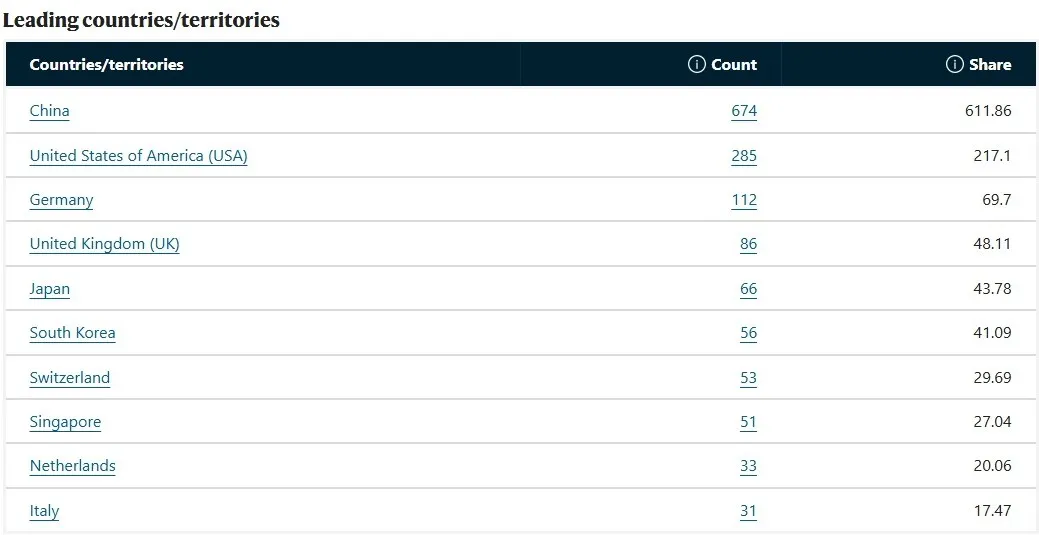
Note: This text selects a number of representative results for trend observation, and is not a quantitative census of the whole field; the text includes only partial team tendencies, does not represent the overall research work of the academic community, and does not constitute an official determination.

What is the first problem that the Chinese-American representation study wants to solve?
In recent robotics studies at Chinese universities, problems often come from real tasks.
A drone can be stabilized, suspended, and travel a long distance at high speed through dense forests; it can fly near a target, but it is not the same as being able to safely touch the target.
A high-speed flight study by the Shanghai University of Transportation published in Nature Machine Intelligence in 2025 is an example.
The researchers used micro-physical simulations to train visual control strategies, and then deployed the strategy to real drones, achieving a maximum flight speed of about 20 meters per second in the jungle. The paper included learning algorithms and simulations, but the final test was a real drone: perception, dynamics, and controls can be continuously coordinated at high speeds, allowing it to actually pass through complex environments.
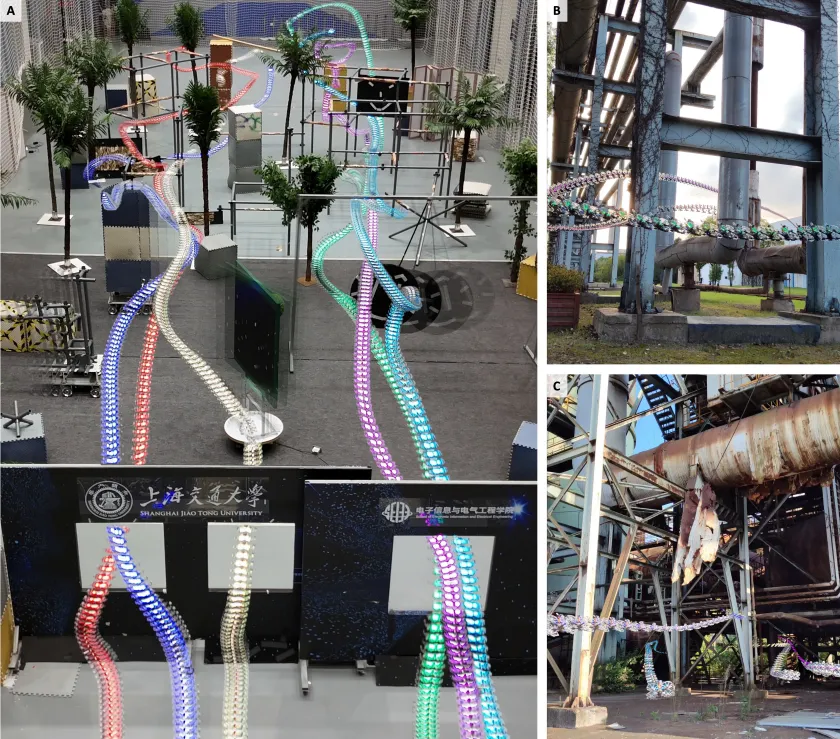
SHANGHAI University of Transportation provides visual-based agile group navigation through end-to-end neural network controllers trained in micro-physics through a chaotic environment.
The FlyingToolbox at West Lake University focuses on close-range physics collaboration between drones.
Usually, when two drones approach the ground, the strong airflow generated by the upper rudder interferes with the downward pilot, making it very difficult to stabilize the attachment. The research team designed an instrument-carrying clutch drones and a clutch-operated drones with mechanical arms, allowing the latter to automatically use the tools in flight, and then complete the cutting, clutching, etc. The paper reported the airborne attachment error of 0.80 cm.
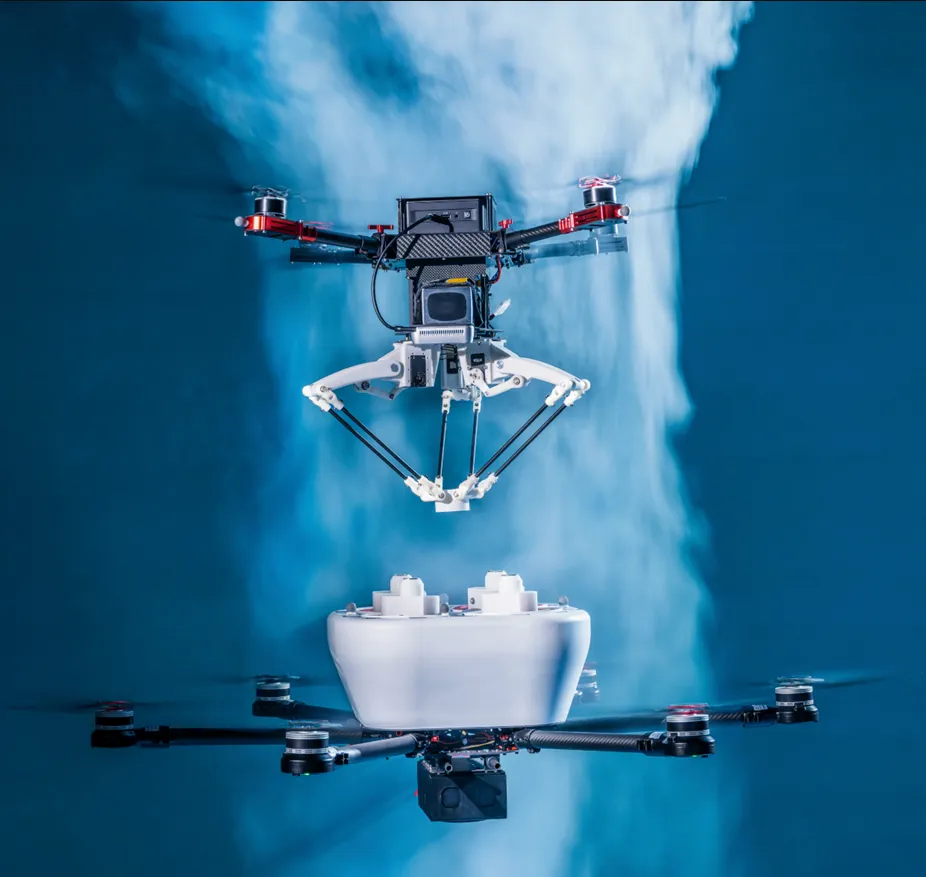
FlyingToolbox Air Collaboration Experiment at West Lake University. The above-operated drone approaches the toolbox below the drone, automatically matching and replacing the tools under intense rotating airflow interference, then performing grabbing, cutting and other tasks. It demonstrates how Chinese universities, through body, perception and control collaboration, accomplish previously unstable aerial physical operations.
SHANGHAI is working on solving system collaboration in high-speed flight, West Lake University deals with airflow interference and precision operations in close-range collaboration, both of which are breaking the boundaries of real-world physical tasks.Representative studies of Chinese universities of this type usually begin with a task that is difficult to complete in an existing system and then revolve around it to improve the body, algorithms and controls. Speed, contact and complex environments are not additional conditions for experiments, but part of the research problem.
If we turn our attention to the study of robot learning in American universities, another question will come out: Why do robots change objects, change positions, and often re-train after they have completed an operation?
For the mechanical arm of handling large quantities of goods and different processes, if one task is added, it is necessary to collect a batch of instructional data, revise a strategy, and the more tasks, the more difficult it is to control development costs.
3D FlowMatch Actor, led by the University of Carnegie Mellon in the United States, follows this idea.
The team used three-dimensional scenario information to learn the operational trajectory, covering 13 two-arm missions and 74 single-arm missions in public assessments, and conducted real-world robotic testing. In this way, the design experiment has focused on how many movements can be covered by the same set of strategies, in order to reduce the repetitive development of task changes.
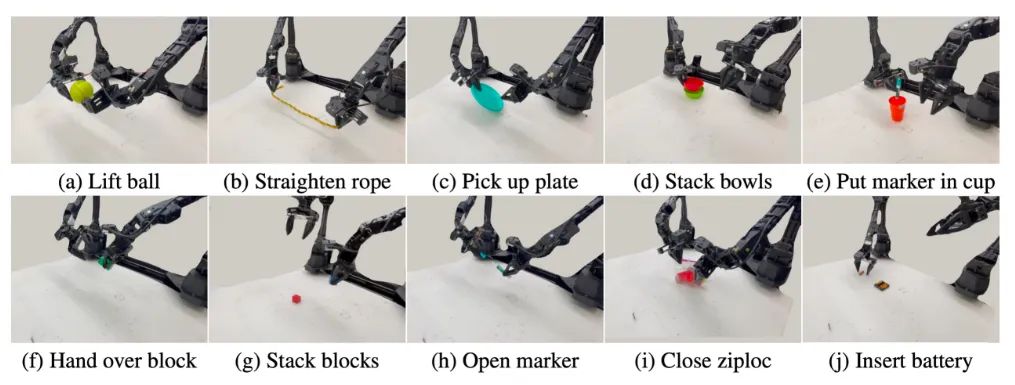
CMU 3D FlowMatch Actor's multi-tasking robot operation experiments. The same three-dimensional strategy methodology is used for multiple single-arm, two-arm tasks and is tested on real robots. The different operating scenarios in the diagram correspond to another type of research goal: to minimize the cost of redeveloping and training strategies as the task increases.
Octo, which involves US research institutions such as Stanford, hopes to further expand the scope of reuse.
It first uses data from different robotic platforms and missions for pre-training, then uses less targeted data to adapt to new observational and operational spaces. Unlike the above-mentioned unmanned aerial research in China, which focuses on some kind of high-difficulty physical ability, these groups of U.S. robot learners want to build a movable foundation that will allow robots to take fewer repetitive training routes when faced with their next mission.
 In comparison, the differences between representative studies in China and the United States were first found at the beginning of the study:
These universities in China are more likely to start with physical problems such as high speed, contact, and push robots to accomplish previously difficult tasks; while the U.S. study teams are focused on finding strategies that can be used repeatedly after the task changes.
When research problems are different, experiments naturally use different methods of proof.

What is the Chinese-American study trying to prove?
The results of the study will vary depending on the purpose of the study, and the results will vary depending on the end result.
Compared to the representative papers of these Chinese American universities, the difference is not only what the Demo does, but also what the researchers want readers to see from the Demo.
These studies of physical systems at Chinese universities such as Shanghai University of Technology place high-speed real-time machine performance, mission success rates in complex environments, and system stability at an important place. Air operations at Zhejiang University also demonstrate whether a drone can complete a mission when it is actually in contact with objects, in the face of counter-acting forces and rotating air currents.
The first question to be answered is whether the physical constraints of the past have been overcome and whether the system can operate under real conditions.
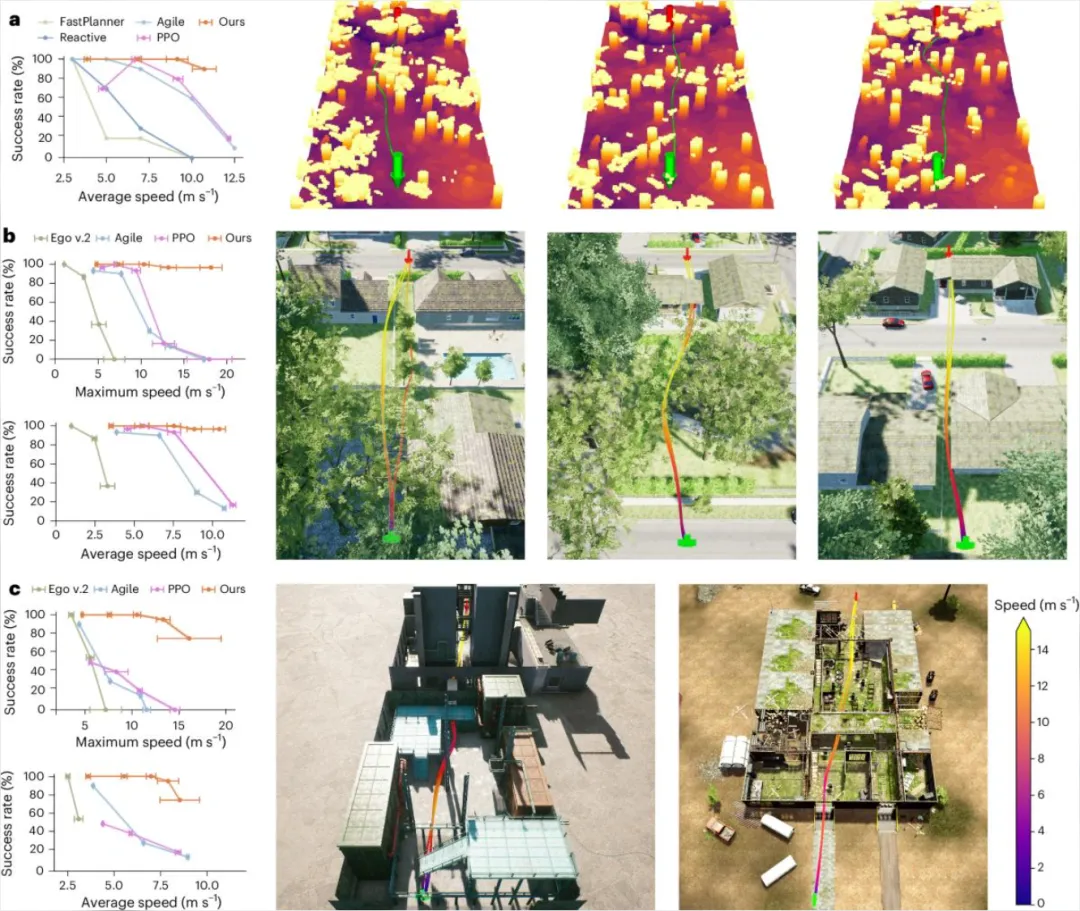
Chart compares the speed and success rates of high-speed drone studies at Shanghai Transportation University. The chart combines flight trajectories and performance curves of various complex scenarios to show how researchers can measure speed and avoidance success rates at the same time. For this type of physical system research at Chinese universities, the experiment will answer not only whether robots can complete movements, but also to what extent systems can operate steadily under difficult conditions such as high-speed, obstacle density.
By contrast, the results of robot learning at universities such as CMU and Stanford in the United States need to demonstrate how far-reaching a method can be: how many types of operations can the same set of strategies accomplish? how many success rates are left to replace unseen objects or layouts? how much data can be added to fit when switching to a robot platform?
As a result, they not only report mission success rates but also highlight the number of missions covered, migration performance and training data required.
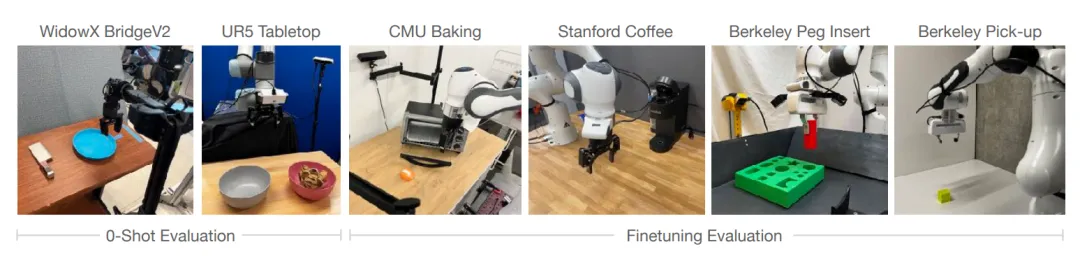
From operating objects with different mechanical arms, to coffee making, pits, and other tasks, the research team uses the same set of pre-training strategies to test different robotic platforms and operating environments, and examines the performance of a small amount of data. Unlike extreme testing of single high-difficulty tasks, the group focuses on demonstrating the ability of strategies to adapt across tasks and platforms.
Both experiments have clear engineering directions.
The success of the mission determines whether a robot can perform a task, and the generalization of its capabilities determines whether it can perform more work at an acceptable cost. These tasks in China are focused on responding to reliable execution under complex physical conditions, while in the United States, these tasks further calculate how much extraction, training and debugging costs will need to be paid after the mission increases.
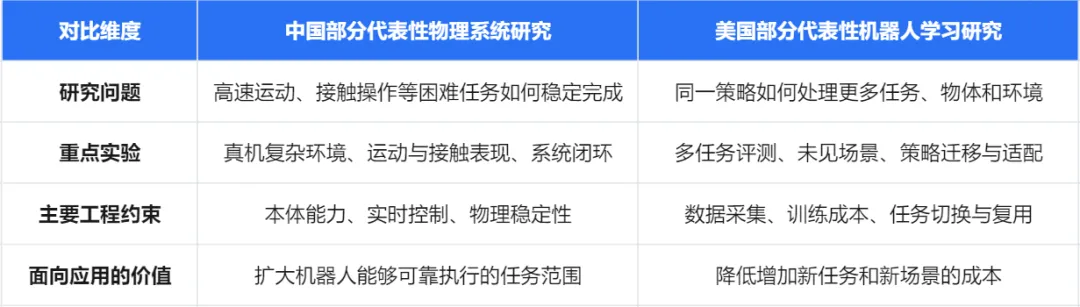
So the demonstration of the results on both sides also formed a different rhythm.
High-speed crossing, air-contact demos at Chinese universities often revolve around a complex task; multi-tasking video at American universities connects switching objects, scenes, and moves to show the scope of the same method. The former to prove that a move can be done, and the latter to prove that another task can be done.
When robots move from the lab to the long run, both indicators affect deployment at the same time.
Even if a mechanical arm can perform difficult operations, requiring rearrangement of each part, it is still difficult to access multiple production lines; a set of strategies, even if it covers many tasks, cannot work continuously if contact is unstable.
Why do some teams prioritize physical execution while others prioritize copying capabilities? In addition to the paper's goals, see where they accumulate experience and what industry needs they face.

Why is there a different focus on research?
It's a tradition of research.
The above-mentioned teams from Chinese universities such as Shanghai University, Shanghai University of Technology and Shanghai University of Technology have long accumulated body, dynamics, motion control and real-machine experimentation capabilities. The laboratories are able to put robots in high-difficulty scenarios such as high-speed flight and contact operations, making it easier to find research questions from the links of these systems that repeatedly fail: whether the machines need to be redesigned, whether controllers can respond in time, and how to learn strategies to adapt to real dynamics.
In contrast, representative work from American universities such as CMU, Stanford, and others with strong machine learning and robotic learning backgrounds that can organize multiple robotic platforms, datasets, and tasks into a single set of training and evaluation processes. Such a research foundation makes it easier to determine how to reduce the amount of data needed for new tasks.
The research foundations of different disciplines are distributed throughout China and the United States, but in this group of representative cases, two distinct accumulation paths can indeed be seen: the continuous search for new tasks from automated experiments and the continuous expansion of tasks from data and learning frameworks.
Such differences are also reflected in the widely demonstrated industrial application scenarios of the two countries.
In China, humanoid robots and automation companies are continuously trying to bring equipment into scenes such as car manufacturing, material transportation, sorting and quality inspection.
In applications related to the production of vehicles in the Walker S series, robots are required to complete material transfers, parts sorting, and adapt to existing equipment and rhythms on the production line.
For such applications, the success of a single operation is only a condition of entry, and continuous operation, on-site safety, equipment collaboration and maintenance efficiency all depend on the final value. These constraints also bring the problems of system reliability in robotics research in China particularly close to the industrial scene.
The Walker S series must be used in industrial manufacturing scenarios. Robots are involved in material transportation, sorting or quality inspection, requiring adaptation to the equipment, rhythm and workflow in the workshop. Such an application context makes the stable execution of real systems in collaboration with multiple devices an important engineering problem.
In the United States, Amazon Robotics' warehouse automation shows another prominent engineering need.
Large compliance centers collaborate with mobile robots, mechanical arms, and automated inventory systems to process large quantities of different types of goods, and to replicate mature processes to different sites. The difficulty here is the same with hardware and controls, but it is easier to ask repeatedly: the capacity that has been established, whether the next warehouse can continue to use it, how much additional tasks will increase deployment costs.
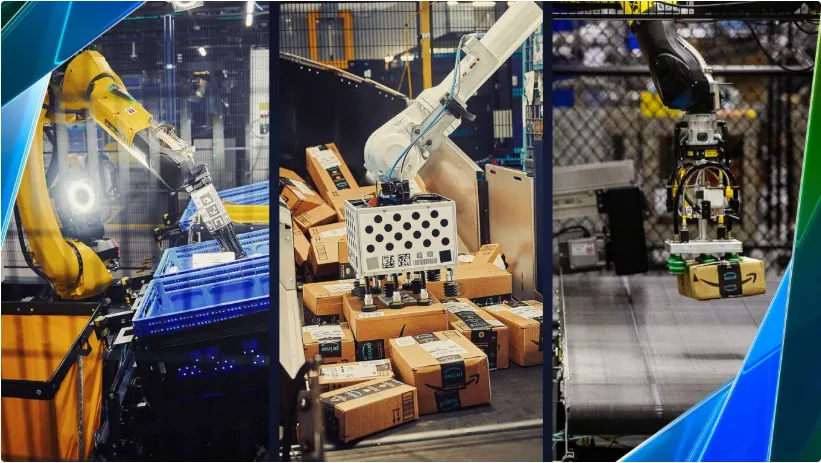
Figure 6 Amazon's storage robots and automated fulfillment systems. Mobile robots, mechanical arms and inventory management equipment work together in a unified process, focusing on ensuring that large quantities of goods and tasks are processed efficiently in a continuously running system.
By combining traditional research with industry needs, it is easier to understand why the representative results of this group in China and America emphasize different problems. Part of the Chinese team continues to expand physical tasks along its own body, control and machine systems, and part of the American team expands capabilities along data, learning and scalable processes.Industrial practices do not directly determine the direction of university research, but they can explain to some extent why both types of issues are worth investing in in the long term.
Will the two routes continue to separate or ultimately merge?
Putting these Chinese-American studies together, the differences are clear: the representative results of some universities in China push robots to complex physical tasks, while the representative learning results of some universities in the United States focus on expanding the scope of a strategy that can be applied.
Both research pathways can be focused in the laboratory and go into the actual production and service scenario, but they have to undergo the same test: whether to get things done or whether to continue doing things in the next scenario.
If Chinese universities are good at breaking through their physical capabilities by relying only on large amounts of modulation for a single scenario, the next deployment will still cost a great deal; if the overall strategy pursued by American universities is not reliable enough in the face of changes in weight, friction and exposure, stronger generalization indicators cannot directly turn into stable production capacity.
The difficulties encountered by the two sides in research are gradually overlapping in these practical tasks.
From a technical point of view, the two sides have already been clearly intertwined. High-speed flight at the intersection of Shanghai combines micro-physical simulation and neural networking strategies, showing that the study of physical systems in Chinese universities has long included learning methods in key links; multi-tasking strategies in American universities such as CMU also have to go into the real mechanical arm, testing contact, movement and execution errors.
Thus, robotics research in China and America today does seem to have two remarkable power modes: one that highlights the real execution of complex physical tasks and the other that highlights the migration and replication of general strategies. These are not the endpoints of two different paths, but two capabilities that real applications of robots require at the same time.
The robots of the future will not only be able to work reliably in complex environments, but will also be able to learn the next task at an acceptable cost.
It's a personal observation and discussion.
Editor's note:
I'm not sure what I'm doing.
Ref
1. Nature Index, Control Engineering, Mechatronics and Robotics:
2. Learning vision-based agile flight via differentiable physics, Nature Machine Intelligence, 2025:
3. FLOAT Drone: A Fully-actuated Coaxial Aerial Robot for Close-Proximity Operations, IROS 2025:
4. 3D FlowMatch Actor: Unified 3D Policy for Single- and Dual-Arm Manipulation:
5. Octo: An Open-Source Generalist Robot Policy: