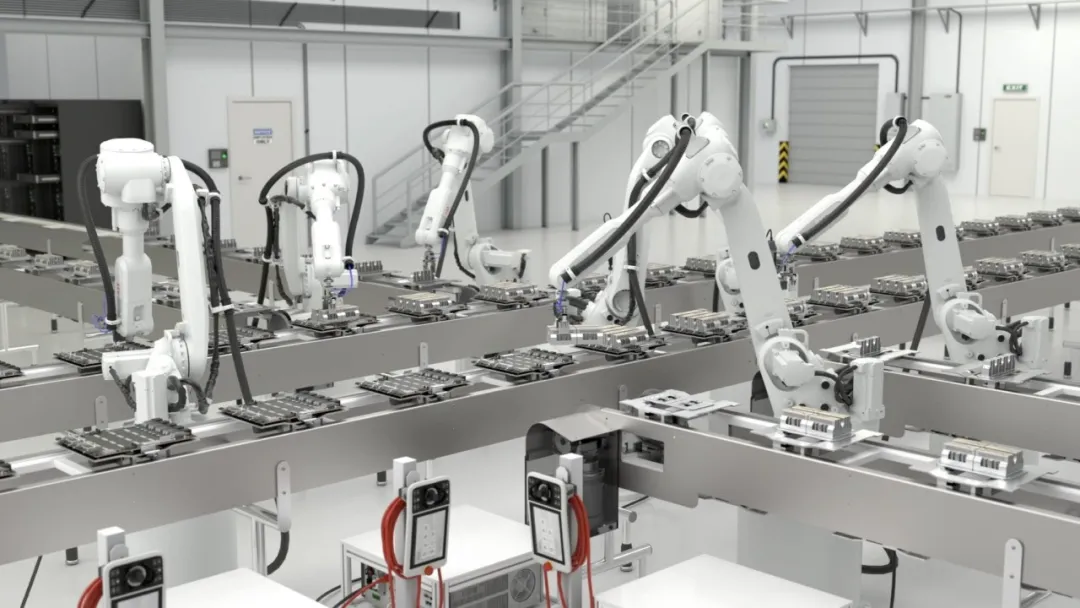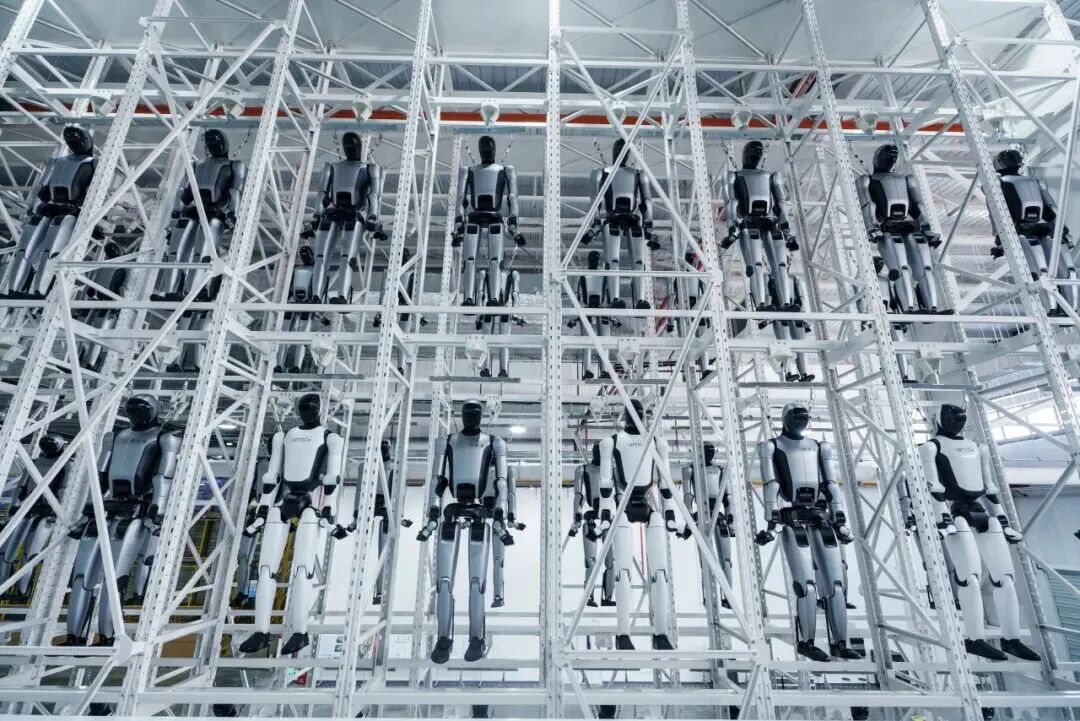
On October 25, it was revealed that the company's 5,000th personal robot (including Q1, T1) was officially downloadable in the last 35 days, meaning that the company downloads about 143 products per day.
It is clear that the shipments of the above four enterprises have grown very significantly and have shown a more optimistic attitude.
Of course, the vast majority of companies do not disclose shipments, but they do not represent overall shipment trends. According to high-profile robotics statistics, in the first nine months of this year, the robotics industry has accumulated 195 new types of humanoid robots. This means that at the product level, the industry is still flooded with a lot of new products, and the attitude of companies to release new products is still optimistic.
At the same time, the Institute of Advanced Robotics Industry (GGII) forecasts that by 2026, the size of the Chinese robotic integrated market will increase by 193.7% and the global robotic integrated market will increase by 215% respectively.
But it has to be admitted that lithium-ion pumps are not the key word for humanoid robots in 2026, as expected.
The global model is decreasing in heat
The labels for 2026 are extremely rich, featuring a number of devices, data, touch, world models, base models, valuations, IPOs, and so on, paving the way for the focus images of the last 10 months of physical intelligence.
By 2026, almost every enterprise with modeling capabilities on the smart racetrack will be on the world model. More and more global model enterprises will be connected in a short period of time to complete high-volume financing, push high valuations and release new world models, sparking market attention.
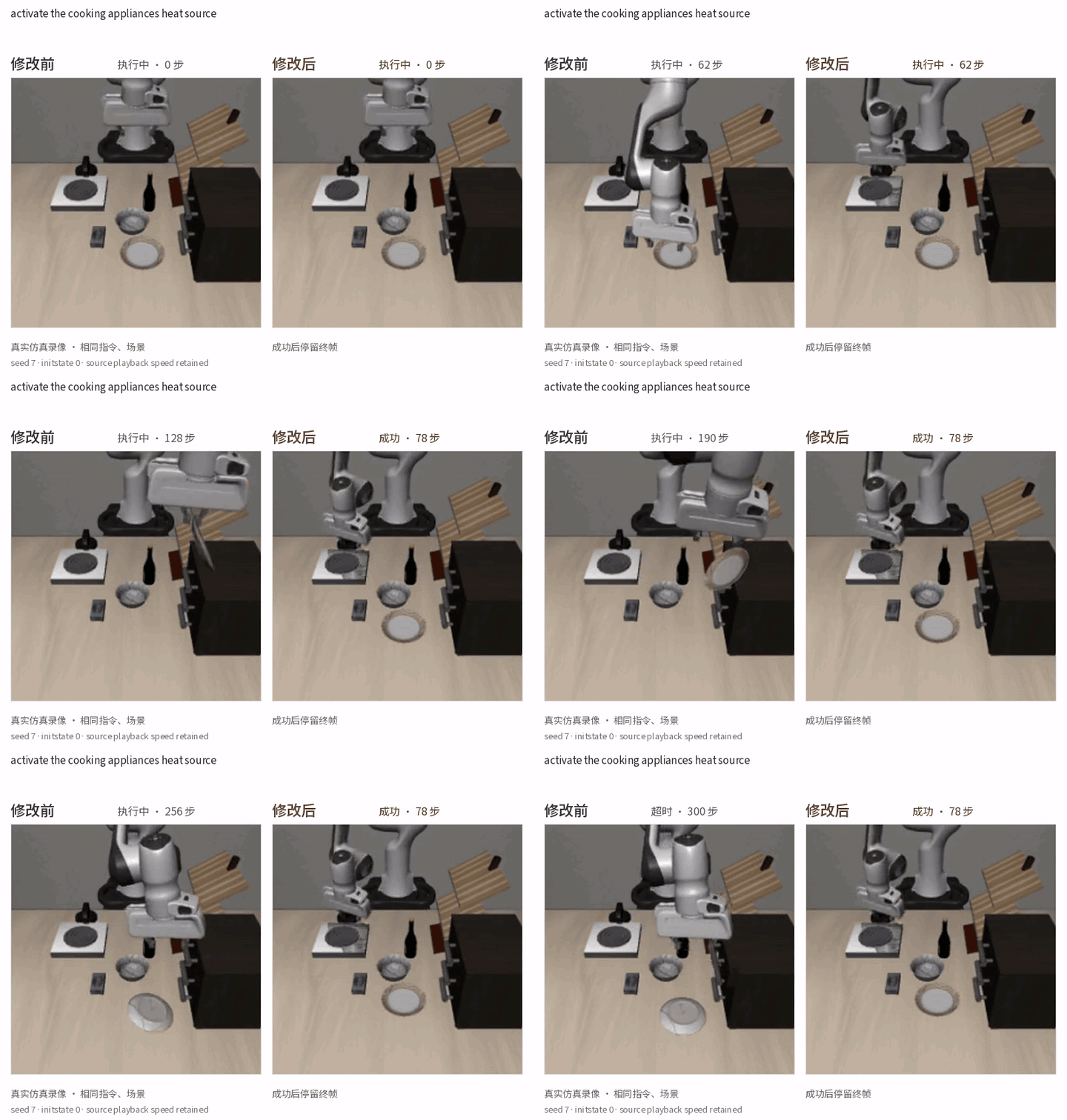
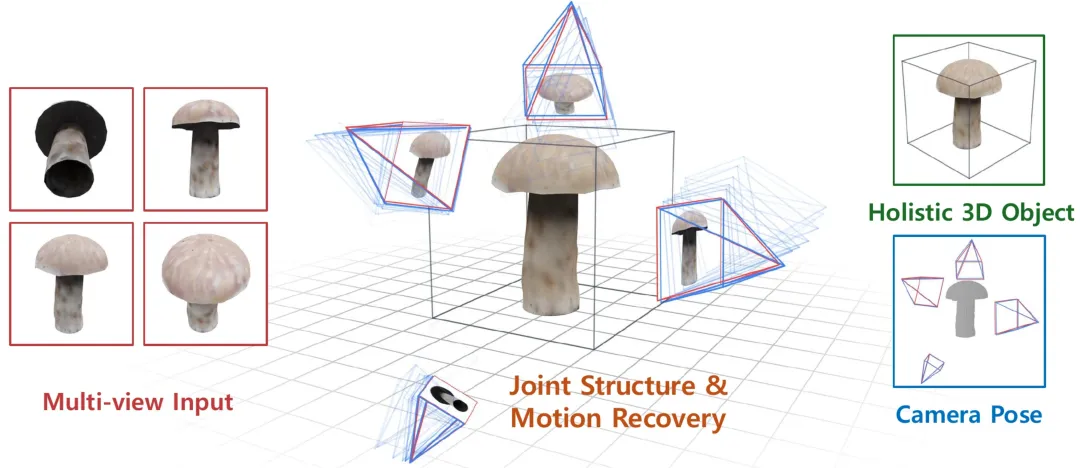
World models are more likely to be understood as a direction in which physical intelligence can model. From the broadest definition, world models want robots to understand how the world is changing, that is, given the current environment and an action, the model tries to predict what will happen next.
With the exception of a few World Action Models (WAM), World Models often do not have the ability to directly output action instructions, but instead embedded in larger models to help robots understand and predict the physical world. This is why it has been extended to models of the world with different capabilities, such as the Hidden Space World Model, Force Condition Touch World Model, and Target Cause World Model.
Another major class of world models is as a set of highly realistic general-physical simulators that allow robots to predict the future, attempt action, and acquire new capabilities through large-scale trial and error. But several large-scale model technicians have told high-profile robots that this direction has long-term value, but achieves greater difficulty. The real world contains complex geometric relationships, object properties, contact changes, and the laws of dynamics.
So is the highly imaginative world model a money-making tool for 2026?
The answer is no.
When high-profile robotics limited the scale of the world model enterprises to making the world model a central highlight in the field of physical intelligence, without covering all the enterprises that have released the world model-related results, only 20 enterprises can be included in the nine months of 2026, and in the nine months of 2026, these 20 world model enterprises have completed a cumulative total of 36 financing (excluding acquisitions), totaling over 13.2 billion yuan, or about 6.50% of the total financing of 20.32 billion yuan in the same period this year.
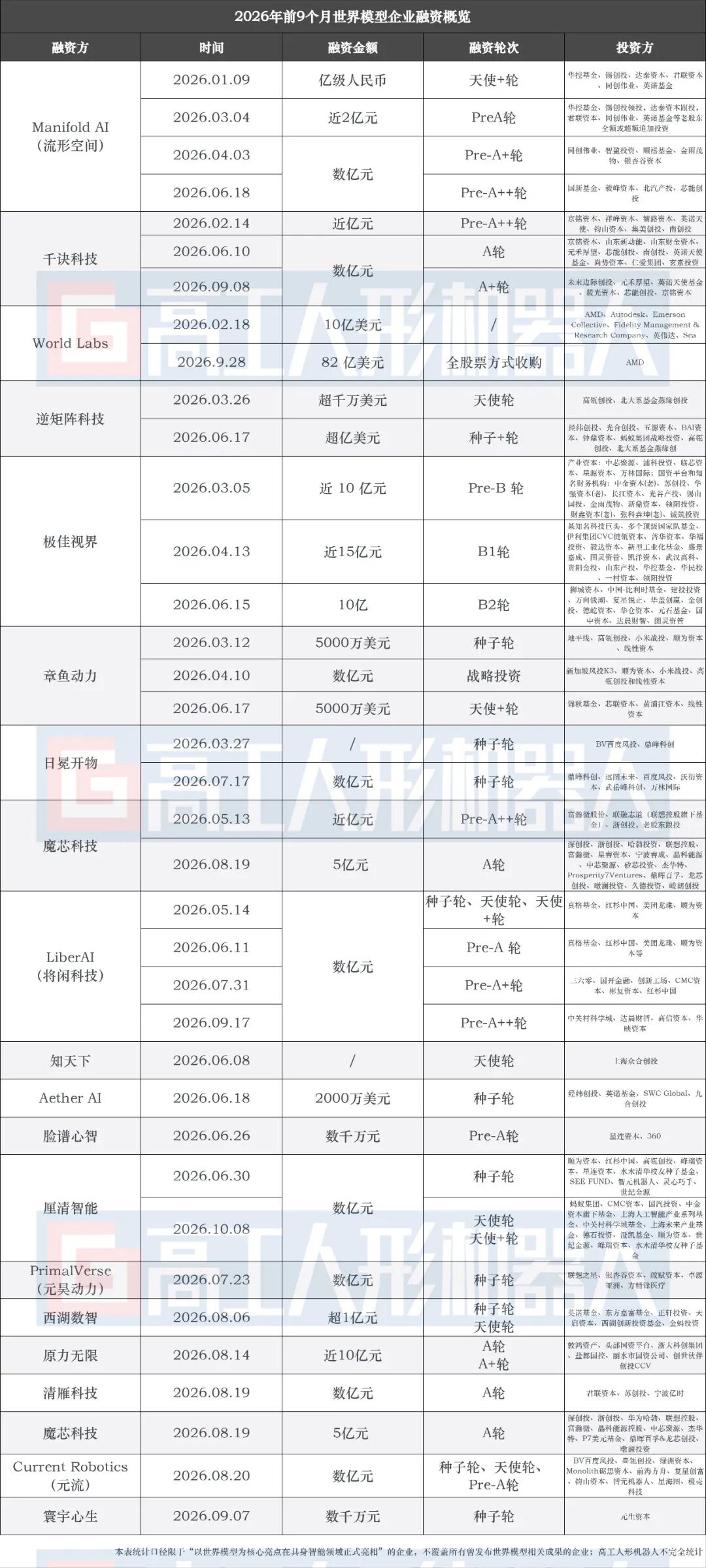
From the market's standpoint alone, it seems that the world model has been overestimated for its appeal.
With the passage of time, the world model is falling from its independent model category to the functional layer next to the action model, to enhance planning and robustness by predicting the next state before performing the verification moves. VLAs that don't die, but don't integrate the world model, will be eliminated; and WAM won't be called king alone because of its weak semantic understanding and cost-effective reasoning.
The warmth of the world model may fade away from the narrative center, but its technological value will be embedded in the system in a less striking and more realistic way.
GPT-6 Astra brings the base model back into view
The global model has decreased in temperature, and one possible reason is the spacing of the GPT-6 Astra.
The GPT-6 Astra directly undermined the core competitiveness of the corporate body: If a base model can perceive the physical environment, plan for robotic actions and predict the consequences of actions, is it necessary to develop a separate body-sized model?
The impact of Astra is real. Without any physical training on the model, the GPT-6 can control the robot to complete tasks such as identifying color discs, changing colors, cleaning pencils, etc.; the British Jim Fan team accessed the robot framework after the release of the Astra, and the benchmark score was about 99% overnight; on the RoboLab-120 sample benchmark, the Astra success rate was 66.3% and 74.8%, while the dedicated VLA model π0.5 was only 28.0%.[3]
General Large Model's ability to understand semantic generalization and open scenarios has been positively confirmed in the industry for the first time.
However, the boundaries between the GPT-6 Astra and the body-sized model are equally clear. The GPT-6 Astra can figure out what to do, but cannot do it in a dynamic environment in a timely manner. The robot's breakthrough tests showed that the Astra can pick up a hook, but cannot complete tasks involving complex physical contact with animal bodies, stacking boxes, folding clothes, etc.
Astra demonstrates that a general model can be a powerful planning layer rather than an alternative execution layer.
If it is necessary to give 2027 a falsifiable expectation, it is likely that the industry will no longer see the world model as a question that needs to be answered separately, but as a module that is present by default when evaluating a body system.