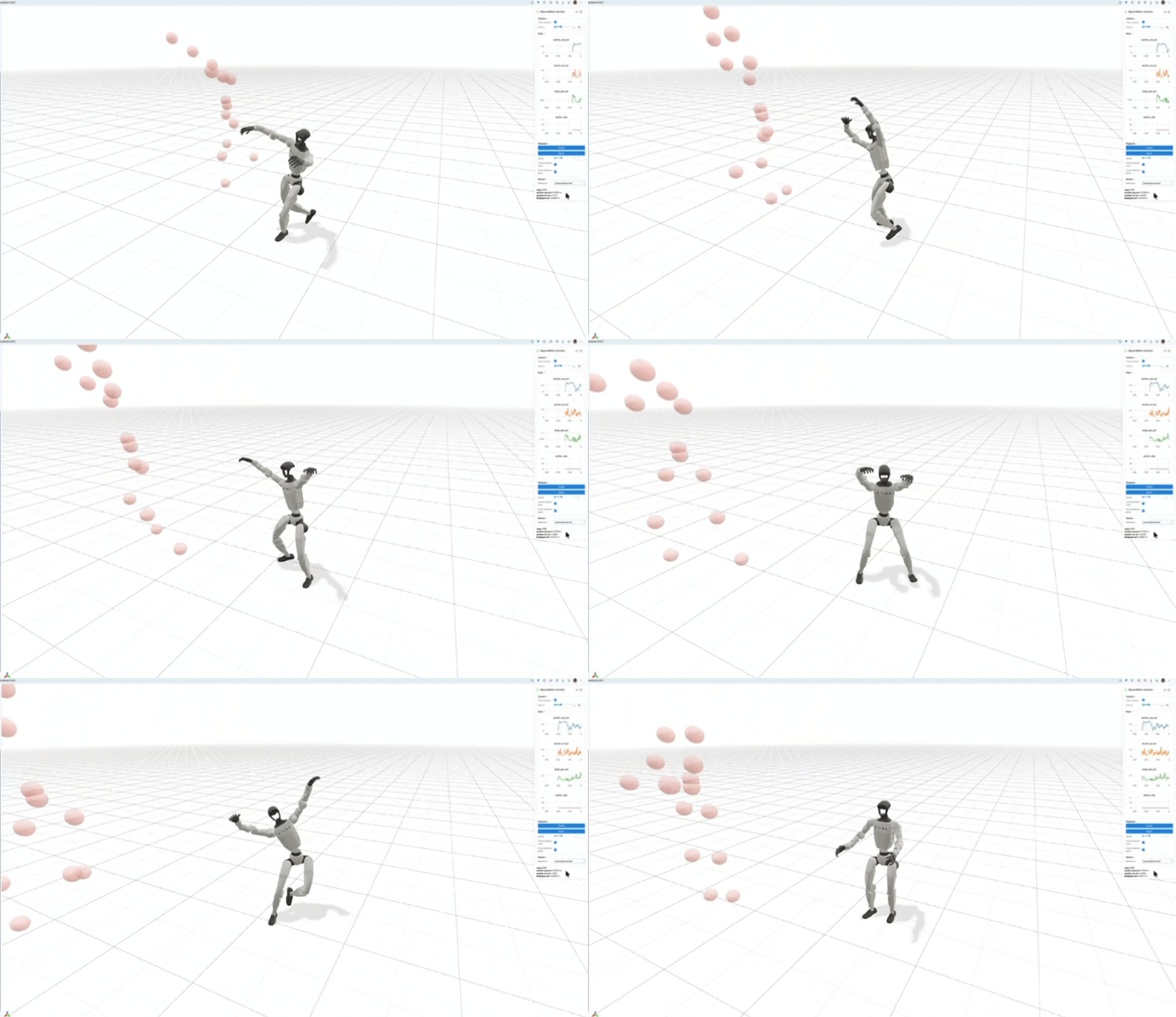
From a single-step demonstration to a series of live demonstrations, long-term planning is becoming a new watershed for robots.
When the brain pump becomes a robotic hydraulic pump
According to data from the Chinese Electronics Association, in the first half of 2026, domestic shipments of humanoid robots have exceeded 40,000 units, accounting for up to 97% worldwide; overseas tech giants are also accelerating entry: OpenAI CEO has confirmed that the company will develop humanoid robots on its own and speak directly to the appearance of robots.
From China's leading scale manufacturer to the global betting giant, the chip-brain competition, the industry consensus is clear: the shape is no longer a split chip, it really determines whether robots can chip, and the ability to plan, make decisions and generalize in complex scenarios.
In this race, a key capability is emerging from the surface, allowing robots to navigate the long-term planning process from understanding environmental threats to continuously operating threats, and is becoming a new, intelligent landing site that opens up a high-cost R&D path for the industry.
Long-term Planning: The Leap From the Brain
The human brain is seen as the central hub of the robot's ability to perceive, reason, plan, and make security decisions that directly determine whether or not a robot can actually enter the physical world. Long-range task planning is the gap between recognized capabilities. From single-step identification to multi-step continuous decision-making, from stage-understanding to dismantling tasks, planning pathways, and erroneous execution, the human brain is a key leap from demonstration to function, and is the most significant dimension of the current head model to specialized model gap.
In this context, ZTE Communications published the paper EmbodiedMind: Adaptive Data Curation and Prefix-Tree Reinforcement Learning for Efficient Embodied Intelligence with an average score of 70.02% on 18 body-brain benchmarks, with a long-term planning accuracy increase of 30.31% from the existing best approaches.
Subsequently, SuperCLUE released its September list of EmbodiedCLUE-VLA embodied brains: ZTE Communications Nebula-EmbodiedBrain-180B was ranked first in the country with a score of 77.48 against Ali Qwen 3.8-Max-0902.
Triple Structural Difficulties, Training the Body and Brain
The current training of body-based models is generally subject to three structural flaws.
The first is the inefficiency of samples. Large amounts of trajectory information in the training material are low in density, quality input is significant, noise is significant, supervision of mitigation and reinforcement learning consumes computational power on redundant and high-dimensional data, but is shortened to secondary optimization strategies, and truly valuable training signals are diluted.
Second, the contribution of heterogeneous task scales is imbalanced. Dynamic sampling methods such as DAPO lack task-level calibration, simple tasks are overly discarded, difficult tasks are systematically ignored, and multi-tasking training capabilities are depleted, causing the board effect to collapse.
Third, the credit allocation in long-term planning is seriously flawed. Standard GRPO applies trajectory-level advantages evenly to all tokens, one trajectory ultimately fails, and the correct decisions between them are punished concurrently; tree searches, although dating back to single-step nodes, face the profound cost of combined explosions, making it difficult to balance depth exploration with computational feasibility.
The trivial dilemma points to a central proposition: the brain needs to be able to understand the environment from learning to performing long-term learning, and the training paradigm itself needs to be reconstructed.
Triple mechanism collaboration, systematic breakdown of problems
To break the bottleneck of existing body-brain-based model training, the research team proposed a three-stage training paradigm: RSFT to clean data from the source with SFT training; IR-GRPO to reconstruct task balance; Trie-GRPO to achieve step-by-step credit allocation; three-tier mechanisms to each task; and step-by-step to achieve systemic restructuring of the body-brain training paradigm.
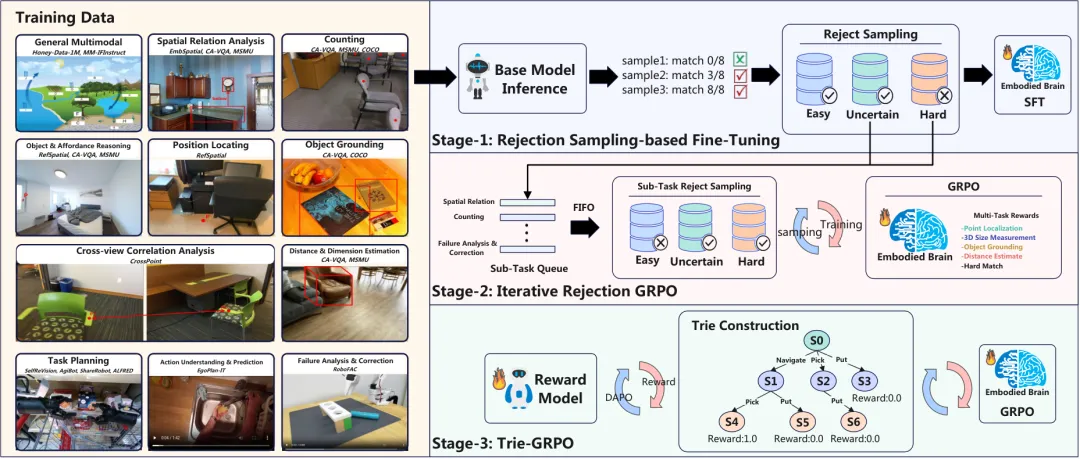
Figure 1 EmbodiedMind three-phase training framework (RSFT→IR-GRPO→Trie-GRPO)
Mechanism 1: RSFT: Increase data information density from source
To address the problem of dilution of effective signals in low-information density trajectories in training materials, the mechanism uses high-temperature coefficients to reason multiple times over the sample substrate: all generate correctly assigned simple samples, some correctly assigned uncertain samples, and all failures assigned difficulty samples. The training set only retains uncertain samples with a certain proportion of simple samples, temporarily excluding difficulty samples, both preventing early distribution collapse and avoiding incorrect trajectory contamination, and improving the data density from the source.
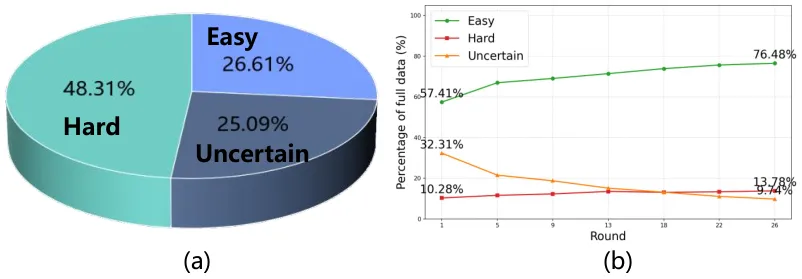
Figure 2 Distribution of training samples rejected after sampling (RSFT stage pie chart with IR-GRPO round change)
Mechanism 2: IR-GRPO: reconstructing the balance of heterogeneous tasks
For GRPO dynamic sampling, the lack of task-level calibration and ease-of-acceptance problem has been addressed by the mechanism that maintains independent front-line advancements for each task type and smooths the effective sample proportions of each task with an index moving average, dynamically adjusting the sample quotas for the next round, ensuring that the proportion of data in the training of each task is balanced.
Mechanism 3: Tri-GRPO: Gradual credit allocation
Its core insight is that strategically optimized clusters should not be defined at the full trajectory level, but should be conditioned at the trajectory level. All sample trajectories are inserted in parallel into a trajectory tree, sharing trajectories of the same historical trajectory to form independent decision subgroups at junctions, with relative advantages strictly limited to the calculation between brother nodes.
This means that even if a trajectory ultimately fails, the correct moves between them can still gain a positively localized advantage, completely freeing themselves from the penalty of interlocking seats; the right and wrong moves at the intersection point are directly contrasted and the advantage signal is precise to the step. To control the exploration cost, the mechanism uses discounted returns to retransmit along tree paths, integrate the brethren nodes into computational advantages, and filter out near-zero advantages samples to achieve a principled balance between exploration depth and computational feasibility.
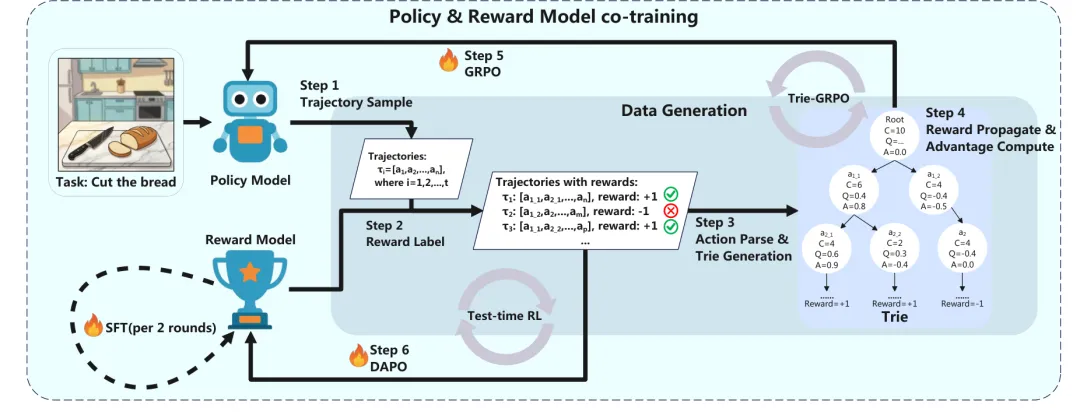
Figure 3 Trie-GRPO Automated Retrogression Training Framework (Joint Training of Strategies and Rewards Models)
From 18 benchmarks to the physical world, data proof
EmbodiedMind-8B received an average score of 70.02% on just 52.2 million training samples on 18 body-brain benchmarks, which outperformed the integrated capability of the same quantum-level open-source model. These 18 benchmarks cover four major capability blocks: general multi-modal understanding, 2D space reasoning, 3D space measurement and task planning, involving counting, target positioning, distance measurement, size measurement planning, step generation, motion prediction, and more.
On this basis, the research team further verified their ability to plan long-range missions in a simulation environment: a score of 66.67 on the VLM-PlanSim-99 25-step planning task benchmark, exceeding Cosmos3-Nano to an industry-leading level; and a success rate of 60.45% on the ALFWorld-thor test set, exceeding 46.27% on the SEEA-R1.
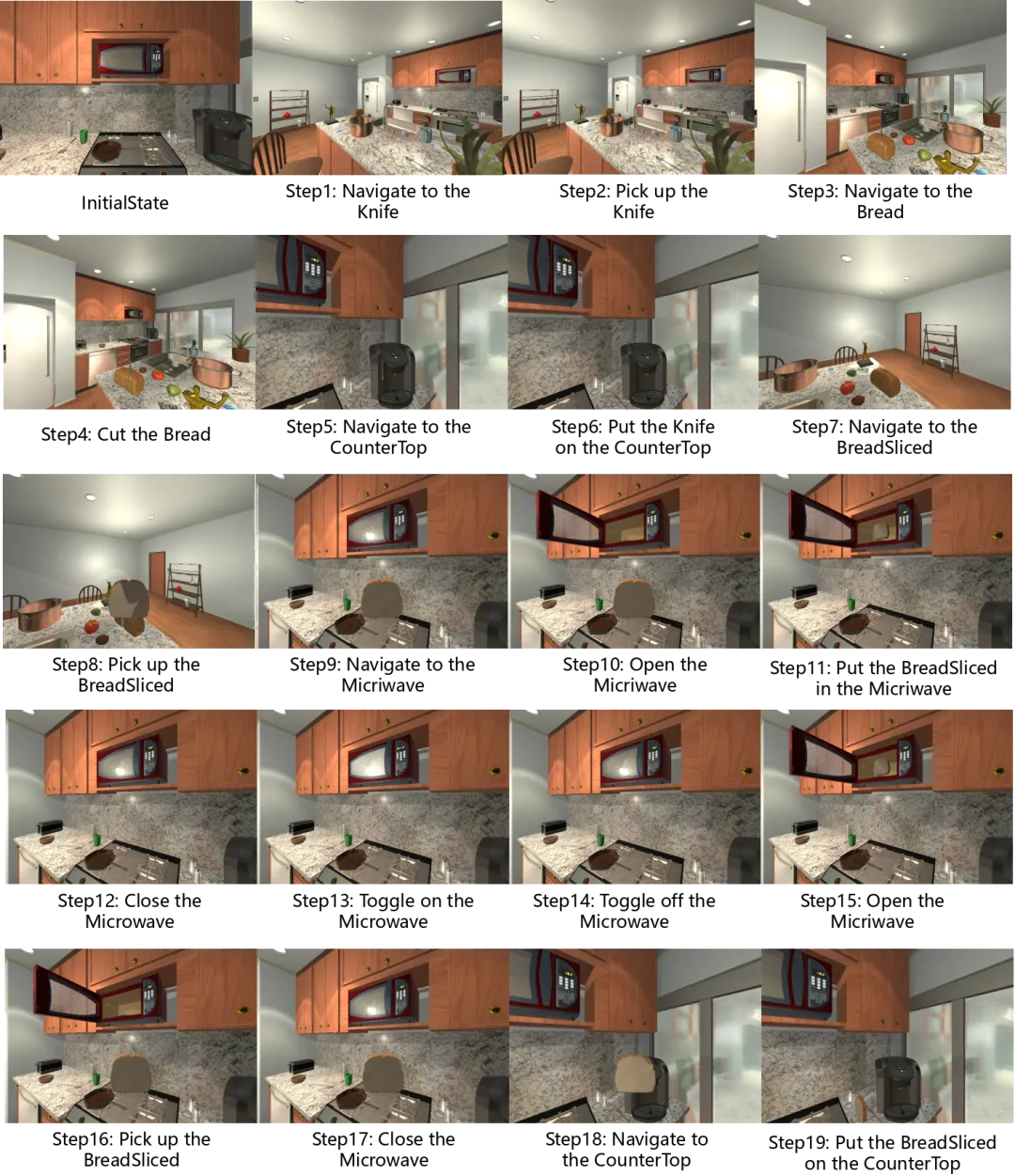
Figure 4 Long-range planning visualization: 19-step continuous task planning for making and heating sliced breadcrumbs in a simulated environment
The team constructed 50 desktop scenarios based on the AgiBot A2 robot and collected 160 task-performing video surveillance data sets to construct the A2-Failure, EmbodiedMind achieved 62.00% of the task of planning tasks on the desktop and 40.00% of the Qwen3-VL-8B base; the task-performing monitoring accuracy rate was 55.31% and 46.88% of the Q3-VL-8B. This means that through Trie-GRPO, the ability to allocate step-by-step credits learned in a simulated environment can effectively migrate to real-world robot scenarios.
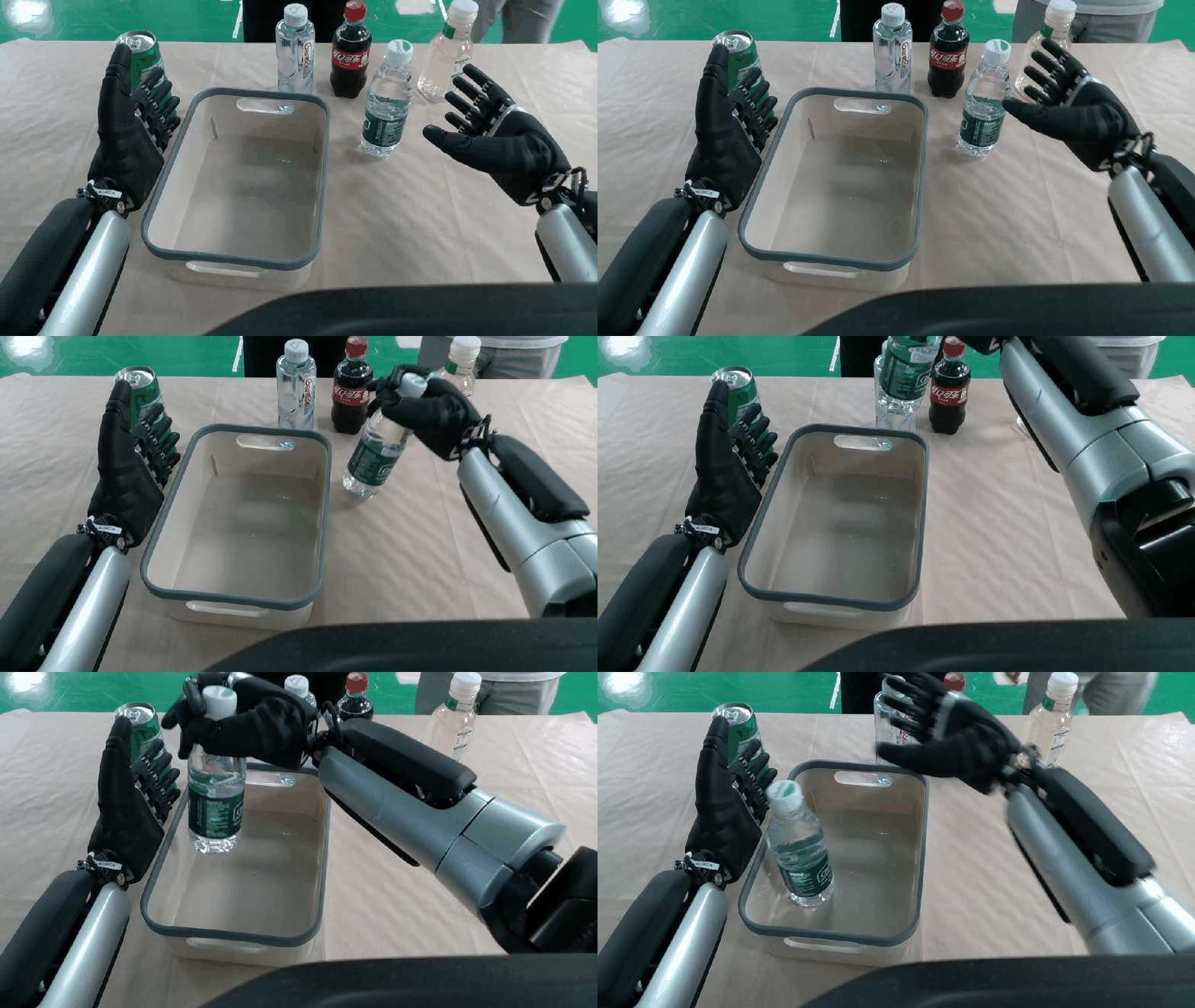


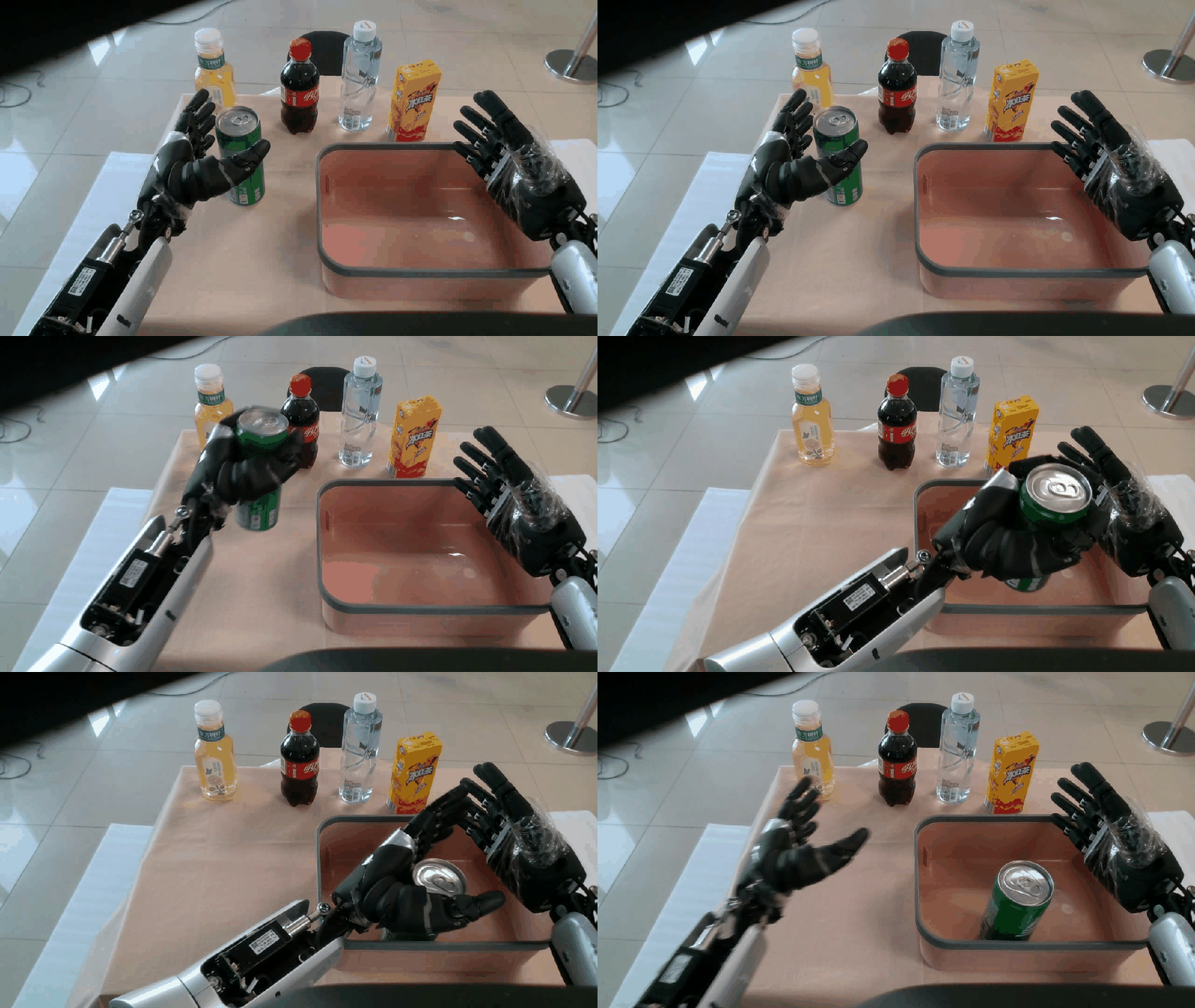
Figure 5 Visualization of real machine task planning: Scheduled planning and execution under the AgiBot A2 desktop scenario
List imprinted: National first-class squad
After the method, the third-party assessment provided external verification. The September SuperCLUE EmbodiedCLUE-VLA assessment covers 10 representative models at home and abroad, revolving around the four major capabilities of basic perception, visual reasoning, interaction and planning, and physical security.
Nebula-EmbodiedBrain leads the list with a high score of 97.92 points, demonstrating extremely high reliability and safety; overall, ZTE's Nebula-EmbodiedBrain-180B achieves performance consistent with industry-class trillion-dollar supermodels on a parametric scale of 100 billion. It should be noted that the list does not include the GPT-6 Astra (86.75) Gemini-3.8-Flash (82.12) as a reference item in the domestic ranking, while ZTE is ranked first in the domestic and first in the global rankings at 77.48.
Figure 6 SuperCLUE Embodied CLUE-VLA (with body and brain) General list for September 2026, International Model for reference)
The breakthrough from the training paradigm of the 8B specialty model to the comprehensive capabilities of the 180B class brain model, a set of technological pathways that allows long-term planning to move from research to reproducible industry capabilities.
From the bottom of the cylinder to the top of the cylinder to the full closure of the cylinder
From solving the long-range scheduling puzzle, to winning an open-source model with a very small sample size, to competing with international giants and finishing first on a third-party authority list, the training paradigm completes a complete loop from the bottom training paradigm to the top general capability paradigm on a smart track.
With a solid methodology behind it, and a list of hardcore scores behind it, this not only confirms the technological pathway's advanced and generalizing capabilities, but also provides the industry with a replicable, high-priced path to the development of physically intelligent brains. In the second half of the accelerated move towards the physical world with physically intelligent brains, with a breath-taking and dynamic robot brain, robots are really going to inject powerful energy into thousands of industries.
Sources of reference
[1] EmbodiedMind: Adaptive Data Curation and Prefix-Tree Reinforcement Learning for Efficient Embodied Intelligence, arXiv:2609.19659
[2] SuperCLUE September 2026 EmbodiedCLUE-VLA (with body and brain) rating list