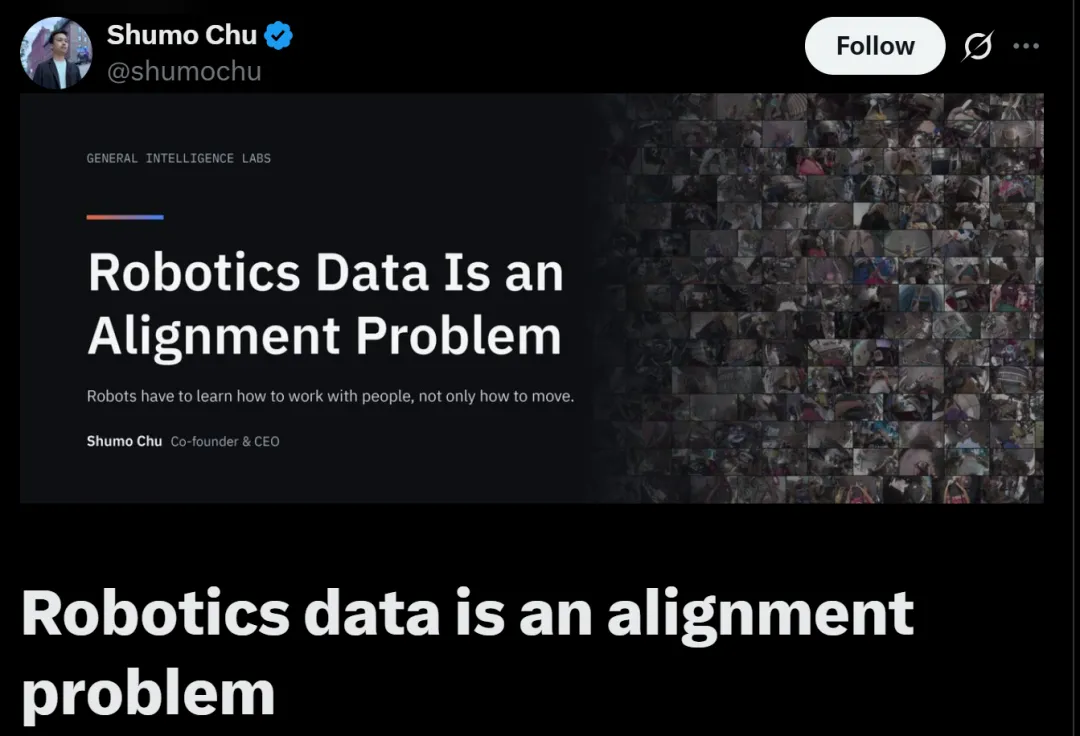
Everyone in the robotics field is arguing about which data will ultimately win.

Adam Patni (@adam_patni) was released on X on November 8, 2026.
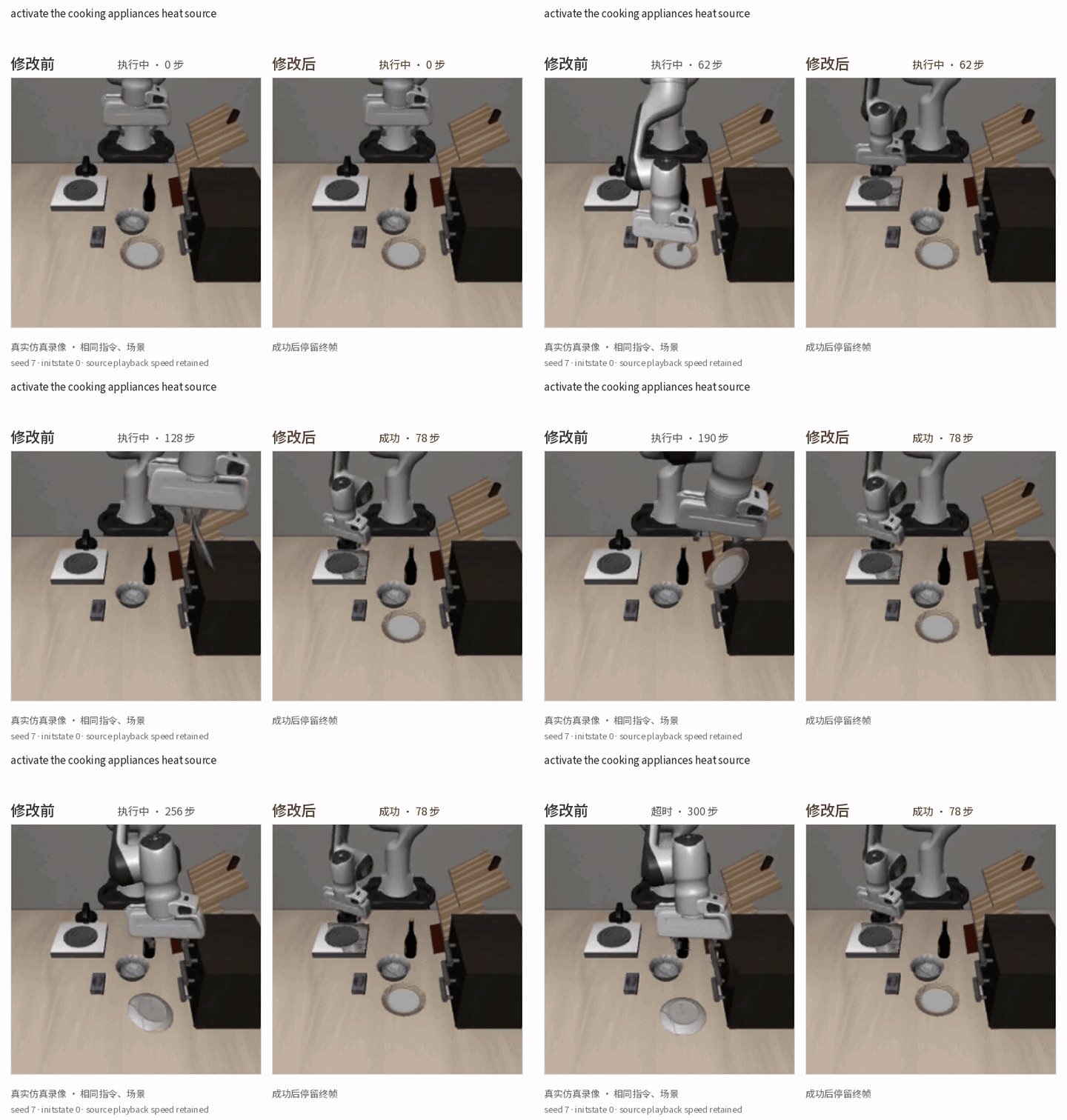
Some teams bet on first-person video: people wear cameras during their daily work. Some teams bet on UMI-style demonstrations: people use robotic claw-like hand claw to complete tasks. Some teams bet on remote operations: people directly control robots.
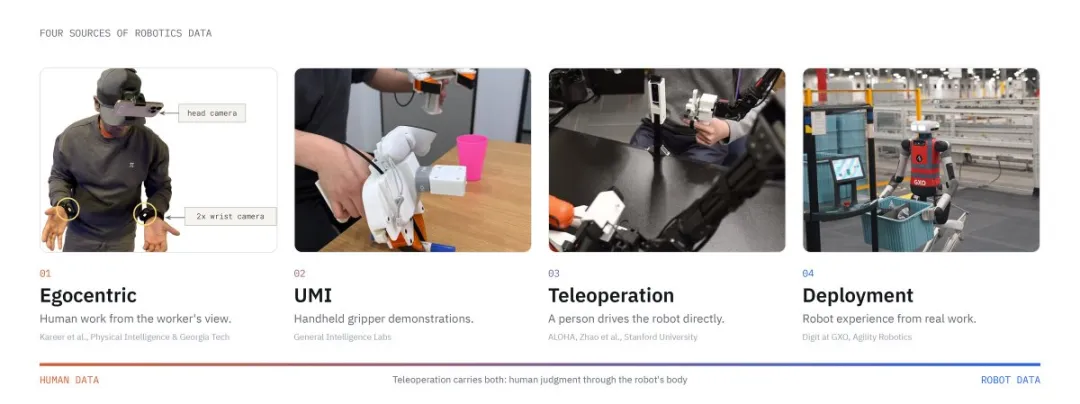
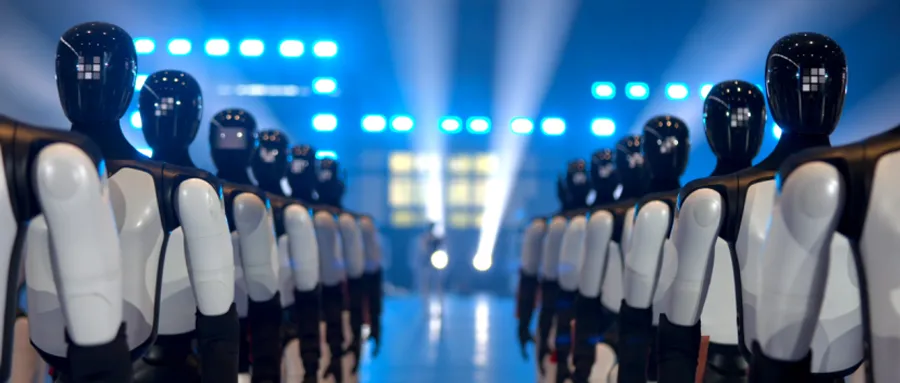
Four sources of robotic data. A third-party image is shown only as an example, and the copyright belongs to its owner; this does not mean that it has anything to do with the GI.
There is a question behind these debates: Will human data become obsolete when there are enough robots working in the real world?
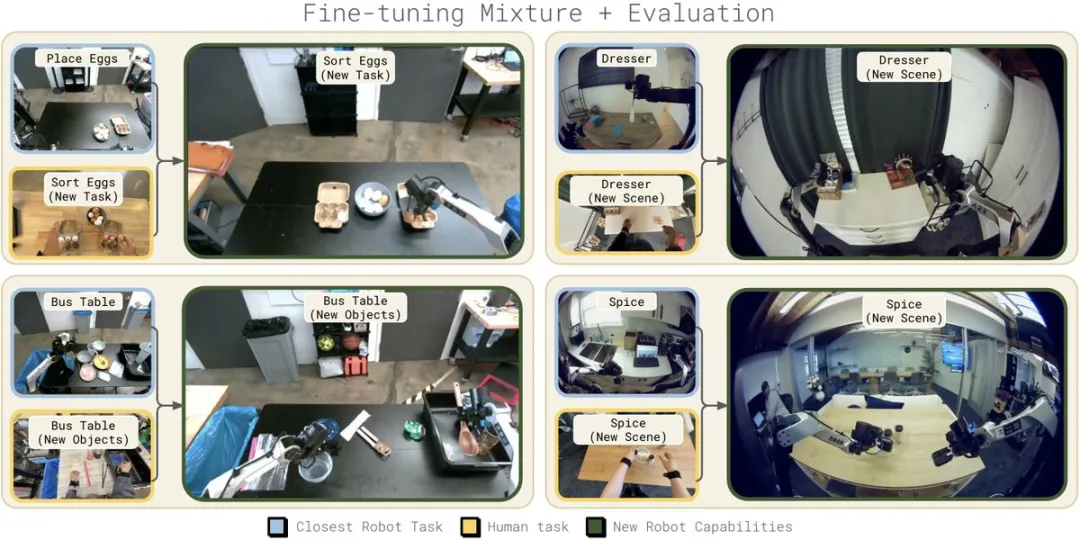
Human demonstrations and robot missions for testing. Images are from Kareer and others, Physical Intelligence and the Georgia Institute of Technology.
I think the answer is no. This question assumes that robot data has only one function: to teach robots how to move. But it also has a second function that will not disappear: to teach robots how to move around people.
Two analogies pointing in opposite directions
Proponents of robotic data often use Tesla as a metaphor. A company with a large fleet of road vehicles can learn from the vehicles they actually deliver and from the locations they actually drive. No other data can match this with the deployment scenario that training data will ultimately apply.
I'm just using it as a metaphor. This view does not depend on whether Tesla learns purely from autonomous driving, nor does it depend on whether autonomous driving has been solved.
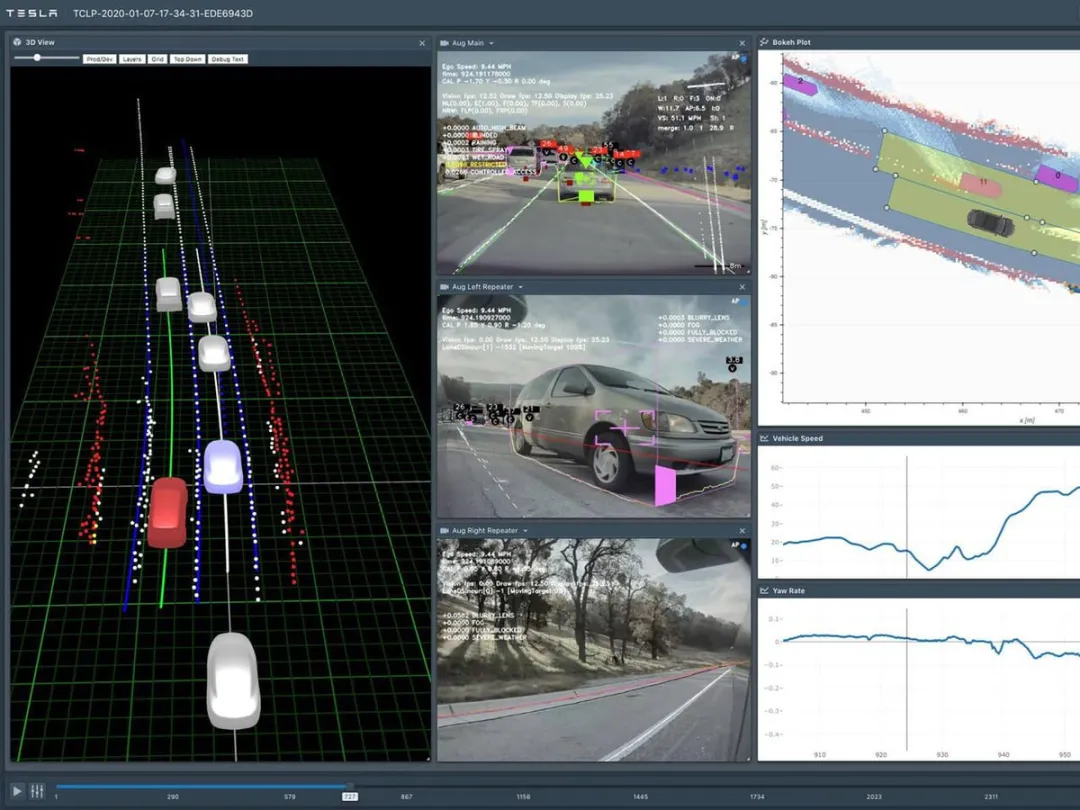
Autonomous driving visualization. Image: Tesla AI & Robotics. Here's just a metaphor: Crew data can include human driving and artificial intervention, and this article doesn't claim that autonomous driving has been solved.
The view that supports human data is analogous to the LLM. Language models are built on human writing content and do not cease to be needed by humans once they are capable of doing so. The InstructGPT work of OpenAI is a clear example. The foundation model already has the relevant knowledge and what really makes it useful is the addition of human demonstration and the sequencing of human output to the model. These data models serve to do what users really want. As the model progresses, the inputs offered by humans become more targeted, but they do not disappear.
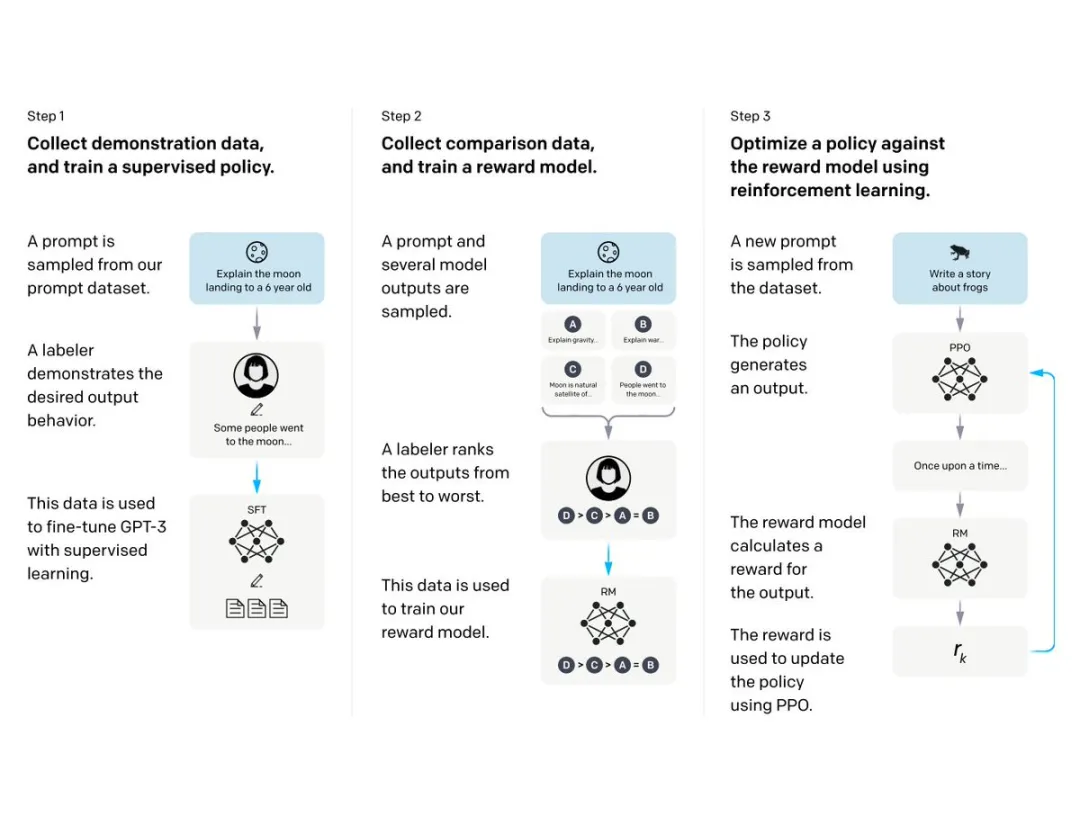
Instruct GPT's training method: first using human samples, then using human sequences, and then RL for these sequences. The image is shown in Figure 2, OpenAI, a 2022 paper by Ouyang et al. This is just a metaphor and cannot prove that robots learn the same way.
Both analogies are valid because they describe different things. Tesla is about how to learn about the body and environment; InstructGPT is about how to learn about people's will.
Each data model is different.
Our position is between these two points of view.
The robot experiences the church's model of knowledge about the body, physical constraints and results of action: what the body can do and what happens when it tries to do so.
Human data is about how the church model works, how people work together, what their intentions are, and what they prefer.
Remote operation is part of both: human judgement is expressed through the body of a robot.
Human data itself is not unique. First-person logs show the processes that work naturally unfolds, including pauses, gazes, and intersections that no one would think of writing into the script. One demonstration shows a good way to accomplish a specific task. Clear feedback, such as sorting two behaviors, indicates which one people prefer. These are three different signals that models can use at the same time.
These signals can also reinforce each other. Researchers at Physical Intelligence and Georgia Tech found that using a variety of robot data to pre-train can improve the effect of models migrating from structured human samples. In this study, more robot data makes human data more useful.
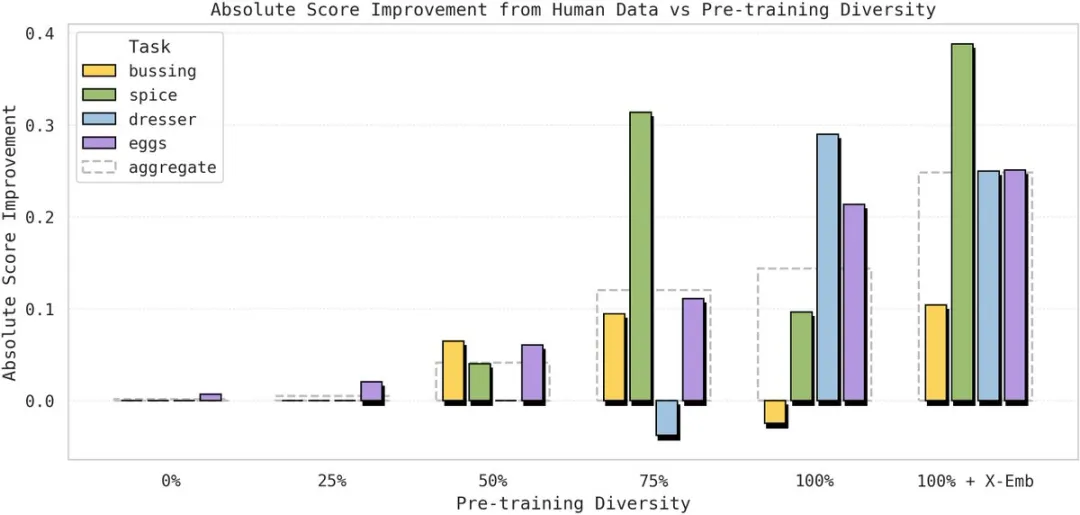
Incorporating human data increases the scores, and the relationship between the diversity of robot pre-trained data and this increase. Images come from studies by Kareer, Physical Intelligence, and Georgia Tech. In this study, the more pre-trained data robots have, the greater the benefits of human data; the results apply only to the tasks in the study and not to the universally applicable Scaling Laws.
Even if there are a billion robots, they still live in the crowd.
Let's take a look at one of the most powerful expressions of the robot data perspective. Imagine a billion robots, each recording their experiences every day.
But these robots are still working alongside humans, with workplaces including kitchens, hospitals, warehouses, and homes. They deliver things to people, wait for people, and are interrupted by people.
This gap will not disappear as it expands. This gap can only be filled when people show robots what good behavior they are doing.
Physical alignment
I call this physical alignment. When a robot behaves in accordance with the will of the people around it, rather than just completing the narrow tasks assigned to it, it achieves physical alignment.
In practice, this means that robots need to learn when to act, wait, adjust, ask, make concessions or stop. This also means that robots need to leave choice and control to humans.
Completion of operational tasks is only part of success. The following five examples illustrate the difference.
1. Plastic bags
In experiments at UC Berkeley and Carnegie Mellon, a robot was able to steadily pick up a bag of chips. But it often grabbed the middle of the bag so that it could crush the chips inside. From a mechanical point of view, it was successful, but it still did not satisfy human desires.
Researchers used human preferences to guide robots to grasp the edges of bags. Robots have the skills they already possess, and humans provide a definition of how to do well.
2. Supplemental nutrition
It is difficult enough to feed one person to process dishes and food in itself. At the same time, the robot needs to know what the other person wants to eat next, whether they are ready for the next meal, and how much help the other person wants to get.
FLAIR is a system developed by Cornell, Stanford, and UBC that takes into account both the user's requirements and the ease with which food can be cooked when planning a meal order. A study conducted by the University of Washington early on targeting disadvantaged populations found that robots have more autonomy and are not always preferred by participants.
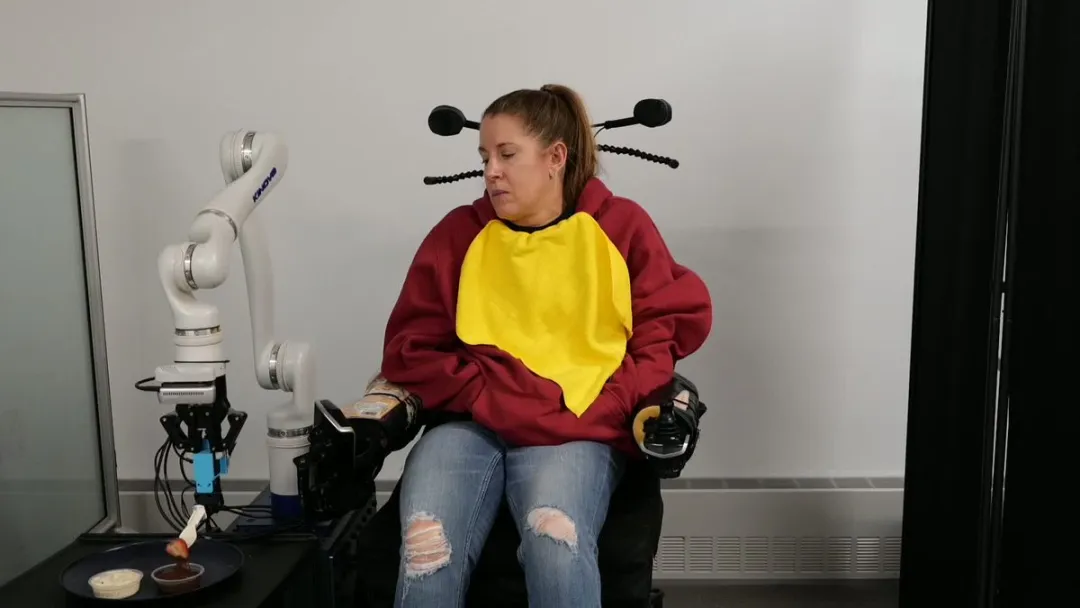
FLAIR is assisting with nutrition for a caregiver. Image: FLAIR Project, Cornell University, Stanford University and the University of British Columbia. Participants in these assisted nutrition studies are people with limited mobility and not specifically targeted at retirement care.
Pension care is one of the scenarios in which this experience may play a role. But to be precise, the studies discussed the provision of supplemental nutrition to people with disabilities, rather than research aimed at pension care.
3. Servants and bartenders
It's a relatively easy part of the job to end up with a drink and not get out. A good bartender will notice who wants to order, serve customers in a fair order, and confirm when needs aren't clear.
The JAMES project has developed a robotic bartender around this idea. Researchers believe that robots that provide services to the public must not only complete tasks, but also meet expectations in social interactions and deal with multiple customers at the same time seeking their attention.
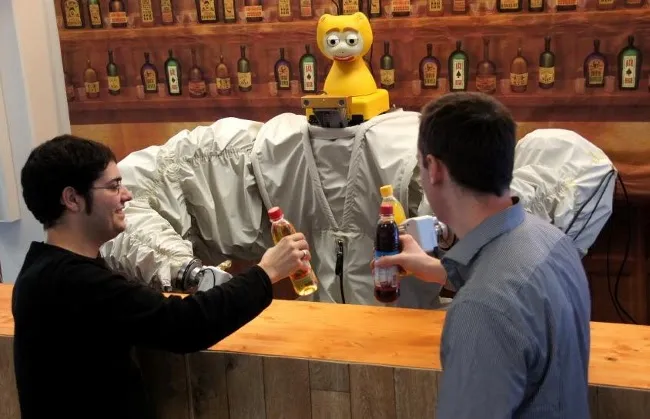
James is a robot brewer, a research prototype. Image: James Project, University of Edinburgh, Heriot-Watt University, Bielefeld University, Fortiss and FORTH
4. Guided navigation
A guide takes you to the right place and only completes half of the work. The other half is to accompany you at your pace and to step aside when you want to find your own way.
Researchers from Carnegie Mellon, the National Science Museum of Japan (Miraikan) and IBM Research Tokyo followed six blind or visually impaired visitors using museum-navigated robots over a three-week period. Visitors always choose when to follow the robot, when to handle themselves, and these choices change as circumstances change. Some people rely more on robots in crowded or noisy areas.
The researchers concluded that assisted systems should give priority to flexibility and user control over the pursuit of maximum automation.
5. Collectively assembled
Imagine two people installing a panel together on the frame. One person is supporting the panel and the other is pointing the hole.
A robot that plays a supporting role cannot just keep the board at the right height. It must be accompanied by a companion's action timing, nor can it be prematurely relaxed. Researchers at TU Bergakademie Freiberg and Arizona State teach the robot this coordination ability by recording the process of two people completing tasks together.
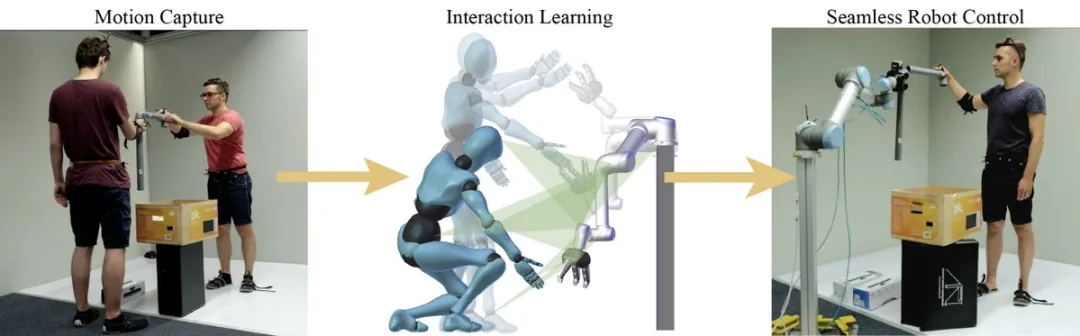
Human demonstration, interactive learning and robotic control. Research image: David Vogt. Research from Vogt and others published at ICRA 2017, at TU Bergakademie Freiberg and Arizona State University.
In these five instances, exercise is necessary, but exercise alone is not enough. What is missing is information about people, which must be provided by people.
What the evidence says and what doesn't.
These studies illustrate our point of view, but they do not prove that human data will always be indispensable. Most of them are controlled experiments, and no studies have measured a large group of robots.
Human data will continue to play a role, and that's one of the judgments we've made. I want to express it clearly as a point of view: as long as robots share space with humans, some of the things they need to learn can only be provided by humans.
What does this mean for data collection?
If robot data is a problem of alignment, then collecting hours is not a good measure. The better question is whether data has improved the behavior of robots, including when robots are around people.
This is exactly what we do at General Intelligence Labs. We provide first-person data, UMI data and touch data, and the collection equipment that records that data. We are completely independent in hardware research and manufacturing, so we can control what content is being collected and how much is being collected.
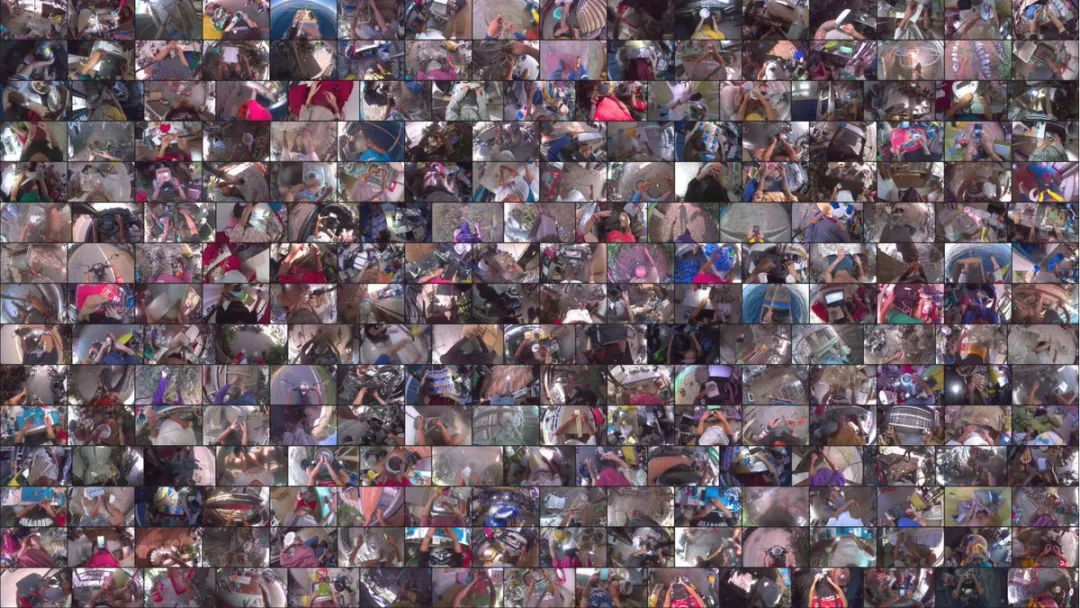
Next:GI's first point of view data collection in the real world.
Next: GI collection equipment, including EGO2 series headgear, wrist cameras, UMI and touch gloves.
We don't think there's a single model that will prevail. Robot experience, remote operation, demonstration, first-person video and human feedback each provide different signals. The best teams will know which signal they're missing and then pick it up.
Robots learn how to move from a variety of sources. They can only do so when we show them how to collaborate with us.