I'm going to tell you something.The shadows
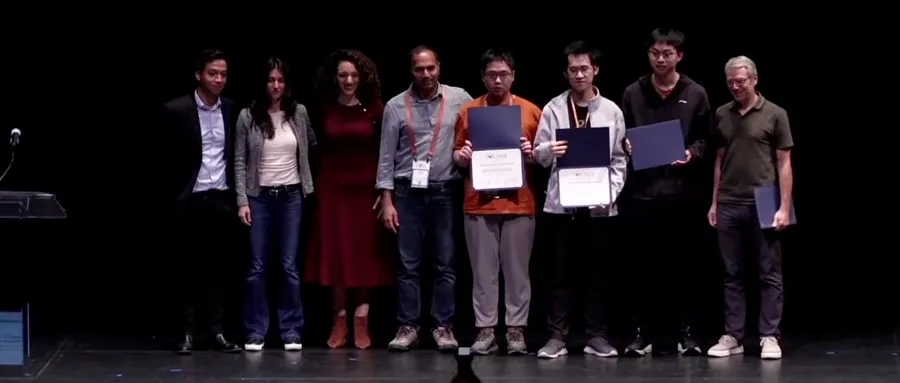
Robot Foreigner reported on November 12 that today, a summit in the field of robot learning will be heldCoRL 2026 officially announces list of winnersAccording to official data, CoRL 2026 received 2094 valid posts, an increase of about 184.1% from last year's 737 papers. Of these, 687 papers were accepted, with an acceptance rate of 32.8%.The University of California, Berkeley's study of human-robot movement was awarded the Best Conference Paper Award。
 FromRobotics at institutions such as INVIDA, Stanford and others won the Best Student Paper Award for Contextual Strategy Learning。
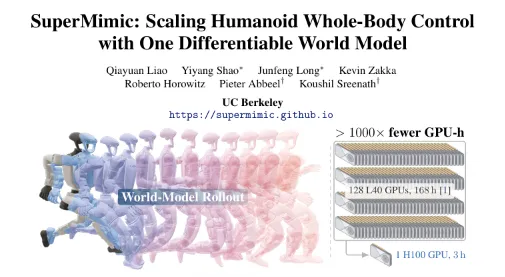
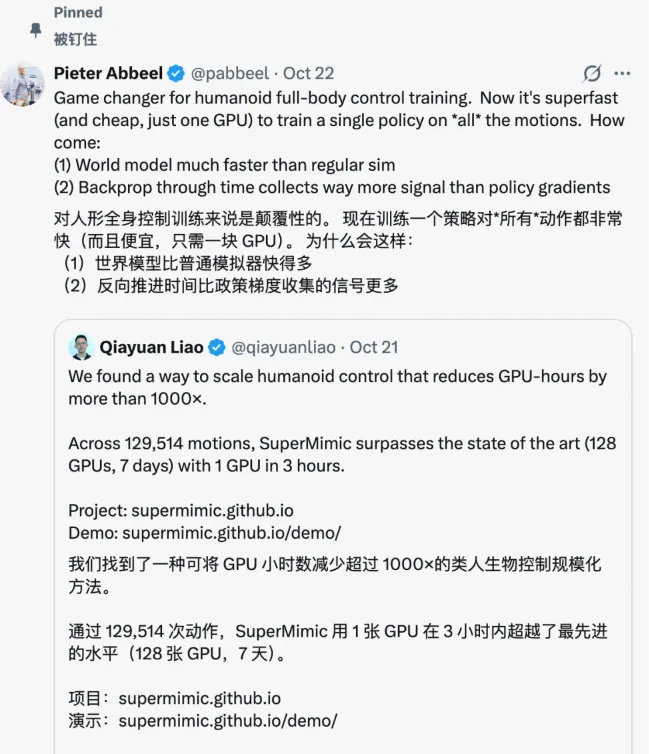
 Among them, the SuperMimic study at the University of California, Berkeley, is a strategy for the full-body control of humanoid robots based on micro-world models trained to calculate GPU time.Reduce by more than 1,000 timesThe method uses a single GPU for three hours of training, surpassed by a seven-day baseline model of 128 GPUs, and has been fully automated on the Yuri G1. The first author of the paper is Qiayuan Liao, a Ph.D. student at the University of California, Berkeley.
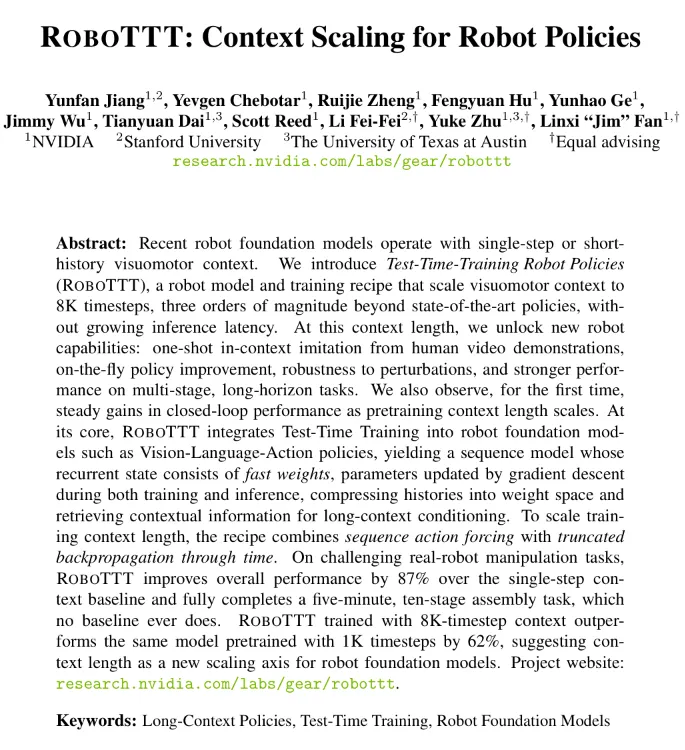
 Another study that won the Best Student Paper Award is RoboTTT. The paper proposes a methodology for learning robotic strategies based on test-time training, which will be used to determine the results of the study.Expanded to 8,000 time stepsThe first author of this paper was Yunfan Jiang, a Ph.D. student in computer science at Stanford University. Other authors include:Professor Lifeifeifei of Stanford University, Jim Fan and Zhu Yuko, head of the GEAR team at INVEDAWait a minute.
01.
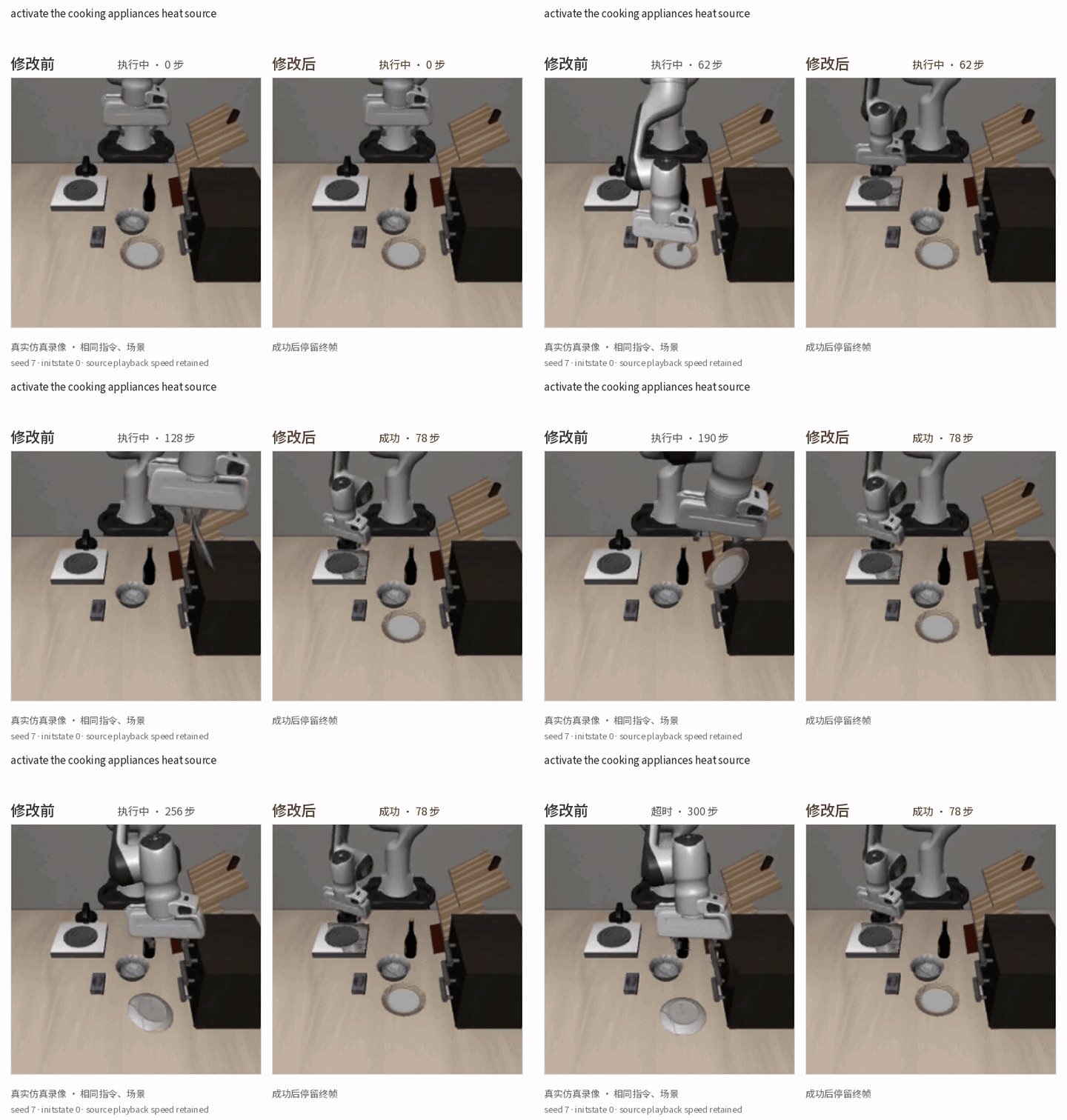
It's been a long time since I've been able to do this, and it's been a long time since I've done this.The Berkeley team takes home the Best Paper AwardPaper from the University of California, BerkeleySuperMimic: Scaling Humanoid Whole-Body Control with One Differentiable World ModelIn a benchmark test of 129514 human movements, SuperMimic overcame the previous strongest method with 1 GPU for 3 hours of training, using 128 GPUs to train 7 days ofSONIC. More importantly, the well-trained strategy can be deployed directly to the UG1 robot. SuperMimic also displays the relevant demonstration video, in which the UG1 performs a high difficulty of crawling, crawling, dancing, and performance; it can also mimic human movements by tracking its authors, responding to delays, and performing at low speeds.This one-man-shaped robot removed the bottleneck of scaling the entire body.Currently, the mainstream route for humanoid robots to master a large number of human movements is to repeatedly try and make mistakes in physical simulators, tracking mass movements and capturing data using reinforcement learning. But the cost of this route is extremely high: the library of movements expands by one point and the computation costs linear growth by one point. SuperMimic's starting point is a simple observation: although reference movements from humans differ for humanoids, they share the same hybrid dynamics.The standard rigid-body simulator is the standard rigid-body simulator.Recorded state transfer data to fit into an all-action sharedDifferentiable world modelIt allows the world model to be trained in the same cycle with the tracking strategy. The strategy involves 32-step imaginary rollouts within the world model, which are then propagated backwards through time (BPTT, backpropagation-through-time) directly to analytic policy gradients. Since the gradient never passes through the simulator itself, simulators with non-smooth contact are also compatible.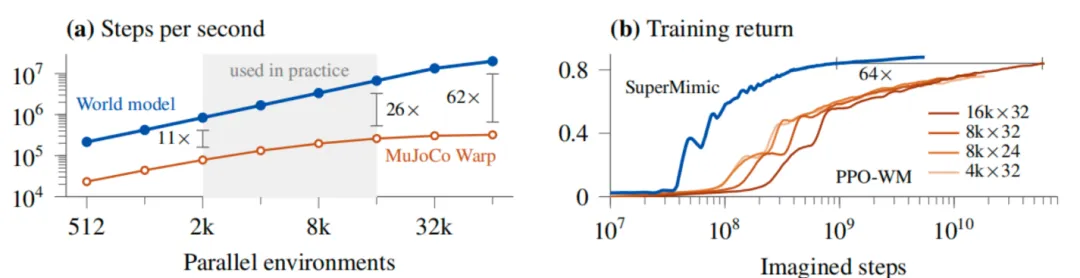 This design resulted in two efficiency improvements: over the batch sizes used in practical applications, the world model's imaging speeds were more than 10 times faster than direct simulation; parallel environments were extended to 62 times the time gap of 64k; and the parsing gradient allowed the strategy to achieve the same imaging rate of training returns, which was about 64 times lower than the PPO. As a result, after 3 hours of running on a single GPU, the SuperMimic failed only 25 times on a benchmark of 129,514 actions, while the SuperMimic failed 179 times on a single CPU, and the failure rate dropped even further to zero after 9.8 hours of training on two GPUs.
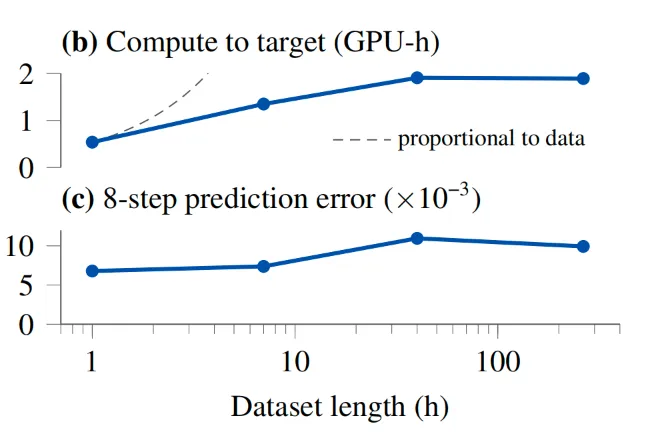 As training data increased from 1 hour to 264 hours, the GPU computing time required to achieve target return did not increase much, and the 8-step prediction error in the World Model always remained between 0.007 and 0.011.Today's scaling laws for measuring mouse movements are cheaper than a single GPU can afford.There are seven authors of SuperMimic, all from the University of California, Berkeley.The first author is Qiayuan Liao.He has worked as a research intern at Boston Dynamics in collaboration with Scott Kuindersma on the reinforcement learning control of E-Atlas robots, and has directed or participated in projects such as Workhorse, BeyondMimic. MuJoCo Playground, the open-source robotic learning framework for which he developed, won the RSS 2025 Best Demonstration Thesis Award.
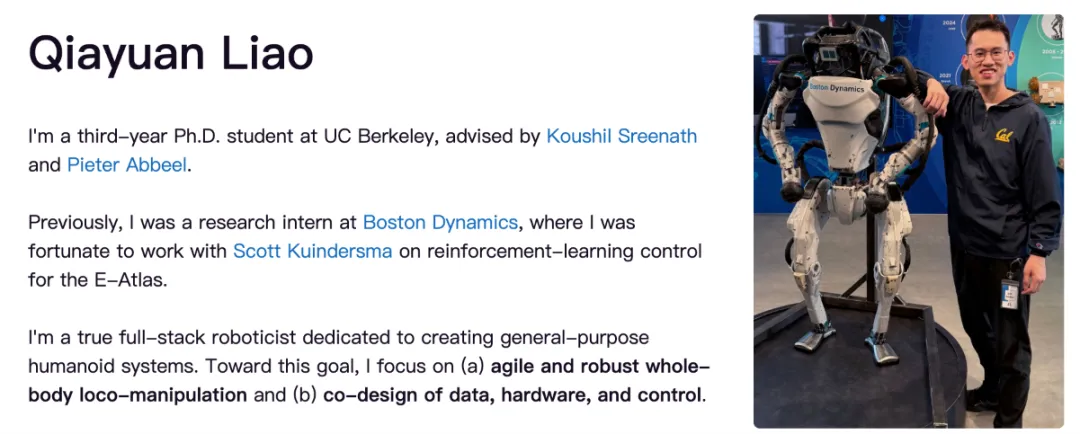 In addition, one of the lead authors, Pieter Abbeel, a prolific deep reinforcement learner, is the director of the Berkeley Robot Learning Laboratory and co-founder of the Berkeley AI BAIR Laboratory, Covariant.The rules of the game have changed in the training of the whole body of the puppet.
02.
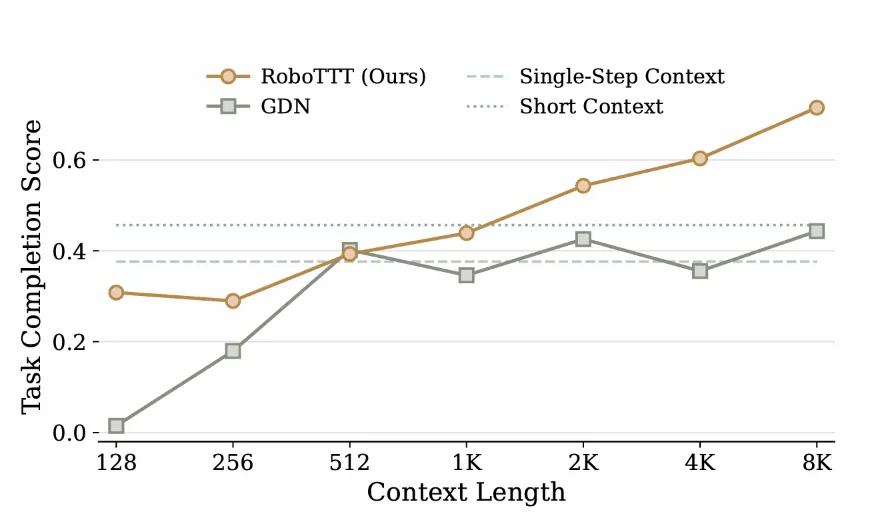
It's important to remember that robots learn how to use long-term memory.Invisalign and Stanford Research TeamAward for best student paperThe paper, which won this year's CoRL Award for Best Student Paper, was developed by a joint research team from Indiana University, Stanford University, and the University of Texas at Austin.Robots: Context Scaling for Robot Policies: Robots: Context Scaling for Robot Policies: Robots: Context Scaling for Robot PoliciesCurrently, most robotic strategy models can only make decisions using single time steps or shorter historical information, making it difficult to make full use of previous operational experiences. This limitation is even more apparent when performing long-term, multi-phase tasks. To address this problem, RoboTTT continuously compresses historical interaction information into model parameters by updating the internal speed weights during model reasoning.Sequence Action ForcingIt's a great way to consolidate the training process.It's time to reverse the transmission of TBPTT.In real-machine testing, the team set up three long, sleek assembly tasks, including vehicle model assembly, remote-controlled robot assembly and circuit assembly, and compared RoboTTT to the three baseline models GR00T N1.7, GR00T N1.7 Hist. and GDN. The results showed that RoboTTT was among the three tasks.Average completion rate of 79%It was 42%, 49% and 56% higher than other models and achieved the highest completion rate of all tasks.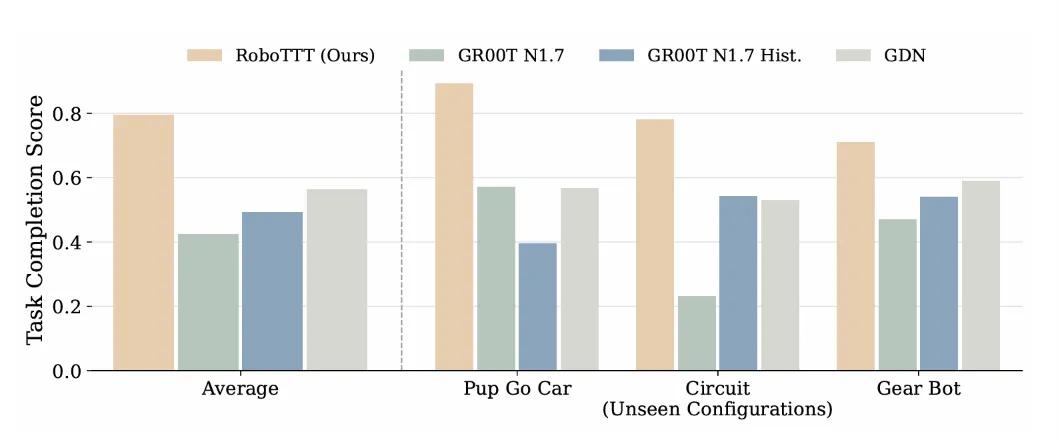 In addition, the team also tested the impact of different contextual lengths on model performance. As the contextual length expanded from 128 time steps to 8,000 time steps in pre-training, RoboTTT's task completion rate increased.Increased from 30.8% to 71.5%There are no signs or symptoms of the disease.
 First author of the paperYunfan Jiang is a PhD student in computer science at Stanford University.He received his undergraduate degree from the University of Edinburgh and his master's degree from Stanford University, majoring in robotic learning and reinforcement learning.

He is also the founder and CEO of the company, which is headquartered in Hong Kong.
Previously, the research involving Yunfan Jiang was awarded the NeurIPS 2022 Outstanding Datasets and Benchmarks Papers Award and the ICRA 2024 Best Paper Award.03.
It's a saving power, an expanding memory.CoRL awarded the prize to Silicon Efficiency SiliconThis year's CoRL post rate has skyrocketed, to 184%, and the field of robotic learning is becoming another champagne in the AI industry. In recent years, the segment of physical intelligence has almost continued the industry's basic consensus that the more data, the larger the calculations, the stronger the models. But this year's CoRL winning paper gave a slightly different answer. SuperMimic can compress 128 cards 7 days of training to a single card of 3 hours, which is a pioneer in the same dynamics that all movements share, a micro-world model can expand the learning cost to the entire operation library; RoboTTT can expand the content to a few 8000 steps, not to expand the storage, but to compress the historical information model by testing.It's a lot more efficient than algorithmic design and the laws of physics.